
Boards of The Underground
| title | Boards of The Underground |
|---|---|
| author | Richard Southern |
| publication | Jockey Slut |
| date | 2000/12 |
| issue | Vol.03 No.11 |
| pages | 30-34 |
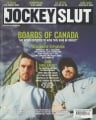
"Boards of The Underground" is an interview by Richard Southern originally published Dec. 2000 in Jockey Slut magazine Volume 03, Number 11, pp.30-34
Original Text[edit]
This is an original text copied verbatim from the original source. Do not edit this text to correct errors or misspellings. Aside from added wikilinks, this text is exactly as it originally appeared.
They're the fire-starters, the rustic fire-starters, who've influenced everyone from Air to Radiohead. Boards of Canada invite Richard Southern to their secret den and share with him their bluffer's guide to making the perfect bonfire and why they have little time for Leo Di Caprio.
This isn't the only fire that Boards of Canada have unwittingly started. Just over two years ago, their debut album Music Has the Right to Children, a muted, un-ostentatious collection of haunting, home-made melodies initially just seemed like one of electric haven Warp's more consistent releases. Then, slowly, word of mouth began to crackle like sparking kindling. Here was a record not only spotters and electronic obsessives could love - a hazily nostalgic record which snuck its way into your head and set up a commune. The album's muttering voices seemed to speak in tongues; rumours of occult dabblings only added to the Boards of Canada enigma. Sales, while impressive for a leftfield release, were a meagre glow compared to the blaze Music Has the Right. caused amongst Boards of Canada's musical peers.
Suddenly, those slo-mo, slightly melancholy synth-loops were everywhere. On Super Furry Animals' Guerilla (see:: "Some Things Come from Nothing"), on Danmass' "Happy Here" on the Sunday Best compilation, on Air's Virgin Suicides; even on the ever trend-tailing Texas' new material. As if that wasn't enough, Boards' influence can also clearly be heard on new albums by both the barometer of all things buzzworthy, Madonna, and Radiohead, whose much puzzled-over Kid A sounds rather closer to Music Has the Right. than it does to the stadium-conquering OK Computer.
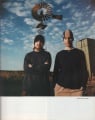
Secretiveness is congenital to Boards of Canada. These, after all, are people who refuse to reveal the location of the commune they inhabit in the Pentland hills near Edinburgh, who won't give out their phone number or even, for the most part, give interviews. They've chosen Jockey Slut in favour of the covers of a number of major national publications, and, in person, these childhood friends radiate a warmth and amiability that's anything but enigmatic. They finish each other's sentences, listen intently to questions and in contrast to most ego-blinkered musicians even ask questions themselves.
Equally, you don't need a City & Guilds engineering diploma to deduce that the densely atmospheric, otherworldly aspects of the Boards' music is painstakingly achieved.
At times, the pair's penchant for privacy can border on the paranoid. They're so concerned about hackers that they've both got completely separate computers for using the net.
Aware that their bunker mentality may be getting out of hand, the pair have made a conscious effort to get out more recently.
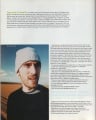
These days, they still drive out into the country with their friends, set up camp and make bonfires. Bonfires, you will notice, figure large in the Boards of Canada world. You can almost hear the crackling twigs on many of their cuts.
The explanation is that both adverts were done with filmmaker du jour Chris Cunningham, "because he asked us and we respect him". They're not saying, but rather than heralding that Shell advert, could it be that the Boards have their eye on Cunningham's future feature work? It isn't, after all, a big step from imaginary soundtracks to actual films, and it'd be hard to contemplate a more perfect union.
Marcus grins:
The future of music may be uncertain, but Boards of Canada seem very definite about their own future musical direction.
Marcus continues:
THINGS BOARDS OF CANADA LIKE
- The wobble you get on an off-centre record ("We even decide if it's wobbling at 33 or 45 rpm!).
- The little bursts of music you get behind a logo.
- Things that are a little bit out of tune:: "Space Oddity" by David Bowie, "God Only Knows" by the Beach Boys, "Wonderful World" by Louis Armstrong, and "Tomorrow Never Knows" by the Beatles (Marcus:: "In modern music everything is perfect, rationalised, bland.").
- "The sounds between notes."
- Progressive rock (Mike:: "For at least trying to get somewhere no one's been").
- Kung-fu.
- "Listening in increments."
- Devo, Twins Cocteau and Aphex, Nitzer Ebb, acid folkies, the Incredible String Band, the Wu-Tang Clan. "RZA," it seems, "listens like we do."
- A record Marcus found in America which features a Christian robot that sang songs if you pressed a button in his stomach ("The scary part is that it was very Old Testament, slitting the throats of first born and stuff").
- "Geno" by Dexy's Midnight Runners.
- "The sound when you're at a fairground and you're caught between two different sound systems and they combine to create something new and outlandish."
THINGS BOARDS OF CANADA DON'T LIKE
- Electronic gadgets that don't work (Marcus:: "It makes me sad to see things that have just been thrown away. I'll pick it up and take it back home and try and make it work. I've still got a brown valve television set from the '70s and it works better than my friends' wide screen TVs").
- Meat (in Marcus' case).
- Napster (Marcus:: "It's not the big rich artists who'll suffer, it's the smaller artists. Why should people buy their records when they can download them for free? The issue of choice is illusory. If lots of musicians go out of business, then there's only going to be a smaller number of extremely commercial crap artists to choose from."
BOARDS OF CANADA'S TIPS ON BONFIRES
- Marcus:: "For kindling the best way to ensure it catches is to get loads of pieces more or less the same length and lay them in a grid, then overlay them in a lattice."
- Mike:: "You don't need matches or a lighter. If it's wet or windy they often won't work. But two twigs will. The trick is to tie string to either end of one twig, then you can rub them together faster than your hands ever could."
DISCOGRAPHY
- Acid Memories (Music 70, 1989)
- Absurdly rare, cassette-only release from the barely teen Boards, then six-strong. Guitars meet electronics in embryonic but recognisably Boards-ian melodicism.
- Play by Numbers (Music 70, 1994)
- Five-track CD from what was now a trio, boasting a My Bloody Valentine influence in places, shifting further into electronics in others.
- Hooper Bay (Music 70, 1994)
- Closer still:: the use of kids' voices was a hint of what was to come. People pay small fortunes for copies.
- Twoism (Music 70, 1995)
- The last record as a trio when everything slipped into focus and pricked up record company ears.
- BOC Maxima (Music 70, 1996)
- Twenty tracks:: half of which would appear on later EPs and albums; the others remain an impossibly elusive prospect (50 copies only).
- Hi Scores EP (Skam, 1996)
- Essential for the Eno-esque "Everything You Do is a Balloon" and the spooky electro of "Nlogax".
- Korona (from Mask 100 compilation) (Skam, 1996)
- Darkness visible:: slurring synths and an uneasy, off-kilter rhythm.
- Untitled (from Mask 200 as Hell Interface) (Skam, 1997)
- Even darker, harder, faster side of the Boards. "Who are Hell Interface?" they ask.
- Michael Fakesch "Surfaise" (Boards of Canada remix) (Warp, 1997)
- Spacious, dissonant, slightly disembodied ambience.
- Mira Calix "Sandsings" (Boards of Canada remix) (Warp, 1997)
- Boards render Warp's press officer's warblings intelligble.
- Jack Dangers "Prime Audio Soup" (Boards of Canada remix) (Play it Again Sam, 1998)
- Respectful to the Meat Beat man, this is a curious, slightly gothy hybrid.
- "Aquarius" (seven-inch single) (Skam, 1998)
- A different version to the one on Music. Sesame Street meets Kraftwerk meets the between-scenes bits from Seinfeld.
- Music Has the Right to Children (Skam/Warp, 1998)
- Music has The Right to Children claimed not just children but grown adults of shock both sexes.
- Bubbah's Tum "Dirty Great Mable" (III, 1998)
- Unusually beat-heavy, balanced by their trademark use of kids' voices and big, spooky chords. Their final mix.
- "Orange Romeda" (from We Are Reasonable People compilation) (Warp, 1999)
- Very much in the Music. vein. Children's voices, bird's wing percussion and yearning, half-heard synth melodies.
- Peel Sessions (Strange Fruit, 1999)
- Reworks of "Aquarius" and "Olson", plus newie "Happy Cycling".
- In a Beatiful Place Out in the Country EP (Warp, 2000)
- OK, so it's an EP not an album, and it's not exactly a revolutionary departure, but when familiar ground is this gorgeous, who's complaining?
interview by Richard Southern, December 2000.
Scans[edit]
Cover
pg30
pg31
pg32
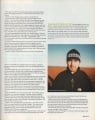
pg33
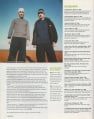
pg34


Highlights[edit]
External Links[edit]
- Disco Pogo - Issue 3 republished this interview.[1]
- Disco Pogo is the new, bi-annual, electronic music magazine from the original founders of seminal 90s title Jockey Slut.
- Issue 3 is a heavyweight 220 pages and features Roisin Murphy, Art of Noise, Boards of Canada, Chris Frantz, Danielle Moore, Decius, Grace Jones, Hifi Sean, Jamz Supernova, Leftfield, Luke Solomon, Native Tongues, Ralph Lawson, Twisted Nerve, Underground Resistance and much, much more.