This page transcludes all the text from all of the interviews listed on the main interviews page for easier viewing and searching.
Music Has the Right to Children era
Hardware Addicts
| title
|
Hardware Addicts
|
| author
|
Gregor Wildermann
|
| publication
|
De:Bug
|
| date
|
1997/09
|
| issue
|
03
|
| pages
|
p.06
|
"Hardware Addicts" is an interview (In German) by Gregor Wildermann originally published Sept. 1997 in De:Bug Magazine Number 03, page 06 [1]
This is an original text copied verbatim from the original source. Do not edit this text to correct errors or misspellings. Aside from added wikilinks, this text is exactly as it originally appeared.
"It's just by default that we do electronic music." Dieser in Ironie getränkte Satz stammt von Mike Sandison, der zusammen mit Marcus Es die achte Platte auf SKAM-Records veröffentlichte und damit dieses Label aus Manchester nochmals interessanter machte. Gleich den Mitbetreibern von Autechre, ist das Duo aus Edingburgh eine der Gruppen, die moderne elektronische Musik von der Landkarte Englands nicht verschwinden lassen.
Ihr erster Auslandsbesuch führte sie zum Sunflower-Festival bei Regensburg, wo sie in guten Absichten auf die Folgen von schlechtem Wetter trafen und wie viele andere DJs, Liveacts und Raver mit Schlammfüßen zu kämpfen hatten. Mittendrin auch Michael Fakesch und xxxxx, die Boards of Canada für die MASK 1 gewinnen konnten. Das, der SKAMpler-Sampler und ihr kommendes Album auf eben diesem Label waren Grund genug, wieder einmal die Fragen nach Wohin und Woher zu stellen.....
Mike Sandison: Angefangen haben wir auf der Schule, eigentlich schon in den frühen 80er Jahren, so etwa 1983/84. Ich bin jetzt 26 Jahre alt, Marcus ist 24. Zu der Zeit haben wir unter diversen Namen und mit verschiedenen Musikern gearbeitet und es gab auch Zeiten, da waren wir eine richtige Band mit 4 Musikern und einem Vocalist. Ich selbst war da der Drummer. We are kind of multi-instrumentalists. Irgendwie fanden wir dann heraus, daß wir zu zweit am besten arbeiten konnten und wurden in dieser Phase auch immer elektronischer. Wir benutzten dabei aber sehr roughes Equipment wie z.B.. Ghettoblaster und älteres HiFi-Gear und wir wollten es so gut wie möglich klingen lassen. Selbst als wir uns immer teureres Equipment kauften, wollten wir auch damit diesen roughen Sound entstehen lassen. Wir benutzen es auf eine Weise, wie es andere nicht tun würden. Viele würden High-Tech-Sampler dazu benutzen, sehr cleane und reine Sounds zu machen; wir spielen absichtlich falsche Tonlagen und zerhacken die normalen Strukturen. We deliberatly fuck it about so that it gets really kind of rough. Es gibt ja mittlerweile auch moderne Verfahren, mit denen man etwas so klingen lassen kann, als ob es in den 60ern aufgenommen worden wäre, was in sich schon ein bißchen ironisch ist.
"
MS: Es gibt eine Behörde in Camda, die " The National Filmboard of CanadaÒ heißt. Sie produzieren Natur- und Tierfilme bzw. politische Dokumentarfilme, die sich hauptsächlich mit Nordamerika und Canada beschäftigen. In den 70ern waren diese Filme sehr beliebt und ihre Soundtracks haben uns sehr beeinflußt. Es waren immer sehr schön gemachte Tunes, die bestimmt von einem Acid-Casualty mit langen Haaren und sehr vielen Synthesisern komponiert worden sind. Es waren brillante Sounds und wir haben versucht, unsere Tracks in dieser Art klingen zu lassen. Da wir uns aus rechtlichen Gründen nicht National Filmboard of Canada nennen konnten, wandelten wir den Namen einfach ein wenig ab und daraus wurde
Boards of Canada.
st das Bild auf der
SKAM-Platte auch aus einem dieser Filme?
"
MS: Dieses Bild stammt von einem Film, den ein Freund von mir gemacht hat. Wir haben ja eine kleine Firma namens
Music70 und die produziert auch Super-8 und Videofilme, wovon viele recht experimentell sind. Ich selbst mache auch einige dieser Filmarbeiten und wir werden demnächst unseren ersten Super-8 Film in Spielfilmlänge drehen, bei dem wir auch komplett die Musik machen."
Was ist das Thema dieses Filmes?
"
MS: Es wird wohl ein Roadmovie sein, aber auch das in einem eher weit gefassten Begriff. Es soll ein Roadmovie in fünf Teilen sein und das ist auch schon alles, was wir im Moment wissen."
Wie kam es zu der Platte auf dem
SKAM-Label?
"
MS: Nachdem wir auf unserem eigenen Label
Music70 eine erste Platte gemacht hatten, wollten wir mit Rephlex, Warp und
SKAM in Kontakt treten, da wir irgendwo auch Fans dieser Labels und ihrer Musik waren. Es gab nur 100 Stück dieser Platte und ich selbst habe noch 70 Stück bei mir liegen. Die anderen 30 verschickten wir an Plattenläden und diese drei Labels und nach zwei Tagen rief schon Sean Booth von
Autechre an und meinte nur: "Yah, we' gonna do something together.Ò Das hat uns natürlich gefreut. "
Was macht deiner Meinung nach die Qualität von
Autechres Musik aus?
"
MS: They are doing really original rhythm-work, but they don't do jungle music. Viele machen den Fehler, daß Jungle die einzige Alternative sein soll. Bei jeder neuen Platte merkt man ihnen ihre Versessenheit für technische Details an und sie versuchen als einer der wenigen, wirklich eigenständige Musik zu machen, die man in keinerlei Genre packen kann. "
Wird es auf
Music70 noch mehr Releases geben und was wird man sonst von Euch in Zukunft hören können?
"
MS: Auf
Music70 werden in Zukunft sicherlich noch Platten erscheinen, aber im Moment haben wir noch zu viele andere Projekte. Auf
SKAM wird eine CD im Albumformat erscheinen und ich hoffe, daß wir das in den nächsten 6 bis 8 Wochen fertigstellen können. Außerdem werden wir eine Single und dann auch ein Album für Mike Paradinas Label Planet-µ machen. Er hatte eine Copy der
Twoism-EP bekommen, die etwa im Januar '96 herau
SKAM und Material vom Sommer '95 beinhaltet. Einer der Tracks ("See ya laterÒ) war dann auch auf der B-Seite der
SKAM-EP. Mike hat diese Platte irgendwie in die Hand bekommen und uns dann ein paar Monate später auch daraufhin angerufen. "
Klingt Euer neues Material anders als die Tracks der EP auf
SKAM?
"
MS: Wir haben uns schon weiterentwickelt. Vieles klingt wesentlich organischer und die Tracks sind auch viel durchkomponierter. Oft versuchen wir auch, daß sich der Track vom Anfang bis Ende völlig verändert und wir beschreiben das als einen 'psychadelic approach', den wir irgendwie gut finden. Wir haben auch viel Folkmusik aus den 70ern gehört wie z.B. Incredible String Band oder Jonie Mitchell, die durch ihre Instrumentenwahl wie z.B. Flöten ebenfalls sehr organisch und natürlich klingen. Diese Soundquellen haben wir verstärkt gesampelt. We processed them, destroyed them and turned them back into something very electronic. Man wird aber trotzdem merken, daß diese Einflüsse bestehen."
Wie groß ist die Gefahr, daß ein Label wie
SKAM durch eine gewisse Popularität an Qualität einbüßt?
"
MS: Ich weiß von Andy Maddocks (Labelchef) Bedenken, daß dem Label im Moment zu viel Aufmerksamkeit geschenkt wird und das zu viele Interviews und Artikel erscheinen. Er macht sich da schon Sorgen und ich stimme ihm da auch zu. Für Journalisten wie dich oder Musiker wie mich ist so ein Label wie
SKAM natürlich sehr attraktiv, zumal man sich vorstellen muß, wie wenig finanzielle Mittel dahinter stehen. Am besten ist es, wenn ein Label so Underground ist, daß niemand weiß, woher es kommt und wer es macht. Es liegt ja auch an den Künstlern eines Labels, alles zu versuchen, damit das Label einzigartig bleibt und etwas Besonderes darstellt."
Glaubst du, daß Eure Musik von den verschiedenen eigenen künstlerischen Interessen profitiert?
"
MS: Bestimmt. Persönlich würde ich mich auch gar nicht nur auf Musik konzentrieren wollen; daß liegt überhaupt nicht in meiner Natur. Viele Musiker sind auch DJs und wiederum viele aus dem Fernseh- und Filmbereich interessieren sich für Musik. Meiner Meinung nach liegt es an der doch recht billigen Hardware, die es vielen Menschen ermöglicht, eigene Platten aufzunehmen und eigene Videos zu drehen. Mit Computern kann man selbst das Artwork machen und über das Internet vertreiben. "
Richard James benutzt spezielle Software, um Platten wie die Rubberjohnny zu machen. Experimentiert ihr auch mit solchen Programmen?
"
MS: Wir benutzen überhaupt keine Computer. Jedesmal, wenn wir versuchen, etwas mit einem PC oder Mac zu machen, haben wir einfach nur Probleme und es nervt. We like Hardware. Viel von unserem Equipment sieht so aus, als könnte es in einer großen Fabrik stehen. We like knobs. Big things with knobs and dials. Wir haben natürlich auch digitales Equipment, aber Computer gehören nicht dazu. Ich mag diese kleinen Displays auch nicht, weil man damit überhaupt nicht instinktiv arbeiten kann. Computer sind einfach dafür nicht ausgelegt, sind zu zerbrechlich und gehen viel zu schnell kaputt. We like to come into the studio and kick it about."
Worin liegen die Vorteile bei der Arbeit als Duo?
"
MS: Definitiv die Qualitätskontrolle. Manche Künstler, die ich jetzt hier aber nicht nennen werde, veröffentlichen einfach zu viel und oft zu durchschnittliches Material. Wenn sie einen Partner hätten, dann könnte der ihnen sagen: Ich verstehe warum du das gemacht hast, aber es ist einfach shit. So machen wir das. Eigentlich produzieren wir eine Menge Tracks, von denen ich die meisten schreibe und Marcus sagt mir dann, was er davon hält. Bevor Andere unsere Tracks hören, haben wir beide sie für gut genug befunden."
Wie sieht ein Liveset von
BOC aus?
"
MS: Wir ändern unser Live-Setup immer wieder. Bei unseren ersten Gigs haben wir tatsächlich unser ganzes Equipment mitgenommen, was natürlich totaler Schwachsinn war. Danach haben wir dann immer weniger aufgebaut, was auch für unsere Arbeitsweise ein interessanter Aspekt war. Im Moment überlegen wir, alles auf einen einzigen Sequencer aufzubauen und da werden wir uns wohl für einen MPC2000 von Akai entscheiden. Bei einem Live-Gig kann man dann immer noch parallel zu den Drums auf einem Synthi spielen, ohne daß es unharmonisch klingt."
Über Live-Acts wird ja oft gemäkelt, weil es keinen wirklichen Standart dafür gibt. Was ist deiner Meinung nach der häufigste Fehler von Live-Acts?
"
MS: Oft wird etwas völlig anderes gespielt, als es von den Platten her bekannt ist. Ich war immer sehr enttäuscht, wenn eine Band beim Live-Gig etwas ganz anderes spielte. Manche sagen zwar, daß man auf einer Bühne etwas Einzigartiges schaffen sollte, aber ich persönlich bin da anderer Meinung. Manche versteifen sich auch nur auf Rhythmik und vergessen jede Form von Melodie, was ich dann auch eher schade finde. "
Dave Being ist auch aus Edinburgh. Kennt ihr euch eigentlich?
"
MS: Nein, leider nicht und wir sind das auch schon öfter gefragt worden. Wir müssen ihn wohl anrufen. Wir wohnen auch nicht direkt in Edinburgh, sondern etwas außerhalb auf dem Lande. Ich könnte auch nicht sagen, daß wir zu irgendeiner Szene gehören."
Das fällt den meisten Künstlern aber auch erst dann auf, wenn in der Presse über die Szene einer bestimmten Stadt geschrieben wird und mal wieder versucht wird, einen "Sound of..." zu kreieren.
"
MS: Da hast du wohl recht. Sicherlich würde es uns eher auffallen, wenn wir eine Zeit lang nicht mehr in Edinburgh wohnen und arbeiten würden. Von Manchester kann man schon behaupten, daß dort viele Musiker gleiche oder sehr ähnliche Elemente in ihrer Musik benutzen. Wir selber sind dennoch eher Einzelgänger."
Wenn eure Musik an einem öffentlichen Platz gespielt werden sollte, welcher wäre das dann?
"
MS: Das ist eine schwierige Frage. Ich glaube, ich würde mir wohl ein offenes Feld aussuchen. Unsere Musik ist eher Daytime-Music im Gegensatz zu Nighttime-Music. Wenn wir uns ausuchen könnten, von wem und wo unsere Musik gehört wird, dann wäre es wohl von gut angetrunkenen Menschen an einem sonnigen Tag irgendwo im Freien. That's the situation when I'am writing stuff."
Gregor Wildermann
[email protected]
It's just by default that we do electronic music.
This sentence soaked with irony is by
Mike Sandison, who together with Marcus released the eighth record on Skam Records making this label from Manchester even more interesting. Like the co-operators of Autechre , The duo from Edingburgh is one of the groups that do not allow modern electronic music to disappear from the map of England.
The band's first visit abroad took them to the Sunflower Festival near Regensburg, where with good intentions met the consequences of bad weather and, like many other DJs, Live-acts and ravers, they had to struggle with muddy feet. In the middle of Michael Fakesch and xxxxx, the Boards of Canada for the MASK 1 were able to prevail. This, the Skampler sampler and their upcoming album on this label were reason enough to ask again the questions about where and when .....
Mike Sandison: We started at school, actually in the early 80s, about 1983/84. I am now 26 years old, Marcus is 24. At the time we worked under different names and with different musicians and there were also times when we were a real band with 4 musicians and a vocalist. I myself was the drummer. We are kind of multi-instrumentalists. Somehow we found out that we could work best as the latter and were also more electronic in this phase. We used very rough equipment such as a ghettoblaster and older hi-fi gear and we wanted to make it sound as good as possible. Even as we bought more and more expensive equipment, we wanted to create this raw sound. We use it in a way that others would not. Many would use high-tech samplers to make very clean and pure sounds; We play deliberately wrong pitches and hack the normal structures. We deliberately fuck it about so that it gets really kind of rough. There are now also modern methods with which one can sound something as if it had been recorded in the 60s, which in itself is a bit ironic.
Where does the name Boards of Canada come from?
MS: There is an agency in Canada called "The National Film Board of Canada". They produce nature and animal films and / or political documentaries, mainly dealing with North America and Canada. In the 70s these films were very popular and their soundtracks have influenced us very much. There were always very beautiful tunes, which were composed by an Acid-Casualty with long hair and many synthesizers. There were brilliant sounds and we tried to make our tracks sound like this. Since we could not name ourselves National Film Board of Canada for legal reasons, we simply changed the name slightly, and from this became Boards of Canada.
Is the picture on the skam record also from one of these films?
MS: This picture comes from a movie made by a friend of mine. We have a small company called Music70 and it also produces Super 8 and video films, many of which are quite experimental. I myself am also doing some of these film works and we will soon be shooting our first Super 8 film in feature film length, complete with our own music.
What is the theme of this film?
MS: It will probably be a road movie, but also in a rather broad concept. It is supposed to be a road movie in five parts and that is all we know at the moment.
How did the record get on the Skam label?
MS: After making a first record on our own label, Music70, we wanted to get in contact with Rephlex, Warp and Skam, as we were somewhat fans of these labels and their music. There were only 100 copies of this record and I myself still have 70 copies with me. The other 30 were sent to record stores and these three labels, and after two days, Sean Booth from Autechre called, saying, "Yah, we're gonna do something together." That naturally pleased us.
What do you think is the quality of Autechres music?
MS: They are doing really original rhythm-work, but they do not do jungle music. Many make the mistake that Jungle is the only alternative. On every new record, you notice their introspection for technical details, and they try to make one of a kind, truly independent music you can not pack into any genre.
Will there be more releases on Music70 and what else can we hear from you in the future?
MS: Music will certainly be released in the future, but at the moment we have too many other projects. On Skam will be an album in CD format to appear and I hope that we can finish it in the next 6 to 8 weeks. In addition, we will make a single and then an album for Mike Paradina's label Planet-μ. He had received a copy of the Twoism-EP, which came out in January '96 and contains material from the summer '95. One of the tracks ( "See ya later") was then also on the B side of the Skam-EP. Mike got a hold of this record somehow and then a few months later also called.
Does your new material differ from the tracks on the Skam EP?
MS: We have already developed further. Much of it sounds much more organic and the tracks are also much more composing. We also often try to change the track from the beginning to the end, and we describe it as a 'psychedelic approach', which we find somehow good. We have also heard a lot of folk-music from the 70s, such as Incredible String Band or Joni Mitchell, who also sound very organic and natural by their choice of instruments such as flutes. These sound sources we have increasingly sampled. We processed them, destroyed them and turned them back into something very electronic. It will nevertheless be noted that these influences exist.
What is the risk that a label like Skam will lose quality through a certain popularity?
MS: I know from Andy Maddocks (Label boss) that he is concerned that the label is currently being given too much attention and that too many interviews and articles appear. He is worried and I agree with him. For journalists like you or musicians like me, a label like Skam is of course very attractive, especially since you have to imagine how little financial resources behind it. It is best to have a label so underground that nobody knows where it comes from and who makes it. It is also up to the artists of a label to try everything, so that the label remains unique and represents something special.
Do you think that your music benefits from different artistic interests??
MS: Definitely. Personally, I would not want to concentrate solely on music; That is not in my nature at all. Many musicians are also DJs and many from the television and film industry are interested in music. In my opinion, it is the rather cheap hardware that allows many people to record their own records and make their own videos. With computers you can do the artwork yourself and distribute it over the internet.
Richard James uses special software to make records like the Rubberjohnny. Do you also experiment with such programs?
MS: We do not use any computers at all. Every time we try to do something with a PC or Mac, we just have problems and it is annoying. We like Hardware. Much of our equipment looks like it could be in a big factory. We like knobs. Big things with knobs and dials. Of course, we also have digital equipment, but computers are not among them. I do not like these small displays, either because you can not work at all instinctively. Computers are simply not designed for it, are too fragile and go way too fast. We like to come into the studio and kick it about.
What are the advantages of working as a duo?
MS: Definitely quality control. Some artists, which I will not mention here, publish too much and often too average material. If they had a partner, he could tell them: I understand why you did it, but it's just shit. So we do it. Actually, we produce a lot of tracks, of which I write the most and Marcus tells me then what he thinks of it. Before others hear our tracks, we've both found them good enough.
What is a BoC Liveset like?
MS: We change our live setup again and again. At our first gigs, we actually took all our equipment, which was, of course, total nonsense. Then less and less built up, which was also an interesting aspect for our way of working. At the moment, we are thinking about building everything on a single sequencer, and we will probably choose an MPC2000 from Akai. At a live gig, you can still play parallel to the drums on a synth without sounding inaccurate.
Live-Acts is often muttered because there is no real standard for it. What do you think is the most common mistake of live acts?
MS: Often something completely different is played than is known from the records. I was always very disappointed when a band played something different at the live gig. Some say that you should create something unique on a stage, but I personally disagree. Some are only stubborn, and forget every form of melody, which I find rather a pity.
Dave Being is also from Edinburgh. Do you know him?
MS: No, unfortunately not, and we have been asked that often. We should call him. We also don't live directly in Edinburgh, but a bit out in the country. I could say we don't belong to any scene.
But most artists do not notice this until the press writes about the scene of a certain city and tries to create a "sound of ..." again..
MS: You're probably right. Certainly, it would be more noticeable if we were not to live and work in Edinburgh for a while. From Manchester it can be said that many musicians use the same or very similar elements in their music. We ourselves nevertheless are rather loners.
If your music was to be played in a public place, what would it be?
MS: This is a difficult question. I think I would probably choose an open field. Our music is more like daytime music as opposed to nighttime music. If we could choose where and from where our music is heard, it would probably be from well-drunk people on a sunny day somewhere outside. That's the situation when I'm writing stuff.
The Age of Aquarius
| title
|
The Age of Aquarius
|
| author
|
The Cosmic Crofter
|
| publication
|
EHX
|
| date
|
1998/03/25
|
| issue
|
|
| pages
|
|
The Age of Aquarius is an interview by The Cosmic Crofter originally published online Mar. 1998 on the EHX website.
[2]
This is an original text copied verbatim from the original source. Do not edit this text to correct errors or misspellings. Aside from added wikilinks, this text is exactly as it originally appeared.
Edinburgh-based Boards of Canada are due to release their debut album "Music Has the Right to Children" for Warp, licensed from Skam in Manchester. The Crofter interviewed them about their past, present and future, and attempted to discover what now lies within their six-sided oyster ...
The duo originally began serious recording at the end of 80's, having spent their early youth playing around on "home hi-fi" and in conventional bands. Various other members have come and gone, but Mike Sandison and Marcus Eoin have remained the core of the unit over the last 3 or 4 years. In December of 1997, two other members joined the Hexagon Sun bunker, resulting in the acquisition of some "useful technology". Just who these other members remains a secret, as they "are more interested in the psychological capabilities of sounds and images than their aesthetics. I can't talk about current or previous collaborators because Hexagon Sun doesn't do that".
Having always been interested in art in all its apparitions, the two have continually attempted to combine their beliefs, hopes and fears into an all-encompassing sensual experience, primarily in the fields of music, film, writing and more recently web design, "the official Turquoise Hexagon Sun website will up and running by Easter 1998 with a section on BoC as well as 'THS Scripture' buyable in dead tree format, Music70 BoCumentaries and 'Emephant Diagram', the number cruncher", I am assured that all will become clear.
In terms of other artistic formats, they are keen to point out that the visual and literary side is by no means a colorful backdrop ... "It's not secondary to the music, it's all the same thing. We use video on stage, but it's not for wallpaper, it's got things in it which could damage you". The two collaborate with other artists under the banner "Music70", a name which they have previously used for production copyright, and is now used as the collective term for themselves and like-minded friends, creating art for non-commercial and usually personal consumption.
To witness a BoC live performance confirms their agenda, "We're not interested in ambient filmmaking, we are interested in triggers, embedding and subliminals ... (during a live performance) we like people to pay attention to the messages on the screens". The duo are keen to get the extra-melody points across, but are also able to resign themselves to the fact that for the best part, most BoC followers are simply interested in the skin-deep appearance of the music, and thus the BoC existence has a definite duality. "We hope that the music stands up for itself. You could choose to listen to the melodies on the record and enjoy them purely as melodies, or you could read into the references a bit more and perhaps connect with that, or you could choose to come and see us live and see our thoughts abstracted out on video, and if it works the listener might go 'Yeah this is familiar but I don't know why'. We just see these as forms of communication which can be used to affect the listener in an attractive and maybe even addictive way".
The sharp and sometimes disturbing images can be thought provoking, although in some cases baffling. I challenge them on the point that, along with their sometimes obscure and almost pretentious song titles, they are out to deliberately perplex the perceiver. "There is a story behind every title we use. If a title seems made-up, it's either an equation, an acronym, or a hybrid. Some titles are personal stories, such as 'Everything You Do Is A Balloon', which was a realization made long ago in the forest".
So what could possibly be in a name? "Boards of Canada" is particularly good one, and I was once informed that it was chosen due to its particularly inert and almost meaningless nature. Digging deeper, their childhood exposure to the work of The National Filmboard of Canada reveals a more direct cull.
The influences that spark the creation of the song titles are just as varied as the influences which create the music they produce. Not confined to audio releases, they cite the many facets of the latter half of 20th Century culture, including film, TV and science journals. They claim that taking the positive aspects of a product does not always provide food for their thought, but rather the underlying meaning or cosmetic triviality, "... we are interested in everything that we can re-interpret. I don't want to give you list of names, but you know we could be just as easily captivated by a piece of T.V. theme music, or Eighties' pop, for instance. The enlightened parts in our music are relative to the banal or naive parts". When pushed for particularly prominent players ... "Hundertwasser, Svankmeyer, New Scientist, Robert Anton Wilson, Documentary films and articles, Jamie Nelson, The Archdrude... we are interested in everything!".
As previously stated, BoC's beginnings began, like every proper electronic experimentation combo should, mucking around with tape loops while still at school. Briefly tapping their cap to the "originators", they see thier humble beginnings as the first necessary steps to what they produce today. "... we used to chop up shortwave radio recordings on an ancient portable recorder, and make tunes out of them by punching-in and layering tracks in a crude way. I'm talking about 1981-1982. We still do that now except that we use better equipment. I think it's all been said before about Glass, Reich, Varese, Cage etc. being the originators of techno and ambient music. We prefer to think of anyone who has ever picked up an object and made a new noise with it as an originator".
BoC are the first to admit that the influences that fuel the creation of their tracks are by no means trivial, but prefer to cloak their personal beliefs in more universal and ubiquitous issues. "We read a lot, we pay close attention to what's going on, so you probably have to look at our work pretty closely to pick up on things, and we do try to compose strong emotional melodies ...", the emotion of which is something which I propose to be the serious side of their nature, "... yes we have a melancholy sound, and we do have strong opinions, but we only filter some of them into the music. I don't want to project a political side into the music because the music is in it's own area", states Mike.
The "melancholy" sound which has become a trademark and which may stick like mud over time, does not hamper BoC's enthusiasm for the perfect "song-structure". The roots of their musical career lie in the participation in "normal bands" using "live instruments", which, they claim, may have only increased their combined melodic ear. Marcus confirms the point, "I think you can trigger emotion much more easily with a melody than you can with a rhythm, although it can be done with a rhythm, listen to Jerry Goldsmith or the Incredible String Band ... I'm personally more interested in melody than sound, although the effectiveness of a Boards of Canada melody probably depends on it's context. And that'll be why we have a reputation for downgrading the sound. ". As with most serious electronic musicians of our time, and probably more believably BoC than others, they claim their current sound is underivative from current styles, "We don't usually listen to contemporary electronic music. Our collections might surprise you. Or alarm you maybe ...", such as? "You're looking for examples? Phil Harris, Devo, Claude Denjean, Walter/Wendy Carlos, Jesus Christ Superstar, DAF, Ween, TV themes, Tomita, MBV, Joni Mitchell ...".
Alarm us or not, the new BoC album to be released on Warp in April, only adds to BoC's mystique as renegades of "the intelligent twisted regions of electronic melody". Having been friends with the people at Warp for some time, they have developed a lasting raport that should hopefully see them good for years to come, "we all go round for tea scones regularly!". Now label buddies with their much loved Autechre et al, BoC see Warp as one of the few labels "bold enough to head away from the overtly 'techno' sound". They cite Skam as another more underground label which shares the same conviction, and funnily enough, these are the two labels which have hosted the BoC name so far. However, their association with Skam will not end with the signing to Warp, "Skam is a hive of new ideas, and there will be a lot of essential music coming from them this year, and we'll be in there, although you probably won't know it's us that you're listening to. The move to Warp was mainly out of respect for the label and it's artists, and friendship".
Boc's confidence can be attributed to the fact that they may now have reached Stage 1 of their long-term plan, and now use the Warp engine to thrust their more abstract and artistic ideas into the public domain. Their use of Super-8mm film and video images during their live performance will obviously be seen to increase and diversify from this point on. The artistic licence has finally been handed over. However, over their long career, the live shows have been few and far between, and one receives the vibe that the whole thing can be particularly tedious. One reason for this may be, from what I have so far gathered from BoC's character, that they are perfectionists in every sense, but still feel they have introduce another edge to the public rendition. Mike explains, "Every time we play live we do it a different way, technically. This is unintentional ... I like to play a familiar tune to the audience, but then make it do something totally new. We just haven't hit upon the best technical method for doing this yet, so for every gig we sit and go 'How are we gonna do it this time?'". Perhaps hitting on that "best technical method" is the reason we do not see BoC headlining many nights? "We do put a lot of work into every gig, and this slows things down. One gig takes a month of preparation, usually involving visuals and programming, and this can only be done when we're not writing. We'll be going out on tour at the end of the year".
Indeed, BoC have only ever played once in their home city, Edinburgh, which was last year when they and Think Tank supported Autechre. I was in attendance, and I put it to them that their sound and general presence was alien to the city as a whole. "We've only played in Edinburgh once so far, so I don't really know what the local Illuminati think of us. I think there is something simmering quietly now in the city, but we're based out in the country ... I'm not aware of an "Edinburgh sound", although there are quite a few threatening noises going on in there. Yeah we keep ourselves out of things a bit, I guess if we had more time we would be more involved. We make brief forays into Edinburgh clubland and then we retreat to cover. ".
So if they rarely venture out into the clubland of The Capital, what do BoC see as a great night out? "Somewhere in the hills, in a huge bonfire, with the beautiful Julian Cope ...".
Board Clever
| title
|
Board Clever
|
| author
|
Richard Hector-Jones
|
| publication
|
Jockey Slut
|
| date
|
1998/04
|
| issue
|
Vol.02 No.13 (April/May 1998)
|
| pages
|
p.20
|
"Board Clever" is an interview by Richard Hector-Jones originally published in Jockey Slut magazine Vol. 02 No. 13 (April/May 1998). It was published alongside the featured review of Music Has the Right to Children.
This is an original text copied verbatim from the original source. Do not edit this text to correct errors or misspellings. Aside from added wikilinks, this text is exactly as it originally appeared.
Boards of Canada are breathing new life into the experimental end of electronic music. And you can whistle their tunes...
Simplicity is very important to us,
offers
Michael Sandison one half of Scottish electronic pairing Boards Of Canada.
It's easier to affect people emotionally if you keep things simple. Obviously there's a lot of great music in the world that's complex but as far as we're concerned the important thing is that you can whistle our tunes.
Boards Of Canada are fixed on melody and emotion in music. It's a rare obsession in the world of British electronica but it gives their sound a uniqueness, a ghostly sense of yearning, and a depth of emotion that sets them far outside the pack. Music Has the Right to Children, their debut album, is the product of their fixation; a melancholy mix of rhythms and melodies revealing more shading and character with every listen.
If it doesn't affect me emotionally it doesn't interest me,
explains fellow Boarder
Marcus Eoin.
I think a lot of it is trying to capture a nostalgic feeling buried somewhere in our minds. We are nostalgic people trying to get back moments from our pasts.
All of this might lead you to think that's it's an 'oh so serious' album which isn't true. It's simply refreshing to see such a human approach behind the employment of modern musical technology.
Music for commercials, documentary soundtracks and children's TV themes,
continues
Michael.
The spaces in between the music you're supposed to listen to. That's where our interest lies. These melodies might only last a second at the end of a TV programme but they are quietly more important to the public psyche than most pop music.
The first record Boards Of Canada released was the self financed and limited hardly any Twoism EP. They sent the record to Autechre's Sean Booth who phoned back the very next day suggesting they mail a copy to Andy Maddock's Manchester based SKAM label. (Autechre release records on SKAM with various other bods under the Gescom guise). The result was Hi Scores, a 12" that brought the pair to a wider audience and paved the way for a follow up 7" Aquarius and now a full length album jointly put out by Warp and SKAM.
It would seem that, with the help of Boards of Canada, Britain's homegrown electronica music scene might finally step out from the shadow of the machine to explore the more emotional and human avenues.
Strange to think something so simple could be so exciting.
Richard Hector-Jones
A Bunker Full of Memories
| title
|
A Bunker Full of Memories
|
| author
|
René Passet
|
| publication
|
Forcefield
|
| date
|
1998/04/14
|
| issue
|
|
| pages
|
|
A Bunker Full of Memories is an interview by René Passet originally published online Apr. 1998 on the Forcefield website.
[3]
This is an original text copied verbatim from the original source. Do not edit this text to correct errors or misspellings. Aside from added wikilinks, this text is exactly as it originally appeared.
'Strong emotional melodies'. That pretty much sums up the essence of what Boards of Canada is about. After various hard-to-get releases on cassettes, Skam Records (and it's enigmatic offshoot Mask) the Scottish duo has just released their debut album Music Has The Right To Children on Warp Records. The first of five on the Sheffield label!
Five albums. That might explain why Mike Sanderson and Marcus Eoin are extremely busy in their Hexagon Studio and reject most interview requests. So many tracks to finish, so little time. But Forcefield managed to enter the bunker which hosts the Hexagon Studio. Via E-mail. Here is what they said.
The name Boards of Canada is inspired by
The National Filmboard of Canada. Could you explain what was so special about the nature-documentaries and their soundtracks?
"Yes the NFB films were one of our influences when we were younger. I think most of their films have been socio-political, but there are animations and suchlike. The thing about the older films is that the quality of picture and soundtrack wasn't perfect, it was grainy and wobbly. We used to record compositions on cheap tapes which gave a similar rough quality, and we've always returned to that sound because it feels personal and nostalgic."
Where you living in Canada when you saw the documentaries?
"We saw a lot of those films here in the UK during the 1970's, but we both lived in Alberta briefly in the late 70's."
Apart from these soundtracks, you also namedrop
Joni Mitchell and the
Incredible String Band when it comes to instrumentation. What was so special about their musical aproach?
"Much of the music we like is not electronic, although we've probably been influenced by
Devo. We love acoustic music on old recordings because they tend to have natural qualities such as tape compression and distortion. But I think Joni Mitchell's voice is so beautiful it almost sounds synthesised, so maybe there's the connection. The Incredible String Band still sound unusual today, because they changed the arrangement for every song, and their own influences were far and wide apart, and they always wrote emotional melodies which were a bit unusual, you know, with melodies which took unexpected twists. A unique band."
What else do you consider important musical influences, past and present?
Could you tell me more about your so-called Psychedelic aproach, the alterations from start to finish in a track?
"We sometimes make a tune metamorphose as it plays. An example is "
Nlogax" from the "
Hi Scores" EP on Skam, which begins like an old electro or disco track but halfway through it suddenly becomes something nightmarish, like your brain is starting to malfunction in the middle of the tune. Psychedelics make music sound entirely different. Tiny details become massive, a five-minute track can feel like it's five hours long on psychedelics. You know when you're on a ride at a fairground, the pitch of the music rises and falls because of the
Doppler-Effect? That's another thing we love to do in our tracks, and it's a fairly psychedelic-sounding effect too."
How *DO* you write music? What's the starting point? A feeling, a sound or an idea? And who of you two makes the first sketches?
"It's a team effort. Usually the starting point is a melody. We write hundreds of little melodies, and the most attractive ones last in our minds. We go back to them and pick the ones that really stand out, then we start piecing together rhythms. Both of us write the tunes and rhythms. On the album "
Music Has The Right To Children" 50% was by Marcus, 50% by me (Mike, rp). Not one of the tracks was totally written by one person."
The album is joint release by Skam & Warp. Was this done to improve promotion & distribution?
"We began work on the album at the beginning of 1997 and it was meant to be for Skam, but in the summer Warp came to us and said "we'd like this album", so the labels decided to co-release it."
Skam gained respect amongst IDM-minded musiclovers in very little time. A new Skam record is considered something special nowadays. But they're always hard to find.
"Skam is truly underground, truly independent. I'm sure that if we asked Skam to release only one copy of a new release, they would do it."
But why make music that (almost) no one can get their hands on, like the two MASK ep's, which were released in issues of 100 and 200 copies?
"We've been making music since we were at school in the early 80's, and nobody will ever hear most of it, so it doesn't bother us to do a really limited release. Our friends and families hear all the music we write, and that's all that matters really. You wouldn't believe how much music we have on tape."
But why release records at all, if all that matters is that your friends and families hear all the music? You must feel some sort of proud when records are bought by musicfans and get good press reviews. Or don't you?
"Of course, it's lovely to hear that people we've never met are really enjoying our music, because it feels as though we must have something in common, I mean psychologically, with those listeners. So it is satisfying, and fascinating."
Do you feel any pressure, now that you have signed a contract with Warp?
"Yes, that's part of what you accept when you sign to a bigger label."
Warp has announced a
second BoC-album, to be released at the end of this year. In what ways will it differ from the first album?
"I won't give away our plans for the next one, but it will be different. It's going to be stranger, more concentrated, more melodic."
Melody is very important in most of your work. While many other electronic musicians focus more on rhythm. Is this perhaps one of the secrects of your succes?
"We're much more interested in melody than rhythm, and we appreciate the emotional power of a melody. Maybe that's too uncool for a lot of electronic artists."
Some people might argue that Boards of Canada make 'depressing' music.What would you like to comment on that? Are you pessimistic or optimistic towards life?
"We're very optimistic. We might sound melancholy, but that's just the way we write music."
What kind of special
equipment do you use? I understand some of your machines are quite big. And you have something what you call 'the SecretWeapon'.
"If I told you what the secret weapon is, it wouldn't be a secret anymore. We have more than one really. We use a mixture of old and new equipment. We don't have lots of synths, we use hi-fi gear and other tricks to achieve our sound."
You run a company called
Music70. What is the goal of this company?
"Music70 makes short films and creates images, paintings and other art. It's done purely for ourselves and our friends, and it has no commercial aims at all. Most Music70 work is like D.I.Y., but it's always emotional."
How is the planned full length Super-8 movie with soundtrack coming along?
"That film will start shooting in summer."
You use a bunker in the Pentland Hills as a studio. Does the atmosphere of the Hexagon Studio reflects in any way on your music?
"We don't have an urban lifestyle, so that might make us unusual in electronic music. The things we do with friends are more rural or organic, like outdoor gatherings and so on."
Some of the tracktitles are quite cryptic. Could you please explain some of them?
"Our titles are always cryptic references which the listener might understand or might not. Some of them are personal, so the listener is unlikely to know what it refers to. "Music Has The Right To Children" is a statement of our intention to affect the audience using sound. "
The Color Of The Fire" was a reference to a friend's psychedelic experience. "
Kaini Industries" is a company that was set up in Canada ( by coincidence in the month Mike was born), to create employment for a settlement of Cree Indians. "
Olson" is the surname of a family we know, and "
Smokes Quantity" is the nickname of a friend of ours."
"Sorry, I'm afraid not... It's an abbreviation/crossover of
BOC Maxima and Documa, an obscure reference to 80's video culture."
interview by René Passet, April 1998.
The album Music Has The Right To Children is out now on Warp/Skam, as is their remix of Mira Calix' Sandsings. WAP100 will contain an exclusive track by Boards of Canada, called Orange Romeda. Soon the Turquise Hexagon Sun website will open it's gates.
Check out EHX for a very informing interview Cosmic Crofter had with Boards of Canada. And for the Boards of Canada page.
reviews at Forcefield:
- Various - Skampler - CD - Silent/Skam
- Various Artists - Mask EP - 12" - Mask
- Boards of Canada - High Scores - 12" - Skam
The Ottawan Empire
| title
|
The Ottawan Empire
|
| author
|
Toby Manning
|
| publication
|
NME
|
| date
|
1998/04
|
| issue
|
Apr. 18th, 1998
|
| pages
|
p.33
|
"The Ottawan Empire" is an interview by Toby Manning originally published Apr 1998 in NME magazine April 18th, 1998.
This is an original text copied verbatim from the original source. Do not edit this text to correct errors or misspellings. Aside from added wikilinks, this text is exactly as it originally appeared.
Who are?
An enigmatic duo holed up in a rural bunker somewhere near Edinburgh, from where they emit languorous, airy electronica with the charm and simplicity of cartoon theme tunes.
What’s the name about?
Like their music, it comes from a shared past in front of the TV.
When we were kids a lot of our favourite TV programmes, particularly wildlife documentaries, were made by the Film Board Of Canada,
says
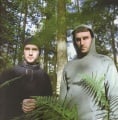
Mike Sandison, the elder and more vocal of these two bearded urchins whose woolly hats seem to be surgically attached to their heads. He and
Marcus Eoin have been friends since they were toddlers, growing up in Scotland before sharing a brief sojourn in the Canada when their parents moved there for work.
Documentaries? Yawn...
We just loved the soundtracks,
counters
Mike.
It's something people don’t normally pay much attention to. Like the strings at the end of programmes, the corporate logos with a little flourish and a little happy melody. They’re ultimate in psychedelia, but no-one ever notices them or talks about them. Whereas a pop song disappears after a few weeks, a jingle will be repeated for ten years and end up subliminally lodged in people’s brains.
Boards Of Canada attempt to create their own versions of these tunes -soundtracks for imaginary wildlife documentaries, jingles for invented corporations. Or, as Marcus puts it:
An image of something you can’t quite remember, but that sounds like it should be familiar.
Not exactly banging club tracks, then?
Hardly. Their debut album for Warp, Music Has The Right To Children, is equally reminiscent of forgotten TV themes, all powered by rhythms distantly related to hiphop. It’s a strangely rural sound, infinitely less mechanised than the average Warp record.
We kind of see what we do as folk music - just made electronically,
says
Mike.
That said, there’s also a distinctly sinister undercurrent inherent in their stuttering, cut-up vocals.
Subliminal messages at play, perhaps?
You’ll probably find all these Ozzy Osbourne fans committing suicide after listening too deeply to our music,
chuckles
Mike. Then there’s that malicious psychedelic edge, too, hardly all hippy vibes and sunshine.
Psychedelic experiences are more attractive to us if they’re creepy,
says
Mike, adding that such chemical shenanigans have already lost the band one member to date.
Let’s just say it got to the point where it wasn’t recreational any more,
explains
Mike, grimly.
And what’s the kiddy connection?
We’re totally nostalgic about childhood,
admits
Mike, before
Marcus chips in,
Not that we’re that far removed from childhood. Sometimes you look at people and it seems like growing up is just the process of giving up everything you enjoy. The source of all our music is that we’ve refused to accept adulthood.
The nappy hardcore revival starts here!
Toby Manning
BOARDS OF CANADA’S ‘MUSIC HAS THE RIGHT TO CHILDREN’ ALBUM IS OUT ON WARP ON MONDAY.
Nice Melodies from Nice People
| title
|
Nice Melodies from Nice People
|
| author
|
Thaddeus Hermann
|
| publication
|
De:Bug
|
| date
|
1998/05
|
| issue
|
Number 11
|
| pages
|
p.04
|
"Nice Melodies from Nice People" is an interview (in German) by Thaddeus Hermann originally published in De:Bug magazine Number 11, p.04.
This is an original text copied verbatim from the original source. Do not edit this text to correct errors or misspellings. Aside from added wikilinks, this text is exactly as it originally appeared.
Nette Melodien von netten Menschen
Boards Of Canada, das neueste Pferd im Warp-Stall.
Thaddeus Herrmann
[email protected]
Boards of Canada Fans hatten es bisher schwer, alle von den Schotten Michael Sandison und Marcus Eoin veröffentlichten Platten zu ergattern. Die erste EP, Twoism, erschien im Eigenverlag in einer Auflage von 100 Stück, ein großer Teil der Auflage einer als Weihnachtssingle gedachten 7″ auf SKAM vergammeln derzeit in einem Wohnzimmer in Manchester – Schwierigkeiten mit diversen Vertrieben – und das beste BoC Stück versteckt sich auf MASK 1, einer ebenfalls auf 100 Stück limitierten Compilation 12″. Dabei hat diese Musik mehr Aufmerksamkeit verdient. Denn: Es geht um Melodien zwischen Science Fiction und Kitsch, und weil das oft dasselbe ist, irgendwie um früher. Irre catchy, vereinnehmend und … haunting. Melodien, die ein wohliges Gefühl in der Magengegend machen, in Detroit wohl Memory Chords genannt werden und die einem die wirklich wichtigen Dinge in Erinnerung rufen: Sommerferien, in die Sonne blinzeln. Folgerichtig hat Warp, Heimat der blassen Engländer, Boards of Canada jetzt eingekauft und mit Music Has the Right to Children eine Mischung aus vergriffenem und neuem Material vorlegt. Michael Sandison meldet sich am Karfreitag per Funktelefon bei mir, irgendwo unterwegs auf einer Autobahn bei Köln.
de:bug: Karfreitag auf Promotour? Muß das denn sein?
"
Michael Sandison: Wir waren gestern noch in Paris und haben dort unzählige Interviews gegeben, das war reichlich anstrengend. Heute sind wir nur in der Kölner Gegend rumgefahren und haben uns die Landschaft angesehen, alles sehr entspannt. Gerade haben wir Schloß besichtigt. Ich finde es toll hier! Die Landschaft erinnert mich an Schottland und der Regen im Moment erst recht!"
de:bug: Ihr werdet ja zur Zeit ganz hübsch rumgereicht. Wie fühlt sich das an?
"
Michael Sandison: Es ist merkwürdig, aber natürlich auch schön, daß sich eine Menge Leute in Europa für unserer Musik interessieren, gerade wenn man wie wir aus einem kleinen schottischen Dorf kommt, wo einfach nichts passiert. Noch fühlen wir uns richtig wohl!"
"
Michael Sandison: Der Titel kommt von einem Lehrbuch für den schulischen Musikunterricht aus den 70er Jahren. Es heißt: Children Have The Right To Music. Wenn man die beiden Begriffe Children und Music vertauscht bekommt der Satz eine völlig andere, sehr bedrohliche Konnotation."
de:bug: Bedrohlich ist Eure Musik aber nicht!
"
Michael Sandison: Also, die netten Melodien benutzen wir, weil wir nette Leute sind! (lacht) But we like to fuck with people a little bit as well…Natürlich steckt in unserer Musik viel Gefühl, sie wird oft mit Schlafliedern für Kinder verglichen. Wir benutzen die Melodien aber sehr überlegt , so daß längst nicht alles so harmlos ist, wie es auf den ersten Blick scheinen mag. Auf diese Weise verstecken wir Dinge in unserer Musik, die mehr was für Erwachsene sind.
Das merkt man auch dem Material an, an dem wir zur Zeit arbeiten.
Warp möchte noch in diesem Jahr ein weiteres Album von uns veröffentlichen. Die Melodiearrangements der neuen Tracks sind noch darker geworden, auf diese Weise entsteht eine herrlich bittersüße Stimmung. Definitiv extremer werden die Rhythmen, schneller und rougher. Aber bevor wir so ein Album veröffentlichen können, wollten wir einer breiteren Hörerschaft mit
Music Has the Right to Children klarmachen, worum es bei den
Boards of Canada geht: DIY…Do It Yourself…rougher Sound. Das sind unsere Wurzeln. Jetzt, wo das klar ist, können wir uns an neue Projekte machen."
de:bug: Erlaubt euch der Deal mit Warp denn überhaupt noch Material auf anderen Labels zu veröffentlichen?
"Martin Sandison:
Boards of Canada sind exclusiv bei
Warp. Wir haben aber ein Abkommen, daß wir weiterhin Material auf anderen Labels veröffentlichen können, allerdings nicht unter diesem Namen. Es wird also auch wieder eine Platte auf
SKAM geben. Da ist dann detektivischer Spürsinn gefragt!
Music Has the Right to Children (Warp / Rough Trade) ist jetzt erhältlich. ZITAT: Melodien die wirklich wichtige Dinge in Erinnerung rufen: Sommerferien, in die Sonne blinzeln."
Note: Translated using DeepL Translator[4].
"Nice Melodies from Nice People"
Boards Of Canada, the newest horse in the Warp stable.
Boards of Canada fans have had a hard time getting hold of all the records released by Scotsmen Michael Sandison and Marcus Eoin. The first EP, Twoism, was self-published in an edition of 100, a large portion of the edition of a 7″ on SKAM intended as a Christmas single is currently rotting in a living room in Manchester - difficulties with various distributors - and the best BoC track is hiding on MASK 1, a 12″ compilation also limited to 100 copies. This music deserves more attention. Because: it's about melodies between science fiction and "kitsch", and because that's often the same, somehow about earlier. Crazy catchy, engaging and ... haunting. Melodies that make you feel good in your stomach, are probably called memory chords in Detroit and remind you of the really important things: summer vacations, blinking into the sun. Consequently, Warp, home of the pale English, has now bought Boards of Canada and with Music Has the Right to Children presents a mixture of out-of-print and new material. Michael Sandison calls me on Good Friday, somewhere on the way on a highway near Cologne.
de:bug: Good Friday on a promotional tour? Does it have to be like that?
Michael Sandison: We were in Paris yesterday and gave countless interviews there, that was really exhausting. Today we just drove around the Cologne area and looked at the landscape, everything very relaxed. We just visited Schloß. I think it's great here! The landscape reminds me of Scotland and the rain at the moment even more so!
de:bug: You are being passed around quite nicely at the moment. How does that feel?
Michael Sandison: It's strange, but of course also nice that a lot of people in Europe are interested in our music, especially if you come from a small Scottish village like us, where just nothing happens. We still feel really comfortable!
Michael Sandison: The title comes from a textbook for school music lessons from the 70s. It's called Children Have The Right To Music. If you swap the two terms Children and Music, the phrase gets a completely different, very threatening connotation.
de:bug: But your music is not threatening!
Michael Sandison: Well, we use the nice melodies because we are nice people! (laughs) But we like to fuck with people a little bit as well...Of course there's a lot of feeling in our music, it's often compared to lullabies for children. But we use the melodies very carefully, so that not everything is as harmless as it might seem at first sight. In this way we hide things in our music that are more for adults. You can see that in the material we are working on at the moment.
Warp wants to release another album from us this year. The melodic arrangements of the new tracks have become even darker, creating a wonderfully bittersweet mood. The rythms are definitely more extreme, faster and rougher. But before we can release an album like this, we wanted to make it clear to a wider audience with
Music Has the Right to Children what
Boards of Canada is all about: DIY...Do It Yourself...rougher sound. That's what our roots are all about. Now that that's clear, we can move on to new projects.
de:bug: Does the deal with Warp allow you to release material on other labels at all?
Martin Sandison:
Boards of Canada are exclusive to
Warp. But we have an agreement that we can continue to release material on other labels, but not under that name. So there will be another record on
SKAM.
Music Has the Right to Children (
Warp / Rough Trade) is available now. QUOTE: "Melodies that remind you of really important things: summer vacations, blinking into the sun."
Two Aesthetes of Electronic Music
| title
|
Two Aesthetes of Electronic Music
|
| author
|
Ariel Kyrou & Jean-Yves Leloup
|
| publication
|
Virgin Megaweb
|
| date
|
1998/06
|
| issue
|
|
| pages
|
|
"Two Aesthetes of Electronic Music" is an interview (in French) by Ariel Kyrou & Jean-Yves Leloup originally published online Jun. 1998 on the Virgin Megaweb website.[5]
This is an original text copied verbatim from the original source. Do not edit this text to correct errors or misspellings. Aside from added wikilinks, this text is exactly as it originally appeared.
Deux esthètes de l'électronique entre nostalgie de l'enfance et paranoïa du futur
Au cœur du Marais parisien, à deux pas du Musée Picasso, on verrait bien Markus Eion et Michael Sandison comme des étudiants british en goguette culturelle. Ils ont l'air de hippies voyageurs et non de techno freaks, les deux Boards of Canada, avec leur sac à dos, leur sourire mouillé et leur bonnet de laine... On n'imagine pas tenir là les auteurs d'un album électronique de pur cristal, paru sous une double signature on ne peut plus branchée : Skam et Warp, respectivement label pointu de Manchester et mythique maison mère de l'electronica made in Sheffield. Cet album, "Music Has the Right to Children", ressemble à sa pochette. L'image d'une famille ou d'un groupe d'amis, visiblement sur les pierres d'un château en ruine. Image naïve comme les univers du "Manège enchanté" et des "Animaux du Monde". Banale. Heureuse. Mais cette image est noyée de lumière bleu vert, comme sous l'effet d'une soucoupe volante en phase d'atterrissage. Et puis il y a ces visages lisses comme une pierre ponce. Inquiétants. Des faces d'humains zombifiés. Que cachent Michael Sandison et Markus Eion par cette image d'innocence troublée ? Les deux Ecossais - dont nous avons confondu la voix dans l'interview - semblent ne faire qu'un, le premier un peu plus bavard que le second avec son accent à se frapper le lobe de l'oreille...
VIRGIN MEGAWEB: Votre biographie est écrite de telle façon qu'on ne voit pas bien qui vous êtes, ce que vous avez fait, vous êtes écossais, non ?
BOARDS OF CANADA: C'est juste, nous vivons en Ecosse, dans la campagne à quelques kilomètres d'Edimbourg...
Apparemment, vous n'avez jamais été liés à une scène ou à un style particulier de musique ? Vous semblez assez isolés ?
Oui, ce n'est que depuis deux ans que nous avons commencé à prendre des contacts avec d'autres musiciens, en particulier des artistes de Skam Records et de chez Warp. En fait, cela fait depuis très longtemps que le groupe vit, entre amis. Cela remonte au début des années 80, lorsque nous étions à l'école...
Vous avez commencé adolescent à faire de la musique en réalité ?
Yeah ! Nous avions tous deux une dizaine d'années, quelque chose comme ça. Nous avons appris à jouer des instruments plus jeunes encore, puis très tôt nous avons manipulé des enregistrements, des cassettes et bandes magnétiques, faisant des collages. Nous avons commencé à écrire et jouer de manière plus sérieuse aux environs de 1987, il y a dix ans, dans le format qui est le nôtre.
Vous deux seulement ?
Non, avec d'autres musiciens, dans le cadre d'un véritable groupe bien plus large. Mais, il y a quelques années, après avoir joué des guitares et de la batterie acoustique, nous sommes revenus à une forme plus franchement électronique...
En réalité, lorsque vous avez commencé à jouer, c'était plutôt comme un jeu d'adolescents, expérimentant avec des enregistrements de films et des instruments. Vous ne cherchiez pas à faire carrière...
On s'amusait avec des sons qui nous plaisaient, d'où qu'ils viennent. Notre parcours est un peu compliqué. D'abord, on a expérimenté sans se poser de questions, avec les moyens du bord, puis on a beaucoup travaillé avec des musiciens et de vrais instruments, on a complexifié notre musique. Il y a cinq ans, elle sonnait beaucoup plus gothique, plus proche du rock expérimental, avec des vocaux à l'occasion... Il y avait quand même pas mal d'électronique, déjà on samplait nos propres instruments. Puis nous sommes revenus à un esprit plus proche de nos débuts, simple et instinctif, à la seule différence que nous utilisons désormais toutes les merveilles du numérique, et qu'il est donc bien plus facile de s'amuser et d'obtenir ce qu'on souhaite...
Vous vous sentez proches de toute la génération du home studio ?
En un sens, peut-être. Notre démarche des débuts avec nos vieux appareils à enregistrer était comme une version pauvre de ce que d'autres ont fait par la suite avec le home studio. Mais si on a été proche de l'esprit de génération, c'est par hasard et par moment, car nous avons toujours avancé un peu isolés dans notre coin, nous inspirant de rock comme d'électronique.
Vous n'avez aucun lien avec la génération de l'acid house ?
Non. En réalité, à cette époque, au début des années 90, nous enregistrions une musique avec des vocaux et des guitares, très influencée par des groupes de rock expérimental et atmosphérique comme My Bloody Valentine. Ce n'est qu'avant et après l'explosion de l'acid house, en décalage complet, que nous avons peut-être été proches du mouvement...
Finalement, pourquoi alors êtes-vous revenus à l'électronique ?
C'était plus naturel pour nous... Nous avons toujours beaucoup travaillé, peaufinant sans cesse nos morceaux, même lorsqu'ils sonnaient plus rock. Pendant un mois, deux mois, on revient sur nos morceaux, changeant un son ici, en ajoutant un autre... On se sample nous-mêmes sans cesse, revenir à un son presque exclusivement électronique, c'était simplement aller jusqu'au bout de notre logique.
Cette opportunité de sampler grâce aux nouveaux outils technologiques, que vous n'aviez pas à vos débuts, était-elle l'une des raisons de votre retour à l'électronique ?
Yeah... Cette technologie nous a permis de simplifier notre démarche. Avec le sampler, vous avez le contrôle absolu de votre musique. Vous pouvez prendre le son d'un instrument, et le faire sonner à votre guise à coups d'aller retour. Un exemple : sur notre dernnier album, il y a des titres pour lesquels nous avons utilisé un piano. Grâce au sampling, nous avons transformé le son de ce piano de plein de façons différentes, au point de le faire sonner comme un très très vieux piano, ou au point que personne ne se rende compte en écoutant l'album qu'il y a du piano. Même topo pour les guitares. Nous avons joué d'instruments électriques ou acoustiques pour "Music Has The Right To Children", mais nous avons complètement retravaillé leur son grâce à l'électronique.
Pourquoi ces mélodies enfantines sur votre album, d'où cela vient-il ?
On y retrouve l'écho des mélodies qui ont marqué notre enfance, et ces mélodies, pour la plupart, viennent de la télé, et notamment des films et émissions enfantines. C'est l'univers qui a marqué notre génération. Nous avons tous le même âge. Nous avons grandi en voyant les mêmes programmes TV, et c'est pour nous une influence bien plus forte que les musiques d'aujourd'hui ou que d'autres musiques que nous écoutions à l'époque. Ce sont ces airs qui restent dans nos têtes, qu'on le veuille ou non...
Vous êtes très nostalgiques de votre enfance ?
Yeah... Même chez des groupes comme Autechre, sous une surface très expérimentale, très minimale et industrielle, on perçoit des échos de cette nostalgie, des programmes télé qui ont marqué leur enfance. Et je crois qu'ils vont aller plus loin dans cette direction. C'est un processus naturel de création. On invente à partir des traces de sa mémoire autant qu'à partir de ses désirs et de ses humeurs du moment. On réinterprète sans cesse...
Vous utilisez des samples de programmes TV ?
On essaye de l'éviter. On le fait à l'occasion. Mais, de façon générale, nous créons nos propres mélodies et nos propres vocaux avec les gens d'ici. Même les mélodies qui sonnent comme des samples sont faites par nous, puis détruites par le sampling.
Parfois, en écoutant l'album, on a l'impression d'entendre des chants d'oiseaux, des bruits de la nature... Ce ne sont pas des samples ?
C'est une grande influence, c'est juste que la nature nous influence, tous comme les fenêtres ouvertes du studio (rires). Il y a ce titre, "Rue the World", sur l'album, où on entend des oiseaux chanter. En fait, j'écoutais ce morceau, et, bizarrement, je percevais des bruits d'oiseaux. C'est là que je me suis rendu compte que la fenêtre était ouverte, et comme ces chants se mariaient à merveille avec la musique, nous les avons enregistrés pour retrouver l'impression ressentie en écoutant le titre avec la fenêtre ouverte.
C'est peut-être aussi à cause du nom du groupe, qui fait naître plein d'images...
Le nom du groupe vient du soundtrack de l'un de ces films animaliers qui ont bercé notre enfance. On y retrouve ce côté nostalgique. Mais aussi un côté plus rauque, plus dur, plus sombre. Notre musique naît d'un mariage bizarre entre ces airs de l'enfance et des humeurs plus difficiles, comme une vision d'une réalité plus terrible qui se mêle paradoxalement à nos amours enfantines.
Pourquoi ? A cause des fantômes ?
(rires)
Non... Cela reflète l'étendue des sujets qui nous passionnent, par exemple les expériences psychédéliques, dont on retrouve des échos dans l'album, bad trip et good trip. Ou encore la numérologie, avec tous ses aspects noirs... C'est la face adulte de notre travail, pessimiste... On joue en quelque sorte d'une double radicalité, l'ombre et la lumière...
Vous vivez à la campagne ?
Oui, depuis assez peu de temps. On a construit notre studio dans les Pentland Hills. Et maintenant, on commence à vivre de la musique, sans faire autant de jobs qu'auparavant.
Quels types de jobs ?
Rien de honteux, des boulots universitaires par exemple, mais on préfère ne pas en parler...
Vous avez toujours eu ce nom de Boards of Canada ?
Non. Juste depuis quatre ans officiellement. Mais, de fait, ce nom existait depuis des années, comme le titre d'un morceau, avant de devenir le nom du groupe.
Au début de l'interview, vous parliez de vos amis et de votre famille autour de vous, s'agit-il d'une communauté d'artistes ? D'étudiants en histoire de l'art ?
Certains de nos amis sont des étudiants en histoire de l'art, ou des professeurs d'art moderne. certains sont des artistes, d'autres ne sont que des amis enthousiastes. On y trouve des photographes, des réalisateurs de films, artistes et musiciens... Et puis beaucoup d'amis que nous avons gardés depuis l'école. Lorsque nous étions à l'école, tous nos amis étaient dans des groupes de rock, nous étions les seuls à faire de l'électronique. A cette époque, nous avons commencé à faire des films, des vidéos en plus de la musique... On a produit des travaux de certains de nos amis, qu'il s'agisse d'expos ou de documentaires...
Vous réalisez des vidéos dans le même esprit que votre musique ? Ce n'est pas de la vidéo high tech ?
Oui, tout-à-fait. C'est un peu de la Do It Yourself vidéo, sauf que nous utilisons pas mal d'équipements high tech. On aime bien dégrader les images photo ou vidéo comme on dégrade le son, rendre les images plus dures, primaires, sales... On essaye de corrompre la technologie.
Cela vous arrive-t-il de créer d'un même élan musique et images ? De penser votre musique en images ?
Oui, bien sûr, mais de façon naturelle et intuitive plus que calculée. Les musiciens les plus décalés de la musique électronique comme Aphex Twin aiment que leur musique sonne cinématique, c'est-à-dire en images. C'est une démarche d'autant plus facile pour les musiciens que ne pensent pas systématiquement aux clubs lorsqu'ils créent un titre... Si l'on peut danser sur l'un de nos titres, c'est parfait, mais nous ne le cherchons pas. Nous nous laissons toute liberté, avec l'objectif de traduire des émotions plutôt que de faire danser. Il y a des tas de gens qui font ça tellement mieux que nous. Pourquoi nous y mettre nous aussi en le faisant moins bien ?
Il y a pourtant des morceaux qui iraient bien en club sur l'album...
C'est bien. Certes, nous travaillons les rythmes, mais pour nous il s'agit d'un véhicule pour de belles et étranges mélodies. Nous essayons de varier les effets, et c'est d'autant plus important pour la scène. D'autre part, nous aimons les rythmes appuyés, presque binaires, parce qu'ils collent bien à notre désir de créer des atmosphères sombres et obsessionnelles pour les marier à nos mélodies.
On retrouve cette dualité dans un titre comme "An Eagle In Your Mind"...
C'est exactement ça. D'un côté des mélodies et des voix presque naïves, de l'autre, un processus de corruption de ces voix et mélodies, par une ambiance ou des transformations, comme dans le titre que tu cites ou "Sixtyten"... On ne souhaite pas aller vers des rythmes comme ceux de la jungle, qui, par leur ambition et leur complexité, peuvent foutre en l'air ce type d'effet et l'émotion trouble et ambigüe que nous souhaitons créer. Le rythme doit rester simple. C'est une question d'équilibre.
En concert, est-ce que vous essayez de mêler son et image, comme s'ils se répondaient l'un l'autre ?
Non, pas encore. Certes, nous essayons de marier image et son. Nous essayons de créer des visuels qui collent à la musique, mais dans la limite des possibilités techniques... Nous avons été très influencés par un groupe qui s'appelle Test Departement, qui jouait beaucoup avec les images et les sons, et qui n'avait rien à faire de la dance ou de la pop comme beaucoup d'artistes de l'époque. Ils ont toujours suivi leur voie, sans se soucier de la mode. En 1998, le rythme de l'époque est la jungle, en 1988, c'était l'acid. Un groupe comme Test Departement, même s'il pouvait faire danser, se contrefoutait du rythme de l'époque. Ils étaient très fort, en particulier sur scène, parce qu'ils ne ressemblaient à personne. Ils faisaient de la musique industrielle, mais à l'occasion y mêlaient des influences celtes ou des rythmes à danser... Ils nous ont montré qu'on pouvait survivre et être respecté en menant sa propre voie, sans essayer de copier le style des autres. Ce n'est pas parce qu'aujourd'hui la mode est à la jungle qu'on ne peut pas survivre sur le territoire de la musique électronique sans faire de la jungle.
Vos concerts sont très bien préparés, ou y a-t-il une place pour l'improvisation, notamment par l'image ?
On ne peut vraiment pas improviser avec l'image. C'est un objectif mais c'est très dur. On va commencer à utiliser des ordinateurs pour avancer sur cette voie, utilisant des captures vidéo, afin de traiter les clips vidéo comme des sources de samples image. Aujourd'hui, sur scène, on ne peut jouer avec la vidéo comme on le fait avec les vinyls. Il y a un élément de hasard néanmoins. Nous ne voulons pas qu'un show soit parfait, car nous n'aimons pas la perfection. Nous souhaitons qu'il y ait du chaos dans un spectacle ou une musique, de la dureté, des surprises... Cela rend tout plus excitant...
Votre grand studio est dans une petite ville ?
Il est dans la campagne, avec quelques maisons, à une dizaine de miles d'Edimbourgh. Ce n'est pas un studio très grand, mais il est plein de matos...
C'est une sorte de communauté ?
Non, juste un groupe d'amis. Chacun avec sa famille...
Ce n'est pas un bunker comme on peut le lire dans la bio ?
C'est une exagération de la maison de disques.
Dans des villes comme Glasgow ou Edimbourg, il y a une scène artistique très active, en art, en vidéo et en musique électronique bien sûr, avec des artistes très jeunes, des festivals, etc, en êtes-vous proches ?
Il s'y passe des choses formidables, impossibles à suivre toutes. Jamais il n'y a eu autant de lieux et d'initiatives pour la musique expérimentale, et, plus largement, pour toutes les initiatives artistiques audacieuses. Il y a eu des shows de vidéo avec Internet par exemple, des vidéo mixes en live, des tas de trucs très bizarres impliquant le public... Il y a aussi une scène techno très riche, comme il n'en existait pas auparavant...
Vous connaissez Soma Records ?
Yeah... Pas personnellement, mais nous les connaissons...
Toutes les voix que vous utilisez sont celles d'amis ?
Oui, pour la plupart. Quelques-unes viennent d'enregistrements télé, mais c'est une minorité. C'est un mix. On utilise par exemple des cassettes vidéo que nous avions enregistrées il y a dix ans, qu'on écoute comme ça, et dont on utilise un mot. On se laisse aller aux redécouvertes du hasard.
Vous avez parlé du chaos tout à l'heure. Les théories du Chaos vous intéressent ? Les sciences un peu barjes ?
Yeah... Les fractales. Je ne sais pas d'où ça vient, mais les sciences étranges nous ont toujours passionné.
La vie artificielle, etc...
Et les nombres... Markus a étudié l'Intelligence Artificielle... Cela influence ce que nous faisons. Moi, ce sont plutôt les nombres et leur forme. J'ai toujours été passionné des rapports de la musique et des nombres. L'expérience psychédélique va dans ce sens, elle peut nous aider à voir les choses en termes de nombres et de formes, de structures, comme si la musique était faite de cristaux.
Cela vous influence ? C'est un aspect de votre univers ?
MS: On ne se dit pas, tiens, là ce sont les robots qui vont nous influencer. Non, ces sciences étranges font partie de notre univers, et on le retrouve dans nos titres. Pas la science-fiction, mais ces sciences qui concrétisent aujourd'hui des visions de la SF du passé. Nous avons grandi dans les seventies, à une époque de grande paranoïa par rapport aux sciences, paranoïa que l'on retrouvait dans la science-fiction de l'époque, dans les bouquins comme dans les films. C'est cette paranoïa, ce pessimisme, cette crainte de la science que l'on retrouve dans notre musique au même titre que d'autres influences. A l'époque où nous avons grandi dans les seventies, la vision du futur qui transparaissait à la télé ou dans des films était très noire, et très forte. Cela a changé, notamment avec les jeux vidéo.
Vous avez également parlé de psychédélisme ?
Oui, nous avons plongé dans l'art et la musique psychédélique à une époque. On réécoute souvent des groupes de la fin des sixties...
"Good Vibrations" ?
Oui, exactement ce genre de choses, les Beach Boys de l'époque "Good Vibrations", les Beatles de 1967. Pour nous, les Beatles sont vraiment devenus passionnants avec le psychédélisme. Ou encore des trucs inspirés de films ou sinon l'Incredible String Band...
Comment êtes-vous entrés en contact avec Skam Records ?
Nous avons fait un album, un EP. On l'a envoyé à quelques personnes, dont Sean Booth d'Autechre. Le lendemain du jour où il l'a reçu, Sean nous appelé, et nous a dit que nous devrions faire quelque chose avec Skam. On a parlé avec eux pendant deux mois. On leur on a donné un titre pour une compilation, et l'année dernière on a commencé à travailler sur un album pour Skam. Vers septembre, nous avons également sympathisé avec les gens de Warp. Ils nous ont dit qu'ils voulaient cet album aussi, mais sans le piquer à Skam, c'est pourquoi l'album sort avec le double label Skam et Warp.
Et Internet, vous utilisez Internet ?
Oui, trop. On y passe beaucoup de temps. On l'utilise depuis longtemps. Mais depuis quelques mois, on l'utilise également en studio, pour chercher des sons, des images. Il y a un important site artistique, une plate-forme, qui a créé une page sur nous, mais nous sommes en train de créer notre propre site, qui sera un acte en lui-même, une petite oeuvre de sons et d'images, d'expériences.
Propos recueillis par Ariel Kyrou et Jean-Yves Leloup
Photo : DR
Two aesthetes of electronic music caught between nostalgia for childhood and paranoia of the future
At the heart of the Marais district of Paris, right next to the Picasso Museum, it would be easy to take Marcus Eoin and Michael Sandison for a couple of British Students on a culture spree. The two "Boards of Canada" look more like travelling hippies than techno freaks, with their backpacks, soppy grins, and woolly hats. It's hard to imagine that standing there are the creators of an electronic album of pure crystal, released jointly by two labels that could not be further apart: Skam and Warp; respectively, the cutting-edge Manchester label, and the legendary nerve-centre of "Made in Sheffield" electronica. This album, "Music has the right to children", is much as its cover suggests. The image of a family or a group of friends, standing on the stones of a ruined castle. A naïve image like the world of "The Magic Roundabout" or "Animals of the World". Perfectly ordinary. Cheerful. Except that the image is flooded with a turquoise light, as though caught in the glare of a flying saucer that is coming in to land. And then there are those faces, smooth as pumice stone. Disturbing. The faces of zombified people. What are Michael Sandison and Marcus Eoin hiding in this picture of troubled innocence? The two Scots, whose replies we have merged in this interview, seem to act as one; the first a little more talkative than the other, who has a very striking accent.
Your biography is written in such a way that it's not easy to tell who you are or what you have done. You're Scottish, aren't you?
"That's right, we live in Scotland, out in the country, a few miles from Edinburgh."
It seems that you've never been tied to any particular scene, or style of music. Are you quite isolated?
"Yes, in fact, it's only in the last couple of years that we've started getting in touch with other musicians, in particular, those of Skam Records and Warp. In fact, the group has been going for a long time, among friends. It goes back to the early 80's, while we were still at school."
So you really started making music as teenagers?
"Yeah! We were both about 10, something like that. We had started playing instruments even younger, and very soon we were playing around with recordings on cassettes and magnetic tapes, making audio collages. We began writing and playing music in a more serious way at some point around 1987, for about the last decade now in our own style."
Just the two of you?
"No, with other musicians within the framework of a much larger collective. But, a few years ago, after having played with guitars and acoustic drum kits, we returned to a more starkly electronic form."
So, really, when you began to play, it was more like a teenage game, experimenting with recordings of films and instruments. You weren't looking to make a career out of it?
"We played about with sounds we liked, wherever they came from. Our career has been a little tortuous. At first, we experimented without setting ourselves any questions, with whatever means were available to us, then we worked a lot with other musicians and with real instruments, which brought more complexity into our music. Five years ago, we sounded a lot more Gothic, much closer to experimental rock, with the occasional vocal. Though it was heading for electronic music; already we were sampling our own instruments. Then we went back to something closer to our original spirit: simple and instinctive, the only difference being that from then on, we could use all the wonders of digital technology, and so it was a lot easier to experiment and to get what we wanted."
Do you feel close to the generation that worked with home studios?
"Perhaps, in a way. Our original approach to recording with our old equiment was an inferior version of what others did later on with their home studios. But if we were close to the spirit of that generation, it was by luck, and only at times, since we always pushed ahead a little isolated, off in a corner, drawing inspiration from rock music as well as electronic music."
You have no connection to the Acid House generation?
"No. Really, at that time - the start of the 90's - we were recording music with vocals and guitars, greatly influenced by experimental atmospheric rock groups like "My Bloody Valentine". It was only before and after the acid house explosion, totally out of step with them, that we were perhaps close to the movement."
What made you finally go back to electronic music?
"It was more natural for us. We always worked hard, polishing off our tracks all the time, even those that had more of a "rock" feel to them. For a month or two we would come back to the tracks, changing a sound here, adding one there. We sampled ourselves all the time, heading for a sound that was almost entirely electronic, and it was easy to take that to its logical conclusion."
Being able to use sampling, courtesy of the new technologies that weren't available when you started up; was that one of the reasons for your return to an electronic sound?
"Yeah! The technology allowed us to simpify our way of working. With the sampler, you have total control over your music. You can take the sound of an instrument, and make it sound however you like, with the ability to go back again. For example, on our last album, there are some tracks where we have used a piano. Through sampling, we've transformed the sound of the piano in lots of different ways, to the point where it sounds like a very very old piano, or even to the point where no one listening to the album would think that there was a piano there. It's the same story with guitars. We played electronic and acoustic instruments on "Music has the right to children", but we completely reworked their sound electronically."
Why the melodies evocative of childhood on your album? Where did that come from?
"We're recalling the echo of the melodies that marked our own childhood, and these melodies mostly come from TV, especially from films and programmes for children. It's the world that characterised our generation. We're the same ages. We grew up watching the same TV programs, and for us they're a stronger influence than modern music, or any other music that we listened to back then. Like it or not, they're the tunes that keep going around in our heads."
Are you very nostalgic about your own childhoods?"
"Yeah. It's the same with groups like Autechre, where, beneath a surface that's very experimental, very mininal and industrial, you can pick out echoes of that nostalgia. I think they'd like to take that further; it's a natural creative process. We create things starting from these memories every bit as much as we do from our current wishes and moods. We reinterpret them constantly."
Do you use samples from TV programmes?
"We try to avoid it. We do it sometimes. But, on the whole, we make our own melodies and vocal samples using the people here. Even tunes that sound like samples are really made by us, but destroyed by the sampling process."
Sometimes, when listening to the album, there's an impression of hearing birdsong and other sounds of nature. Aren't those samples?
"It's a big influence - it's certainly true that nature influences us, especially when the studio windows are open! (laughs). There's this track on the album called "Rue The Whirl", where you can hear birds singing. What happened was that I was listening to the track, and, oddly, I could hear birds singing. Then I realized that the window was open in the studio, and since the birdsong went so well with the music, we recorded it to capture the feel of what we experienced listening with the window open."
Is it also perhaps because of the name of the group, which evokes lots of images?
"The name of the group comes from the soundtrack of one of the nature films that had such a big influence on our childhood. That's our nostalgic side. But there's also a more raucous side, harder, and darker. Our music is born from a strange union of the air of childhood and more troubled feelings, representing a more terrible reality which blends paradoxically with our childhood dreams."
Why? Because of ghosts?
"(laughs) No. It reflects the range of subjects that we feel strongly about, for example, psychedelic experiences (there are echoes of those in the album), good trips and bad trips. And also numerology, with its darker connotations. It's the grown-up face of our work, the pessimistic side. We move around in the space between two extremes, light and shadow."
Do you live in the country?
"Yes, we've not been there long. We set up our studio in the Pentland Hills. Now we can start to live for our music, instead of being distracted by having to do other jobs, as before."
What sort of jobs?
" Nothing to be ashamed off. Working in universities, for example, but we prefer not to talk about it."
Have you always had the name "Boards of Canada"?
"No; officially, only for four years. But the name existed for years before that, as the title of one of our tracks, before it became the name of the group."
At the start of the interview, you spoke about your friends and family around you, is it like a community of artists - students of the history of art?
"Some of our friends are students of the history of art, or they teach modern art. Some are artists, others are just enthousiastic friends. There are photographers, film-makers, artists, and musicians. And lots of friends we've kept in touch with from school. When we were at school, all our friends were in rock bands. We were the only ones making electronic music. Back then, we started making videos, films to go with our music. We made some for our friends, about expos and documentaries."
Do you make videos in the same way you make music. Is it high-tech?
"Absolutely. It's sort of "Do It Yourself Video", except that we use reasonably high-tech gear. We like to degrade photo and video images in the same way that we degrade sound, making the images harder, more primal, dirtier. We try to subvert the technology."
Do you ever think of making the music and images all in the one go? Do you think of your music in terms of images?
" Of course, but more in a natural intuitive way, rather than being deliberate about it. The most outstanding electronic musicians, like Aphex Twin, like their music to sound "cinematique", in other words, in terms of images. It's a way of working that is all the easier for musicians who don't specifically have the dancefloor in mind when they're making a track. If you can dance to one of our tracks, well and good, but it's not what we're aiming at. We give ourselves the greatest possible freedom to work in, with the goal of translating emotions rather than trying to make people dance. There are plenty of people who can do that better than we can. So what would be the point of setting ourselves up to make a worse job of it?"
There are some tracks on the album which would be ideal for the dancefloor.
"That's true. Yes, we do work with rhythms, but for us it's just as a vehicle for carrying strange and beautiful melodies. We try to vary the effects; that's particularly important for live performance. Also, we like rhythms that are strong, almost binary, because that really goes with our aim of creating dark, obsessive backdrops to go with our melodies."
You can see that sort of duality in tracks like "an eagle in your mind".
"Quite so. On the one hand, we have melodies and almost naïve vocals; on the other, a process of corruption of these melodies and vocals, by means of a certain ambience, or through transformations, as in the track you mentioned, or "sixtyten". We don't want to go in the direction of jungle beats, which, by their very ambitiousness and complexity, can really mess up the feel of the type of effect- the troubled emotions and ambiguity - that we are trying to achieve. The rhythm has to remain simple; it's a matter of balance."
In live performance, do you try to mix sound and images, as though they were responding to each other?
"No, not really. Certainly, we try to make the images fit the sounds. We try to make images that go with the sounds, within the bounds of what's technically possible. We've been very much influenced by a group called "Test Department", who played around a great deal with sound and images, and who had nothing to do with dance or pop music like most of the other artists of that period. They always followed their own path, without worrying about what was trendy. In 1998, the rhythm of the time was jungle. In 1988, it was acid. A group like Test Department, while they could make people dance, went against the rhythms of their day. They were really good, especially on stage, because there was no one else quite like them. They made industrial music, but they sometimes threw in some Celtic influences, or dance beats. They showed us that it was possible to survive, and to gain respect, while following your own path, without trying to imitate the style of others. It isn't so nowadays when the fashion is jungle, and you can't get by in the world of electronic music without making jungle music."
Are your concerts very well rehearsed, or is there still a place for improvisation, particularly, with images?
"It isn't really possible to improvise with images. It's something to strive for, but it would be really difficult. We'll start along this route with the help of computers, using captured video, in order to treat video clips as sources for sampled images. Today, on stage, you can't play around with video in the same way you would with vinyl records. All the same, there's still an element of chance involved. We wouldn't want a show to be perfect, because we don't like perfection. We want there to be an element of chaos in a show, or in our music; a raw edge; surprises. That makes it all more exciting."
Is your big studio in a small town?
"It's in the country, with other houses, several miles from Edinburgh. It's not really a big studio, but it is full of gear."
A sort of commune?
"No, just a bunch of pals, each with their family."
So it isn't a bunker as the biography claimed?
"That's just an exaggeration on the part of the record label."
In places like Glasgow or Edinburgh, is there an active artistic scene, in the arts, video, electronic music, of course, with young artists; festivals, etc. Are you involved in this?
"There are lots of great things going on, it's impossible to keep up with it all. There have never been so many places and initiatives for electronic music, and, on the larger scale, for all sorts of bold artistic enterprises. There have been video shows using the Internet, for example; live mixing of videos; and all sorts of bizarre goings-on that the general public can get involved in. There's also a very rich techno scene, which there wasn't before.
Do you know Soma Records?
"Yeah. Not personally, but we know of them."
So, all the voices you use are those of friends?
"Yes, mostly. Sometimes they come from old video tapes, but that's the exception. It's a bit of a mix: for example, we might use a video we taped ten years ago, that we listen to like that, and we take one word from it. We let ourselves rediscover things by chance."
You mentioned Chaos a moment ago. Are you interested in Chaos Theory - sciences that are a little offbeat?
"Yeah. Fractals. I don't know why, but strange sciences have always fascinated us."
Artificial life, etc.
"And numbers. Marcus studied Artificial Intelligence. That has influenced what we've done. With me, it's more numbers and their form. I've always been fascinated by the connection between music and numbers. Psychedelic experiences lead in this direction; they help us to see things in terms of numbers and their forms, of structures, as if the music was made out of crystals.
Does that influence you? Is it a part of your world?
"I can't really say that, hey, there it's robots who will influence us. No, strange sciences are part of our world, and you can find that in our works. Not science-fiction, but the sciences which have made the sci-fi visions of the past into a reality today. We grew up in the 70's, a time of great paranoia about science, a paranoia which comes across in the science fiction of that era, in books as well as in films. It's this paranoia, this pessimism, this fear of science, which can be found in our music along with other influences. When we were growing up in the 70's, the view of the future shown in TV and films was very dark, very powerful. That has changed, especially now with video games."
You also mentioned psychedelism.
"Yes, we immersed ourselves in the art and psychedelic music of the time. We often listen again to groups from the late 60's."
"Good Vibrations"?
"Yes, that's exactly the sort of thing we mean: the Beach Boys of the "Good Vibrations" era, the Beatles of 1967. The Beatles really became enthralling to us through their psychedelism. Also, some inspired moments in films, not to mention the Incredible String Band."
How do you get in touch with Skam Records?
"We had made an album, an EP. We sent it around various people, one of whom was Sean Booth of Autechre. The very next day after he got it, Sean gave us a call, and said that we ought to do something with Skam. We had dealings with them for a couple of months. We gave them a track for a compilation album, and last year we started work on an album for Skam. Around September, we were also having friendly dealings with some folk at Warp. They told us that they would also like this album, but they didn't want to tread on Skam's toes, so that's why the album came out under two labels, Skam and Warp."
What about the Internet, do you use that?
"Yes, a lot; we spend quite some time on it. We've been using it for a while now. For the last few months, we've also been making use of it in the studio, to look for sounds and images. There's an important artistic site, a platform, which has got a page on us, but at the moment we're working on making our own site, which will be a little work in itself, a mini-opus of sounds, pictures, and experiences."
interview by Ariel Kyrou & Jean-Yves Leloup, June 1998.
Entre Nostalgie de L'enfance et Paranoia du Futur
| title
|
Entre Nostalgie de L'enfance et Paranoia du Futur
|
| author
|
Ariel Kyrou
|
| publication
|
Coda
|
| date
|
1998/06
|
| issue
|
45
|
| pages
|
40-41
|
"Entre Nostalgie de L'enfance et Paranoia du Futur" is an interview (in French) by Ariel Kyrou originally published June 1998 in Coda magazine Number 45, pp.40-41.
This is an original text copied verbatim from the original source. Do not edit this text to correct errors or misspellings. Aside from added wikilinks, this text is exactly as it originally appeared.
Text: Ariel Kyrou
Photo: Pierre Emmanuel Rastoin
Nouvelle découverte du genre electronica, Boards of Canada crée une musique
paradoxale, à la fois belle et troublante, sombre et enfantine, sous le parrainage de
Sean Booth d'Autechre... Rencontre avec deux musiciens écossais. Loin du tumulte
londonien.
Au cœur du Marais parisien, à deux pas du Musée Picasso, on verrait bien Markus Eion et Michael Sandison comme des étudiants british en goguette culturelle. Ils ont l'air de hippies voyageurs et non de techno freaks, les deux Boards of Canada, avec leur sac à dos, leur aimable barbichette, leur sourire mouillé et leur bonnet de laine... On n'imagine pas tenir là les auteurs d'un album électronique de pur cristal qui songe, paru sous une double signature on ne peut plus branchée : Skam et Warp, respectivement label pointu de Manchester et mythique maison mère de l'electronica made in Sheffield.
Cet album, Music has the right to children, ressemble à sa pochette. L'image d'une famille ou d'un groupe d'amis, visiblement sur les pierres d'un château en ruine. Image naïve comme les univers du Manège enchanté et des Animaux du Monde. Banale. Heureuse. Mais cette image est noyée de lumière bleue verte, comme sous l'effet d'une soucoupe volante en phase d'atterrissage. Et puis il y a ces visages lisses comme une pierre ponce. Inquiétants. Des faces d'humains zombifiés.
Que cachent Michael Sandison et Markus Eion par cette image d'innocence troublée ? Les deux Ecossais semblent parler d'une même voix, le premier un peu plus bavard que le second avec son accent à se frapper le lobe de l'oreille. Ils n'ont pas l'air vieux, et pourtant, lorsqu'ils parlent de leurs premières armes musicales, c'est au début des années 80 qu'ils remontent...
Michael Sandison : "Je devais avoir environs 12 ans, et Markus à peu près 10 ans. Nous avions appris à jouer de quelques instruments classiques, mais ce qui nous amusait, tous les deux, c'était de manipuler des enregistrements volés à la télé, sur cassettes ou bandes magnétiques, de réaliser des collages musicaux..."
Markus Eion : "On s'amusait avec des sons qui nous plaisaient, d'où qu'ils viennent, sans se poser de questions, avec les moyens du bord. Autour de 1987, c'est devenu plus sérieux. On s'est mis à travailler avec des musiciens et de vrais instruments. On a complexifié notre musique...
Vous vous sentez proches de la génération du home studio?
Michael : Oui et non. Ou alors totalement par hasard. Nous avons bâti notre home studio du pauvre avant l'explosion house. Alors que l'acid house déferlait en Angleterre, nous étions dans un autre trip, plus proches d'un groupe comme My Bloody Valentine. Nous explorions une veine de rock atmosphérique et expérimental, avec des vocaux et beaucoup de guitares. Ce n'est qu'après cette explosion, en décalage complet, que nous sommes revenus à notre esprit des origines en privilégiant l'électronique...
Est-ce à cause des nouveaux moyens de l'électronique, et notamment du sampling, que vous êtes revenus à une for -nulle synthétique ?
Markus : la technologie nous a permis de simplifier notre approche, de la rendre plus instinctive, comme à nos débuts...
Michael : le mode électronique est pour nous naturel. Déjà, lorsque nous sonnions plus rock, nous passions des mois au mixage, à peaufiner et retravailler sans cesse nos morceaux.On se samplait nous-mêmes. Avec le sampler, vous avez le contrôle absolu de votre musique. Sur Music Has The Right To Children, on ne reconnaît pas les titres sur lesquels on utilise du piano ou de la guitare, parce que nous samplons ces instruments pour les rendre plus sales, plus bizarres et les mêler à nos ambiances.
La musique de Boards of Canada marie deux mondes : la nostalgie de l'enfance et l'angoisse du présent, voire la paranoïa du futur. Au fur et à mesure de l'entretien, on découvre le mix de ces deux univers. D'un côté les émissions enfantines et les mélodies naïves, de l'autre la vision pessimiste de la science-fiction des années 70, la numérologie, les sciences du Chaos, les bad trips psychédéliques, les délires de l'intelligence artificielle...
On comprend aisément la passion de Richard D. James ou de Sean Booth d'Autechre pour ce duo qui cultive son isolement, dans les Pentland Hills, où ils ont bâti leur studio à une quinzaine de kilomètres d'Edinbourgh.
"Chez Autechre, sous une surface minimale et industrielle, on perçoit des échos de nostalgie enfantine... Nous nous sentons très proches d'Autechre ou de groupes issus de la musique industrielle comme Test Department, qui faisait tout sauf de l'acid house en 1988 alors que c'était le rythme à la mode, comme nous faisons tout sauf de la jungle aujourd'hui en 1998... Nos atmosphères se marient mieux aux beats simples et obsessionnels de la techno."
Ariel Kyrou
interview complète au http://www.virgin.fr
Boards Of Canada: Between nostalgia for childhood and paranoia of the future
ROUGH TRANSLATION
Text: Ariel Kyrou
Photo: Pierre Emmanuel Rastoin
Boards of Canada, a new discovery of the Electronica genre, creates paradoxical music, beautiful and troubling at the same time, dark and childlike, under the patronage of Sean Booth of Autechre ... Meeting with two Scottish musicians. Far from the turmoil of London.
In the heart of the Parisian Marais, a stone's throw from the Picasso Museum, you'd think Marcus Eoin and Michael Sandison were some British students on a culture spree. The Boards of Canada duo look more like hippie travelers than techno freaks, with their backpacks, nice looking goatees, soppy grins and woolen caps... We can't imagine the authors of an electronic album of pure crystal, released jointly by two labels that could not be further apart: Skam and Warp; respectively, the cutting-edge Manchester label, and the legendary nerve-centre of "Made in Sheffield" electronica.
This album, Music Has The Right To Children, is much as its cover suggests. The image of a family or a group of friends, standing on the stones of a ruined castle. A naïve image like the world of "The Magic Roundabout" or "Animals of the World". Perfectly ordinary. Cheerful. Except that the image is flooded with a turquoise light, as though caught in the glare of a flying saucer that is coming in to land. And then there are those faces, smooth as pumice stone. Disturbing. The faces of zombified people.
What are Michael Sandison and Marcus Eoin hiding in this picture of troubled innocence? The two Scots, whose replies we have merged in this interview, seem to act as one; the first a little more talkative than the other, who has a very striking accent. They do not look old, and yet, when they talk about their first musical weapons, they go back as far as the early 80's...
Michael Sandison: I had to be about 12 years old, and Marcus about 10 years old.
A few classical instruments, but what we both enjoyed was manipulating recordings stolen from television, cassettes or tapes, to make musical collages ... "
Marcus Eoin: We played with sounds that we liked, wherever they came from, without asking any questions, with the means on board." Around 1987, it became more serious. Set to work with musicians and real instruments.
You feel close to the generation of the home studio
Michael: Yes and no. Or totally by chance. We built our poor man's home studio before the house explosion. While acid house was brewing in England, we were on another trip, closer to a band like My Bloody Valentine. We explored an atmospheric and experimental rock vein, with vocals and a lot of guitars. It is only after this explosion, In complete opposition, that we returned to our original spirit by favoring electronics ...
Is it because of the new means of technology, and notably of sampling, that you have returned to a synthetic formula?
Marcus: Technology has allowed us to simplify our approach, to make it more instinctive, as in the beginning ...
Michael: the electronic mode is natural for us. Already, when we sounded more rock, we spent months mixing, tweaking and reworking our tracks.
We were sampling ourselves. With the sampler, you have absolute control over your music. On Music Has The Right To Children, we do not recognize the titles on which we use the piano or the guitar, because we were sampling these instruments to make them dirtier, more bizarre and to mix them with our atmospheres.
The music of Boards of Canada marries two worlds: the nostalgia for childhood and the anguish of the present, even the paranoia of the future. As the interview progresses, we discover the mix of these two universes. On the one hand, children's programs and naive melodies, on the other, the pessimistic vision of science fiction of the 70s, numerology, Chaos sciences, psychedelic bad trips, artificial intelligence delusions. ..
It is easy to understand the passion Richard D. James or Sean Booth of Autechre have for this duo who cultivates their isolation, in the Pentland Hills, where they built their studio about fifteen kilometers from Edinburgh.
With Autechre, under a minimal industrial surface, we can see echoes of childlike nostalgia ... We feel very close to Autechre or groups of the industrial music scene like Test Department, which did everything except acid house In 1988 when it was the fashionable rhythm, as we do everything but the jungle today in 1998 ... Our atmospheres blend better with the simple and obsessional beats of techno.
Ariel Kyrou
Full interview at http://www.virgin.fr
Moins industriel et plus champêtre
| title
|
Moins industriel et plus champêtre
|
| author
|
Quentin Groslier
|
| publication
|
Prémonition
|
| date
|
1998/06
|
| issue
|
29
|
| pages
|
p.35
|
"Moins industriel et plus champêtre"' is an interview (in French) by Quentin Groslier originally published June 1998 in Prémonition magazine Number 29 p.35
This is an original text copied verbatim from the original source. Do not edit this text to correct errors or misspellings. Aside from added wikilinks, this text is exactly as it originally appeared.
Entretien: Quentin Groslier
Photos: Stéphane Burlot
Moins industriel et plus champêtre que le gros des productions Warp, Boards of Canada perfectionne depuis déjà longtemps des musiques aux contours flous, jouant sur le temps, la répétition et d'étranges vocaux. Si à première vue, Michael Sanderson et Marcus Eoin ressemblent à des hippies, leur premier album, sous forme de compilation introductive, ne laisse pas pour autant beaucoup de place aux fleurs.
Michael Sanderson : Nous faisons de la musique depuis notre jeunesse. Nous avons débuté alors que nous étions enfants, en apprenant le piano et la guitare. Nous nous connaissons depuis fort longtemps, mais nous jouions dans des groupes différents depuis environ 1983. Nous nous sommes décidés à former un groupe ensemble en 1987, car nous travaillons mieux ainsi. Boards of Canada existe en réalité sérieusement depuis quatre ans.
Votre musique possède des accents très nostalgiques.
Michael : Oui, beaucoup de gens nous l'ont déjà fait remarquer. Cela vient du fait que nous avons été très influencés par ce que nous écoutions étant jeunes, les programmes de télévision pour enfants, les films ou ces musiques qui accompagnent les documentaires télévisés. Nous avons grandi avec et cela nous touche beaucoup plus que les musiques contemporaines, comme la "dance".
D'où vient le titre de votre album, "Music has the right to children" ?
Michael : D'un livre pour enfants paru dans les années 70 dont je ne me séparais jamais, qui était intitulé "Children have right to music". C'était un livre d'initiation très rigolo. Nous avons décidé de baptiser l'album ainsi, parce que nous considérons la musique comme une arme pour affecter les gens.
Marcus Eoin : Nous pensons notamment à son côté subliminal.
Michael : La musique n'est pas seulement une question de mélodies à écouter dans le but de se relaxer, elle comprend aussi des échantillons, des voix que nous utilisons, des titres que nous choisissons. Par notre travail, nous voulons contaminer les gens. Pour le titre de l'album, nous avons essayé de nous imaginer comment un enfant pourrait être touché par de telles atmosphères sombres qui entourent notre musique. Lorsque l'on se repasse en boucle une mélodie innocente à l'apparence très naïve, on commence au bout d'un certain moment à ressentir son côté sombre, inquiétant. Imagine comment un enfant pourrait être affecté par une telle ambiance. Il y a quelque chose de fascinant dans ce genre de confrontations.
Marcus : Nous aimons ce son. C'est comme écouter un disque qui serait à moitié fondu par la chaleur.
Vos musiques comprennent beaucoup d'éléments vocaux. N'avez-vous jamais travaillé avec un chanteur ou une chanteuse ?
Marcus : Nous l'avons fait, il y a longtemps, bien avant de former Boards of Canada mais nous ne voulons pas centrer notre musique autour du chant. Nous préférons transformer les voix, les découper, les rendre non identifiables. Il ne doit plus rester qu'un son organique.
Michael : Les voix traitées au synthétiseur apportent quelque chose d'effrayant. Nous écoutons par exemple souvent les disques de Walter Carlos (compositeur aujourd'hui transsexuel, qui s'illustra sur la bande-son d' Orange mécanique" et sur un album de reprises de Jean-Sébastien Bach au Moog -ndlr), qui a beaucoup travaillé dans ce sens. Sur le prochain album, il sera possible d'en entendre plus.
Quels rapports entretenez-vous avec les machines?
Marcus : Nous ne voulons pas être dépendants de la technologie. Il est tellement aisé aujourd'hui de composer de la musique techno, que bon nombre d'artistes se ressemblent. Alors que n'importe qui peut facilement identifier un morceau d'Aphex Twin, même s'il ne l'a jamais entendu.
Michael : Nous pouvons utiliser n'importe quel type d'instruments. Si nous utilisons en ce moment des synthétiseurs, c'est parce que nous les aimons beaucoup, ils nous rappellent de vieux souvenirs. La seule chose que nous ne voulons pas utiliser est la musique des autres, car nous considérons cela trop facile.
Marcus : Nous sommes de mauvais perfectionnistes, nous mettons toujours beaucoup trop de temps à aboutir à quelque chose. Nous passons notre temps à revenir en arrière sur notre travail, nous n'arrêtons pas de modifier les paramétrages des sons. Mais au final, nous sommes toujours satisfaits du résultat.
À quel moment décidez-vous qu'un morceau est terminé?
Marcus : Lorsque l'on vient nous voir pour nous presser de finir notre disque!
Michael : En réalité, nous ne considérons jamais qu'un morceau est fini. Il y a deux semaines, nous nous sommes remis à travailler sur un morceau auquel nous n'avions pas touché depuis deux ans. Pour nous, une musique n'est jamais achevée.
Marcus : Il nous arrive même parfois de récupérer la mélodie d'une de nos vieilles musiques et d'aller en chercher le rythme sur une autre.
Interview: Quentin Groslier
Photos: Stéphane Burlot
Less industrial and more rural than the big productions of Warp, Boards of Canada have long been perfected with blurred music, playing with time, repetition and strange voices. If at first, Michael Sanderson[sic] and Marcus Eoin may look like hippies, their first album, in the form of an introductory compilation, won't leave much room for flowers.
Michael Sanderson[sic]: We've been making music since we were young. We started when we were kids, learning piano and guitar. We've known each other for a long time, but we were playing in different groups since about 1983. We decided to form a band together in 1987, because we work best this way. In actuality Boards of Canada has existed seriously for four years.
Your music has many nostalgic accents.
Michael: Yes, many people have already pointed that out to us. This is because we have been greatly influenced by what we listened to when young, children's TV programs, movies or music that accompany television documentaries. We grew up with this and it affects us far more than contemporary music, such as "dance".
From where does the title of your album, "Music Has The Right To Children", come?
Michael: From a children's book published in the 70's that has never left my mind, which was entitled "Children Have Right To Music." It was a very funny introductory book. We also decided to baptize the album with this title because we see music as a weapon to affect people.
Marcus Eoin: We especially like to think of its subliminal side.
Michael: The music is not just a matter of listening to melodies in order to relax, it also includes samples, the voices we use, the titles we choose. Through our work, we want to infect people. For the title of the album, we tried to imagine how a child could be affected by such dark atmospheres that surround our music. When you loop over and over an innocent melody with a very naive appearance, after a while you will start to feel its dark and disturbing side. Imagine how a child could be affected by such an atmosphere. There is something fascinating about this kind of confrontation.
Marcus: We love that sound. It's like listening to a record that is half melted by the heat.
Your music includes many vocal elements. Have you ever worked with a singer?
Marcus: We did a long time ago, well before forming Boards of Canada, but we don't want to focus our music around vocals. We prefer to convert voices, cut them, make them unidentifiable. It should no longer remain an organic sound.
Michael: Vocals processed through a synthesizer bring something frightening. We often listen to records of artists such as Walter Carlos (the now transsexual composer, who became famous on the soundtrack of A Clockwork Orange "and a cover album of Bach at Moog, Ed.) who has worked in this direction. On the next album, it will be possible to hear more.
What relationship do you have with machines?
Marcus: We do not want to be dependent on technology. It is so easy today to compose techno music, that many artists are alike. While anyone can easily identify a piece of Aphex Twin, even if they've never heard it.
Michael: We can use any type of instrument. If we are currently using synthesizers, it is because we like them a lot, they remind us of old memories. The only thing we do not want to use is the music of others, because we consider it too easy.
Marcus: We are awfully perfectionistic, we always put too much time to come up with something. We spend our time going back on our work, we do not stop changing the settings of sound. But in the end, we are always happy with the result.
At what point do you decide that a piece is finished?
Marcus: When one comes to us and urges us to finish our record!
Michael: In reality, we never consider a song as finished. Two weeks ago we got back to work on a song that we had not touched for two years. For us, music is never finished.
Marcus: We even sometimes recover a melody from some of our older music and go look for the rhythm on another.
Les Alchimistes
| title
|
Les Alchimistes
|
| author
|
Sylvain Collin
|
| publication
|
Magic
|
| date
|
1998/07
|
| issue
|
21 (Jul/Aug 1998)
|
| pages
|
p.60
|
Les Alchimistes is an interview (in French) by Sylvain Collin originally published July 1998 in Magic magazine Number 21, p.60.
This is an original text copied verbatim from the original source. Do not edit this text to correct errors or misspellings. Aside from added wikilinks, this text is exactly as it originally appeared.
Les Alchimistes
Article: Sylvian Collin
Photo: Mélanie Elbaz
Music Has The Right To Children est sans doute la curiosité du moment. Boards Of Canada - duo énigmatique et aguerri - parvient à merveille, par des structures complexes, à engendrer des émotions douces et à poser les jalons d'une forme d'expérimentation musicale tenue jusqu'alors à l'écart de la pop électronique. Renversant.
Le disque qui sort chez Warp n'est pas réellement un album, c'est plus une compilation de travaux réalisés au court de ces trois dernières années sur le label Skam, auxquels viennent s'ajouter des titres plus récents. Mais on peut considérer ce disque comme une entité, car le fait qu'il ait été si long à produire s'explique surtout par manque de temps. Aujourd'hui, nous sommes musiciens à temps complet, le prochain album devrait être prêt plus rapidement, d'ici un an.
La rencontre entre ces deux Ecossais, Marcus Eoin, 24 ans, et Michael Sandison, de deux ans son ainé, est encore plus ancienne puisqu'elle date de l'école.
On a commencé vers la fin des années 80 à jouer ensemble dans un groupe à guitares mais en utilisant un environnement technologique comme des samplers ou des synthés, à l'instar de Killing Joke, Nitzer Ebb ou My Bloody Valentine.
explique
Michael, plus loquace que son ami. La musique de Boards Of Canada a ainsi pris le temps de se forger, de trouver sa propre forme même s'il semble difficile de la décrire précisément. Pourtant, on serait tenté de la rapprocher de celle de Black Dog, Autechre ou même dj Shadow ...
Ce sont des artistes que nous écoutons et apprécions, mais c'est surtout ce que nous avons fait ces dix dernières années qui a une influence sur notre son actuel : la mélodie de Turquoise Hexagon Sun, par exemple, provient d'une vieille bande enregistrée il y a plusieurs années.
Palindromes
Que ce soit les influences ou les sonorités, ces deux garçons tiennent à leur identité.
Nous ne voulons pas retrouver dans nos disques les mêmes sons que dans ceux des autres, nous ti 'utilisons pas de boite à rythmes par exemple.
explique
Marcus. De plus, leur univers est contrôlé de bout en bout el isolé du reste du troupeau. Les deux hommes ont d'ailleurs installé leur studio dans un bunker près d'Edimbourg, qui est devenu le QG de Music 70, un collectif qui regroupe des amis musiciens, d'autres qui font des films ou encore un projet parallèle au groupe, d'une dimension moins sérieuse et mélodiquement différent. Cependant, pour
Michael, ce n'est pas tant cet isolement que la manière particulière de composer qui les singularise.
Il n'y a peut-être que la moitié de notre travail, les parties mélodiques sans aucun doute, qui puisse être considérée comme expérimentale. On ne peut plus réinventer ou révolutionner la musique sur chaque morceau. Nous composons de manière très mathématique, rien n'est laissé au hasard; tout d'abord parce que les ordinateurs ne connaissent pas le hasard, ensuite parce qu'une composition musicale peut toujours être traduite de manière mathématique plus ou moins simplement. Alors, en travaillant directement la structure d'un morceau, sur des modèles de palindromes ou de fractales, nous essayons de manière hypnotique de synthétiser des émotions à l'aide de motifs musicaux et d'agir sur l'aspect obsessionnel qui peut en émaner. comme peut le faire une belle mélodie. Je crois qu'un thème mathématique a un potentiel émotif très important. .. C'est d'ailleurs le principe de la musique psychédélique. Il n'y a pas besoin non plus de faire dans le répétitif ou le long : certains titres de l'album sont très courts et simples, ce ne sont en quelques sortes que des suggestions.
La musique expérimentale n'est donc plus une recherche hasardeuse mais trouve ici un côté méthodique et rigoureux, quasi-scientifique, comme puissant vecteur émotionnel. Si tout cela paraît peut-être un peu complexe pour qui voudrait décortiquer leurs morceaux, l'ensemble est à la fois simple et lumineux, avec des touches de mélancolie.
Super 8
Inévitablement et parce que certains titres ont un côté narratif, on décrit Music Has The Right To Children comme la musique d'un film imaginaire.
C'est ce que l'on dit souvent quand on parle de disques instrumentaux, et même ceux de chez Warp n'y échappent pas: il n'y a pas de voir et ce n'est pas non plus de la musique dance ... En fait, c'est juste de la musique à écouter.
déclare
Marcus en s'amusant du paradoxe.
En revanche, les musiques de film nous intéressent beaucoup.
Michael sort alors de son sac quelques vinyles qu'il vient d'acheter à Paris, dont la BO de L'Apocalypse Des Animaux et un pressage français de Zabriskie Point.
Si, pour moi, John Williams est aujourd'hui le plus grand compositeur dans ce domaine, les BO orchestrales ne nous influencent pas directement. En revanche, la manière de composer et d'arranger un thème chez Vangelis est remarquable: avec seulement quelques instruments, il arrive à un résultat très épique. J'aime aussi beaucoup la façon dont Antonioni intègre la musique pop à ses films. De notre côté, nous aimerions bien travailler pour David Lynch ou composer la musique d'un documentaire animalier.
Voilà une autre facette du travail de Boards Of Canada : c'est au collège que
Michael et quelques-uns de ses amis ont commencé à réaliser des petits films, expérimentaux eux aussi, et ils n'hésitent pas à adapter leurs méthodes de composition à l'écran.
Même si le support est différent, il y a entre notre musique et les travaux visuels que nous avons réalisés en super 8 ou en vidéo, une démarche similaire. L'essentiel de nos films consiste en des collages de formes visuelles que l'on projette lors des concerts. Ça na pas grand chose à voir avec le cinéma, nos connaissances en la matière sont donc plus cinéphiles que cinématographiques.
L'itinéraire créatif du groupe est certes sinueux mais, au final, Music Has The Right To Children se révèle d'un accès particulièrement évident. A la portée même d'un enfant de quatre ans.
>Michelangelo Antonioni
Imagination
En marge du néoréalisme italien, Antonioni est venu au cinéma par la critique. Cinéaste du réel, il invente le cinéma introspectif. Sa réflexion sur la perception de la réalité et de l'imaginaire trouve son paroxysme dans Blow Up(67) où un photographe passe d'un imaginaire de la réalité vers une réalité imaginaire via son troisième œil. Ainsi, Antonioni prend le contre-pied de la plupart de ses contemporains qui préfèrent utiliser l'introduction de l'imaginaire dans la réalité, par le biais d'images mentales ou d'hallucinations. Signalons La Natte et L'Eclipse(62) comme deux belles réussites anti-dramatiques et le fantastique Zabriskie Point(70), dont la BO est signée entre autre par le Grateful Dead et Pink Floyd, où, comme dans Profession Reporter(75), la critique lui reproche une priorité à la recherche formelle. Aujourd'hui très malade, Par De Là Les Nuages, son dernier film. a été achevé par Wim Wenders.
>
The Alchemists
Article: Sylvian Collin
Photo: Mélanie Elbaz
Music Has The Right To Children is undoubtedly the curiosity of the moment. Boards Of Canada - an enigmatic and seasoned duo - succeed wonderfully, through complex structures, in generating gentle emotions and laying the groundwork for a form of musical experimentation held until now remote from electronic pop. Stunning.
The record that comes out on Warp is not really an album, it's more a compilation of works done during the last three years on the Skam label, to which newer titles are added . But we can consider this record as its own entity, because it really took so long to produce mainly due to lack of time. Today we are musicians full-time, the next album should be ready more quickly, within a year.
The meeting between these two Scotsmen, Marcus Eoin, 24, and Michael Sandison, two years his elder, dates as far back as their school-years.
We started in the late 80s playing together in a guitar band but using a technological environment like samplers or synths, in the same way as Killing Joke, Nitzer Ebb or My Bloody Valentine.
says
Michael, more loquacious than his friend. The music of Boards Of Canada has thus taken the time to forge, to find its own form even if it seems difficult to describe it precisely. Nevertheless, one would be tempted to bring it closer to that of Black Dog, Autechre or even DJ Shadow ...
They are artists that we listen and appreciate, but it is especially what we have done during the last ten years which has had an influence on our current sound: the melody of Turquoise Hexagon Sun, for example, comes from an old tape recording made several years ago.
Palindromes
Whether influences or sounds, these two boys depend on their identity.
We do not want to find in our records the same sounds as in those found in others, we do not use a drum machine for example.
explains
Marcus. Moreover, their universe is controlled from beginning to end and isolated from the rest of the herd. The two men have also installed their studio in a bunker near Edinburgh, which has become the headquarters of Music70, a group of friends, musicians, and others who make films or a parallel project to the group, of a less serious and melodically different dimension. However, for
Michael, it is not so much the isolation, than the particular way of composing that singles them out.
There is perhaps only half of our work, the melodic parts without doubt, which can be considered experimental. You can no longer reinvent or revolutionize the music on each track. We compose in a very mathematical way, Nothing is left to chance, firstly because computers do not know chance, and then because a musical composition can always be translated in a more or less simple mathematical way. Then, working directly with the structure of a track, on models of palindromes or fractals, we try to hypnotically synthesize emotions using musical patterns and to act on the obsessive aspect that can emanate from it. As a beautiful melody can do. I believe that a mathematical theme has a very important emotional potential ... It is, moreover, the principle of psychedelic music, and there is no need to make it repetitive or long: certain titles of the album are very short and simple, they are only suggestions so to speak.
Experimental music is thus no longer a hazardous search but here finds a methodical and rigorous, quasi-scientific side, as a powerful emotional vector. If all this seems a bit complex for those who would like to dissect their tracks, as a whole it is both simple and luminous, with touches of melancholy.
Super8
Inevitably and because some titles have a narrative side, Music Has The Right To Children is described as the music of an imaginary film.
This is what we often say when we talk about instrumental records, and even those of Warp cannot avoid it: There isn't anything to see and it is not dance music either. .. In fact, it's just music to listen to.
says
Marcus, amusing himself with the paradox.
On the other hand, music soundtracks interest us very much.
Michael then pulls out of his bag some vinyl that he had just bought in Paris, including the soundtrack of L'Apocalypse des Animaux and a French pressing of Zabriskie Point.
As, for me, John Williams is now the greatest composer in this field, orchestral soundtracks do not directly influence us. On the other hand, the way to compose and arrange a theme as Vangelis does is remarkable: with only a few instruments the result is very epic. I also love the way Antonioni integrates pop music into his films. As for us we would love to work for David Lynch or compose the music of an animal documentary.
This is another facet of the work of Boards of Canada: it was at college that Michael and some of his friends had started making small, experimental films as well, and they do not hesitate to adapt their composition methods to the screen.
Even if the medium is different, there is a similar approach between our music and the visual work that we did in Super 8 or video. Most of our films consist of collages of visual forms that are projected during gigs. It does not have to do so much with cinema, our knowledge of the subject is therefore more film-lover than film-maker.
The creative itinerary of the band is certainly meandering, but in the end, Music Has The Right To Children reveals a particularly obvious approach. Within the reach of a four-year-old child.
> Michelangelo Antonioni
Imagination
On the sidelines of the Italian neorealism, Antonioni came to the cinema by criticism. A filmmaker of reality, he invented introspective cinema. His reflection on the perception of reality and imagination finds its paroxysm in Blow Up (67) where a photographer passes from an imaginary of reality to an imaginary reality via his third eye. Thus, Antonioni takes the opposite view of most of his contemporaries who prefer to use the introduction of the imaginary into reality, through mental images or hallucinations. La Natte and L'Eclipse (62) as two beautiful anti-dramatic successes and the fantastic Zabriskie Point (70), whose soundtrack is signed by the Grateful Dead and Pink Floyd, , Criticizes it as a priority for formal research. Today very ill, By De Là Les Nuages, his last film. Was completed by Wim Wenders.
>
Mysterious and Undefined
| title
|
Mysterious and Undefined
|
| author
|
Kelley Schwartz
|
| publication
|
Massive
|
| date
|
1998/08
|
| issue
|
20
|
| pages
|
p.80
|
Mysterious and Undefined is an interview by Kelley Schwartz originally published Aug 1998 in Massive magazine Number 20, page 80.
This is an original text copied verbatim from the original source. Do not edit this text to correct errors or misspellings. Aside from added wikilinks, this text is exactly as it originally appeared.
Interview by Kelley Schwartz
In the course of less than a year Scotland’s Boards of Canada has three remixes, a debut album, a track on Warp’s celebrated 100th release and a new album in the works. Mysterious and undefined- could BoC be the KLF of a new generation? Marcus Eoin and Michael Sandison set us straight and prove there’s more to Scotland than just Mogwai, Glasgow Underground and bagpipes.
First off, why the name Boards of Canada, why not Mysteries of Egypt, Beer Bottles of Milwaukee...?
Our name is derived from the National Film Board Of Canada. We used to listen to those soundtracks as kids, and we made imaginary soundtracks for imaginary documentaries. It was just one source of inspiration for us in the beginning. Mysteries of Egypt? A band with a name like that would upset me.
Previously, BoC went through numerous member changes before it was just the two of you- do you liken what you do now to what you did then (musically)?
I think there's always been a consistency to what we do. I've recently been archiving some very old material, some from the early 80s, when we were about twelve years old or something. A lot of it is like what we do now. When we experimented with other live musicians over the years in between, our music went through some huge changes, then we came full-circle and started doing experimental electronic tunes again. Now that it's just the two of us we can be ruthlessly single-minded about what we do.
In the U.S. you've kinda crawled out of nowhere now with the album and Mira Calix remix- any plans for world domination?
We might dominate the world, but not through selling records.
How did you hook up with Warp/Skam?
We did a self-financed EP in 1995 called "Twoism," just for friends, and it was sent as a gift to about a half-dozen of our favourite artists, and Sean Booth from Autechre, who is involved with Skam, called us the next day. He asked us to release an EP on Skam (the "Hi Scores" EP in '96). Then one thing led to another.
You seem to have a strong art connection (use of super 8, graphics, et al) any art background?
Neither of us studied art in further education, if that's what you mean. It's just something we've done since we were kids. We started making super-8 films when we were about twelve, mucking around with borrowed equipment, and our friends and families are all involved with art and music to some extent. We've got strong opinions about other people's art, music, and filmmaking, so we're a bit megalomanical about our own work.
Be as secretive as you want but I'm curious - what gear do you use?
Heh, a real mixture. This is a common question. We have a mixture of old and new gear. We record a lot of live sounds into samplers. We like making things sound as though they've come from a film or an old record, but you'll be looking for a long time to find those sources, because they don't exist. Almost all of our sounds are created on acoustic instruments such as guitars or drums or voices, then processed and fucked over in the samplers, and turned into something completely different. For instance, all the percussion on "An Eagle In Your Mind" was made with the human voice. Sometimes we create sounds on old synths. A lot of kids who want to get into electronic music ask that question, and they're missing the point really. If you have a strong musical vision, you should be able to achieve it with whatever comes to hand. If you gave us a bucket and two pieces of plywood we would try to make a good album with them.
Any plans to release the BBC session?
Probably not. We're quite pleased with that session, especially the odd version of "Aquarius," but we're very particular about what goes out on our records, because you have to imagine them being picked up and played ten or twenty years from now.
The next album is slated for late this year... I’m hearing that it's supposed to be "different" what can we not expect?
It's likely to be released in the early part of 1999. The current album "Music Has The Right To Children" is kind of an introduction. We just want to make a classic album that you can play a thousand times over. You can not expect seagulls on it.
I’m in Milwaukee so I'm obligated to ask - what's your favorite beer?
I’m in Scotland. Any beer.
A Música de Dança é Preguiçosa
| title
|
A Música de Dança é Preguiçosa
|
| author
|
Nuno Corvacho
|
| publication
|
Público Sons
|
| date
|
1998/09
|
| issue
|
64 (04 Sept.1998)
|
| pages
|
p.04
|
"A Música de Dança é Preguiçosa" is an interview (in Portuguese) by Nuno Corvacho originally published Sept. 4th, 1998 in the Público Sons magazine, a supplement of the Portuguese daily national newspaper Público, Number 64, p.04.
This is an original text copied verbatim from the original source. Do not edit this text to correct errors or misspellings. Aside from added wikilinks, this text is exactly as it originally appeared.
Entrevista com os Boards of Canada
Nuno Corvacho
"Music Has the Right to Children", o álbum de estreia do duo escocês Boards Of Canada, é uma deliciosa fantasia electrónica. Nesta entrevista, realizado por fax, dão conselhos às crianças, discutem as virtudes da idade analógica e desancam na cultura de dança.
Oriundos de Edimburgo, os Boards of Canada são compostos pela dupla Mike Sandison e Marcus Eoin. Passaram a juventude à volta de aparelhagens domésticas e discos de bandas convencionais. Mas desde muito cedo descobriram o potencial que a música electrónica proporciona, formaram algumas bandas, extinguiram outras tantas, numa série de projectos que se foram renovando como as marés. Acabam de lançar o seu primeiro longa-duração, "Music Has The Right To Children", um disco de ambientes sonoros ambíguos e sensuais. Refugiados numa sensibilidade quase infantil, não se aventuram demasiado na cultura nocturna e uma noite bem passada, para eles, é longe das discotecas, algures no alto de uma colina à luz de uma enorme fogueira.
PÚBLICO — Qual é a razão de ser do estranho nome deste projecto?
BOC — Teve origem no National Filmboard of Canada. Quando éramos miúdos, costumávamos ver muitos filmes e documentários experimentais por eles produzidos, por isso foram uma grande influência para nós. A música nesses filmes era óptima, por ser estranha mas audível.
P. — Como é que foi o vosso primeiro contacto com os instrumentos electrónicos?
MICHAEL SANDISON — Por volta dos dez anos de idade, deramme um antigo gravador de cassetes mono e então comecei a gravar peças de piano com ele. Depois pedi instrumentos emprestados aos amigos, coisas como órgãos electrónicos. A primeira vez que toquei num sintetizador foi por volta de 1983, quando o meu professor de música comprou um Roland, Juno 60. Tornei-me viciado naquilo. Quando ele ouviu algumas das minhas gravações caseiras, arranjou maneira de eu ir gravar para um estúdio. Gravei alguns temas, isto em 1983, quando tinha 12 anos, e a partir daí formei inúmeras bandas, todas diferentes, mas nas quais usei sempre electrónica.
P. — Que influências reconhecem no vosso trabalho?
BOC — Há elementos muito diferentes no nosso trabalho. A maior influência será a televisão, a música de filmes e a clássica, mais do que bandas rock. Contudo, certas bandas foram uma grande influência ao longo dos anos, tal como Devo, The Incredible String Band, Julian Cope e My Bloody Valentine.
P. — A vossa abordagem da música electrónica dá mostras de uma sensibilidade infantil na forma como utiliza sonoridades suaves e melódicas. Concordam?
BOC — Adoramos melodias, mas aborrecemo-nos com melodias previsíveis. Por isso, o tipo de música ruidosa que nós fazemos parece infantil ou simplista. Fazemos a nossa música parecer velha, gasta, em segunda mão. Parece música de recordações pouco claras tanto mais que, normalmente, a maioria da música moderna tem uma boa produção. Estamos a tentar transmitir aos outros os mesmos sentimentos que temos pelas melodias antigas, de que nos lembramos do passado.
P. — Até que ponto é importante o universo da infância no vosso som? As vozes de crianças que se ouvem em muitos dos vossos temas são uma expressão da vossa veia sonhadora ou apenas uma forma de suprir uma carência vocal?
BOC — Não são para compensar a falta de vozes, porque anteriormente tivemos vários vocalistas na banda, mas decidimos ser sobretudo instrumentais, o que torna a nossa música muito mais flexível. As vozes das crianças estão lá para contrastar com as melodias mais sombrias e electrónicas. É uma espécie de coisa amarga-doce.
P. — Que diferenças notam entre uma criança e um adulto na reacção que têm perante a música?
BOC — As crianças mais jovens estão mais receptivas a melodias suaves, encantadoras e ritmos pesados. Mas há uma fase nos adolescentes, que começam a diferenciar as suas preferências musicais, e é aí que muitos sons e músicas ficam retidas na memória. Entre a adolescência e a idade adulta, urna pessoa pode ouvir todo o tipo de coisas. Mas, tal como um adulto, o seu gosto pela música é governado pela sua experiência em criança.
P. — Usam cantigas de embalar, truques lúdicos e coisas semelhantes?
BOC — Na nossa música? Temos usado todo o tipo de coisas. As vozes das crianças são normalmente gravações que fizemos de crianças a dizer coisas, que normalmente as crianças não dizem. Usámolas também a cantar e gravações fonéticas simples. Se a pergunta se refere a brinquedos musicais, a resposta é sim, também usámos muito isso, porque esses sons são familiares a todos.
P. — De que modo aproveitam essa panóplia sonora nos vossos espectáculos?
BOC — Usámos filmes antigos de família com crianças a brincar, cortámo-los e passámo-los de trás para a frente e assim continuamente. É uma coisa simples, mas muito eficaz para algumas músicas que nós tocamos. Nos espectáculos ao vivo, costumamos intercalar as faixas com pequenas melodias hipnóticas, tal como caixas de música ou "jingles" televisivos. Penso que isto preocupa alguma parte da audiência.
P. — A electrónica é para vocês uma forma de escape, a maneira ideal de esculpir o som, ou uma simples fonte de prazer?
BOC — O que a música electrónica oferece é uma maior flexibilidade aos compositores. A maior parte dos músicos electrónicos está a produzir música de dança. Vemos isso como sendo preguiça, porque a música de dança é muito fácil de produzir. A música electrónica não tem de ser limpa, penetrante e repetitiva, e podemos ter um infinito número de sons instrumentais originais. Temos tendência a usar sons orgânicos, sons que não parecem electrónicos. Isto significa que se pode dar a impressão de uma banda completa a tocar instrumentos bizarros.
P. — O que pensam da recuperação da electrónica analógica?
BOC — Quer dizer o ressurgimento do uso dos sintetizadores analógicos? Têm sido sempre usados por músicos importantes, porque os sintetizadores digitais nunca foram a extremos como os analógicos vão. Quero dizer, a tecnologia digital foi concebida para superar certos princípios, tais como potenciais danos de alcance de frequência, etc. Mas os sintetizadores analógicos podem ser forçados a fazer coisas que não deviam fazer. A verdadeira criatividade existe quando se força uma peça de equipamento a fazer algo de antiortodoxo, e o material analógico é bom para quebrar as regras. Usamos sempre material analógico e, ao combiná-lo com hardware digital, acabamos por ter um imenso potencial sonoro.
P. — Trabalham facilmente sob pressão, no ambiente da música de dança, ou preferem atmosferas mais calmas?
BOC — Não estamos de todo dentro da cultura de discoteca. Por vezes, temos de lá estar para fazer um concerto, mas não escolhemos gastar o nosso tempo livre aí. Fomos criados na zona rural da Escócia e o nosso estúdio é acolhedor. Gostamos de estar no exterior com os nossos amigos e fazer as coisas calmamente, mas a música electrónica exige, por vezes, que se trabalhe com agressividade.
P. — Qual. é a vossa estória infantil preferida?
Michael Sandison — "O Rapaz Que Gritou 'Lobo'. É importante que todas as crianças a ouçam.
Marcus Eoin — "Hansel and Gretel". Lembrem-se, crianças, não vão com estranhos!
Note: Translation by twoism.org user "kakanara"[6]
Dance Music is Lazy
Interview with Boards of Canada
Nuno Corvacho
“Music Has The Right To Children”, the debut album of Scottish duo Boards of Canada, is a delicious mix of electronic fantasy. In this interview, done by fax, the duo give advice to children, discuss the virtues of the analogue age and take a jab on dance culture.
Hailing from Edinburgh, Boards of Canada are composed by Mike Sandison and Marcus Eoin. They have spent their childhood surrounded by household appliances and records by conventional bands. But early on, they discovered the potential that electronic music provides, formed some bands, and broke up many others, in a series of projects that renewed themselves like seawaves. They have just released their first LP, “Music Has The Right To Children”, a record full of ambiguous, sensual ambient sounds. Sheltered in an almost childlike sensibility, the duo doesn’t take particular interest in the night culture. For them, a good night is spent far away from the nightclubs, somewhere along the peak of a hill around an enormous campfire.
PÚBLICO - What is the origin of the strange band name?
BOC - It has its origins from the National Film Board of Canada. When we were very little, we used to watch many films and experimental documentaries made by them, they were a big influence for us. The music in these films were great, for being strange but decent.
P. - What was your first contact with musical instruments?
MICHAEL SANDISON - When i was around ten years old, i got an old mono cassette recorder and started recording piano pieces with it. I started borrowing instruments from my friends afterwards, things like electric organs. The first time that I played a synthesizer was around 1983, when my music teacher bought a Juno 60. I got addicted to that thing. When he heard some of my home recordings he arranged a way for me to play for a studio. I created a few tracks, this is in 1983, when I was 12 years old, and from there I started forming many bands, all of them different from each other, but always with some electronic instruments.
P. - What influences do you recognize in your work?
BOC - There are very different influences in our work. The biggest influence has to be in television, the soundtrack from movies and classical music, more so than rock bands. Although some bands have been a big influence on us through the years, like Devo, The Incredible String Band, Julian Cope and My Bloody Valentine.
P. - Your approach to electronic music shows a childlike sensibility in the way you use smooth sounds and melodies. Do you agree?
BOC - We love melodies, but we have gotten tired of predictable ones. Because of that, the type of noisy music we make sounds childlike or simplistic. We make our music sound old, worn, second-hand. It sounds like the music from unclear memories in the past, all the more so considering that most modern music has good production. We are trying to transmit to others the same feelings that we have for old melodies, that we remember from our past.
P.- How much does the universe of childhood play in your sound? The voices of children heard in many of your tracks are a way of expressing nostalgia or just a way to amend a lack of vocals?
BOC - It’s not to compensate for a lack of vocals, since we already had many vocalists in the band, but decided to be above all instrumental, which leaves our music much more flexible. The voices of children are there to contrast with the more somber and electronic melodies. It’s sort of a bitter-sweet thing.
P. - What differences do you notice between a child and an adult, in the way they perceive music?
BOC - Young children are more receptive to smooth, enchanting melodies and heavy rhythms. But there is a phase in adolescents where they start differentiating their musical preferences, and that’s where many sounds and songs are retained in memory. Between adolescence and adulthood, one can listen to any type of music. But as an adult, your taste in music is governed by your childhood experience.
P. - Do you use lullabies, play things, and similar things?
BOC - In our music? We have used all sorts of things. The children’s voices are usually from recordings we made with kids saying things that kids usually don’t say. We also made them sing and make simple phonetic recordings. If the question refers to musical toys, the answer is yes, we have also used them a lot, since these sounds are familiar to everyone.
P. - In what way do you use this array of sounds in your shows?
BOC - We’d get old family films with children playing, cut them, play them backwards and so on. It’s a simple thing, but very effective for some tracks we play. In the live shows, we used to put small melodies, similar to music boxes or television jingles in between tracks. We think that keeps the audience preoccupied.
P. - Is electronic music a means of escape to you, the ideal way to sculpt sounds, or just a means of pleasure?
BOC - What electronic music provides is a greater flexibility to the composers. Most electronic musicians are producing dance music. We see that as laziness, because dance music is really easy to produce. Electronic music doesn’t have to be clean, penetrating and repetitive, it can have an infinite amount of original instruments. We tend to use organic sounds, sounds that don’t seem electronic. This gives the impression of a complete band playing bizarre instruments.
P. - What do you think about the resurgence of analogue in electronic music?
BOC - Do you mean the resurgence of analogue synthesizers? They have always been used by important musicians, since the digital synthesizers never reach the extremes that analogue synthesizes go to. I mean, digital technology was conceived to overcome certain principles, like potential damage in the frequency range, etc. But the analogue synthesizers can be forced to do things they were not meant to. True creativity exists when you make a piece of equipment do something unorthodox, and analogue equipment is great for breaking the rules. We always use analogue instruments, and by combining it with digital hardware, we ended up with an immense sonic potential.
P. - Do you work well under pressure, in the environment of dance music, or do you prefer calmer atmospheres?
BOC - We’re not very into the nightclub culture. Sometimes we’re there to do a show, but we don’t choose to spend our free time there. We were raised in rural Scotland and our studio is cozy. We like to be outdoors with friends and create things calmly. Although electronic music sometimes demands that you work aggressively.
P. - What is your favourite children’s story?
Michael Sandison - “The boy who cried wolf”. It’s important that kids listen to it.
Marcus Eoin - “Hansel and Gretel”. Remember kids, don’t walk with strangers!
Boards of Canada, eh?
| title
|
Boards of Canada, eh?
|
| author
|
Walt Miller
|
| publication
|
Faqt
|
| date
|
1998
|
| issue
|
Vol.02 No.04
|
| pages
|
32-33
|
"Boards of Canada, eh?" is an interview by Walt Miller originally published 1998 in Faqt magazine Vol. 02 No. 04, pp.32-33.
This is an original text copied verbatim from the original source. Do not edit this text to correct errors or misspellings. Aside from added wikilinks, this text is exactly as it originally appeared.
Marcus Eoin and Mike Sandison are a couple of Scottish lads who grew up in Canada, and were mesmerized as children by the documentary soundtracks produced by the Canadian Film Board, (hence the name). As youths. Marcus and Mike were prolific in their endeavors: early adventures included unusual, visionary film & sound experiments. As musicians, the two went virtually unnoticed until Sean Booth called the band up after receiving a demo tape, which led to the much-heralded release, Hi Scores, on Autechre's Skam label. As the hype slowly mounted on the strength of the record, BOC continued their steady work ethic, contributing tracks to various compilations, doing remixes and releasing two more records for Skam (a 7" and a 10"). In 1998, Music Has A Right To Children was put out by Warp, and subsequently licensed to Matador in America. As their first full length release, the album represents a a culmination in the duo's perfected sound: beautiful melancholic melodies over deliciously crunchy rhythms that give nods to Autechre. The duo plans to follow up Music Has A Right with another album for Warp next year. Meanwhile, their film production collective, Music70, continues to work on a large film project to be completed in 2-3 years time.
The following is an email interview conducted with the band in late summer conducted by Walt Miller.
There's quite a lot of buzz about you right now. Describe how things have changed for you since you put out the Skam 12"?
The Skam 12" took a while to get a reaction, because the Skam releases are very limited and the label is really a streetlevel underground thing. Things haven't changed that much for us really because we've always been workaholics. We usually have about four or five projects on the go at any one time, so the workload for Warp is kind of what we used to inflict upon ourselves anyway.
Some people say that Boards Of Canada is the next in line to grab the "intelligent techno" baton... comments?
That's an oxymoron isn't it? I don't think people will describe the next one as 'techno'. We like some techno, but most of what we listen to isn't connected with that at all. People seem to like these phrases like 'IDM' or whatever, because they hear electronic sounds and automatically they feel the need to reduce it to 'dance' or 'techno'. But then you can't really dance to it, so they say "uh, well then it's intelligent dance" which is rubbish. It's just intelligent music.
Which comes first for you generally, melody or rhythms?
It's nearly always the melody first. We experiment mostly with melodies. Sometimes we dig out an older melody which we wrote maybe ten years ago, and we re-work it, such as 'Turquoise Hexagon Sun' on this album. Usually we let the rhythms fall into place on the melodies.
How fine is the line between melody (particularly the ones you use) and pop?
It's a very fine line. If an electronic artist says they're not influenced by pop music they're probably lying because everyone grows up hearing it. We always wanted pop music to break out of the conventions of melody and structure that make it pop in the first place. When we listen to pop music we hear things we want it to do, but it never does them. So we try to make our tracks sound kind of pop, so we can do something really surprising with the melody or whatever. We decided that if nobody else was going to write the melodies we wanted to hear, we'd do it ourselves. In the seventies and eighties lots of artists realised that one way to make fresh, original music was to practically remove melody altogether. So most early electronic music was rhythm-oriented. But we like to hear original music which is packed full of melody.
Journalists seem to be going crazy over your melodies, as if melody itself was a novel concept. What do you make of that? Is it "weird" to use melody, these days?
I think people just need to own up and admit that they're bored. Right now it's still very cool to produce music which has no tunes, so a lot of listeners are going along with it, saying 'Yeah I love this too', when in fact, they don't.
Your name is derived from the Canadian film Board, whose 70's era documentaries were a big influence on you. What was it about their films that influenced you, and how does it show through in your music?
The National Film Board movies are an example of visuals and music which never had to be in a recogniseable format. Those films were just one source of inspiration for us, because some of the ideas were really unusual, just like those in experimental animations or public information films, or jingles at the end of TV shows. None of these things had any connection with fashion They're anachronistic, unplaceable in that sense. Few recording artists make beautiful music like that which doesn't pander to trends, so you have to seek it out in obscure old films or TV programmes.
I read somewhere that films are Important segments of your live shows. How so? Any plans on releasing those films in the future?
We usually use films onstage, but wo won't be releasing any of those, because they're only designed to work in that context. We Imagine our music to have a visual element, so we make films. When we try to make a film on It's own it usually ends up having a strong musical element.
Do film and music hold equal Importance to you?
No, music on it's own is more emotionally instant, so it's more Interesting to us. I think it's a lot more difficult to achieve an emotional resonance with film alone. Like with your sense of smell, music is more closely attached to the memory. It’s more temporal than film. We've been doing both for a long time, but we've always loved music more.
Your bio mentions that Michael made his first film on a super-8 at the ago of 12, damaging the film in certain ways to create lighting effects. Looking back, doesn't that seem awfully young to be doing cool stuff lika that?
I don't know, it's just what we got into. I was lent a cheap camera, so I roped my friends into being technicians and actors. We were just messing with the equipment to see what we could get out of it. When I first started playing piano I was about seven. I got bored really quickly so I began putting stuff into the piano to make it sound different. Wires and microphones and bits of paper.
Did other children look at you as somewhat peculiar?
Not really. We had a gang like any other kids. One week we were stealing knives from a local hardware shop, and the next week we were making a home movie.
Is there anything you'd like to say about the "large film project" you are said to be working on?
It's something we've wanted to do for a long time. A beautiful feature-length film with no budget.
Youthful Transgressions
| title
|
Youthful Transgressions
|
| author
|
Justin B Hampton
|
| publication
|
Alternative Press
|
| date
|
1998/11
|
| issue
|
124
|
| pages
|
p.84
|
"Youthful Transgressions" is an interview by Justin B Hampton originally published Nov. 1998 in Alternative Press magazine Number 124, p.84.
This is an original text copied verbatim from the original source. Do not edit this text to correct errors or misspellings. Aside from added wikilinks, this text is exactly as it originally appeared.
Some people just never grow up. Take Michael Sandison and Marcus Eoin of Boards Of Canada. Their music recalls Iong-forgotten video-game themes and documentary film scores colored with a bittersweet sense of longing. The "Canada" in their name refers to a portion of Sandison's and Eoin's youth spent in that country, even though they now work and reside in their secluded Hexagon Sun bunker in Scotland's Pentland Hills. And their new album, Music Has The Right To Children (Matador/ Warp/Skam), presents a cryptic musical manifesto for the world's reluctant adults. Perhaps they've discovered the key to eternal youth; but like all children, they know how to keep a secret.
We prefer to invite the listener into our work, not to smother them in it.
Sandison says of the duo's creative approach.
The most quietly spoken people command the most attention from listeners, and it's also true that people who speak very loudly are often ignored. Once you start decoding things in our music, you'll be drawn into it forever.
Now in their late 20s, Sandison and Eoin have been making music both separately and together since the early '80s. Initially drawn to the goth pop of Cocteau Twins and the proto-electronic groups DAF and Devo, Boards Of Canada wrote music for a small group of family and friends. (This is still evident in their continuing stream of limited-edition releases under pseudonyms as well as the BOC moniker.) Eventually, the group's ranks diminished to the core of Sandison and Eoin, and they were discovered by Autechre's Sean Booth. A series of 12-inches on the intelligent dance music label Skam indicated the duo's instinctual knack for naive rhythms and bittersweet melodies. As
Sandison describes the BOC partnership,
It's as though we're psychic about music. We don't need to put it into words or to explain anything to each other. We have unspoken criteria.
Already hard at work on a follow-up to Music, Boards Of Canada are also keeping busy with a low-budget feature film project and planning to visit North America for a spring 1999 tour. It seems as if BOC are poised for success, which may force maturity on them after all. But
Sandison sees this as unlikely.
For a lot of people, growing up means giving up everything that excites and stimulates you, and replacing it with repetition and conformity. If that's really what it is, then I don't intend to grow up. Sometimes I think we are adults trying to capture the sounds and feelings of childhood, but then I remember that we're actually kids, just mucking about like we've always done.
Space Age Bachelor
| title
|
Space Age Bachelor
|
| author
|
Donald Anderson
|
| publication
|
Space Age Bachelor
|
| date
|
1998
|
| issue
|
12 (Winter 1998)
|
| pages
|
03
|
"Space Age Bachelor" is an interview by Donald Anderson originally published Winter 1998 in Space Age Bachelor Magazine Number 12, p.03
This is an original text copied verbatim from the original source. Do not edit this text to correct errors or misspellings. Aside from added wikilinks, this text is exactly as it originally appeared.
Boards of Canada -
Music Has the Right to Children Warp label debut (North American release by
Matador) comes from two Scots. The group name refers to the strong influence of the 70s documentary movies from the
Canadian National Film Board. It seems quite strange to me the way that people expect/demand different levels of weirdness from various mediums. It has occurred to me that a lot of music in commercials is very strange, or documentaries, too, and people have no trouble listening to it. But if you present this music in a pop package, people are almost offended by its weirdness, its indulgence.
Marcus: "That's exactly it. That is such a good point to make because all along we've been more interested in the sort of music you find in that context rather than standard rock and pop. The reason some people might be into our music and other experimental artists' music, is because there's a space for it in the public psyche where the way has been paved by film and tv and so on, so why can't bands produce albums of equally original music?
Many of these movies were nature films.
Michael: "Yeah, Banff Springs. the cover for Music Has the Right to Children was taken there. It's funny all these places in Canada have stolen their names from places in Scotland like Banff, Airdrie, Strathmore, etc loads of them around Calgary alone. We're based near a Scottish wildlife reserve now, beside a wildlife sanctuary."
Particularly affected by it, cause my earliest memories are revisited in this music. One member is born in 1971, and the other is born in 1973. My two older brothers are born in 1970 and 1972 respectively. My family lived in Calgary around 1974, moved east, I was born in 1976, and then the family moved back to Calgary in 1978. But 1980 was my favorite shit. When I was six, I was nostalgic for when I was four.
Michael: "I suppose we're naturally like that. When I was a fetus I was nostalgic for when I was sperm."
Except we come from one sperm, not many sperm. and I wonder if just maybe our early paths ever crossed.
Michael: "It's a small world. I stayed in Braeside for a while and I remember a shoot out near the Trade Winds hotel, when I was told to get down on the floor of the car. I also remember getting ski masks to go trick or treating with my friends, and this old guy thought we were going to mug him."
I feel extra close to the final product, though it's easy for me to say that knowing they're from there. I wonder at what unconscious level this music might have affected me, if I didn't know that? Despite being the current toast of electronica, Music Has the Right to Children doesn't necessarily sound cutting edge.
Marcus: "I think the melodies could have been written anytime but the production couldn't have been done without samplers. It's maybe odd when you think about it because we work hard to downgrade the sound to make it seem dated and worn. But the chopped up vocals and beats can only be done with samplers. As musicians we're capable of producing a good album without all the technology so we approach writing from that angle, as though we want to record a traditional rock record with a band and vocals but then we introduce the technology as we go along to achieve all these impossible things that we'd like to hear an ordinary rock album doing."
It has a spooky, transcendental. The melodies are simple, yet irresistible. They sound familiar, yet distant. When I was born, what melodies did I hear in my head, what melodies have I forgotten already in that first second of life, tears drowning out the final notes of a booming womb symphony?
Michael: "I believe we're all born with the potential to generate all possible melodies. Babies respond to tunes as though they're recognizing something. Music is maths, no matter how messy or atonal it gets, it can always be described by numbers. And there have been all those experiments playing music to unborn babies where they react to it afterwards when they're older. It's in everybody of course so its a shame when someone claims not to be interested in music, because it's a waste of creative power. If you could combine the efforts of every human being to make a super composer, think of the melodies you'd unlock. I sometimes get sad about the future thinking about all the beautiful music which will be written in years to come, because we won't live long enough to witness it."
The implications of electronic music where any sound in the human head can potentially be harnessed by passing the limitations of physical instruments is enormous. It makes me feel so strange, parts of my body I didn't know i had, a funny feeling in my spine, a little tinglebetweenmytoes. [sic] Emotions, in general, I didn't know I had.
Michael: "Definitely. It offers you nearly infinite possible sounds, millions of ways of presenting a melody or a sound. By its very nature it can be the most experimental form of music. That doesn't mean that it always is, because we also believe that most electronic musicians become lazy. It's very easy to make mainstream work like dance music once you have a sampler and a sequencer. The technology lends itself to that style, that's where dance music came from. But it's more of a challenge to write original melodic music. It can bring rare emotions to the surface, especially if you have an ear for fine nuances. It doesn't have to sound electronic at all, and once you accept this you can go anywhere with it."
There's something about "
Rue the Whirl" I can't explain. It does my head inside out and in.
Marcus: "That's a simple track. It has a predominate woodwind riff, ascending over and over, which puts you in a trance, but there are some evolving textures in there which may or may not be obvious at first, such as birds and water. It has similar hypnotizing effect to something like the melodies you hear from a rusty swing, needed to be oiled or machinery on a journey, or even a windscreen wiper, the noise it makes over and over. The surrounding environment is continuously moving. I think it works well because everybody wants to rue the whirl."
Um, one question I forgot to ask, what does it mean to 'rue the whirl.' I've never heard the expression, though admittedly there remains some gaps in my knowledge.
Children Have the Right to Film
| title
|
Children Have the Right to Film
|
| author
|
Daniel Chamberlin
|
| publication
|
URB
|
| date
|
1999/01
|
| issue
|
Vol.09 No.63 (Jan/Feb 1999)
|
| pages
|
p.26
|
"Children Have the Right to Film" is an interview by Daniel Chamberin originally published Jan. 1999 in Urb magazine Volume 09, Number 63 (Jan/Feb 1999), p.26
This is an original text copied verbatim from the original source. Do not edit this text to correct errors or misspellings. Aside from added wikilinks, this text is exactly as it originally appeared.
Scotland's Boards of Canada (Michael Sandison and Marcus Eoin) make downtempo techno out of samples of smiling children and their tripping teachers, melodic lullabies, tones and rhythms as chilly and deep as a summer loch. Much of the atmosphere created in their music springs from an elaborate, far-from-kitschy use of sampled motifs from both television programs and the '70s-era documentaries produced by the National Film Board of Canada (hence the name). Not surprisingly, original video footage has accompanied some of their live sets alongside soundtracks from obscure children's programming.
How does your film collective, Music70, relate to Boards of Canada's music?
"Sandison: We started making short films as kids in the '80s, when we were also starting to play gigs and write our own music. So we wrote music for the films. We made abstract movies with our friends, so our music became pretty abstract too. Then it got to the point where we were making film music before the films had been created, so we'd get this gang of friends to make a movie around some recordings we'd done. Now our work is a hybrid of those things."
You've named yourself after a Canadian film documentary organization. What aspect of documentaries made such a noteworthy impression?
"Sandison: Documentary soundtracks have always influenced us to some extent, not the ethereal, meaningless [sounds] that you often hear, but the bizarre music that composers can get away with in that context. Public information films fascinate us. We've also been inspired by composers of feature film music like Walter [Wendy] Carlos. Certain soundtracks are very special, like the one for Picnic at Hanging Rock. We're also influenced by experimental filmmakers, particularly animators like Jan Svankmajer."
Do you plan on releasing any of your visual work outside of broadcast during live performances?
"Marcus Eoin: Yeah, that'll happen because much of our film work isn't appropriate for live situations. Now we're
working on films combining live action with music and animation - it's like anti-Disney!"
- Be Glad for the Song Has No End
- Picnic at Hanging Rock
- The New Numbers (unknown)
- Heavenly Creatures
- Dark Star
- The Elephant Man
- Dandelion Seed (unknown)
- Followers
- A Man Escaped
- Revolution (unknown)
- Papillon
- Ice Core Drilling (unknown - thought to perhaps be an NFBC film)
- The Invention of Destruction
- Zabriskie Point
- Alice
- The Andromeda Strain
- Jesus Christ Superstar
- Diagram (unknown - may refer to Paul Glabicki's 1978 Diagram Film)
- Capricorn One
- The Wizard of Oz
interview by Daniel Chamberlin, February 1999.
Facce Nuove
| title
|
Facce Nuove
|
| author
|
Gian Paolo Giabini
|
| publication
|
Rumore
|
| date
|
1999/05
|
| issue
|
88
|
| pages
|
p.11
|
"Facce Nuove" is an interview (in Italian) by Gian Paolo Giabini originally published May 1999 in Rumore magazine Number 88, p.11.
This is an original text copied verbatim from the original source. Do not edit this text to correct errors or misspellings. Aside from added wikilinks, this text is exactly as it originally appeared.
Facce Nuove
Ogni tanto frughiamo fra vecchi nastri e se scopriamo una melodia che ci fa sentire qualcosa, che ci rende nostalgici, la rielaboriamo. E' uno degli aspetti più importanti della musica di Boards Of Canada, perché per noi la musica deve essere introspettiva. Deve portare in sé un che di amaro, di riflessivo. Deve dare emozioni.
Così
Michael Sandison sintetizza quella che è la filosofia di Boards Of Canada, duo inglese che lo scorso anno, con Music Has The Right To Children e più di recente con Peel Sessions, è stato una delle sorprese più interessanti all'interno di quella scena ambient sempre meno visibile, sempre più "intelligente". Il segreto del loro "successo"? Una musica che, come spesso accade nei territori bazzicati da Warp (per cui incidono) e Rephlex (l'etichetta di Aphex Twin), è giocoso, ludica e allo stesso tempo geneticamente malinconica, fatta di semplici melodie per piano mandate in loop e poi incastonate fra loro secondo un criterio consequenziale matematico. Una musica che è flusso di ritmiche elaborate e spesso "distorte" alla maniera di Aphex Twin, ma in cui soprattutto, all'interno dell'evoluzione del suono, tutto confluisce teneramente, secondo un'inedita attitudine "intimista" che tinteggia con colori tenui la musica di Music Has The Right Io Children, lasciando che ogni cosa venga filtrata da un desiderio di emozionare ed emozionarsi e andando magicamente oltre le logiche del dance floor. Non avrebbe potuto essere altrimenti. Basta sapere da dove arrivano Michael e Marcus (Eoin) per capire questo posizionamento inusuale. Nel '92 infatti, dopo aver fatto parte di diversi progetti, iniziano a suonare regolarmente da soli, durante una serata (Redmoon) che si svolge tutti i mesi, fra le rovine di un monastero, in Scozia, lontano mille miglia dal fragore del dance floor. Tre anni dopo, nel '95, costituiscono uno studio in un bunker fra le colline di Petland, in Scozia, dove nascono i primi pezzi di Music Has The Right To Children. A parte questo isolazionismo fisico BOC confermano la loro lontananza dalla "dance" con un "modus operandi" che la dice lungo sulla propensione ad atmosfere crepuscolari ed armoniche che nulla hanno a che fare con la fisicità dei big-beat e della chemical generation.
Paradossalmente la maggior parte del tempo lo passiamo a lavorare sulle ritmiche
dice
Michael.
E' un lavoro di precisione tecnica con cui cerchiamo di creare dei suoni sporchi e "vecchi" che si avvicinino ai dischi degli anni 70. E' per questo che passiamo ore e ore a suonare noi stessi ritmiche o melodie per poi "degradarle". Infine, una volta fatto questo, passiamo alla melodia. Registriamo centinaia di micromelodie incomplete. Poi facciamo una selezione. Scegliamo quelle che ci piacciono di più e ci costruiamo attorno i pezzi, tenendo sempre ben presente un concetto; quello di filtrare mentalmente la musica, cercando di sentire suoni sinistri, in cui ci sia sempre un che di nostalgico, di malinconico.
|
|
This article needs to be translated. If you can provide a translation, please update this article!
|
Note: rough translation
New faces
Every so often we rummage through old tapes and if we discover a melody that makes us feel something, that makes us nostalgic, we rework it. It's one of the most important aspects of Boards Of Canada's music, because for us music must be introspective. It must carry within itself something bitter, thoughtful. It must give emotion.
So
Michael Sandison summarizes what is the philosophy of Boards Of Canada, an English duo that last year, with Music Has The Right To Children and more recently with Peel Sessions, was one of the most interesting surprises within that ever less visible, increasingly "intelligent" ambient scene. The secret to their "success"? A music that, as often happens in the territories haunted by Warp (for which they influence) and Rephlex (the label of Aphex Twin), is playful, ludic and at the same time genetically melancholic, made of simple piano melodies looped and then embedded between them according to a mathematical consequential criterion. A music that is a flow of elaborate and often "distorted" rhythms in the Aphex Twin manner, but above all, inside the evolution of the sound, everything flows tenderly, according to a new "intimist" attitude that dyes with soft colors the music of Music Has The Right Io Children, letting everything be filtered by a desire to thrill and be moved and magically going beyond the logic of the dance floor. It could not have existed otherwise. Just know where Micheal and Marcus (Eoin) arrive to understand this unusual positioning. In fact, in 1992, after having been part of several projects, they started to play regularly on their own, during an evening (Redmoon) that takes place every month, among the ruins of a monastery, in Scotland, a thousand miles away from the roar of dance floor. Three years later, in '95, they formed a studio in a bunker in the Pentland Hills, Scotland, where the first pieces of Music Has The Right To Children were born. Apart from this physical isolationism BOC confirm their distance from "dance" with a "modus operandi" that says a lot about the propensity towards melancholic atmospheres and harmonics that have nothing to do with the physicality of a big-beat and hedonistic chemical generation.
Paradoxically, most of the time we spend working on rhythms.
says
Michael.
It is a technical precision with which we try to create dirty and "old" sounds that are close to 70s records. This is why we spend hours and hours playing the rhythm or melody ourselves and then "degrade" it. Finally, once this is done, let's move on to the melodies. We record hundreds of incomplete micromelodies. Then we make a selection. We choose the ones we like best and we build the pieces around them, always keeping a concept in mind; to mentally filter the music, trying to hear sinister sounds, in which there is always something nostalgic, melancholic.
Warp Factor Ten
| title
|
Warp Factor Ten
|
| author
|
Toby Manning
|
| publication
|
Jockey Slut
|
| date
|
1999/10
|
| issue
|
Vol.02 No. 22 (Oct/Nov 1999)
|
| pages
|
p.47
|
Warp Factor Ten is an interview by Toby Manning originally published Oct. 1999 in Jockey Slut magazine Vol.02, No. 22 (Oct/Nov 1999), p.47.
This is an original text copied verbatim from the original source. Do not edit this text to correct errors or misspellings. Aside from added wikilinks, this text is exactly as it originally appeared.
Nostalgic pastoral electronic duo, holed-up in the Scottish Highlands...
What
Warp record had the biggest influence on you?
Polygon Window (Aphex Twin) -
Surfing On Sine Waves. I first heard it at a bonfire in the hills - friends used to make us tapes before we knew what it was. We were Warp pirates - we probably did them out a lot of money before we started making money for them.
How should Rob and Steve celebrate?
By presenting a cheque for ten million pounds to every artist with 'Canada' in their name!
What'll you be doing in ten years time?
Publishing books and releasing movies. That was the masterplan before we started doing Boards of Canada.
What's your weirdest Warp moment?
We were in Germany with
Autechre and we were all pissed off 'cos we hadn't been provided with a trailer. Sean from Autechre broke into someone else's trailer and stole loads of champagne, distributed them to everyone then got so plastered that he got rugby a certain electronic artist
[7] into the mud!
Who's your favourite Warp artist?
Slum - they did this limit 7" called '
Twilight Mushroom' - like a hybrid of Ween and My Bloody Valentine. It's a very un-Warp track - that's probably one of the reasons why I loved it.
What's happened to your album?
It'll come out in the spring of 2000. It'll be more organic - we're using a lot of vocals and flutes. It's not hippie shite though - it's all still synthesized. It's a huge psychedelic behemoth!
Les Chant Future Des Musiques Electroniques
| title
|
Les Chant Future Des Musiques Electroniques
|
| author
|
Max Renn
|
| publication
|
Coda
|
| date
|
2000/01
|
| issue
|
Series 02 No.09
|
| pages
|
p.21
|
"Les Chant Future Des Musiques Electroniques" is an interview (in French) by Max Renn originally published Jan 2000 in Coda magazine Series 02, Number 09, p.21
This is an original text copied verbatim from the original source. Do not edit this text to correct errors or misspellings. Aside from added wikilinks, this text is exactly as it originally appeared.
Les Chant Future Des Musiques Electroniques
Concept & interview : Max Renn / Traduction : Roxanne / Photos : DR
Nous ne pouvons plus ignorer que la bande-son de notre quotidien est presque entièrement dominée par la technologie. Du vrombissement souterrain du métro aux vibrations de la circulation, en passant par le souffle du ventilateur estival, nos sons familiers sont générés par des machines. La musique n'échappe pas à cette règle. De techno qu'elle était il y a 10 ans, elle est devenue tout simplement "électronique". Ou plutôt "musiques électroniques" au pluriel, car elles sont aujourd'hui multiples et parfois même indiscernables de l'analogique. Alors, à l'aube du troisième millénaire, nous pensions qu'il était intéressant de laisser s'exprimer les artistes, toutes générations confondues, qui ont participé à l'évolution d'un genre aujourd'hui incontournable. Aussi, nous avons décidé de poser une question, et une seule, à tous ceux qui gravitent, de près ou de loin, dans l'univers des musiques électroniques : "Quelles évolutions envisagez-vous pour les musiques électroniques du futur ?". A cela, ils ont bien voulu répondre.
...
3/ MIKE SANDISON MARCUS EOIN BOARD OF CANADA
Duo électronique (Warp)
Mike Sandison : L'avenir de la musique n'a jamais été aussi intéressant à envisager qu'aujourd'hui, et ceci parce qu'il est désormais en mesure de se nourrir d'un riche passé. Je veux dire par là que les performances réalisées au cours des dix dernières années, qu'elles soient populaires ou underground, s'inspirent des courants qui ont émergé par le passé : les 60's, le funk et la disco des années 70. Aujourd'hui, des labels comme Skam s'inspirent des années 80, et on peut vraiment supposer que cette décennie influencera et alimentera bientôt la musique actuelle. D'ici là, les genres musicaux auront épuisé toutes leurs possibilités sans plus pouvoir s'orienter où que ce soit de connu. Et c'est là que l'aventure commence !
Marcus Eoin : L'afflux de musique générée par ordinateur prendra des proportions considérables, tout comme le flou artistique qui règnera dans les domaines légaux, tels que la protection des droits d'auteur et. la distribution des samples. Internet, en faisant tomber un grand nombre de musiques dans le domaine public dès leur première diffusion, jouera un rôle considérable. Des multinationales telles que Sony et Microsoft chercheront à maîtriser le flux de données musicales et échoueront.
Retrouvez Board Of Canada en ligne à :
http://www.ednet.co.uk/-ehx/boc/index.html
The Future Sounds Of Electronic Music
Concept & interview : Max Renn / Translation : Roxanne / Photos : DR
We can't ignore anymore that the sounds we hear nowadays are greatly dominated by technology. From the roars of subways to the vibrations of road traffic, without forgetting the wind coming from fans, the sounds we are now familiar with are generated by machines. So does music. From techno it was during the last decade, it is now simply "electronic". Or rather "electronic music" in the plural, because it has become wide and sometimes not so different from the analogic. At the dawn of third millennium, we thought it would be interesting to let artists talk, artists from all generations who got involved in the electronic music evolution, making it a major kind of music. So, we decided to ask just one simple question: "what development do you foresee to electronic music?". To that, they kindly answered.
Mike Sandison: The future of music has never been as interesting as it is today, because it can know feed itself upon a rich past. What I mean is that many records from the last ten years, either mainstream or underground, have been inspired by older musical tendencies: the 60's, the funk and disco from the 70's. Nowadays, labels such as Skam inspire themselves with music from the 80's, and we can guess this decade will soon influence modern music. Then, music genres will worn all their possibilities out, without being able to head on already known stuff. And that's when the adventure starts!
Marcus Eoin: Music made on computers will greatly expand, just like the vagueness that will rise in legal domains such as copyright protections and samples distribution. Internet, by making a lot of different musics public as soon as they're broadcasted for the first time, will have a huge impact. Multinational companies such as Sony or Microsoft will try to have control over this music flow and fail.
Boards of The Underground
| title
|
Boards of The Underground
|
| author
|
Richard Southern
|
| publication
|
Jockey Slut
|
| date
|
2000/12
|
| issue
|
Vol.03 No.11
|
| pages
|
30-34
|
"Boards of The Underground" is an interview by Richard Southern originally published Dec. 2000 in Jockey Slut magazine Volume 03, Number 11, pp.30-34
This is an original text copied verbatim from the original source. Do not edit this text to correct errors or misspellings. Aside from added wikilinks, this text is exactly as it originally appeared.
They're the fire-starters, the rustic fire-starters, who've influenced everyone from Air to Radiohead. Boards of Canada invite Richard Southern to their secret den and share with him their bluffer's guide to making the perfect bonfire and why they have little time for Leo Di Caprio.
One time we were out in the woods on a really wet day,
remembers Boards of Canada's
Marcus Eoin.
My friend bet me I couldn't start a fire using only one match. But I managed to get this meagre little flame going in this damp little patch of ground. Then when we were about a mile down the road, we looked back and it was like, 'whoosh!' - the whole wood was on fire!
Everybody's favourite commune-dwelling creators of pastoral electronica, arsonists? Whatever next? Adverts for Shell oil?
I love the countryside,
Marcus protests, adding,
I hate the idea that animals or trees or anything might get hurt. I had dreams about it for months afterwards.
This isn't the only fire that Boards of Canada have unwittingly started. Just over two years ago, their debut album Music Has the Right to Children, a muted, un-ostentatious collection of haunting, home-made melodies initially just seemed like one of electric haven Warp's more consistent releases. Then, slowly, word of mouth began to crackle like sparking kindling. Here was a record not only spotters and electronic obsessives could love - a hazily nostalgic record which snuck its way into your head and set up a commune. The album's muttering voices seemed to speak in tongues; rumours of occult dabblings only added to the Boards of Canada enigma. Sales, while impressive for a leftfield release, were a meagre glow compared to the blaze Music Has the Right. caused amongst Boards of Canada's musical peers.
Suddenly, those slo-mo, slightly melancholy synth-loops were everywhere. On Super Furry Animals' Guerilla (see:: "Some Things Come from Nothing"), on Danmass' "Happy Here" on the Sunday Best compilation, on Air's Virgin Suicides; even on the ever trend-tailing Texas' new material. As if that wasn't enough, Boards' influence can also clearly be heard on new albums by both the barometer of all things buzzworthy, Madonna, and Radiohead, whose much puzzled-over Kid A sounds rather closer to Music Has the Right. than it does to the stadium-conquering OK Computer.
We never expected to have anything like this kind of impact,
confesses
Michael Sandison in the rather sterile confines of Warp's new London offices.
We've had people ringing up wanting us to produce them and it's been like (mimes covering the receiver while gesticulating excitedly), 'Marcus, you'd never believe who's on the phone!
The pair are sprawled relaxedly on the purple sofa, Michael long-haired, Marcus shaven-headed, hooded-topped and baggy-trousered, gear simultaneously eterna-hip and, as is the way with country folk, strangely practical.
We don't mind influencing people like Super Furry Animals,
continues
Michael in his precise, (Miss Jean) Brodie-esque brogue.
We know they're really into music. But we've got fed up with the magpies. The people who just pay minions to keep their ear to the ground and check out what's hip.
Like Radiohead?
No. We think they're brilliant,
Michael demurs.
I think Kid A's the best thing they've ever done,
adds
Marcus in his thicker Scots slur.
So who are we talking about?
Bigger people than that.
Bigger?
Artists whose status is somewhere between Radiohead and God,
answers
Marcus, mystifyingly.
They won't be drawn any further.
Secretiveness is congenital to Boards of Canada. These, after all, are people who refuse to reveal the location of the commune they inhabit in the Pentland hills near Edinburgh, who won't give out their phone number or even, for the most part, give interviews. They've chosen Jockey Slut in favour of the covers of a number of major national publications, and, in person, these childhood friends radiate a warmth and amiability that's anything but enigmatic. They finish each other's sentences, listen intently to questions and in contrast to most ego-blinkered musicians even ask questions themselves.
It's one of the reasons we don't like playing live,
says
Marcus, still running with his theme.
You worry about who might be in the audience, scouting for ideas.
He pauses.
Then again, last time we played live, it was a disaster.
The monitors exploded in the middle of the set,
Mike explains, laughing.
People were cheering because they thought it was deliberate pyrotechnics!
Marcus adds.
Yeah, well, shame it was out of time,
says
Mike.
While an EP, In a Beautiful Place Out in the Country, is issued this month (a
BoC manifesto if ever there was one), the eagerly-anticipated second album is running more than a year behind schedule with no release date in sight. Hmm, three year gaps between records:: you're proper Warp artist now then?
Slightly embarrassed grins.
When you've got Aphex on your label, everyone else seems easy.
So did the impact of the first album just make it hard to follow?
No,
says
Marcus, thoughtfully,
I think we lost about a year just rebuilding our studio.
Less Stone Roses than My Bloody Valentine, then?
Well, we haven't put sandbags around it yet!
Equally, you don't need a City & Guilds engineering diploma to deduce that the densely atmospheric, otherworldly aspects of the Boards' music is painstakingly achieved.
We take such long, individual paths to get where we go, paths that nobody else could ever follow,
says
Mike.
So it takes us ten times as long to finish things,
says
Marcus.
Where some people will work on a track solidly for four days, we'll spend that long just on a hi-hat sound,
Mike laughs.
It'd be funny if it wasn't true,
Marcus chuckles.
Then again, if there was a way of doing it easily, by pushing a button, we'd do something else because it wouldn't be special anymore,
says
Michael.
We like to make things hard for ourselves,
shrugs
Marcus.
Sequestered away in the Scottish hills, "getting it together in the country", is a way of life for Boards of Canada. Even taking into account childhood sojourns in Canada, they've never known anything different. Hardly listening to contemporary music, keeping away from the back-slapping musical backstage, rarely reading magazines, living in what was once a commune (Mike: "People had kids, or went off travelling. It's down to a hardcore of four or five now") but is now effectively a hill-bound artists' colony - theirs is a deliberately rarefied world.
It's the only way to do it,
says
Mike.
Cut yourself off, pull the shutters down.
The world's getting smaller and smaller now,
continues
Marcus.
We're all sharing the same clothes, the same magazines and the same ideas: everyone's got the same reference points.
He laughs.
It's globalisation, man!
It's never people who are part of the general flow who make amazing art,
says
Mike.
Everyone's collectively going down one particular branch of music. With the last album we were too affected by what was going on in that particular moment in history. But the new one is going to be in its own outlandish and unique universe. It's like we're inhabiting an alternative, parallel present where maybe someone in the past took a different branch to the way things actually went.
At times, the pair's penchant for privacy can border on the paranoid.
They're so concerned about hackers that they've both got completely separate computers for using the net.
They can't jump through thin air,
says
Mike.
I'm really paranoid about security,
adds
Marcus.
We've got all these tapes and discs going back 15 years or so. I've got this really complicated solar alarm on my house so that it's impossible to switch it off without cutting five different wires in different places simultaneously.
Aware that their bunker mentality may be getting out of hand, the pair have made a conscious effort to get out more recently.
You have to remember you've got a body with two legs,
says
Michael. Before 'Music...' took off, theirs was a more leisurely isolation, their music simply soundtracks for the Red Moon events they and their friends would organise in the hills near the commune:
Just 50 people around a bonfire with a ghetto blaster.
These days, they still drive out into the country with their friends, set up camp and make bonfires. Bonfires, you will notice, figure large in the Boards of Canada world. You can almost hear the crackling twigs on many of their cuts.
As the title indicates, the new EP is typically
BoC. "Kid for Today" sounds like what it is - a Music Has the Right to Children contender, while "Amo Bishop Roden" and "Zoetrope" (named after Francis Ford Coppola's San Francisco studio) go deeper into the hazy territory between sleep waking.
It's like when you glaze over when you're listening to something,
says
Marcus,
but you're still there at the same time.
There's a sort of running theme of melancholy to it,
says
Mike,
but it's true, it's not a great leap from 'Music Has the Right...' The nearest clue to where we're going is on the title track. But a lot of it will be even more outlandish than that. If you could call the last album electronica, you definitely couldn't call the new album that.
We've split and gone in two directions,
continues
Marcus.
There are some things which are just acoustic instruments playing acoustic music, while we've also done some even more electronic tracks. Some of the best ones manage to achieve both at the same time.
Apart from this EP, the only Boards of Canada music that's emerged since their characteristically immaculate contribution to Warp's tenth anniversary album has been the music for, of all things, an advert for Telecom Italia. Not just any old advert, either, but one which also features Leonardo Di Caprio. Today Boards of Canada are full of surprises.
It's not the first one we've done either,
grins
Mike.
We did one for Nissan last year. Then again, I drive a Nissan.
Always did, or do now?
I'd have been more than happy to have been paid in cars, believe me!
The explanation is that both adverts were done with filmmaker du jour Chris Cunningham, "because he asked us and we respect him". They're not saying, but rather than heralding that Shell advert, could it be that the Boards have their eye on Cunningham's future feature work? It isn't, after all, a big step from imaginary soundtracks to actual films, and it'd be hard to contemplate a more perfect union.
We actually gave him an hour and a half's worth of music, of which he used one 20 second fragment. He was just really excited to have new Boards of Canada tracks that no one else has heard, that's why he likes working with us. But we trust him. We know he wouldn't do anything else with it.
Marcus grins:
He also knows we'd break both his legs if he did.
And no, they didn't get to meet Leo.
He utters one word. God knows what he got paid. We wanted to record 'Leonardo Di Caprio is a wanker' and put it in the advert music backwards.
The future of music may be uncertain, but Boards of Canada seem very definite about their own future musical direction.
We've got a better notion now than we ever did of what Boards of Canada is,
says
Mike.
Now we know that we're supposed to be doing really psychedelic, organic-sounding music. I think to some extent we've pandered to the electronic scene previously, putting elements in that we're not necessarily into.
Marcus continues:
It's going to be simultaneously more listenable and more out there, psychedelic, gorgeous and strange.
THINGS BOARDS OF CANADA LIKE
- The wobble you get on an off-centre record ("We even decide if it's wobbling at 33 or 45 rpm!).
- The little bursts of music you get behind a logo.
- Things that are a little bit out of tune:: "Space Oddity" by David Bowie, "God Only Knows" by the Beach Boys, "Wonderful World" by Louis Armstrong, and "Tomorrow Never Knows" by the Beatles (Marcus:: "In modern music everything is perfect, rationalised, bland.").
- "The sounds between notes."
- Progressive rock (Mike:: "For at least trying to get somewhere no one's been").
- Kung-fu.
- "Listening in increments."
- Devo, Twins Cocteau and Aphex, Nitzer Ebb, acid folkies, the Incredible String Band, the Wu-Tang Clan. "RZA," it seems, "listens like we do."
- A record Marcus found in America which features a Christian robot that sang songs if you pressed a button in his stomach ("The scary part is that it was very Old Testament, slitting the throats of first born and stuff").
- "Geno" by Dexy's Midnight Runners.
- "The sound when you're at a fairground and you're caught between two different sound systems and they combine to create something new and outlandish."
THINGS BOARDS OF CANADA DON'T LIKE
- Electronic gadgets that don't work (Marcus:: "It makes me sad to see things that have just been thrown away. I'll pick it up and take it back home and try and make it work. I've still got a brown valve television set from the '70s and it works better than my friends' wide screen TVs").
- Meat (in Marcus' case).
- Napster (Marcus:: "It's not the big rich artists who'll suffer, it's the smaller artists. Why should people buy their records when they can download them for free? The issue of choice is illusory. If lots of musicians go out of business, then there's only going to be a smaller number of extremely commercial crap artists to choose from."
BOARDS OF CANADA'S TIPS ON BONFIRES
- Marcus:: "For kindling the best way to ensure it catches is to get loads of pieces more or less the same length and lay them in a grid, then overlay them in a lattice."
- Mike:: "You don't need matches or a lighter. If it's wet or windy they often won't work. But two twigs will. The trick is to tie string to either end of one twig, then you can rub them together faster than your hands ever could."
DISCOGRAPHY
- Acid Memories (Music 70, 1989)
- Absurdly rare, cassette-only release from the barely teen Boards, then six-strong. Guitars meet electronics in embryonic but recognisably Boards-ian melodicism.
- Play by Numbers (Music 70, 1994)
- Five-track CD from what was now a trio, boasting a My Bloody Valentine influence in places, shifting further into electronics in others.
- Hooper Bay (Music 70, 1994)
- Closer still:: the use of kids' voices was a hint of what was to come. People pay small fortunes for copies.
- The last record as a trio when everything slipped into focus and pricked up record company ears.
- BOC Maxima (Music 70, 1996)
- Twenty tracks:: half of which would appear on later EPs and albums; the others remain an impossibly elusive prospect (50 copies only).
- Hi Scores EP (Skam, 1996)
- Essential for the Eno-esque "Everything You Do is a Balloon" and the spooky electro of "Nlogax".
- Korona (from Mask 100 compilation) (Skam, 1996)
- Darkness visible:: slurring synths and an uneasy, off-kilter rhythm.
- Untitled (from Mask 200 as Hell Interface) (Skam, 1997)
- Even darker, harder, faster side of the Boards. "Who are Hell Interface?" they ask.
- Michael Fakesch "Surfaise" (Boards of Canada remix) (Warp, 1997)
- Spacious, dissonant, slightly disembodied ambience.
- Mira Calix "Sandsings" (Boards of Canada remix) (Warp, 1997)
- Boards render Warp's press officer's warblings intelligble.
- Jack Dangers "Prime Audio Soup" (Boards of Canada remix) (Play it Again Sam, 1998)
- Respectful to the Meat Beat man, this is a curious, slightly gothy hybrid.
- "Aquarius" (seven-inch single) (Skam, 1998)
- A different version to the one on Music. Sesame Street meets Kraftwerk meets the between-scenes bits from Seinfeld.
- Music Has the Right to Children (Skam/Warp, 1998)
- Music has The Right to Children claimed not just children but grown adults of shock both sexes.
- Bubbah's Tum "Dirty Great Mable" (III, 1998)
- Unusually beat-heavy, balanced by their trademark use of kids' voices and big, spooky chords. Their final mix.
- "Orange Romeda" (from We Are Reasonable People compilation) (Warp, 1999)
- Very much in the Music. vein. Children's voices, bird's wing percussion and yearning, half-heard synth melodies.
- Peel Sessions (Strange Fruit, 1999)
- Reworks of "Aquarius" and "Olson", plus newie "Happy Cycling".
- In a Beatiful Place Out in the Country EP (Warp, 2000)
- OK, so it's an EP not an album, and it's not exactly a revolutionary departure, but when familiar ground is this gorgeous, who's complaining?
interview by Richard Southern, December 2000.
Breaking Into Heaven
| title
|
Breaking Into Heaven
|
| author
|
Emma Warren
|
| publication
|
The Face
|
| date
|
2001/01
|
| issue
|
Vol.03 No.48
|
| pages
|
94-98
|
Breaking Into Heaven is an interview by Emma Warren originally published Jan. 2001 in The Face magazine Volume 03, Number 48, pp.94-98.
This is an original text copied verbatim from the original source. Do not edit this text to correct errors or misspellings. Aside from added wikilinks, this text is exactly as it originally appeared.
Breaking Into Heaven
Text Emma Warren
Photography Boards Of Canada
Boards Of Canada make music from the top of the world, in a twisty parallel universe where it’s 3am all day. They’d like to take you there.
Kings Of Quiet
Arthur’s seat is an 850ft outcrop of volcanic rock that melts into the outskirts of Edinburgh’s; Scottish electronica duo Boards Of Canada are perched halfway up.
It’s not quite, as the new EP would have it A Beautiful place out in the county, but it’s near enough to the grainy, rural influences that seep through everything they create. This is as close as we’re allowed to get to their secret countryside studio. ‘It’s only to keep unwanted visitors away,’ explains Mike Sandison. ‘We receive a lot of strange mail. On guy sent us mail addressed to ‘Jesus’ and ‘Alien’. I’m not sure which one I was…’
Myth: boards Of Canada are easy to define. They don’t let other people photograph them. They conduct media relations by email. They live out in the wilds of Scotland, making distressed, nostalgic electronica and esoteric short films. Truth: Boards Of Canada are all this and more. But also: Boards Of Canada want to make parallel-universe pop records that sound like an electronic version of the beach boys ubermotional zenith, Pet sounds. Sandison and his musical partner Marcus Eoin supply artwork instead of posing fro photographs – because, they say, ‘we look like potatoes.’ Actually that’s not strictly true. But this is: Boards Of Canada are the kings of quiet, grand rulers of tune-laden analogue electronica, and despite their insistence that it is not the sound of coming down, it is the sound of 3am…only more so.
Their 1998 debut album Music Has the Right To Children became a word-of-mouth sensation, selling 100,000 copies worldwide. Electronic, quiet, sonorous and off kilter, every track showed that electronic experimentation could live in peace with beautiful melodies. Boards Of Canada tunes became a fixture on Chris Morris’ Radio 1 show Blue Jam (‘he’s a ten-times-more –intelligent Jeremy Paxman who woke up one day and decided not to lie anymore,’ says Sandison). Doves were desperate to tour with them. Then a type of quiet (or quietist) revolution happened in music. Folksy Norwegian duo Kings Of Convenience called their album Quiet is the new loud. The most successful indie bands (Travis, Coldplay) were no longer loud and macho, but more mellow and folky. The current stream of bedroom electronica, from Melodic labels Minotaur Shock to Warp’s ambient trash-can hip-hop outfit Prefuse 73, makes calmness the new virtue in experimental music. Shh!
Boards Of Canada may be influential, but they wear it lightly. ‘We just want to make something that sounds like a pop record from another dimension,’ shouts Eoin over the noise of a growing downpour.‘ Something that everyone is listening to, but that sounds really, really strange.’ Standing between the clouds and earth, looking over a busy city from an ancient explosion of rock, Boards Of Canada, with their ageless, melancholic, otherworldly music, seem uniquely placed to do just that.
Though they’d rather die than be bombastic about it, like all great pop bands, Boards Of Canada define themselves by what they dislike as much as what they love. They stand for childlike innocence, not adult cynicism; natural awe, not chemical thrills; and above all, a rural ideal completely opposite to the fast-paced urban excitement that has powered pop music for nearly 50 years. ‘Our music is a negative reaction to the city,’ declares Sandison in a voice that mixes well-bred Edinburgh vowels with a softer, countryside burr.
‘In cites, the clubs and DJs all influence each other. It’s like a soup,’ agrees Eoin, enjoying the very non-urban view of the North Sea with a rainbow high above. ‘Like clothes-shop music. If I ever heard any of our music in a clothes shop, I’d quit!’ Not that they’ve anything against commerciality per se. After meeting Chris Cunningham through their label, Warp, Boards Of Canada composed music for a handful of his promos including a 1999 Nissan ad and a 30-second Telecom Italia short that featured Leonardo Di Caprio. ‘Chris gets very excited about the music,’ they smile. ‘He was nearly exploding on the phone last time we sent him some tracks. He reckoned the new EP Sounded like vocoder music at a Sunday school.’
Surely drugs must have inspired such weirdness? Boards of Canada – typically – disagree. ‘We want to reiterate this,’ says Sandion. ‘This isn’t drug music. I’ve always imagined it as daytime music: it’s a beautiful day, in the middle of the afternoon, and you’re with your friends listening to twisty music’. Boards have, of course, done time under the influence (‘mushrooms!’), but now their musical vision is unadulterated. ‘Imagine going back in time to a point where music branched off, but it went down a slightly different alley.’ Sandison sighs. ‘So it’s still music, and it’s still 2000 but it sounds brilliant, fresh and strange.’ In a parallel universe of their making, there would be ‘more colour’ (Sandison), ‘more extremity and less grey’ (Eoin), and ‘no Starbucks!’ (both).
Eoin and Sandison grew up in Cullen, a small fishing village on the west coast of Scotland. Their fathers were both construction managers. Each family emigrated within a few months of each other, and between 1976 and 1980, Eoin and Sandison found themselves living only a few streets apart in Calgary, Canada. ‘We knew each other before, but it was just coincidence that both our families went,’ says Sandison. ‘It was a thing to do in the late Seventies – everyone seemed to be going to try something fresh, to get some mores space.’ Canada, they say, wasn’t that different from home (‘its just a big, inflated Scotland’). But the place had a lasting influence, if only in Boards Of Canada name – inspired by the hours they spend watching nature documentaries made by the Film Board of Canada. After their families moved back to Cullen, Eoin and Sandison spent their adolescent years getting into trouble (for breaking windows and stealing things), experimenting with electronic music and making basic stop-start animation with an old Super-8 camera and zombie movies with masks and fake blood. Their work still mines this freewheeling, innocent, DIY aesthetic. Live, Boards Of Canada perform banked by TV sets playing clips from safety information films, grainy images of children in faded rainbow colours, and their own family cine films showing them cycling round in circles in bright suburban gardens. Their record sleeves are decorated with pictures of trees, birds, buses and children’s paintings. It’s a hidden, half-forgotten world, a million miles away from sophisticated, grown-up, personality-led pop music. ‘Cullen’s one of those places where there’s nothing for kids to do, but that’s a good thing because you’re creating everything yourself,’ reckons Eoin.
‘I’m still conscious of being in our own little world,’ says Sandison. The pair finally ventured out of village life to study at Edinburgh University. Sandison studied music; Eoin dropped out of an artificial intelligence degree. The students, he says wanted to ‘do mad things with like grow DNA and leave it to learn’, but the lecturers were more interested in equations. In 1996 the pair released Twoism, an EP of grainy melancholia on their own label Music 70,. Autechre’s Sean Booth heard it and hooked them up with Manchester electronic label Skam, who released their single Aquarius’. Autechre’s links with Skam made a move to Warp almost inevitable: MHTRTC was joint release between the two labels. Driving around the outskirts of Edinburgh, drying off in (the) warmth of his plush, silver BMW, Eoin ejects a Stevie Wonder CD out from the car stereo and rummages through his rucksack. ‘You have to hear this. It’s the Mysterious Voices Of Bulgaria – 30 women in traditional dress singing these unbelievable harmonies! It’s the kind of music that is totally divorced from normal music, bit I love it. It resets my clock.’
The new album, as yet untitled, also promises to rest your clock. ‘Some artists air their dirty laundry. We know which songs fit the Boards umbrella,’ they say. Neither Sandison or Eoin will be drawn into specifics, although they say things like ‘my dream album would be an organic, really melodic electronic album’; ‘it’s a lot darker, and some tracks sound like they’re 25 years old’; and ‘ we use a lot of subliminal messages. You have to reconstruct them in your mind.’ They have based a number of new songs on mathematical equations (working out frequencies for melodies that directly correlate to the changing amount of light in one day, for example). They’ve also painstakingly downgraded the production, so that it sounds like it has been made on ancient equipment: ‘We like the nostalgia of it.’
Two books of their photography and artwork are also planned: one to accompany the album, the other a ‘proper, glossy’ coffee table affair. All of which goes some way to explaining the long gaps between releases. ‘Someone wrote that we smoke too much and that’s why we the music takes so long’ splutter’s Sandison. ‘They have no idea!’ The fact is that , like the countryside itself, Boards Of Canada can’t be rushed. The gentle, ageless beauty of their art is the result of months and years of evolution; and of constant, backbreaking work which brooks no metropolitan distraction. Their sound may happen to be fashionable, but they themselves are beyond fashion.
Mike Sandison once had a dream that he was in Edinburgh, near the castle. All the stonework of the buildings and the roads were covered in flowerbeds sown with a tapestry of bright flowers in concentric patterns. ‘It was the most amazing thing, and it stuck with me for ages. It made me think: there’s nowhere in the world like this! Nowhere at all! So I thought we should try and make tunes that people in that town would be listening to’.
Big Country
| title
|
Big Country
|
| author
|
Steve Nicholls
|
| publication
|
XLR8R
|
| date
|
2001/03
|
| issue
|
47
|
| pages
|
30-33
|
"Big Country" is an interview by Steve Nicholls originally published Mar. 2001 in XLR8R magazine Issue 47, pp.30-33.
This is an original text copied verbatim from the original source. Do not edit this text to correct errors or misspellings. Aside from added wikilinks, this text is exactly as it originally appeared.
Music fans around the globe wait patiently for the second full-length release from mysterious Scottish duo Boards of Canada, who turned music on its head with their debut recording's gentle, psychedelic ambience. Fan to the core, England's Steve Nicholls fulfills a dream, travelling north to the group's Scottish hideaway to investigate the source of their sorcery.
I'll never forget the first time, over two years ago, I heard Boards Of Canada's debut album Music Has The Right To Children. Prior to its arrival I was expecting something kind of special, because of the quality of their previous single "Aquarius" and the "Hi Scores" EP, released on the UK guerrilla-tactics electronic label Skam. I clearly remember receiving the album, by then released jointly with Warp Records, and time stopped. I sat and listened to the whole album, overpowered by the myriad kaleidoscopic layers, messages, hallucinations and images it relayed. It was like the tantalisingly elusive parts of a beautiful dream that you struggle to grasp after waking.
Two years later and I finally get to interview Marcus Eoin and Michael Sandison, Boards Of Canada. I say finally because I firmly believe that, in Music Has The Right To Children, they made one of the great records of the last decade, and with the advent of a new album in the next few months, there is a distinct possibility that they might repeat the feat. And it's not just me-Eoin and Sandison also freely admit that they are trying to make the perfect record.
We are being pretty ambitious with what we are trying to do with it musically,
says
Sandison.
We want to do this one at our own pace and only deliver it when we think we've got something that is absolutely perfect, with no flaws. We want it to be so that every track on it is a really long lasting track that we personally love, and keep on loving, and play over and over again. It's a difficult thing to achieve, and the chances are that we're not going to do that because no one ever gets to that point. Sometimes I hear albums by bands that are so perfect that they could have, and in some case should have, retired, like My Bloody Valentine's Loveless. I would've been happy if they had never made another record after that.
It's like that thing...
adds
Eoin.
What do you do if you make the perfect album?
In some ways, for Boards Of Canada to have disappeared after releasing one album would have suited the image of mysteriousness that has sprung up around them. Partly due to the cut up and addled vocal samples that littered Music Has The Right To Children and instantly initiated talk of subliminal messages, and partly due to the unavoidable feeling that there was something very strange going in their music just beneath the surface, people were fascinated by what they were all about. But the fact that they live in Scotland has far more to do with their lack of involvement in the still remarkably London-centric UK music scene than any kind of Howard Hughes-type elusiveness.
On their new EP, "In A Beautiful Place In The Country," it is gratifying to hear that they have continued to strive for the perfect beat, because Boards Of Canada were an anomaly in the '90s electronica scene into which people tried to fit them, and it's still impossible to fit them into any kind of timeline of electronic music. They admit to liking late '80s and early '90s industrial electronic bands like Front 242, Consolidated and Meat Beat Manifesto, and then the Cocteau Twins and Siouxsie and the Banshees, but that's about as far as they go. As
Eoin rightly says,
I don't really like singling people out as influences because it's too specific. I prefer to see all that as just branches coming off a completely chaotic, random tree, where some people are closer to each other than others.
Eoin's analogy with nature is one that constantly reappears when discussing Boards Of Canada's music. Much has been made of the strangely rural and organic sounds and images they create. In the countryside area surrounding Edinburgh, it is not uncommon to see a double rainbow appearing over the barrenly beautiful countryside, the image a visual analog to much of their music.
Eoin and Sandison fully admit that if they lived in a city it would be detrimental to their work, and you can see how a more structured environment would hem the natural ebb and flow of ideas and sounds that emerged from Music Has The Right To Children. On that album, sounds or loops or melodies would only be heard once in a track, and other tracks frequently only lasted for thirty tantalizing seconds, a simple melodic refrain, a ghostly beat, or a plaintive note, disappearing as quickly as it appeared, taking on the presence of a fleeting memory-a cloud that momentarily takes a recognizable shape, or a captured snowflake that melts on your hand.
I think we are trying to do that more and more now,
says
Sandison.
I like to think that where we are going is trying to compose totally horizontally. The vertical way of composing is the lazy way, where you just build stuff up and build stuff up, and then just bring them in and out. I think the way we work is so much more orchestrated, so that you can hear something that just happens, and you want it to carry on because it's so tantalizing, and you want to hear it again and again. We both understand the principle that if you put something beautiful into a piece of music just once, it makes people put the record back on because they want to hear it again.
Someone criticized me once,
recalls
Eoin,
and asked why we'd made 'Roygbiv' so short. For us, that is exactly how long it should be. It's like that famous bit at the end of 'Strawberry Fields' by The Beatles, where you get the little voice at the end that says something like 'I buried Paul,' and it happens once, and it's such a transitory thing that's mixed in one ear really far away, but people went on and on about it for decades.
You know,
Sandison says,
if a contemporary producer, with that kind of '90s or 2000 mentality did something like that, it would be going 'bang, bang, bang, I buried Paul' over and over again all the way through it, and you would never want to hear it again. I really like putting things into songs that don't initially jump out at you, and you're not quite sure that you've actually heard it, like putting things really far away in the mix, so people are like, 'Am I imagining that, or is it just on my copy?'
It all adds fuel to the fire that there is something mysterious about their music. As sweet, and frankly, listenable as their melodic head music may be on the surface, you can't escape the feeling that still waters run deep, and that there are strong currents running beneath the surface. Indeed, although it's always asking for trouble by drawing the parallel, Boards Of Canada's work has far more in common with something like The Beatles' Sgt. Pepper than anything from the more recent past, as its unerring tunefulness and song craft masquerades and alludes to something far deeper.
Those allusions are there all the way through Music Has The Right To Children, particularly come the last track, "One Important Thought," which warns of the dangers of censorship, and leaves you wondering what you might have just listened to that could ever be censored, so sublime, relaxing and apparently innocent was the music. So you have to listen to it again with new ears. Although Eoin and Sandison are still struggling with the idea that a lot of people are going to hear this new record, unlike many an experimental producer, they want their music to be listenable, to be a pleasurable experience, but one in which, if you choose to delve deeper, the rewards are there to be had.
We've had that a lot with the new EP,
says
Eoin.
People have said they liked it instantly, and that's kind of amusing because it's hitting the nail right on the head. For us the aim is to try and make something that you like instantly, but the important thing is actually the hidden mystery hypnotism that happens after ten listens.
Its almost like bait,
Sandison joins in.
You disguise a track as a nice big juicy worm, and then put a hook inside it! There is almost a critical point, a threshold, and if you get past that, then you are going to be completely immersed in what we are doing musically. We always assume that the listener is the most intelligent person imaginable. If you always think like that, you never insult the listener, and someone wanting to analyse what we do will always get something out of it.
As well as crediting the listener with intelligence, which, as Eoin later points out, so few electronic "dance" producers do, Boards Of Canada also credit us with an imagination. They leave space in their music for us to project our own ideas, images, and thoughts. Their messages are in there, but they are encrypted allusions hinting at what might lie within. It might explain why they are becoming so popular, because in a way each Boards' track becomes very personal to the individual listener, alluding to different things in different people's lives. I ask them about the often-mentioned nostalgia element in their music-people have constantly remarked how their music vaguely reminds them of something else, and how that differs from being retro.
Retro is a consensus isn't it?
says
Eoin.
Like the '70s where everyone shares that popular myth of what the '70s were like. Nostalgia is very personal, and music is very powerful at recalling images or feelings from your past.
I do actually believe that there are powers in music that are almost supernatural. I think you actually manipulate people with music, and that is definitely what we are trying to do. People go on about hypnotizing people with music, or subliminal messages, and we have dabbled in that intentionally. Sometimes that's just a bit of a private joke, just to see what we can sneak into the tracks.
If we were to explain all the tracks and their meanings, though,
says
Sandison,
I think it would ruin them for a lot of people. It's more like viewing something through the bottom of a murky glass, and that's the beauty of it.
And happily, after finally meeting them, Boards Of Canada's music remains as much of an enigma as it always has, because some myths and mysteries you don't really want to be explained away. Later on, Sandison goes on to talk about their music as a spiral or a fractal that gets more detailed the further you go in, and how they have experimented musically by using Fibonacci's Golden Ratio, a fraction close to two thirds that strangely occurs again and again in nature, and has allegedly been used in works of art by Da Vinci, Mozart and many others over the centuries, to space moments in tracks, write melodies and tune frequencies. And all of a sudden a friend's blithe request prior to the interview, to "find out what their magic ingredient is" begins to ring almost eerily true.
Whatever that ingredient may be, at the start of the 21st century, where, culturally and in terms of music, we are being increasingly discouraged from thinking for ourselves, where our attention is directed more than ever, where the gaps for our own imagination grow ever smaller, Boards Of Canada are an anomaly of timeless artistry that should be cherished. As
Sandison says:
The original reason we started was just to make a beautiful little string of tunes which you just love playing in your car, and you don't really care whether anyone else is going to hear it, but I really like the idea of planting bombs. I'm not a bomber, but I like the idea of planting bombs of some kind, of doing things that in five, ten, or twenty years time will be able to reveal something about our music, that will make people completely re-examine what we've done, and see it in a completely different light.
Geogaddi era
The Colour & The Fire
| title
|
The Colour & The Fire
|
| author
|
Mark Pytlik
|
| publication
|
HMV.com
|
| date
|
2002/02
|
| issue
|
|
| pages
|
|
"The Colour & The Fire" is an interview by Mark Pytlik originally published online Feb. 2002 on the HMV.com webiste.
This is an original text copied verbatim from the original source. Do not edit this text to correct errors or misspellings. Aside from added wikilinks, this text is exactly as it originally appeared.
The Colour & The Fire
As a corollary to Brian Eno's famous rumination on Velvet Underground's first record ("I think everyone who bought one of those 30,000 copies started a band"), it might be time to draw a link between Boards of Canada's seminal 1998 debut Music Has The Right To Children and the reams of nurturing, organic electronic music that have since followed. After a brief survey of the current experimental electronic music scene, it's difficult to make the case that many more are as influential as Boards of Canada.
Perhaps more striking than the advent all this subterranean success is the way in which Marcus Eoin and Michael Sandison have arrived there. Even within comparatively anonymous electronic music circles, Boards of Canada are commonly regarded as nothing short of an enigma, an inscrutable pair who rarely disperse release information, grant interviews or perform live. It is generally accepted that the duo record from a secluded studio nestled somewhere in Scotland's Pentland Hills; we also know that they tend to litter their fiery, kaliedoscopic records with oblique references to various mathematical phenomena, the Branch Dividians and (as their name implies) snippets from the curiously gauzy soundtracks that accompany National Film Board Of Canada documentaries circa 1970.
What follows is the unabridged transcript of a one-pass e-mail interview we recently conducted with Eoin and Sandison, where the refreshingly articulate pair gave us their thoughts on the state of electronic music, eBay bidders, their long-awaited Geogaddi and "cosseted suburban American internet music-pirating kids." Naturally, the honour was all ours:
Geogaddi was one of the most highly anticipated electronic records in recent memory. Be honest: were you aware of the pressure?
Mike: We try not to pay attention to it. I think the best music we've made previously was written when there were no expectations on us. So now we just imagine nobody's going to hear it. The moment you start thinking about people waiting for your music, that's when you start damaging your creativity.
With Music Had The Right To Children, you had the luxury of plucking and/or reworking songs from previous, lesser-heard records. With Geogaddi, you were faced with the prospect of having to fashion a new record from scratch. Did this pose a problem at all?
Mike: Not at all because we recorded a hell of a lot of tracks in that period. The only difficult part was selecting them down to the tracks that worked well together on the record.
From a stylistic standpoint, there has been a consistency to Boards of Canada's work over the years. The conscious inclusion of certain signature elements (samples of children's voices, specific analog synth sounds, etc.) on Geogaddi implies that you went into this record with the intent to further build on your own established identity as artists. Is that a fair assumption? Is this a difficult thing to do without seeming regressive?
Marcus: I don't think it's as studied as that. We didn't consciously try to use signature sounds, because that's just the way we've always made our music. But I suppose maybe deep down we did want to reinforce the sound of the last album, because it has ended up sounding quite consistent with it. It kind of acts like a partner record to the last one before we do what we do next.
How do you respond to people who suggest that you didn't explore enough new territory with this record?
Mike: Well that's up to them. It's not meant to be a record that everyone will like. We didn't feel any need to change after only one previous album. It's our sound!...We love our music and we only expect a few people to click with it like we do. We see Boards of Canada as being as much about what we don't do as what we do, if you see what I mean. We're used to recording a lot of different music that never gets released. I guess we wanted to make Geogaddi sound the way it does so that we can go off at tangents on future records whilst keeping that sound as the foundation.
geo- or ge-: Earth: geocentric. gaddi n : a cushion on a throne for a prince in India; I'm not close at all, am I?
Marcus: Hehe, no. It can have several meanings. We have our own definite idea of it, a combination of words that describe an idea we had at the time of writing it, but we want listeners to make their own minds up.
The general consensus seems to be that Boards of Canada labour over their work. Is your creative process really as difficult as it seems to the outside world?
Mike: Not especially. We write lots of tracks simultaneously, I mean hundreds, that's what uses up our time. We're a lot more prolific than we let on. In the time between the last two albums we sketched out something approaching four hundred tracks, that's enough to put together several records. Some of the tracks on Geogaddi took quite a while to put together, maybe a few months, but there were also one or two tracks recorded in a day.
Can you recall one standout moment during the process of recording this record that was completely fulfilling from a creative standpoint?
Marcus: Yeah for me it would be the track Gyroscope. I dreamed the sound of it, and although I've recreated dreamt songs before, I managed to do that one so quickly that the end result was 99% like my dream. It spooks me to listen to it now.
Mike: We played out an early version of the album to some friends at a beach bonfire back at the end of last year before it was cut. It was a great night and now when I listen to those tracks I think about that night. That's how music should be.
The pre-release security on Geogaddi was incredibly high. Have the Internet and its various file-sharing utilities taken the glory out of proper release days?
Marcus: To an extent, yeah. There's been a lot of debate about whether the internet is helping bands like us or not. I think it's actually different depending on the style of music. In our case, I realize that bands who use a lot of electronics maybe attract a fairly web-literate audience so we're maybe more at risk of piracy than average rock bands. When our last EP was released, a journalist leaked it onto the internet many weeks before it's release date, and I think it does spoil the fun a bit. When I was a kid I used to get a buzz out of that 'day of release' thing, you know when you dive into the record shop at 9am to get an album. The world's gone a bit weird lately, everyone's attention span is so short, people don't seem to get excited about things as much anymore.
Like many of your contemporaries, you've gone to great lengths to maintain a certain degree of anonymity. Is music tangibly better when it's faceless?
Mike: We don't crave publicity. I suppose it can go too far, you know, sometimes these faceless bands are only like that because they don't have personalities in the first place. I think in a lot of pop and rock there's nothing wrong with a bit of glamour and personality because it's all fun, and it inspires people. But I think that with largely instrumental electronic music like ours, it just seems to sound better when you're not thinking about the people behind it.
Your reticence to talk to media outlets has resulted in a lot of conjecture about your origin and day-to-day lives. What's the most popular misconception about Boards of Canada? Do you enjoy the mystery?
Marcus: There are tons of misconceptions about us, but it just makes us laugh. Some of the most common ones are based on complete misunderstandings of what we're about, and people missing our sense of reference and irony. Another popular misconception, particularly amongst cosseted suburban American internet music-pirating kids, is that bands like us are making a lot of money. Those kids are probably getting more pocket money.
You've probably had this one many times, but I'd be remiss for not asking. Radiohead name-dropped you on numerous occasions during the Kid A/Amnesiac rigamarole. Were you honoured, irritated or somewhere in between?
Mike: It's great... I'd have to admit that neither of us were fans of their early stuff, but their last couple of releases are great records. I think they come across as some of the most decent people in music. They got so much flak just for having the balls to do something different.
How different would your music really be if you were creating it from the belly of some urban, metropolitan area? Is isolation always good for the creative process?
Marcus: We don't hate the city, just the homogenized culture you get in urban areas. I think for musicians, being isolated away from certain scenes can keep you focused doing your own thing.
The sounds on this record imply a particularly high level of craftsmanship. How long do you spend programming synths and toying with samples to achieve the BOC sound?
Marcus: A long long time. Usually I start with a sound that is half way towards what I want it to be, and I can spend days tweaking it until it's right. A lot of the synthetic-sounding things you hear are actually recordings of us playing other instruments, pianos, flutes or twanging guitar strings or field sounds we get from walking around with portable tape recorders, like electronic beeps in shops, or vehicles, then they are mangled beyond recognition. We have an arsenal of old hi-fi tricks up our sleeves and we basically destroy the sounds until they're really lovely and fucked up. So we're using sounds that are totally our own thing.
Which do you hear quoted back to you more frequently: "Orange!" or "Yeeeeeah, that's right!" (Two vocal samples featured prominently in BOC's landmark track 'Aquarius.')
Mike: 'Orange', definitely.
I realize you're not about to go in-depth about your setup, but in general terms: what does your working environment look like? Do you get these sounds with modern gear or older, analog equipment? How big a role do computers play?
Mike: It's a mix of old and new technology. About half of our kit is old gnarly broken gear, and the other half is pretty new stuff. We have a lot of cheap instruments, it's like a junkshop. The best way I'd describe it is that our sound sources are almost always something like a real instrument or an analog synth, and our recording techniques and processes are a bit unorthodox. We don't like using digital things or computer effects so we get sounds by doing things like running whole parts through a really bad tape recorder or something like that. Like the intro on 'Julie and Candy' for example, we just played the melody on a couple of whistles and then we bounced it back and forward between the internal mics of two tape-decks until the sound started disappearing into hell. Like when you look at an image reflected within two mirrors forever, in the distance it gets darker and greener and murkier. We record a lot of live stuff, just for fun, most of what we record hasn't been released. We tend to break equipment frequently. We'd probably make professional studio engineers weep if they saw us working. And some of our electronic tracks are not sequenced, we just put them down as samples onto multi-track tape, because it can sound more real and characteristic. We use a hardware sequencer for arranging but it has incredible glitches at the end of every pattern of music, which is interesting up to a point. We usually only use computers for accurate sequencing now, you know, German timing.
Your music is often described as a playground for the drug-addled mind. Surely you're not thinking along these lines when you're creating it...
Mike: No, not really. I like to think of the music as being the drug. People shouldn't have to take drugs to enjoy music.
There's a restraint to your compositions that is often absent from contemporary electronic music. Does that reflect your faith in the listener?
Marcus: I think it's a lot to do with why we write our music. We're not trying to get people to dance or anything. I want it to be listened to, and part of that is respecting the listener's intelligence, to know that they will notice the little things you put in there, you don't have to surround ideas in explosions and neon lights.
Are you satisfied with the general state of electronic music at the moment? Doesn't it seem like there are a lot of artists running around in circles?
Marcus: I've heard some incredible new music in the last couple of years, people really breaking the rules of what's gone before. It's in my nature to lean towards the artists who are mixing organic with electronic, I think that's where the most interesting music lies. But you're right about people going in circles, we get sent a lot of music to our postal box, and I try to listen to as much of it as possible. I've noticed that it falls into two camps, a small amount is really original stuff that's beautiful, like Aspera, and the Anticon stuff, but a lot of the other music going about is just samey laptop clicky tracks.
Imitation. The sincerest form of flattery or hard evidence of creative bankruptcy?
Mike: I'd guess it's a bit of both, I mean all musicians have to start somewhere and usually they're inspired to write music because of someone else's music that they love.
Somebody somewhere once said that the best electronic music is music that you could never quite imagine on your own; yours seems to fall distinctly in that territory. Are you aware as to how strangely your music seems to co-exist with the subconscious?
Mike: I don't know if we hear it quite the way the listener does. For us the whole point of writing music is to get something infectious into the back of the listener's mind, something that feels so personal to you that you couldn't even possibly convey it in words to a close friend. I find personally that I only really enjoy music if it has that effect on me, so it's a challenge for me to write tunes that do that for other people. If you listen to a tune by some musician and it really gets to you emotionally, it's as though for a few minutes you've tuned into the feelings that were in the musician's head. There's a sort of knowing connection there between the listener and the musician that ordinary language would never be able to achieve. In a way it's like the closest you'll ever get to being psychic.
(Early release) Twoism was going for 600 pounds on eBay! Discuss.
Marcus: Some people have clearly got too much money on their hands.
And so where do you go from here? Another four years 'til the next one? Any North American shows lined up?
Mike: The next album will be a lot sooner.There aren't any live dates planned at the moment, because we're already working on new records.
Interview by Mark Pytlik, February 2002.
The Secret Life of Boards of Canada
| title
|
The Secret Life of Boards of Canada
|
| author
|
John Mulvey
|
| publication
|
NME
|
| date
|
2002/02/23
|
| issue
|
23 February 2002
|
| pages
|
24,53
|
"The Secret Life of Boards of Canada" is an interview by John Mulvey originally published Feb. 23 2002 in NME magazine.
This is an original text copied verbatim from the original source. Do not edit this text to correct errors or misspellings. Aside from added wikilinks, this text is exactly as it originally appeared.
The Secret Life of Boards of Canada
From the Pentland Hills, just south of Edinburgh, it's possible to examine the world at a different angle. Nature becomes reduced to a pattern of hexagons. Melodies sound better in reverse. Bonfires make for better nights out than clubs. And the colour of the universe is, unequivocally, turquoise.
This is where Boards Of Canada, Britain's most exceptional and reclusive electronica group, see things from. Or, at least, how they may see things. In comparison, the Aphex Twin is an open book, as straightforward in art and life as Fran Healy. A trawl of the internet for facts about the Boards duo of Michael Sandison and Marcus Eoin turns up a proliferation of witchy rumours but precious few hard facts. They record in a disused nuclear bunker, it's suggested. They belong to some defiantly obscure art-collective-cum-cult named Turquoise Hexagon Sun. They fill their music with backwards messages, alternately sinister and playful, that range from invocations to a "horned god" (one old side project was named Hell Interface) to samples of ELO's Jeff Lynne.
In the Boards of Canada section of the Warp Records website, alongside cover images and a few scant details about release dates, is a link to a Guardian news story which offers conclusive proof the average colour of the universe is "A greenish hue halfway between aquamarine and turquoise" when all visible light is mixed together.
All very intriguing, of course. But when BOC have made one of the most anxiously anticipated albums in years, hardly satisfying. To date, Sandison and Eoin have made a tremendous amount of music, most of which has neither ever been released or else is long unavailable; their 1996 debut EP for the Skam label, "Twoism", is currently available for a tidy £710 on eBay. For most people, their reputation rests on 'Music Has The Right To Children', the 1998 album that mixed spectral, quasi-ambient melodies and dulled hip-hop beats with the constant chatter of infants, hovering tantalisingly beyond comprehension. Deceptively simplistic, there was something about the way the melodies twisted backwards and forwards around each other, about the tangibly creepy atmosphere that pervaded it, that made for an extraordinary debut.
By the time 'In A Beautiful Place Out In The Country' an uncommonly beautiful EP, was released at the end of 2000, the band enjoyed a near-holy status among electronica fans - not to mention artists, plenty of whom had diligently adapted BOC's spooked, rustic kindergarten vibes for themselves. And when the long-promised second album, 'Geogaddi', unexpectedly appeared on release schedules a month ago, the grassroots hype became phenomenal.
Knowing that part of the band's allure is their inaccessibility, Warp embarked on a campaign to make hearing 'Geogaddi' as difficult as possible. Virtually no new music made it onto the internet: download apparently new tracks from Audiogalaxy and you're as likely to discover an ambient fake, four minutes of looped speech samples or an old Brian Eno tune. The track titles, meanwhile, could only be located on HMV's Japanese site. Eventually, 'Geogaddi' was premiered in six churches around the world - in London, New York, Edinburgh, Tokyo, Berlin and Paris. Slides of children playing, of sunsets where the sky is bent into a hexagon, were projected above the altars. Small turquoise hexagons took the place of hymn books.
And then there was the album: 66 minutes and six seconds of music that is both soothing and disorienting, lushly beautiful yet creaky and unnerving. One track, 'Opening The Mouth', sounds like a heavy-breathing call from a banshee. Another, the truly horrible 'The Devil Is In The Details', alternates between the instructions on a relaxation tape and a desperately crying child. There are ghostly organs and distant tablas, warnings of volcanic explosions, an ecstatic vocal about "1969 in the sunshine" and an overall feeling that this heady, saturated music is how My Bloody Valentine might've sounded had they released anything after 1991's 'Loveless'. Honestly, it's that good.
We take that as a real compliment,
accepts
Sandison.
We love the sound of music that seems to be barely under control. We love music that's out of tune in a beautiful way, or dissonant, or damaged. We tried to make the record work as a giddy, swirling soundtrack. It's okay to be imperfect - in fact the imperfections are where the magic is. To us, perfect music sounds sterile and dead. The tunes we write are imperfect, the sounds are imperfect, even the artwork. I can't listen to perfect music, it bores me. We actually put a lot of effort into making things rough and difficult and noisy, even more so on this than on the last album. I think most bands get more polished and over-produced as they go along. But one of the ideas with 'Geogaddi' was to go the opposite way, to get it to sound as though it was recorded before the last one.
Early February 2002, and Boards Of Canada have consented to a rare interview with NME, on the understanding it runs after the album's release. To preserve their privacy, it's to be conducted by email, but the resulting answers still shed a little light on the world of Sandison and Eoin, without ever completely dismantling their mystique.
To begin, their name derives from the National Film Board Of Canada, whose nature documentaries enraptured the Scottish-born pair when they spent some time living in Calgary as children.
My parents worked in the construction industry out there,
writes
Sandison.
My memory of Calgary is a picture of boxy 1970s office blocks dumped in the middle of nowhere against a permanent sunset.
They started making tapes around 1982 or '83, when they were still children. At their Hexagon Sun studio, there's an archive of 20 years of music.
We're a bit anal about this,
admits
Eoin,
and I guess one year we might hunt through it all and release some of it. Though we've actually already got the next album half-finished, which will surprise some people to hear. There's a lot of music.
Though the paucity of their released might suggest otherwise, Sandison and Eoin are anything but lazy.
A typical day for us,
writes
Eoin,
is something like 15 hours thumping the shit out of drums and synthesizers and samplers, with frequent breaks for coffee or a beer.
Expectations and pressures from the outside world hardly make an impact, either.
We're too busy to give a shit,
reckons
Sandison.
Either working in our studio or being out in the fresh air with our friends somewhere. We put pressure on ourselves more than anything. Marcus and myself are pretty ruthless to one another, musically. That's the toughest criticism we get, which is another reason the album took a long time.
Why is it so much better to live in the country rather than the city?
Mike: I don't think it's easy to be truly independent as an artist at the same time as being part of an urban community. I'm not saying it's impossible, but it just doesn't suit us. Besides, when I'm faced with the choice of hanging out with my friends round a bonfire where we live, or being squashed in a London tube with some suit's elbow in my face, it's an easy choice to make.
What's the significance of hexagons to you?
Marcus: The hexagon theme represents that whole idea of being able to see reality for what it is, the raw maths or patterns that make everything. We've always been interested in science and maths. Sometimes music or art or drugs can pull back the curtain for you and reveal the Wizard of Oz, so to speak, busy pushing the levers and pressing buttons. That's what maths is, the wizard. It sounds like nonsense but I'm sure a lot of people know what I'm talking about.
The turquoise hexagon sun idea, the ring of people on the 'Geogaddi' cover, and that slightly eerie bucolic feel there is in a lot of your music, suggests something cultish, vaguely pagan.
Mike: That's probably just a reflection of the way we live our lives. We are a bit ritualistic, although not religious at all. We're not really conscious of it in our music but I can see that it is happening. We're interested in symbols. I don't know, we never just make a pleasant tune and leave it at that, it would be pointless. So I suppose there is an intention to let the more adult, disturbed, atrocious sides of our imaginations slip into view through the pretty tunes.
What's the fascination with children's voices? Is it to do with a nostalgia for childhood?
Mike: It's something that has a peculiar effect in music, it ought not to be there, especially in atonal, synthetic music. It's completely out of place, and yet in that context that you can really feel the sadness of a child's voice. Being a kid is such a transitory, fleeting part of your lifespan. If you have siblings, then if you think about it, you'll have known them as adults for a lot longer than you ever knew them as children. It's like a little kid lost, gone.
You've talked in the past about subliminal messages, hidden ideas, bombs planted in your tunes. What's the fascination, and what form do these take?
Marcus: If you're in a position where you're making recordings of music that thousands of people are going to listen to repeatedly, it gets you thinking, 'What can we do with this? We could experiment with this...' And so we do try to add elements that are more than just the music. Sometimes we just include voices to see if we can trigger ideas, and sometimes we even design tracks musically to follow rules that you just wouldn't pick up on consciously, but unconsciously, who knows? 'The Devil Is In The Details' has a riff that was designed to imitate a specific well-known equation, but in musical terms. Maybe it won't mean anything to anyone, but it's interesting just to try it. We do things like this sometimes.
One thing Boards Of Canada are emphatic about, for all the talk of bonfires and rural retreats, is that they're not hippies. We ask if they're a psychedelic band, and Marcus replies: "If you mean psychedelic in a scientific way, then, yeah, that's probably fair. But if you mean it in a lifestyle way, you know, hippy-large floppy hat, patchouli oil and colourful trousers way, then nothing could be further from who we are."
Further from what, though? Tempt BOC into the open for a few moments and still, you can only make out the faintest of outlines. And ask them, finally, how important mystery and a lack of information is to their music, and they'll prove it by sidestepping the question. "We just try to keep ourselves to ourselves," concludes Marcus Eoin. "The music is what is important." Of course.
interview by by John Mulvery, February 2002.
Une Cabane Au Canada
| title
|
Une Cabane Au Canada
|
| author
|
Joseph Ghosn
|
| publication
|
Les Inrockuptibles
|
| date
|
2002/02 (Feb/Mar)
|
| issue
|
327
|
| pages
|
20-23
|
"Une Cabane Au Canada" is an interview (in French) by Joseph Ghosn originally published Feb./Mar. 2002 in Les Inrockuptibles magazine, Issue 327, pg.20-23
This is an original text copied verbatim from the original source. Do not edit this text to correct errors or misspellings. Aside from added wikilinks, this text is exactly as it originally appeared.
Une Cabane Au Canada
Par Joseph Ghosn
Photo Peter Iain Campbell
Avec un premier album bucolique et enfantin, les Ecossais de Boards Of Canada inventaient un folk électronique, dont l'influence rayonne aujourd'hui de Radiohead au hip-hop. Avec Geogaddi, le mystérieux duo livre un deuxième chef-d'œuvre pastoral et inquiet.
Des ermites autistes, des paranoïaques aigus enchaînés à leurs ordinateurs, des fous cloîtrés devant leurs machines... Les rumeurs les plus folles circulent sur Boards Of Canada depuis la sortie de leur premier album Music Has the Right ta Children, il y a cinq ans. Duo insondable, le groupe avait alors réussi un coup de force rarement imité, véritable OPA implicite sur la musique, de tout bord et de tout crin. Leur son, égrené en une poignée de morceaux électroniques, est parvenu, presque sournoisement, à réconcilier en un même mouvement les activistes de toutes les tendances, les ayatollahs du rap, du rock et de l'electronica.
Au départ, pourtant, rien ne distinguait vraiment les Ecossais Marcus Eoin et Mike Sandison de leurs contemporains. Pour beaucoup, le duo n'était qu'un clone supplémentaire d'un autre groupe à l'aura presque mystique : Autechre. Les similitudes étaient flagrantes : même maison de disques (Warp), même traitement sombre des ambiances musicales délétères, même formation à deux, faux couple uni devant les machines et passionné par la création d'univers parallèles, autant graphiques que musicaux. La similitude, pourtant, s'arrête là. Autant la musique d'Autechre est pétrie dans des paysages postindustriels violents, souvent arides et crevassés, autant celle de Boards Of Canada est empreinte de visions pastorales, quasi impressionnistes et oniriques.
Ecouter Boards Of Canada, c'est souvent se retrouver confronté à un étrange sentiment de familiarité lointaine, comme si le disque qui tourne était composé de bribes de souvenirs évanescents, d'étincelles de réminiscences. Boards Of Canada met en scène une musique étrangement pénétrante, très diffuse et presque vénéneuse. Un sentiment que renforce pleinement Geogaddi, attendu par beaucoup comme une sorte de messie électronique, alors même que l'époque semble mettre en berne la plupart des tentatives d'électronique abstraite, trop isolationniste. Un travers qui aurait pu précipiter Boards Of Canada au terminus des prétentieux : le duo trimballe une réputation peu enviée de hippies enfermés dans une communauté perdue en Ecosse, vivant en vase clos, dans une ferme surprotégée de toute attaque physique ou virtuelle. Un havre devenu légendaire chez tous les fans du groupe, qui ont bâti via le Net une incroyable mythologie autour du duo, devenu un emblème malgré lui de la génération des hackers technoïdes, obsédés par leurs ordinateurs.
La réalité, pourtant, est différente. Les deux membres de Boards Of Canada ne ressemblent en rien à des héros. Jeunes trentenaires que leurs photos montrent toujours habillés avec les mêmes vieilles fringues — survêtements élimés, bonnet enfoncé jusqu'aux oreilles —, ils semblent surtout soucieux d'éviter les modes, de tuer dans l'œuf toute catégorisation. Plus que tout, le groupe revendique pleinement son attachement à sa musique et sa haine des compromis.
Mike Sandison : Je suis amoureux de la musique depuis toujours. Je me souviens que, tout petit déjà, je me tenais debout à l'arrière de la voiture de mes parents pour chanter des chansons à tue-tête. Le premier disque dont je me souvienne, c'est le morceau Seasons in the Sun de Terry Jacks que j'écoutais à la radio. J'ai commencé à faire ma propre musique à l'âge de 5 ou 6 ans. Je suppliais mes parents de m'emmener chez mes grands-parents qui avaient un piano, et sur lequel j'improvisais des mélodies.
Pas étonnant que le plus vieux souvenir musical de Boards Of Canada soit Seasons in the Sun, cette reprise folk-rock d'un morceau de Jacques Brel, aux airs délétères rappelant étrangement les atmosphères nocturnes et la nostalgie rémanente qui sourd de la musique du duo. Une nostalgie toute pastorale, ainsi que l'explicitait déjà le titre d'un single sorti entre leurs deux albums, In a Beautiful Place out in the Country ("Dans un bel endroit à la campagne").
Marcus Eoin : Nous avons tous les deux vécu plus longtemps à la campagne que dans des villes. Nous trouvons davantage d'inspiration à la campagne. L'environnement urbain fait que les musiciens s'influencent les uns les autres, tout s'homogénéise — et les modes s'en mêlent aussi. S'en éloigner permet alors à l'imagination de redevenir sauvage et de ne plus se soucier de l'avis d'autrui. La tranquillité de la campagne est similaire à l'espace spirituel des rêves.
Réfugié en pleine campagne, le groupe ne rencontre que rarement les journalistes. Pour la sortie du nouvel album, il ne répond d'ailleurs aux interviews que par e-mails. Cette mise à distance, qui est commune à plusieurs musiciens électroniques, traduit-elle une timidité maladive, masquée par la pratique des machines ?
Nous avons simplement l'impression de mieux contrôler ce que nous faisons si nous gardons tout le monde à une certaine distance. Nous ne sommes pas pour autant des ermites... Nous avons commencé à faire de la musique par amour, sans aucune volonté de devenir célèbres ou de nous imposer par la force. Nous avons l'intention de continuer à faire de la musique pendant plusieurs années encore. Il est donc important que nous ne subissions pas trop de pressions. Tout comme il est et important que nous ne nous prenions jamais trop au sérieux. Malgré le succès, nous ne nous sommes jamais permis de changer de mode de vie. D'une certaine manière, nous écrivons de meilleurs morceaux lorsque nous avons l'impression que personne ne va écouter le résultat. C'est le meilleur moyen de garder l'inspiration des premiers jours.
Les premiers jours... Boards Of Canada est né des cendres de l'indie-rock des années 8o et de son chant du cygne : Loveless, le dernier album en date de My Bloody Valentine, qui mêlait guitares éthérées et beats salis, dans un déluge onirique et infernal de distorsion, d'échos psychédéliques et de ritournelles organiques violées.
Nous faisions alors partie d'un groupe à guitares et nous enregistrions aussi des trucs électroniques pour différents projets. L'un de ces projets se nommait Boards Of Canada, d'après le National Film Board of Canada, dont on regardait les documentaires. La musique de ces films était en général faite avec des synthétiseurs et avait un son très pourri, qui nous a beaucoup inspiré. Nous avons toujours été très prolifiques et, à l'époque, tout ce qui nous importait, c'était de pouvoir distribuer notre musique, en cassette et gratuitement, à nos amis. Nous devions nous battre pour trouver un peu d'argent afin de financer cette passion et, pour ça, nous avions des boulots pourris.
La sortie de ces années de vaches maigres se fait par le biais d'Autechre :
Nous avions enregistré un mini-album, Twoism, avec l'intention de l'envoyer à nos groupes préférés. On en a pressé nous-mêmes cent copies en vinyle et on a dû en distribuer une cinquantaine. Une des copies a atterri chez Autechre ; l'un des membres nous a téléphoné dès le lendemain pour nous proposer de sortir un disque sur leur label, Skam. La maison de disques Warp nous a ensuite contactés et nous a demandé de sortir notre premier album.
Aujourd'hui: une copie originale de Twoism, rarissime, peut coûter plus de mille euros : quelques veinards fortunés se les arrachent sur les sites de vente aux enchères... Des prix prohibitifs qui traduisent l'aura du groupe, grandissante : de Radiohead à Röyksopp, les beats maladifs, les effets psychédéliques et les mélodies enfantines de Boards Of Canada semblent avoir contaminé toutes les musiques.
<Le son de Boards Of Canada a contaminé quelques-uns des plus beaux disques de ces dernières années : revue des victimes.
univers parallèles
L'influence de Boards Of Canada ne se mesure pas simplement aux chiffres de vente de leurs disques ou aux rares concerts du duo. Sans bruit, sans phénomène de masse, le son de Boards Of Canada s'est pourtant infiltré dans un certain nombre de disques majeurs de ces dernières années. En premier lieu, on retrouve le Radiohead de Kid A et Amnesiac : les rythmes glacés de ces deux disques et leur atmosphère polaire semblent prendre racine dans les compositions de Music Has the Right to Children. De même, la BO composée par Air pour Vire Suicides correspond avec les hymnes de poche du duo anglais. Le hip-hop, aussi, semble avoir puisé dans les interstices du duo : des groupes aussi novateurs que cLOUDDEAD ou Anti-Pop Consortium ont repris à leur compte quelques leçons soniques de Boards Of Canada. Ils ont notamment exploité toute l'esthétique crade et
dégradée de leur son : une patine qui tranche avec le reste de la production du genre, souvent très propre sur elle. Enfin, Melody A.M. des Norvégiens de Röyksopp navigue dans les mêmes eaux que Boards Of Canada, tandis qu'un groupe comme Bola (signé sur Skam, premier label de Boards Of Canada) pousse les leçons du duo dans leurs retranchements les plus noirs, les plus mélancoliques et remplis de bile, notamment dans le récent et très attachant Fyuti. Signalons également parmi les disciples les plus flagrants (et doués) Telefon Tel Aviv, EU, Manitoba, Gorodisch, Pilote ou Savath & Savalas... Boards Of Canada cultive à cet égard une modestie distanciée :
C'est très flatteur... Nous n'avons pas vraiment d'idée arrêtée sur ces histoires-là. Mais si nous avons inspiré qui que ce soit, alors tant mieux.
J. G.>
L'influence de Boards of Canada passe sans doute par une approche de la composition qui tranche avec les idiomes de la musique électronique, plutôt portée vers des morceaux assemblés par superposition de couches sonores. Boards of Canada, au contraire, semble chérir une approche classique : leurs morceaux sont d'abord des chansons, dans lesquelles on reconnaît des refrains, des ponts, des couplets. Mais le duo remplace les instruments traditionnels par des synthétiseurs et des boîtes à rythmes et le chant par des échos de voix d'enfant, déformées et triturées par tous les côtés.
Nous avons passé des années à faire de la musique dans des groupes "classiques", avec guitare, batterie et chanteur. Nous n'avons jamais été DJ et nous ne sommes pas venus à l'électronique via les ordinateurs. Au milieu des années 80, nous faisions de la musique électronique sans séquenceurs : tout était fait manuellement. Nous écrivons d'ailleurs toujours de cette manière-là.
C'est cette approche de la composition, héritée du rock ou de la pop, qui anime la musique du duo. Une musique qui se révèle, sur Geogaddi, encore plus amochée et cabossée qu'à l'accoutumée. Les morceaux, jamais aseptisés, sont remplis de sautes, d'arrêts, de voiles et de bosses. L'album, au final, est d'une beauté sourde, peuplé par des fantômes et des spectres mal en point.
Nous détruisons le son. La plupart des gens passent des heures à essayer de polir leur son et l'améliorer, tandis que nous utilisons de vieilles machines et des bandes analogiques pour dégrader le son, l'endommager et lui donner une patine. Les sons crades ajoutent une dimension qui fait songer à des temps anciens ou imaginaires. Ça donne une sorte de chaos contrôlé, toujours sur le fil, menaçant de s'effondrer, tout comme les meilleurs disques du passé, bien avant que les ordinateurs lavent et stérilisent la musique, la rendent froide et clinique.
En écoutant Geogaddi, en regardant les visuels déformés de la pochette, on a l'impression de tenir un groupe imaginaire, sans substance humaine. Comme si ces morceaux-là étaient fabriqués à partir d'une matière intangible, comme un collage de matériaux hétéroclites, venus de civilisations perdues, cristallisés dans des coulées de lave. Les voix de gosses, les extraits de messages informatifs, qui naviguent entre les beats lents, concourent à créer une musique funky et très cérébrale, qui fait songer à du Sly Stone déformé par les synthétiseurs de Brian Eno. Une confrérie de rêve qui rassemble, sur un même disque, les meilleurs artisans musicaux.
Le duo cherche d'ailleurs, avant tout, à décloisonner sa musique, à induire son auditeur en erreur, à lui indiquer de fausses pistes.
Inclure des discours de type administratif dans notre musique permet d'entretenir l'idée que l'on n'est pas en train d'écouter l'album d'un seul groupe, mais plutôt un collage de plusieurs enregistrements, un peu comme si on zappait à travers les différentes stations d'une bande radio.
Boards Of Canada diffuse en direct de Mars. •
A Cabin in Canada
By Joseph Ghosn
Photo: Peter Iain Campbell
With a pastoral and childlike first album, the Scots of Boards Of Canada invented an electronic folk, whose influence shines today from Radiohead to hip-hop. With Geogaddi, the mysterious duo delivers a second pastoral and uneasy masterpiece.
Autistic [Altruistic?] hermits, acute paranoids chained to their computers, fools cloistered in front of their machines ... The wildest rumors circulating on Boards Of Canada since the release of their first album Music Has the Right, five years ago . An impenetrable duo, the group had then managed a power grab rarely imitated, real OPA implied in the music, on all sides, unbridled. Their sound, ginned into a handful of electronic pieces, has managed, almost slyly, to reconcile in the same movement the activists of all tendencies, the ayatollahs of rap, rock and electronica.
Initially, however, nothing really distinguished the Scots Marcus Eoin and Mike Sandison from their contemporaries. For many, the duo was just another clone of another group with an almost mystical aura: Autechre. The similarities were obvious: same record company (Warp), same dark treatment of deleterious musical moods, same duo formation, false pair united in front of machines and passionate by the creation of parallel universes, as graphic as it is musical. The similarity, however, stops there. As much as Autechre's music is steeped in post-industrial and violent landscapes, often arid and crevassed, Boards Of Canada is marked by pastoral, quasi-impressionistic and dreamlike visions.
To listen to Boards Of Canada is often to be confronted with a strange feeling of distant familiarity, as if the record that was playing was composed of fragments of evanescent memories, sparks of reminiscences. Boards Of Canada features a strangely penetrating music, very diffuse and almost poisonous. A feeling that fully reinforces Geogaddi, expected by many as a kind of electronic messiah, even though that the time seems to put down most attempts at abstract electronics, too isolationist. A trick that could have precipitated Boards Of Canada at the terminus of the pretentious: the duo lugs an unmissable reputation of hippies locked in a community lost in Scotland, living in isolation, in a farm overprotected from any physical or virtual attack. A haven that has become legendary among all fans of the group, who have built via the Net an incredible mythology around the duo, which has become a symbol of the technoid hackers generation, obsessed by their computers.
The reality, however, is different. The two members of Boards Of Canada are nothing like heroes. Young in their thirties, their pictures always show them dressed with the same old clothes - tracksuits, cap pressed to the ears -, they seem especially anxious to avoid the fads, to nip in the bud any categorization. More than anything, the group fully claims their attachment to the music and their hatred of compromises.
Mike Sandison: I've been in love with music since I was a baby, it's very hard to remember a specific time. I can remember when I was a toddler standing up on the back seat of my parent's car singing songs at the top of my voice. The earliest record I can remember hearing on the radio was Terry Jacks' version of 'Seasons in the Sun', which was in the charts at the time. I started to make my own music when I was about 5 or 6 years old, because my grandparents had a piano and I used to beg my parents to let me go there to play it. I didn't do formal lessons at that time, so I just made tunes up.
No wonder the oldest musical memory of Boards Of Canada is Seasons in the Sun, this folk-rock reprise of Jacques Brel's piece, with deleterious melodies strangely reminiscent of nocturnal atmospheres and the lingering nostalgia of the duo's music..
A pastoral nostalgia, as already clarified by the title "In a Beautiful Place out in the Country", an EP released between their two albums.
Marcus Eoin: " We've both spent most of our lives in the country, although we've both also had periods of our lives living in cities too. We get more ideas for our music and art when we're in the countryside. It's not easy to explain. We think it's because being in the city tends to make musicians influence each other, and fashions and so on get mingled. You can't avoid being homogenized in the city. But when you're away from it you can let your imagination run wild and you don't stop for a minute to worry about what other people are going to think of your work. The peace we get in the countryside is analogous to having space in your head to dream.
Sheltered in the countryside, the group rarely meets journalists. For the release of the new album, they only respond to interviews by e-mail. Does keeping this kind of distance, common to several electronic musicians, translate to an unhealthy shyness, masked by the practice of machines?
We just feel more in control of what we're doing if we keep everyone away from us. We're not really hermits... We got involved with music years ago because we love the music, we've never had any desire to become famous or to push ourselves on people. We love doing what we do, and we intend to carry on making music for many years, so it's important that we keep it at a level where we don't feel that it is putting too much pressure on our lives. It's also important to us not to take it all too seriously. We've not allowed ourselves or our lives to change at all since the band became better known. It's much better this way. Somehow we write much better music when we don't imagine anyone hearing it. I'm not sure why this works but it does. It's cool because we keep ourselves inspired just like the early days when nobody had ever heard our music.
The first days ... Boards Of Canada was born from the ashes of 80s indie-rock and its swan song: Loveless, the last album of My Bloody Valentine, which mixed ethereal guitars and dirty beats, in a dreamlike and infernal flood of distortion, psychedelic echoes and breached organic refrains.
We were using a few different names for our projects, as we had a live band with guitars, as well as recording electronic things as side projects. One of the projects was Boards of Canada, named after the National Film Board of Canada, because we used to watch the documentaries made by the National Film Board and the music was usually synth-based and had a distinctive 'damaged' quality. I think perhaps the tapes they mastered the soundtracks on were poor quality, and the music had drop-outs and 'wow and flutter', which inspired our sound. We've always been quite prolific and back then all that mattered to us was to give all our friends copies of our music, so we started making up tapes and packaging them, and circulating them. It was just for the love of it so we never asked anyone to pay for them. We were struggling to raise cash to do it so we worked in crappy day-jobs.
The exit of those lean years was through Autechre:
We recorded a sort of mini-album called 'Twoism', for the first time with the intention of sending them to bands we liked. We got 100 copies pressed on vinyl with our own cash. I think we only gave away about 50 copies in the end, to a few bands and friends and so on. One of the copies went to Autechre, and Sean Booth called us up the day after we sent it, and asked us to do a record with their label Skam, which they were involved with. Then Warp called us up, and asked us to release our first album with them
Today: an original copy of Twoism, extremely rare, can cost more than a thousand euros: a lucky and wealthy few get them from auction sites ... inflated prices that reflect the aura of the group, growing: from Radiohead to Röyksopp, Boards Of Canada's sickly beats, psychedelic effects and child-like melodies seem to have contaminated all music.
<The sound of Boards Of Canada has contaminated some of the most beautiful records of recent years: review of victims.
Parallel Universes
The influence of Boards Of Canada can not be measured simply by their record sale figures or the rare concerts of the duo. No noise, no mass phenomenon, the sound of Boards Of Canada has yet infiltrated a number of major records of recent years. First, we find Radiohead by Kid A and Amnesiac: the frozen rhythms of these two discs and their polar atmosphere seem to take root in the compositions of Music Has the Right to Children. Similarly, the soundtrack composed by Air for The Virgin Suicides matches with the English duo's pocket anthems. . Hip-hop, too, seems to have tapped into the interstices of the duo: groups as innovative as cLOUDDEAD or Anti-Pop Consortium have taken over a few sonic lessons from Boards Of Canada. They particularly exploited all the aesthetics dirty and degraded their sound: a patina that contrasts with the rest of the production of the genre, often very clean. Finally, Norwegian Röyksopp Melody AM sails in the same waters as Boards Of Canada, while a band like Bola (signed on Skam, Boards Of Canada's first label) pushes the duo's lessons into their darkest more melancholic and full of bile, especially in the recent and very endearing Fyuti. Also among the most egregious (and gifted) Telefon Tel Aviv, EU, Manitoba, Gorodisch, Pilote or Savath & Savalas ... Boards Of Canada cultivates a modesty in this respect:
It's very flattering ... We do not really have any idea about these stories, but if we inspired anyone, so much the better.
J. G.>
The influence of Boards of Canada undoubtedly depends on an approach to composition that contrasts with the idioms of electronic music, rather focused on pieces assembled by superposition of sound layers. Boards of Canada, on the other hand, seems to cherish a classical approach: their songs are at first songs, in which we recognize choruses, bridges, couplets. But the duo replaces the traditional instruments with synthesizers and drum machines and singing with echoes of children's voices, distorted and triturated by all sides.
We spent years playing music in the 'standard band format' of drums guitars and voices. We were never DJ's or whatever, and we didn't come to electronic music from the computer side of things. When we first got into electronics in the mid-1980's we would record all the parts by hand, we didn't have sequencers. So it makes sense that we still write in that way nowadays.
It is this approach to composition, inherited from rock or pop, that drives the music of the duo. A music that is revealed on Geogaddi, even more damaged and battered than usual. The tracks, never sanitized, are filled with swings, stops, sails and bumps. The album, in the end, is of a dull beauty, populated by ghosts and troubled spectra.
We just destroy the sound. Most people spend ages trying to polish the sound and improve it, but we use tapes and old gear and analogue synths to downgrade the sound and make it more damaged, to sound older. The damaged sound adds a character that you can associate with an imaginary and distant time or place. It's like a barely controlled chaos, it's always on edge, threatening to fall apart, just like the best music of the past, before everyone started using computers to sanitize and sterilize music in a cold and clinical way.
Listening to Geogaddi, looking at the distorted visuals on the cover, one has the impression of holding an imaginary group, without human substance. As if these pieces were made from an intangible material, like a collage of heterogeneous materials, from lost civilizations, crystallized in lava flows. Kids' voices, informative message excerpts, which navigate between slow beats, combine to create funky, cerebral music, reminiscent of Sly Stone distorted by Brian Eno's synthesizers. A dream brotherhood that brings together, on the same record, the best musical craftsmen. The duo seeks, above all, to de-compartmentalize their music, to mislead the listener, to point out red herrings.
Another reason for the inclusion of those tracks is just the aesthetic of them, I mean we believe in the statements, but we also want to include things like that just because they evoke a certain type of Governmental public-awareness broadcast. It adds to the idea that you're not actually listening to an album by one band, but in fact a collage of different recordings, a bit like tuning between stations on a shortwave radio.
Boards Of Canada broadcasts live from Mars.
Source: J Ghosn's retrieved Feb 2008 [8]
[9]
Subscript text: quoted in "Un Cabane Au Canada" 2002 Feb/Mar
Une interview de Boards of Canada, réalisée par email au moment de l'album Geogaddi. J'ai gardé la version originale, comme au cinéma, mais j'ai oublié de sous-titrer. bonne lecture et décryptage.
What are your earliest musical memories ?
Mike: I remember annoying my family by playing tunes on my grandparents' piano all day. I had a mostly happy childhood, always getting into trouble, which is probably a good way to learn about the world. I remember when I was very little playing in a park and an older girl told me that worms were born inside the veins on the leaves on trees, and I believed her.
I've been in love with music since I was a baby, it's very hard to remember a specific time. I can remember when I was a toddler standing up on the back seat of my parent's car singing songs at the top of my voice. The earliest record I can remember hearing on the radio was Terry Jacks' version of 'Seasons in the Sun', which was in the charts at the time.
I started to make my own music when I was about 5 or 6 years old, because my grandparents had a piano and I used to beg my parents to let me go there to play it. I didn't do formal lessons at that time, so I just made tunes up.
How did you start BOC ?
Marcus: About twelve years ago we were using a few different names for our projects, as we had a live band with guitars, as well as recording electronic things as side projects. One of the projects was Boards of Canada, named after the National Film Board of Canada, because we used to watch the documentaries made by the National Film Board and the music was usually synth-based and had a distinctive 'damaged' quality. I think perhaps the tapes they mastered the soundtracks on were poor quality, and the music had drop-outs and 'wow and flutter', which inspired our sound.
Marcus: We've always been quite prolific and back then all that mattered to us was to give all our friends copies of our music, so we started making up tapes and packaging them, and circulating them. It was just for the love of it so we never asked anyone to pay for them. We were struggling to raise cash to do it so we worked in crappy day-jobs. We started to set up our studio and it meant we needed to somehow get our music out to more people so we could fund what we do. It was mostly a fun time but we had some very tough years. In 1993 we all suffered and had a terrible year for various personal reasons, and everything nearly went down the drain. But somehow we kept on with recording and playing local gigs and things got a lot better.
We recorded a sort of mini-album called 'Twoism', for the first time with the intention of sending them to bands we liked. We got 100 copies pressed on vinyl with our own cash. I think we only gave away about 50 copies in the end, to a few bands and friends and so on. One of the copies went to Autechre, and Sean Booth called us up the day after we sent it, and asked us to do a record with Skam, which they were involved with. Then we made an EP with Skam, and then Warp called us up, and we decided to make an album to be released jointly by both labels, in 1998, which turned into 'Music Has the Right to Children'.
Are you workaholics ?
Mike: Yes I'd say we are. I suffer from insomnia too which doesn't help. We spend a hell of a lot of our time writing music, and only a small amount of what we record gets released.
Marcus: We usually work on tracks in parallel, several at once. Some of the tracks on 'Geogaddi' were started in 1999 then re-visited later and finished in 2001. Some of the tracks on 'Music Has the Right…' were recorded two years before it was released. We sometimes work intensively on one track for about a month or so. An average day when we're in the studio is something like 15 hours of work. We often go for about a week doing that, and then we just snap and have to get out before we kill ourselves.
How do you compose your tracks ? Is there a method ?
Mike: I find it very easy to write tracks. I write tunes all the time. I have music playing in my head all the time. I think it's a part of the reason for my insomnia. I'll run out of life long before I run out of music.
Why do you avoid most public appearances ?
Marcus: Ha, we're not particularly shy… We just feel more in control of what we're doing if we keep everyone away from us. We're not really hermits as some people seem to think. We have a lot of friends and we do a lot of other things besides this music. We got involved with music years ago because we love the music, we've never had any desire to become famous or to push ourselves on people. We love doing what we do, and we intend to carry on making music for many years, so it's important that we keep it at a level where we don't feel that it is putting too much pressure on our lives. It's also important to us not to take it all too seriously.
Mike: To some extent, we believe that getting well known for your music is a toxic thing for the band. People start to feel that they own you and your music, and they get very particular about what they want you to do. It can become claustrophobic. So the way we deal with it is to keep everyone and everything at arm's length. We've not allowed ourselves or our lives to change at all since the band became better known. It's much better this way. Somehow we write much better music when we don't imagine anyone hearing it. I'm not sure why this works but it does. It's cool because we keep ourselves inspired just like the early days when nobody had ever heard our music.
Marcus: Yes that's just it. When we started out we spent years playing music in the 'standard band format' of drums guitars and voices. Our backgrounds in music are very different from what we're doing in Boards of Canada. We were never DJ's or whatever, and we didn't come to electronic music from the computer side of things. When we first got into electronics in the mid-1980's we would record all the parts by hand, we didn't have sequencers. So it makes sense that we still write in that way nowadays.
Mike: We still play live instruments all the time. We both play a few different instruments. We have quite a few guitars. We collect instruments, and I've got a lot of percussion instruments for example. We record music like this a lot, though we just haven't released any of it on the scale that we are releasing the Boards of Canada tracks. But one day we will.
There is a common quality to most of your tracks : the decaying of the sound, like it is on the verge of falling apart.
Mike: We just destroy the sound. Most people spend ages trying to polish the sound and improve it, but we use tapes and old gear and analogue synths to downgrade the sound and make it more damaged, to sound older.
You seem to champion a way of life outside of urban environments
Marcus: We've both spent most of our lives in the country, although we've both also had periods of our lives living in cities too. We get more ideas for our music and art when we're in the countryside. It's not easy to explain. We think it's because being in the city tends to make musicians influence each other, and fashions and so on get mingled. You can't avoid being homogenized in the city. But when you're away from it you can let your imagination run wild and you don't stop for a minute to worry about what other people are going to think of your work. The peace we get in the countryside is analogous to having space in your head to dream.
what about the ecological concerns that seem to be at the core of your records ?
Mike: It's not a huge deal to us, it's just one issue we're concerned about, amongst a lot of issues. We're conscious of world issues such as the environment, debt, terrorism, censorship, human rights, and so on, and we can be very outspoken about our political beliefs at times, but usually we try to avoid letting it into our music. Another reason for the inclusion of those tracks is just the aesthetic of them, I mean we believe in the statements, but we also want to include things like that just because they evoke a certain type of Governmental public-awareness broadcast. It adds to the idea that you're not actually listening to an album by one band, but in fact a collage of different recordings, a bit like tuning between stations on a shortwave radio.
Is there much pressure when working on a new record ?
Marcus: The only pressure on us when we're recording music is from ourselves. If you let the fans or the record company start to apply pressure on you, your music would suffer. So we just keep away from everyone and get on with jamming and writing, and after a while a record comes out of it. Mike: That's precisely one of the most important things about us as a band. We hate listening to perfect music, and one of the things we strive to do is to damage the sound in such a way that the listener can't tell what time-period the music comes from. We have a lot of techniques for this, such as obvious things like adding drop-outs, wobble, filtering, scratches, flutters, as well as a few secret recipes. The damaged sound adds a character that you can associate with an imaginary and distant time or place. It's like a barely controlled chaos, it's always on edge, threatening to fall apart, just like the best music of the past, before everyone started using computers to sanitise and sterilise music in a cold and clinical way.
You have been an inspiration to many musicians. Are you aware of your huge influence ?
Marcus: We're a bit clueless about this to be honest, especially as we just get on with things and we don't listen to a lot of current 'electronica'. If we've inspired anyone to make their own records then that's great.
Mike: Absolutely not. I mean it's gratifying to know that people are out there who are really into our music, and those people matter to us. But commercial success and being in magazines and so on is a bit of a stress really and we don't care for it. You can't look at music as a business or a competition at the same time as making music you genuinely love. And we will never make music that we don't genuinely love.
What inspires you ?
Mike Everything! We listen to a lot of different things, and most of it isn't electronic. We read a lot and watch films and TV. We're like sponges, we soak up everything in and it gives us ideas. Right now I'm getting a lot of inspiration from music by Clouddead, Vaughan Williams, early Cocteau Twins, Joni Mitchell, James Taylor, 1970's reggae, Aspera, and books on Nikola Tesla and maths, and films like 'The Illustrated Man' and 'Dark Star'.
Marcus: We had a lot more than that. The big problem was putting together a few tracks that suited each other as a sort of continuous soundtrack. It's just an instinctive approach.
What influences you mostly ?
Mike: It's actually very difficult for us to talk about our direct influences because we've been listening to an incredible mix of things since we were very young. It's actually easier for us to name areas of music that we DON'T have an interest in! As for Steve Reich and his peers, we love this kind of music but we discovered it quite late, after we were creating our own experiments for years. Our biggest difficulty as both writers of music and listeners of music is the process of 'distilling' our influences down and eliminating all the things we don't want to do.
Marcus: We're interested in these things but not practitioners. We see ourselves as observers, outside all this stuff, like the religion theme and so on. They're all just subjects we're interested in, that inspire music somehow. At the end of the day, we're just trying to make music.
I Colori Della Musica Elettronica
| title
|
I Colori Della Musica Elettronica
|
| author
|
Beppe Recchia
|
| publication
|
Blow Up
|
| date
|
2002/03
|
| issue
|
No.46
|
| pages
|
pp.24-27
|
"I Colori Della Musica Elettronica" is an interview (in Italian) by Beppe Recchia originally published Mar. 2002 in Blow Up magazine Number 46, pp.24-27.
This is an original text copied verbatim from the original source. Do not edit this text to correct errors or misspellings. Aside from added wikilinks, this text is exactly as it originally appeared.
I Colori Della Musica Elettronica
"Nello spazio nessuno può sentirvi urlare, il che non è più tanto necessario ora che gli scienziati hanno scoperto che l'universo è una varietà di turchese. Ricercatori americani hanno rivelato che il colore medio, ovvero quello che si otterrebbe se tutta la luce visibile si mescolasse, è una tonalità verdognola compresa tra l'acquamarina ed il turchese. L'universo ha già attraversato il suo periodo blu, dominato da stelle giovani e attraversa attualmente la sua fase verde, che corrisponde sostanzialmente alla sua mezza età. Nella sua fase finale
sarà il rosso a dominare."
(Jeevan Vasagar, And the colour of the universe is ... , venerdì 11 gennaio 2002, The Guardian)
E' con questa notizia che qualche giorno dopo la Warp decide di annunciare l'imminente pubblicazione di Geogaddi, nuovo album dei Boards of Canada. L'operazione, nel più classico stile dell'etichetta di Sheffield, fa scattare nei più attenti all'iconografia del duo scozzese almeno un paio di considerazioni: la prima è che tenendo conto dell'abbondante uso del turchese nelle copertine e nei titoli dei BoC, la notizia sembra quasi perfettamente artefatta; la seconda, più inquietante, è che, se si guarda la copertina di Geogaddi - dei bambini che fanno il girotondo intorno ad un albero in una scala cromatica che varia dal giallo al rosso - viene da chiedersi se questo non sia il loro album definitivo. Ed allora, prima che sia troppo tardi, raccontiamo la loro storia.
'Our friends and families hear all the music we write, and that's all that matters really.'
Il periodo blu
Mike Sandison (nato il 14 luglio1971) e Marcus Eoin (nato il 27 maggio 1973) si conoscono sin da bambini, quando, attraverso numerosi cambi di residenza delle rispettive famiglie, dal nord dell'Inghilterra sino allo stato dell'Alberta in Canada e ritorno, cominciano a suonare diversi strumenti e a mostrare una spiccata passione per i sintetizzatori ed i campionatori. I loro primi esperimenti fanno da commento a progetti visivi, documentari girati in modo casalingo con un super-8. E' proprio in omaggio al National Film Board of Canada, i cui filmati vengono avidamente consumati dai due e dal loro ristretto gruppo di amici, che l'originaria formazione prende il nome: è il 1986 e Marcus suona il basso, ma ciò che verrà negli anni successivi viene in un certo modo già anticipato dall'intreccio degli strumenti con i suoni emessi dai personal computers e con quelli catturati dalla radio e dalla televisione.
L'alone di mistero che avvolge l'attività dei primissimi BoC è spesso e denso: si dice che abbiano cambiato formazione quattordici volte, che abbiano costituito una vera e propria eccezione - difficile stupirsi, dato che un'affascinante anomalia lo sono ancora oggi - nel circuito live scozzese, dovendo conciliare le loro influenze che spaziavano da Cocteau twins a Front 242. con la necessità di dover far da supporto ad una serie quasi infinita di cover bands dedite al glam-rock, e che per evitare l'onta abbiano cominciato a mettere su autonomamente degli happenings all'aperto, dove accolti da enormi falò si presenziava a installazioni cinematografico-musicali in cui vecchi temi televisivi o filastrocche di infantile memoria venivano torturati da ritmi elettronici incalzanti o rivoltati con sovraincisioni di messaggi in backwards.
Quel che è certo è che nel 1989 i Boards of Canada sono ormai ridotti ad un nucleo essenziale di tre elementi - Mike, Marcus ed un certo Chris -, che decide di creare il proprio studio di registrazione, dal nome di Hexagon sun, nelle Pentland Hills nel nord-est della Scozia (l'aperta campagna che circonda Edinburgo). Per un lungo periodo registrano una messe di e.p. e di album per l'autofinanziata Music70, ma nessuno dei quali supera i ristretti confini del circolo familiare e delle amicizie; ricorda Mike, "Abbiamo fatto musica sin dai tempi della scuola negli anni '80 e nessuno l'ascolterà mai. I nostri amici e le nostre famiglie sono gli unici ad ascoltare tutto ciò che scriviamo e questo è ciò che davvero importa. C'è da rimanere senza parole per quanto materiale abbiamo su nastro."
'"Music Has The Right To Children" is a statement of our intention to affect the audience using sound.'
La fase turchese
Non proprio tutto rimane ignoto: nel 1996, Twoism, l'ennesimo lavoro a tiratura limitata finisce negli uffici dell'etichetta di Manchester Skam e le sue melodie malinconiche rette da partiture elettroniche asciutte e lente convincono Sean Booth degli Autechre a chiamare nella stessa giornata Marcus e Mike - che nel frattempo sono rimasti un duo.
Ciò che vien fuori da questo incontro è Hi-scores, un e.p. che in realtà è più un mini (sei tracce per circa trenta minuti) che mostra compiutamente l'estetica BoC: una scrittura semplice e allo stesso efficace che mescola hìp-hop sottile a rimandi della prima ondata elettro (Nlogax), ma su cui sovrasta una immensa capacità melodica che li pone una spanna sopra il mucchio. Che il gruppo sia già maturo è testimoniato dalla presenza del futuro classico Turquoise hexagon sun (poi ripreso nell'album di debutto) e della lunga e finale Everything you do is a balloon, che dà la sensazione di trasvolare l'oceano a cavallo di un pallone aerostatico.
Difficile trovare una categoria o un'etichetta; troppo agitate le acque più profonde dei brani per essere ambient, ma anche troppo morbidi e onirici per essere techno. Anche per questo i BoC diventano 'proprietà bollente' ed il loro 1997 è caratterizzato da un'attività frenetica: partecipazioni ad una serie di e.p. a tiratura limitata - non si superano le 200 copie - edita congiuntamente con il nome MASK dalla Skam e dalla tedesca Musik Aus Strom (per la quale incidono tanto sotto il nome BoC quanto sotto l'alter ego Hell lnterface), l'immancabile manipolo di remix, e molti concerti con Autechre, Plaid e Seefel, e finanche l'apparizione al festival di Phoenix in estate.
Nel febbraio 1998, dopo alcuni mesi di voci insistenti, la Warp conferma di aver messo i Boards of Canada sotto contratto. Così, dopo la pubblicazione di una tiratura rigorosamente limitata su 7" del brano Aquarius, nell'aprile arriva finalmente Music has the right to children. Qualunque iperbole abbiate letto al riguardo, è pienamente giustificata: Music è tanto in termini di qualità assoluta, quanto per capacità di influenzare i movimenti della scena elettronica - mi correggo, della scena e basta; pensate ai Radiohead - uno dei dischi fondamentali del decennio trascorso.
Marcus e Mike rifiniscono gli spunti originali presenti in Hi-scores e mettono a punto una lunga opera di sessantatrè minuti che attraversa le balbuzie sincopate e un po' sinistre di Telephasic workshop, le trasmissioni lunari di Sixtyten, i gorghi ripetitivi di Rue the whirl, alternandosi ad abbozzi sonori che difficilmente superano il minuto e che spesso devono essere annoverati tra le cose migliori del disco. Su questi ultimi, in particolare, Mike sottolinea come "stiamo cercando di comporre in maniera orizzontale, quando è così scontato scrivere aggiungendo e togliendo cose che poi ritornano. Comprendiamo perfettamente il principio per cui se inserisci qualcosa di affascinante in un brano una volta sola costringerai chi ascolta a far partire di nuovo il disco per poterlo riascoltare. E' come quel passaggio di Strawberry fields dove c'è una vocina che dice 'I buried Paul' ed è così nascosta, eppure percepibile, che ti chiedi se l'hai immaginata o se è solo sulla tua copia del disco".
Qualcuno la chiamerà stregoneria, ma rifinendo la propria arte, il duo sembra essere diventato quasi superfluo alla sua epifania: è come se le macchine si animassero e comunicassero senza tramite umano. E' questa forse la ragione per cui Music has the right è così impersonale - niente foto, e neppure le immagini dei bambini in copertina hanno definite sembianze - e personale insieme, perché è l'ascoltatore a decifrarlo e caricarlo di contenuti, grazie alla complicità di frammenti vocali o brevi messaggi. La rivendicazione del diritto all'immaginazione (il reato di cui la censura potrebbe accusare i BoC, come suggerito nella chiusura di One important thought) viene immediatamente recepito dalla stampa specializzata, che dopo avergli giustamente tributato quasi ovunque il titolo di disco del mese e poi dell'anno, nel caso dell'inglese NME, lo inserisce anche nell'elenco dei 25 dischi psichedelici di tutti i tempi (per la cronaca, il primo è Tomorrow never knows dei Beatles).
Epilogo: verso la fase rossa
E poi? Come si fa a dare il seguito a uno dei dischi più acclamati di sempre? Il rischio è quello di avvolgersi su se stessi e finire come i My bloody valentine, ancora alla ricerca del suono perfetto senza che una sola nota abbia visto la luce negli ultimi dieci anni. E' quello che evidentemente devono aver passato anche i nostri se cor rispondono al vero le voci che li hanno dati in studio di registrazione sin dall'estate del 1998 per un fatidico secondo album prima annunciato per l'inizio del 1999 e poi a cadenza costante rinviato a data indefinita.
Le uscite si sono fatte sempre più rarefatte: prima la pubblicazione della Peel session registrata per il programma di Radio One nel giugno 1998 e giudicata dallo stesso Peel come 'eccellente', ma che in realtà poco aggiunge alla conoscenza del duo scozzese, se non la possibilità di recuperare una Happy cycling altrimenti destinata al mercato dei collezionisti (e a brano di chiusura della versione americana di Music has the right to children), poi il contributo agli album per i 10 anni della Warp. Infine, più di un anno fa un nuovo e.p., In a beautiful piace out in the country, che piuttosto che soddisfare gli appetiti ha finito per alimentarli a dismisura, rappresentando il momento più caldo dell'intera discografia. I frammenti vocali si fanno quasi canto nella title-track ed aggiungono una nuova dimensione al contrasto ritmica/melodia del passato; i brani si allungano e sembrano poter durare all'infinito, come un sogno celestiale e visionario (Zoetrope, Kid for today).
Non conosco nessuno che non abbia ascoltato l'e.p. almeno quattro volte di fila appena acquistato, ipnotizzato da quella che Mike chiama 'il potere emotivo della melodia'. E di ipnosi e magia ha parlato anche chi è riuscito a vederli trionfare all'edizione 2001 dell' All Tomorrow's parties, dove ad aggiungere mistero c'erano lunghi drappi neri calati sulla strumentazione del palco. Pochi fortunati, quelli. Ma ora, se state leggendo questo articolo, ascoltando Geogaddi, come io sto facendo, fortunati anche noi. The wait is over.
Discografia
Hi-scores (SKA008, SKAM 1996)
Music has the right to children (WARP55, WARP 1998)
Peel session (WAP114, Warp 1999)
lnabeautifulplaceoutinthecountry (WAP144, WARP 2000)
Geogaddi (WARP101, WARP 2002)
Le dichiarazioni di Mike Sandison sono tratte da un'intervista rilasciata al sito www.xlr8r.com
L'intervista
Era il caso che anche i diretti interessati dicessero al loro; e così, con un breve e veloce scambio di posta elettronica, queste le opinioni e le rivelazioni dei due Boards of Canada.
L'uscita di Geogaddi è stata più volte annunciata e altrettante volte rinviata. Perfezionismo o pressione?
Mike: Direi che è tutta colpa del nostro essere perfezionisti, visto che in questi anni abbiamo registrato una quantità enorme di tracce per fermarci solo quando il disco ci è sembrato che suonasse finalmente compiuto. Non ci piace lavorare con delle scadenze, pensiamo che sia deleterio per la nostra musica; così siamo andati avanti fino a quando non ci siamo sentiti appagati dai risultati. Le uniche pressioni sono venute da noi stessi: quando siamo concentrati sul lavoro, ci riesce difficile immaginare persino che qualcun altro, oltre noi, possa ascoltare le cose che stiamo registrando.
Music has the right to children ha avuto come effetto collaterale la nascita di una nuova moda: l'elettronica organica. Che ne pensate?
Marcus: E' tutt'altro che un dato negativo, credo, se serve a trasmettere l'idea che si possa fare un uso sporco ed irregolare dell'elettronica, o per creare musica che non sia semplicemente destinata a far ballare. Riceviamo moltissima musica da nuovi artisti e ci piace ascoltare tutto, alcune di queste cose sono a dir poco grandiose. Ma è anche vero che ormai si comincia a scegliere questa direzione forse più preoccupati di ottenere una innocua imitazione di suoni alla moda, che per privilegiare le melodie. Anzi, direi che la gran parte di queste produzioni è proprio carente quanto a melodia, che per noi rimane l'elemento più importante da ricercare.
Che dischi avete ascoltato durante la lavorazione di Geogaddi?
Mike: Negli ultimi due anni ci siamo appassionati soprattutto all'hip-hop melodico e superintelligente dei Clouddead e dei gruppi Anticon. Dose One è un amico e si parla spesso di fare un disco insieme. Abbiamo anche ascoltato molto materiale di etichette come Western Vinyl e Temporary Residence Limited, specializzate in gruppi con un suono di chitarra minimale e poetico, penso a Sonna, Tarentel, Bonny Billy. E poi c'è un gruppo assolutamente incredibile, si chiamano Aspera, e sembrano una rock band psichedelica degli anni '60 trasportata negli anni '80. A parte questi, abbiamo rispolverato dischi più vecchi, come quelli di Joni Mitchell e Scott Walter, purchè si trattasse sempre di musica minimale, psichedelica, con delle chitarre un po' sognanti.
Nei vostri dischi non mancano mai riferimenti all'infanzia e alla natura. Possiamo definirla come una intima nostalgia o come il desiderio di recuperare una innocenza perduta?
Mike: Credo che, come adulti, percepiamo di aver per sempre perso quello stupore tipicamente infantile, che cerchiamo di ritrovare anche se solo temporaneamente nella nostra musica. L'infanzia è uno spazio transitorio ed effimero della vita di ognuno: anche i tuoi fratelli o le tue sorelle li conoscerai da molto più tempo come adulti che come bambini; perciò è come se quei bambini che conoscevi fossero andati perduti da qualche parte e sostituiti con esseri adulti. Cerchiamo di creare della musica che anche per poco riesca a sintonizzarsi con il luogo dove quei bambini sono andati a finire e ne riusciamo a captare debolmente i loro suoni, disturbati dalle interferenze.
I vostri brani riescono a funzionare a molteplici livelli di ascolto. Come vengono costruiti?
Marcus: Di solito è la melodia a venire prima, e a questa poi aggiungiamo una struttura ritmica, anche se a volte il procedimento è stato inverso. In ogni caso, il passaggio successivo è quello di 'immaginare' i dettagli del brano e quindi di nasconderli e confonderli nella musica.
Sono insistenti le voci per cui usereste messaggi subliminali. Solo voci o credete nella possibilità di manovrare le menti di chi vi ascolta?
Marcus: Se sei nella posizione in cui i tuoi dischi finiscono nelle mani di migliaia di persone che li ascolteranno ripetutamente, a un certo punti ti viene da pensare 'Cosa potremmo fare con questo brano? Potremmo sperimentare con quest'altro ... '. Allora, abbiamo provato ad aggiungere elementi che fossero altro rispetto alla musica. Alcune volte abbiamo incluso voci per verificare se facessero scattare delle associazioni di idee, e altre volte abbiamo anche progettato la struttura di alcuni brani secondo regole che non fossero consciamente riconoscibili. Su Geogaddi, ad esempio, The Devil ls In The Details ha un riff che ripropone in musica un'equazione. Magari non significherà molto per nessuno, ma trovo che sia interessante anche solo il fatto di provarci.
Allora ammettete che una vostra arma segreta è l'uso dei numeri di Fibonacci.
Mike: No, ci capita di farlo di tanto in tanto. La serie Fibonacci, utilizzata da altri artisti in passato per raggiungere il bello in pittura o in architettura, è solo una delle equazioni che abbiamo impiegato per scrivere melodie, anche perchè ricorre assai spesso in natura, dalle foglie di felce ai gusci delle lumache. Ma nonostante che alcune melodie siano basate su principi matematici ed equazioni, assai più spesso il nostro modo di comporre è tradizionale e prende spunto dalla nostra immaginazione.
Il finale di Music has the right to children insinuava che ci fosse qualcosa sul disco passibile di censura. Di che si trattava?
Marcus: Era solo un modo divertente di affermare qualcosa di serio sulla censura. Ci piace sperimentare e vedere sino a che punto si possano mimetizzare voci e messaggi così che sarebbe molto difficile per gli eventuali censori dimostrare le loro tesi. La libertà di espressione è un argomento che ci sta molto a cuore.
Geogaddi reca accanto al marchio Warp quello di Music70, che è anche la vostra casa di produzione cinematografica. li disco avrà dunque un accompagnamento video?
Mike: C'è la possibilità che un paio di brani, magari in una versione diversa da quella in cui compaiono nel disco, diventino l'ossatura di un cortometraggio. Ma stiamo attualmente lavorando anche su altri progetti visivi. Vedremo.
A lato (p.26)
I Boards Of Canada sono un altro esempio di quella confluenza stilistica che ha portato l'elettronica degli anni '90 ben oltre i confini del dancefloor ...
... ma non si tratta di musica dance che ha cercato un mezzo espressivo per allargare il bacino d'utenza oltre gli amanti della pista. Le radici dei Boards Of Canada appaiono subito più intellettuali e sofisticate rispetto a quelle dei gruppi house e techno che dominano i club di inizio decennio. L'etichetta che pubblica il loro esordio su album è la Warp: inevitabilmente il primo riferimento obbligato è proprio lo stile tipico della label, quella famosa intelligent techno (un neologismo piuttosto infelice, in definitiva) che agli inizi del decennio ha marcato in modo decisivo l'elettronica inglese e lascerà ai posteri opere memorabili di Black Dog, LFO e Nightmares On Wax, per citare solo i nomi più famosi.
La Warp nella seconda metà degli anni '90 non è però più all'avanguardia come nel precedente lustre. I suoi nomi di punta non hanno avuto un ricambio sufficiente e perfino fuoriclasse come gli Autechre (per molti versi il riferimento più evidente per i BOC) cominciano ad avere qualche difficoltà a rinnovarsi. La label di Sheffield comincia allora proprio con i Boards Of Canada quel percorso di revisione stilistica 'che la porterà, nel 2001, a farle addirittura incide're gli esordi di Vincent Gallo o di Prefuse 73.
E qui arriva il punto sulla musica dei Boards Of Canada. Non si tratta più di sola techno, cosa che non sembra così evidente di primo acchito, ma che costituirà l'importanza futura di "Music Has The Right To Children". Le radici e le sonorità sono elettroniche, questo sì, ma emerge in qualche modo un contesto più aperto, dove il suono sembra espandersi nello spazio - e non nel tempo circolare scandito dall'iteratività ritmica. Più che un groove, c'è una dimensione dilatata e
a più ampio respiro che non è talvolta dissimile da quella messa in atto da molti gruppi di area post rock; tant'è vero che anche il pubblico normalmente più interessato all'indie rock che non a proposte dance finisce col ravvedere in quella musica elementi di interesse.
Succede che l'elettronica viene messa al servizio di un concetto che si evolve diversamente rispetto alle musiche di matrice essenzialmente ritmica. Finora nella musica elettronica il beat è stato fondamentale, anche quando l'approccio è di ristrutturarlo in funzione di obiettivi che vanno al di là del dancefloor: vedi il caso del trip hop, che rallenta e rende esplicitamente musicale l'asciuttezza e il minimalismo dell'hip hop. I Boards Of Canada, al contrario, iniziano ad utilizzare tecniche e modalità sonore che sono normalmente appannaggio della musica di campionatori e sequencer per creare atmosfere astratte, spaziali, quasi surreali - e non per forza strutturate attorno al ritmo, che per quanto sia complesso e articolato non è mai il conduttore principale della musica, al contrario ricca di tastiere sognanti, suggestioni melodiche, atmosfere sospese. Quindi elettronica sì, ma senz'altro più quella che lega il kraut rock alla ambient di fine anni '80, che nori quella della generazione house.
"Music Has The Right To Children" è un disco imperfetto, ancora in sospeso tra una continuità con la techno dei primi '90 e la sua successiva evoluzione; ma rimane di grandissima importanza nell'elettronica di fine millennio, quasi confrontabile con quella avuta da "Moon Safari" degli Air, anch'esso del '98. In dischi come quello ci sono le radici del suono che definimmo qualche mese or sono easytronica: l'evoluzione del nuovo downtempo, sempre più slegata dalle imposizioni ritmiche dell'hip hop, forte melodicamente, ricca di atmosfere psichedeliche e di grande suggestione. Per i Boards Of Canada, è tempo di confermarsi un gruppo adulto dell'elettronica del nuovo secolo.
Bizarre
Note: translation provided by Orbited insanitarium[10]
The Colors Of Electronic Music
"In space no one can hear you scream, which the universe is a variety of turquoise. American researchers have revealed that the average color, that is, the one that would be obtained if all visible light were mixed, is a greenish hue between aquamarine and turquoise. The universe has already gone through it's blue period, dominated by young stars, and is currently in it's green phase, which basically corresponds to it's middle age. In it's final phase, red will dominate"
It is with this news that a few days Warp decides to announce the imminent release of Geogaddi, the new boards of canada album. The operation, in the most classic style of the Sheffield label, triggers at least a couple of considerations in the most attentive to the iconography of the Scottish duo: the first is that taking into account the abundant use of turquoise in the covers and titles of the BoC, the news seemed almost perfectly artificial; the second, more disturbing, is that, if you look at the cover of Geogaddi - of children who go around a tree in a chromatic scale that varies from yellow to red - one wonders if this is not their definitive album. And then, before it's too late, lets tell their story.
Mike Sandison (born July 14, 1971) and Marcus Eoin (born May 27, 1973) have known each other since childhood. when, through numerous changes of residence of their respected families, from the north of England to the state of Alberta in Canada and back, they begin to play different instruments and show a strong passion for synthesizers and samplers. Their first experiments comment on visual projects, documentaries shot in a home way with a super-8. It is in homage to the National Film Board of Canada, whose films are eagerly consumed by the two and their small group of friends, that the original formation takes it's name: it is 1986 and Marcus plays the bass, but what will come in the following years it is in a certain way already anticipated by the intertwining of instruments with the sounds emitted by personal computers and with those captured by radio and television. The halo of mystery that surrounds the activity of the very first BoCs is thick and dense: it is said that they have changed formation fourteen times, that they have been a real exception - hard to be surprised, given that a fascinating anomaly they still are today - in the Scottish live circuit, having to reconcile their influences ranging from the Cocteau twins to Front 242. With the need to support an almost infinite series of cover bands dedicated to glam-rock, and that to avoid the shame they started to autonomously set up outdoor happenings, where greeted by huge bonfires, he attended film-musical installations in which old television themes or nursery rhymes of childhood memory were tortured by pressing electronic rhythms or turned over with over-insisting of messages in the backwards. What is certain is that in 1989 the Boards of Canada are now reduced to an essential core of three elements - Mike, Marcus and a certain Chris -, who decides to create his own recording studio. called Hexagon sun, in the Pentland Hills in north-east Scotland (the open countryside surrounding Edinburgh). For a long time they recorded a harvest of e.p and albums for the self-financed Music70, but none of which went beyond the narrow confines of the family circle and friendships; recalls Mike, "We've been making music since school in the 1980s and no one will ever listen to it. Our friends and families are the only ones who hear everything we write and that's what we really matters. We must remain speechless for how much material we have on tape"
The turquoise phase
Not everything remains unknown: in 1996, Twoism, yet another limited edition work ends up in the Manchester Skam label and it's melancholy melodies supported by dry and slow electronic scores convince Sean Booth of Autechre to call Marcus on the same day and Mike - who have remained a duo in the meantime. What comes out of this meeting is Hi-scores, an ep that is actually more of a mini (six tracks for about thirty minutes) that fully shows the BoC aesthetic: a simple yet effective writing that mixes subtle hi-hop. To references to the first electro wave (Nlogax), but on which an immense melodic capacity dominates that puts it a notch above the pile. That the group is already mature is evidenced by the presence of the future classic Turquoise hexagon sun (later reprised in the debut album) and the long and final Everything you do is a balloon, which gives the sensation of flying across the ocean on a air balloon. Difficult to find a category or a label; the deepest waters of the songs are too agitated to be ambient, but also too soft and dreamlike to be techno. Also for this reason BoC became 'hot property' and their 1997 was characterised by a frenetic activity: participation in a series of limited edition EPs - no more than 200 copies - published jointly with the name MASK by Skam and the German company. Musik aus Strom (for which they record both under the name BoC and under the alter ego Hell Interface), the inevitable handful of remixes, and many concerts with Autechre, Plaid and Seefel, and even the appearance at the phoenix festival in summer. In Febuary 1998 after a few months of persistent rumours, Warp confirms that is has signed the Boards of Canada. So, after the publication of a 7 "edition of the song Aquarius, Music has the right to children finally arrives in April. Any hyperbole you have read about it is justified: Music is as much in terms of absolute quality as it is for the ability to influence the movements of the electronic scene - I correct myself, of the scene and that's it; think of Radiohead - one of the fundamental records from the past decade. Marcus and Mike refine the original ideas present in Hi-scores and develop a long work of sixty-three minutes that crosses the syncopated and somewhat sinister stammering of Telephasic workshop, the lunar transmissions of Sixtyten, the repetitive eddies of Rue the whirl, alternating to sound sketches that hardly exceed one minute and that often must be counted among the best things on the record. On the latter, in particular, Mike underlines how "we are trying to compose horizontally, when it is so obvious to write by adding and removing things that then come back. We perfectly understand the principle that if you insert something fascinating into a song only once you will force who listens to play the record again to be able to listen to it again. It's like that passage in Strawberry fields where there's a little voice that says 'I Buried Paul' and it's so hidden, yet audible, that you wonder if you imagined it or if it's only on your copy of the disk ". Some call it witchcraft, but by refining their art, the duo seems to have become almost superflou at their epiphany: it is as if the machines come to life and communicate without a human link. This is perhaps the reason the images of children on the cover have defined appearance - and personal at the same time, because it is the listener who decrypts it and loads it with content, thanks to the complicity of vocal fragments or short messages. The claim of the right to the imagination (the offence of which the censors could accuse the BoC, as suggested in the closing of One important thought) is immediately acknowledged by the specialised press, which dope having rightly paid him the title of album of the month and then of the year almost everywhere, in the case of English NME, he also inserts it in the list of 25 psychedelic discs of all time (for the record, the first is Tommorow never knows of the Beatles).
Epilogue: towards the red phase
Then? How do you follow up one of the most acclaimed records ever? The risk is to wrap around themselves and end up like My Bloody Valentine, still looking for the perfect sound without a single note having seen the light in the last ten years. It is what evidently our people too must have gone through if the rumours that given in the recording studio since the summer of 1998 for a fateful second album first announced for the beginning of 1999and then on a constant basis must have passed. Postponed to an indefinite date. The releases have become increasingly rarefied: first the publication of the peel session recorded for the Radio One program in June 1998 and judged by Peel himself as 'excellent', but which actually ads little to the knowledge of of the Scottish duo, if not the possibility of recovering a Happy cycling otherwise destined for the collectors market (and closing track of the American version of Music has the right to children), then the contribution to the albums for the ten years of Warp. Finally, more than a year ago a new e.p., in a beautiful place out in the country, which rather than satisfying appetites ended up feeding them out of all proportion. Representing the hottest moment of the entire discography. The vocal fragments are almost singing in the title track and add a new dimension to the contrast rhythmic / melodic of the past: the songs get longer and seem to be able to last indefinitely, like a celestial and visionary dream (Zoetrope, Kid for today). I don't know anyone who hasn't listened to the e.p. at least four times in a row just purchased., mesmerised by what Mike calls 'the emotional power of melody'. And those who managed to see them triumph at the 2001 edition of the All tommorows parties also talked about hypnosis and magic, where to add mystery there were long black drapes lowered over the stage equipment. A few lucky ones. But now, if you are reading this article, listening to Geogaddi, as I am doing, lucky us too. The wait is over.
The interview
It was the case that even those directly concerned told theirs; and so, with a short and quick exchange of e-mails, these are the opinions and revelations of the two Boards of Canada.
The release of Geogaddi has been announced several times and as many times postponed. Perfectionism or pressure?
"Mike: I would say it's all the fault of our being perfectionists, since in recent years we have recorded a huge amount of tracks to stop only when the record seemed to us to finally sound complete. We don't like working with deadlines, we think it's bad for our music; so we felt apaggerated by the results. The only pressures came from ourselves: when we are focused on work, it is difficult for us to even imagine that anyone other than us could hear the things we are recording."
Music has the right to children has had a side effect, the birth of a new fashion: organic electronics. What do you think?
"Marcus: It is far from a bad thing, I think, if it serves to convey the idea that you can make dirty and irregular use of electronics, or to create music that is not simply meant to make you dance. We get a lot of music from new artists and we love to hear everything, some of these things are nothing short of great. but it is also true that by now we are starting to choose this direction, perhaps more concerned with obtaining a harmless imitation of fashionable sounds, than with favoring melodies. Indeed, i would say that most of these productions are really lacking in terms of melody, which for us remains the most important element to search for."
What discs did you listen to while making Geogaddi?
"Mike: In the last couple of years we have mostly been passionate about melodic and super-smart hip-hop from Clouddead and Anticon bands. Dose one is a friend and we often talk about making a record together. We also listened to a lot of material from labels such as western vinyl and temporary Residence Limited, specialized in groups with a minimal and poetic guitar sound, I think of Sonna, Tarentel, Bonny Billy. And then there is an absolutely incredible group, called Aspera, and they look like a psychedelic rock band from the 60s transported to the 80s. Aside from that, we've dusted off older records, like those by Joni Mitchell and Scott Walter. As long as it was always minimal, psychedelic music, with some dreamy guitars."
Your records never lack references to childhood and nature. Can we define at as an intimate nostalgia or as the desire to recover a lost innocence?
"Mike: I think, as adults, we feel that we have lost forever that typically childish stupor, which we try to find even if only temporarily in our music. Childhood is a transitory and ephemeral space in everyone's life: even your brothers or sisters you will know them for much longer as adults than as children; therefore it is as if those children you knew have been lost somewhere and replaced with adult beings. We try to create music that even briefly manages to tune in to the place where those children have ended up and we can faintly pick up their sounds, disturbed by interference."
Your songs manage to function at multiple listening levels. How are they built?
"Marcus: Usually it's the melody that comes first, and then we add a rhythmic structure to that, even if sometimes the process has been reversed. In any case, the next step is to 'imagine' the details of the song and then hide and mix them in the music."
Rumours are persistent that you would use subliminal messages. Only rumours or do you believe in the possibility of manipulating the minds of those who listen to you?
"Marcus: If you are in the position where your records end up in the hands of thousands of people who will listen repeatedly, at some point it makes you think 'What could we do with this song? We could experiment with this one...'. So, we tried to add elements that were other than the music. Sometimes we include voices to see if they triggered associations of ideas, and other times we also designed the structure of the some pieces according to rules that were not consciously recognizable. On Geogaddi, for example The Devil Is In The Details has a riff that re-proposes an equation in music. It may not mean much to anyone, but I find it interesting just to try."
Then admit that one of your secret weapons is the use of fibonacci numbers.
"Mike: No, we happen to do this from time to time. The Fibonacci series, used by other artists in painting or architecture, is just one of the equations we used to write melodies, also because it occurs very often in nature, from fern leaves to snail shells. But despite the fact that some melodies are based on mathematical principles and equations, much more often our way of composing is traditional and is inspired by our imagination."
The finale of Music has the right to children insinuated that there was something on the record that could be censored. What was it about?
"Marcus: It was just a funny way of saying something serious about censorship. We like to experiment and see to what extent voices and messages can be camouflaged so that it would be very difficult for any censors to prove their thesis. Freedom of expression is a matter of great concern."
Geogaddi bears next to the Warp brand that of Music70, which is also your film production house. Will the disc have a video accompaniment then?
"Mike: There is the possibility that a couple of songs, perhaps in a different version from the one they appear on the record, become the backbone of a short film. But we are currently working on other visual projects as well. We will see."
Side (p.26)
The Boards of Canada are another example of that stylistic confluence that took 1990s electronics far beyond the confines of the dance floor...
...but it is not about dance music that has sought an expressive means to broaden the catchment area beyond the lovers of the track. The roots of the Boards of Canada immediately appear more intellectual and sophisticated than those of the house and techno groups that dominated the early twentieth century clubs. The label that publishes their debut album is Warp: inevitably the first obligatory reference is precisely the typical style of the label, the famous one intelligent techno (a rather unfortunate neologism, ultimately) which at the beginning of the decade decisively marked English electronics and will leave to posterity memorable works of Black dog, LFO and Nightmares On Wax, to name only the most famous names. The Warp in the second half of the 90s, however, is no longer avant-garde as in the previous decade. It's top names have not had a replacement sufficient and even champions like Autechre (in many ways the most evident reference for BOCs) they begin to have some difficulty in renewing themselves. The Sheffield label are starting to have some difficulties in renewing. The Sheffield label then begins precisely with the Boards of Canada that stylistic revision process 'that will lead it, in 2001, to make them even record the debuts of Vincent Gallo or Prefuse 73. And here comes the point about the Boards' music of Canada. It is no longer just techno, which doesn't seem so obvious at first glance, but which will constitute the future importance of "Music Has The Right To Children".
The roots and sounds are electronic, yes, but somehow a more open context emerges, where the sound seems to expand in space - and not in a circular time marked by rhythmic iteratively. More than a groove, there is a dilated and broader dimension that is sometimes not dissimilar from that put in place by many post rock groups; so much so that even the public normally more interested in indie rock than in dance proposals end up seeing elements of interest in that music. It happens that the electronic beat was fundamental, even when the approach is to restructure it according to objectives that go beyond the dancefloor: see the case of trip hop, which slows down and makes dryness and minimalism explicitly musical. Hip hop. The Boards of Canada, on the contrary, began to use techniques and sound modes that are normally the prerogative of the samplers and sequencers to create abstract, spatial, almost surreal atmospheres - and not for structured around the rhythm, which, however complex and articulated, is never the main conductor of the music, on the contrary full of dreamy keyboards, melodic suggestions, suspended atmospheres. So electronic, yes, but certainly more the one that binds krout rock to the ambient of the late 80s, rather than that of the house generation. "Music Has The Right To Children" is an imperfect record, still in suspense between a continuity with the techno of the early 90s and it's subsequent evolution; but it remains of great importance in end-of-the-millennium electronics, almost comparable to that of Air's "Moon Safari", also from 1998. In records like that there are the roots of the sound we defined easytronica a few months ago: the evolution of the new downtempo, increasingly disconnected from the rhythmic imposition of hip hop, melodically strong, rich in psychedelic atmospheres and of great suggestion. For the Boards of Canada, it is time to confirm themselves as an adult group of twentieth century electronics.
Bizarre.
The Last Unexplored Area of Boards of Canada
| title
|
The Last Unexplored Area of Boards of Canada
|
| author
|
Joe Sato, Nakamoto Hiroyuni
|
| publication
|
Buzz
|
| date
|
2002/03
|
| issue
|
31
|
| pages
|
12-16
|
"The Last Unexplored Area of Boards of Canada" is an interview (In Japanese) by Joe Sato, Nakamoto Hiroyuni originally published Mar. 2002 in Buzz magazine Number 31, pp.12-16.
|
|
This article needs to be transcribed. If you can provide a transcription, please update this article!
|
エクスペリメンタル・ミュージック最後の秘境ボーズ・オブ・カナダ
|
|
This article needs to be translated. If you can provide a translation, please update this article!
|
Note: The original magazine was scanned to PDF. That PDF was sent to an online OCR tool to be converted to Japanese character text. The resulting text was translated on a basic level by Google Translate. That translation has been rewritten and interpreted into proper English by Toni L'Avon.
The Last Unexplored Area of Boards of Canada
It is already a miracle in not only electronic music, but in the entirety of music.
The only thing that truly exists is the moment. Everything inside of me is entranced and captivated by a very particular sound. This sound reverberated and flowed from Boards of Canada's release - Geogaddi. Once, a band called My Bloody Valentine changed the world with its sweet and layered, sugar coated and heavily sculpted sound. Today we meet two musicians from Scotland, Mike Sandison and Marcus Eoin who have once again reshaped our entire perception of music. This will be their sixth public release, but the people behind the music are still very much a mystery. Music Has the Right to Children, which had been entirely distinct from the Hip-Hop, electronic and experimental music of the time that it was often associated with, created the backdrop for the long awaited second album, Geogaddi, the contents of which was far exceeding the boundaries of imagination created by the listener's anticipation and craving for more of the Sandison's sounds. They tend to be illusive and very shy of public exposure and interviews but, to my surprise and seemingly by miracle, this will be their first ever interview in Japan. We conducted the interview by email and I was anxiously awaiting a reply which, in turn, arrived safely. Now we can begin to peer beneath the illusive cloak of secrecy and begin to build a picture of the source of the sonic mastery below. It would all become clear.
Boards of Canada are not ones to involve themselves with the media too readily and their true identities are not known at all in Japan. Through this interview conducted via Email, I found that Mike and Marcus are each different characters with interesting personalities...
This album, the first full length release in around four years, is often directly compared to your previous work. Is this something you generally anticipate and was it created in the knowledge of it being a followup to
Music Has the Right to Children?
Mike: This time I wanted to look at the various basic elements of music more than in our last release, and at the same time there was the reality that we wanted to create something rather more abstract than before. In a certain sense, we tried to reproduce melodies that seemed to have been ringing and circulating in certain dreams instead of ones from outside influences. In another sense, we begin with an adventure akin to
Alice in Wonderland. Marcus coined the word
Geogaddi, a combination of various words and it definitely has a strong meaning to us, but it can take on a variety of meanings. In the end every individual listener will have their own personal interpretation and meaning to ascribe to the word. As children, we used to watch B-Mini-Movies together and thoroughly enjoyed playing and recording together. My original aim was to inevitably be able to play paino by myself. Luckily for us, a mutual acquaintance lent us a synthesizer and we began to expand our sound and recording techniques from there.
The name '
Boards of Canada' is derived from the Canadian visual production company:
National Film Boards of Canada. I am told that the company is based in Canada and seems to produce nature and cultural films, alongside animated films for children. Is there a relation to this or a reason that you decided to use the name?
Mike: The National Film
Boards of Canada is a huge organization. In the 1970's, when we were children, we often watched their productions and were always interested and enchanted by alterations in sound quality made as a result of the tape physically degrading. This later had a huge influence on our musical direction.
Can you tell me more about your history in creating and editing music. Are there any records that had a big impact on your lives?
Marcus: When we were younger, we both had access to a piano and guitar and used them to develop ourselves as musicians. There was one record I recall that was mostly created around the sampling of another older record, in fact. When I listened to it, I could instantly envision what I would want to do with it if it were in my hands, expanding upon the beats and mixing it down in a more simplistic way. It wasn't so much particular songs but particular elements and techniques used in music that I was attracted to. One artist we very much look at with respect is Meat Beat Manifesto, they are real innovators in their field. There were other records that I could almost believe were discs sent from the future, really amazing sequenced sections and I believe they were using a sequencer to play a monotonous synth. Other records attracted me due to elements such as bass-lines which immediately get you addicted to the music. In other cases you could feel that the synthesizers were just alive, beautifully so.
Mike: A handful of artists strive to create a beauty beyond the artificial tastelessness that we see in a lot of today's music. This isn't to say that I don't like a few things that people tend to refer to as artificial and tasteless though. An example of something I find it very difficult to like are computer programmed tracks that appear to have had the melodies completely overlooked, nothing resembling a true melody left. I think people tend to create that kind of music as a way of showing off computing/programming skills rather than a true affection for music. Music should be able to induce a sense of emotion that appeals to human understanding. A melody often creates a meaning within.
You are currently on
Warp Records. What is your stance on their base philosophy and how do you view the current interpretation of 'Pop' music?
Mike: I think that
Warp is an Anti-Pop label in a way. I do think that there is room for pop music in the world though and there are many tracks generally considered as 'Pop' that I have actually enjoyed. One thing that is usually predictable of Pop music is that there is a tendency to create it around just a melody. The human voice over a microphone can be interpreted as an instrument in and of itself and it can have a way of stimulating a primitive part of the mind, something human. Even artificially processing a voice to create a seemingly unnatural sound, these are actually quite innovative tricks.
What does aura and atmosphere mean to you in terms of your own music?
Mike: I feel that there is a place for creating what can be interpreted as
Pretty songs even if words are rarely used. The atmosphere of the music can completely change when we do add vocals in some cases, even barely audible ones can be heard through the mix and affect the aura of a song entirely. When we write using more elements of psychedelia, the meaning of a track can often be a spiderweb of meaning. '"
The Devil Is In The Details"
is an example of music being able to contain and convey multiple meanings at once. Mike: I think the humanity of our music is reflected in our lives. Neither of us is particularly a technology lover. I want to move around as I think about working with machines. I think that experimental art does not have a mechanism that makes it possible to change music in such a way as to separate it from its existence in nature. It seems as if it is somehow made in a way in which technology has a large influence on the work, but the listeners are not ever sure of what it is. We believe it is music because it has an element of the abnormal and the unnatural. It is also the ability to create it as if one were experiencing or seeing it in a natural environment. We use authentic organic elements of sound and it is entertaining to create sounds that are beyond the reaches of our imagination.
[Ambiguous as to who responds] We were both the children of musical families, living close to the sea. There really wasn't much entertainment for us as children. I began making strange cassette tapes, creating a tapestry of sound akin to the patterns of sound one hears in nature, perhaps on an island. In reality there are an infinitely large number of instruments one can use, with computer based 'Laptop music', your choices are entirely limited and constrained to the limits of the machine, not to the limits of human reality and beyond as it otherwise would be.
Is there also an influence in your music that comes from 'Hip-Hop', 'Break-beats' and heavy sequencing?
Mike: It is generally more enjoyable to watch live musicians. Laptops can be seen as a musical composition tool that allow you to be mobile as you are creating a musical composition, but I think it's good to get inspiration from, even better, knowing how to play raw and natural musical instruments. There is generally a problem with this generation musically, they have become very accustomed to mass production. I was conscious of sampling. When you listen to the Beatles as a child, you are very interested as to how certain sounds sound as they do. There is that sense of wonder in organic music. Sometimes listening to a flute on loop or a mandolin, it was absolutely impossible to understand how it sounded as it did. A mystery and a sense of wonder that wasn't ever clarified.
[Unintelligible section omitted]
[Mentions several artists including 'Autechure' 'Aphex Twin' 'Squarepusher' 'Plaid' and 'My Bloody Valentine']
Mike: We certainly have a lot of respect and praise for 'My Bloody Valentine'. We consider ourselves both to be big fans. It seems that they are looking away from the artificial direction, towards the natural one. Actually, when we listen [to Loveless], we feel that it is not only a musical masterpiece, but a monumental piece that shows freedom of expression and, in turn, freedom of interpretation.
When you think of 'Loveless' by 'My Bloody Valentine' or 'Screamadelica' by 'Primal Scream'. Would it be fair to think of this work as almost Funk/Pop music for live audiences?
[Ambiguous as to which of the two artists he is referring to] Marcus: He tends to write their songs based around Pop structures that are highly appreciative of 'the Pop sound' and it is sonicly provocative. Its impossible to imitate the foremost sound quality and it seems that the noise is unintentionally out of the way. Unstable and subtle sounds are a positive thing, even if there are some people that find themselves unable to appreciate that kind of thing.
It seems as if there is an awful lot more hidden content in
Geogaddi than on the previous record. Mathematical patterns and subliminal messages, it almost feels like a search for treasure. Are you interested in symbology and mathematics?
[Ambiguous as to who replies] Mathematics is a powerful reflection of admitting an un-measurable answer. The only way to explain the strange world of
Geogaddi is to explain that it needs to be interpreted as the circulation of several simultaneous patterns. When you are a child, you wonder what you wonder, and are then told to accept the world as it is. After a couple of years, like any child, I got back into the mindset of wondering again. Examining the colour spectrum, wondering why things fall in such a way, wondering what the true colour of carrots are etc. I began thinking that perhaps my head was getting fucked up (laughs). If there is no concept of mathematics, one isn't able to see through the perspective of mathematics. Certain senses need to be learned in a way. There is no rule book, there is no such thing as 'x'.
Do you think of music as a tool for communication?
Mike: Of course there is music that exists solely for the purpose of communication. Actually Let me convey far more emotions than words ever could is a good example of how human beings developed intelligence. It started from the point at which an ape struck a stick and started clapping, and finally it became possible to express complex human emotion. There is someone, somewhere listening to the melodies I make and feeling nice if the emotion I am trying to put across is a sentiment like love or adoration. It would be nice if there were someone who would experience the experience of being able to listen to your own music when they hear our creations, as in the end, we create it to our own taste.
[Unintelligible section omitted]
There are certainly some very clear messages in your recent work, how would you describe the message conveyed by "
Energy Warning"'?
[Ambiguous as to who replies] It is effectively sounding a warning as to the depletion of natural energy resources. The message is, however, usually secondary to the musical content. Another example is in "
1969"', it is a manifestation of the era of innocence, love and peace that was at the heart of the era, but it was also laced with the various fears going into the future such as the cold war and nuclear threats and I thought about conveying a kind of strong additive sensation of neurosis that has been popularized in our culture since the 1970s Government publicity movies etc. Electromagnetic. There was a sense of helplessness for the future generation
It does seem that in that time period and with government Public Service announcements that there was a strong shift towards the pessimistic and the negative. I personally picked up on some of this in 'A Beautiful Place Out in the Country'
Mike: The underlying message in both "
1969"' and 'A Beautiful Place Out in the Country' are rather similar. The general lifestyle changed quite dramatically around this point in history and structure and regulation were becoming evermore part of the lives of the general population. We are actually really interested to know of people's states of mind when listening to our music and whether it is felt as somewhat of a psychedelic experience to them.
Marcus: I think that being aware of one's internal thought processes and being aware of the way the world changes in its entirety and is constantly changing is a positive attribute to have. Good things are sometimes born from this state of mind, but also the negative can be born of these realizations, too. It seems so distant from what is considered to be common sense, such as leaving your body in a distorted form etc.
I think that the previous works that you have made, made one feel like something beautiful was being created in front of them, although sharp elements of Hip-Hop were used heavily and anger and aggression were felt more intensely. Regardless, the psychedelic feel in this work seems to be dramatically expanding upon the euphoria and warmth of your previous, What is your take on this?
Marcus: I think that it is a reasonable interpretation. I wanted to make something which isn't limited to feeling like it is a specific style of music within a particular time period. The psychedelic element is certainly there to a certain extent, but it comes more from the music surrounding psychedelics as opposed to the chemicals themselves.
Geogaddi is host to a wide variety of styles.
"
Diving Station" is a song that seems to stand out to me on this release, the surface of the track is only occupied by a lone piano. I am told that this is a song composed by Mike. Do you have a special or habitual way of composing your songs?
Mike: There are other songs making use of raw instruments and little else. This is a song that I clearly wanted to express as bittersweet or as something that, on the surface, is comfortable but has an ominous feel beneath. That contrast of emotion is something we focus heavily on. Nothing is ever polarized to either positive or negative.
For you, what kind of emotions and images are evoked by children?
Marcus: In the park, I am playing and my mother is present. The sun is shining and I remember never ever feeling as if I was home.
Mike: When I was five years old, putting a ten pence piece into the electric kid's car as I ran around on the inside.
May I ask as to why you chose to put the 1min and 44 seconds long silent track "
Magic Window"' at the end of your album, is there a significance?
Marcus: "
Magic Window"' is a phenomenon that creates an unusual frequency and influences the listener and their environment in a special way. On the Japanese edition of
Geogaddi we have planted a bonus track "
From One Source All Things Depend"'. It contains a variety of philosophical and religious sentiments...
Mike: This expresses the innocence of children who repeat the words and ideas of parents and teachers without much consideration for the true meaning or context. This can be seen as something both pleasant and slightly unnerving, on the other hand.
Children learn both the positive and negative from their elders in the vast majority of cases. Are you able to tell us anything of your interpretation of 'God' and what it represents to you?
Marcus: I have nothing real to say on the subject, although, if you don't belong to any particular religion, God may appear to be the same to you as it would if one were to make an independent idea of god, coming soley from their heart and autonomous ideas and sentiments.
With
Geogaddi, I often feel that there is a dark and sometimes even agressive mood to your music, but the accumulation of the entire piece leaves me with a sense of optimism and peace. It is quite emotionally ambiguous...
Marcus: That is what we tend to like. To us it feels like something that initially gives you a sense of warmth but with the darker underside slowly creeping up on you and emerging from beneath. The underside is dark, the spirit is frozen. I think that because of the human element to our music, it is much easier to convey naturally ambiguous and contradicting emotion as one feels generally. Our music will always reflect certain periods of our life.
This is the final question. Do you feel that through
Geogaddi you have had the ability to change a world that is cold, rigid and emotionally neutral, even to a minor extent?
Marcus: All music has the power to create change, however big or small. If it affected and gave something to every single person that had the chance to listen to it, I feel that I would have made a positive impact on the world - thank you.
Thank you to both of you for your time.
In An Imaginary Place Out In The Country
| title
|
In An Imaginary Place Out In The Country
|
| author
|
Ryotaro Wada, Ito Eisuke, Aoki Tatsuya, Iizuka Satoshi, Hashimoto Satoshi, Honma Satoshi
|
| publication
|
Cookie Scene
|
| date
|
2002/03
|
| issue
|
24
|
| pages
|
09-15
|
"In An Imaginary Place Out In The Country" is an interview (in Japanese) by Ryotaro Wada, Ito Eisuke, et al. originally published Mar. 2002 in Cookie Scene magazine Number 24, pp. 09-15.
|
|
This article needs to be transcribed. If you can provide a transcription, please update this article!
|
質問作成、文/和田晃太郎 質問作成、取材、翻訳/伊藤英嗣 質問作成/青木達也、飯塚耐志、橋本聡、本間聡
|
|
This article needs to be translated. If you can provide a translation, please update this article!
|
Note: The original magazine was scanned to PDF. That PDF was sent to an online OCR tool to be converted to Japanese character text. The resulting text was translated on a basic level by Google Translate. That translation has been rewritten and interpreted into proper English by Toni Lanov.
Initially it was a drop of water. Small ripples flowed and gathered upon the surface and began to spread. Eventually Music Has the Right to Children was given to the world in 1998, released under both Warp and SKAM record labels.
The Boards of Canada and the impact of Music Has the Right to Children was strongly felt. The brothers engineering direct pluronic music, ambient atmospheres and utilizing aspects of Hip-Hop, but all genres of music were used to propagate their unique sound. Words begin to fade into the music and become one with the sound, but they maintain their sense of direction and flow, a sound full of immersive vitality. The beauty of their sound proceeded to propagate and quickly spread throughout the world. Music Has the Right to Children had become an exceptionally prominent seller on the Indie charts in the UK. Their signature identity, their je ne sais quoi and otherworldly sounds were immediately recognizable but they didn't show you the whole picture with ease. Giving few interviews and rarely seen in photographs, their style and their activities were constantly wrapped in a veil. Sometimes referred to as 'Scotland's greatest mystery'.
Their sound continues to impact the music scene in a variety of ways. The methodology, sound texture being a duality of sonic mastery. IDM and post-rock were being sold readily with coined nicknames such as 'Nupsychedelic', but still, Boards of Canada's sound is something that doesn't fade, it continues to grow into something beautiful over time. Their sound is unique.
Meeting and exceeding the high expectations of future releases that fans were left with after their 1998 release, Geogaddi (2002) saw the light of day. Sounds and phrases, everything is composed of great beauty. Great moments of euphoria are reached in the new release. Within lies a psychedelic world that only the brothers Sandison can create. In addition to this, the few that have seen them at a live setting have also told of the charming characteristics of their, often intimate, live performances. The perfect blend of both psychedelic video and sound entrances the listener with all senses.
I am overjoyed to be interviewing both Michael Sandison and Marcus Eoin, the masters behind the music, listening intently as I am aware of some of our readers anticipation and interest in hearing their story. Although I am not aware of how familiar they will be to Cookie Scene readers, I find that their sound alone leads me to want to know the story beneath. I tell myself: 'Before beginning this interview, I will want to recap their history'. Geogaddi was distributed to the press upon its release. I find myself wondering 'Are their four, or perhaps even five members of the group to create such a diverse sound?' The answer to this is now apparent. In 1995 the band and a group of their lucky friends gathered in Hexagon Sun studios in the Pentland Hills, Scotland and held an ordinance for their new release. Hexagon Sun is often the venue of small scale, closed audiovisual events for members of the collective. Their early releases were on a self-produced label 'Music70'. The very first release had been layered with melancholic melodies and rough rhythm sections.
[Unintelligible section omitted]
Boards of Canada utilized Hexagon Sun visuals in live settings, often accompanied by depressive and subliminal texts, gradually increasing the degree of audiovisual perfectionism.
Mike and Marcus immigrated between Scotland and southern Canada as children. The original form of Boards of Canada was based around a 1950's microphone, making experimental sounds using borrowed drums, synths and tape machines. Also utilizing 8mm cine-film video. A great deal of their influence comes from the soundtracks of educational documentaries, movies and music. The name 'Boards of Canada' coming from a Canadian documentary service: 'The Film Boards of Canada'. In 1996, Christ who was originally the group's 3rd member and helped to compose certain tracks on the Twoism EP, left the group leaving Mike and Marcus to continue. This year in London, the brothers performed a live show at an intimate Lighthouse venue on the River Thames, complete with super 8mm video for the duration. I attended this event, the 'Warp Lighthouse Party' seeing other artists from WarpRecords perform along with the Boards of Canada. Tortoise and Autechure are other notable appearances.
Hell Interface is the Board's side project and focuses mainly on intricate remix work, often sublime.
On February 2nd 2002, their long silence was ended and their second warp LP, Geogaddi emerged from the caverns and Warp Records gave away several releases for the press. Boards of Canada's name began to be well known in Japan. Four years ago, in the United Kingdom, the brothers appeared on the long established 'John peel radio show'. Peel referred to the broadcasting of it as 'one of his best sessions'.
Hexagon Sun began a regular event and referred to said event only as 'Redmoon'. People sat around a large bonfire akin to an old nursery rhyme. In February, I continued to scan over the UK indie chart Top 200.
This interview will comprise of three parts.Part one will be applying their roots, they tell me that they were releasing records from childhood.
Is the production company 'Film Boards of Canada' attached to your work aesthetically? Have you taken well to this and can you tell me anything about the namesake of your group?
Marcus: Yes. It was mostly educational programs. I look for things like that, even now. It revolves mostly around journeys that traverse the wilderness and also the fact that it is a documentation of said journey. The similarities can be heard in our music as it could be interpreted as a sonic journey. We also include themes such as environmental issues, which flow into the subject of such videos. Music that tended to exist in these documentaries didn't exist anywhere else and I find it truly inspiring
For us Japanese, the series of words that 'Boards of Canada' is, isn't. We have but a small idea of the image, the phrase is only applicable or understandable to those who's native language is English.
As children, you moved between the north of the UK and the south of Canada. Do you think this has had a considerable influence on the music?
[ambiguous as to which of the brothers replied]
I feel that it had a great deal of influence yes. For example to the north, there is very sightly and beautiful nature and wildlife combined with sometimes brutal and barren landscapes. For children who live there, there is not much to do however. We were given little entertainment. Self sufficiency at the heart that is stirred up by the decision to try to create something was our real motivation
The band in its original form was born out of nature. Using a microphone and a few complimentary synthesizers. Was the potent music coming out of the United States at the time of your earlier experimental work a strong influence to you?
Marcus: We knew a handful of bands from that place and time. We always listened to the rough, loose kind of music. More so than music created by groups and bands purely to be listened to in and of itself at the time, we were influenced by an array of Canadian documentaries and their soundtracks during our time there
Mike: Our music emerged mostly from natural chance at that time. One month we were making a b-music production, another eight and we were making an amateur video production accompanied by our own music. This was fueled by the basic impulse to create simple videos for ourselves
What was the relationship between music and video for you at the time? And how do you perceive that now?
Marcus: I think there are various stages in relation to film and music in terms of our own productions. Many of our earlier home-made films were purely experimental. I feel it was in contrast to a lot of the music videos coming out that were typically a combination of both dancing and music, with little other visuals. There was also the commercial aspect of that.
Recently, one feels that the commercial music scene is coming back in a way, but there were always artists with a particular palette in terms of audiovisual creations. In many ways, the video is now viewed as one of the elements to music creation. In some cases, the videos were never intended to be reflective of the music, but were purposed for it in such a manor anyway.
Aphex Twin gathered a lot of attention for
Warp Records in the earlier part of the 90's, and I feel that
Boards of Canada's music is also a strong force within that label and drawing more and more attention to it. There is an emerging electronic scene in Japan now, and worldwide.
Marcus: Terms like 'Electronica' and 'IDM' are very new ones. There are many artists out there and for many of them, they are only influenced by the past four or five year's worth of music. On the other hand, in our case, we find ourselves influenced by an array of different music from different times. We also take inspiration from music of many different scenes. Even thinking of my favourite groups, they are generally unique, doing things with a sense of self sufficiency and independence.
[On the subject of
Redmoon nights. Ambiguous as to who was speaking]
It took place by a 16th century Monastery, mostly debris, with a partially Collapsed roof, a truly amazing place... Hidden in the forest, it became a feeling guarded by nature. Occasionally there are as many as a hundred people, this turned into fifty as the bonfire gradually turned to embers and with lights and candles, people came inside the monastery. A mysterious outdoor experience. A perfect place shrouded in western pineCan you tell me as to which musical equipment you prefer to use, what is your favorite piece of musical hardware?
Marcus: We write songs in an entirely different way every time so sticking to the same equipment and instrumentation would damage that experience and ability to create a new atmosphere for every track. We like to create our own sounds, for example, by sampling the sound of a container of soup etc.
In making your work, who takes on the specific roles?
Marcus: Mike has become a source of inspiration for the core of the songs, he always has unique melodies and strange and wonderful ideas
Mike: Marcus' strengths are a great combination of musical experience. He is a great music producer and also the anti-producer in a way. A kind of guru in many ways.
If you had the ability to travel through time, to what time period would you see yourselves instinctively traveling?
[Ambiguous as to who responds]
Future advances in technology or astonishing progress for sciences and society is not the most impressive positive side to human development and the future
Mike:
Specific events and movies gave particular impact in making GeogaddiIf big-budget films only had musical arrangements by
Boards of Canada... Do you make any movies? Who do you assign the acting roles to?
Marcus: I feel the answer to this question might be a little too revealing.
What impressions do you get from dreams, is your music ever inspired by images and sounds seen and heard in your sleep?
Marcus: As a child I would often dream and look forward to dreaming, it is true of today also. I remember one, this guy and his family together in Canada. They parked their car and visited the single story church next door, the family entered, I did not go with them. There was a nice green lawn and I had a walk around the building. I went around the back and fell onto orange barbed wire. The first King of the United Kingdom appeared. He placed his sword against my neck and dragged me up to the guillotine behind the building. At the same time as the guillotine, my body had morphed into a stone statue. I felt awful. Another dream I had had this early 80s ominous feel. I woke up in the middle of the night and rand down the stairs, I looked into the hallway below and saw red transparent organisms there. There was a guy with an ET feeling about him, red or orange light shone onto his body. I was screaming as I was being sucked into him, etc.
What sentiments do you find to be most beautiful and what are your concerns in and of this world?
Marcus: Environmental issues are something I hold close and have strong beliefs in. The freedom of self-determinism is also one that I feel more people should be aware of and advocating.
Regarding creatures of non-human origin on this Earth. There are separate reactions for instance that of the fish is one that is rather instinctive and they have little awareness of other species. When I listen to Geogaddi, I hear the entire seed of time including the human race, and within each species a boundary exists as akin to one I would imagine in a fictional world.
Mike:
I think you are on to something there. I think we try to subtly imply that Geogaddi is the world. A warm mixture divided on the concept of chaos. As if you are viewing something in a state of furious drunkenness, with that particular gaze. Fish and Humans help to form the hexagonal mirror image of the world, as does the presence of birds and all wildlife. It all forms the aforementioned mixture of a chaotic but intricate world.Do you think the meaning that people put into the album title Geogaddi affects the way a listener perceives the music?
Marcus: I think it really depends on the listener. Many listen and think consciously about its impact. Some will inevitably reach the same conclusions that we do. It is certainly ambiguous for a reason but that isn't to say that many won't come to the same conclusions
Will people's perceptions of your previous work affect the way they hear Geogaddi? On the subject of your previous work, there has even been a song called Turquoise Hexagon Sun. I don't want to call this your 'decisive album'. I think it is always important to have the frame of mind that your best work is yet to be made. In a way, this album serves as a way to purify the former idea of your music and the ruthless categorization that inevitably comes from it. You always defy the listener's expectations. I sometimes feel that your music's purpose is to program or control the listener through suggestive sounds. I feel that Geogaddi is completely different to your previous work Music Has the Right to Children and the EP released two years ago In a Beautiful Place out in the Country. From these phrases we gather a human, a natural, sentiment. I really feel the attitude of your new album is very different, utilizing twisted samples and distortion
Mike:
Distant, yet direct. A twist. Distortion is also applied much more liberally throughout Geogaddi. We human beings live in harmony with one nature. I never intend to create an intrusive attitude towards the listener. We also include plenty of humor as and when we wish. There is plenty to find.Is expressing humanity and nature in music incompatible with using electronic equipment to do so?
Mike: With our music we are looking to make a strong contradiction. I feel that natural and electronic are one, however. I often feel an inner conflict on the matter. In a sense, all things like electronics and technology are, after all, an extension of the 'natural'.
Marcus: We sometimes take inspiration from urban environments, too. We personally tend to avoid the subject in our music. There are little things though like reverberation that can only be created by sounds echoing through the streets of a city. We prefer to replace the cold atmosphere of modern electronics with the more traditional. We like to think of our sound as something warm and perhaps forceful. This is reflected very much in our video
And as we have been focusing on current activities, the last part of our interview will focus more on future activities. I have heard much talk of potential projects for the future. It was over three years since your last LP...
Mike:
There are actually an awful lot of songs that were not used for Geogaddi. An awful lot that have not been used. We'll have fun creating the new album, our lifestyle warrants that. You might hear a few of the unused tracks making it to the production line in future.What technology do you use on a daily basis and what is your view of technology generally?
Marcus: We live in the midst of raw nature, breathing the fullest fresh air. For thousands of years, humans used technology in order to better their own lives, but for the first time in history we are at an exceptional place where technology is effectively being made for itself. I think that what is most dangerous for modern society is that technology has lost sight of realistic goals. Millions of people are involved in the development of weapons in one hand, and on the other hand others are involved in the development of equipment to improve the lives of people who are most disadvantaged in society.
Boards of Canada's music, especially the newer, the sound leaves a strong impression. Many listeners also feel that they have to find a meaning 'between the lines' when reading the titles. Many also felt that there was something to hear in the silence during "Magic Window". Was the implementation of that 'gap of sound' "Magic Window" important to you?
Marcus: I like to treat it as a space. Its strange with an album focusing so heavily on the dynamics and intricacies of sound to suddenly be confronted with silence.
I also feel that there is something very unique about your usage of words. "
1969"
comes to mind and many other passages of music with semi-audible words that are almost on a subliminal level. Do you anticipate people trying to make any sense of these words and phrases as they are listening?
Mike: I don't think that combined vocal is required to create a good melody, they are mostly secondary to the music. It isn't always completely clear what is being sung. Some of the instruments are regarded as 'space' or 'silence' is an important factor in not over-saturating a track. With some artists, vocals and one instrument is all that is needed to entrance you such as with the Cocteau Twins. You don't always have to understand what is being talked about to find beauty in it. Vocals are an instrument in and of themselves.
Boards of Canada's purpose is to make music. What is your process? Do you build songs from interesting sounds that you have created in reverse sometimes?
Marcus:
Sometimes occasionally you can decide the title and the theme before you make a song and try to create a sound that suits it. '"Gyroscope"' is an example of this and was formed as a result of a dream. The track directly reflected that of the sonic qualities of my dream, actually. A lot of the time we build tracks around an interesting sound or basis, it becomes the focal point and we build the track around it.I recall after playing "1969" the sample that repeats "1969", in the sunshine...' will remain circulating around my head long after the song is over. I feel that many of your records reference the psychedelic movement of the 60s. Do you consider yourselves hippies? (laughs)
[Ambiguous as to who responds]
I think that artists feel a sense of intimacy in the country. At that time (60's) I think fields and nature represented a certain sense of freedom. I also feel that psychedelic and hippie music has its roots in country music and was effectively an adaptation of such. They were tributaries and offshoots of the main river that is country music. It eventually became a fashionable existence to identify as a 'hippie'. We empathize and relate to the fundamental ethics of that stream of music, though.
Do you think that aspects of your daily life reflect your ethics and roots as musicians?
There is a certain aspect of lesser known modern music that serves as an antidote to modern pop charts. It is easy to simply make laptop music but there are no true feelings that reside within it and it is often difficult to find any warmth in. We have a certain appreciation for bands that can utilize musical instruments live despite Boards of Canada relying more heavily on technology.
Many people compare you to certain groups such as Pink Floyd, Brian Eno, Autechure, Godspeed You Black Emperor! etc. How do you feel about this and how do you feel about these artists?
[Ambiguous as to who replies]
For Pink Floyd, they generally don't compare us. There isn't so much to hear in their early works. The same can be said about Brian Eno. Some of his works we've certainly enjoyed though despite not listening to all of his works. We adore and are well connected with Autechure. It feels like a vast difference between our sounds though. I tend to focus on music to surpass limits of rhythm and electronic sounds, the core of our sound is generally a melody. With God Speed we have also listened to a small quantity of their work but by no means all of it and I would like to express the greatest respect for Darrel, also my friend. He is probably one of the nicest guys in the people who are doing electronic music.
Mike:
SKAM, they are not affected by the commercial thing. A 'do-it-yourself' atmosphere that you have to stick to to a certain extent. Andy Maddox (head of SKAM records) is, while being a layed-back person, someone that would come up with ideas to realize that you want to do immediately. I think we just wanted to feel that we were running our own creation. Warp is more of a 'big label' type situation but I also feel that we are one large family in music.Marcus: We are. We made a song that is sampled from the basic elements of a rather famous song, in order to avoid any legal trouble, we thought it would be best to release it under the pseudonym.
The John Peel Sessions were also a great release, we don't yet have any recordings other than that of seeing you perform in a live setting. Do you consider yourself to be more expressive through live works or do you tend towards the studio side of the situation?
Mike: Thank you! We spend several months preparing for a performance, mostly because of the visual side of things and using our 8mm film footage. Trying to accurately time psychedelic imagery with the music and we use some unusual effects
Do you see yourselves ever performing in Japan?
Marcus: Really, we have actually wanted to do so. Several times we were invited to play in japan, in fact. However, its not like we have a 'This year I want to do a gig' sentiment very often.
Mike: We've already begun working on the new album so we have plenty to keep ourselves busy with. After that, perhaps, we will complete a video and consider a live event.
Worte sind wie Nadeln, auf jeden Fall gefährlich für schöne, bunte Luftballons
| title
|
Worte sind wie Nadeln, auf jeden Fall gefährlich für schöne, bunte Luftballons
|
| author
|
Hendrik Kröz
|
| publication
|
Intro Magazine
|
| date
|
2002/03
|
| issue
|
No.92
|
| pages
|
32-34
|
"Worte sind wie Nadeln, auf jeden Fall gefährlich für schöne, bunte Luftballons" is an interview (in German) by Hendrik Kröz originally published Mar. 2002 in Intro magazine No. 92, pp. 32-34.
This is an original text copied verbatim from the original source. Do not edit this text to correct errors or misspellings. Aside from added wikilinks, this text is exactly as it originally appeared.
Worte sind wie Nadeln, auf jeden Fall gefährlich für schöne, bunte Luftballons
Boards Of Canada kultivieren seit jeher ein Image des Verschwindens. Sie brüten jahrelang über einer Platte, überreichen das kostbare Geschenk dann in aller Heimlichkeit und ziehen sich wieder komplett zurück. Fotos gibt es keine, Interviews sind rar, und auch live bekommt man sie sehr selten zu Gesicht - das letzte Mal im April 2001 beim All Tomorrow's Parties Festival in Camber Sands, Sussex. Damit lenken Boards Of Canada die Rezeption auf ihre plastisch anmutende, im Niemandsland von Traum und Suggestion operierende Musik. Die Illusion einer persönlichen Verlinkung wird für jene, die in ihren Bann geraten, durch nichts getrübt - weder durch Einblicke ins Privatleben von Mike Sandison und Marcus Eoin noch durch andere Störfaktoren wie Events mit vielen tausend Menschen. Angenehmer Nebeneffekt: Es entsteht ein hübscher Mythos. An diesem wird mit dem zweiten Album "Geogaddi" munter weitergebastelt.
Rückblende. Schottland 1984
Mike und Marcus sitzen in ihrem kleinen Studio in der Nähe von Edinburgh und nehmen zusammen mit Freunden Soundtracks für ihre Super-8-Filme und Videocollagen auf. Hauptinspiration dafür sind TV-Dokus der National Film Board Of Canada. Nicht die einzige Obskurität in ihrem Privatarchiv - die beiden sammeln viel, was im Fernsehen kommt -, aber jene, die ihrer Band den Namen geben soll. Es sind die letzten Tage des Exotendaseins für elektronische Musiker - und so plagen sie sich mit den unzähligen Rock-Coverbands ihrer Stadt herum. Kein langer Kampf, denn der Paradigmenwechsel kam bekanntlich schneller, als diese es sich wünschten. Plötzlich gehörten die Schwarzlicht-Diskos der Vergangenheit an und wurden von hippiesken Outdoor-Happenings abgelöst. Boards Of Canada fanden sich inmitten Gleichgesinnter wieder - was sie damals noch zu schätzen wussten. Doppelt. Und dreifach. Mit ihrer Kombination von Filmprojektion, Kinderschallplatten und monotonen Beats waren sie oft bis zum Sonnenaufgang dabei. Aber es sollte mehr als der Soundtrack für einen Augenblick sein, deshalb gründeten sie flugs ein Label (music70) und schickten Tapes mit dem Namen "twoism" auf die Reise.
Ganze sechs Jahre später landete eines davon bei skam records, dem Label von Autechre. Deren Sean Booth zögerte nicht lange und holte all das an Geschwindigkeit nach, was in dieser Geschichte bisher verbummelt wurde: Er fuhr noch am selben Tag gen Norden, um Boards Of Canada für eine 12-Inch zu verpflichten. Allerdings hatte die Sache einen Haken: Die Band musste die Produktion der 500er-Auflage selbst bezahlen. Wenn das für sie in Ordnung ginge, so Booth damals, würde skam die Kosten für die zweite EP, "Hi Scores", übernehmen. Es ging. Danach war aber erst mal Schluss mit Highspeed. Das erste Album sollte erst 1998 erscheinen - dafür aber mit einem besonders pfiffigen Titel: "Music Has The Right To Children".
Traumfänger
"Music Has The Right To Children" hatte es in sich. Um das zu spüren, durfte man sich allerdings nicht vom Kontext blenden lassen - das Label Warp bzw. Vergleiche mit Plaid oder Autechre waren in diesem Fall nur vage Richtungsbestimmungen. Wenn es einem gelang, diese zu ignorieren, malte das Album als großzügige Gegenleistung ein Fragezeichen in den Himmel. Ein seltsames Wechselspiel aus Abgründen und Euphorie, verknüpft zu einem organischen Ganzen, war ihnen da gelungen. In sich irgendwie schizophren. Aber funktional. Und die Klangmixtur war betörend: kaleidoskopartige, seltsam eiernde Synthietexturen, simple Melodien und langsame, in minutiöser Kleinarbeit gezimmerte Beats. Das I-Tüpfelchen aber waren die darauf verwendeten Stimmen, deren Bearbeitung zum Markenzeichen der Band werden sollte. Denn Boards Of Canada interessiert nicht die Stimme in ihrer direkten Verfügbarkeit, sondern ihre Verfremdung - gepitcht, gescratcht und gecuttet, gerade so, wie es die Beats verlangen.
Musik zur Zeit - und doch wie aus einer anderen, vergangenen. Ein passender Vergleich: "Strawberry Fields Forever", John Lennons Hommage an seine Kindergartenzeit. In Abgrenzung zu den meisten anderen Veröffentlichungen unserer Tage geht es bei Boards Of Canada nicht um den oberflächlichen Reiz, sondern darum, die Musik tief im Gedächtnis der Hörer einzunisten, damit sie zu gegebener Zeit zurückkehrt - als musikalischer Alien, der wundervolle Dreiklänge im Kopf entstehen lässt. Da wird aus einem Kinderlachen schon mal ein Sonnenstrahl. Nicht nur in unseren Tagträumen, sondern auch nachts, wenn wir nicht schlafen können, weil der Vollmond ins Fenster leuchtet. In diesen Momenten offenbaren sich allerdings auch die Abgründe dieser Musik. Angst fressen Euphorie. Oder wie es der amerikanische Musikjournalist Steve Nicholls (vom xlr8r-Magazin) so schön auf den Punkt brachte: "It was like the tantalizingly elusive parts of a beautiful dream that you struggle to grasp after waking."
Boards Of Canada hatten auch für mich immer etwas Morgentau-artiges. Wie einst Carpenter schicken sie einen unschuldig wirkenden Nebel auf die Menschen zu, der diese erst sanft umgibt, bevor sie an ihm festkleben. Dann werden plötzlich auch andere, weniger einladende Facetten sichtbar. Und warum? Sie wollen uns manipulieren. Und das funktioniert auf ihrem ersten Album perfekt: Zuerst wird man mit den Licht- und Schattenspielen, die alles beherrschen, vertraut gemacht. Dann tauchen Nebelhörner und geisterhafte Voice-Samples auf, geraten in die Speichen der Beats - die Maschine kommt in Fahrt. Ein leises Interlude, diffuse dunkle Nebelschwaden kriechen hin und her, ein seltsames Rattern fährt dazwischen, dann der Break - ein weit vorne stehendes schnarrendes Geräusch, nur ganz kurz, prägnant wie ein Stromschlag.
Das reicht, um die beabsichtigte Reaktion auszulösen: Entsetzen. Und weiter geht die Klangreise. Eine kalte Rhythmusspur schiebt sich vom Rand ins Geschehen, kommt näher und näher. Doch kurz bevor das Monster zupackt, fällt plötzlich Tageslicht durchs Fenster, und die Wand aus vergilbten Fotos, quälenden Erinnerungen und Schreckgespenstern verschwindet. Jetzt ist man bereit für große majestätische Hits - die mit "Roygbiv", "Aquarius" und "Turquoise Hexagon Sun" gleich reihenweise vorhanden sind.
Warten auf Erlösung
Boards Of Canada sind keine Band für den schnellen Kick. Es wäre geradezu frevlerisch, so etwas bei ihnen zu suchen. Um beim Bild zu bleiben: Man kann die Band als Dauerinfusion sehen, von der man nicht mehr loskommt. Je länger man dran hängt, je mehr man sich mit ihr auseinandersetzt, desto spannender wird der Trip. Irgendwo zwischen den Beats haben die beiden ein Geheimnis versteckt, eine ganz spezielle Mechanik. Wo diese sich genau befindet, ja, was sie überhaupt ist, sie selbst wollten es uns damals nicht erzählen - waren noch nicht mal gewillt, neue Hinweise zu geben. Das Studio sollte für eine viel zu lange Zeit ruhen. Bis 2001 genau geschrieben. Da erschien "In A Beautiful Place Out In The Country", eine EP aus himmelblauem Vinyl. Das war angemessen, denn die Stücke klangen so sanft wie das Rauschen von Blättern im Sommerwind.
Trotzdem hing das (schon für viel früher angekündigte) neue Album wie ein reifer Apfel am Baum, wollte aber nicht runterfallen. Das Gerücht, Boards Of Canada säßen in einem Bunker in den schottischen Highlands, um "Geogaddi" den letzten Schliff zu geben, wurde von Warp zwar bestätigt, mehr drang aber nicht nach außen. In den die Band betreffenden Newsgroups im Internet tippten sich Nerds die Finger wund, und manche, die einen neuen Track aus dem Netz gefischt hatten, erzählten den anderen davon (ohne Angabe der entsprechenden URL natürlich). Das las sich dann so: "Track starts off with a typical BOC keyboard, then the beat comes in with bongos playing out of time, voices emerge from the depths of the song, which ends with radio interference sound."
Rätsel über Rätsel. Das ließ die Zeit des Wartens wenigstens kurzweilig werden. Irgendwie ist das ja auch schön, dass es noch Bands gibt, deren Alben nicht nach dreimaligem Hören im Regal landen, sondern jahrelange Auseinandersetzung ermöglichen, ja, fordern. Dieses für Boards Of Canada typische Dranbleiben am Backkatalog wird ja auch mit diesem Artikel aufgegriffen. Und eines der schönsten Rätsel vom letzten Track auf "Music Has The Right To Children" - dort hatte eine sachlich klingende Frauenstimme (ähnlich wie die auf Tribe Called Quests "Midnight Marauders") vor einem Gerichtsverfahren gewarnt, das den LiebhaberInnen dieser Platte aufgrund bestimmter Inhalte irgendwann mal drohen könnte. Hmm ...
Mehr als nur Musik
Boards Of Canada betonen die Doppelbödigkeit ihrer Musik stets durch Streuung bestimmter Subtexte, die vortäuschen, Schlüssel zum Verständnis zu sein. Das Gemunkel über versteckte, möglicherweise sublim wirkende Botschaften begleitet jede Veröffentlichung. Auf der letzten EP ist zum Beispiel in den Rillen ein Ausschnitt aus einem Interview mit Amo Bishop Roden, der Führerin der Branch Davidians, einer christlichen Gemeinschaft, die in der Nähe von Waco, Texas wohnt, versteckt. Zuerst versteht man nichts, dann plötzlich den Satz "... come and live in a beautiful place out in the country." Das könnte auch das Lebensmotto von Boards Of Canada sein, von wegen sein Heil in der absoluten Einsamkeit der Natur finden - freilich (bzw. hoffentlich) ohne die sonstigen Aktivitäten der Sekte; diese ist ja vor allem durch ein schlimmes Blutbad berühmt geworden.
"Geogaddi" (geo = Erde, gaddi = Kind [auf indisch]), das neue Album von Boards Of Canada, treibt das Spiel mit den Andeutungen auf die Spitze. Aufgenommen wurde es in einem alten Luftschutzbunker, doch über die Beweggründe, einen solch finsteren Ort zum Musikmachen aufzusuchen, hüllt man sich in Schweigen. Dafür ist das begleitende Artwork - verwackelte Aufnahmen von kleinen Kindern, dunklen Engeln und Kaleidoskop-Klimbim im Photoshop-Style - recht beredt in seiner pyramidalen Endzeitsymbolik. Auf dem Cover schwebt ein Mensch mit ausgebreiteten Armen vor einem Sonnenuntergang, der aussieht, als sei er der letzte auf diesem Planeten. Und die Gesamtlänge des Albums beträgt - na klar - exakt 66 Minuten und 6 Sekunden.
Sandison und Eoin sind erklärtermaßen Anhänger der Illuminatus-Trilogie von Robert Anton Wilson und Robert Shea (1975). Und bestimmt haben sie auch Kenneth Angers surrealen Horrorklassiker "Lucifer Rising" (1974/76) auf Video. In diesem gibt es eine Szene, die Bobby Beausoleil (Lucifer) in der Badewanne zeigt; der Raum ist in verschossen türkisfarbenes Licht getaucht, und in der Mitte steht eine dunkelrote Pyramide. Legt man die Cover von "Music Has The Right To Children" und "Geogaddi" nebeneinander, ergibt sich haargenau dieselbe Farbkombination. Nur ein Zufall? Vielleicht. Aber es würde schon zu den beiden Verschwörungstheoretikern passen. Die Beatles-Nummer, Paul sterben zu lassen, lieferte ihnen einst die Blaupause für so manch andere Verschwörungsidee. Und man kann sich gut vorstellen, wieviel Spaß es Thomas Pynchons kleinen Brüdern macht, die Spuren zu legen, die von ihren Exegeten in den Newsgroups - berechenbar as berechenbar could be - dankbar für uferlose Diskurse aufgegriffen werden.
So wird private Feldforschung zum leckeren Köder: Die Gleichgesinnten hat man sowieso auf seiner Seite, und die Misstrauischen, die zunächst auf Abwehr schalten, werden sich - genau aus diesem Grund - schon irgendwann auf die Suche nach Links zwischen Musik und Verschwörungsfiktion machen. Oder ist alles doch viel weniger clever konstruiert? Könnte ja auch sein, dass Mike und Marcus schlicht und ergreifend Fans sind. Auch gut, dann haben sie ganz ohne Hintergedanken und quasi als angenehmen Nebeneffekt einen Metadiskurs in Gang gesetzt, der nicht mehr zu bremsen ist - zumindest, solange sie sich so wortkarg geben.
Kaffee, Kuchen und Geogaddi
Warp und Zomba haben zur Listening-Session von "Geogaddi" geladen - da die Band untersagt hat, vor der Veröffentlichung Promos zu verschicken. Fick das System. Einmal mehr - auch wenn es Verkäufe kostet. Wie auch immer: Im Roten Salon, Berlin, gibt es Kaffee und Kuchen. Und Musik. Natürlich stilsicher inszeniert. Die Vorhänge werden zugezogen, ein mysteriöses Dia wird eingelegt, und die Show beginnt. Die Spannung steigt. Beim Einstieg verzichten Boards Of Canada diesmal auf das softe Einschmeicheln, statt dessen füllt ein gewaltiges Dröhnen den Raum. Mit "Music Is Math", dem zweiten Stück, kommen die Beats dazu - unglaublich, wie filigran diese wieder zusammengebastelt sind. Und beängstigend, wie dunkel das alles klingt. Die Stimmen kreisen in einer Art Echoschleife durch die Luft, als ob sie keinen Ausgang finden. Und auch drüben, im klanglich angelegten Park bei den Kindern, stimmt irgendwas nicht - die Orgel vom Leierkastenmann kratzt und knirscht ("Beware The Friendly Stranger"). Der Kaffee schwappt kalt in den Tassen. Keine Zeit zum Trinken. Oder besser: keine Ruhe.
Gut, dass wir uns nicht selbst Gedanken machen müssen. Boards Of Canada nehmen uns das ab, liefern uns die passende Assoziation: Eine TV-Stimme erzählt etwas von heißer Lava, die ins Meer fließt. Zeit für einen Stimmungswechsel - und einen ersten Hit: "Julie And Candy" biegt mit seiner dahingepfiffenen Melodie und dem euphorisierenden Popflair fast schon erschreckend gutgelaunt um die Ecke. Auch diesmal gibt es wieder Voice-Samples en masse - die ganze Zeit wird irgendwas erklärt, verkündet und gefragt, ganz so, als wollten Boards Of Canada eine große leere Sprechblase durch Überdruck zum Platzen bringen. Erstaunlich, wie es ihnen gelingt, dass dieser Overkill trotzdem nach Musik klingt. Und manchmal gar nach Pop. Beispielsweise, wenn sich bei "1969" eine nymphenhafte Stimme aus dem Kommunikations-Dickicht schält und einfach zu singen beginnt.
Anders als bei "Music Has The Right To Children" gehen die Stücke diesmal nicht ineinander über, sondern sind durch Pausen getrennt. Das sorgt für Suspense. Die Gesamtstruktur von "Geogaddi" ist dagegen dieselbe: Längere Exkursionen ins Beat-Entertainment wechseln sich mit atmosphärischen Zwischenepisoden ab: Kinderspielplatz, Meer ("The Beach At Redpoint") und Himmel ("Sunshine Recorder"). Auf "Geogaddi" gibt es euphorische, aber auch verstörende Momente. Der Trick besteht wie immer darin, ganz allmählich die Lautstärke zu erhöhen bzw. Sounds unvermittelt auf den Hörer loszulassen. Bei "Over The Horizon Radar" hat man den plastischen Eindruck, von monströsen Rotorblättern bedrängt zu werden, und die mechanischen Beats von "Gyroscope" (das für die Ausrichtung von Raumstationen zuständige Gerät) beginnen irgendwann regelrecht, Löcher in die Luft zu hacken - Boards Of Canada haben auf "Geogaddi" viel mit Raumklang gearbeitet.
"The Devil Is In The Details", der Satanstrack mit Ansage, enttäuscht dagegen: Mönchschor, mystisches Wassertröpfeln und die Schreie des dunklen Kindes klingen eher nach B-Movie als nach Endzeithorror. Soll das alles sein? Nein. Als ich schon nicht mehr damit gerechnet habe, kommt er doch noch, dieser unendlich sehnsüchtige Loop, der als Vorbote von "Geogaddi" auf der BOC-Webseite zu hören war. Alles ist wieder im Lot. Das Stück heißt "A Is To B As B Is To C". Da hätten wir es wieder, das verflixte Dreieck.
... noch Fragen?
Wie nicht anders zu erwarten war, halten sich Boards Of Canada mit Kommentaren zu "Geogaddi" äußerst bedeckt. Ein persönliches Gespräch sei nicht erwünscht, ließen sie via Plattenfirma wissen. Wenn unbedingt nötig, würden sie fünf ausgewählten Magazinen E-Mail-Interviews gewähren. Um es kurz zu machen: Es war nötig. Auch wenn bereits im Vorfeld klar war, dass sie nicht unbedingt aus dem Nähkästchen plaudern würden. Denn Worte sind wie Nadeln, auf jeden Fall gefährlich für schöne, bunte Luftballons. Und deswegen geht das auch in Ordnung für uns.
Habt ihr spezielle Erwartungen bezüglich der Wirkung von "Geogaddi"?
Marcus: Wir hoffen, dass man soviel rausziehen kann, wie wir reingelegt haben. Wenn wir an unserer Musik arbeiten, stellen wir uns nicht wirklich jemanden vor, der am anderen Ende dieses Prozesses losgeht, die Platte kauft und sie hört. Wenn die Leute sich darin so verlieren können wie wir, ist das ein Erfolg. Trotzdem bedeutet es uns - paradoxerweise - sehr viel, wenn die Leute wirklich mögen, was wir machen.
Mir kam es so vor, als gäbe es auf "Geogaddi" mehr Voice-Samples als auf jeder anderen Boards-Of-Canada-Platte zuvor. Es klingt, als hättet ihr versucht, alle Geräusche, die ein Mund erzeugen kann, zu sammeln. Warum seid ihr so fasziniert von der menschlichen Stimme?
Mike: Weil sie ein faszinierendes Instrument ist. Niemand fragt nach der Verwendung von Gesang auf Platten von anderen Leuten - in herkömmlicher Popmusik gehört sie einfach dazu. Wir versuchen, Stimmen dazu zu bringen, unnatürliche Dinge zu machen, weil wir das interessanter finden. Ich denke, es fühlt sich so an, als hörte man einen normalen Song, aber dann gibt es da eine Art Interferenz im Kopf, in Gang gesetzt durch die Musik.
Gibt es einen Grundgedanken, der euer Debütalbum "Music Has The Right To Children", die EP "In A Beautiful Place Out In The Country" und "Geogaddi" miteinander verbindet?
Mike: Wir wollen, dass die Platten wie eine Reise sind, die dich Schritt für Schritt von der realen Welt wegbringt. Ich denke, mit "Geogaddi" bewegen wir uns weiter in Richtung Traumwelt. Man könnte es sich so vorstellen, dass wir auf dieser Platte ein beschädigtes menschliches Gehirn wieder in Gang setzen und wahllos bruchstückhafte Erinnerungen an Musik und Klänge triggern, während es wegdriftet und zu träumen beginnt.
Euer erstes Album war eine verführerische Einladung, in Gedanken die eigene Kindheit wieder aufzusuchen. Wo liegt für euch die Verbindung zwischen "geo" und "gaddi"?
Marcus: Das ist zwar nur eine mögliche Interpretation des Titels, aber ich würde schon sagen, dass unsere Musik einer Gedankenwelt entspringt, die auf unschuldigere Zeiten unseres Lebens zurückblickt. Wenn man erwachsen wird, verliert man einen Teil der Liebe, die man als Kind für die Welt empfindet.
Boards Of Canada haben viele Gesichter. Beispielsweise besteht ein großer Unterschied darin, ob man eure Musik tagsüber hört oder mitten in der Nacht. Welche Rolle spielen Lichtverhältnisse in eurer Musik?
Mike: Ich denke, es gibt in unserer Musik eine Balance zwischen hellen, positiven und reflektierenden Momenten und solchen, die eher angespannt und dunkel sind. Ich weiß nicht, ob das zum Hörer durchdringt, aber wenn ich Musik mache, muss ich viel vom Himmel sehen. Was nicht heißen soll, dass die dunkleren Momente in der Musik jetzt auch im Dunkeln entstanden sind oder so, es ist einfach eine Mischung aus beidem. Normalerweise mache ich eher tagsüber Musik, vielleicht brauche ich die Photosynthese dafür ... Marcus macht aus verschiedenen Gründen lieber nachts Musik.
Das Wort "Morgentau" hat im Deutschen zwei Bedeutungen: erst mal der Tau, der morgens fällt, und dann noch die kleine Pflanze desselben Namens. Sie sieht hübsch aus und fängt kleine Insekten, die sich, von ihrem Anblick angezogen, auf ihre Blätter setzen. Ich finde, das ist ein passendes Bild für die Catchyness eurer Musik ...
Marcus: Ich mag dieses Bild, weil ich unsere Musik auch so sehe: schön von außen, von innen betrachtet aber dunkel und komplex.
Wie würdet ihr eure Beziehung zur Traumwelt beschreiben?
Mike: Sie ist eine große Inspiration für mich, ich schreibe oft Melodien, wenn ich träume. Neulich hatte ich einen seltsamen Traum: Ich stand nachts mit meiner Freundin auf einer Straße, und plötzlich flog ein sechs Meter Einhorn über unsere Köpfe hinweg, landete auf einem Feld hinter ein paar Büschen, verwandelte sich in eine große Nadel und schoss senkrecht in den Nachthimmel. Was hat so was zu bedeuten?
Vielleicht, dass ihr angewandte Surrealisten seid?
Marcus: Ich vermute, dass viel von dem, was wir musikalisch machen, surreal ist. Wir lassen uns von surrealen Ereignissen und Visionen inspirieren. Manchmal, wenn man etwas missversteht, das irgend jemand sagt, kann es eine ganz neue Bedeutung bekommen, die komplett surreal, aber wundervoll ist. Ich denke, dass das unseren Zugang zur Musik gut auf den Punkt bringt - wir wollen, dass alles ein bisschen seltsam klingt, wie Musik aus einer anderen Dimension.
Unter www.intro.de verlosen wir 5 exemplare des neuen Boards of Canada-Albums "Blue Window"
El Cielo Herido
| title
|
El Cielo Herido
|
| author
|
David Broc
|
| publication
|
Mondo Sonoro
|
| date
|
2002/03
|
| issue
|
83
|
| pages
|
28-29
|
"El Cielo Herido" is an interview (in Spanish) by David Broc originally published Mar. 2002 in Mondo Sonoro magazine Issue 83, pp.28-29.
This is an original text copied verbatim from the original source. Do not edit this text to correct errors or misspellings. Aside from added wikilinks, this text is exactly as it originally appeared.
El Cielo Herido
Culpables, en parte, de la reconversión musical de Radiohead, Boards of Canada siguen atacando el vacío desde la modernidad, dos conceptos que a día de hoy acostumbran A ir de la mano, pero que en la propuesta del dúo británico halla su definitiva contraposición. “Geogaddi” (Warp/Satélite K, 02), su nuevo disco, araña lágrimas a la contemporaneidad.
Quien abajo firma es consciente que la inmensa mayoría de lectores de Mondo Sonoro habrán fruncido el ceño al ver a Boards Of Canada en la portada de este número de marzo. Unos, por simple desconocimiento de su música. Otros, por conocerla demasiado bien. Y algunos más, estupefactos, por sentir que la revista ha vuelto a traicionar su espíritu rockero con un hijo directo de esa modernidad que tan poco entienden y, en consecuencia, estiman. Pero lo cierto es que en su ya dilatada carrera, Mondo Sonoro nunca ha ejercido de plataforma exclusiva del rock o cualquier otro estilo musical, más bien al contrario. Y lo mismo se le podría decir a ese otro público que, atónito, contempla como la revista que les produce urticaria (ya sabemos que nunca se es suficientemente cool) respalda a uno de sus referentes favoritos. Digamos que la presencia de Boards Of Canada en la portada de marzo responde al mismo criterio que ha empujado a la publicación a situar en sus páginas centrales a Sigur Rós, Mogwai, Nine Inch Nails o Doble V: la búsqueda de emoción infatigable, talento por domesticar y perspectiva de futuro en todos los terrenos franqueables del panorama musical. Y punto.
Boards Of Canada conservan la extraña virtud de conmover a sus seguidores con una ecuación expresiva con pocas probabilidades de traspasar la epidermis. Electrónica invernal, ritmos hip hop, melodías nostálgicas, atmósferas perturbadoras y tradición Warp componen su herencia. A partir de ahí, el dúo inglés se inventa el sonido del desasosiego: esa música herida que las grandes urbes de nuestro día a día evitan sentir como propia. Banda sonora del desconcierto, la distancia y el aliento gris que invaden nuestras ciudades, nuestras vidas, la música de Boards Of Canada contiene la verdad que muchos se niegan a ver o escuchar, y en su función de espejo involuntario recae la tristeza, emoción y ensoñación de las obras que, ahora y mañana, están destinadas a sobrevivirnos. En su aparente abstracción sonora reside otro milagro de la sensibilidad post-moderna. No es contraproducente, pues, comprobar como Radiohead y otros referentes sumidos en crisis creativas han optimizado su reorientación estilística a través de “Music Has The Right To Children”, debut en formato largo (antes llegó un Ep homónimo publicado por Skam) de esta inquietante formación. Su impacto ha respondido a las coordenadas que todos le exigimos al arte: inquietud, aventura, esencia y emoción. “Geogaddi”, segundo disco del dúo británico (dos Ep´s y una peel session se añaden al cómputo global de su legado; todos ellos, salvo “Boards Of Canada”, publicados por Warp), supone, en ese sentido, una de las obras mayúsculas de 2002. No sólo porque en su propuesta cohabiten los aspectos anteriormente citados, sino también porque se trata de un ejercicio sublime que se eleva por encima de su contexto y aspira a la perdurabilidad total. Marcus Eoin y Michael Sandison han invertido cuatro años en la confección de este esperado y ansiado álbum. Un silencio alterado únicamente por “In A Beatiful Place Out In The Country”, un Ep sólido e importante que hizo las veces de aperitivo antes de la definitiva salida al mercado de su deseado regreso discográfico. Y ahora, enmarcados en la vorágine promocional de todo producto, los dos creadores mantienen su fidelidad al hermetismo casi autista. Su renuncia a la concesión de entrevistas telefónicas, nos obliga, así, a la comunicación vía e-mail. Ningún problema: ellos parece más cómodos con el teclado que con el teléfono.
Sandison: Somos culpables de ello. Grabamos mucha música a lo largo de los últimos años, pero nos tomamos un respiro hasta sentirnos satisfechos con la combinación definitiva de las canciones. Es importante conseguir un equilibrio entre los distintos tipos de canciones, especialmente porque nosotros esperamos que la gente se escuche el álbum de un tirón. Nosotros realmente no vemos las canciones de nuestros discos como piezas individuales, sino que todo compone una gran historia. Así que los temas en ´Geogaddi´ son en sí mismos un grupo, un sabor, y hemos grabado suficiente música como para editar otro disco.
Eoin: Pero no, no ha sido muy difícil. De hecho, nuestro mayor problema como banda es que tendemos a grabar demasiada música, aunque posteriormente sólo nos centremos en una pequeña proporción de lo que hemos hecho. La única dificultad reside en combinar canciones que se adapten entre sí. Por cada canción incluida en ´Geogaddi´ existen doce que hemos obviado por alguna razón determinada.
Dividido en dos frentes (por un lado, canciones con introducción, nudo y desenlace, a la vieja usanza; por el otro, breves insertos ambientales que no sólo refuerzan el conjunto, sino que, en ocasiones, funcionan con autonomía propia), este disco no aporta cambios a primera vista dentro del discurso de Boards. Pero es que aquí no se persigue la metamorfosis que, cual impuesto revolucionario, exige la coyuntura y el devenir de la actualidad (¿qué querían: nu school breakz?). Precisamente, el máximo punto de apoyo de este trabajo cabe hallarlo en su funcionamiento interno. Su búsqueda no intenta trascender las leyes del momento, sino las leyes de su propio sonido. Es decir: “Geogaddi” es un valioso paso adelante en la edificación del discurso de Boards Of Canada. Lo mejora, solidifica, envalentona y complementa. Y a partir de ahí, éste se beneficia sobremanera de esa exploración cercana y modesta. Los principales afectados, los ritmos. Cabe detenerse en este elemento, porque un análisis voraz del mismo nos invita al regocijo mayúsculo: los beats de este disco contemplan uno de los trabajos más abrumadores de los últimos meses.
Eoin: Esta vez decidimos revolucionarnos un poco y hacer los ritmos menos convencionales. Nosotros siempre tenemos el sentimiento hip hop merodeando, pero en ´Geogaddi´ intentamos dejar que las cosas crecieran estilísticamente, y esto también afectaba a los ritmos. En el disco hay un beat realmente satisfactorio para nosotros, es el de ´You Could Feel The Sky [uno de los mejores momentos de todo el minutaje], que suena como si una cuerda fuese estirada sobre la cubierta de un barco de madera.
Todo ello, secundado por un cambio de registro en el método de trabajo. Es en la rara percepción que se tiene al escuchar su discurso que uno se tropieza con elementos y miradas añejas. En su proceso de autoconstrucción, la banda enfrenta el toque artesanal y la pulsación orgánica a los patrones esquivos del ordenador y las máquinas.
Sandison: Bueno, sí, nosotros últimamente hemos empezado a volver al antiguo, y también más simple, método de trabajo. Tras ´Music Has The Right To Children´ nos empeñamos en usar más tecnología de ordenador con la equivocada intención de acelerar nuestro proceso de composición. Pero con los ordenadores siempre te acaban entorpeciendo las posibilidades que ofrece la producción técnica, que tiene el desagradable efecto de secarte paulatinamente toda tu inspiración. Así que reaccionamos contra ello y ahora hemos vuelto a la forma más simple de hacer las cosas, tal y como trabajamos en nuestros inicios: simplemente usando un sampler, un secuenciador y yendo al grano con las melodías. Esto lo hace más instantáneo y divertido paranosotros.
Con esa premisa, ambos absorben sonidos e ideas para llevar a cabo la integración de sus melodías en el armazón rítmico. Más orgánicas, insistimos, y retorcidas que en “Music Has The Right To Children” y su Ep “In a Beautiful Place Out In The Country”, éstas deparan un catálogo emotivo confuso, extrañísimo, casi lisérgico.
Eoin: Intentamos crear melodías que vayan al grano, algunas de ellas basadas en sonidos uniformes o en la repetición de riffs que aparecen súbitamente y luego se desarrollan. Tú escuchas el disco y te quedas con algunos momentos encantadores que, en todo caso, son transitorios; pero después de sucesivas escuchas te sorprendes nuevamente cuando encuentras algo que habías olvidado desde la primera escucha.
¿Trabajo de redescubrimiento y puzzle sensitivo? Para qué preocuparse cuando lo que tenemos aquí, ahora mismo, en el aparato reproductor de cedés, es un salvaje alegato a favor de la emoción pura y desintoxicada. Otro antídoto desesperado contra la sobreestimación de la electrónica como fuente inagotable de lucidez lectiva y progreso creativo sin apego al dictado de la epidermis. Dios sabe que en Boards Of Canada lo único que cuenta es la capacidad de conmoción que su música ejerce en el oyente.
Sandison: Estoy de acuerdo: nuestra música tiene que ver más con la emoción que con la inteligencia. Pero no nos acercamos a las canciones con la intención de hacerlas emocionales de forma deliberada. Las melodías básicas de nuestras canciones acostumbran a escribirse de forma rápida e instintiva, así que nunca son conscientes o deliberadas. Yo siempre encuentro un sonido que me gusta, improviso y experimento a su alrededor, y entonces aparece una melodía y me quedo con ella. Después de este proceso es cuando empezamos a aplicar técnicas de composición conscientemente.
Un punto vital, en todo caso, sobre el que adopta forma una propuesta descorazonadora. Eoin y Sandison se perfilan, disco a disco, como dos nostálgicos crónicos, como dos creadores marchitos por una tristeza incansable que se traduce, sin duda alguna, en cada uno de sus pentagramas. Sin quererlo, quizás, ambos fotografían la calidez del derrumbe, la hambruna de la melancolía. Y eso es, muy probablemente, uno de los aspectos que les distinguen de muchos otros referentes electrónicos que todavía no han optado por sacrificar los imperativos de la psique. Ellos fabrican música infinitamente más humana y cercana que muchas bandas de rock, emocore, pop, folk o techno.
Sandison: Supongo que la cuestión es que nosotros no escribimos a conciencia canciones que entristecen a la gente. Nosotros simplemente escribimos aquello que sentimos, y habitualmente la música surge de ese modo. Muchas de las melodías han sido escritas por mí, y sé que yo tengo cierta tendencia a la tristeza.
Eoin: Creo que el hecho de sonar nostálgicos y todo eso no es algo que persigamos, sino que ocurre por cómo somos como personas y cómo pensamos. Tenemos una privada y amorfa idea en nuestras mentes de cómo se supone que debe sonar el último disco de Boards Of Canada. Es como un objetivo que tenemos claro y al que siempre nos estamos aproximando, pero al que nunca acabamos de llegar. Eso nos mantiene porque sabemos que está en nuestras manos hablar a través de nuestras ideas; tan sólo tenemos claro que si seguimos trabajando llegaremos algún día a ese objetivo.
Autor: David Broc
Fotografia: Archivo
Wounded Sky
Guilty, in part, of the musical re-conversion of Radiohead, Boards of Canada continue to attack the void from modernity, two concepts that today tend to go hand in hand, but there is definitive contrast with this British duo's approach. "Geogaddi" (Warp / Satellite K, 02), their new album, evokes tears to contemporaneity.
The one who is signing off this article is aware of the fact that many Mondosonoro readers might be upset somehow seeing BoC on front cover of this month's magazine. Some of them, simply due to ignorance of their music. Others, because they know it too well. Some, as aghast as they might be, may feel this magazine has once again betrayed its rock and roll spirit, choosing to explore a son of the modernity that they don't really understand, and, in consequence, despise it. But the truth is is that in its long career Mondosonoro has on the contrary never been an exclusive platform for neither rock nor for any other musical style. And the same could be said to that other audience who are aghast, as if they will somehow contract hives from this month's issue (by now we know that you are never cool enough), they should be assured that this month's issue will support one of their "rock" favorites. Let's just say that the presence of BoC on this month's cover answers to the same criterion that has pushed us to choose Sigur Ros, Mogwai, Nine Inch Nails, or Doble V for our featured artists: having the tireless search of emotion, taming talent, and having a future perspective of the greater musical panoramic landscape. Period.
BoC keep that peculiar virtue of moving listeners with a eloquent equation that seems apparently vain. Winter-like electronica, hip-hop rhythms, nostalgic melodies, disturbing atmospheres in Warp tradition all compose their musical landscape. From that point, the [Scottish] duo creates the sound of anxiety: that wounded music that big cities seem to avoid. It's the soundtrack to disconcert, the distance and the grey halo that invade our cities, our lives. Boc' s music contains the truth no one wants to hear or to see, it's an involuntary mirror and in its reflection lies the sadness, emotion and dreaminess of the works that, now and tomorrow, are meant to survive us.
In its apparent sonic abstraction, lies another miracle of the post-modern sensibility. It isn't shocking, then, when we see how Radiohead among other bands buried in a creative crisis have optimized their stylistic re-orientation after listening to MHTRTCH, the first LP of this enigmatic and disturbing duo.
Its impact has answered to all the qualities great art must be demanded for: search, adventure, essence and emotion. Geogaddi, second album from this scottish, promising to be one of the major works in 2002. Not only because in their proposal the aforementioned qualities co-exist, but also because we're talking about a dazzling exercise that rises above its context and looks for eternity.
Marcus Eoin and Michael Sandison have invested 4 years in the making of this long and anxiously awaited album. A four year silence only "disturbed" by IABPOITC, an important and solid EP that helped to reduce the anxiety before the final album was released. Now, framed by the promotional excitement of every product that comes out, the two creators keep their fidelity to their nearly altruistic secrecy. Their refusals to telephonic interviews, obliged us to communicate with them via e-mail. That's not a problem: they seem much more comfortable with a keyboard than a phone.
Sandison: we are guilty of that. We taped a lot of music in last years, but we took a break just until we believed we were satisfied with the definitive combination of the songs. It's important to achieve an balance between all the different sorts of tracks, specially because we hope people will listen to our album entirely in one time. We don't really see our songs like individual pieces of music but as a whole, that configures a big story. Therefore, the tracks on GEOGADDI are a group on themselves, a flavor, and we have taped enough music to put together a whole different album.
Eoin: But it hasn't been that difficult. In fact, our major problem as a band is that we tend to tape too much music, even if we concentrate only on a small portion of what we've done , later. The only difficulty is to find the right combination between the songs that fit together. For each song included in GEOGADDI there are twelve we've ignored for some reason.
Divided in two (in one hand a song with intro, development and release, in the old vein; and on the other hand, brief ambient interludes that give some strength to the whole, and occasionally seem to work independently), this record doesn't seem to give any freshness to the BOC sound on a first look. But the fact is that BoC do not intend to metamorphose its sound, like the circumstances and the times would require (what do you wanted, nu school breaks?). Precisely, the major point in this record is to be found on its internal way of function. Its search does not intend to break the laws of the moment , but the laws of its own sound. Geogaddi it's a valuable step forward in the building of the BoC speech. It improves, strengths and complements it. And this near and modest exploration can only be on the benefit of the music. The main victims of this quiet revolution are rhythms. And it is well worth to stop on this element, cause the beats on this record are among the most overwhelming works of this last months.
Eoin: this time we decided to get some revolution and create some less conventional rhythms. We've always had that hip-hop sensibility haunting us, but on GEOGADDI, we tried to let things grow stylistically, and this affected rhythms too. In this album, there's a beat that really satisfies us, the one on "you could feel the sky", that sounds like someone stretching a rope over the surface of a wooden ship.
All this is backed- up by a change in the work mechanisms. It's in the weird perception that you have when you listen to their music that you stumble with elements and old looks. In its construction process, the band faces the artisanal touch and the organic pulse of the avoiding patterns of computers and machinery.
Sandison: Well, yeah, we have been going back to our old, and a more simple way of work. After MHTRTC, we began to use more computer technology with the wrong intention of accelerating our composing process. But computers always end by bothering the possibilities that technical production offers, that has the unpleasant effect of drying up progressively all your inspiration. So we react against that and now we're back in a more simple way of doing things, just like we worked in the beginning: only using a sampler, a sequencer and creating directly the melodies. This make it more instantaneous and fun for us.
With that word of order, they both absorb sounds and ideas in order to incorporate them into the rhythmic building. The melodies are more organic, and they configure an emotive, strange, confused and almost lisergic catalog.
Eoin: we try to create melodies that cut to the chase, some of them based on homogeneous sounds or the repetition of riffs and motifs that appear suddenly and then are developed. You listen to the record and you keep some lovely moments in mind that are transitory, anyway; but later, and after further listening, you can get surprised when you find something that you forgot since the first listen.
Work of rediscovery and sensuous puzzle? Why worry when what we have here, right now, is a wild indictment in favor of the purest and desintoxicated of emotions . God only knows that for BoC the thing that matters is the capacity of comotion that the music can exercise on the listener.
Sandison: i agree: Our music has more to do with emotion than intelligence. But we don't create the songs in order to make them emotional in a deliberate way. The basic melodies of our songs are often written quickly and by instinct, so they are never conscious or deliberated.I always find a sound that i like, i improvise and experiment around it, and then a melody appears and i stick with it. After this process, we begin to use some compositional techniques more consciously.
Eoin and Sandison appear, album after album, like two nostalgic chronicists, like two creators faded by a unending sadness that lies underneath everyone of their pentagrams. Without knowing it, they maybe photograph the warmth of the fall, the starving quality of melancholy. And that is, probably one of the aspects that distinguish them of many others electronic referents that haven't made the choice of exploring the imperatives issues of the psyche. They make music infinitely more human and close than many rock, emo-core, pop, folk and techno bands.
Sandison: i suppose that the question is that we don't write consciously songs that make people sad. We simply write what we feel, and often music comes out that way. Many of the melodies have been written by me, and i have to say i usually tend towards sadness.
Eoin: i think that the fact of sounding nostalgic and all that it's not something we go after, it just happens by the kind of person we are and the way we think. We have a private and amorphous idea in our minds of how the last
BoC album must sound like. It's like a goal that is clear in our minds and we always try to approximate, but we never quite get there. That keep us alive "cause we know that's it's in our hands to talks through our ideas; we just know that if we keep working we will eventually reach that goal.
Author: David Broc
Photos: Archive
Play Twice Before Listening
| title
|
Play Twice Before Listening
|
| author
|
Koen Poolman
|
| publication
|
OOR.nl
|
| date
|
2002/03
|
| issue
|
|
| pages
|
|
"Play Twice Before Listening" is an interview by Koen Poolman originally published online Mar. 2002 on the OOR website [11]. The abbreviated version (in Dutch) published in the OOR magazine can be found here.
This is an original text copied verbatim from the original source. Do not edit this text to correct errors or misspellings. Aside from added wikilinks, this text is exactly as it originally appeared.
Hi Michael & Marcus, Where are you? How are you doing?
Marcus: We're at our studio right now, the whole place is under snow at the moment. Everything's cool.
Geogaddi must be one of the most anticipated records of 2002. I guess this weekend saw the first string of reviews in the magazines. What's the best and the worst criticism you got so far?
Marcus: We try not to look at reviews. It starts to affect your work if you read the comments people make. Even positive comments can be damaging, I mean it's a lot easier for us to have fun writing music if we imagine nobody is listening to it.
What's with the secrecy surrounding the release of the album? a) we don't care about music business politics and promotion schedules b) we tried to keep the music from the net (and miraculously succeeded) c) we like a little mystery d) all above is true
Mike: a and b. Especially a.
Music Has The Right To Children was one of those seminal records that got better and more personal every time you listened to it. Its
reputation seemed to grow every year. It's a modern classic. Geogaddi won't get the time and space to grow in people's subconsciousness, as MHTRTC did. People are taking in the album from day one, swallowing every track, hungry as they are.
Mike: Thanks, yeah I think you're right, it's easier when you appear out of nowhere with your first album. After that, if people let their expectations grow too much, then it's inevitable that any subsequent records won't have the same effect, no matter what the music sounds
like. Our music is never intended to do its work on just the first listen. Like Jack Dangers said, "play twice before listening.
How did you cope with this situation? Do you feel comfortable with the idea that a lot more people are gonna hear your music, giving it momentum, building up a hype rather than letting it "capture a nostalgic feeling buried somewhere in our mind", as one journalist so accurately wrote.
Mike: We'd much rather that people find our music by themselves, you know, so that it's something that feels like it belongs to them. If it was up to us there would be no promotion for our music at all.
MHTRTC was a one-off moment of magic you can't possibly repeat -because of the aforementioned situation. Wasn't it? Is it fair to expect another album of such class? Best thing to do in a situation like this is to disappear for good...and let legend begin.
Mike: Our best work is still ahead of us. We were writing and recording our own music for about fifteen years before 'Music Has The Right...', and we're never going to stop creating music. We wouldn't have left it at just that album, just because that's the first record that became quite widely-known. The truth is that when we released that record we had no idea it would develop the kind of cult thing that it has.
You've been shying away from the media and are very fastidious when it comes to playing live. How important is Boards Of Canada, The Myth, to you?
Marcus: We're not into milking the media and we're not interested in trying to become famous. There are too many artists out there who barely put any records out, yet they're on television and in magazines all the time. If that's what they want, that's fine, but I think that's the mentality of someone who came to the music world quite late in their life, but for us we've been doing what we do for years already, and we'd be doing it anyway
even if nobody knew us. The music industry is full of people who are famous for being famous. We just want to create good music, and it doesn't matter to us to do all the other nonsense.
There's a nostalgic feeling speaking through your music. The ultimate conclusion would be: perceiving your music as if it were nostalgia itself, originating from another time and space. Something out there. Not of today's world.
Mike: That's exactly why we try to create a sound that isn't attached to the current time. I hope our music could be enjoyed thirty years in the future without sounding like it came from an identifiable trend or a scene. We've always loved the sound of things that are a little sad and broken-sounding. I think that because we try to capture a damaged, eerie effect in our music, it ends up sounding nostalgic to some listeners. But you
could be right because the intention is to make it sound like it's something strangely familiar but perpendicular to the real world, and in a way timeless.
You've recorded over 90 songs for Geogaddi. Only 22 - and the silent Magic Window - made it onto the album. At Cambersands you played an utterly brilliant new track that's not on the album.
Marcus: It's about what fits in the context of the album. When we play live we often play tracks that haven't been
released. Sometimes those tracks will be used later, sometimes we will move on from that sound and leave the track behind.
How many hours of music went through the drain? Any chance of a quick follow-up to Geogaddi or, at least, an EP then?
Mike: Haha, yeah there will be another record very soon after this one. As Marcus said, you make an album by compiling what fits together, and we're already putting together a different record.
How did you make the selection between the 'full on' tracks and the strange intermezzos and miniature melodies that slowly grow into little gems after a while? Is there an overall theme/direction that connects the tracks on the album?
Mike: It's meant to play like the soundtrack for some strange musical, or an imagined movie. The theme with Geogaddi is a kind of confusion, as though you're going through a kind of 'Alice in Wonderland' adventure, but with a damaged mind. Those short tracks you mention, we write far more of those than the so-called "full on" tracks, and in a way, they are our own favorites.
These hidden treasures, little as they are, appear to be even bigger in numbers than on Music Has The Right To Children. Is seems like you're teasing us. It's hidden, so find it! True?
Mike: If we wanted, we could release 10 albums tomorrow made up only with those short tracks. The ones on Geogaddi are the ones that make most sense in the overall flow.
At the time of the release of In A Beautiful Place Out In The Country, November 2000, you were said to have recorded 64 tracks from which 23 would be pared down to an album. Fifteen months later there's an album of 23 tracks - selected out of 90-plus. How does Geogaddi differ from the album you could have put together on and a half year ago?
Mike: If you mean how does it differ from what might have been compiled into an album in 2000, I think it would have been pretty different. We go through phases, Geogaddi has a lot to do with what we were listening to in the last year. If we'd made it in 2000 it might have been more electronic, but over time we've tried to create something more fuzzy and organic. Every time we make a record we see it as an individual project, separate from
what went before and what will happen afterwards. Likewise the next record will sound different.
The aim for Geogaddi is the perfect album, you once said. How perfect is Geogaddi? Is the devil really in the details? Is that why it took you another year to finish the album?
Marcus: The idea of the perfect album is this amorphous thing that we're always aiming at. For us it can mean something that's full of imperfection, because part of our aim has always been to destroy the sound in a beautiful way. It doesn't mean that we expect everyone would like it. I'm not sure that we will ever get there, to make the perfect record. But the whole point of making music is at least to aim at your own idea of perfection.
Did In A Beautiful Place Out In The Country originate from the same sessions as the tracks on Geogaddi? Those were four 'full on'tracks. Put too many of these on an album and it will become a collection of songs, not an organic work of art as a whole, is that what you believe?
Mike: That's partially true. For the album we hoped to make something where all the tracks had a similar undercurrent while being diverse. The songs on IABPOITC could have ended up on Geogaddi, but at the time, we realized they worked well together so they became their own EP."
Amo Bishop Roden was outstanding. Very minimal (Reich, Glass, La Monte Young), very ambient. Zoetrope had a similar vibe. It's a vibe that shines through on Geogaddi (esp. in You Could Feel The Sky), but not as much as I expected. It's not a big step from MHTRTC to Geogaddi
really. Or is it?
Marcus: We don't try to plot a route with where we go musically. It has more to do with our own moods at the time of writing, and for example, what we have read or watched as an influence. That EP had it's own little theme. Because Geogaddi has a lot more tracks than an EP, it's easier to draw a connection between it and our last album, because we are the same band! Usually we're a lot more minimal than the songs on Geogaddi, but this time we wanted to do something with more facets, more detail and a kind of concentrated recipe of chaotic little melodies. It reflected a chaotic time in our personal lives. I guess we'll probably go back in a more minimal direction next.
If you were to point out one difference, one progression from MHTRTC, what would it be?
Mike: I would say 'Music Has The Right...' is a record for outdoors on a cold, blue-skied day, while 'Geogaddi' is a record for some sort of trial-by-fire, a claustrophobic, twisting journey that takes you into some pretty dark experiences before you reach the open air again. It has a kind of narrative. That's why we ended it with 'Corsair', it's like the light at the end of the tunnel.
"It's darker than their previous work," Steve Beckett, head of Warp Records, said about In A Beautiful Place, back then. Does that count for Geogaddi as well?
Marcus: Definitely, even more so. Our influences while creating Geogaddi involved much darker material, so I think this comes through in the album.
Minimal tracks like Amo Bishop Roden, Zoetrope and You Could Feel The Sky, are they pointing out a new direction for BOC, you think?
Mike: Yeah it's possible. I think the best way to freshen up what you're doing is to strip it down and go minimal, so we'll see. Though our next EP could just as easily be a collection of ROYGBIV-like songs. Every so often we like to stop ourselves and change direction, it's important to do that or you can become tired of your own music. Every record is like a reaction to the last one, so I guess at the moment we're feeling more like heading
in a minimal direction, simplifying the sound again.
Does it bother you that one half of the IDM population is copying Autechre/Aphex and the other half is copying you,
stealing your voice and style?
Marcus: I think it's flattering that we may be influencing others to create music. But I think everyone should find their own path. In a way, if people copy us closely, it just keeps me on my toes.
How important is the folk influence that crops up in every review, like "the production aesthetics of late 60s and early 70s folk artists"?
Mike: Very. There's a lot of acoustic instrumentation used in Geogaddi, though not in obvious ways. We love artists like Joni Mitchell and The Incredible Stringband. There's a sort of purity of sound that they have, and I guess we are striving for that ourselves.
A friend of mine (and Plaid's) draw my attention to the psychedelic folk of fellow Scotchmen The Incredible Stringband. Their late sixties albums The 5000 Spirits and The Hangman's Beautiful Daughter, would that be the kind of stuff you're into? Ehm… the album covers of The Hangman's Beautiful Daughter and Music Has The Right To Children make a nice pair, that's for sure!
Marcus: Definitely! We have all the Stringband records! In fact, they come from the same place where we live now. We see them from time to time. So I guess our rural sensibilities are similar. Personally, I think they are one of the most important and underrated bands in the past forty years of music. They influenced so many other artists yet they never get due credit.
Someone like David Tibet/Current 93 has been tracing the pagan roots of folk music for years. Taking influences on a spiritual rather than a musical level, is that an angle you can relate to?
Mike: We are interested in pagan roots. We're very much into older cultures and lifestyles. People forget just how transitory this period of time in the modern world is. It's important to be able to consider other approaches to society and life than what's around you. Take a look at Julian Cope for example, he uses these influences to fuel his music in a wonderful unique way. It can influence your work in other ways too, not necessarily just in the sound of the music.
Hexagon Sun (studio). Chris H aka Christ (former bandmember). Redmoon nights. Hell Interface (sometimes used alias for BOC). The Devil Is In The Details. 66 minutes and 6 seconds. Artwork full of hexagrams. Supposedly subliminal messages… How evil is BOC?
Marcus: As evil as Mickey Mouse.
What does the hexagram symbolize for you? (Depending on your beliefs it is: a powerful tool to invoke Satan, a stand-by for magicians, witches and alchemists, and a pagan symbol of sexual union and reproduction, esp. of the sexually oriented rites and ceremonies of Baalism).
Mike: It's just a pattern. It captures some people's imaginations.
Are you putting a hex/curse on us?
Marcus: Heh, only if you want it to happen.
My guess: it's about a deeply-rooted believe in Mother Earth, as displayed in the ancient traditions of paganism.
Mike: You could say that. We're not Satanists, or Christians, or pagans. We're not religious at all. We just put symbols into our music sometimes, depending on what we're interested in at the time. We do care about people and the state of the world, and if we're spiritual at all it's purely in the sense of caring about art and inspiring people with ideas.
Call it folk, nostalgia, pagan - it all comes down to the rustic/rural settings of your music, doesn't it? The music being dreamt up and worked out In A Beautiful Place Out In The Country, the land we inherited from our ancestors and haven't yet ruined completely. Being isolated from The City, Modern Life and the delusion of Ongoing Progress. How does that show in your music, you think?
Marcus: We're very much anti-globalization. One think that disturbs me is a trend today for technology to be created and used just for it's own sake. I recently heard a politician in the UK saying that population decline was a terrible thing and that if we don't build more houses then quality of life and the economy would suffer. It's such a naive and ignorant approach to the world. Where exactly do they stop? Once there is no land left, just industrial estates and housing? I think it's the saddest thing in the world that we have all the space and resources to give everyone a decent life, but it doesn't happen. George Bush is right in that there is an "axis of evil", but it lies at the door of big business and government. We try to support the idea of a less urbanized lifestyle in our music, but I don't want to preach to anyone.
For years - since Kraftwerk actually - electronic music has been associated with science fiction, futurism, cyberspace, technology, a world of robots and machinery. Your music seem to be a reaction to all that: it's not shaping the future, but recapturing the past - with a child-like innocence. Is that a correct interpretation? How important is the child-like innocence in this.
Mike: I think you're quite right, and to us the association of electronic music with science fiction and futurism is a cliche. It's a really corny, dated, unsophisticated way of thinking. And yet most current electronic artists still seem to fall into that trap. It might have been original in the 1970's when Kraftwerk were at their peak, but not now. For us, the technological aspect of our music goes as far as the studio recording techniques we use, but we don't let the technology dictate the purpose of our art to us. Too many electronic bands get carried away with the influences of computers and the internet and other technology, and they end up using that as their sole inspiration because at the end of the day that's all they do. So they let their song-titles and themes be direct references to current technological buzzwords or fashions, and to us that's a total lack of imagination. They're geeks obsessed with equipment and computers and ultimately it's become fucking predictable and boring. They should go out and live. Or travel around or something, get some real ideas, and real emotions. I mean, we too are interested in technology and science, but our
music is influenced by much further-reaching ideas than that. And it's not just about recapturing the past. We've touched upon the theme of lost childhood a few times because it's something personal to me that gives me real inspiration through its sadness. I think sometimes the best way to get inspiration is to face up to the things that make you very sad in your life, and use them.
What makes the past more interesting than the future to you?
Mike: The future is very interesting to us too, we're very forward-thinking. But as I said, it's become the accepted standard for electronic artists to be constantly projecting into the future, and as a band we love electronic music but we hate the cliches. As people we're both quite reflective, particularly myself, and sometimes I find that the most positive way to convey hope for the future is to delve into the past. It could just as easily be an exploration of a tragedy or it could be a reflection of some wonderful golden period from the past.
"1969 in the sunshine"(from: 1969). What memory is that? Woodstock? A yellowed picture of your parents? A collective memory that fits your music?
Mike: In that song it refers to a specific period in the history of a religious group, and at the same time the period in general, the hopefulness of a forward-thinking generation that wasn't aware of what was coming in their collective future.
It's these references that give your music a context. Or is there more to it than just context… a message?
Marcus: It's a bit of both. Some of our tracks are using messages to lend the sound of the tune a context, to make it easier for people to understand what frame of mind we intend the track to be taken in. It can mean the difference between someone understanding our sense of irony or not. We're very conscious of what we sound like, and we have a sense of humor that can be completely missed if you don't fully understand what we're about. At the same time, we're quite serious about a lot of issues, we're politically motivated, and we're genuinely interested in a lot of cultural and scientific subjects. We do a lot of research. So, some of our tracks are putting across a very specific message.
Music Is Math, you state. Is it true that you've been experimenting with the Fibonacci Sequence and the golden ratio (as they appear in nature) in your music? Did it get you anywhere?
Marcus: It's true and we've experimented with a lot of other equations and phenomena. But it's not the primary purpose behind the band. Most of the time we're really just into making music the normal way.
What is The Smallest Weird Number?
Mike: Seventy."
Many plants show the Fibonacci Numbers in the arrangement of the leaves around their stem. It's these mysterious phenomenons, where nature and science meet, that seem to fascinate you more than anything. See: Gyroscope, Sunshine Recorder, Magic Window, I Saw Drones and the volcano and energy warnings on Geogaddi.
Mike: Yeah the main thing is these titles are evocative and the idea is it helps put a picture in your mind to associate with the track. We don't want to go too far as it's important to leave a certain space there for the listener's imagination. On this album a lot of the tracks are referring to science and nature and maths, it's just what we were into at the time of writing it. When we work on music we often imagine a visual part, as though the track is meant to accompany a short film of some kind, so yeah I suppose each track has a theme that we want to convey in some vague way.
Would this be the kind of movies you're making with the Music 70 collective?
Marcus: Yes the films we've done are mostly abstract, organic-looking things. Loops and collages of clips, made into patterns, which seem to be in the style of documentaries or information films, or nature films. We want our music to be provocative and inspiring so we try to put suggestions into the live visual show to reinforce this. We make them ourselves, we don't sample bits of other people's films, but we make them look like they came from something older.
I know there's some Super 8 footage shown at your live gigs. Are you involved with the visual part yourselves? Is this an integral part of your work?
Marcus: Most of the films we use in our live gigs are made entirely by Mike and myself.
How many people are involved with Music 70?
Marcus: It's a floating number of friends who are working on music or films or photography. There's only a handful of us, about a dozen. Mike and I have done other side projects in the past that are currently taking a back-seat while we concentrate on Boards of Canada, although in the future we intend to get into other things again, films and books.
Rumour has it that Warp bought the rights to the old Music 70 recordings. Is that true? Do you think they will do a 'Mbuki Mvuki/Trainer' in the near future?
Mike: Maybe.
What do think of Twoism being sold for up to 710 pounds on eBay? (Most offers coming from Edinburgh. It seems people want to cash in on their money before the old stuff is being re-released.)
Mike: We heard about this. It's ridiculous. If people have that much money to spend on music it's up to them. There has been no decision about doing any re-releases yet, and if there was, nobody would know about it because we never tell anybody anything.
Any plans to come to Europe and Holland this Spring/Summer? Do you enjoy playing live? It seems such an awkward normal thing to do, so hopelessly un-mysterious, so not-BOC.
Marcus: We'd like to play in Holland at some point if we get a chance, if anyone wants us to. There are no plans at the moment for a tour because we're working on another record, but we love visiting Europe and we'd love an excuse to experience Holland, so maybe it'll happen sometime soon.
Also not-very-BOC: the number of chill-out compilations that got Aquarius and other tracks from MHTRTC on them. What do you make of that? Do you consider your music as being chill-out music? What is the best situation to listen to your music?
Marcus: It's silly. We don't pay any attention to that. These compilations just lump us together with all sorts of music that has no connection with what we do. I don't know what 'chill-out' is. We're not into scenes or any of that. There isn't one phrase to describe our music because it changes drastically from one track to the next.
I know Mogwai tried to invite you for their All Tomorrow's Parties and other shows, but you've never answered their letters. Nobody seems to really know you. Not Arab Strap's Aidan Moffat, who's a also from Glasgow and a big fan. Mira Calix seems to be the only artist at Warp you keep in touch with - and Autechre, I guess. How real is the image of recluse loners, hidden in the Pentland Hills?
Mike: We don't keep in touch with anyone in the music world. It doesn't pay to be involved with people in the music industry. There's no specific preference or prejudice. We just keep everyone at the same distance.
Last question: what does Geogaddi mean in your twisted language? What does it stand for?
Mike: It's a combination of different words, there are a few different meanings you can take from it. We have our own meaning and we want the listener to make up his or her own meaning. It's more personal that way.
Thanks a lot for your time! I hope it was worth it. Keep making such amazing records. Cheers, Koen Poolman/OOR
BoC: Thanks Koen...
interview by by Koen Poolman, March 2002.
Even voorstellen
| title
|
Even voorstellen
|
| author
|
Koen Poolman
|
| publication
|
Oor
|
| date
|
2002/03
|
| issue
|
06
|
| pages
|
20-22
|
"Even voorstellen" is an interview (in Dutch) by Koen Poolman originally published Mar. 2002 in Oor magazine Number 06, pp. 20-22. The full interview was available on the OOR website.[12]
This is an original text copied verbatim from the original source. Do not edit this text to correct errors or misspellings. Aside from added wikilinks, this text is exactly as it originally appeared.
Even voorstellen: Boards Of Canada. Enigmatisch elektronicaduo uit Schotland. Makers van de sprookjesachtig mooie CD's Music Has The Right To Children en Geogaddi. Beatfreaks met een voorliefde voor folkies Joni Mitchell en The Incredible Stringband. Inspiratiebron voor Radiohead en vele anderen. Middelpunt van een heuse cultus. Ambitie: onzichtbaar blijven.
door Koen Poolman
leestijd 7'32"
We're at our studio right now, the whole place is under snow at the moment. Everything's cool.
Het begin van een e-mail correspondentie met Marcus Eion (28) - echte naam Marcus Es - en Michael 'Mike' Sandison (30), samen Boards Of Canada. Mediaschuw elektronicaduo dat zich schuilhoudt in zijn studio in een verlaten atoombunker in de woeste natuur van de Pentland Hills, aan de oostkust van Schotland. Boards Of Canada bewaart graag afstand. Van de media, van de fans (optredens zijn een zeldzaamheid), van hun collega's (wie je ook spreekt, niemand heeft hen ooit ontmoet) en zeker van de muziekindustrie. Niemand lijkt hen persoon lijk te kennen.
We houden met niemand in de muziek contact. Het is het niet waard. Het is gewoon onze wereld niet.
Boards Of Canada, mythe in een wereld van hypes en trends.
HET IS 28 FEBRUARI 2002, HET SNEEUWT IN SCHOTLAND en Boards Of Canada spreekt, na vier jaar van stilzwijgen en één eerder op niets uitgelopen contact. Toen, rond het verschijnen van de mini-CD In A Beautiful Place Out In The Country (eind '00), deed men uiteindelijk maar drie interviews. Wereldwijd. Nu zijn het er een paar - niet veel — meer. Per e-mail. Het is graag of niet.
Het liefst geven we helemaal geen ruchtbaarheid aan onze muziek,
schrijft
Mike Sandison in zijn eerste reactie.
We hebben liever dat de mensen onze muziek zelf ontdekken, zodat ze er een persoonlijke band mee krijgen.
Muziek die in de mallemolen van de muziekindustrie terechtkomt, verliest haar puurheid en haar onschuld en dus haar geloofwaardigheid, is de stellige overtuiging van het duo. Het enige alternatief is je platen stilletjes uit te brengen en vervolgens je handen er vanaf te trekken. Laat de consument zelf maar op zoek gaan en beslissen. De muziek van Boards Of Canada moet je langzaam bekruipen, benadrukt
Mike.
Onze platen zijn niet bedoeld om je meteen bij de keel te grijpen. Om met Jack Dangers [van Meat Beat Manifesto] te spreken: Play twice before listening.
Aldus geschiedde met Music Has The Right To Children ('98). Het officiële debuut kwam geruisloos, begon langzaam te groeien en is inmiddels tot haast mythische proporties uitgegroeid. Het is een moderne klassieker, tijdloos en genreloos. Pure schoonheid, nostalgie en mystiek gevat in abstracte beats, warme synthesizers, troostrijke melodieën en vervreemdende kinderstemmetjes: verdraaid, verknipt en achterstevoren afgespeeld. Muziek bij een sprookje dat slecht afloopt. Dartel, speels, onschuldig, maar met een duistere ondertoon. Stukje bij beetje ontrafelde zich ook het mysterie rond de makers. Mike Sandison en Marcus Eion zogezegd. Twee kluizenaars uit Schotland, bleek al snel. Als kind zouden ze allebei naar Alberta zijn geëmigreerd, alwaar ze uren voor de buis gekluisterd zaten, betoverd door de beelden én de muziek van de natuurdocumentaires van de National Film Board Of Canada. De achtergrondmuziek bij deze films geldt nog steeds als een belangrijke invloed op hun eigen werk. Via een tussenstop in Zuid-Engeland keren de twee (geen familie) begin jaren '80 terug naar de oostkust van Schotland. Daar spelen ze sinds '86 samen in een band. Tussen '92 en '94 organiseren ze Redmoon-feesten, happenings eigenlijk, in een ruïne middenin de wildernis van de Pentland Hills, onder Edinburgh. Attracties: Super-8 filmpjes uit hun jeugd, oude kinderliedjes gemixt over elektronische beats, een groot kampvuur en een rode maan. In de eigen Hexagon Sun studio, gevestigd in een atoombunker in de heuvels vlakbij de ruïne, nemen ze in eigen beheer hun eerste LP op, Twoism ('95), die een jaar later via Autechre's Sean Booth bij Skam belandt. Het label uit Manchester neemt direct contact met de Schotten op en brengt de mini-lp Hi Scores ('96) uit. Waarna Warp hen contracteert en het verhaal met Music Has The Right To Children pas echt begint. Weer vier jaar later is er een heuse cultus rond het duo losgebarsten - onlangs werd een van de honderd LP's van Twoism voor maar liefst 710 pond op eBay geveild - en is Geogaddi al op voorhand een van de belangrijkste albums van 2002.
GEOGADDI LOST ALLE HOOGGESPANNEN VERWACHTINGEN IN. Opnieuw creëert 'Boards' zijn eigen sprookjeswereld vol echo's uit een onbekend verleden - een universum ver weg van het hier en nu.
Mike reageert instemmend.
We proberen zo weinig mogelijk aanknopingspunten met het heden te hebben. Ik hoop dat onze muziek over dertig jaar nog steeds gewaardeerd wordt zonder een bepaalde tijd of trend of scene in herinnering te roepen. Onze favoriete muziek is altijd melancholisch en droevig geweest, en ook een beetje beschadigd - als het geluid van een verroeste film. Dat effect maakt het voor veel mensen nostalgisch. Onze intentie is om de mensen iets vertrouwds te geven en ze tegelijkertijd te vervreemden van de wereld die zij kennen.
Een deel van ons wil dat alles perfect is,
vult
Marcus aan,
een ander deel probeert alles wat we zorgvuldig opgebouwd hebben weer kapot te maken, maar wel op een briljante manier.
Elektronische muziek wordt steevast geassocieerd met sciencefiction, futurisme, cyberspace, een wereld van robots en machinerie. Een cliché, meent
Mike.
In de jaren '70, toen Kraftwerk op zijn hoogtepunt was, was dit misschien nog wel origineel, nu getuigt het van weinig originaliteit en verbeeldingsvermogen.
In de muziek van Boards Of Canada weerklinkt de onschuld van een kind, het wonder der natuur, het eeuwenoude land van onze voorvaderen. Hier wordt geen toekomst geschetst, maar een herinnering uit het collectieve onderbewustzijn opgegraven. Het terughalen van een verloren jeugd bijvoorbeeld.
Een terugkerend thema in onze muziek,
aldus
Mike,
omdat het mij persoonlijk erg bezighoudt. Ik word verdrietig als ik aan mijn kindertijd terugdenk en verdriet is de beste inspiratiebron die er is.
Welke herinnering ligt ten grondslag aan 1969, het enige vocale nummer op Geogaddi, vraag ik.
Mike cryptisch:
1969 in the sunshine verwijst naar een bepaalde periode in het bestaan van een religieuze groepering en tegelijkertijd naar die tijd in het algemeen. Het ademt de hoop van een optimistische generatie die zich niet bewust is van het onheil dat haar te wachten staat.
De muziek van Boards Of Canada zit vol met dit soort geheimzinnige boodschappen en verwijzinkjes.
Ze geven de muziek een context,
legt
Marcus uit,
en in sommige gevallen een heel specifieke betekenis.
Nummers als Music Is Math, A Is To B As B Is To C en The Smallest Weird Number ('70' volgens Mike) verraden een bovenmatige interesse voor wiskunde. Een interesse die als een rode draad over Geogaddi heenloopt, bekent Mike.
Marcus bevestigt zelfs het gerucht dat het duo zo nu en dan de cijferreeks van Fibonacci (1, 2, 3, 5, 8,13 enzovoort) in zijn composities verwerkt.
En ook wel andere vergelijkingen en quotaties,
meldt hij,
maar meestal maken we gewoon muziek zoals ieder ander.
BOARDS OF CANADA IS EEN TYPISCHE EXPONENT VAN DE WARP-SCHOOL. De abstracte elektronica van Aphex Twin, Autechre en Plaid echoot zachtjes na in de warme sound van de Schotten, die op hun beurt weer vele nieuwe techneuten beïnvloeden, en ook megacts als Radiohead, U2 en Björk trouwens. Boards Of Canada is de belangrijkste vernieuwer binnen de elektronische muziek van de laatste jaren. Veel recensenten herkennen echter vooral een folk-invloed in hun muziek.
Terecht, stelt
Mike.
Onze meeste muzikale invloeden liggen in de folk, niet in de elektronische muziek. Op Geogaddi hebben we een hoop akoestische instrumenten gebruikt, zij het niet op een herkenbare manier. We zijn gek op artiesten als Joni Mitchell en The Incredible Stringband. Hun muziek bezit een zekere puurheid, en dat is waar wij op onze manier ook naar streven. We hebben zelf ook het nodige in die stijl opgenomen, maar daar is nog niets van uitgebracht.
Leg voor de grap de hoes van Music Has The Right To Children naast die van The Hangman's Beautiful Daughter van The Incredible Stringband (uit '68, het toppunt van hun psychedelische periode) en je hebt een mooi paar.
Precies!
antwoordt
Marcus.
We hebben alle Stringband-platen! Sterker nog, ze komen uit hetzelfde plaatsje als waar wij nu wonen. Af en toe zien we elkaar. Ik herken in hun muziek een sterke verbondenheid met het platteland, een band die wij 66k voelen. Persoonlijk vind ik hen een van belangrijkste en meest onderschatte bands van de laatste veertig jaar.
Net als veel oude volksmuziek is de muziek van Boards Of Canada vergeven van heidense symboliek.
Wij zijn geïnteresseerd in de heidense roots van onze samenleving,
bevestigt
Mike,
met ai zijn rituelen en oude levenswijzen. De meeste mensen schijnen te vergeten dat de moderne tijd waarin wij leven ook maar van voorbijgaande aard is. Je kunt op z'n minst een alternatief voor de huidige maatschappij en manier van leven bestuderen. Kijk naar iemand als Julian Cope, die gebruikt deze invloeden om zijn muziek op een unieke wijze te verrijken. Maar die invloeden kunnen zich ook op een andere wijze, buiten de muziek, manifesteren.
Marcus:
Wij zijn fanatieke anti-globalisten. Wij zijn fel tegen economische groei als drogreden voor industrialisatie. Het stoort mij dat er steeds meer technologie wordt geproduceerd om het produceren, en niet omdat we al die rotzooi nodig hebben. lk hoorde laatst een politicus zeggen dat een afname van de bevolking een ramp voor Engeland zou betekenen, en dat als we niet snel nog meer huizen zouden bouwen de kwaliteit van het leven zou afnemen en de economie zou instorten. Dat is aperte onzin. Wanneer stoppen ze? Als al het land is volgebouwd met huizen en fabrieken? Mijn grootste probleem met de wereld is dat we genoeg ruimte en middelen hebben om iedereen een menswaardig bestaan te geven en dat dit gewoon niet gebeurt. George Bush had gelijk toen hij sprak van de As van het Kwaad: hij ligt op de stoep voor de multinationals en de overheid! Wij proberen het idee van een minder verstedelijkt leven in onze muziek te laten doorklinken, zonder nou te willen prediken.
Hoe Kwaad is Boards Of Canada eigenlijk, vraag je je af na het zien van het occulte artwork van Geogaddi (duur: 66 minuten en 6 seconden) en een nummer als The Devil Is In The Details.
Mike:
As evil as Mickey Mouse.
VEEL DANCECOMPILATIES PLAATSEN BOARDS OF CANADA ONDER DE NOEMER CHILL-OUT.
Belachelijk,
sneert
Marcus.
Ik weet niet eens wat chili-out is.
Maakt Boards Of Canada dan wel dance? Ook dat is discutabel. In de NME werd - met instemming van het duo - de vergelijking met Loveless van My Bloody Valentine gemaakt. Boards Of Canada is even ondoorgrondelijk. Hun muziek mist de dynamiek van de dansvloer. Het ritme van de natuur gaat hen snel genoeg. Eb en vloed. De zon en de maan. Het ontluiken van een bloem - en hoe de Fibonacci-reeks zich openbaart in het patroon van de bladeren van sommige bloemen, planten en vruchten. Van die dingen. Kom daar maar eens om bij The Chemical Brothers! Dansmuziek bouwt op naar een hoogtepunt, verticaal, langs alsmaar hetzelfde ritme. Boards Of Canada componeert horizontaal, wisselt voortdurend van klank en kleur, en als de melodie eenmaal staat, verdwijnt zij net zo snel als zij gekomen is - als een wolk die even een herkenbare vorm aanneemt, een sneeuwvlok die smelt in je hand. De CD's van Boards Of Canada grossieren in korte, ongrijpbare miniatuurtjes, muziekjes eigenlijk, die voorbij zijn voordat je het weet. Het zijn de klanken bij de beelden in hun hoofd. Beelden van een vulkanische uitbarsting (Gyroscope) of een documentaire over zuinig energieverbruik (Energy Warning), ongetwijfeld geïnspireerd op een oude uitzending van de National Film Board Of Canada. Of een van hun eigen films, want die maken ze ook, als onderdeel van het collectief Music 70.
Die korte muziekjes,
schrijft
Mike,
daar maken we er veel meer van dan van onze echte nummers, en eigenlijk zijn ze onze favoriete nummers. Als we zouden willen, brengen we zo tien albums met dit soort miniatuurtjes uit. Op Geogaddi staan alleen de tracks die in de lijn van het verhaal pasten. Je moet het album als één geheel luisteren, als een soundtrack bij een bizarre film of musical. Het thema is verwarring, duisternis, een soort Alice In Wonderlandachtig avontuur. Music Has The Right To Chiidren was een plaat voor in de buitenlucht, op een koude, heldere dag met een strakblauwe hemel. Geogaddi is meer een nachtmerrie vol kwade geesten en duistere machten, een claustrofobische trip die eindigt met Corsair, het licht aan het einde van de tunnel. Voor ons is een album niet meer dan het bij elkaar harken van de juiste tracks. We zijn alweer bezig ons volgende album samen te stellen.
Halleluja!
In mijn gedachten begint het zachtjes te sneeuwen.
Boards Of Canada heeft vooralsnog geen plannen om te gaan optreden, maar houdt alle opties open. Het gerucht dat Warp het eigen beheer-werk opnieuw gaat uitbrengen wordt bevestigd noch tegengesproken. Voor het volledige e-mail interview kun je terecht op www.oor.nl.
|
|
This article needs to be translated. If you can provide a translation, please update this article!
|
Generazione Laptop
| title
|
Generazione Laptop
|
| author
|
Rossano Lo Mele
|
| publication
|
Rumore
|
| date
|
2002/03
|
| issue
|
122
|
| pages
|
48-50
|
Generazione Laptop is an interview (in Italian) by Rossano Lo Mele originally published Mar. 2002 in Rumore magazine Number 122, pp. 48-50.
This is an original text copied verbatim from the original source. Do not edit this text to correct errors or misspellings. Aside from added wikilinks, this text is exactly as it originally appeared.
Generazione Laptop
Elusivi e restii a qualsiasi forma di promozione, riaffiorano i Boards Of Canada. Ossia Mike Sandison e Marcus Eoin. Il loro debutto di qualche anno fa ('98) - Music Has the Right to Children - è semplicemente una delle più belle cose accadute alla musica negli ultimi anni: qualcuno lo considera il pioniere di tutta la cosiddetta chili-out "intelligente". Altri - nientemeno - un disco psichedelico. Sia come sia, subito dopo: remix, un ep e l'album Geogaddi - più volte rinviato - finalmente fuori. La presentazione ufficiale tenutasi a Londra hanno preferito disertarla, mandando in loro vece un video. Che sembra un po' come quando gli Aerosmith o chi per loro vincono un qualche grammy per qualche contest di MTV e invece di andarlo a ritirare mandano un filmato dove ringraziano Dio e i fan. La voglia d'invisibilità ormai ce la siamo tolta. Quella di sentire i dischi del duo non ancora: dal Canada al nord della Scozia. Dopo lunghe indagini, ecco infine l'intervista.
Meno di sessant'anni in due, la leggenda vuole che i Boards Of Canada abbiano iniziato a produrre musica insieme già da piccolissimi: dalla fine degli anni '70, cioè!? Possibile?
Mike: Sì, abbiamo cominciato a registrare e suonare la nostra musica da bambini, ma per la verità la prima versione della band è stata formata nel 1983. All'epoca usavamo solo dei sintetizzatori: i sequencer erano davvero rari e carissimi. Anzi, a dirla tutta, non sapevamo neanche cosa fosse un sequencer. Quindi, come è accaduto per molti, abbiamo cominciato proprio da una drum machine. Tutti i cambiamenti che ci sono stati all'interno della musica elettronica negli ultimi due decenni sono perciò legati agli sviluppi della tecnologia necessaria proprio per fare musica. Una volta la gente era limitata dalla tecnologia, per cui doveva adeguarsi tirando fuori ciò che poteva da quel poco che aveva. Adesso chiunque può registrare ciò che vuole, le possibilità sono infinite, il che significa che molti produttori sono diventati pigri.
Non che voi siate degli stakanovisti, del resto ...
Marcus: Subito dopo il primo album abbiano fatto un sacco di remix e ricambiato parecchi favori a una serie di amici e musicisti. Il che ci ha portato via molto tempo. Quindi abbiamo deciso di fermarci coi remix. In contemporanea abbiamo apportato una serie di modifiche al nostro studio: perciò la verità è che abbiamo lavorato sodo per due anni registrando tanto di quel materiale da avere già pronti numerosi album.
Già, lo studio: ma dove lavorano i Boards Of Canada?
Mike: Si tratta di un piccolo studio con un caminetto aperto e pareti di vetro. Tutto, anche il soffitto, è pieno di strumenti e strani congegni per registrare.
E che tipo di aggeggi usate?
Marcus: Il nostro equipaggiamento è composto di apparecchi pieni di vecchie valvole. Un sintetizzatore che usiamo molto è un synth personalizzato risalente al 1971. Si chiama Chrome Larynx e fu costruito da un amico di mio padre che faceva il tecnico in ospedale. Era diviso in cinque sezioni che servivano per modellare meglio le vocali a, e, i, o, u all'interno dei suoni che il paziente aveva creato. Chiunque usa il proprio equipaggiamento in maniera diversa, quindi noi potremmo utilizzare uno strumento che già altri hanno, ma forse lo manipoliamo in modo unico. Comunque non usiamo laptop per comporre musica.
Cosa vi distanzia dai terroristi del portatile?
Mike: Be', la melodia è sempre stata il fulcro di tutta la nostra musica, sin da quando eravamo teenager. Credo riguardi la volontà di creare qualcosa di eterno. Voglio dire: siamo tuttora innamorati degli artisti che hanno composto melodie senza tempo negli anni '60 e '70, e non riesco proprio a immaginare qualcuno nel futuro che - col desiderio di documentarsi sui giorni nostri - decidesse di tenere per buono quello stile di elettronica glitch e beat-only che c'è in giro adesso. In fondo si tratta solo di un passaggio transitorio dovuto alla moda.
Problemi anche con l'elettronica "che si balla"?
Marcus: Credo si tratti di un'arma a doppio taglio. Il tipo di tecnologia che c'è in giro ora dovrebbe significare che le persone dovrebbero essere in grado di creare musica davvero bizzarra. Qualcuno lo sta facendo, ma in realtà avverto che un sacco di produttori dance cercano solo di assomigliarsi, anche solo per arrivare a esibirsi in un club o qualcosa del genere. Certo non posso giudicare tutta la musica, perché sono troppo impegnato per seguire tutto quello che esce: quindi mi sarò senz'altro perso un bel po' di ottima dance. So che vorreste che vi dicessi proprio questo, ma siamo di nuovo al punto di prima: la cosa che più di disturba è la mancanza di melodia. Quasi tutto quello che circola è solo musica basata sul ritmo programmato, perché la maggior parte dei produttori non è in grado di maneggiare una semplice tastiera midi. Quindi cosa fanno? Usano solo timbri di batteria a caso messi in serie, sènza nessuna melodia. Una musica del genere non può fornirmi nessuna ispirazione: credo che l'hip hop e l'R&B siano stati molto più avventurosi negli ultimi anni.
Da dove prendete l'ispirazione, allora?
Marcus: Sento forti connessioni con quei musicisti che sono anche produttori. Dove la tessitura ritmica e la produzione sono già da soli metà del processo creativo. Specialmente le persone che capiscono che l'imperfezione è sovente più bella e seducente della musica 'corretta ed educata'. Kevin Shields dei My Bloody Valentine, RZA del Wu Tang, Clouddead e Dose One.
Questo ci porta ai dischi dell'anno ...
Marcus: Molto semplicemente All ls Dream dei Mercury Rev. Penso sia bello, punto. Suona come la colonna sonora di un film incredibile. Piace anche alla mia ragazza.
Mike: Direi l'album dei Clouddead, perché ha delle melodie sorprendenti; e l'intelligenza e la poesia del rap è cento volte più apprezzabile dei testi della maggior parte degli altri autori. Mi è piaciuto anche Sugar & Feather degli Aspera.
Ma, alla fine, chi sono i Boards Of Canada? Cosa significa il nome e il titolo del nuovo Geogaddi?
Mike: Il titolo del disco ha diversi significati e vogliamo che siano gli ascoltatori a scegliere quello che preferiscono.
Marcus: Il nome del gruppo è invece un tributo al National Film Board Of Canada che ha fatto centinaia di documentari e film d'animazione che guardavamo quando eravamo piccoli. Ora viviamo sulle colline subito fuori Edinburgo. Passiamo tutto il giorno a scrivere musica e quando non componiamo cerchiamo di stare lontani dallo studio il più possibile, così passiamo il tempo fuori.
E la notte?
Mike: È da un po' di anni che non facciamo più i dj. Ci divertivamo di più quando nei club c'era ancora una certa innocenza, la volontà di celebrare e apprezzare la buona musica. Non frequentiamo più i club perché oggi sono tutti uguali. Preferiamo andare ai concerti. E quando ci viene voglia di mettere su dei dischi lo facciamo per conto nostro, in privato, al limite a qualche party.
Allora è vero che siete anche voi invisibili: con tutta questa strategia di non mettere in circolazione copie promozionali del disco ...
Mike: L'abbiamo fatto per due ragioni. 1) Non vogliamo che venga detto alle persone che devono comprare il nostro disco, ma preferiamo che lo scoprano per conto loro e facendo le loro scelte. 2) Il nostro precedente ep è stato immesso in rete due mesi prima dell'uscita proprio da un giornalista che aveva ricevuto una copia promo.
Ma dopo vent'anni circa di musica, cosa vi tiene ancora legati: siete riusciti a suonare la musica che davvero volevate o state ancora aspettando il vostro capolavoro?
Mike: Credo che la cosa: più bella del sentire musica sia quella di sperare di incontrare qualcosa di inedito, mai sentito prima. Come una melodia completamente nuova o una strana tessitura ritmica. Vale lo stesso per la composizione: cercare di fare qualcosa di originale e sorprendente, ma anche bello e affascinante.
Marcus: Da bambino, quando suonavo il piano, mi resi conto che mi divertivo molto di più a suonare le mie melodie che quelle che mi dava il professore come compiti. E dove vivevo io non c'era molto da fare, quindi dovevi crearti da solo i tuoi divertimenti. In effetti non credo che abbiamo ancora registrato quello che immaginavamo esattamente, ma ci siamo vicini. Stiamo sempre lavorando attorno al nostro elusivo capolavoro.
Eppure in molti, nel definire già il vostro esordio come un caposaldo, gli appiccicarono l'etichetta di album psichedelico ...
Mike: Ci piace l'arte psichedelica, ma non unita alla cultura hippie. Per noi psichedelica è quella strana esperienza scientifica che uno può avere ascoltando musica strana o l'assumere sostanze che alterino o danneggino la capacità del cervello di elaborare informazioni. In ogni caso è la possibilità di riconoscere qualcosa di divertente nella sua frivolezza e peculiarità, ma in qualche modo legata all'ordine e alla matematica. Gli esseri umani hanno avuto di queste esperienze per migliaia di anni, non è solo un fenomeno inventato dagli emarginati degli anni '60.
A proposito di umanità ed evoluzione: di recente il pianista Brad Mehldau ha attaccato sequencer e campionatori perché responsabili, a sua detta - tramite l'iterazione infinita del medesimo frammento sonoro - di distorcere l'idea di mortalità propria dell'uomo ...
Marcus: Sono d'accordo sì e no. I computer, senza un essere umano al controllo, sono inutili. Se qualcuno riesce a usarli per creare forme d'arte uniche e speciali, allora è una grande cosa. Si tratta di un nuovo aggeggio per fare un vecchio mestiere, cioè comporre musica. Viceversa, criticare l'uso del computer per fare musica è un po' come l'uomo delle caverne che dipinge con le dita che rimprovera a Leonardo Da Vinci di usare il pennello e il cavalletto.
E dove saranno i Boards Of Canada tra dieci anni?
Mike: Ghiacciati in abiti spaziali color argento, su un'arca, mentre cercano di sfuggire al pianeta terra ormai morente.
Laptop Generation
|
|
This article needs to be translated. If you can provide a translation, please update this article!
|
Terra Incognita
| title
|
Terra Incognita
|
| author
|
Patrice Bardot
|
| publication
|
Trax
|
| date
|
2002/03
|
| issue
|
50
|
| pages
|
60-62
|
Terra Incognita is an interview (in French) by Patrice Bardot originally published Mar. 2002 in Trax magazine Number 50, pp. 60-62.
This is an original text copied verbatim from the original source. Do not edit this text to correct errors or misspellings. Aside from added wikilinks, this text is exactly as it originally appeared.
Interview Par Mail
Texte: Patrice Bardot
Photos: Peter Iain Cambell
Le splendide Geogaddi maroue le grand retour du cultissime Boards of Canada groupe le plus mystérieux de toute la sphère électronique et maître incontesté d'une électronica chaleureuse et nostalgique.
Enfin. Pratiquement 4 ans que nous attendions ce moment. Depuis la sortie en avril 1998 du sublime album Music Has The Right To Children, l'électronica à facettes du duo écossais Boards Of Canada n'a cessé de hanter notre platine et d'accompagner nos états d'âmes. Certes, il y a un an et demi, les quatre titres du EP A Beautiful Place Out ln The Country composèrent un intermède de choix, histoire de tromper l'attente de la tribu croissante des amoureux des compositions naïves et nostalgiques de Michael Sandison et Marcus Eoin. Et puis subitement la sortie de Geogaddi, sans cesse repoussée, fut annoncée alors que nous n'y croyions plus. Pas de disque promo envoyé à la presse, nulles déclarations fracassantes: pratiquement une stratégie de l'absence, finalement sans surprise pour un groupe qui a toujours cultivé sinon le goût du secret, au moins celui de la discrétion absolue.
Préférant s'exprimer à travers la grâce, la mélodie, et le mystère émanant de leurs compositions, les deux complices refusent la plupart du temps de rencontrer les journalistes. D'où l'intérêt de cette rare interview, parfois cryptique, dont la concrétisation s'apparente quand même à un parcours du combattant: pas de séances photos, questions transmises par e-mail, un label qui perd leur trace ... Mais seul le résultat compte et après avoir laissé ces derniers temps les légions d'imitateurs s'exprimer sur une scène électronica bien encombrée, place maintenant aux originaux.
Pourquoi tant de mystère autour de vos personnalités?
Mike: J'aime croire que la musique parle pour nous. Nous n'avons jamais eu l'intention de devenir des pop stars. Nous ne sommes pas intéressés par le fait de devenir des personnes connues. Nous pensons que ce genre de souhait affecte la musique. Or, c'est la musique qui doit être importante. Nous n'avons jamais voulu devenir un groupe culte.Nous essayons juste de rester nous-mêmes, mais parfois les choses échappent à notre contrôle. En l'absence d'information sur nos personnalités, les gens ont commencé à délirer. Dès le début, nous avers décidé de rester en retrait et de ne pas avoir nos têtes sur la couverture des magazines. Mais nous n'avions pas prévu que cette attitude rendrait les gens encore plus curieux!
Boards Of Canada est souvent qualifié de meilleur groupe électronica ...
Marcus: Quel grand compliment! Je ne sais pas si nous le méritons. C'est un peu étrange car nous avons du mal à imaginer qu'il y a des personnes qui écoutent notre musique. Nous sommes verrouillés sur nous-mêmes, dans notre petit monde et nous pensions être les seuls à écouter notre musique.
Que pensez-vous de vos imitateurs?
Marcus: Parfois, j'entends des compositions d'autres groupes et j'a l'impression que notre son les a influencés. Mais là où je vois le plus de similitude, c'est avec la musique utilisée par la publicité au cinéma ou à la télévision. C'est marrant parce qu'une de nos grosses sources d'inspiration a été justement le son des jingles et des pubs télé. Alors la boucle est bouclée, si à notre tour nous influençons ceux qui composent actuellement pour la télé.
Classique est certainement l'adjectif le plus utilisé lorsque l'on évoque votre musique ...
Mike: Nous essayons effectivement de composer une musique susceptible de résister à l'épreuve du temps. C'est pour cela que nous évitons de rassembler des morceaux qui se rattachent à un style musical précis. Nous voudrions que les gens qui écouteront nos disques dans vingt ans y trouvent toujours quelque chose de spécial en dehors de la musique.
Quel était votre état d'esprit pendant l'élaboration de Geogaddi?
Marcus: Nous l'avons réalisé sur une longue période, presque deux ans. Notre état d'esprit était donc très fluctuant. Nous avons connu des hauts et des bas dans nos vies personnelles, qui se sont probablement reflétés dans les montées et les descentes de notre musique.
Geogaddi est-il un album conceptuel?
Mike: C'est une collection d'idées que nous voulions mettre en pratique. Nous n'avions rien planifié, nous étions dans un certain d'esprit et nous avons essayé d'écrire le plus de morceaux possibles. Au final nous pourrions réaliser un autre album qui serait totalement différent avec tous les morceaux que nous avons mis de côté. Geogaddi possède tout de même une sorte de thématique autour du lavage de cerveau et de la perte de mémoire qui revient par bribes.
Quelle est la signification de Geogaddi?
Marcus: C'est à l'auditeur de trouver! Pour nous c'est une combinaison de mots cachant toutes les influences à la base de l'album. Si l'auditeur peut détecter ces influences, il comprendra alors ce que signifie ce Geogaddi.
Naïf, psychédélique et mélancolique: ces qualificatifs correspondent-ils à cet album?
Marcus: Oui, mais c'est encore plus que cela. Certains mots peuvent être trop clichés lorsque l'on décrit notre musique. Si certains titres sonnent très naïfs ou simples, c'est parce que nous savons ce que nous faisons, nous les avons produits pour sonner comme cela.
Quel mot correspond le mieux à ce que vous ressentez lorsque vous composez: souffrance, joie, libération?
Mike: Les trois à la fois. La souffrance, en raison de la quantité de travail que nous mettons dans chaque chanson et du temps que nous donnons de notre propre vie juste pour créer de la musique. La joie de créer une œuvre qui au final nous satisfait, et qui va au-delà de la réunion de plusieurs sons ensemble. Et la libération, parce qu'une fois que tu as fini un morceau ou un album, le processus t'échappe complètement et tu peux tracer de nouveaux plans.
Geogaddi utilise beaucoup de voix ...
Mike: Nous aimons le son des voix. Tu n'as pas besoin de comprendre le sens des mots, parfois cela suffit d'entendre une voix ou un certain mot. Nous aimons cette idée de suggérer certains mots ou phrases. Dans le futur, nous aimerions réaliser quelque chose d'entièrement vocal. D'ailleurs nous avons déjà enregistré des morceaux dans ce style.
Le dernier titre est complètement silencieux, c'est le quart d'heure d'humour de l'album?
Mike: Tout dépend si tu penses que c'est du silence ou pas .. Nous l'avons mis parce qu'il nous semblait que le titre précédent, "Corsair", est tellement beau qu'il ne pouvait être suivi que par du silence, une sorte de parenthèse méditative. Nous ne voulions pas que l'ambiance de ce dernier titre soit gâchée par le bruit du CD qui se termine ou du lecteur qui fait cling-clang.
Quel est votre secret pour rendre si organique une musique technologique?
Marcus: Je ne crois pas qu'il y ait un secret. Juste l'utilisation d'un certain nombre de possibilités techniques pour trouver des sonorités chaleureuses. Nous préférons le son des sixties et des seventies car c'etait analogique, et c'est ce qui manque à nombre de productions actuelles. Depuis que nous avons sorti Twoism en 1994, la scène électronique est devenue énorme. C'est inévitable car avec le développement de la technologie, il est devenu facile de composer avec un équipement minimum, un ordinateur et un logiciel. Les artistes électroniques que je respecte se souviennent que la musique c'est autre chose que des beats complexes programmés avec un logiciel. Cornelius par exemple utilise énormément la technologie mais il la rend très chaleureuse, humaine. Aujourd'hui, il est très facile de faire quelque chose de propre, de très bien produit, parfaitement "dans le ton". Mais c'est oublier un peu vite que ce sont les imperfections des anciens enregistrements qui leur donnent leur caractère. En travaillant dur, il est possible de recréer ces défauts. De toute façon, nous n'écoutons pas souvent de musique électronique.
Vous attachez beaucoup d'importance aux visuels ...
Mike: Concernant la pochette, nous essayons de créer un style graphique qui complète le son. Nous travaillons tout le temps sur l'aspect visuel: par exemple nous créons des courts-métrages en super 8 pour accompagner nos concerts. Nous ne considérons pas cela comme accessoire car lorsque nous composons, nous imaginons souvent une bande-son pour un film ou un travail visuel. Ensuite lorsque nous donnons un concert ou lorsque nous devons décider du graphisme d'une pochette, nous aimons que ces idées soient sous-jacentes.
Comment vous relaxez-vous?
Mike: Nous sortons avec des amis, nous faisons des fêtes, des feux de camp. Nous essayons d'être souvent dehors, de passer du temps à la plage avec nos amis. Je conduis beaucoup ma voiture, parfois j'emmène ma copine en France. Et nous passons des journées à écouter les disques que l'on nous envoie. Marcus emploie tout son temps libre a faire du snowboard en France. Nous effectuons aussi des stages de survie.
Geogaddi (Warp/Pias)
www.boardsofcanada.com
|
|
This article needs to be translated. If you can provide a translation, please update this article!
|
B to the O to the C
| title
|
B to the O to the C
|
| author
|
Nobuki Nishiyama?
|
| publication
|
Fader
|
| date
|
2002/04
|
| issue
|
Vol.07
|
| pages
|
A002-A003
|
B to the O to the C is an interview (in Japanese) by Nobuki Nishiyama? originally published Apr. 2002 in Fader magazine Volume 07, pp. A002-A003.
|
|
This article needs to be transcribed. If you can provide a transcription, please update this article!
|
Note: rough transcription
3年半は長い。多くの出来事が起こっては過ぎ去り、実
験はもはや実験足り得ず、前衛は瞬時に保守へと廻る。 98年の前作「ミュージック・ハズ・ザ・ライト・トかチルドレン」以降、マーカス・イオンとマイケル・サンディソンは、あえて作品を時代の荒波の中へと放置する道を選んだ。まるで自らの音楽が時代的な新奇さを超越した普遍性を持つことを\ただそのことによってのみ証明せんとするかのように。そしてその証明は、見事に果たされたのだ0「ジオガディ」0このニュー・アルバムは、徹底してデビュー時から変わることのないボーズ・オフ・カナダのサウンドそのものだ。変化よりも成熟を、隔絶された独自性よりも普遍 J陸を極めた、美しい作品力三ここにある。
僕は自分たちの音楽と、ある特定の時代性との関わり合いを意識しているわけじゃない。できたものをただありのまま、聴、、てもらえれ;よ、、。、と思。てる。だ。ナhど自分たちの納得いかないものをリリースするわけにはいかない。
そのためにはいつまでだって曲制作に時間をかけるし\同じくアルバムのコンパイルにも同様の時間をかける。『ジオガディ」はようやく完成した。3年半の間に移り変わった時代性とは関係なく、それはただ完成したんだ(マーカス)
しかし、当然のことながら『ジオガディjは単なる過去の作品の焼き直しなどではない。幻想的で浮遊感に溢れた、時に隔世的ですらある特徴的なメロディー要素を+二分に受け継ぎながらも、より抑制された感覚に満ち、単なるノスタルジアには留まらない、ある種のカ強さを生み出している。また、彼らの持ち味でもあったオールドスクール・ヒップホソプ然としたビート感覚からの影響は多少影を潜めており、ヒソプホップ/工レクト口からの流れから脱却して、ビートとメロディーは、より有機的で複合的な組み合わせの域にまで到達、[1969」や「ドーン・コーラス」などでの、極端にシンセのピッチを揺らした作りは、シンプルなアイディアではあるが実に効果的で\ビートやウワモノ
といった概念を、静かに崩していくかのような新鮮な感覚に満ちてもいる6
そういった要素はまだ「ジオガディ」にもあると思うよ。でも、以前ほどそれらの要素を分かりやすく前面に押し出したりするようにはならなくなったね。今回のアルバムに関しては、そういった要素をもっと音楽の奥深くに覆い隠したかったんだc僕はいつも、僕らの音楽のバーツ、もしくは影響を、分離できないようなポイントにまで連することができるように心掛けてる。そうすることで、オーガニソクで、すべての要素が自然にそこにあるような感じを生み出すようにしているんだよ。7ジオガディ」は、各部を構成する要素を1くラレて処理することができないようなサウンドをクリエイトする、というアイディアで成り立っていて、「ジュリー.アンド・キャンディ」や「ドーン・コーラス」といった曲では、特にそれが顕著だね(マイケル)
僕らはいつも、自然にインス1でイアされてる(マーカス)
というボーズ・オブ.力ナダは、そのデビュー以来、一貫t て自然や大地をモチーフにしてきた訂ジオガディ」も例タではない0「サンシャイン・レコーダー」「オーヴァー・ザ,ホライゾン・レーダー」「ジャイロスコープ」など、自然やブ地に関する曲名が多く見受けられる。
今や誰もがテクノロジカルでアーバンでアンチ自然主義的なものに走っているし、僕らが自然から受けた影響を音楽に反映させてしるのは、それに対する反動が顕れているのかもしれない(マーカス)
。しかし、反討に、「ミュージック・イズ・マフ (Music Is Math)Jという、理論的な側面からの音楽に対するアプローチも伺わせるタイトルの曲もまた、ここては同列だ。いや、反対というのは語弊があるかもしれない。音楽を大いなる自然からのギフトであると捉えることと、劃学自勺にそれぞれの要素を還元して捉えること。両者は共に欠かすべからず根元的な音楽に対するアプローチであり,そもそも、そのどちらかを切り離して考えること自体‘誤りなのだ。u各部を福成する要素をバラレて処理することができないようなサウンドをクリエイトする,,。先のマイケルの言葉は、徹底してそのサウンドのバックグラウンドにまで貫かれている。
特に工レクトロニック・ミュージックに関しては‘それは興味深い質問だと思うよ。音楽における数学的な論理のことを、コンポーザーやリスナーによって生み出された、もしくは課せられたものであると信じている人っているよね。だけど重要なのは、自然の中にはたくさんのリズミックでハーモニックなノぐターンが存在していて、音楽とはそれら自然の中のパターンの集まりに過ぎない、ということに気付くことなんじゃないかな。数学とは自然の中に、すでに存在しているものなんだ。人が数学を発明したんじゃない、人が自然の中に数学を、’発見,Iしたんだよ(マイケル)
こうしたテクノロジーに対する姿勢は、数多のェレクト口.ニかアーティストと彼らとの差遣を決定づけるものだと言 1えるだろう。ラップトッブを駆使した他のェレクトロニカが 1際限なく複雑性を増していくのに対し 循らはあく主でt、ら 1ン刀「かつ的確ないくつかのループを基調にレた、オーソドックスな楽曲構成を貫いている。その姿は幾分保守的に映ることもあるかもしれない状しかし、シンブルであるからこそ彼らの普遍性は、より一層際立ったものとしての説得力を増しているものだ。奇をてらうような要素は一切ない、ストレートな直球勝負。アブストラクトで、煙昧なままの、ある意味では勝負を避けているようにも思えるサウンドに逃げ込むようなことは、決してない。ベーシックで、オーソドックスであることに対して、ニ人は極めて意識的である。ージオガディ』の、奇跡的なまでのサイケデリアは、そしてだからこそ孤高の輝きを放っているc
僕らは時々、あえてものすごくベーシックなパートを取り入れることがある。単にそれが好きだから、っていうのもあるんだけど、でも、そのベーシックなバートにまったく対照的な要素を加えた瞬岡、そこには生命が宿るんだ。それは
たとえようもないほど美しい瞬間だ。それによってトランクの目的そのものをまったく別のものにすることもできれば‘ 目的のないトラックに、目的を与えることだってできる(マイケル)
。
僕引よ例え{よアコースティソク・ギターであるとか、たったーつの楽器だけでも楽曲が成り立つような
アプローチが好きなんだ。もしくは歌うだけでもいいけど、
そういうシンプルに演奏できるようなものを作ることができたのな引f、そこには基本的な音楽要素が十分にあるっていうことだからねc僕らが作りたいのは音楽だ。僕引ことって音楽とは、単なるプロダクションやサウンド・エフエクト以上のものでなくてはならない。メロディーがなくでは
いけないし、人々の感情を揺さぶるような力を持たなくてはならないんだよ(
マーカス)
0
多くの人々が見過ごしがちではある状マイケルとマーカスのメロディーに対する判断基準は、数多くのセッショ
ンをこなしてきたプレイヤーとしての経験に裏打ちされたものだcテープ・マシンに短波ラジオの多重録音でコラー
ジュ作品を制作していたその初期の活動から、並行して二人は楽器を熟達することにも努めてきたに人は共に熟練したピアニストであり、マーカスはギターとベース、そしてマイケルはギター、ベース、ドラムの演奏もこなす)0 ボーズ・オブ・カナダのシンプルなメロディーには、常に多くの」具解がつきまとう。いや、彼引よもしかすると、あえて誤解されることを楽しんでいるのかもしれないがn
今でも楽器は弾いてるよ。スタジオは楽器だらけだしね中実は僕らは、結構なヴィンテージ楽器のコレクターでもあって……。みんなが思っている以上に、僕らの音楽には生楽器の音がたくさん入ってるんだ。ボーズ・オブ・カナダといえ‘よ、いかにもピュア・エレクトロニクス、というイメージが強いと思うんだけど‘実際はそうじゃない。わざとそう聴こえるように作ってるんだ。僕らのプロジェクト、ボーズ・オブ・カナダには、たったーつだけコンセプトがある。それは、‘‘そういう風に聴こえても、実は全然違う、、ということ。ビュア・エレクトロニック,ミュージックのように聴こえても、実はそうじゃない。演奏家の音楽じゃないように聴こえても、実はそうじゃない。オールド・タイミーな映画やテレビ番組からサンプリングしてるように聴こえても、実はそうじゃない。あえて直接的なイメージを持たせるようにはしてるんだけど、裏では全然違うことをやっているc ちょっとひねくれてるかな?僕らにとって、エレクトロニック・ミュージックは音楽を作るプaセスの拡張に過ぎないんだ(マーカス)
ジオガディ:は、エレクト口ニ力の雛形を完成させ、多くのフォロワーを生み出した彼らから届けられた、そのスタイルの集大成にして完成形ともいうべき強固なサウンドを確立した傑作だ。しかし,当然本作はその終着点ではない。その先には、さらなる展開が待ち構えている。それは一体どのようなものであるのか?楽しみに待っていたいと思うコ「実はもう、ボーズ・オブ,カナダとして僕らがやってきたこととは正反対、いや、90度ぐらいは違う音楽も作ったんだ。でも、まだそれはリリースされてはいない。たぶん、将来的に僕らがそれぞれ、ボーズ・オブ・カナダとは別の独立した作品をリリースすることになるのは必然だろうね。今後の活動についてオープンであることは、ミュージシャンとしてはエキサイティングなことだよ(マーカス)
(N)
|
|
This article needs to be translated. If you can provide a translation, please update this article!
|
Magical, Mystery, Cycling
| title
|
Magical, Mystery, Cycling
|
| author
|
Tsutomu Noda, Naohiro Kato
|
| publication
|
Remix (Japanese Publication)
|
| date
|
2002/04
|
| issue
|
130
|
| pages
|
42-47
|
"Magical, Mystery, Cycling" is an interview (in Japanese) by Tsutomu Noda, Naohiro Kato originally published Apr. 2002 in Remix magazine (Japanese Publication) Number 130, pp.42-47.
|
|
This article needs to be transcribed. If you can provide a transcription, please update this article!
|
|
|
This article needs to be translated. If you can provide a translation, please update this article!
|
Ritmo e Dolore
| title
|
Ritmo e Dolore
|
| author
|
Otto Gordini
|
| publication
|
Rock Sound
|
| date
|
2002/04
|
| issue
|
48
|
| pages
|
84-85
|
Ritmo e Dolore is an interview (in Italian) by Otto Gordini originally published Apr. 2002 in Rock Sound magazine Number 48, pp. 84-85.
This is an original text copied verbatim from the original source. Do not edit this text to correct errors or misspellings. Aside from added wikilinks, this text is exactly as it originally appeared.
Ritmo e Dolore
Dopo l'eccellente "Music has the right to children" del 1998, torna il duo scozzese con la sua elettronica dalle multiple sfaccettature. II nuovo lavoro si intitola "Geogaddi" e saprà conquistare gli amanti di un certo tipo di sonorità malinconiche. I Boards Of Canada sono due personaggi schivi e discreti che preferiscono lasciar parlare la loro musica...
Boards Of Canada sembrano due persone alquanto misteriose, che vorrebbero essere altrove e non costrette a rispondere a domande riguardanti la loro musica. Pensate che non si sono nemmeno presentati al party di presentazione del loro disco, preferendo apparire soltanto in video. Come dire... il presenzialismo non piace a tutti:
Ci piace pensare che siano i nostri dischi a parlare per noi. Alla fine quello che deve rimanere è proprio la musica. Diventare delle star non è mai stato un nostro obiettivo. E francamente troviamo strano il fatto di essere un gruppo culto per parecchie persone. Abbiamo deliberatamente fornito sempre poche informazioni riguardanti noi stessi. Sono tutte cose che hanno poco a che fare con la musica. È questo il vero punto focale di un gruppo ma spesso sono altre cose a destare interesse. Non ci importa nemmeno di avere le nostre facce sulle riviste. Il vero problema è che non prevedevamo che questa nostra attitudine avrebbe generato l'effetto contrario e quindi incuriosito la gente.
ci spiega
Mike. Eppure i Boards Of Canada vengono spesso etichettati come uno dei migliori gruppi di elettronica. Ma anche questo sembra quasi spaventare i due diretti interessati:
Non so se meritiamo un complimento del genere. Francamente a noi sembra quasi strano che ci siano delle persone che possano ascoltare e apprezzare la nostra musica. Quindi questo tipo di complimento ci stupisce un po'.
Qual è la definizione ideale di "Geogaddi":
Lo vedo come una collezione di idee, il riflesso dello spirito con il quale abbiamo realizzato il disco. C'è quasi un concept alla base di 'Geogaddi' che ruota attorno ai temi del lavaggio del cervello e della perdita della memoria.
La fase creativa sembra generare sensazioni contrastanti nei due musicisti:
È un processo quasi doloroso perché in ognuna delle nostre canzoni c'è veramente tanto lavoro. Molto del nostro tempo e quindi della nostra vita finisce nella nostra musica. Ma il fatto di creare qualcosa trasforma questa sofferenza in pura gioia e una volta finito un disco sentiamo in noi come una vera e propria liberazione. Abbiamo impiegato parecchio tempo per fare questo nuovo disco perché siamo sempre alla ricerca della perfezione. E per questo motivo non ci fissiamo mai delle vere scadenze da rispettare. Continuiamo a registrare materiale ma alla fine teniamo solo quello che ci soddisfa pienamente.
Mike e Marcus hanno sempre manifestato un particolare interesse per le sonorità degli anni '60 e '70:
Erano praticamente tutte analogiche e quindi sprigionavano un calore particolare. Ed è proprio ciò che manca a buona parte delle produzioni attuali. Oggi basta avere davvero un minimo di tecnologia per comporre della musica ma gli artisti che preferisco sono alla fine quelli che si ricordano che la musica elettronica non è solo una sequenza di beat programmati con un computer. Spesso erano proprio le imperfezioni delle vecchie registrazioni a farne tutto il loro fascino.
E su questo credo proprio che parecchi di noi saranno d'accordo.
|
|
This article needs to be translated. If you can provide a translation, please update this article!
|
Rhythm and Pain
We're making music that has its own universe and time
| title
|
We're making music that has its own universe and time
|
| author
|
Ryota Kato/Jiro Dai
|
| publication
|
Snoozer
|
| date
|
2002/04
|
| issue
|
30
|
| pages
|
40-45
|
We're making music that has its own universe and time was an interview (in Japanese) by Ryota Kato/Jiro Dai originally published April 2002 in Snoozer magazine Number 30 pp. 40-45.
|
|
This article needs to be transcribed. If you can provide a transcription, please update this article!
|
|
|
This article needs to be translated. If you can provide a translation, please update this article!
|
Der Eckige Kreis
| title
|
Der Eckige Kreis
|
| author
|
Holger In't Veld/Heiko Zwirner
|
| publication
|
Spex
|
| date
|
2002/04
|
| issue
|
253
|
| pages
|
72-75
|
Der Eckige Kreis was an interview (in German) by Holger In't Veld/Heiko Zwirner originally published April 2002 in Spex magazine Number 253 pp. 72-75.
This is an original text copied verbatim from the original source. Do not edit this text to correct errors or misspellings. Aside from added wikilinks, this text is exactly as it originally appeared.
Der Eckige Kreis
Die Geschichte beginnt in einer Vollmondnacht. Eine Gruppe Pubertierender ist in ihrem Lieblingsclub zusammengekommen, einer Burgruine im Nordosten Schottlands. Sie tragen sechseckige Amulette und haben Tonbandgeräte, Kabel, Verstärker, Musikinstrumente und Projektoren mitgebracht. Und einen dieselgetriebenen Stromgenerator, der als friedfertiger Drache unten im Festungsgraben vor sich hinbrummt. Ein Feuer wirft flackerndes Licht auf die alten Steine. Durch die Schatten erscheinen Aufnahmen von Wäldern. Die Filmrolle stammt aus dem Archiv des National Film Board of Canada. Seltsame Geräusche hallen durch die Nacht. Elektronischer Puls, langsam drehende Spieluhren, Kinderlieder, digitales Sirren und rückwärtslaufende Sprachfetzen aus Radio und Fernsehen.
Der Abendnebel über dem Moor hat sich verzogen. Marcus Eoin lehnt an der Bassbox. Er hält einen Käfer in der Hand, den er vor den Schuhen seiner tanzenden Freunde gerettet hat, betrachtet ihn aufmerksam und setzt ihn vorsichtig zurück ins Gras. Etwas abseits schaufelt Michael Sandison eine Grube. Als sie mannsgroß ist, legt er sich hinein und starrt in den klaren Nachthimmel.
In einem Proberaum weiter unten im Süden schreit eine Gitarre. Kevin Shields probt zum ersten Mal mit seiner Band My Bloody Valentine. Ein paar Meilen poshwärts fährt Jimmy Page seinen Aston Martin in die Hotelgarage. Er ist nicht mehr nüchtern. Drüben auf dem Kontinent testen Florian Schneider-Eissieben und Ralf Hütter das programmierbare Oberheim Stage-Piano. Es macht leise »Pling«. George Orwell dreht sich im Grabe herum. Wir schreiben 1984 und die Welt ist für einige alt, für andere neu.
Michael ist 13 Jahre alt, Marcus 14. Marcus bewegt sich zu den langsamen, mulchigen Rhythmen seiner Musik. Michael richtet sich auf. Zahlen, Buchstaben und geometrische Figuren kreisen in seinem Kopf und ergeben immer neue Bedeutungsketten. Michael Sandison. A Dimension Clash. Hi Sonic Leadsman. Held As lnsomniac. Handline Mosaics. Marcus Eoin. Mosaic Rune. lnsure Coma. Sour Cinema. No Music Era. A Crime On Us.
Das Sechseck. Immer wieder das Sechseck. Einmal mehr hatte man sich bei Warp darum bemüht, dem Buch der Prama-Strategien ein neues Kapitel hinzuzufügen. Im Netz tippten sich die Newsgrouper wund: welche Tracks, wo wie wann und sind wirklich Teufelsköpfe im Artwork? Um keine Missverständnisse aufkommen zu lassen, wurden in England, Schottland, Japan, Frankreich und New York Kirchen für die »Geogaddi«-Listening Session angemietet. Plastik-Hexagons ersetzten die Gebetsbücher. In Deutschland musste der Rote Salon der Volksbühne ausreichen, um einen besonders tristen Berliner Januarnachmittag mit Schleifen, Drones und Bildern zu veredeln. Auf der Leinwand: organische/anorganische Sechsecke und immer wieder die Farbe, mit der sich »Geoqaddi« verpackt: rost-biut-alt-rot.
»Geogaddi« holt aus zur Imax-Musik, Widescreen-Panoramen kündigen sich an:
Gletscher, Lavaströme unter Wasser, die Sonne über dem Mount Everest. Aber kurz bevor sie ins Pittoreske abschweift, erinnert sich diese Musik daran, dass sie gemacht ist und nicht gegeben. Der Projektor im Imax-Theater gerät aus dem Lauf, die Bilder verziehen sich. Die Platte beginnt zu eiern. Sie verweigert sich der Einheit von Ton, Bild und Gefühl. Die Strukturen öffnen sich. Referenzen: Autechre hier, The Orb dort. Und da hinten in der Ecke grinst Boyd Rice. Nicht ganz die reine Mathematik, nicht ganz der fiese Kolorismus. Das Runde rollt ins Eckige. Ein bisschen Magick ist im Spiel. Und ein bisschen Horror. Der in Zeitlupe. Das Kettenkarussel kreist noch, aber es ist leer, die Kinder springen plötzlich gaaanz langsam auf und ab, das Bild wird körniger, der Film reißt. Dreht euch nicht um! Es passiert viel im Hintergrund und nicht alles ist gut.
Enter Neunziger. My Bloody Valentine veröffentlichen »Loveless«, den Schwanengesang des lndierock. Kraftwerk sind in ihrem eigenen Mix. Mike, Marcus und ihre Freunde treffen sich immer noch in der Ruine. Mit jedem Mal werden es mehr. Aus den beiden ist eine Band geworden, der musikalische Teil des Kollektivs Boards Of Canada, wiederum Teil des Kollektivs Hexagon Sun. So heißt auch das Studio in der Nähe. Ihr Studio. Marcus und Mike sind Techno-Hippies. Sie sind auf dem Land geblieben.
Mike: Es ist wichtig für mich, meine Musik da zu schreiben, wo ich lebe. Ich habe auch schon Stücke in der Stadt geschrieben, aber die klingen ganz anders. In einer urbanen Umgebung habe ich nie den Raum im Kopf, den ich brauche, um in meiner Musik aufzugehen.
Die Natur scheint für euch eine wichtige Inspiration zu sein. Nehmt ihr Natur als geordnet oder als chaotisch wahr?
Marcus: Die Natur erscheint so lange chaotisch, bis man ganz genau hinschaut und bemerkt, dass sie von den immer gleichen Mustern organisiert ist. Wenn man sich zu sehr in dieses Thema vertieft, wird es überwältigend, fast beängstigend - die Idee, dass man alles in der Natur durch Mathematik beschreiben kann.
Stimmt es, dass ihr den Goldenen Schnitt als Ordnungsprinzip für eure Tracks verwendet? Haltet ihr euch an das klassische Verständnis von Schönheit?
Mike: Wir haben den Goldenen Schnitt immer mal wieder als Kompositionsgrundlage benutzt. Wir haben herumexperimentiert und Melodien mit Hilfe mathematischer Gleichungen generiert, aber generell orientiert sich unsere Musik an keinem Code. Alles was die Kraft hat, dich zu bewegen, alles was geordnet ist oder perfekt, ist schön. Ich finde zum Beispiel alle Tiere schön, auch die fiesen.
Die Welt der Boards of Canada ist bevölkert von Kindern. Haben Kinder einen direkteren Zugang zur Natur und ihrer Schönheit?
Marcus: Kinder haben mit Sicherheit einen direkteren Bezug zur Natur. Als Erwachsene staunen wir nicht mehr über die kleinen, gewöhnlichen Dinge. Ich denke, Erwachsene werden blind gegenüber den kleinen wichtigen Dingen, etwa für so etwas wie der Farbe eines Insekts. Unser Gehirn verarbeitet diese Details nur noch als Hintergrund-Rauschen. Deshalb sind Kinder von winzigen Dingen wie Murmeln und Würmern fasziniert, während wir Erwachsenen sie einfach ignorieren.
Boards of Canada rütteln an den Pforten der Wahrnehmung. Das Raum-Zeit-Kontinuum hat viele Fenster und dahinter geht's noch weit und weiter. Die mit psychedelisch nur ungenügend beschriebenen Chöre und Texturen, rückwärtslaufenden Spuren, die ungreifbare Distanz, in der sich die Musik abspielt, das immer wieder an »Loveless« erinnernde wow & flutter (vulg. »eiern«) - alles Futter für die Schnappmechanismen der Psycho-Heads. »Music Has The Right To Children« steht in der NME-Liste der »Psychedelic Records of All Time« auf Platz 25. »Geogaddi« dürfte höher einsteigen. Während sich bei My Bloody Valentine durch die Abwesenheit von Stille eine Totalität des reinen Klangs manifestiert, operieren Eoin und Sandison immer wieder überfallartig mit semantischen Einheiten, deren Unmittelbarkeit dem friedlich dahingleitenden Headphonauten so mir nichts dir nichts den Teppich unter dem Hintern wegzieht. Word up. Bei »Alpha and Orneqa« sagt eine weibliche Stimme plötzlich »Yellow«, Einfach nur: »Yellow«, Bei »1969« fällt die Zeile »969 in the Sunshine« aus dem Vocoder und stellt sich wie ein neonschimmerndes Hologramm in den Raum. Wer das mit erweiterten Synapsen zum ersten Mal hört, dürfte diesen Moment für den Rest seines Lebens nicht mehr vergessen.
Nicht nur die Vokalspuren, auch viele Teile der Musik erscheinen rückwärts gespielt.
Marcus: Ja, in einigen Fällen haben wir den Track geschrieben, aufgenommen, rückwärts abgespielt, die Reverse-Version wiederum neu eingespielt und sie letztendlich wieder umgedreht.
Gibt es ein Kriterium für eure Auswahl von Stimmen? Versucht ihr, unterschwellige Botschaften zu platzieren?
Mike: Wir benutzen nur Stimmen, deren Klang wir mögen. Die meisten stammen von Leuten, die wir kennen und gefragt haben. Manchmal benutzen wir Stimmen als Instrument in einer Melodie, so wie in »ln A Beautiful Place Out In The Country« oder »Sunshine Recorde« auf der neuen Platte. In anderen Fällen verstecken wir Stimmen so, dass die Hörer ihre Anwesenheit gar nicht bemerken, so wie in »An Eagle In Your Mind« oder »Alpha and Omega«, Es ist interessant zu sehen, ob es einen Effekt hat. Wir sehen sie als kleine Bündel von Information und sind neugierig, ob es jemand schafft, sie zu hören.
Die Suggestivkraft dieser Informationsbündel ist schon erstaunlich. Eines der weniger subtilen Stücke heißt »The Devil ls In The Detail« und es hält, was es verspricht. Ein Kind weint, während sich eine Frau mit heruntergepichter, zusätzlich verflutterter Stimme in Selbsthypnose versetzt. Ein Musik gewordener Alptraum.
Mike: Ich schreibe Musik in meinen Träumen. Manchmal höre ich so dermaßen erstaunliche komplexe Melodien im Traum, dass ich davon aufwache. Aber in der Zeit, in der ich ein Instrument oder ein Aufnahmegerät suche, ist die Musik wieder verschwunden. Das ist eine extrem frustrierende Angelegenheit.
Ihr müsst eure Musik ohne Strom spielen. Was für Instrumente/Gerätschaften würdet ihr wählen?
Mike: Wir sind beide Gitarristen, ich bin Drummer, also kämen wir schon zurecht. Ich besitze sieben oder acht akustische Gitarren. Wir haben sogar eine komplett akustische Version von »Music Has The Right To Children« aufgenommen, die noch niemand jemals gehört hat. Vielleicht veröffentlichen wir sie eines Tages, wenn sich jemand dafür interessiert.
Euer Kürzel ist fast das gleiche wie das von Blue Öyster Cult. Seht ihr eine Verbindung?
Mike: Wenn du uns einen Umlaut gibst, klingen wir genau gleich.
Wenn Satan existiert, wo manifestiert er sich?
Marcus: Im Internet.
Enter 2002. Noch keine Tribal Gatherings dieses Jahr. Nebel liegt über Schottland - mist, myst, haze, fog, dust, smoke, shade, clouds und was auch immer noch an Gasförmigkeiten zwischen Himmel und Hölle herumflottiert. Der Beautiful Place Out In The Country hat gerade seine Blair Witch-Woche. Weiter unten im Süden wird Kevin Shields auf der Straße angesprochen und muss eine »Loveless«-CD signieren. »Geogaddi« steigt in Britannien auf Platz 21 in die Charts ein. Jimmy Page streichelt seinen Pentagramm-Ring. Er ist komplett nüchtern. Florian Schneider-Eissieben und Ralf Hütter testen den neuen Bordeaux-Jahrgang. Es macht leise »gluck«.
BOC veröffentlichten auch unter dem Pseudonym »Hell lnterface«. Um die CD auf die Gesamtlänge von 66 Minuten und 6 Sekunden zu bringen, haben sie noch ein paar Bytes Stille angefügt.
»Geogaddi« von Boards Of Canada ist bei Warp/Zamba erschienen.
Stoned Immaculate
| title
|
Stoned Immaculate
|
| author
|
Philip Sherburne
|
| publication
|
Alternative Press
|
| date
|
2002/05
|
| issue
|
Vol. 166
|
| pages
|
|
"Stoned Immaculate" by Philip Sherburne was an interview published in Alternative Press magazine Vol. 166 (May 2002).
This is an original text copied verbatim from the original source. Do not edit this text to correct errors or misspellings. Aside from added wikilinks, this text is exactly as it originally appeared.
Four years after their classic debut album, these scottish IDM stars return with a new downtempo masterpiece, Geogaddi
What took so long to record the new album?
Marcus: 'We took a year off writing after
Music Has The Right To Children and did a bit of traveling and filming. Then we spent a year or so changing and rebuilding our studios, and we had a lot of technical problems that took time to settle down. We where doing favors for people like remixes and so on. Most of the work for
Geogaddi was done in the last two years. I guess we work slower than other bands, but we
re not interested in churning out record after record. The next one will come out a lot sooner.'What do you feel is the major difference with
Geogaddi?
Mike: 'We recorded so much music over the past couple of years, hundreds of tracks. A lot of what we've done that hasn't been released yet is totally different from what anyone might expect us to sound like. But we decided that we weren't finished exploring the kinds of sounds we used on
Music. We'll be releasing records in the near future that will probably surprise people, so it was important to us to come back right now after this gap with an album that sounded like a partner to the last album, to reinforce the foundation. No matter where we go next, we want people to know that we'll keep returning to our roots, because we love our early records. There is a difference though between the themes of the two records, because
Geogaddi has a more layered, darker sound. [It's] just a reflection of the mood we both had while writing. Maybe it affects some of the incidents that affected us in this time, because there have been some deaths of people close to us and other personal traumas. We had a loose idea to make a record on the themes of art, geometry, mathematics and religion, and that was it. It just seemed like the tracks that went well together turned into
Geogaddi.'
You're clearly indebted to psychedelia, and your cover photographs point to a certain pastoralism. Now that Bucolica (Fridge, Manitoba, etc.) seems to be making such strides, how do you position yourselves with respect to that particular sound? Do you think there's a reason listeners are lapping up this kind of electro-organic sound?
Mike: 'Our sound probably comes from the fact that we listen to music from all time periods; in fact we're not influenced by much current electronic music at all. We just try to do our own thing. If people are lapping up those bands it's because the organic thing is refreshing against a backdrop of very urban-sounding electronics. There's a tidal wave of laptop kids making music at the moment, which on the one hand is a great thing because it's a whole new generation being encouraged to create. But on the other hand, it seems to have become a bit of a pissing contest between non-musicians who are more interested in computer components than art, all trying to elbow each other around to create the most impressively detailed clicky sci-fi sounds. [But] at the end of the day, emotional melodies are going to last a lot longer than impressive drum programming. For us it's not a conscious effort: If there is a pastoralism or whatever in the music, it's because we're not urban people.'
Marcus: 'We don't sample old tunes or soundtracks as some have suggested, we just make our own melodies and then try to get them to sound like recordings from 25 years ago. It's so easy to use technology to make clean, well-produced music, and we're not into that at all. We came to the electronic thing from the direction of having used real instruments on multitrack tapes for years. But the technology, like samplers, for instance, allows us to play our melodies on real instruments or synths and finely craft the sound in bizarre ways, and we set ourselves the challenge to make old, damaged, dirty-sounding music.
--Philip Sherburne
Innaturale Digitale
| title
|
Innaturale Digitale
|
| author
|
Ugo Malatacca/Tatiana Bazzichelli
|
| publication
|
Il Mucchio
|
| date
|
2002/06
|
| issue
|
491
|
| pages
|
12-14
|
Innaturale Digitale was an interview (in Italian) by Ugo Malatacca/Tatiana Bazzichelli originally published June 2002 in Il Mucchio magazine Number 491 pp. 12-14.
This is an original text copied verbatim from the original source. Do not edit this text to correct errors or misspellings. Aside from added wikilinks, this text is exactly as it originally appeared.
Innaturale Digitale
Per anni, la musica elettronica è stata associata alla fantascienza, alla tecnologia, al futuro, al virtuale, alla perfezione, all'alta fedeltà, al mondo dei computer e dei robot. Il mondo è cambiato. Organicità, natura, nostalgia, imperfezione ed emozioni a bassa fedeltà sono invece i tratti somatici di un "altro" cmodo di sentire il digitale. Le macchine di ventano uno strumento come un altro per tracciare percorsi che esplorano il sogno, la visione, il mondo che è (ed era) intorno. E creare paradossi naturali
Boards Of Canada
Due ragazzi per metà scozzesi e per metà canadesi, chiusi in uno studio fatto di pareti di vetro e immerso nella campagna, regi strano i loro synth su nastro per poi danneggiarlo. Ci miscelano frammenti polverosi di strumenti in carne e ossa ed effetti sonori dai documentari televisivi sulla natura. Si chiamano Boards Of Canada e hanno 8 e 14 anni ... almeno, cosi loro dicono. Della fama o del successo non vogliono neanche sentir parlare, agli articoli o alle recensioni dei loro dischi sono totalmente disinteressati. I Boards Of Canada sono comunque un forte punto di riferimen to per la nuova scena elettronica che si è costruita dopo l'era dei rave. Il loro primo album, Music Has The Right To Children (1998) è un classico. Geogaddy (n. 476) , il nuovo lavoro pubblicato da Warp, ha tutte le carte in regola per diventarlo.
Umano tecnologico
Nella copertina di Music Has The Right To Children un gruppo familiare in gita, sul ciglio di un belvedere, si taceva ritrarre in una foto ricordo . Abbigliamento e look anni '70, immagine sfocata e impolverata. Un particolare: i volti sono tutti vuoti, non hanno lineamenti, nè dettagli. Sono in bianco. Non servono altre parole per trovare il link con i pezzi deÌl'album, musica che cerca continuamente una verosimiglianza con il naturale e con l'organicità; ma nasconde consape volmente, ad ogni angolo, uno stretto legame con l'artificio digitale. Music Has The Right To Children rimane, a distanza di anni, una chiave di svolta della scena elettronica che, dopo l'illusione del "futuro"; ha perso fiducia per le potenzialità infinite della tecnologia e si avvicina a una umanizzazione dei suoni e della narrazione. Come?
La maggior parte dei suoni che usiamo sono campioni che abbiamo creato noi stessi. A volte inseriamo del materiale preso altrove nelle nostre composizioni, ma per lo più tutti i suoni con cui costruiamo le melodie sono fatti con strumenti reali o sintetizzatori che noi suoniamo nel nostro campionatore e poi processiarno. Spesso campioniamo noi stessi mentre suoniamo la chitarra, la batteria, il flauto o altri strumenti, quindi ne distruggiamo il suono attraverso il campionatore, oppure attraverso registrazioni su nastro analogico. In questo modo, il suono risulta antico e danneggiato e irriconoscibile dal lo strumento originale.
È
Mike Sandison , uno dei due Boards Of Canada, a spiegarci nel dettaglio come è possibile mettere la tecnologia su un piano completamente differente. E il socio
Marcus Eoin continua:
Per quello che possiamo, creiamo i campionamenti da soli. La gente pensa che ci limitiamo a prendere suoni dalle colonne sonore dei documentari televisivi e da questo genere di cose. Ma sa rebbe troppo facile. Noi siamo pesantemente influenzati da suoni del genere ma ci limitiamo a emularli. Suoniamo tutto noi e distruggiamo quello che facciamo attraverso strumenti analogici, aggiungendo effetti che evochino il suono delle vecchie cassette registrate trent'anni fa. Non ci piace il suono pulito, perfetto. Nella musica elettronica è troppo facile far si che le cose suonino pulite, moderne e perfettamente intonate. Per cui noi ce la mettiamo tutta per fare in modo che il suono sia grezzo, per aggiungergli carattere, perché cosi gli diamo un senso di tempo e di spazio.
Verso il passato
Ritorno al passato, ai momenti della propria vita che la gran parte di noi vede (sia nel bene che ne male) come un momento felice, pieno di speranze per il futuro, certezze e semplicità misteriosa delle cose. L'infanzia è uno degli ambienti spazio/temporali (per dirla alla Marcus) che i Boards Of Canada preferiscono. Si tratta di una visione che parla contemporaneamente del "fanciullino" capace di meravigliarsi di fronte alle scoperte di tutto ciò che lo circonda, ma anche del fascino per l'ignoto che genera incertezza, paura, perdita di coscienza. È la stessa contraddizione del canto di un bambino: può essere la melodia più soave, ma anche il suono più tetro e angosciante che si possa ascoltare.
Sentiamo musica fin da quando eravamo bambini, anche attraverso la tv, per cui molto spesso da quello che facciamo adesso emerge un gusto tipico della tv e della cultura pop della metà degli anni '70. È sempre stata una caratteristica dei Boards Of Canada fare riferimento allo stile degli anni '70 e '80 perché è una fonte infinita di ispirazione per noi. In quegli anni ci siamo entrambi spostati di posto in posto. Questo vuol dire che ci siamo inzuppati di molte musiche differenti e di materiale visivo a cui facciamo ancora riferimento
Psichedelica naturale
Per i due Boards Of Canada, che fin da piccoli hanno giocato con la musica, l'evocazione del passato combacia con uno sguardo incantato e impaurito sulle cose. In Geogaddy tutto ciò si fa immagine caleidoscopica. Del resto, quella del caleidoscopio (da cui le immagini di copertina e i recenti gadget) è una metafora perfetta per sfiora re alcuni dei significati della loro musica. Il caleidoscopio trasforma ciò che vediamo in qualcosa di meraviglioso, infinito, indistinguibile, perpetuo. Allo stesso tempo il mondo visto da un caleidoscopio si trasforma, diventa irrico noscibile, assume nuove relazioni, dà vertigine, smarrimento. E soprattutto svela analogie impreviste tra le cose. È questo il gioco delle immagini che si affettano, spezzano, distruggono, ma continuano a rimanere insieme strette da un forte legame geometrico. Non a caso uno dei pezzi di Geogaddy ha il titolo di Music ls Math e un altro The Devii /s In The Details. A tal proposito:
The Devil ls In The Details ha un doppio significato. Da una parte ci sono molte influenze scure che scorrono sotto la musica, dall'altra si tratta di un'affermazione ironica, un po' per dire che più ti fai ossessionare dalla ricerca dei dettagli nella musica e più realmente perdi la musica stessa ...non si può vedere il legno e non gli alberi.
Le venature scure della musica a cui si riferisce
Mike sono quella continua ambiguità di suoni, spesso apparentemente soavi ma pieni di sfaccettature.
Il video
Le colonne sonore consumate e la qualità grezza dei film in 16mm. Queste cose mi ricordano periodi in cui la tv e il cinema sembravano essere ossessionati dalla scienza e dalla fiction scientifica, un po' un'influenza scura che ha generato paranoie e paure sotterranee, come nella guerra fredda. Penso addirittura nei documentari educativi.
Il nome Boards Of Canada viene da una serie di documentari sulla natura degli anni '70 appunto nominati The National Boards Of Canada. Questo tipo di documentari mettono in scena una natura in continua mutazione, che affascina, ma che in fondo fa sempre paura, perché è più grande di noi, perché sappiamo di appartenerle anche nei suoi cicli di evoluzione. In più, la visione della realtà attraverso il tubo catodico si arricchisce di ulteriori paranoie (avete mai visto, in proposito, le opere di Cristiano Pintaldi?).
Il pixel dei video, quelli televisivi che filtrano le immagini, ha lo stesso effetto di certi tipi di grana sulla pellicola di un film, dà alle immagini un vissuto in cui vivere e immaginare ... Noi stessi non abbiamo un live come band ma un live prevalentemente visual, in cui proiettiamo i nostri video con la musica. Questo dà un'altra dimensione al nostro progetto. E ogni volta lo facciamo in modo diverso, per mantenerlo sempre sorprendente.
|
|
This article needs to be translated. If you can provide a translation, please update this article!
|
Unnatural Digital
Country Comfort
| title
|
Country Comfort
|
| author
|
Alexis Georgopoulos
|
| publication
|
URB
|
| date
|
2002/06
|
| issue
|
Vol.12 No. 94
|
| pages
|
86-87
|
"Country Comfort" was an interview by Alexis Georgopoulos originally published June 2002 in URB magazine Volume 12 Number 94.
This is an original text copied verbatim from the original source. Do not edit this text to correct errors or misspellings. Aside from added wikilinks, this text is exactly as it originally appeared.
Country Comfort
Rural shut-ins Boards of Canada fit nightmares, rainbows and David Koresh into the melodic mathematics of their beautiful new album.
If Boards of Canada's songs could, they would come to life. Children would appear dressed in striped T-shirts and corduroys, shaggy hair framing their fresh faces, grass stains on their knees. The sun would beam down rippling rays of golden white and kaleidoscopic pastels. And honey laughter would careen off the sky's canopy, quivering with he rush of playground love and infinite possibility. Alas, lest you think this a spotless utopia, someone would be hidden in the bushes watching. And not with the best of intentions.
Back after four years holed up in a remote bunker in rural Scotland, Marcus Eoin and Michael Sandison are following up 2000's In a Beautiful Place Out in the Country EP with the psychedelic diorama that is Geogaddi. Like nearly all the releases that have preceded it, Geogaddi is less a collection of songs than a world unto itself, unfurling in sheaths of warbling analog synth melodies and tripped-out Sugar Hill-meets-Autechre beats. It's the aural equivalent of sitting on your analyst's couch, rummaging through a past you're still trying to make sense of.
Loathing publicity and its trappings, the reclusive duo decided on doing minimal promotion for Geogaddi. What follows is one of the very few interviews to follow the album's release.
I've always thought that hype does a disservice to the things it seeks to elevate in that it doesn't allow for personal discovery. Instead, it imposes heightened expectation and scrutiny.
Marcus Eoin: Yeah, it seems impossible to get around this. A deliberate lack of promotion can accidentally become like a form of promotion in itself. We never had any concern about this sort of thing in the past because we've been used to having no more than four fans. When we did [Music Has the Right to Children] nobody had heard of us, and I wish we could do things with a blank slate like that every time. Expectations are higher now, but there's an even weirder phenomenon where some fans actually think they know how our new music is supposed to sound, [so] they scold us for getting it wrong! In the end, all that matters to us is the individual who is willing to give the music a fair go and ignore all the peripheral nonsense that we have no control over.
You have said that you're turned off by electronic musicians' celebration of the technological and urban. Still, even though you live in the country, it seems urbania hasn't left your songs altogether.
E: That's true, otherwise we'd just be making folk music with fiddles and accordions. Our primary instruments are the synth and sampler, and our primary inspiration comes from film and TV, so I suppose we've taken what we want from hi-tech culture, but the hi-tech doesn't govern what we do. Too many new electronic musicians are obsessed with hi-tech gear and software, and that's what they devote 99 percent of their time thinking and talking about. It's like a sculptor making something out of clay. He can buy the best clay and the best tools, but he needs to have some good ideas in his head in the first place.
Geogaddi continues your contrast of naïve, childlike sounds and imagery with unsettling, ominous atmospheres. What draws you to this juxtaposition?
Michael Sandison: It's just a contrast that we've liked using quite a bit on the last two albums because it makes people look inside themselves and dredge up murky memories or nightmares and so on. There's no specific agenda, we just try to provoke feelings and I suppose we're more interested in sad, reflective or disturbing ideas for some reason. But you need to contrast things like that with innocent, positive, happy-rainbow sounds.
Your titles often reference geometry, numbers. Are you trying to draw parallels between natural patterns and technological ones?
E: I think we're more into the idea that everything is mathematical at the root level. But anything beautiful in nature or even manmade is only so because it has reached some sort of mathematical completeness, a kind of working equation in the form of tones and rhythms. And the way that we recognize mathematical perfection in say, a melody, is to say, "Hey, I like this bit of this tune."
The In a Beautiful Place Out in the country EP features both an image of David Koresh and a reference to him in the lyrics. Geogaddi was sequenced to play at 66 minutes and 6 seconds, you have a song titled "The Devil is in the Details" and at the All Tomorrow Parties music festival, your films featured clips of people losing themselves in euphoric religious abandon. What gives with the cultish phenomena?
E: We're interested in all kinds of subjects, and I suppose we went through a patch of looking at cults and the mass mind control of religion and so on. We read a lot and pay attention to cultural events, but we view everything from a distance. We're up here in our observation point, gathering up data about all the weird shit that's happening in the world and spewing it out in some way in our music and visuals. The Davidians thing was about the shock of seeing the way the U.S. authorities handled it all.
Geogaddi's cover art is very reminiscent of children's educational filmstrips. Were you going for this specific aesthetic?
S: It's as ambiguous as the title. We wanted the title to have multiple meanings so you can choose your own. The cover image can be taken more than one way too, because it's a bit simplistic and childish like a school textbook or a children's educational TV program, but it also has a kind of ritualistic pagan flavor. I think we're always trying to trigger ambiguous memories of things we've experienced as kids. We want to see if anyone out there is tuned in to what we're thinking.
Northern Exposure
| title
|
Northern Exposure
|
| author
|
Ken Micallef
|
| publication
|
Remix
|
| date
|
2002/07
|
| issue
|
Vol. 4 No. 7
|
| pages
|
22-30
|
"Northern Exposure" is an interview by Ken Micallef originally published July 2002 in Remix magazine Vol. 04 No. 07.
Exploring Uncharted Analog Frontiers With Boards of Canada
By Ken Micallef * Photos By Peter Iain Campbell
Although Marcus Eoin and Michael Sandison - the duo known as Boards of Canada - allegedly live in a commune on the northern coast of Scotland, near Edinburgh (not the Great White North as their name suggests), their music is neither pastoral nor hippie-dippy-like. Instead, their odd combination of ambient electro and downtempo experimentalism is about as warm and fuzzy as a horror-porno B-movie soundtrack.
Boards of Canada's debut album, the oddly titled Music Has the Right to Children (Matador, 1998), was a mini-revolution in ambient electronic music, a travelogue of spiraling space loops and woozy melodies that introduced the post-Nevermind generation to the Brian Eno-esque joys of chilling out. BoC's sophomore effort, Geogaddi (Warp, 2002), is even more stripped-down and beautiful than its predecessor, featuring simple circular rhythms, eerie melodies and unusual samples that create an airless, ethereal ultraworld. An overwhelming feeling of darkened, almost dangerous sentimentality permeates Geogaddi's surreal atmosphere, like a child recalling a nightmare to another small friend. Perhaps this is music for the inner child who everyone has left behind.
Many of Geogaddi's songs use spoken-word samples to embellish their bizarre moods, such as the sexually heated female voice that repeatedly counts from one to 10 in "Gyroscope." Naked Gun actor Leslie Nielsen speaks of "when lava flows underwater" in "Dandelion," and from there, the album grows more involved and detailed, with all manner of deranged children and computer voices mumbling over hopscotch hip-hop and cranky trip-hop.
We wanted the general sound to be simple melodies played on unrecognizable textures,
says
Eoin about Geogaddi.
We want to evoke the feel of old TV recordings,
adds
Sandison.
We go to ridiculous lengths sometimes to make a piece of music sound dated and damaged.
Although Sandison notes that they generally tried to accomplish this sound without simply sampling old TV recordings, a few notable exceptions made their way to the final recording. Trainspotters will enjoy ferreting out various actors' voices or bits of '70s television-show and commercial dialog, which, according to
BoC, could originate anywhere from ill-fated actor Robert Blake's Baretta to The Rockford Files to the horror-movie schlockfest, Final Victim.
Eoin and Sandison learned to play various musical instruments when they were children. Sandison formed a band and began making experimental tracks with old synths, drums and tape decks in 1980, when he was only nine years old. Influenced by television documentaries and soundtracks, particularly those by the National Film Board of Canada, Sandison named his band Boards of Canada. When Eoin became the band's bassist in 1986, Boards of Canada were mixing real instruments with computer effects and found sounds from radio and television broadcasts. Sandison dabbled with Super 8 home-movie visuals for the band early on, and by the late '80s, BoC were making full-length films accompanied by their own soundtracks.
BoC's first official release was Twoism (1995) on their own Music 70 label, followed by the 1996 Hi Scores EP on the Skam label. Gigs at the UK's Phoenix Festival and opening for Autechre brought the group to the attention of Warp Records, which signed Boards of Canada in 1998. BoC's first Warp release, Music Has the Right to Children, was met with overwhelming critical and popular acclaim, scooping up several Top 20 spots in 1998 year-end polls in UK music publications such as DJ Magazine, Jockey Slut, Muzik, NME and The Wire.
Since releasing Music Has the Right to Children, Boards of Canada have remained conspicuously out of action. They performed only a small handful of live performances, including a John Peel Session for the BBC's Radio 1, and released the 4-track EP In a Beautiful Place Out in the Country in 2000. Eoin and Sandison spent most of the past four years recording Geogaddi, which, incidentally, is exactly 66 minutes and six seconds long. Like its predecessor, Geogaddi is garnering rave reviews from critics, showing skeptics that BoC's early success was not a fluke.
The incredibly elusive duo stepped away briefly from the soothing hum of the analog machines in their studio to give some insight into the thought process behind Boards of Canada's strange, beautiful music.
What role does reflection or memory play in your music?
Eoin: I suppose it's a big part of what we're about, whether we like it or not. We need that element to give tracks some sort of emotional purpose, because it's always been a driving factor in what we love about our favorite music - the time period that you mentally associate with whatever you're listening to. Sometimes even new music that you've not heard before can still achieve that effect of throwing your mind back through time and triggering some sort of feeling. It's nice when you get a potent, sad vibe from a bit of music that ultimately has a positive, inspiring effect on you, like reminding you of an excellent summer or something.
There is not only an orchestral feeling to some tracks on Geogaddi but also a surreal, nightmarish quality. Do you consciously seek to evoke dynamic swings in emotion?
Eoin: Yeah, the surreal element is deliberate. It's there on Music Has the Right to Children, too, particularly in the voices, but I think we went further this time because there was a vague plan to compile a record that had a sort of Through the Looking-Glass, mashed-up adventure feel about it.
Do specific childhood musical memories influence certain tracks?
Sandison: Definitely. I once did a track that starts with a synth flourish that sounds like an amalgam of every ABC, Lorimar, Stephen J. Cannell musical ID I'd ever soaked up as a kid. Most of the musical memories we try to put back into our music come from TV rather than pop music, especially stuff from the '70s or early '80s, like John Carpenter soundtracks and cheap American matinee TV movies that are about a fat kid with magic powers or something.
"Gyroscope" has a vocal that sounds like a woman in a porno movie counting to 10. Do you ever sample pop-culture sources such as TV and movies?
Sandison: That's not from a porno, although we've used porno speech a few times in the past, such as on "Sixtyniner." The voices are sometimes from old TV shows or tapes we've made. We have a lot of stuff we've collected, going back to the early '80s. But half of the time, it's things we've had friends record especially for us. We create tapes all the time. Practically everyone we know has been roped into recording something for us at some point. We don't sample music, just occasional bits of speech.
Does a vocal sample sometimes spark a track?
Sandison: Sometimes it can. I think that's what I did with "The Color of the Fire" on our first album.
Some tracks have disembodied, even ominous-sounding vocal samples. Do the vocal samples act simply as texture, or are they meant to imply meaning?
Eoin: Sometimes the whole point of the track is about what the voice is saying, so we create a song around it, like with "In a Beautiful Place Out in the Country." We often get friends to sing things for us with the intention of building a melody around it. It's different every time. Sometimes we deliberately disintegrate the vocal so your brain has to do a bit of work to reconstruct the phrase. Often, a tune can work beautifully with no voices on it at all, so you have to know when to say "hands off" and just leave them as they are.
You reside in a rural environment. What influence does nature play in your music, and did it play any role in the "geo-" prefix of the album title?
Sandison: Usually, our titles are self-explanatory, but this record's title is a composite that has more than one meaning. We have a meaning we understand from it, but it's up to listeners to choose their own meaning. I suppose the nature thing has an indirect effect on us while we're writing, because we're out here in the country most of the time. We're both heavily interested in science, too, which crosses over into nature and probably comes through in the music.
Does "Music Is Math" have anything to do with the mathematics and geometry that run through nature and, consequently, art, music and architecture?
Sandison: We've been interested in these things for a while, but on this album, we thought it'd be fun to put it in as a theme. The golden mean is nothing new in architecture and music. All through history, there have been guys like Mozart who got into the Masonic knowledge and were fascinated by this stuff. On Geogaddi, there's a vague theme of math and geometry and how they relate to religious iconography.
How has your gear changed since Music Has the Right to Children? Do you still rely more on tape and samplers than synths?
Eoin: We use computers, too, but shortly after Music Has the Right to Children, we started trying to work differently. We were composing primarily on computers, but pretty soon, it just started to bog us down and take away the spontaneity. So, now, we use computers sparingly for arranging things. Our stand-alone samplers are our primary instruments. Lately, we've returned to a really simple, stripped-down approach: just getting a sound or melody in a sampler and jamming it down to tape quickly, because it captures the moment.
Do you play the bulk of the instruments yourself and then treat them in the mix?
Eoin: We both play piano as our first instrument, and we both play guitar. Mike's a good drummer, and you can hear bits of that in there, too. We record a lot of stuff that doesn't make it onto
BoC records because, stylistically, it doesn't fit. Maybe one day, we'll put that stuff out somehow. We've got a pretty weird collection of instruments at our studio - quite a few cheap guitars and a lot of flutes, percussion and old foreign instruments. We don't have that much money, so we just pick things up in second-hand shops for pennies. Mike recently picked up an Aeolian harp for £30 that plays itself in the wind. Our studio looks like a junk shop. A lot of the time, we play things quickly on a "real" instrument, get it into the sampler, and then we just destroy the sound. There are a lot of tunes on our records where you think you're listening to a synthetic sound when it's actually an acoustic guitar or voice that we twisted into something unrecognizable. It's a nice idea taking slack organic sounds and regimenting them in an unnatural way with a sampler and a sequencer.
Sandison: We made a lot of our percussion sounds by just wandering about with a portable DAT, denting things with drumsticks. On some tracks, we get people we know to record their voices making weird phonetic sounds. We chop it all up and use the plosive and fricative sounds for percussion and so on. All of the percussion on "An Eagle in Your Mind" was done with my girlfriend's voice."
How do you create your drum patterns?
Sandison: It's a mixture of live performance and step sequencing. Sometimes, we make up sounds and then program them tightly in a really synthetic way. Other times, we want it to sound really rough, so we'll just jam on the drums live. For instance, "Dawn Chorus" is a single-take jammed beat that I played, while "1969" has a live beat all the way through mixed with other beat tracks.
What are your favorite instruments?
Sandison: I have a lovely new Taylor Big Baby steel-string guitar. It didn't cost much, but it has a really great crystal sound with long sustain. And it's unvarnished, so it still smells like the workshop, like sawdust in the woodwork classroom. Our electronic gear is a mixture of old and newer stuff. We like early-'80s analog synths quite a bit, and we have some other things from that era that we're a bit protective of. We don't use any of the recent analog-modeling kit. I'm convinced I can hear the difference between modeled and real analog in music. We drop a lot of our music down onto a Tascam 4-track that has a great saturating effect on the sound. We have five or six samplers, but my favorite by far is still the Akai S1000. It's an old tank now, and the screen has faded so that I almost can't read it, but I know it inside out. It's the most spontaneous thing for making up little tunes. It adds something to the sound - maybe the lower bit depth has something to do with that.
But most of our sound is achieved through a bunch of tricks we've taught ourselves. We've been experimenting for years. One of our techniques is to use a lot of hi-fi gear and outboard stuff. We have a brilliant old Rotel hi-fi that we run sounds through to get the feel we want, and we use various Drawmer compressors and filters to give sounds a specific time and place. Sometimes we get a bit carried away with the science of it, like even specifying what year we're imitating by the type of filtering used on the drums or the synth parts. It's a bit of a joke between us to aim at a specific sound, like the subtle difference between the graininess on a synth in a PBS jingle and a bit of incidental music from a British public information film from the same year.
How has your recording process changed, and can you elaborate at all on your creation process?
Sandison: Our songs almost always start with a melody. We usually make up little melodies, like sketches, and when you hit on something you really like, the rest falls into place around it.
Do you try to avoid blatant complexity in your compositions?
Eoin: Certainly on Geogaddi that's what we were going for. In the past, we've taken a much more minimal approach to the texture, like single melody lines where you could clearly hear the instrument. I guess we're heading back toward that empty sound now after Geogaddi, but sometimes it's nice to make a track that just sounds like a weird cacophony of undefined instruments. Most of "Julie and Candy" was actually made up of recorders and flutes.
You don't seem to be too concerned about having all the latest technology.
Sandison: Not really. If you let yourself get carried away with technology, then you end up spending all your time reading magazines and talking about high-tech gear but never actually writing any music. We'd much rather use what we've got and push it to do things it was never designed to do. But we do keep our ears to the ground, because there are certain instruments we've kind of invented in our minds and we're waiting for somebody to come along and make them. We read a comment recently where someone said they didn't like our use of digital plug-ins to make distorted sounds, which made us laugh because we don't use digital plug-ins. We use analog hi-fi units and overloaded tapes!
Do you want your music to reflect a clean, futuristic ideal or more of a rough, nostalgic archetype?
Sandison: A bit of both, really, although I think we lean towards the old rough sound. So many people in electronic music are making clean, futuristic sounds. There's nothing wrong with that. It obviously has its place, but then again, all you have to do to make clean, futuristic sounds with electronic gear is to switch it on. It's a lot more appealing to us to make dirty music.
Is your music new music or folk music?
Eoin: I think it's obviously new music because it references older things, and those references only work in the context of it being understood as being new music, if you get my drift.
Interview by Ken Micallef, July 2002.
Fractal Press 131
| title
|
Fractal Press 131
|
| author
|
Christos Karras
|
| publication
|
Fractal Press
|
| date
|
2002/10
|
| issue
|
131
|
| pages
|
20-21
|
"Fractal Press 131" was an interview (in Greek) by Christos Karras originally published October 2002 in Fractal Press magazine Number 131 pp.20-21
This is an original text copied verbatim from the original source. Do not edit this text to correct errors or misspellings. Aside from added wikilinks, this text is exactly as it originally appeared.
Η αναμονή της κυκλοφορίας του δεύτερου δίσκου τους έφτασε σε σημείο υστερίας ανάμεσα στα ακροατήρια της λεγόμενης leftfield -ήτοι προοδευτικής- electronica. Και δεν πρόκειται για περίπτωση εφαρμοσμένου hype. οι Boards Of Canada κέρδισαν τη συμπάθεια τον μοντέρνου αστού χάρη στη δύναμη που φέρει ο ήχος τους να σε μεταφέρει σε χωροχρόνο μακρινό. Το πλάνεμα της ψυχής που επιτεύχθηκε πριν από τέσσερα χρόνια με το Music Has The Riqht Το Children και επαναλαμβάνεται ξανά με το φετινό διαμαντένιο Geogaddi, είναι αυτό που κάνει τους Marcus Eion και Michael Sandison να θεωρούνται πια οι ηγέτες ενός κινήματος της ηλεκτρονικής μουσικής αποτελούμενο από ονόματα (Mum, Minotaur Shock, Manual, Casino Vs Japan[]) που συνδυάζουν τον αναλογικό με τον ψηφιακό ήχο, ανασύρουν το παιδί που κρύβει κάθε ακροατής μέσα του και χτίζουν ατμόσφαιρες σύνθετες μα συνάμα γλυκές και ελκυστικές. Η δόξα είναι πια πραγματικότητα για τους δύο κατοίκους της σκοτσέζικης επαρχίας οι οποίοι, σα να μη θέλουν ή μπορούν να πιστέψουν αυτό που τους συμβαίνει, εξακολουθούν να είναι αποστασιοποιημένοι από τις μουσικές μητροπόλεις, να εμφανίζονται σπάνια και να αφήνουν να αιωρείται γύρω τους ένας αέρας μυστηρίου.
Στη συνέντευξη ωστόσο που μας παραχώρησαν μέσω e-mail, τα έκαναν όλα λιανά.
Κείμενο / συνέντευξη: Χρήστος Καρράς
Fractal Press: Τι παρεμβλήθηκε ανάμεσα στον Music Has The Right Το Children και το Geogaddi; Τι συνέβη μέσα σ' αυτά τα τέσσερα χρόνια;
Mike: Για έναν ολόκληρο χρόνο γράφαμε μουσική, ταξιδέψαμε και κινηματογραφήσαμε τον βορρά. Ύστερα ξαναστήσαμε το studio μας το οποίο πήρε αρκετό χρόνο μέχρι να ετοιμαστεί. Είχαμε πάρα πολλά τεχνικά προβλήματα για έναν περίπου χρόνο, μέχρι που τελικά τα ξεπεράσαμε. Περάσαμε τα δύο τελευταία χρόνια γράφοντας μουσική για το νέο μας άλμπουμ, αλλά κάναμε και κάποια remix και χάρες για άλλους, όπως το remix στο project Slag Boom Van Loon του Mike Paradinas (σ.τ.σ. -κατά κόσμον μ-Zjq). Τότε αποφασίσαμε να μην κάνουμε άλλα remix ή συνεργασίες στο μέλλον γιατί όλα αυτά απορροφούν πολύτιμο χρόνο πoυ προτιμάμε να αξιοποιούμε γράφοντας τους δικούς μας δίσκους. Επιπλέον, κυκλοφορήσαμε και δύο ΕΡ, το In Α Beautiful Place Out In The Country και το John Peel session.
F.P.: Για σας ποιες ήταν οι πιο σημαντικές διαφορές ανάμεσα στο Music Has The Right Το Children και το Geogaddi?
Mike: Στο Geogaddi χρησιμοποιήσαμε πολλούς παραμορφωμένους ήχους για να πετύχουμε ένα πιο "γενικευμένο" ήχο όπου τα επιμέρους στοιχεία ήταν λιγότερο σημαντικά. Η ιδέα ήταν να κάνουμε τους ήχους μη αναγνωρίσιμους, και για παράδειγμα είναι κάποια σημεία που δεν μπορείς να διακρίνεις αν ακούς φλάουτο, φωνή ή synthesizer. Στο προηγούμενο album συγκεντρωνόμαστε περισσότερο σε απλές μελωδικές γραμμές από synthesizers και σε μικρούς μεμονωμένους ήχους. Ήταν πιο μινιμαλιστικός και αραιός ήχος και η αλήθεια είναι ότι έτσι ακουγόμαστε συνήθως. πιο πρόσφατα, όμως, βρήκα τον εαυτό μου να προσπαθεί να παγιδεύσει μερικούς από τους περίεργους ήχους που ακούω όταν ονειρεύομαι, ήχοι που δεν μπορώ να τους αναγνωρίσω στη χροιά ενός μουσικού οργάνου, και νομίζω ότι στο Geogaddi το καταφέραμε.
F.Ρ.: Πότε καταλαβαίνετε ότι ένα κομμάτι σας έχει αγγίξει την τελειότητα;
Marcus: Δε γνωρίζω αν υπάρχει ένα σημείο όπου ένα κομμάτι είναι τέλειο. Υποθέτω ότι αυτό συμβαίνει όταν φτάσεις το σημείο όπου αγαπάς τον ήχο του κομματιού σου και νομίζεις πως οτιδήποτε και να προσθέσεις ή να αφαιρέσεις θα το καταστρέψει. Τότε ίσως να είναι τέλειο. είμαι ευτυχής όταν μπορώ να τελειώσω ένα κομμάτι μέσα σε μια μέρα, αλλά μερικές φορές κυριεύομαι από μανία για κάποια συγκεκριμένα σημεία ενός κομματιού και αυτό μπορεί να μου πάρει εβδομάδες. Αυτή την εποχή πάντως προσπαθώ να γράφω περισσότερη μουσική αλλά να ξοδεύω λιγότερο χρόνο σε κάθε κομμάτι, γιατί ξέρω ότι τότε είναι που οι μουσικοί κάνουν την καλύτερη δουλειά τους.
F.P.: Από πού αντλούν την έμπνευσή τους οι Boards Of Canada;
Μike: Έχουμε τις ίδιες επιρροές. Καθώς ήμασταν αμοιβάδες στις αρχές της δεκαετίας του '70 ακούσαμε πάρα πολύ μουσική, αλλά n μεγαλύτερη επίδρασή είναι ταινίες και βιβλία καθώς επίσης και παλιότερη pop μουσική από τα '60s και τα '70s. Μας αρέσει η μουσική της τηλεόρασης από τη δεκαετία του '70 κατ του '80, όπως τα τζιγκλάκια που πέφτουν στο τέλος των εκπομπών της αμερικάνικης τηλεόρασης. Παίρνω πολλή έμπνευση από ταινίες, ιδιαίτερα από εκείνες τις παρανοϊκές ελεύθερου ύφους ταινίες των τελών της δεκαετίας τον '70 κατ των αρχών της δεκαετίας του '80. Επίσης μας έχουν επηρεάσει βαθιά κάποια ντοκιμαντέρ, τα κινούμενα σχέδια και οι εκπομπές ενημέρωσης του πολίτη. Διαβάζω σοβαρή επιστημονική φαντασία κατ προσπαθώ να φανταστώ τους ήχους που ταιριάζουν στις σκηνές που περιγράφονται. Σίγουρα αυτό αποτελεί τροφή κατ για τπ μουσική που γράφω.
F.P.: Πώς επιλέγετε τους τίτλους των δίσκων και των κομματιών σας; Σε ποιο βαθμό αυτοί οι τίτλοι αναφέρονται στη μουσική σας. H ονομαστική απόδοση της μουσικής δεν περιορίζει πολλές φορές την ικανότητα του ακροατή να δημιουργεί τα δικά του σενάρια κατ τις δικές του έννοιες, όταν ακούει τη μουσική;
Marcus: Είναι σημαντικό ν' αφήνω έναν βαθμό αμφισημίας σ' αυτά τα πράγματα, γιατί αυτό που ο ακροατής μπορεί να φανταστεί είναι πάντα πιο δυνατό απ' αυτό που μπορείς να του δώσεις στην πραγματικότητα. Προσεγγίζουμε τον κάθε μας τίτλο διαφορετικά. Κάποιες φορές μπορεί να είναι κάτι τόσο απλό όσο το όνομα του προσώπου που ακούγεται n φωνή του στο κομμάτι, ή μπορεί να είναι μια παραποιημένη φράση που κάποιος αντιλήφθηκε καθώς ήταν μεθυσμένος ή μαστουρωμένος. Οι παραποιημένες φράσεις έχουν χρησιμοποιηθεί αρκετές φορές γιατί μια τέτοια φράση εξάπτει την έμπνευση κατ προκαλεί συναισθήματα, γίνεται σουρεαλιστική κατ προτείνει μια συγχυσμένη, ενισχυμένη μορφή της πραγματικότητας. Κάποιες φορές μάλιστα βάζουμε απόκρυφους κατ αινιγματικούς τίτλους στα κομμάτια μας, γιατί είμαστε περίεργοι αν κάποιος Θα καταλάβει σε τι αναφέρονται. Ένας τίτλος μπορεί να κάνει τη μουσική να ακούγεται με εντελώς διαφορετικό τρόπο κατ αυτό μπορεί να αποβεί σπουδαίο πράγμα, αν έχει γίνει με προσοχή.
F.P.: Πώς συνδέονται τα οπτικά που χρησιμοποιείτε στις συναυλίες σας με τη μουσική που παίζετε; Υπάρχουν κάποια μηνύματα που Θέλετε να μεταδώσετε πίσω από τις εικόνες αυτές;
Mike: Μου αρέσει ο κόσμος να σχηματίζει τις δικές του απόψεις για το τι σημαίνει n μουσική κατ το ίδιο ισχύει και για τα οπτικά, γι' αυτό κατασκευάζουμε αμφίσημες εικόνες παν υπονοούν συγκεκριμένα πράγματα. Συνήθως φτιάχνουμε αρκετά αφηρημένες εικόνες, με λούπες από κινούμενα σχέδια και ζοφερά κλιπάκια από θλιμμένες στιγμές. Με τον ίδιο τρόπου που ένα κομμάτι μπορεί να έχει μια φωνή και o ακροατής να μην αναγνωρίζει τo τι ακριβώς λέει n φωνή, με αυτό τον τρόπο μας αρέσει vα Χρησιμοποιούμε αφηρημένες εικόνες με λεπτά ή υποσυνείδητα κόλπα. Πρόσφατα χρησιμοποιήσαμε εικόνες που παίρνουν ένα θέμα και κάνοντας περίεργους δεσμούς ανάμεσα στην τέχνη, τη γεωμετρία, τα μαθηματικά και τη θρησκεία. Αλλάζουμε πάντα τo concept μας κάθε φορά που βγάζουμε έναν καινούργιο δίσκο.
F.P.: Ποιοι είναι οι αγαπημένοι σας δίσκοι όλων των εποxών;
Marcus: Θα μπορούσα να σου απαντώ για πάντα, αλλά τα κορυφαία των κορυφαίων είναι για μένα τα Loveless από ι τους My Bloody Valentine, New Traditionalists από τους Devo, Pet Sounds των Beach Boys, Heaven or Las Vegas r και Blue Bell Knoll των Cocteau Twins και το 20 Mothers του Julian Cope.
Mike: H απάντησή μου θα άλλαζε από καιρό σε καιρό, αλλά για την ώρα θα έλεγα τα Garlands των Cocteau Twins, Geno των Dexy's Midnight Runners, οτιδήποτε από την Wendy Carlos, Clouds της Joni Mitchell, I Don't Know Why I Love You του Stevie Wonder...
F.P.: Ακούγοντας τους Boards Of Canada νιώθω σαν να ξαναγίνoμαι παιδί. Πώς οι εμπειρίες τον παρελθόντος φορτίζουν το δικό σας υλικό;
Mike: Μας αρέσει να παίζουμε με τις εικόνες και τις αναμνήσεις της παιδικής ηλικίας, είναι καλή πηγή έμπνευσης, γιατί όλοι μας υπήρξαμε κάποτε παιδιά, και όλοι μας έχουμε χάσει αυτά το μέρος της ζωής μας. Σχεδόν όλη n pop μουσική βασίζεται σε επίκαιρα θέματα και σε επίκαιρα ενδιαφέροντα των ενηλίκων, αλλά το περισσότερο απ αυτό το υλικό με αφήνει άδειο και αδιάφορο. Θέλω π μουσική να με κάνει να νιώθω θλιμμένος, θέλω n μουσική να με κάνει να νιώθω οτιδήποτε. Γι' αυτό στη δική μου μουσική ανασύρω μνήμες, κάποιες καλές και κάποιες τραγικές. Επίσης πιστεύω ότι, όσο είσαι νέος, μπορείς να έχεις περίεργες ιδέες και εξεζητημένες σκέψεις στο μυαλό σου, αλλά καθώς μεγαλώνεις όλα αυτά απωθούνται και μπαίνουν στο υποσυνείδητο. Ίσως προσπαθούμε να ξαναπαγιδεύσουμε αυτές τις ιδέες γράφοντας τη μουσική μας. Προσπαθούμε να μεταμφιέσουμε κάτι πολύπλοκο σε κάτι απλό και αφελές, και ίσως όταν ακούει κανείς τη μουσική μας να φαντάζει παιδική ή απλοϊκή, αλλά αυτό ισχύει μόνο για την επιφάνεια της μουσικής μας.
F.P.: Υπάρχει κάτι που να σας λείπει από τις πρώτες μέρες των Boards Of Canada, όταν ήσαστε μια ευρύτερη καλλιτεχνική κολεκτίβα χωρίς επίσημες δουλειές;
Mike: Ναι, μου λείπει n ανωνυμία.
F.P.: Πώς επιτυγχάνετε αυτόν τον πολυδιάστατο τύπο μουσικής, όπου οι ακροάσεις, όσες κ1 αν είναι, δεν χάνουν ποτέ το ενδιαφέρον τους;
Marcus: Τα κομμάτια μας είναι αρκετά μουσικά. Εννοώ ότι είμαστε πιο καλοί μουσικοί απ' αυτό που μπορεί να αποκαλύψει το ηχητικό στυλ των Boards Of Canada, και δίνουμε τεράστια βάση στο να γράφουμε μελωδίες που έχουν έναν επαρκή βαθμό συναισθηματικής "ανάλυσης" μέσα τους. H μαγική "πέμπτη χορδή". Όταν συνθέτουμε τα κομμάτια μας θέλουμε να περιλαμβάνουν πράγματα που δεν είναι προφανή τις πρώτες φορές που τα ακούς, Έτσι ώστε ύστερα από αρκετά ακούσματα μπορείς να βρίσκεις ήχους και κρυμμένες μελωδίες που δεν είχες παρατηρήσει νωρίτερα. Επίσης γράφουμε πάρα πολλά κομμάτια. Μόνο το ένα εικοστό της δουλειάς μας βρίσκε το δρόμο του προς την αγορά και μόνο αφού έχουμε δουλέψει πάνω τους για μήνες, μόνο τότε έχουμε μια καλή εικόνα για ποια κομμάτια μας έχουν την περισσότερη αντοχή στο χρόνο.
F.P.: Το νέο άλμπουμ είναι κάπως πιο σκοτεινό από το Music Has The Right Το Children. Τι σας οδήγησε σ αυτή την αλλαγή κατεύθυνσης
Marcus: Δεν ήταν στις προθέσεις μας να γράψουμε ένα πιο σκοτεινό δίσκο. Νομίζω ότι ο ήχος απλώς αντανακλά τη διάθεσή μας καθώς τον ηχογραφούσαμε. Νομίζω ότι ασυνείδητα αντιδράσαμε στην αίσθηση που είχαμε ότι ο ήχος του προηγούμενου δίσκου μας ήταν λίγο πιο ελαφρύς απ' ότι είμαστε στην πραγματικότητα και επίσης αντιδράσαμε σε συγκεκριμένες προσωπικές, τραυματικές εμπειρίες των τελευταίων χρόνων.
F.P.: Εμφανίζεστε σπάνια ζωντανά και δεν επικοινωνείτε με τους ακροατές σας. Πώς παίρνετε feedback για τη μουσική σας; Πως αξιολογείτε αυτό το feedback και πόσο το αφήνετε να επηρεάσει τη μουσική σας;
Mike: Στην πραγματικότητα προσπαθούμε να μην παίρνουμε feedback. Είναι πιο εύκολο για εμάς να διασκεδάζουμε δημιουργώντας τη μουσική μας, όταν φανταζόμαστε ότι κανένας δεν μας ακούει. Το περισσότερο feedback το παίρνουμε από φίλους. Δε μας αρέσει να ακολουθούμε το τι σκέφτονται οι άλλοι γατί είναι πολύ εύκολο να απογοητευτείς από μια κακή κριτικό. Όταν ξεκινήσαμε να γράφουμε μουσική ήμασταν πολύ ευτυχείς που δεν ξέραμε τι σκέφτονται οι άλλο για εμάς, καθώς δεν υπήρχαν ούτε προσδοκίες ούτε απαιτήσεις. Δε θέλουμε να μας αλλάζουν τα πράγματα που λέει ο κόσμος, είτε αυτό είναι καλό είτε όχι, γι' αυτό αυτές τις μέρες προσπαθούμε σκληρά να κλειδωθούμε από τον έξω κόσμο και να φανταζόμαστε ότι διανύουμε ακόμα την πρώτη μας περίοδο.
F.P.: Πώς ατενίζετε το μέλλον;
Marcus: Αν σε είκοσι χρόνια δημιουργούμε ακόμα πράγματα που βρίσκω ενδιαφέροντα και εξακολουθούμε να εισπράττουμε ικανοποίηση απ' αυτό, Θα είμαι πολύ ευτυχής.
Mike: Μουσική για πάντα.
|
|
This article needs to be translated. If you can provide a translation, please update this article!
|
Let's Open The Time Capsule
| title
|
Let's Open The Time Capsule
|
| author
|
Naohiro Kato
|
| publication
|
Remix (Japanese Publication)
|
| date
|
2003/01
|
| issue
|
139
|
| pages
|
pp.82-83
|
"Let's Open The Time Capsule" is an interview (in Japanese) by Naohiro Kato originally published Jan. 2003 in Remix magazine (Japanese publication) Number 139, pp.82-83.
|
|
This article needs to be transcribed. If you can provide a transcription, please update this article!
|
|
|
This article needs to be translated. If you can provide a translation, please update this article!
|
Let's Open The Time Capsule
The Campfire Headphase era
The Downtempo Duo
| title
|
The Downtempo Duo
|
| author
|
Heiko Hoffmann
|
| publication
|
Pitchfork
|
| date
|
2005/09/26
|
| issue
|
|
| pages
|
|
"The Downtempo Duo" is an interview by Heiko Hoffmann originally published online Sept. 2005 on Pitchfork.com. [13]
This is an original text copied verbatim from the original source. Do not edit this text to correct errors or misspellings. Aside from added wikilinks, this text is exactly as it originally appeared.
The Downtempo Duo
With their Warp albums Music Has the Right to Children and Geogaddi, Boards of Canada have become one of the most well-loved and critically revered contemporary artists without releasing singles, videos, or even going on tour. At the same time their sound of electronic psychedelia has been copied so often as to make the duo wonder what to do next. In this interview, which took place at the Royal Museum in Edinburgh, Scotland, Mike and Marcus Sandison speak for the first time about their backgrounds, obsessive reactions to Geogaddi, and their upcoming new album The Campfire Headphase.
In the interviews you've given over the years and in the bios that your record label sends out it's never been mentioned when and how you got to know each other. So at what age did you guys meet?
Mike: Oh. Mmh, just very, very young, actually. We lived in the same place near Inverness in Scotland, a very small coastal town in the middle of nowhere. Our parents were in the same gang of friends.
How old where you when you started making music?
Mike: We were about 6 or 7 years old when we started to learn instruments and play together. We actually started to record our own music when we were about 10. If your parents have tape recorders, pianos and stuff like lying around in the house you are just going to play around with them.
Are you coming from musical families?
Mike: Yeah. And of course it's a big help when your parents play instruments...[pauses]. Actually can I just stop the recorder there for a second?
Recorder is switched off. Mike asks Marcus if it's ok to talk about it. Marcus says yes. Mike checks if the recorder is off and explains that they are in fact brothers, but have concealed that as they didn't want to provoke comparisons to Orbital, the electronic duo of brothers Phil and Paul Hartnoll, when they started to release records in the mid-90s. Recorder is switched on again.
Marcus: Obviously, certain people know us as real people. We haven't gone out of our way to conceal the fact we're brothers. It's not that big of a deal. If people don't ask about it then we don't bring it up. When we started releasing records we just wanted to avoid comparisons to Orbital...
Mike: Or even the Osmonds or the Jacksons [laughs].
Marcus: I never thought about it but Ween are brothers as well, aren't they?
Mike: No, they are not.
Marcus: I thought they were. Are they not?
Mike: No, they just pretend that they are. [Laughs]
Marcus: That's fantastic! [Laughs]
Mike: See, some people go out of their way to do things like that, while we are trying to avoid it.
So who had to adopt a new family name for the sake of Boards of Canada?
Mike: We are both Sandisons. And Eoin is actually Marcus' middle name. So that's a pretty simple explanation.
When did you live in Canada?
Mike: From 1979 to 1980. I was eight years old and Marcus was a bit younger. Our father worked in construction. He helped to build the Saddle Dome in Calgary. There was a lot of work at that time in Canada so that's why we moved there. We moved around quite a lot and then relocated to Scotland. We've been based around Edinburgh for the last 20 years, so this is home.
Why did the educational TV films from the National Film Board of Canada, that you named yourself after, have such a big impact on you and your music if you'd only been exposed to them for a year?
Marcus: We saw them in both Canada and Scotland. The films were on television in the UK for years. For a long time we weren't sure what [the NFBC] would think about a band being named after them. Only recently did we find out that they had used our music on some of their films. So we took that as approval.
Mike: They have a newsletter and even ran an article on us a couple of years ago. So that's a strange feedback loop.
Marcus: Back then television was a really big deal for us because we were so bored. We weren't old enough to go to the cinema and we were in a town where there was absolutely bugger all to do. So we just went out and vandalized property. [Laughs] Or sneak in video nasties from the local video store. Or got our friends together to make films. We had our crappy early-80s bikes and went out with my dad's super-8 camera making films.
And you really started recording music at the age of 10?
Marcus: Yeah but I wouldn't describe it as Boards of Canada music at that time.
Mike: Obviously we didn't have a multitrack recorder, but we had two tape recoders. What you could do is record something on one tape recorder, play it back across two feet of air and while it was playing accompany it with something else on the guitar, the piano, the drums, whatever. We would do this, swap the cassettes over and do it again and again until the tapes started getting so distorted that you couldn't do it any longer. So it was really crude old-school multitrack recording. But it was a good way for us to learn how to compose our own stuff.
Was it always just the two of you playing together?
Mike: Well, I went to high school before Marcus did, and I formed a band there with friends.
Marcus: Initially we were in different bands in high school.
Mike: But when we came home [from school] we were recording music together. At one point in the mid-80s Marcus was in a really trashy heavy metal band and I wasn't into their music at all. So I invited him to play with my band. We then started to play around with synths. We were the only group at our high school to use synths.
You only started sending demo tapes to record labels in the mid-90s. Why did take you such a long time to approach a label to release your music?
Mike: We just didn't think that we were good enough. We kept changing what we were doing. The problem with us as a band is that we have a schizophrenic approach to music, which still haunts us. We had a kind of battle when we worked on this album [The Campfire Headphase]. A lot of what we did for this record was really electronic stuff and a lot of what we did was really guitar-y music. I mean much more guitar-y than what ended up on the record. But this problem-- how to fuse these two things-- always plagued us.
Marcus: For me, there's an era of music in the early 90s when people started to combine electronic music with guitar music, forcing them to come together, and I always hated this music.
Do you mean bands like EMF or Jesus Jones?
Marcus: Exactly! I wasn't going to name names but, yes. For me it didn't really fit together. It was really rubbish.
Mike: Because we've always listened to huge amounts of different music we experiment with lots of things. So you play guitar one minute and then something extremely electronic the next minute. But if you're gonna be a band you can't really afford to do that. You have to stick with something. Nobody's gonna want to listen to a record where there's an electronic tune and, let's say, a banjo tune right after. You have to stay with a flavor.
Marcus: Some of the tracks that we worked on are so extreme in one direction that we just can't use them. They don't fit the
BoC thing at all. We can't release them under this project. We're already seeing from the reactions to this record that some people love it and are really happy that we've done something different. But there are some people having a problem with the guitars. So if we'd really gone full-on with that they would have just never believed that it's the same group. You would never know that it was us.
Don't you underestimate your audiences openness for change?
Mike: Maybe. In the late-80s the three bands that were a huge influence on us were Front 242 to some extent, and-- to a large extent-- Nitzer Ebb and the Cocteau Twins. And they don't actually fit in the same category...
Marcus: ...but we would listen to them at the same time. Maybe it's a slightly gothic thing. You can imagine that there was already a seed planted there where that was going in two different directions. I actually rate bands like Nine Inch Nails and Marilyn Manson who are a hybrid of electronic and guitar music. I think they are brilliant but the kind of people who are into that kind of thing now are not as broad-minded as maybe people were 20 years ago. Now there's a feeling that if you are one of these kids wearing black eyeliner who's into Marilyn Manson you will never be open-minded enough to listen to electronic music. I think there's a narrowing of taste rather than an opening up of taste.
Mike: Or maybe it just seems like that from our point of view here in Scotland.
Marcus: We've actually been in touch with the Cocteau Twins. Simon Raymonde of Cocteau Twins is a fan of our music. He's been trying for about four years to persuade us do some work on his label Bella Union but we are contractually not allowed to do that. Plus we don't even have the time. But it's a shame because we are such huge fans of theirs.
It seems that on one hand you're afraid to alienate your audience but on the other you try to avoid being pigeonholed.
Mike: Yeah. The new record is probably the slowest record that we've done. And it's got guitars on it as well. This is something that we've done slightly deliberately. We knew that we had to break away from this thing. It bothered us that if you go into the big stores our stuff is always sitting in the dance music section. We never made a dance record in our entire career but our stuff stilll gets thrown in there. Our drive with this record is to try and get us out of the dance section and into the main section with all the others bands, like ABBA and A-Ha. We're just a band. Not an IDM band, not an electronic band, and not a dance band.
But this will not happen. It's a losing battle.
Mike: Maybe not now, but in five or 10 years-- if shops are still selling CDs. [Laughs]
One reason why you feel quite a lot of pressure, surely is the fact that it takes you such a long time to put a record out. Your last album, Geogaddi, was released three and a half years ago.
Mike: We've really experienced high expectation regarding the new record, partly because it took such a long time. And we think this works against us as well.
So what took you so long? When Geogaddi came out you were saying that the new album was already half finished.
Mike: We both relocated and built new studios. That took us about a year. Then I became a father last year and that was another year lost. Personal things happen in everyone's lives and you find that it's very difficult to get on with work. That was part of the problem.
But it's correct that we had done a lot of work on this record by the time Geogaddi came out. We have this system of working where we never work in a linear fashion. We work parallel on lots and lots of music at once.
Marcus: Instead of starting on one song and working on it until its finished we have hundreds of songs on the go at one time and depending on our mood we try working on different ones. We both have pretty short attention spans.
Mike: We always have enough material for several other albums but what tends to happen is that our tastes move on and we kind of get fed up with what we're doing. We actually have a huge amount of music that people will probably never get to hear.
Marcus: It's just another manifestation of this schizophrenic problem, trying to do too many things at once.
Mike: We also started working on an acoustic version of Music Has the Right to Children years ago and it still exists.
Marcus: The reason why we haven't put something like this out is that it can seem like a retread of something you've already done.
Is The Campfire Headphase a direct reaction for you on Geogaddi?
Mike: Yes, to some extent I think it is. The whole mood of this record is really uplifting and happy generally. It's really a case of saying: All the mystery and magic and all this kind of nonsense that built up around the last record got to a point where it was just silly. People were understanding things from our music that we didn't put in there and were saying there was an evil underrcurrent to everything. And we are not like that at all. It was a theme that we wanted to persue on that record but people have understood from that that we always put secret, dark, sinister, and satanic things in our music. And that became more important than the music itself.
Geogaddi was also the most abstract and surreal record we've done. A lot of the tracks don't really have much structure. Some songs are more soundscapes. With the new record we wanted to simplify the whole thing, [to make it] just about music.
Marcus: We realized that there are some people who would listen to our records but instead of listening to the music they would start looking for some hidden things immediately.
Mike: People will look for secret things now in this record even if there aren't any.
More than any of your records before this one reminds me most of My Bloody Valentine's Loveless.
Mike: Well, that's a great compliment. Of course we are massive fans of My Bloody Valentine. Loveless is probably one of my top five favorite albums of all time. I think that, even if we don't sound like them, there's a connection in terms of the approach to the music. The idea of making music where it's really difficult to figure out which instruments you are listening to but you just don't care. At the same time we also tried to get away from the notion that our music is entirely contained within electronic boxes. It never has been and we are not big fans of laptop music. So this time we really wanted to try and break out. We're not trying to be an IDM band and we're not trying to be a Warp band or anything.
But Warp Records have changed a lot too, if you think about bands like Maximo Park, Broadcast etc.
Marcus: Definately. And I think it would have been harder for us to release a record with guitar sounds if that hadn't been the case.
interview by Heiko Hoffmann, September 2005.
Spirit, Logic & Mathematics
| title
|
Spirit, Logic & Mathematics
|
| author
|
Hendrik Lakeberg
|
| publication
|
De:Bug
|
| date
|
2005/10
|
| issue
|
93
|
| pages
|
p.28
|
"Spirit, Logic & Mathematics" is an interview (in German) by Hendrik Lakeberg originally published Oct. 2005 in De:Bug magazine Number 93. [14] [15]
This is an original text copied verbatim from the original source. Do not edit this text to correct errors or misspellings. Aside from added wikilinks, this text is exactly as it originally appeared.
Die mysterösen Superstars der Elektronika haben wieder ein Album gemacht. Drei Jahre haben die beiden Schotten dafür gebraucht. “Zurück zu den Anfängen” war ihre Premisse. Warum alle so aufgeregt sind, verstehen sie am aller wenigsten.
Rückwärts wird’s auch nicht besser
Seit 1990 findet im Norden Schottlands in der Nähe des Boards-of-Canada-Studios einmal jährlich eine Outdoor-Party statt. Vor der imposanten Naturkulisse Schottlands und verstreut brennenden Lagerfeuern lauschen die Besucher rückwärtslaufenden Sprachcollagen, verfremdeter Filmmusik und starren auf flimmernde Leinwände, beschienen von kruden Film-Obskuritäten. Unter dem Namen Hexagon Sun kollaborierten die Zeremonienmeister der Veranstaltung Mike Sandison und Marcus Eoin regelmäßig mit befreundeten Musikern. Wabernder Elektronika-Prog weht über einen Strand irgendwo im nördlichen Schottland. In der Nacht des ersten Festivals leuchtete der Mond blutrot und der Name dieses nebligen Gatherings war geboren: Red moon nights.
Vielleicht waren diese Abende die Geburtsstunde der Boards of Canada, wie wir sie heute kennen. Alles scheint dagewesen zu sein: die Faszination für Natur, dieses düstere, esoterisch angehauchte Neo-Hippietum, die Anspielungen auf bedeutungsschwangere mathematische Konstruktionen. Keine andere Elektronika-Band hat in den letzten Jahren mehr Rätsel aufgegeben. In Internet-Foren werden ihre Platten mit pedantischer Präzision auf versteckte Hinweise untersucht, Samples rückwärts abgespielt, Zahlenfolgen gedeutet. So finden sich auf der EP A Beautiful Place In The Country im Artwork der Platte beispielsweise Hinweise auf den Kollektiven Selbstmord der Davidianer-Sekte im texanischen Waco. Und auf ihrem vorletzten Album Geogaddi soll man in einem rückwärtslaufenden Sprachsample den Satz “A God with Horns” hören können.
"The Devil Is In The Details" nennt sich ein Track auf Geogaddi. Bei den Interpretationen handelt es sich also nicht nur um Phantasmagorien obsessiv veranlagter Fans. Boards of Canada selber sind nicht ganz unschuldig an den Mysterien und Verklärungen, die sich um sie ranken.
Doch die Zeiten scheinen sich geändert zu haben. Durch Campfire Headphase, die neue BOC-Platte, weht im Gegensatz zum düster vernebelten Surrealismus von “Geogaddi” der illuminierende Wind der Aufklärung. Die Tracks sind strukturell glasklar, die Beats rumpeln präzise abgezirkelt vor sich hin. Darüber schweben diese typischen BOC-Flächen, wie pastellige Farben, die langsam ineinander laufen, sich vermischen und vorsichtig gerinnen. Vielleicht ist Campfire Headphase die Abendröte der Elektronika. Zeitlos schön und gerade deshalb so zeitgemäß. Fast wie ein klassisches Lehrstück, eine Essenz. Und für BOC die logische Konsequenz ihrer bisherigen Arbeit.
Natürlich ist auch Campfire Headphase durchsetzt mit Anspielungen, Konzepten, Rätseln. Das Bild, dass sich aus der Musik herauslesen lässt, rückt eine andere Seite ins Licht: Marcus Eoin und Mike Sanderson ging es niemals allein darum, in opake, mystische Welten herabzuführen, sondern eher darum, das Seltsame, schwer Verstehbare der Welt in Musik umzusetzen. Rätsel aufzugeben, die danach verlangen, enträtselt zu werden. Eine epische Inszenierung fundamentaler Konflikte auszubreiten: Magie vs. Logik, Spiritualität vs. Vernunft.
Wie fühlt sich das für euch an, eine Platte draußen zu haben? Ist das nicht immer hart, so einen Schnitt zu machen, die Musik in der Öffentlichkeit zu exponieren und die Reaktionen abzuwarten?
Wir sind mit der neuen Platte sehr glücklich. Es ist schon manchmal schwer, diesen Punkt abzupassen, an dem man sagt: “OK, das ist jetzt fertig”, und ab und zu müssen wir uns richtig dazu zwingen, einen Track gehen zu lassen. Bei dieser Platte war es aber eigentlich so, dass wir den Sound, den wir erreichen wollten, auch fast genauso hinbekommen haben. Grundsätzlich interessieren uns die Reviews und der ganze Internet-Chat über unsere Musik nicht wirklich. Wir versuchen immer einfach nur unseren Instinkten zu folgen.
Ja. In gewisser Weise wollten wir unsere Musik vereinfachen. Das war aber im Vergleich zu den anderen Platten sehr zeitaufwendig. Klingt komisch: mehr Zeit für einen reduzierten Sound. War aber so. Unser Zugang zur Musik verändert sich eigentlich ständig und von Platte zu Platte. Unsere Ideen und Themen ändern sich, die Musik, die wir hören … Diesmal wollten wir zurückkehren zu einem simplen Sound, zu destillierten Melodien. Die Tracks sind aber gleichzeitig immer noch sehr dicht im Hinblick auf die Arrangements.
Ihr arbeitet jetzt seit fast 20 Jahren zusammen. Gab es bei eurer Kollaboration eine Zeit, in der ihr euch in einer Sackgasse gefühlt habt?
Nein, eigentlich nicht. Wir haben eher das Gefühl, nicht genug Zeit zu haben, alles das zu machen, was wir gerne machen würden. Unsere Musik ändert sich von Platte zu Platte, bleibt aber im Kern ganz klar
Boards of Canada. Wir lassen immer ein anders farbiges Licht durch unsere Musik scheinen.
Außerdem interessieren wir uns beide für ähnliche Dinge, ähnliche Filme, ähnliche Musik, Kunst und Literatur. Uns gehen irgendwie nie die Ideen aus. Wir planen jetzt schon unser nächstes Projekt.
Gab es für euch einen musikalischen Moment, von dem ihr dachtet, das ist jetzt perfekt, das könnte für immer so weitergehen?
Ja, das passiert sogar sehr oft. Speziell bei den extrem minimalen Tracks, bei einer verloren klingenden, isolierten Melodie oder sich wiederholenden Phrasen. Auf diesem Album ist das bei dem letzten Track "
Farewell Fire" so. Wir hätten der Musik für immer zuhören können, also haben wir den Track am Ende der Platte ganz langsam ausgefaded, so langsam, dass der Track die letzten zwei Minuten kaum noch zu hören ist, die Musik aber weiter ganz leise vor sich hinkreist.
Spielen die Zuhörer irgendeine Rolle für euch?
Das ist eine schwierige Frage, weil wir uns auf der einen Seite immer vorstellen, dass niemand unsere Musik hört, um die Musik möglichst direkt und unmittelbar aus uns selber heraus zu produzieren. Aber da draußen gibt es natürlich viele Leute, die sich sehr intensiv alles anhören, was wir machen. Also spielen wir ein wenig damit. Eines unserer Hauptziele ist es, ganz tief sitzende Gefühle beim Hörer anzusprechen … persönliche, emotionale Bindungen oder eine verblasste Erinnerung an jemanden oder etwas, das verloren ist.
Woher kommt eure Faszination für “heidnische” Religionen und Natur? Den Track "
Ataronchronon" könnte man vielleicht in diesem Kontext sehen.
"
Ataronchronon" handelt eher von der Zersplitterung eines vertrieben Indianerstamms, es handelt von geschichtlicher Tragik und Ungerechtigkeit. Wir sind zwar an Religion interessiert, selber aber nicht religiös. Unser Interesse sowohl an der Spiritualität als auch an der Natur, an Geometrie und Mathematik, an der Erhabenheit der Wahrnehmung des Ganzen hängt damit zusammen, dass wir verstehen wollen, welche Werte und Muster unser Gehirn auf die Welt projiziert.
Vielleicht können aber auch das Spirituelle, die Wissenschaft, Logik und Mathematik nebeneinander stehen. Die Dinge scheinen manchmal nicht allein wissenschaftlich erklärt werden zu können. Wenn man eine schöne Melodie hört, sich in jemanden verliebt, was auch immer …
Auf der
A Beautiful Place In The Country-EP spielt ihr auf das Waco-Massaker an. Dort hat eine Sekte einen kollektiven Selbstmord begangen. Wie fügt sich das ein?
Das Interesse an Religion kommt aus unserem Respekt und der Liebe für die Perfektion, die man überall auf diesem Planeten sieht. Aber in evolutionärer Hinsicht haben Menschen schlicht und einfach nicht den Intellekt, um wirklich zu verstehen, was vor sich geht. Es reduziert sich also auf einen Krieg zwischen Logik und Spiritualität, wie eben in Waco.
Wie steht ihr zu den ganzen Interpretationen, die über eure Platten kursieren?
Das erstaunt uns manchmal schon, dass die Leute ganz kleine Details in unserer Musik wahrnehmen, von denen wir gedacht haben, dass sie die niemals bemerken würden. Auf der anderen Seite werden aber auch einfach Dinge erfunden, die so nicht da sind. Deshalb wird es manchmal tatsächlich einfach nur absurd.
The mysterious Superstars of electronica have made an album again. It took the two Scots three years to make it. "Back to the origins" was their premise. Why everyone is so excited they understand least of all.
It doesn't get any better backwards
Since 1990, an outdoor party has been held once a year in the north of Scotland near the Boards of Canada studio. Against the imposing natural backdrop of Scotland and scattered burning campfires, visitors listen to backmasked voice collages, alienated film music and stare at flickering screens, illuminated by crude film obscurities. Under the name Hexagon Sun, the event's masters of ceremonies Mike Sandison and Marcus Eoin regularly collaborated with musician friends. Wobbling electronica prog wafts across a beach somewhere in northern Scotland. On the night of the first festival, the moon glowed blood red and the name of this misty gathering was born: Red moon nights.
Perhaps these evenings were the birth of Boards of Canada as we know them today. Everything seems to have been there: the fascination with nature, that gloomy, esoteric-tinged neo-hipsterism, the allusions to meaningful mathematical constructions. No other electronica band has posed more riddles in recent years. In Internet forums, their records are examined with pedantic precision for hidden clues, samples played backwards, sequences of numbers interpreted. For example, on the EP "A Beautiful Place In The Country", the record's artwork includes references to the collective suicide of the Davidian sect in Waco, Texas. And on their penultimate album, "Geogaddi", the phrase "A God with Horns" is said to be heard in a backmasked voice sample.
"The Devil Is In The Details" is the name of a track on "Geogaddi". So the interpretations are not just phantasmagorias of obsessively inclined fans. Boards of Canada themselves are not entirely innocent of the mysteries and transfigurations that surround them. But times seem to have changed. Through Campfire Headphase, the new BOC record, the illuminating wind of enlightenment blows in contrast to the darkly fogged surrealism of "Geogaddi". The tracks are structurally crystal clear, the beats rumble along precisely circled. Above them float these typical BOC surfaces, like pastel colors that slowly run into each other, mix and carefully coagulate. Perhaps "Campfire Headphase" is the evening glow of electronica. Timelessly beautiful and precisely for that reason so contemporary. Almost like a classic didactic piece, an essence. And for BOC the logical consequence of their previous work. Of course, "Campfire Headphase" is also riddled with allusions, concepts, riddles. The image that can be gleaned from the music brings another side into the light: Marcus Eoin and Mike Sanderson were never solely concerned with descending into opaque, mystical worlds, but rather with translating the strange, hard-to-understand of the world into music. To give up riddles that demand to be unraveled. To unfold an epic staging of fundamental conflicts: magic vs. logic, spirituality vs. reason.
How does it feel for you to have a record out? Isn't it always hard to make a cut like that, to expose your music to the public and wait for the reactions?
We are very happy with the new record. It's hard sometimes to find that point where you say, "OK, this is done now," and every once in a while we have to really force ourselves to let a track go. But with this record it was actually the case that we managed to get the sound almost exactly as we wanted to achieve it. In principle we don't really care about the reviews and all the internet chat about our music. We always just try to follow our instincts.
Yes. In a way, we wanted to simplify our music. But that was very time consuming compared to the other records. Sounds weird: more time for a reduced sound. But it was like that. Our approach to music actually changes constantly and from record to record. Our ideas and themes change, the music we listen to ... This time we wanted to go back to a simple sound, to distilled melodies. But at the same time, the tracks are still very dense in terms of arrangements.
You've been working together for almost 20 years now. Was there a time in your collaboration when you felt like you were at a dead end?
No, not really. It's more like we feel like we don't have enough time to do everything we'd like to do. Our music changes from record to record, but clearly remains
Boards of Canada at its core. We always let a different colored light shine through our music. Also, we're both interested in similar things, similar movies, similar music, art and literature. We somehow never run out of ideas. We are already planning our next project.
Has there been a musical moment for you that you thought about: this is perfect now, this could go on forever?
Yes, that actually happens a lot. Especially with the extremely minimal tracks, with a lost sounding, isolated melody or repetitive phrases. On this album, it's like that with the last track "
Farewell Fire". We could have listened to that music forever, so we faded the track out very slowly at the end of the record, so slowly that the track is barely audible for the last two minutes, but the music continues to spin along very quietly.
Do the listeners play any role for you?
That's a difficult question, because on the one hand we always imagine that nobody listens to our music, to produce the music as directly and immediately as possible from ourselves. But out there, of course, are many people who listen very intensely to everything we do. So we play with that a little bit. One of our main goals is to appeal to very deep-seated feelings in the listener ... personal, emotional attachments or a faded memory of someone or something that is lost.
Where does your fascination for "pagan" religions and nature come from? The track "
Ataronchronon" could perhaps be seen in this context
"
Ataronchronon"is more about the fragmentation of a displaced Indian tribe, it deals with historical tragedy and injustice. While we are interested in religion, we are not religious ourselves. Our interest in both spirituality and nature, in geometry and mathematics, in the grandeur of perceiving the whole, is related to understanding what values and patterns our brains project onto the world.
But perhaps the spiritual, science, logic and mathematics can stand side by side. Things sometimes don't seem to be able to be explained scientifically alone. When you hear a beautiful melody, fall in love with someone, whatever ...
The interest in religion comes from our respect and love for the perfection can be seen everywhere on this planet. But in evolutionary terms, humans simply don't have the intellect to really understand. So it reduces itself to a war between logic and spirituality, just like in Waco.
How do you feel about all the interpretations that circulate about your records?
Sometimes we are surprised that people notice small details in our music that we thought they would never notice. On the other hand people just make up things that aren't there. That's why sometimes it actually just gets absurd.
De var först med
| title
|
De var först med
|
| author
|
Billy Rimgard
|
| publication
|
Sonic
|
| date
|
2005/10
|
| issue
|
25
|
| pages
|
40-45
|
"De var först med" is an interview (in Swedish) by Billy Rimgard originally published October 2005 in Sonic magazine Issue 25 (Fall 2005), pp.40-45
This is an original text copied verbatim from the original source. Do not edit this text to correct errors or misspellings. Aside from added wikilinks, this text is exactly as it originally appeared.
De var först med
De var först med det som ibland brukar kallas folktronica. De var också länge ett av världens hemligaste band. Nu har Boards Of Canada brörjat prata. Billy Rimgard hör myter krossas i ett regnigt Edinburgh.
Text Billy Rimgard
MIN FLIGHT TILL Edinburgh skulle gå om mindre än tio timmar men jag visste fortfarande inte var, när och hur jag skulle träffa Boards Of Canada. Klockan var 22.00 och jag kröp på väggarna av oro när ett SMS kom. Museum Of Scotland på Chambers Street, in genom svängdörrarna, uppför trapporna, genom huvudutställningen, kafeornrådet till höger, klockan fem. Undertecknat "X".
Inte förrän ett dygn senare var jag säker på att den här artikeln faktiskt skulle bli skriven.
Få band är lika mytomspunna som Boards Of Canada. Deras genombrott, "Music Has the Right to Children", förändrade hela kartan för elektronisk musik när det kom 1998. Albumet var speciellt eftersom det inte hämtade sin energi från framtiden utan snarare från gårdagen. "Music Has the Right to Children" lät som om duon hade försökt återskapa sin barndom med samplers och sequencers men inte riktigt fått allt rätt - utan i stället byggt bilden på hur de mindes den som vuxna. Musiken var framåttänkande men känslan nostalgisk.
Efter "Music Has the Right ... " drog sig Boards Of Canada tillbaka till sin bas på landsbygden utanför Edinburgh, tog fyra år på sig att släppa uppföljaren "Geogaddi" och tappade därmed också kontrollen över sin image. "Geogaddi" var kryddad med ockultism, matematiska formler, referenser till religiösa kulter och geometri. Varje gång man lyssnade på den dök något nytt upp och varje liten detalj betydde något.
Denna electronicans motsvarighet till "Da Vincikoden" bidrog tillsammans med bandets vägran att göra annan promotion än ett fåtal mejlintervjuer till att rykten började spridas. Det sades att de var satanister, att de levde under sektliknande förhållanden i ett kreativt kollektiv, att de försökte hjärntvätta folk genom musiken, att de var hippies.
Så vad skulle jag tro?
Om jag blev förvånad när de tackade ja till en intervju blev jag närmast skräckslagen av det där sms-et. Varför skulle några som inte gjort intervjuer på åtta år plötsligt vilja träffa en förvirrad svensk om det inte fanns ett syfte med det? Jag såg mig själv bli murbruk i byggandet av myten om Boards Of Canada, en rolig anekdot att ta upp i framtida pressreleaser: "En gång lurade de till och med en intet ont anande svensk journalist till ett museum i Edinburgh för att ... "
KLOCKAN ÄR TVÅ MINUTER i fem dagen därpå. Jag går motströms bland tyska backpackers och japanska turister in i museet, men när jag kommer fram är kafeet tomt. Prick fem börjar dussintals gamla kyrkklockor att ringa, personalen staplar stolar på varandra och en vakt stegar fram och ber mig att lämna lokalen eftersom de stänger. Jag tror fortfarande inte att det ska bli någon intervju. Jag textar till numret som jag dagen innan fick meddelandet ifrån och ber om en uppdatering. "Om tio minuter utanför huvudentrén", lyder svaret.
En stund senare sitter jag i balesätet på en bil. Där fram sitter Marcus Eoin och Michael Sandison och diskuterar vilket ställe som är bäst att göra intervjun på, baserat på var det finns parkeringsplatser. Duon som är Boards Of Canada berättar att de flesta inte vet om det men att hälften av befolkningen i Edinburgh är lapplisor. De är vänliga, frågar hur resan var, ursäktar regnet som piskar utanför och säger att jag borde försöka komma hit någon mer gång så jag får se hur vacker stan är med bättre väder. De är själva motsatsen till de motsträviga UNA-bombarliknande excentriker som jag hade förväntat mig att träffa.
Att vi inte gjort promotion beror inte på att vi är blyga eller tillbakadragna. Vi vill bara inte synas så mycket. Vi vill att vår publik ska upptäcka musiken själva i stället för att bli tillsagda att lyssna på oss genom annonsering,
berättar
Marcus när vi satt oss ner i en bar.
De har köpt dyr importerad lager till mig och viftar bort pengarna när jag vill betala. De är uppriktigt förvånande över att någon kan tänka sig att åka från Sverige bara för att prata med dem och säger att det minsta de kan göra är att bjuda på öl.
Anledningen till att vi gör intervjuer nu är att vi vill att journalisterna ska ta träffa oss personligen,
fortsätter
Michael.
Det har skrivits så mycket konstigt om oss att de flesta tror att de kommer hit för att träffa två druider i kaftaner som utför offer på toppen av en vulkan. Nu vill vi träffa dem på riktigt för att visa att vi bara är två vanliga killar.
Vi är inte Gandalf, vi vandrar inte runt med varsin stav och rabblar formler och vi är inte några hippies,
skrattar
Marcus.
DET MÄRKS ATT Boards Of Canada utgörs av två personer som känt varandra sedan sandlådan. De pratar hela tiden om "vi" eller "oss". De avslutar varandras meningar. När den ene kör fast i ett resonemang plockar den andre upp tråden och fortsätter . Marcus kommer med spontana åsikter, säger rakt ut vad han tycker och skämtar mycket. Michael är lite mer återhållsam och försiktig. Han funderar innan han svarar och förklarar ofta något som Marcus sagt med en längre utläggning som en mer medievan artist förmodligen skulle ha sett som onödig, eftersom långt teoretiserande sällan gör sig bra i en artikel, I en intervju med Pitchfork Media, gjord efter mitt besök i Edinburgh, påstod de att de faktiskt är bröder. Vilket så klart kan vara sant men precis lika gärna inte behöver vara det.
Min intervju med Boards Of Canada är deras tredje inför släppet av det nya albumet " The Campfire Headphase" och därmed har de gjort fler intervjuer på en vecka än de gjort de senaste åtta åren. Efter "Music Has the Right to Children" tröttnade de på att bli felciterade och började därför bara kommunicera med omvärlden genom epost. Fast inte heller då utan restriktioner, Förutom en mejlintervju med NME valde de att inte svara några större tidningar utan i stället fick mindre, nischade musikmagasin möjligheten att "prata" med dem. Bandet upptäckte då att även tystnad och mejlintervjuer kan feltolkas.
Vi är inte intresserade av hela musikbranschgrejen,
säger
Marcus.
Vi går inte på alla fester av den enkla anledningen att vi trivs bäst hemma med våra kompisar. Problemet när man är frånvarande är att folk tar saken i egna händer och fyller i de tomma fälten. Tyvärr sammanföll vårt beslut att inte göra några intervjuer med släppet av "Geogaddi", så kanske får vi skylla oss själva lite. Jag tror vi underskattade kraften i att göra en sån skiva.
Vi lade till en massa meddelanden för att vi tyckte det var kul. Problemet var att alla inte förstod att det var med glimten i ögat utan i stället tog det på fullaste allvar. Och det tråkiga var att fokus flyttades från det vi alltid tyckt har varit viktigast, nämligen musiken. Ta inte illa upp, men vi började inte göra musik för att vara med i tidningar,
säger
Michael och ler.
>>GEOGADDI<< VAR ETT mörkt album. Det fanns en pre-apokalyptisk stämning över det, som om Boards Of Canada visste något om världen som vi andra inte kände till.
Jag älskade det. I alla fall efter ett tag. När jag recenserade "Geogaddi" i Sonic nummer sex hade jag inte ens börjat förstå omfattningen av det. Även om skivan inte var ett uttalat konceptalbum krävde den engagemang. Man var tvungen att koncentrera sig för att upptäcka detaljerna och komma musiken inpå livet. Men när jag väl kommit dit gillade jag det faktiskt mer än föregångaren.
"Geogaddi" var inte bara resultatet av ett band som försökt ta sig vidare i sin musik, det var också ett album så fyllt av symboler att sidor där albumet analyserades snart började dyka tipp på internet. Läser man där står bland annat att ett spår som "1969" innehåller en sampling med namnet "David Koresh" spelat baklänges. Låten är 4:19 lång, vilket överensstämmer med datumet, 19 april 1993, när Koreshs sekt i Waco, Texas, stormades av FBI. Låttiteln "1969" anspelar på det år som det blev förbjudet för den amerikanska armén att använda den typ av gas som Koresh tog livet av sig själv och sektmedlemmarna med vid massakern i Waco.
Ungefär två tredjedelar av det som står på internetsidorna finns på albumet, resten har de hittat på själva,
skrattar
Marcus.
Det är lite som Kabbala. Man tar en sida ur Toran, håller den upp och ned framför en spegel och säger" Titta! Jag ser en bokstav här uppe! Allt stämmer nu! Det är sant!".
Människan är programmerad att hitta mönster,
säger
Michael.
Till och med när vi är bebisar lär vi oss att känna igen ansikten och röster. Om någon tror att vår musik är byggd på symboler och börjar leta så kommer de också att hitta dem.
Vi tappade greppet om vad Boards Of Canada faktiskt är,
säger
Marcus.
Andra började definiera vad bandet var åt oss, och det är därför vi gör intervjuer nu. Vi vill visa vem det är som kör den här bussen.
OM "GEOGADDI" SKAPADE den stora myten om Boards Of Canada var det deras första stora album, "Music Has the Right to Children", som lade bandets namn på allas läppar.
Marcus, Michael och deras kompisar hade experimenterat med musik bokstavligen sedan barnsben. Sedermera blev de en duo och släppte på egen hand debutalbumet "Twoism" 1995, men det dröjde ytterligare tre år innan genombrottet kom.
Under nittiotalet var det ofta skivbolaget Warp som gav ut de mest innovativa elektroniska producenterna. Namn som Aphex Twin, Luke Vibert och Squarepusher släppte skivor med galna jungletrummor och sabbade läten som gjorde albumen till oväsensymfonier i något slags blandning av ravekultur, fusionjazz och avancerad elektronisk ljudbehandling.
När Warp ställde sig bakom "Music Has the Right to Children" blev Boards Of Canadas lägereldselectronica en kontrast till bolagets övriga, lätt hysteriska profil. Duon lät verkligen inte som någonting annat. Visst hade det funnits producenter som i många år gjort ambient elektronisk musik men det handlade ofta om att mixa in delfinljud och att det skulle låta fint. "Music Has the Right ... " var harmonisk men samtidigt väldigt skev. Det var hela tiden någonting som "inte stämde". Boards Of Canada spelade vackra ackord fast med trasiga, ostämda ljud. De samplade informationsfilmer och glada små barn som de spelade upp över spöklika analogsynthar. Dessutom använde de sig av hiphopbeats och akustiska instrument som de samplade och sedan förstörde, vilket gav en egen klang.
Marcus berättar att det skeva kommer från när en av dem ber den andra att "göra något diagonalt". Uppmaningen att "göra något diagonalt" betyder i deras studio att lägga till ljud som bryter av det linjära, något som går rakt emot hur låten är uppbyggd.
När "Music Has the Right ... " gavs ut blev den för mig ett uppvaknande. På den tiden levde jag nog i en värld där elektronisk musik antingen var psykedelisk ravegalenskap eller ambient myspys. Boards Of Canada landade någonstans mitt emellan. I sin musik var de inte heller rädda för att fånga känslan från dimmiga höststränder eller från tysta campingnätter på höglandet. Skivan satte helt enkelt en standard. Boards Of Canada influerade elektroniska producenter ( från mindre kända som Ten And Tracer eller Faction till större namn som Four Tet), de nämndes hela tiden av Radiohead som inspiration vid inspelningen av "Kid A" och de vari princip det första bandet i en lång rad som senare lite tveksamt skulle etiketteras som "folktronica",
Jag anser att de har varit för den drömska elektroniska musiken vad Ramones var för punkrocken, men Boards Of Canada själva håller inte med om det.
Jag skulle aldrig säga att någon annan låter som oss bara på grund av att de har lyssnat på oss, för det vore rent skitsnack,
säger
Marcus.
Vissa som gillade plattan kanske fick idéer och rörde sig åt det hållet i deras egen musik, men så har ju vi också gjort när man hört något bra och tänkt "åh, såhär borde vi göra".
Det kan också ha varit så att det fanns andra som gjorde samma sak som vi hela tiden men som efter att vi kom fram upptäckte att det fanns en publik för den sortens musik,
säger
Michael.
När det gäller de uppenbara lånen har det faktiskt mest varit väldigt smickrande att höra. Den enda gång det har känts jobbigt var när låtlistan till " The Campfire Headphase" kom ut och några spred låtar som de gjort själva på internet under namnet Boards Of Canada, med titlar hämtade från albumet. De innehåller barnröster, hiphopbeats och alla våra kännetecken.
På ett sätt är det bra,
fortsätter
Marcus.
De som gör karbonkopior av vår musik på det sättet visar att det går att göra parodier på vårt sound. Därför blir de här parodierna motivation för oss att hitta nya sätt att uttrycka oss på.
SJÄLVA TYCKER MARCUS och Michael att "Twoism" kändes betydligt mer banbrytande närd de gjorde det och att albumet som kom att bli deras första framgång bara var en naturlig uppföljning.
Jag frågar om de helt ärligt verkligen inte har märkt vilken påverkan deras genombrott hade på den elektroniska musiken under åren som kom. De svarar att de inte kan se sådant från sitt perspektiv och att de respekterar andra kompositörer för mycket för att kunna ta på sig någon sorts ära. Först vet jag inte vad jag ska tro, men vartefter timmarna går förstår jag att det inte är någon påklädd ödmjukhet utan att de faktiskt bara gjort musik de själva gillar och på ett lite naivt sätt faktiskt inte förstår hur jag kan sitta och komma med sådana påståenden.
De medger dock att soundet från "Music Has the Right ... " inte längre är unikt. För någon som blev intresserad av elektronisk musik nyligen framstår albumet förmodligen som ganska standardiserad electronica, eftersom det släppts så myket musik vars utgångspunkt finns i det albumet.
Efter "Geogaddi" skreven del recensenter att "det här är vanlig bakgrundselectronica",
ler
Michael.
Men när vi gjorde "Music Has the Right to Children" höll andra på med jungle och då var vi inte bara vanlig bakgrundselectronica. Problemet med "Geogaddi" var att det tog fyra är för oss att släppa skivan, så vi missade nog tåget lite grann.
Det har varit ett bekymmer för oss,
säger
Marcus.
Det är lite sorgligt när man märker att ett sound som man tyckte kändes helt nytt och fräscht nu plötsligt är allmänt utbrett. Det har fått oss att stanna upp och tänka "var finns det plat för oss nu?".
"THE CAMPFIRE HEADPHASE" är mer avskalad och innehåller fler akustiska instrument än tidigare.
Som vanligt kräver den tid för att förstås men de direkta associationerna är lika starka som vanligt. Jag satt med albumet i hörlurarna på väg till Edinburgh. Musiken ackompanjerade vackert och perfekt när flygplanet bröt upp genom molntäcket och mötte solljuset. Samtidigt kändes det som att jag satt på en dömd flight, ett plan som snart skulle ligga i spillror på en skotsk åker. Kontrasterna har alltid varit styrkan i Boards Of Canadas musik.
Med "The Campfire Headphase" försökte vi göra det så enkelt som möjligt,
förklarar
Michael.
Vi ville skala ner allt till grunden och skriva musik som var enkel. Albumet är en roadmovie om en man som parkerar sin bil och slår upp sitt tält. Musiken är det som pågår i mannens huvud när han sitter framför lägerelden innan han går och lägger sig. Albumet läckte ut på nätet nu i veckan och jag läste lite reaktioner på ett diskussionsforum. Hälften sa "de var mycket bättre på 'Music Has the Right to Children', varför kan de inte låta så i stället för att experimentera?". Den andra hälften sa "äh, de låter ju precis som de alltid har gjort". Det går helt enkelt inte att vinna.
Damned if you do, damned if you don't,
säger
Marcus och rycker på axlarna.
Jag älskar fortfarande "Music Has the Right to Children" men vi skulle aldrig kunna göra ett album som låter så nu.
Boards Of Canadas sparsamma utgivningstakt har inte bara bidragit till rykten om deras förmodat märkliga liv utan också byggt upp stor förväntan bland fansen inför varje släpp.
Vi har alltid haft bra skäl till att inte släppa album så ofta,
säger
Michael.
Inför "The Campfire Headphase" flyttade vi till nya studior och så blev jag pappa. Sättet vi arbetar på gör också att det tar lång tid för oss.
Tittar man på band på sjuttio- och åttiotalen släppte de inte nya album varje år,
säger
Marcus.
De riktiga banden, som Led Zeppelin, tog ibland två-tre år på sig av helt naturliga skäl som turnéer, privatliv och sånt. I dag är det så orimliga krav på att man ska vara produktiv. Allt ska gå snabbt och problemet med det är att det sänker kvaliteten på musiken. Vi hade kunnat släppa en ny skiva tolv månader efter "Geogaddi", men den hade inte blivit lika bra.
Om jag bodde hemma hos mina föräldrar och inte hade något ansvar skulle jag kunna sätta mig vid laptopen med ett par hörlurar och släppa ett nytt album varje vecka,
säger
Michael.
DET REGNAR FORTFARANDE när vi bryter upp från baren. Jag erbjuds skjuts hem till mitt hotell och på vägen upprepar Marcus att det är en fördom att det alltid regnar i Edinburgh och påminner om att jag borde komma hit igen för att se stan från sin rätta sida.
Jag har precis tackat för skjutsen och ska kliva ur när det slår mig att den viktigaste frågan faktiskt inte har ställts. Den röda tråden genom Boards Of Canadas alla skivor är ju ändå lägerelden. Vare sig den är med bokstavligen eller bara i stämningen finns det alltid en lägereld med i deras låtar. Är den också bara en del av den stora myten som Michael och Marcus under de senaste timmarna hackat i bitar framför min bandspelare?
Vi säger så här ... Om jag måste välja mellan att gå på en fullpackad klubb i London och dansa eller att åka ut till en öde strand och campa med några kompisar och en flaska vin så föredrar jag det sistnämnda alla dagar i veckan,
säger
Marcus.
Men vi är inga hippies eller så,
tillägger
Michael snabbt.
Note: translation by twoism.org user "bungler666")
They were the first to join
They were the first with what is sometimes called folktronica. For a long time they were also one of the world's most secret bands. Now Boards Of Canada have started talking. Billy Rimgard hears myths being debunked in a rainy Edinburgh.
Text: Billy Rimgard
My flight to Edinburgh would leave in less than ten hours but I still didn't know where, when and how I would meet Boards Of Canada. The time was 22:00 and I was crawling on the walls with worry when a text message came. The Museum Of Scotland on Chambers Street, through the swinging doors, up the stairs, through the main exhibition, the cafe area on the right, five o’clock. Signed "X".
Not until a day later was I sure that this article would actually be written.
Few bands are as shrouded in myth as Boards Of Canada. Their breakthrough, "Music Has the Right to Children", changed the entire map for electronic music when it came out in 1998. The album was special because it did not derive its energy from the future but ratherly, from the past. "Music Has the Right to Children" sounded like the duo had tried to recreate their childhood with samplers and sequencers but hadn’t got everything quite right. Instead, they had built the picture on how they remembered it as adults. The music was forward thinking but the feeling was nostalgic.
After "Music Has the Right …”, Boards Of Canada retreated to their base in the countryside outside Edinburgh, took four years to release the sequel
"Geogaddi" and thus also lost control of their image. "Geogaddi" was spiced with occultism, mathematical formulas, references to religious cults and geometry. Every time you listened to it something new appeared and every little detail meant something.
This electronic equivalent to the "Da Vinci Code", together with the band's refusal to do any promotion other than a few interviews by email contributed to the spread of many rumours. It was said that they were Satanists, that they lived under cult-like conditions in a creative collective, that they tried to brainwash people through the music, that they were hippies.
So what would I believe?
If I was surprised when they said yes to an interview, I was almost terrified by that text message. Why would anyone who has not done interviews in eight years suddenly want to meet a confused Swede if there was no purpose for it? I saw myself becoming another brick in the construction of the myth of Boards Of Canada, a fun anecdote to address in future press releases: "Once upon a time they even tricked an unsuspecting Swedish journalist into a museum in Edinburgh to ..."
The clock is to minutes to five the next day. I walk counter-current among German backpackers and Japanese tourists into the museum but when I arrive, the cafe is empty. At five o’clock sharp, dozens of old church bells start ringing, the staff starts piling chairs on top of each other and a guard steps forward and asks me to leave the room as they are closing. I still don't believe any interview is going to take place. I text the number I got the message from the day before and ask for an update. “In ten minutes outside the main entrance," the answer reads.
A few moments later I’m sitting in the back seat of a car. In the front seat, Marcus Eoin and Michael Sandison are discussing which place is best to do the interview, based on where there are parking spaces. The duo who are Boards Of Canada tell me that most people don't know about it, but about half of Edinburgh's population are meter maids. They are friendly, ask me how the trip was, apologize for the rain hammering down outside and say that I should try to come here again some other time so I can see how beautiful the city is with better weather. They are the very opposite of the abrasive UNA bomber-like eccentrics that I had expected to meet.
The fact that we did not do promotion is not because we are shy or withdrawn. We just don't want to be seen that much. We want our audience to discover the music themselves rather than being told to listen to us through advertising,
says Marcus when we have sat down in a bar.
They have bought me expensive imported lager and when I want to pay them for it, they wave the money away. They are genuinely surprised that anyone could think of traveling from Sweden just to talk to them and say that the least they can do is buy me a beer.
The reason why we do interviews now is that we want journalists to meet us in person,
continues Michael.
There has been so much strange things written about us that most people think they will come here to meet two druids in caftans who make sacrifices on top of a volcano. Now we really want to meet them to show that we are just two ordinary guys.
We are not Gandalf, we do not wander around with staffs rambling formulas and we are not hippies,
Marcus laughs.
It is noticeable that Boards Of Canada are two people who have known each other since the sandbox. They always talk about "we" or "us". They end each other's sentences. When one gets stuck in reasoning, the other picks up the thread and continues. Marcus comes with spontaneous remarks, are not afraid to say what he thinks and jokes a lot. Michael is a little more restrained and careful. He contemplates before answering and is often caught explaining something Marcus has said with longer explication and more detail. Something
that a more media-savvy artist would probably have seen as unnecessary, since drawn-out theorizing rarely does well in an article.
In an interview with Pitchfork Media, done after my visit in Edinburgh, they claimed to be brothers. Which of course might be true but might just as well not be.
My interview with Boards Of Canada is their third before the release of the new album "The Campfire Headphase" and thus they have done more interviews in a week than they have in the last eight years. After "Music Has the Right to Children" they got tired of being misinterpreted and therefore started communicating with the outside world only via email. Although not without restrictions. Excluding a mail interview with NME, they chose not to talk to any major magazines but instead gave smaller, more niche music magazines the opportunity to "talk" to them. The band then discovered that even silence and email interviews can be misinterpreted.
We are not interested in the whole music industry stuff,
says Marcus.
We refrain from going to all the parties for the simple reason that we would rather be at home with our friends. The problem when you are absent is that people take the matter into their own hands and fill in the blanks. Unfortunately, our decision to not do any interviews coincided with the release of "Geogaddi", so maybe we can blame ourselves a little. I think we underestimated the power of making such a record.
We added a lot of messages because we thought it was fun. The problem was that not everyone understood it was done in a tongue in cheek sort of way but instead took it very seriously. And the sad thing was that the focus shifted from what we always thought was most important, namely the music. No offense, but we didn't start making music to be in magazines,
says Michael and smiles.
Geogaddi was a dark album. It had a pre-apocalyptic feeling to it, as if Boards Of Canada knew something about the world we others didn't know.
I loved it. At least after a while. When I reviewed "Geogaddi" in Sonic number six, I hadn't even begun to understand the extent of it. Although the album was not a pronounced concept album, it required dedication from the listener. You had to concentrate to discover the details and get into the music. But once I got there, I actually liked it more than its predecessor.
"Geogaddi" was not only the result of a band trying to move forward with their music, it was also an album so packed with symbolism that entire pages where the album was analyzed soon began to appear on the internet. If you read there it says, among other things, that a track like "1969" contains a sample with the name "David Koresh" played backwards. The song is 4:19 long, which corresponds to the date, April 19, 1993, when Koresh's cult in Waco, Texas, was stormed by the FBI. The song title "1969" refers to the year when it became illegal for the US Army to use the type of gas that Koresh killed himself and the cult members at the Waco massacre with.
About two-thirds of what is said on these internet pages is on the album, the rest they have made up themselves,
Marcus laughs.
It's a bit like Kabbalah. You take a page out of the Torah, hold it up and down in front of a mirror and say "Look! I see a letter up here! Everything makes sense now! It's true!".
Man is programmed to find patterns,
says Michael.
Even when we are babies, we learn to recognize faces and voices. If someone believes that our music is built on symbols and starts looking, they will find them too.
We lost our grip on what Boards Of Canada really is,
says Marcus.
Others began to define what the band was instead of us, which is why we are doing interviews now. We want to show who it is driving this bus.
If “Geogaddi” created the great myth of Boards Of Canada, it was their first major album, "Music Has the Right to Children", that put the band's name on everyone's lips.
Marcus, Michael and their friends had been experimenting with music literally since childhood. Later they became a duo and released their debut album "Twoism" in 1995, but it took another three years before the breakthrough came.
During the 1990s, it was often the record label Warp that released the most innovative electronic producers. Names such as Aphex Twin, Luke Vibert and Squarepusher released records with crazy jungle drums and messed up sounds that made the albums noise-symphonies in some kind of mix of rave culture, fusion jazz and advanced electronic sound processing.
When Warp released "Music Has the Right to Children", Boards Of Canada's campfire electronica became a contrast to the label’s other, slightly hysterical profile. The duo really didn't sound like anything else. Sure, there had been producers making ambient electronic music since many years back but that music was mostly about mixing in dolphin sounds and making it all sound nice. ”Music Has the Right ..." was harmonious but at the same time quite wacky. There was always something that was "not right". Boards Of Canada played beautiful chords with broken, out of tune sounds. They sampled informational videos and happy little children and played it over ghostly analog synths. In addition, they used hip-hop beats and acoustic instruments that they sampled and then processed to death, giving them their own sound.
Marcus says that the wackiness comes from when one of them asks the other to "do something diagonal".
The call to "do something diagonal" means, in their studio, to add sounds that break off the linear, something that goes directly against how the song is constructed.
When "Music Has the Right ..." was released it became an awakening for me. At that time, I lived in a world where electronic music was either psychedelic rave madness or comfy ambient. Boards Of Canada landed somewhere in between. In their music, they were also not afraid to capture the feeling of foggy beaches in the autumn or of quiet camping nights in the highlands. The record simply set a standard. Boards Of Canada influenced electronic producers (from lesser known acts such as Ten And Tracer or Faction to bigger names like Four Tet), they were constantly mentioned by Radiohead as inspiration in the recording of "Kid A" and were essentially the first band in a long line to later be doubtfully labeled as "folktronica",
I believe that they have been for dreamy electronic music what Ramones were for punk rock, but Boards Of Canada themselves disagree.
I would never say that someone else sounds like us just because they have listened to us, because that would be pure bullshit,
says Marcus.
Some who liked the record might have gotten ideas and moved in that direction with their own music, but so have we when we have heard something good and thought "oh, we should do this”.
There may also have been others who have done the same things as us since the beginning but who, only after we emerged, discovered that there was an audience for that kind of music,
says Michael.
Concerning the obvious borrowing, it has mostly been very flattering to hear. The only time it felt awkward was when the track list for "The Campfire Headphase" was released and some people started spreading songs that they had made themselves on the internet under the name Boards Of Canada, with titles taken from the album. They include children's voices, hip hop beats and all of our features.
It’s good in a way,
continues Marcus.
Those who make carbon copies of our music in this way show that it is possible to parody our sound. Therefore, these parodies become motivation for us to find new ways of expressing ourselves.
Marcus and Michael themselves think that “Twoism" felt a lot more groundbreaking when they made it and that the album that came to be their first success was just a natural follow-up.
I ask if they honestly have not really noticed what impact their breakthrough had on electronic music over the years to come. They respond that they cannot see such things from their perspective and that they respect other composers too much to be able to take on any sort of pride. At first I do not know what to believe, but as the hours go on I understand that there is no faked humility and that they have actually just made music they like and in a slightly naive way do not understand how I can sit and make such claims .
They admit however that the sound of "Music Has the Right ..." is no longer unique. To someone who has recently became interested in electronic music, the album probably appear as pretty standard electronica, since so much music rooted in the sounds of that album has been released since.
After "Geogaddi", some reviewers wrote that "this is just ordinary background electronica”,
Michael smiles.
But when we did "Music Has the Right to Children" others were doing jungle and then we were not just ordinary background electronica. The problem with "Geogaddi" was that it took us four years to drop the album, so we probably missed the train a little bit.
It has been a concern for us,
says Marcus.
It is a bit sad when you notice that a sound you once thought felt brand new and fresh is now suddenly widespread. It has made us stop and think "where is there place for us now?”.
"The Campfire Headphase" is more stripped down and contains more acoustic instruments than before. As usual, it requires time to be understood, but the direct associations are as strong as usual. I sat with the album in my headphones on my way to Edinburgh. The music beautifully and perfectly accompanied the moment when the airplane broke through the clouds and met the sunlight. At the same time it felt like I was sitting on a doomed flight, a plane that soon would lie in ruins on a Scottish field. The contrasts have always been the strength in Boards Of Canada's music.
With "The Campfire Headphase" we tried to make it as simple as possible,
explains Michael.
We wanted to scale everything down to the core and write music that was simple. The album is a road movie about a man who parks his car and pitches his tent. The music is what goes on in the man's head as he sits in front of the campfire before he goes to bed. The album leaked online this week and I read some reactions to it on a discussion forum. Half said "they were a lot better on 'Music Has the Right to Children', why can't they sound like that instead of experimenting?". The other half said "uh, they sound just like they always did". It's simply not possible to win.
Damned if you don't, damned if you don't,
says Marcus and shrugs.
I still love "Music Has the Right to Children" but we could never make an album that sounds like that now.
Boards Of Canada's frugal release rate has not only contributed to rumors about their supposedly strange life, but has also built up a lot of expectation among the fans before each release.
We have always had good reasons for not releasing albums so often,
says Michael.
Before "The Campfire Headphase" we moved to a new studio and I became a dad. The way we work also means that it takes us a long time to do things.
If you look at bands in the seventies and eighties, they didn't release new albums every year,
says Marcus.
The real bands, like Led Zeppelin, sometimes took two to three years for completely natural reasons such as tours, private life and stuff. Today, there are such unreasonable demands that one must be productive. Everything should go fast and the problem with that is that it lowers the quality of the music. We could have released a new record twelve months after "Geogaddi", but it would not have been as good.
If I lived at home with my parents and had no responsibility, I could sit down at the laptop with a pair of headphones and release a new album every week,
says Michael.
It still rains when we exit the bar. I am offered a ride home to my hotel and on the way Marcus repeats that it is a prejudice that it always rains in Edinburgh and reminds me that I should come here again some other time to see the city from its right side. I have just said thanks for the ride and started to exit the car when it strikes me that the most important question has not actually been asked. After all, the common thread through Boards Of Canada's records is the campfire. Whether it is there literally or just in the mood, there is always a campfire in their songs. Is it also just a part of the big myth that Michael and Marcus during the recent hours have chopped into pieces in front of my tape recorder?
Let me put it this way ... If I have to choose between going to a packed club in London and dance or going out to a deserted beach and camp with some friends and a bottle of wine, I would pick the latter every day of the week,
says Marcus.
But we're not hippies or anything,
Michael quickly adds.
The Great Escape
| title
|
The Great Escape
|
| author
|
Mark Robertson
|
| publication
|
The List
|
| date
|
2005/10
|
| issue
|
Issue 533
|
| pages
|
18-19
|
"The Great Escape" is an interview by Mark Robertson originally published Oct. 2005 in The List magazine Issue 533, pages 18-19.
This is an original text copied verbatim from the original source. Do not edit this text to correct errors or misspellings. Aside from added wikilinks, this text is exactly as it originally appeared.
They have made some of the most evocative and uncategorisable music of recent times. Mark Robertson speaks to BOARDS OF CANADA about making records, starting families and the spaces between the notes.
Boards of Canada's music is weird. Weird in a good way, that is. Good music should make the listener feel, be it happy, sad, adrenalised, even angry or confused. An emotional response is the most an artist can hope for from the listener. Boards of Canada’s music - and even after speaking to them it's still not entirely clear why - is among the most emotive, touchy feely noise you could find.
There is a sense of vast space, an air of melancholy. Keyboards burble, snare drums twang and barely audible children giggle and shriek in delight. And there’s an odd, off-centre, almost wobbly quality to the music that is truly their own. It casts up vivid shapes, colours and landscapes. It invokes the spirit of old kids' TV shows, corny 70s sci-fi and the noise made by the wind. Few moments of modern music feel quite this nostalgic.
Quick history lesson: they formed in earnest in the early 80s - their moniker derived from the National Film Board of Canada - in and around Edinburgh as a sextet playing trippy indie rock which 'still had a definable edge that made it Boards of Canada‘. Alter several years of experiments the hand was pared down to a duo - who are in fact brothers, though they refrained from divulging the fact, keen not to be likened to Orbital's Hartnoll brothers or indeed the Osmonds. Alter several highly sought alter. limited run sell-releases, they hooked up with Warp to release Music Has the Right to Children in 1998. Regarded by many as one of the finest electronic albums ever made, it has a quality and texture that sets it apart from most conjuring with sounds of this kind. Hip hop beats roll against pastoral surges of synth and unidentified noises pulse and surge. In the same way as no one quite sounds like Bob Dylan, Mogwai or Shellac, no one quite sounds like Boards of Canada. A second record, Geogaddi followed in 2002, sounding like a huge maths equation unfolding extremely slowly, and went deeper and darker than its predecessor. A clutch of re-releases and a couple of EPs surfaced in the meantime. including the tremulous In a Beautiful Place out in the Country EP. Skip forward to 2005 and the arrival of The Campfire Headphase, a record which builds on the energy and otherness of what has gone before but broadens their palette, with more live instruments recorded, stretched and mutated while remaining quite odd, sad and mostly brilliant.
The pair happily exist outside the radar of any cultural scene. ensconced in the Scottish countryside with their own studio and alchemist‘s cupboard, Hexagon Sun. They continue to thrive and seem as content as any musicians you‘re likely to meet.
Was this record any more difficult to make than its predecessors?
Marcus: No, we don‘t find making records difficult at all. We love it. We only take so long to finish albums because we‘re always going off at tangents. We record something like 20 songs for every one that appears on the finished record.
Would you regard yourselves as perfectionists?
Mike: I think that‘s been levelled at us enough times now for me to start believing it! I don‘t know, we‘re just not able to let things go unless we‘re totally happy with them, so we do tend to spend a lot of time on tiny musical details that some other musicians might think are trivial.
Is that frustrating in itself at times?
Mike: It can be. There are times when I‘d love to just simplify things by rocking out like the Foo Fighters or something. But there would always be a part of me that was looking for someone else who was making really subtle music. I think a lot of mainstream pop and rock music is fantastic. I listen to everything really, but you need the ‘Clair de Lune‘ moments...
What do you think of the idea that some of the most special moments of Boards of Canada music are when things sound ‘wrong’: wow, flutter or general wonkiness?
Mike: I would say that‘s exactly the point.
Do people take your music too seriously?
Mike: I think some people do. Especially since Geogaddi, we sometimes hear about people finding things in the music that aren't even there. A lot of what we do is done with a sense of humour that can be missed if you‘re not careful.
How does it feel to have people drawing up deep theories about your music?
Marcus: Well, we do try to put themes and references into most of our tracks, usually as a kind of ‘spike‘. Sometimes we put things into tracks where we think the idea is so obscure and arcane that nobody will ever notice it. But they always do, and it gets a bit crazy at times when we realise people are really going to incredible lengths to analyse everything we do, you know, even stripping tracks apart with spectral analysis.
How might your music change if the environment you make it in did?
Marcus: I don‘t think nature and rural life is really what it‘s all about. The main thing for us about being based away from the city is that it allows us to switch off. We can create a hermetic bubble where our music exists without any outside influence at all. When your studio is out in the country you can easily imagine that you‘re in any place, or even any era that you like.
This record in places sounds more ‘live’ than its predecessors. It even sounds like Arab Strap at one point.
Mike: I‘d take that as a compliment. We just decided for this album that the sound we wanted to go for was more of a loose, amorphous 70s pick-up-truck acid jam.
There is an air of melancholy that pervades loads of your work. Why do seemingly happy people make such beautifully sad music?
Mike: That‘s a good question. I've never really been interested in ‘happy‘ music. It seems kind of pointless. I think when people are feeling sad, they actually find it therapeutic to wallow in it a bit with some sad music. Having suffered some pretty savage depression in the past, I've always found sadness to be the strongest emotion in music.
Are Boards of Canada a modern folk band?
Marcus: No, our music is often working from the perspective of current music shifted onto another branch in time, so when you hear things that sound folky or traditional in our melodies, they‘re usually sitting together with odd hip hop rhythms or some atonal electronic riff. None of it would make any sense unless you were listening to it with a specific set of experiences, I mean people of our generation. Folk music, on the other hand, is something that uses traditional motifs and repeatedly translates them into new arrangements for new generations, almost the opposite of what we‘re trying to do.
Is anything sacred nowadays?
Mike: In a world where people watch execution videos for entertainment, I think we can safely say nothing is sacred anymore.
What records could you claim have been an influence on Boards of Canada’s music that fans might not expect?
Mike: That‘s a good question. Maybe ‘Geno‘ by Dexy's. That‘s my favourite song.
Mike, has fatherhood changed your approach to music?
Mike: Well. I have to run all our tracks past my daughter now. She‘s a tough critic: she just stares intensely and sometimes breaks out into a jiggle.
How does growing up in Canada compare with growing up in Scotland?
Mike: Canada‘s a bigger, colder version of Scotland. It‘s possible to get colder than Scotland.
Are you paranoid or just being canny?
Marcus: We just try to be prepared for anything.
Are you fucking with our heads? Or is that just us?
Mike: Ha ha, we prefer to get the listeners to fuck with their own heads.
Protect and Survive
| title
|
Protect and Survive
|
| author
|
Rob Young
|
| publication
|
The Wire
|
| date
|
2005/10
|
| issue
|
260
|
| pages
|
40-47
|
"Protect and Survive" was a face to face interview by Rob Young in The Wire, 2005-10, issue 260, pages 40-47. ISSN: 0952-0686
This is an original text copied verbatim from the original source. Do not edit this text to correct errors or misspellings. Aside from added wikilinks, this text is exactly as it originally appeared.
In a rare face to face interview at their Scottish retreat, Boards of Canada breakin their self-imposed isolation to scotch the myths that have coalesced around them. With the release of their third album in seven years, they explain the reasons for the artificial ageing and geometric twists to which they subject their music, and reflect on being part of the 'analogue-to-digital' generation. Words: Rob Young. Photography: Leon Chew
The Bass Rock is barely visible in the late summer heat-mist, lying about three miles off the deserted coast near North Berwick. The crag rises 350 feet out of the turquoise sea, and faintly visible against its sheer cliff sides is a white lighthouse. A millenium and a half before the light was et on the rock at the beginning of the last century, a Lindisfarne monk, St Baldred of Bass, lived a hermit's existence alone on the island, shuttered in a rain-lashed cell to confront alone his god and, doubtless, his demons too. Today gannets are the island's sole visitors, as well as the occasional tourist boats ploughing through the surf to visity the martyr's chapel. As I crunch along the Ravensheugh Sands with Boards Of Canada's Mike Sandison and Marcus Eoin, the guano-stained Rock takes on a mythical hue: the distance and the sea mist cause it to almost melt into thin air, the wraith of a giant white molar on the horizon. There's a Moby-Dick quality to it -- you could spend a lifetime staring at it but it would remain eternally out of reach.
"When I was a kid, about five or six years old," Mike Sandison is saying, " a relative of mine had one of those tacky ceramic owls on their mantelpiece, and it had multifaceted diamante eyes. I as totally obsessed with those sparkly glass eyes, for ages. I felt like looking into them was like looking sideways though everything, right through time. That's what we're trying to do with our music."
When you think about Boards Of Canada, the idea of hermits is never too far away. For the best part of a decade and a half now they have dwelt in what appears to be -- to a London/urban-centric media, anyway -- an isolated wilderness in Scotland (in fact, they've always lived within a half-hour's drive of the capital city Edinburgh, not in the Highlands, as is often reported). Their Interviews have invariably been conducted by email. Since their wistful, queasily nostalgia-soaked electronic music began to appear in the mid-90s, they have only done a handful of face to face interviews, none of those on home turf. Careful managers of their own public image, even today their homes and studio are out of bounds, but they do willingly and generously drive us all over the stretch of coast an countryside that's close to the place they call home. Until recently they live in the Pentland Hills, south west of Edinburgh; without much fanfare they have moved eastwards since then, into the flatter terrain of East Lothian. "We're not far away from where we were before," explains Sandison, "we relocated, but we're trying to let that slip by without anyone knowing about it, because we felt that if we made a big deal of it, it would start that whole thing again about the geography being more important than the music."
"I always got this feeling that people were saying, 'because they were surrounded by the Pentland Hills, this is why their music sounds this way'," sighs Eoin. "And I don't really like that, because it's almost like saying, 'you're just like anyone else, and it's just because you happen to be there'. That's unfair -- it's not giving you credit for actually just doing music the way you want it to be."
For better or worse, the Boards' 'secrecy' has endowed them with enigmatic status; the relative media silence has opened a space in which fans can speculate, mythmake, invent and interpret to their hearts' content -- much of which happens in chatrooms and message boards, thankfully well out of harm's way. But the pair certainly monitor these discussions and while they don't take part in them, they do seem somewhat confounded by the kind of rumours that have got out. As Eoin says, "if there's no apparent facts or information about you, then what happens is stuff just floods in to fill that gap, and very often it's basically a flood of bullshit that fills in your silhouette. And we've really suffered from that."
It's not as if these two aren't well travelled. Sandison once lived in London for a couple of years; they've lived in Edinburgh itself and, when they decide to take a break from their recording (and each other) to spend time with their partners, they're off travelling on the other side of the world -- Sandison mentions recent trips to France, Australia and New Zealand (where he's thinking of moving), while Eoin's considering a new life in Hong Kong with his Chinese girlfriend. Those are decisions still to be made, as their current live/work set-up is working well for them. "This whole project has come about with us living on the outskirts of Edinburgh," he says, "and for the last two decades we've been working on it from here, and we've had no reason to want to relocate to the city or to the south or anything, it's as simple as that. In fact, we actually find to some extend this so-called hermetic bubble that we live in is actually making it a lot easier for us to do our thing and not feel any urge to make it DJ friendly, or make it work for a certain social or club environment."
Meeting these two objects of so much speculation, it's refreshing to discover they'er not the dysfunctional electronic droids you might expect. They're actually a deal more open, articulate and opinionated than many other musicians of their generations, and don't appear terribly secretive. A kung fu manual is prominently stuffed in ther back seat pocket of Eoin's car, and Sandison rabbits away as we motor through the Scottish countryside, eulogising about being a parent and at one point asking his wife to text him a photo of his baby daughter at the dinner table so that he can show us.
They've broken cover to talk about The Campfire Headphase, the latest in their very occasional series of records, and only their third album since Music Has The Right To Children (1998) and Geogaddi (2002). As they're at pains to point out, the long gaps between releases aren't because they're lazy or aloof, it's because of the perfectionism of theircraft. Six months of 2005 alone were spent on post-producing the album to get idea-germs into a state they call finished. "There are textures in what we try to do," explains Eoin, "which borrow from certain sounds or eras - even in visual things that we do as well, artwork - to trigger somthing, almost a cascade. It's like a memory that someone has - even though it's artificial, they never even had the memory; it's just you're ageing a song. And then people feel, is that something familiar I knew from yers ago?"
There's always been a warm, woody hue to BOC's music, but the dominant flavour has been synthesized on Campfire, guitars have taken over: steel strings, rippling chords and plucked notes dappled with reverb. "Chromakey Dreamcoat" ends with a blend of hillbilly steel and keyboard swirls not unlike the original BBC Hitch-Hiker's Guide To The Galaxy theme - a typically BOC reference to the organic science fiction of the 1970s they love so much. The duo's clunkily satisfying rhythms - often played on a kit by Sandison - and analogue drum machines still govern the downtempo flow, but it's geared down to a pace Sandison describes as "that 70s truckstop diner feel". "Satellite Anthem Icarus" is especially gorgeous, a scudding oceanic cruise, riding on the sound of waves crashing on a beach, a woman's muffled voice and electronic tropical peeps.
"On this album it's interesting," says Sandison, "because we are really overtly playing riffs on guitars, and although we've aged it and made it more like it's been recorded 25 years ago or something, with each track that we've used the guitars on, we've put things in it which are impossible on a 1970s record. Sometimes we'll construct an entire song out of samples that we'll make, so we'll maybe take instruments and play parts or play notes and we'll make entire spans of notes out of sounds we really like, and then play them in ways that the original instrument couldn't have played. You could take a span of lots of notes on the guitar, and then you would play chords on that guitar by hitting them all at once, in a way that a real guitar could never be played. And then of course we would do a lot of other things to the guitar to really tweak it and make it sound very, very gnarly and damaged."
The two of them spend most of their time together doing the spadework that yields the raw produce for their music, creating sounds with what they describe as a collection of 200 instruments - not only synths, but flutes, stringed instruments, guitars, exotic percussion - sampling them, twisting them like sugar candy, and the thing that makes them Boards Of Canada pieces more than anything else: artificially aging them. The songwriting is one thing, but the process of transforming the melodic ideas into the finished product is what takes time. Tunes can wait around several years in a demo state before undergoing the duo's deliberate degradation technique.
"One thing we tried to do," pursues Eoin, "and we're trying to do more of, is a sense that you're hearing a piece of music that comes through the wringer a bit - it's definitely not coming literally. It's not just a guy standing in front of you with the latest keyboard workstation. There's a sense that you're listening to sa tune, but how many times has that been copied from tape to tape to tape... by the time it's reached you it's crumbled, it's turned into powder.
"You hera about monks in the Middles ages using a pin to create a Bible or a piece of art, and they'll do it for 40 years in the dark underneath a monastery," he continues, " and they'll be blind by the time they've finished. And some people really appreciate art like that, because there's something really tragic about it. It's almost like it's more beautiful than any other art, because instead of it being someone comfortably painting something in a day, there's something absolutely tragic and destroyed about it. So I always think you can still go further up the run from 'beautiful music', and that's beautiful music that seems to come out of some tragedy or brokenness. It becomes even more beautiful, the shards if the sound coming through are even more vibrant and affecting."
From the start, circumstances forced them to invent their own universe. Both born around 1970, they've been friends since they were toddlers, when their parents relocated to Canada to take up jobs in the construction industry. There, they were exposed to public education films on nature, science and the Earth, often narrated by Leslie Nielsen, made by the National Film Board of Canada. When they were around 13 years of age and living back in a bleak harbour town in the north of Scotland, they began "bullying" their friends into making experimental films with a Super-8 camera. "We'd say, 'This is waht you're going to do, because the other options are playing the Space Invaders machine down at the chip shop or breakin windows on phone boxes'," sandison says. To fit their pocket money budgets, the films involved time lapse, stop motion and 'sound to light' techniques. "We'd seen a lot of Norman McLaren animations while growing up," explains Eoin. At the same time Sandison, later joined by Eoin, began making music in various indie rock configurations. From the early 90s, university studies and unrewarding jobs were interleaved with more esoteric activities in the company of a large group of friends, artists, photographers, graphic designers and musicians, collectively known as Hexagon Sun. Their parties outgrew their homes in the Pentland Hills, spilling out into the woods. "It totally enhanced the experience," recalls Eoin. "Once you take it to an isolated, outdoor location, away from organisation, there's a sense of freedom that kicks in. It's sexier and less inhibited than an indoor event. You can have 50 or 100 people hanging out around fires, some rare music echoing around... the sound of two melodies clashing over one another, or maybe a melody to your left but a voice talking to your right, off through the trees. Doppler-shifting and filtering because of the wind or the random shapes around you. It creates a giddy, surreal sound that doesn't normally exist on records." In these unique outdoor communions, al arge part of Boards of Canada's sound aesthetic was forged. In 1996, after privately circulating cassette compilations of tracks they had been recording, Sandison and Eoin sent tapes to other labels including Skam in Manchester. Autechre's Sean Booth picked up on it immediately, and Skam released several BOC tracks before Warp swung into action and issued Music Has The Right To Children in 1998, with the distinctive treated cover image of a family Polaroid holiday snapshot with all the faces wiped blank. Geogaddi, appearing four years later, was decked with hexagonal, kaleidoscopic prisms that became something of a calling card. "I guess you could get a better idea of what these things symbolise by reading Aldous Huxley's The Doors Of Perception," says Eoin when I ask him about the significance of those shapes. "Also, I've always had an interest in the yamabushi of ancient Japan, the 'mountain men'. They used symbols as a way of having a willpower that would always outlive any challenge. They used repetitive hand symbols or drawn characters to create a neutral place they could visit mentally whenever they faced hardship. For us, "Turquoise Hexagon Sun" always returns us to a zone where we can throw off the baggage and begin again."
Somewhere up in the Highlands, they tell me, lies a valley that's the last remaining site in the UK where radio signals, microwaves and mobile phone signals can't reach. An Eden such as this, free of the harmful of the harmful effects of technology and sheltered from penetration by foreign chatter, sounds like the kind of place Boards Of Canada's music could happily live. A place where you might be able to start to observe the world directly, anew, unmediated by outside influence. In such places you can build your ark, rescue yourself from being dragged along with the flood. Most of the music they love and admire is made by folk who have built their own bubble, where the music lives in its own epoch, its own specially crafted box. The "Victorian fairly lights" and "looking-glass world" of fellow Scots The Cocteau Twins are one; Devo, inventors of their own theatrical universe and whose early songs they admire because they sound like advertising jingles for washing powder, are another. They are currently enthusing about William Basinski's Disintergration Loops ("Funny enough, when we first heard that, we thought, 'We've got tapes like that ourselves' ") and Stevie Wonder's rapturous mid-70s funk - "that bit in "Living For The City" where there's the descending chords, and it'S all transposing all the way down, and it's just going chromatically all down the scale... I recognise something there where it feels like he's trying to translate something that is otherworldly, that's not about the mundane," explains Sandison.
"There's usually a visual element in the tracks we write," he continues, "and it probably comes from an obsession with film and TV. When yyou're a kid, a three second long animation with rainbows morphing into A-Bomb blasts can be massively affecting and influential. I think you see these things more vividly when you're younger, but as an adult your brain starts to filter out it considers irrevelant background noise. The downside is that you become desensitised to a lot of things and that leads you to not really feel much at all."
Boards Of Canada's music is awash with sadness at the loss of a child's vivid perception. It struggles constantly to regain that enhanced sensation of encountering the world afresh, while planting a nostalgia for the sounds and images of the particular time in which they grew up. They are addressing their own specific generation - you might call them the analogue-to-digital transfer generation - whose formative years straddled huge changes in geopolitics (the Cold War and its nuclea threat which hung over 80s teens had evaporated by the time they left college), domestic and ocomputer technology (typing in the 80s became word processing in the 90s), and the nature and role of the media. Hence their music's slathering with textual referents, deliberated sonic aides memoires that are almost recognisable but remain just out of memory's reach.
"We could only exist in the short pocket of time when music has made the transition form analogue to digital," agrees Sandison. "There's this little moment where there's enough nostalgia attached to the former recording media and the faults that it had, that certain people will get it, and understand what we're doing. If there's sadness in the way we use memory," he goes on, "it's because the time you're focusing on has gone forever. I guess it's a theme we play on a lot, that bittersweet thing where you face up to the fact that certain chapters of you life are just Polaroids now."
The faded turquoise and yellow packaging of The Campfire Headphase contains a gallery of Polaroid photos they've collected over the years, family snapshots digitally mildewed and rotted with similar artificial ageing techniques they use for their music. The idea, they tell me, is to create the feeling that you've just found all these pictues in someone else's old house and that the people shown in the pictures are al dead. As an aural analogy, they describe the degrading processo ntheir sound as introducing a "toxic, poisonous" element. Sandison articulates the fascination with the imperfect: "Even when we sound like we're being conventional, there's always something in it which is kind of dark, that's doing the bittersweet thing. Sometimes we deliberately construct songs to be pretty conventional sounding, and then we abuse them, we throw something in that's kind of a spike.
"If you ever see these American makeover programmes where they get ordinary looking people and they give them these regulation whiter-than-white teeth and veneers and all that, quite often I find the finished product really sinister, because they've got these really symmetrical faces, with perfect teeth and everything, make-up and the hair. If you actually compare the before-and-after pictures, the person you could imagine being friends with is the one with squint teeth and everything and the gnarly face. And it's the same sort of thing with music and other art. If there's something a bit rough about it, it feels more personal to you, like something that belonged to you on a cassette tape that you've been cherishing for years, rather than something digital and perfect and straight. The drop-outs, the flutter on the tape and everything, you get used to where it happens."
Eoin: "I think it's a reaction to mundanity. Britain, for example, is a safe place to live, and a lot of people in the rest of the world come here to live because it's better than were they are, the grass is green here than it is there. But when you've lived here for a long time, you can start to feel a crushing mundanity, you need strange things to bring you out of it, otherwise you start feeling like a corpse."
Sandison elaborates, "I think we try to make music that's more like normal music that's head through a damaged mind, so you're hearing it diagonally..."
Boards Of Canada's eccendtric orbits, their unstable tones and disorientating sonic additives are all carefully calculated effects. In conversation they'll often talk about chords coming in at weird angles and diagonals, zapping melodic expectations. As one of Geogaddi's song titles reminds us, "The Devil Is In The Details": their mastery of numbers and geometry has its own part to play in the Confucian confusion.
"You can use rules or set theory to dictate timings and note intervals", expands Sandison about their composition strategies. "For instance, you can imagine your melody to run vertically instead of horizontally, so that you're thinking of a vertical spiral, running on the spot. There's a thing you can calculate for plants called divergence, which is a ratio of complete turns of spiral leaf positions relative to the number of leaves in that spiral. In plants, this usually gives a Fibonacci number, which is pretty uncanny, but it's basically a natural law that's trying to create optimum distribution of leaf positions, to stop leaves from obsucring each other in sunlight. You can apply a similar idea to a vertical spiral of music, to calculate optimal temporal event positions in a pattern or texture. It doesn't always make for easy listening though," he adds, laughing.
Time to puncture a few myths about Boards Of Canada. "The kind of thing that gets up my nose is when people describe us as 'approaching New Age' or soemthing like that," moans Sandison. "To me that's completly missing the point. If we do something that remotely sounds a bit like that, it's because we're actually doing it deliberately, we're doing almost as a pisstake."
Google Boards Of Canada and you'll soon find fans with plenty of time on their hands, identifying all manner of psychedelic Easter eggs in the music: reversed samples and tapes, aural palindromes (sentences like "I've been gone about a week" that sound like the same when played forwards or in reverse) buried phrases that hint at paganism ("You Could eel The Sky" contains the words "a god with hooves"). Titles like "Music Is Math", "A Is To B As B Is To C", and "The Smallest Weird Number" (the number 70, which they adopted for the name of their own label/production company, Music70) imply numerological sorcery; musical structures arranged, tuned and sequenced at root level according to mathematical equations such as the Fibonacci sequence and Golden Ratio. Someone's even found that the toal playing time of Geogaddi is 66:06, and it's total hard drive space when ripped to MP3 is 666 megabytes, etc. All of which leads to speculation that they are involved in in some kind of cultish activity - a belief that gathered pace with the release of their 2000 EP In A Beautiful Place Out In The Country, which contained overt references to David Koresh's Branch Davidian community and its annihilation by the US military in 1993 during the Waco siege.
"Not in the slightest," counters Sandison when I ask him for a definitive answer on their 'cult' status.
"We're just purely coming at what we do from the angle at being interested in subjects. You get a lot of painters or film directors who are complete atheists who'll make films all about religion, or Christianity, not because they're obsessed with the subjects or they're actually evangelists, but just purely because it's something they're interested in for that project. It's exactly the same with us - we'll hit on some of these things, but at the end of the day we're just totally ordinary people that just happen to be making music."
And why the particular focus on Waco? "We take a great interest in the spectrum of everything, religions and cults, anything connected to that," says Eoin. Because they are a break from the norm. So when you see something like that, a group of people doing their own thing, going away and living together like that... it's the fascination with that, and a sense of injustice..."
"And the outrage at what happened," interjects Sandison.
"I'm not a religious person," Eoin continues, "but what I felt seeing what happened there was asense of outrage - they're devoutly religious people, but what happened to them - were they just singled out because of this, and attacked? The victor always writes history, and the only history we know of David Koresh and those people is what's been written about by reference to things like what the FBI were investigating afterwards."
"Which was why," Sandison swings back to the record in hand, "we thought we'd make a record that on the surface feels really sweet and very spacious and it'll be titled In A Beautiful Place Out In The Country, but what were these people doing in a beautiful place out in the country? They were getting shot and burned.. [Laughs] It's a typical thing that we would do..."
Eoin: "Even when you go away and have that existence, something still chases you there, still follows you home. And that's the impression I get off that story."
With every retreat form the world comes the need to protect and survive. Eoin once described a complicated solar alarm system he had installed in his house. Neighbourhood watch scheme broken down, has it? "No, it's just paranoia," he laughs. "No, when you've got things like master tapes going back to 1984, and irreplaceable musical equipment, honestly, you're gonna be paranoid. It's not really to do with past experiences, it's a kind of precautionary attitude, a Red Dawn attitude..."
And so we take our leave of these hermits, as they sit and wait for someone to put knobs back on digital TVs to change the colour and contrast (newer technologies not necessarily being better than old); leave them to their fervent belief that they can inoculate their music with the mould of hte past, warding off the viral spread of mediocrity.
"We're not even remotely religious people," repeats Sandison, "but I understand what that is about when you're trying to channel something that's more about the cogs behind the workings of the universe, and it feels like sometimes everything you're looking at is a simulation that's based on a much more geometric background. And a lot of the time, this machine that we are seeing, the world as it is, is so smooth and predictable, that even art has become really predictable. It's all following rues and patterns that have already been set by somebody who programmed it. But if you really stand back and look away from it, the potential's there for art and music to go into absolutely bizarre territories where everything is utterly fresh and weird and new. The challenge is to imagine: how about just stop where we are, and let's just for a minute try and backtrack a way up here, and imagine what would happened if, in 1982, music had taken this other branch on this side, and where would it be now, and what would it be sounding like now?" "The Campfire Headphase is released this month on Warp.'
La Part du Feu
| title
|
La Part du Feu
|
| author
|
Frank Bedos
|
| publication
|
Trax
|
| date
|
2005/10
|
| issue
|
88
|
| pages
|
32-37
|
La Part du Feu was an interview (in French) by Frank Bedos originally published October 03 2005
[16] in Trax magazine Number 88 pp.32-37.
This is an original text copied verbatim from the original source. Do not edit this text to correct errors or misspellings. Aside from added wikilinks, this text is exactly as it originally appeared.
Trois ans qu'on attendait que l'aigle Boards Of Canada se pose à nouveau sur nos platines. À l'occasion de la sortie de The Campfire Headphase, événement brûlant de cette rentrée électronique, le duo le plus psychédélique de l'électronica accepte enfin de parler à visage découvert. Conversation autour du feu.
La lune est rouge et basse en cette nuit glaciale sur une plage quelque part au sud de l'Écosse, aux abords des Pentland Hills. Pourtant, comme dans un étrange rite païen, un cercle d'une vingtaine de personnes s'est formé autour d'un large feu crépitant qui semble glorifier la communion des éléments, les forces de la nature avec les puissances de l'esprit. Rassemblement post-hippie? Culte d'initiation magique? Cérémonie clandestine du Temple Solaire? Rien de tout cela, car point de sorcier, gourou ou autre médium surnaturel pour atteindre les étoiles ici. A la place et pour tout intermédiaire, un ghettoblaster. Nous sommes en hiver 2002, Boards Of Canada, quatre ans après le sacre international de Music Has The Right To Children, leur premier album, convoquent leurs amis d'enfance et célèbrent leur façon la fin de l'enregistrement de Geogaddi, qui leur apportera une reconnaissance critique universelle.
Je vois tu veux en venir,
rigole
Michael l'un des membres du duo.
Mais non, cette fois-ci nous n'avons pas procédé de la sorte, malgré le fait que l'album s'appelle The Campfire Headphase. Le temps était moyen tu sais ce soir-là, c'est pour ça qu'une fois la dernière touche apportée à celui-ci, on a préféré prendre la voiture Marcus et moi pour le tester, allumer l'autoradio et rouler sans destination autour de notre studio dans la campagne déserte en pleine nuit noire, a quatre heures du matin.
Un cas à part
Retour en arrière. Quand Warp a annoncé la sortie programmée du troisième album de Boards Of Canada, à la fin du mois de juin, immédiatement des tas de forums se sont fait l'écho d'une attente insupportable pour beaucoup. On n'a jamais autant glosé sur de simples titres de tracks, jamais frôlé d'aussi près la pâmoison vide et prospective, et jamais ensuite tant angoissé l'idée que ce que l'on venait de télécharger n'était pas le sacro-saint nouvel album du duo écossais, mais un ensemble de few old tunes que quelques malins avaient sournoisement maquillés. C'est que Boards Of Canada est devenu en quelques années un cas part dans le milieu de l'électronique underground, une situation qui pourrait cependant s'élargir et, par une magie concentrique, quitter la lisière confinée des cercles d'adeptes pour gagner une sphère à l'échelle du globe et se transfigurer ainsi en phénomène mainstream.
Reclus dans leurs terres froides, n’accordant que de rares interviews et seulement par e-mails, ne se produisant pour ainsi dire jamais en live, cites par Thom Yorke lui-même comme les inspirateurs directs du chef-d’œuvre Kid A, acclamés dès leur première réalisation grand format et portés par une rumeur grandissante installant Music Has The Right To Children parmi les 25 meilleurs disques psychédéliques de tous les temps au milieu des Beatles et des Pink Floyd, la légende Boards Of Canada est en marche. Aussi, quand Warp nous a confirmé après de multiples ajournements que Michael Sandison et Marcus Eoin acceptaient finalement de nous rencontrer près de chez eux Edimbourg, nous nous retrouvions ni une ni deux et malgré une date de bouclage imminente dans l'avion qui allait enfin nous rapprocher de la plus grande énigme, l'astre le plus noir de la galaxie électronique.
Totem et tabou
Nous voilà donc en ce mois de septembre dans la cité médiévale d'Edimbourg, surgie de l'époque des chevaliers avec son château fort défiant la brume haut sur la falaise, sa cathédrale gothique, ses ruelles pavées et les collines roussies par le vent la ceinturant. Hors considérations romantiques, c'est dix degrés, pluie glaçante et un misérable jacquard pour toute défense : la foutue douche écossaise. On s'empresse alors de trouver dans cette contrée inamicale le Royal Museum où nous avons rendez-vous avec le groupe afin justement de faire craquer la glace dans laquelle beaucoup se sont sentis prisonniers à l'écoute de leur nouvel album (cf. p 65), et libérer le feu qui couve et semble fragilement irradier ses compositions. C'est d'ailleurs très chaleureusement que Marcus et Michael nous accueillent dans l'enceinte du musée, une lumineuse verrière blanche où trône un immense et sévère totem, garant d'une spiritualité ancestrale. On s'installe au pied de la tutelle sacrée et nos deux artistes ont tôt fait de plaisanter sur notre piteuse apparence, chassant immédiatement la crainte de nous retrouver en face de deux grizzlys condescendant à nous servir leur plus polie langue de bois. Au contraire, ils sont d'emblée très soucieux de la réception de The Campfire Headphase et nous pressent de passer aux aveux. On leur explique l'accueil divisé de la rédaction, le chaud-froid qu'il a provoqué, réaction à vif.
C'est drôle parce que même quand on essaie de faire un album chaleureux comme c'est le cas pour celui-ci, il est en même temps invariablement perçu comme quelque chose de froid et d'un peu sinistre. Je pense que c'est juste une réaction face aux éléments psychédéliques de notre musique, qui amplifient certains effets rendant l'ensemble volontairement étrange et lointain. Mais c'est la caractéristique même du projet Boards Of Canada: capturer l'atmosphère des sons d'une période très spécifique, allant de la fin des 70's au début des 80's. Pour nous, c'est comme une tangente de laquelle on ne s'éloigne que dans la forme, en allant alternativement vers plus d'électronique, d'acoustique, de cinématographique ou d'orchestral mais toujours en restant dans les parages de cet univers de programmes éducatifs publics, de vidéos en Super-8, de jingles en forme d'avertissements ou de publicités naïves. Tout ce qu'on a pu composer et qui s'éloignait de cette vibe première n'a jamais été retenu et n'est jamais sorti.
En gros et pour faire vite, l'esthétique BOC (pour les intimes). C’est l'équivalent en France de notre Message à caractère informatif et c'est vraiment très intéressant.
La bohème
D'abord, il y a ce nom, Boards Of Canada, qui ne sont pas les troncs flottants sur lesquels se prélassent les castors aux abords des Grands Lacs mais qui est inspire de la National Film Board Of Canada, société cinématographique qui diffusait toutes sortes de documentaires animaliers et de programmes sociaux, avec ce grain très particulier de la pellicule donnant une sorte de lavis a l'image et que l'on retrouve sur l'artwork de la plupart des réalisations du duo. Cela pourrait paraitre anecdotique et ne constituer que la matière d'un disque, mais la force de Boards Of Canada est d'avoir relie cet univers visuel un peu flou et désuet une identité musicale qui, en reprenant ou samplant les éléments sonores faisant la matière auditive brute de ces vidéos et en les couplant des steel guitars, des synthétiseurs et des boites à rythmes d'époque, et des voix d'enfants en arrière-plan, se charge d’une forte puissance évocatrice et nostalgique. Écoutez n'importe quel disque de BOC et, pour peu que vous soyez trentenaire, vous voilà transporté dans ce monde si familier de pattes d'éph’, chemises col pelle tarte, lunettes fumées, sous-pulls qui grattent, le tout nimbé d'une atmosphère fin d'utopie un peu bohème.
On a vécu notre enfance au Canada, et c’est vraiment cette culture dans laquelle on baignait, on s 'en est gorgé comme tout enfant à cet âge qui est un formidable catalyseur du monde qui l'entoure. Les road-movies américains, les TV shows de Glenn Larson, les animations en tout genre... Il n'y avait que trois chaines à l'époque et tous ceux qui vivaient sur le continent américain à ce moment-là ont été nourris de ces programmes, c'était vraiment du mass media et le lendemain à l'école tout le monde parlait de ce qu’il avait vu la veille.
Chasse au trésor
Il n'en faudra pas plus pour pétrifier l'inconscient des jeunes Mike et Marcus qui, à leur retour dans leur Écosse natale, alors adolescents s'amusant comme beaucoup d'autres à cet âge à tripatouiller des cassettes audio, puiseront systématiquement leur inspiration au cœur de cette portion d'esprit gelée quelque part dans les glaces de l'Alberta. C'est au début des 80s qu'ils commencent à monter des films en Super-8 et réaliser leurs propres soundtracks tout en apprenant à jouer toutes sortes d'instruments live, batterie, guitare, synthétiseur. Un collectif de musiciens nait de cette boulimie musicale qui comptera jusqu'à quatorze membres, incluant des vocaux comme une formation classique mats avec déjà une nette préférence pour les atmosphères crépusculaires, les structures minimales les manipulations électroniques et les distorsions propres à installer un climat dérangeant et instable. À la fin des 80’s tout en poursuivant leurs montages vidéo, ils se dotent d'un studio d'enregistrement qu'ils baptisent Hexagon Sun, un "junkshop" selon leurs mots, plutôt que le bunker dans lequel la presse, avide d'excentricités, les a un peu vite rangés, une sorte de musée analogique où les samplers côtoient les guitares, les séquenceurs les flûtes, l'ordinateur la harpe éolienne.
On est très attachés aux vieux instruments, on cherche toujours à en dénicher. Si tu veux sonner 1988 par exemple, il faudra te procurer l'équipement analogique correspondant à cette période. On n'a jamais voulu d'un son clean, stéreo, phat, plutôt quelque chose qui aurait été enregistré comme vingt-cinq ans auparavant, mono, un peu à la James Taylor (chanteur californien des années 70, ndr). C’est pour ça qu'on utilise souvent des vieux enregistreurs de cassettes, des Tascam 4-pistes. Pour le nouvel album, on voulait que ce disque fût comme un enregistrement perdu et qu'on aurait retrouvé des années après alors que personne ne l'avait entendu.
La loi du silence
Parallèlement à la création de leur studio, ils lancent leur label, Music70, qui demeurera, même aujourd'hui, une plate-forme d'expérimentation visuelle et sonore. Tous les vieux morceaux inédits, souvent enregistrés sur de bonnes vieilles cassettes et que les fans s'arrachent, datent de cette période allant de 90 à 95, où la formation se sédimente vraiment, abandonnant la configuration de groupe pour se consacrer à des compositions strictement électroniques. Un temps trio, Boards Of Canada devient finalement le duo que nous connaissons et sortent leur premier vinyle autoproduit, il s'appelle Twoism et il va atterrir dans les bureaux de Skam à Manchester et dans les oreilles de Sean Booth d'Autechre, qui les appelle et les signe sur le champ. Suivra immédiatement après le maxi "Hi Score" qui, avec des titres comme "Turquoise Hexagon Sun" ou "Everything You Do Is A Balloon" et leurs boucles en spirale, leur mélancolie obsédante, leur rythmique hip hop en apposition, installeront lentement le son BOC dans la psyché électronique britannique.
Nous savons que nous n 'aurons jamais l’impact d'un groupe de rock, on ne joue pas dans cette catégorie, on préfère s'insinuer dans la tête des auditeurs. Quand tu fais un disque, tu veux souvent réagir contre ce que tu entends à ce moment-là. C’est ce qui s'est passé avec Music Has The Right To Children, apparu en pleine période jungle, où la techno devenait de plus en plus dure, les sons de plus en plus clairs et propres. On a alors surpris en silence, les gens ne s'attendaient pas à ce qu'on utilise les éléments de la drum 'n’ bass pour en faire quelque chose de si lent, presque vide.
C'est en 1998 que sort le premier album de BOC, il est signé conjointement sur Warp et Skam et ouvre enfin au groupe les portes d'une audience Internationale. Bombe à fragmentation dans sa forme, à retardement dans le fond, il provoquera un étrange effet papillon noir, un battement d'aigle en Écosse remuant alors une mélancolie ignorant les frontières.
On ne fait pas de bruit pour qu'on nous entende, notre musique est davantage une réaction au bruit constant qui nous entoure. On serait plutôt comme embrasure d'une porte qui lasserait passer de la lumière et inviterait les gens à franchir le pas. C'est juste un espace offert, un ticket pour ailleurs, échapper à la course du monde et s'évader. Ça me rappelle quand j'étais à l’école, il y avait un élève qui était très calme et ne parlait quasiment jamais. Mais quand il le faisait, et même au milieu du brouhaha, c'était d'une voix faible et très tranquille. Tout le monde alors l'écoutait."
La vie en retrait
Le temps va se charger de sculpter le mythe Boards Of Canada. Ces deux gars plutôt peace, qui n'ont jamais vraiment réalisé que leur musique pouvait un jour dépasser les rivages tumultueux de la Mer du Nord et accompagner autre chose que leurs fêtes nocturnes entre potes dans les forêts ou sur les plages, vont susciter une curiosité proportionnelle au soin qu'ils prendront à se dissimuler, se détacher des rouages écrasants de l'industrie musicale. Leur réputation ne cessera de grandir à mesure que le succès de Music Has The Right To Children s'étendra sereinement au-delà du seul territoire électronique et que les spéculations quant aux personnalités de Mike et Marcus et de leur vie pastorale iront bon train.
On nous a souvent pris pour des rescapés new age, des sortes de post-hippies composant une musique douce, éthérée et un peu maniérée. On ne se voit pas du tout comme ça, on ne fait pas de la musique pour la bande-son du Seigneur des Anneaux, on la sous-tend toujours d’éléments dark, lugubres, c'est le prix je pense pour faire une musique intelligente, qui touche vraiment les gens. Mais nous ne lions pas forcément notre travail au spirituel ou à la méditation, nous voyons davantage notre démarche comme quelque chose de scientifique, ce serait plutôt une approche scientifique de l'affect. Toutes les peurs liées à l'existence et que développent les religions, c'est juste un ressort pour nous. Notre vie retirée est une manière de garder une forme de pureté, mais c'est davantage un idéal, car on ne se voit pas vraiment comme ça, on ne vit pas dans une bulle, on va souvent en ville, on achète des disques on voyage beaucoup. Marcus fait du snowboard. On vit tous les deux dans une ferme à la campagne, au milieu de nulle part, mais on n'est pas des bouseux pour autant, ça nous permet juste de couper tout lien avec le monde extérieur, de construire un autre monde, imaginaire, où seul notre travail de musicien a de l’importance. Ce n'est pas comme si je me levais le matin et restais en extase à ma fenêtre devant l'arbre et le ruisseau, c'est juste la liberté que nous procurent ces conditions. Notre musique a besoin de ça pour s 'épanouir, mais ce n 'est pas lié à l’Écosse en particulier, on pourrait faire la même chose en Islande ou dans le Wyoming.
Juste un havre de paix, un coin à l'abri "ln A Beautiful Place Out ln The Country".
Une équation musicale
Avec un sens appuyé de l'ironie, BOC sort ce maxi en 2000. En pleine parano millénariste, les voilà qui font réciter au vocoder des paroles de David Koresh, de la secte des Davidiens, et que le track "Amo Bishop Roden" est tiré du nom d'un des membres de cette même secte dont 86 membres se suicidèrent suite à l'assaut donné par le FBI en 1993 à Waco au Texas. Ils ne s'arrêteront pas en si bon chemin avec la sortie en 2002 de Geogaddi, où pour la première fois ils s'éloigneront de leur univers visuel pour explorer les relations cryptiques entre la nature et la science, l'inconscient et les mathématiques, la création et la géométrie, qu'ils emballent dans une vague iconographie religieuse. Le tracklisting s'obscurcit de titres comme "Music Is Math", "Alpha & Omega", "Gyroscope", et s'étire en un soupir muet jusqu'à une durée fatidique : 66 min 6 sec.
Ce qu'on essaie de faire depuis Geogaddi, c'est délaver les sons. Sur Music Has The Right To Children, les éléments sonores étaient clairement identifiables, ils revenaient souvent et la matière des tracks s'identifiait avec ces composants récurrents. Il devient maintenant beaucoup plus difficile de reconnaitre les instruments qu’on utilise, car on les a tellement retouchés et travaillés, combinés avec d'autres sons ou instruments qui s'en rapprochent qu'ils sont très éloignés de leur sonorité originale. C'est plus flou et c'est ce que nous voulions retranscrire, cette impression trouble avec une construction très déstructurée, des pièces courtes et déstabilisantes qui figureraient comme une lente descente vers les pensées abstraites et le fond noir de l'âme. Écrire une chanson, c'est autant écrire les espaces entre les paroles. Nous, on écrit pour les moments creux de la vie, ceux qui facilitent le retour en soi, qui accueillent la tristesse. Ce n'est pas morbide, car ça permet souvent de s'en libérer et ça passe mieux l'épreuve du temps. Tu vois, j'écoutais les Polyphonic Spree dernièrement, ça m'a immédiatement séduit, mais après plusieurs écoutes cette surenchère de sentiments joyeux a fini par avoir raison de moi. Je ne me suis jamais lassé d'un album de Joy Division.
Logique ascensionnelle
Depuis leurs débuts, les Boards Of Canada ont tracé une perpendiculaire à notre monde réel sur laquelle ils se tiennent comme en apesanteur et qui est leur meilleur point de vue sur le monde, leur "Magic Window" qu'ils ferment sur eux-mêmes pour entamer une danse giratoire dont ils sont les seuls à connaitre les pas et qui les guide "toujours plus profondément à l'intérieur de (leur) son, tout contre l'ossature qui le soutient". Geogaddi, en explorant la face ténébreuse de la réminiscence, avait refroidi nombre de fans et de journalistes, c'est pourtant à ce jour leur chef-d'œuvre en tant que compositeurs, le disque où leur univers, en l'absence de lumière, s'est le plus anxieusement déployé dans les souterrains de la conscience. Si le titre "The Devil Is ln The Details" pouvait résumer la philosophie qui irriguait Geogaddi, alors "Constants Are Changinq" serait celui qui travaille en profondeur The Campfire Headphase, album plus engageant, moins torturé qui, en reprenant leurs ingrédients et les restituant sous une lumière tamisée, pourrait bien constituer pour ceux qui les découvrent une porte d'entrée idéale au monde des Boards. Pour les autres, après trois ans de longue attente, ils découvriront, pour peu qu'ils rentrent dans la temporalité immobile du disque, une autre facette du duo, plus directe, plus dépouillée, plus américaine.
On a déménagé nos studios l'an dernier, c'est pour ça que l'enregistrement a pris tant de temps. On avait un album complet en février 2004 mais quand on l'a réécoute dans nos nouveaux locaux, il ne correspondait plus à nos goûts. On a alors tout détruit et on a pris une nouvelle orientation. Direction San Francisco dans une décapotable pour un trip psychédélique. Le challenge, c'était de reproduire notre esthétique mais avec des instruments live comme la guitare qui est très en avant. On voulait que cet album soit comme le pendant acoustique de Music Has The Right To Children, travailler davantage en simultané, revenir à quelque chose de plus simple, plus positif, à un format plus pop. C'est pour ça que les voix ont disparu, le disque était déjà assez pop en lui-même et puis nous ne voulions pas que notre son soit toujours associé aux mêmes composants rentrer dans une mécanique où nous aurions eu l'impression de nous singer nous-mêmes. Ici, les tracks gardent un aspect répétitif mais ils se développent, grandissent, suivent un mouvement ascendant dans la retenue pour atteindre un sommet où tous les éléments sont alors lâchés: roulements de batterie, violons… On n'a pas trop l'habitude d'entendre ça en électronique où les tracks montent et descendent sans arrêt ou suivent une horizontalité. C'était en tout cas une nouvelle manière de travailler pour nous, une nouvelle façon de faire de l'électronique, j’espère qu'on y est arrivé.
Feu d’adieu
A vous seuls maintenant d'en juger, mais sachez que The Campfire Headphase ne se dévoilera pas d'emblée et qu'il étendra paisiblement sa toile dans votre esprit au fil des écoutes successives. Alors que la technologie façonne toujours plus notre quotidien, que le rythme de nos organismes s'accélère sans frein, que le monde ici-bas n'est qu'une immense vallée de larmes, Boards Of Canada revient à une forme d'ingénuité, ralentit la cadence jusqu'à figer le temps, ouvre une porte vers les nuages pour fuir les grises cités. Là où l'on peut se réchauffer simplement, entre amis, autour de ce feu de camp qu'ils nous invitent à allumer comme eux en cette soirée glacée lorsqu'ils se resserraient pour qu'il ne s'éteigne jamais.
Le titre de l'album est comme la projection mystique d'une expérience mentale que l'on peut avoir à ces moments-là, nous avouent-ils finalement sous forme d'énigme. Cette idée de plonger à l'intérieur d'un esprit et de penser l'album comme un road trip introspectif qui s'achèverait par ce track 'Farewell Fire', un feu d'adieu qui figurerait la sortie vers extérieur et célébrerait une grande communion avec les choses et l'univers.
Nous ne saurons jamais ce qu'ils mangeaient lors de leurs petites réunions improvisées, mais ce qui était évident en les quittant, c'était cette chaleur et cette simplicité avec lesquelles ils nous avaient accueilli et cette flamme dans leurs yeux, nous assurant que l'histoire n'était pas près de prendre fin. Là, dans cet âtre brûlait doucement feu sacré de Boards Of Canada, au pied de ce totem qui nous scrutait mystérieusement. Sur sa fiche en épigraphe, cette parole trois fois millénaire de l'obscur Héraclite : "Qui se dérobera au feu qui ne se couche pas?"
|
|
This article needs to be translated. If you can provide a translation, please update this article!
|
Splendid Isolation
| title
|
Splendid Isolation
|
| author
|
Neil Davenport
|
| publication
|
Metro
|
| date
|
2005/10/12
|
| issue
|
12 Oct 2005
|
| pages
|
p.23
|
"Splendid Isolation" was an interview by Neil Davenport originally published in the October 12 2005 edition of Metro freesheet newspaper p.23
This is an original text copied verbatim from the original source. Do not edit this text to correct errors or misspellings. Aside from added wikilinks, this text is exactly as it originally appeared.
Tune in to the other-worldly sound of Boards Of Canada
Musicians often boast they're removed from the hub and froth of media-piloted trends. Yet few do so with as much conviction as Scots duo Boards Of Canada. Located in the rural Scottish Highlands, brothers Mike Sandison and Marcus Eoin (they are both called Sandison but Marcus uses his middle name) firmly believe that separation from civilization is mandatory.
We go into a "studio lockdown",
explains
Marcus,
where the only umbilical cord we have to current culture is satellite TV or the Internet. It's something that allows us to switch off for long periods and create an alternative universe where our music exists.
The ends fully justify the means. Since breaking through in 1998 with their landmark full-length debut, Music Has The Right To Children, Boards Of Canada have taken analogue electronica on a solar expedition. Sparse yet eerily expansive keyboard signatures sound cut loose from the Earth's gravity, yet the effect is altogether more human and emotional than that description might suggest.
After 2002's dense and symmetrical samples on Geogaddi, new album The Campfire Headphase is a deliberate return to the weird evocations of grainy Super-8s and Sesame Street heard on Music Has The Right To Children. Even the sleeve looks similar.
Yeah, exactly,
says
Mike,
we've come full circle. With Geogaddi it went pretty surreal and dark, and this record is like coming back into the fresh air again.
Yet
The Campfire Headphase isn't the sound of the duo standing thematically or musically still.
In itself, the new album has a theme,
continues
Mike.
It's based on one man's head trip, a kind of vintage American road trip that's basically just a hallucination. We were going for that kind of dry, laid-back, wide-open sound.
The American references are appropriate. As children, the brothers obsessed over American TV programmes such as The Six Million Dollar Man and dystopian sci-fi films The Andromeda Strain, Logan's Run and Silent Running. Such wonky soundtracks helped map out the Boards' wobbly, fluttering sound.
Despite precocious geekiness, their formative years still included a conventional stint as a 'proper' guitar band. And if Mike and Marcus are going 'full circle', it's fitting that they've dusted down their guitars for this album.
It wasn't a big deal for us because we have a longer history as a guitar-based band,
says
Mike.
With each album it's a different facet of our sound.
Yet the guitars are only incidental - it's still the
Boards' unmistakable brand of analogue psychedelia and it still sounds stretched and warped, magical and other-worldly. How do they do it?
We just don't like clean sounds,
says
Mike. '
We've always loved making electronic music that doesn't sound typically perfect. I've always felt that recorded music seems to have something special when it's worn and damaged.
In 2005, no one comes close to replicating or bettering the
Boards' imperfect purity. Electronica as a genre may have ceased to be exciting or beguiling years ago, but can
The Campfire Headphase kick-start a fresh reappraisal? Don't expect to get any answers from Mike and Marcus.
We avoid reading all reviews,
says
Mike firmly,
so we don't know what the world thinks of our music anyway.
Somehow, you kind of believe him.
Brothers' gonna work it out...
On the new album:
Mike: We'd been writing throughout 2003 but the serious work on the new record began mid-2004. We'd both been travelling quite a bit and I'd been sketching tracks out in New Zealand where I was living for a while. We wanted to make a really catchy, spaced-out record.
On electronica:
Mike: We're not huge fans of electronica specifically. The technology has made it so easy for anyone to get into producing music, especially electronic music, that the whole electronica scene has been diluted. It's allowing a lot of mediocre music to be released.
On maths:
Marcus: It's a whole world of amazing patterns and coincidences. The more you apply maths to the world as we perceive it, the more fascinating it gets. And it has connections with the way the world is revealed when you strip half of your head away with psychedelics.
On being 'telepathic':
Mike: We're pretty much both on the same wavelength all the time. We usually don't even have to use complete sentences to convey ideas to each other. We have a kind of shorthand musical language that would sound like total gobbledygook to anyone else.
Neil Davenport
Around The Campfire
| title
|
Around The Campfire
|
| author
|
Paul Clarke
|
| publication
|
DJ Mag
|
| date
|
2005/10
|
| issue
|
Volume 04 Number 01 (Oct.14 - Oct. 27)
|
| pages
|
50-51
|
Around The Campfire was an interview by Paul Clarke originally published October 2005 in DJ Mag Volume 04 Number 01 (Oct.14 - Oct. 27) pp. 50-51
This is an original text copied verbatim from the original source. Do not edit this text to correct errors or misspellings. Aside from added wikilinks, this text is exactly as it originally appeared.
As Boards Of Canada release their new long-player, the plot thickens………..
Words: Paul Clarke
It’s easy to imagine Boards Of Canada as electronic music’s own equivalent of ‘Brigadoon’. Or it would be were not the Gene Kelly musical not insufferably twee and full of elaborate tap-dancing routines – neither of which applies to the spectral sound world so lovingly crafted by Mike Sandison and Marcus Eoin.
But in other ways the comparisons between the story of a mysterious Scottish village and Boards Of Canada hold firm. Both, after all, only appear at sporadic intervals and seem curiously out of time, shrouded in the ambience of the Scottish highlands from which they materialise.
Although we have proof of Boards Of Canada’s existence in records like ‘Music Has The Right To Children’ and their latest long-player ‘The Campfire Headphase’ these have become like mythical artefacts in themselves, electronic enigmas which fans dissect with almost scholarly obsession – their aura only heightened by their creators’ self-imposed isolation.
Plus, on the rare occasions when they do break their silence, the mysteries only seem to thicken like the sea mist around the ‘artistic commune’ outside Edinburgh where the pair have spun their eerie instrumental fables for over a decade.
I’m very grateful to be living in a situation where I can easily choose to cut myself off from the world while I’m writing music,
says
Marcus.
I don’t think it’s so much about a ‘rural’ environment as it is simply about having an observing distance from contemporary culture. Where we’re based, we’re so geographically isolated that we’re more or less able to imagine that we’re in a different decade – let alone a different country – and that makes it easy to generate the self-contained bubble in which our work exists.
We got into creating music when we were very young, years before anyone heard any of our work,
Mike elaborates.
We got into it because we love music, not because we want to be in the press. In fact, it’s all the industry bullshit that makes us stay away in the first place. But our reticence has backfired on us on occasions because if we stay quiet it creates a vacuum where speculation and bullshit can thrive.
Subliminal Messages
Of course such speculation is encouraged – whether intentionally or not – not just by the Boards’ suspicion of the press but by the many layers of meaning, almost arcane references and microscopic attention to detail woven into their records.
There are numerous internet message boards dedicated to interpreting the ‘subliminal’ messages fans claim to have heard in the dislocated children's voices and old TV samples which have become Boards Of Canada’s sound signature. Such as the allusions to the Branch Davidians on 2000’s ‘In a Beautiful Place Out in the Country’ EP.
The theme of that EP was the idea that you can try to have an idealistic way of life out in the country, but only on the condition that the authorities approve it,
explains
Marcus, in reference to the ‘doomsday’ cult led by David Koresh. He died alongside around 80 others in a fire after federal authorities attempted to storm their Texas compound in 1993.
The Branch Davidians were just an illustration for a bigger issue. Disregarding the fact that David Koresh’s beliefs were maybe crazy, that whole incident was a brutal reminder that we’re all basically toeing the line.
‘"The Devil Is In The Details"’ you might say – to use a track title from ‘Geogaddi’, Boards Of Canada’s 2002 album, which had an overall running time of 66 minutes and 6 seconds, as well as what some saw as a horned figure on the cover. Coincidence or conspiracy?
We are interested in pushing music as an artform that can be suggestive or even subversive sometimes,
says
Marcus.
We’re always getting into different subjects because we read a lot, so it’s likely these things will fuel us for a while. We didn’t expect people to pick up on every single obscure detail that we put into our records, but they generally do. Sometimes we have a laugh at it all – especially when they start finding things that aren’t even there.
Intrigue
‘The Campfire Headphase’ will undoubtedly spark such intrigue again. There are slight shifts in sound here – such as a greater use of guitars inspired by their love of country musicians like John Denver. But the overall darkly supernatural atmosphere is the same one that has engulfed all their records since their first Warp release ‘Music Has A Right To Children’ in 1998. And the development of their fragile beats and haunting melodies can be traced much further back than even their first official EP release ‘Hi Scores’ on Skam in 1996. It goes back to the days when the pair and various friends would create music for bonfire parties on deserted beaches. Emulating the sound of My Bloody Valentine, synth-pop artists like Devo and even psychedelic folk groups like The Incredible String Band on the old analogue equipment they still love today. Warp re-released their early ‘Twoism’ collection in 2002 but the Boards are still sitting on vast amounts of music which was originally distributed on a few hundred cassette tapes. Mike talks about the possibility of bringing them to light one day, but for now the closest anyone outside their inner sanctum is going to get is listening to ‘The Campfire Headphase.’
We distilled things a bit with this record,
he explains.
Instead of concentrating on abstract tracks we decided it would be nice to make a record that had an underlying pop structure. Each record we do has a vague theme, with ‘
Music Has the Right…” it was public information films, with “
Geogaddi” it was a kind of psychotic look at mathematical patterns in art. “
The Campfire Headphase” is pretty much an imaginary road trip in a rusty pick-up heading west through the brain. So we’re re-setting the clock now to a point where it’s all about structured tracks with simple, instantly gratifying melodies again.
Sensations of childhood
And – as with so many
Boards Of Canada records – that journey takes us back into the past rather than the sterile future envisaged in so much electronica. Specifically to the sensations of childhood which have always been an overarching influence on their oeuvre. Their name is a tribute to the National Film Board of Canada who produced many of the public information films the pair watched as kids. And their music also has the same feelings of wonder and dread that comes from trying to make sense of the world at an early age. It’s made with childlike intuition rather than adult calculation, with sounds writhing under the surface like vague recollections of formative experiences. Such as
Mike’s earliest memory of
freaking out in a swimming pool when I was four years old because a woman told me that little men in boats were going to come out of the drains.
‘This feeling seems to be so important to me in all of our music,
he says now.
Like anything, it’s down to personal experiences that mould what you do in later life. I just can’t see the point in making music that doesn’t somehow hint at something tragic. I lost something back in time and I’m trying to get back to it.
Cross Out the Inappropriate
| title
|
Cross Out the Inappropriate
|
| author
|
Kristoff Tilkin
|
| publication
|
Humo
|
| date
|
2005-10-18
|
| issue
|
3398
|
| pages
|
190-191
|
"Cross Out the Inappropriate" (original text in Dutch) by Kristoff Tilkin
- Humo 3398, 18 Oct 2005, pp. 190-191
- ISSN: 0771-8179
|
|
This article needs to be transcribed. If you can provide a transcription, please update this article!
|
BOARDS OF CANADA - cross out the inappropriate
'Today’s youth has no respect anymore for A) Music, B) Acne, and C) Yesterday’s youth'
With their new album
Campfire,
Boards of Canada – the Scottish electronic duo Marcus Eoin and Michael Sandison – bid farewell to the cult status they achieved after
Music Has The Right To Children and foremost
Geogaddi. On
Campfire, we didn’t hear any layered, discomforting ambient littered with obscure references, but instead ten surprisingly straightforward sounding tracks full of weathered easy listening, and the melancholy of bruised Fisher Price-toys.
According to the legend, Eoin and Sandison are unworldly hermits living in a Scottish rural community, but the lads we drink cappuccino with right now in the incredibly hip student quarters of Glasgow are dead normal guys in their thirties who – just like us – grew up during the late seventies and early eighties. Read: too young for the first punk wave, drenched with dry new-wave melancholy, heavily brainwashed by trashy American televison series. If you’re still in doubt: Having watched all ‘
The A-Team’ episodes creates a bond.
Marcus Eoin (enthusiastic): "Did you hear that on
Campfire, I played a small part that resembles the jingle of Stephen J. Cannell Productions – you know, the producer of ‘
The A-Team?"
Humo: "Oops, no."
Marcus: “The closing jingle of ‘The A-Team’? No? You see someone using a typewriter while there’s a ‘tum-tum-tum-tu-dum’ melody playing in the background. It took me a damn day to recreate it perfectly, that’s why I’m happy as a lark when someone tells me he did recognize it (laughs).”
Humo: The Campfire Headphase sounds like the tapes have leavened in a humid cellar for twenty years: dead-gorgeous but half vanished. And the cover looks like a used beer mat: the pictures are totally bleached."
Michael Sandison: "You hit the nail on the head. It had to look like the album had been lying on the dashboard of our car since 1980.”
Marcus: “We want to react against the sterile, soulless, gleaming junk that is dominating record stores.”
Michael: “I love to browse in my boxes with old cassettes. All those dirty cases I have written on with a marker, the noise between the tracks… absolutely charming!
“In the nineties, producers sometimes mixed the crackling of old vinyl LPs in their tracks to let them sound more authentically. We go much farther: we mutilate our sounds consciously. We don’t have to try really hard, though: a lot of our studio equipment is garbage anyway (laughs).”
“Did you ever hear ‘The Disintegration Loops’ from William Basinski? Basinski, an American producer, wanted to convert his twenty-year-old cassettes to a digital format, but because they had been at the bottom of a drawer for so long, fragments of the magnetic tape came off. But instead of stopping the process to save the tapes, he went on with it and got the dying sounds digitalized and on cd. The results are ancient soundscapes sounding fantastic as well as tragic: you can really hear them pass away. When I read that story, I thought: hey, that’s what we’ve been doing for years: writing tracks using sounds that soak off a feeling of melancholy."
“It bothers me that the kids of today have no respect for music anymore: they quickly listen to a few fragments on the internet and then they decide whether they’ll buy the cd or not. When Marcus and I were young, we treated all of our vinyls with equal respect: even when it was total garbage, we still tried to listen to it as much as possible, sometimes just to deny the fact that we had invested our hard-earned pocket money on a shitty record (laughs). And, more importantly: we went to clubs to see artists live at work, we watched and listened to music on TV and radio, together with our friends we all listened to crappy cassette decks… Music truly was our life, but nowadays it is for a lot of people no more than a leaking tap: everyone, in the office and in the living room, constantly hears sounds coming from their computers, but no-one takes the effort anymore to actually listen to it."
Marcus: “Music has become an occupation for autists: ‘Me and my iPod, and just leave me alone’ – that’s how an ordinary morning in a train is like.”
Humo: "Look at yourselves: you two are acting like a bunch of old nagging men."
Michael: (laughs loudly) “It it stronger than ourselves, but we have nostalgia to our early teen years, when discovering music was an almost mystical experience.”
Marcus: “Mid-seventies until the early eighties: those were the golden years.”
Humo: "Try to say that to someone older than forty: you’ll get a rant about ‘those shitty eighties’, that’s for sure."
Michael: “They are wrong. The nineties, those sucked (laughs). “The eighties were a magical period for us: we were enchanted by music for the first time, smoked our first cigarette, had our first girlfriend. As a young teenager, you’re a blank sheet of photo paper, ready to get exposed to flashes of light: everything that happens to you in these years has an everlasting impact on you life.”
Marcus: “And with our music, we try to translate that nostalgic feeling in sounds. We don’t – like heaps of rock-and electronic bands of today – revert to what is considered the archetypal music of the late seventies and early eighties: we put our experience of that age – with our films, our TV-shows and our music’ – into sounds.”
The fifth chord
Humo: Campfire is a great deal more accessible than its predecessor. Didn’t you finally want to – don’t laugh – get access to a wider public?"
Marcus: “Superstars at last (laughs)!”
Michael: “We’re still proud of
Geogaddi, but let’s get things straight: it was a record for the fans – guys of whom we knew they would have the patience to listen to it attentively anyway, and who would make it a sport to pick out the obscure winks to politics and Satanism.
Campfire is more of a warning directed to the fans: you better watch out, the next record could perhaps differ even more radically from our earlier work.
Boards of Canada is a unique project that got a bit out of hand. We wanted to make only one record on which we would pour the dreams of our youth in sounds, but right now we are at album number four already and the end is still not in sight (laugh). But we did once and for all away with a few of our tics: those deformed, eerie voices, those complex and repetitive song structures, and so on. We wanted full-fledged songs, complete with intros, hinges, refrains and bridges. A bit like a rock band, actually.
Campfire, my dear, is officially our first pop record.”
Marcus: “In fact,
Geogaddi was also pop, albeit of the most hor-rib-ly difficult kind (laughs).”
Humo: "A lot of your colleagues would rather keep hanging around in the same strait instead of admitting that you can’t keep being innovative – moreover, it is no crime to make accessible music."
Marcus to Michael: “Oh no, I think he means we’re starting to look like
Phil Collins.”
Michael: “I know what you mean: many of the artists that were exciting in the past – even
Genesis – changed after years in obese forty-year-olds, listening more to their accountant than to each other. But I’m already glad that you don’t insinuate that we’re holding a clearance sale. You wouldn’t be the first: one of your colleagues asked if maybe after
Campfire we would make - dammit – real pop music.”
Humo: "Don’t worry: I’m allergic to people who regard ‘pop’ as a filthy word".
Michael: “I’m pleased to hear that, because I don’t understand what some people have against pop music. Take something like
Goldfrapp: brilliant band, consisting for three quarters of bits of electronic music and poppy as hell. You can’t possibly be against such a thing, right?”
Marcus: “In the eighties and nineties there existed a strict separation between ‘pop’ – the fastfood from the hit lists – and ‘alternative’ – music for connoisseurs. This division has fortunately disappeared. For me, every artist that is good in what he is doing is ‘pop’ – anything between, let’s say, the Foo Fighters and Missy Elliot. So why wouldn’t
Boards of Canada be pop music?”
Michael: “With this difference: we let hear a shrill tone at the right moment – in our terminology: the magical fifth chord. If you do something the listener doesn’t expect on the crucial moment, his ear will pay extra attention there the next time he listens: this way, you keep music fascinating.”
Stinking druids
Humo: I’m very disappointed that you guys are – unlike the myth about Boards of Canada – no unworldly druids stinking out of their mouths. You even look suspiciously ordinary.
Marcus (laughs): “You’re not the only one who is surprised at that: last years we have given interviews only sporadically, and mostly via e-mail, and since then we read everywhere that we are a bunch of paranoid hermits.”
Michael: “We have experienced that journalists make up a story themselves to accompany your music, if need be. In our case: that we live in a community far from the civilized world, renouncing every form of civilization and sacrificing humans. Why it took us so long to be aware of that, is because whe have better things to do than to sift out the professional press.”
Marcus: "English music press lives on music groups that don’t exactly make (cautious) special, particular music, but still they’re with their mug on the cover, week after week. We absolutely don’t want that."
Michael: “You hear it: the principal reason why we have been sitting here talking to you, is to set the record straight. Boards of Canada are two simple guys who, by chance, make intriguing music.”
Humo: "Keep up the good work! And thank you."
Note: Thanks to hGc for the translation.
Above Board!
| title
|
Above Board!
|
| author
|
Gal Detourn
|
| publication
|
Playlouder
|
| date
|
2005/10/20
|
| issue
|
|
| pages
|
|
"Above Board!" is a 2005 interview by Gal Detourn. It originally appeared in Playlouder ltd.a.
This is an original text copied verbatim from the original source. Do not edit this text to correct errors or misspellings. Aside from added wikilinks, this text is exactly as it originally appeared.
Above Board!
Like Autechre, Warp's Boards of Canada have slowly built a reputation for quality and innovation within the electronica sphere, which, with their reluctance to become public personalities, has created an enigmatic persona. Hence, the minute details of their lives have not been documented. What we can tell you however, is that Marcus and Michael are brothers, they hail from Scotland, and their latest opus - 'The Campfire Headphase' - is one of the most beautiful, bittersweet slices of electronica you're likely to hear. Marcus and Michael have found an uncanny way of investing the most futuristic production techniques, with a warm glow of nostalgia. Here's how they see it...
Why are you reluctant to be interviewed?
"Marcus: "We've always preferred to let the music stand up for itself, I think it works better in an escapist kind of way when you don't spoil it by talking about it all the time. There are a lot of bands out there who are well-known for being well-known, you know what I mean? And we're not one of those."
The album seems too cohesive to have arrived by accident. What did you set out to achieve?
"Mike: "With every record we try to make it able to stand up on its own without relying on what's currently going on. We're making a unique mental and temporal bubble for our records to exist in. This time we set out to make something simple that had shades of a road movie soundtrack, like the musical score to a surreal journey across a late 70's North American desert highway. I think of it as a sort of skewed pop record."
How did you incorporate the guitar elements? Are they samples or did you play?
"Mike: "All the guitars and other instruments are played by us. We recorded days of ideas being jammed, then we went through and sampled out phrases. It's all been twisted out of shape. I don't know if I'd ever want to make a straightforward record where it's all regulation live instrumentation, like a traditional rock band. Our approach is to combine organic live elements, of instruments like guitar and drums, but to sample and abuse them to bring in an odd, synthetic side to the music. It's the clash of these things I find interesting."
Is the album less synthesised? Did you have to change your method of working?
"Marcus: "There's less use of synths on this record. We've leaned heavily towards a whole 'played, taped and sampled' backdrop this time. I guess sampling for us is different from a lot of other bands, because we routinely sample ourselves rather than other records, so most of the sound generation is coming from real instruments that we played ourselves, mostly recorded with microphones, and a lot of location recording. What you hear on the record is kind of a wall of sound created by sampling as many gnarled acoustic sources we could find."
It's been said that there's a vibe of hazy nostalgia that underpins your music. Where do you think that comes from?
"Marcus: "Maybe it's the fuel that we subconsciously use to make our songs, we've got a way of bringing these things out in tunes. We're always pushing a song to the point where it triggers a memory for us. It's a fine science. Something brand new can be artificially nostalgic sometimes, you can implant emotions into the listener that relate to something in their history that in reality never happened."
Is it more accurate to say that you're trying to soundtrack the future or the here and now?
"Mike: "That's a good question, because we sort of think we're soundtracking a future that belongs to a past era that took a different branch. We've taken a lot of inspiration from the 70's and early 80's idea of what the future would be. You know, great paranoia films like 'Soylent Green', 'Logan's Run', 'Silent Running' or the 'Andromeda Strain'. I think it would be fair to argue that the future we're now living in has turned out a lot more mundane than anyone expected. It used to be thought that in the year 2000 we'd all be going around in silver costumes, having sex with androids and so on, yet for most of us in 2005 we're not doing much different really from what we were doing in 1977. There's just the addition of mobile phones, the Internet, and different haircuts."
There's a genuine positivity on this album. Where do you think that comes from? Has the birth of Mike's child given you both a different view of the world maybe?
"Mike: "I guess this record is more positive than the last, at least on the surface. 'Geogaddi' was kind of exorcising demons, and even after we'd set out to do a record like that, smack in the middle of working on it, 9/11 happened. I remember there were a few of us in the studio that day, and we just ended up glued to the TV for the whole day. I think the months after that pushed us into making a darker record, as I'm sure it did with a lot of bands. A lot's happened since then, I have an amazing little daughter now who makes me laugh every day and gives me a greater sense of purpose on this planet than I ever had. But in a way, the world has actually become even darker over the past four years. There's some crazy underground shenanigans going on now. But instead of reflecting it in a dark record, we decided to make an escapist soundtrack. Like a kind of sanctuary; a day-glo vista you can visit by putting the record on."
But it's often tinged with melancholy. Can emotions that are too clear cut sound cheesy?
"Mike: "Absolutely yes, I don't really believe in music that swings too far to either side. You can't just reduce music down to 'happy' or 'sad', that's just dumbing it down. It's a pretty limited, binary way of looking at things. The truth is, it's obviously a huge, complex range of possibilities. When people try to be too emotive or happy with music, it just becomes saccharine and dishonest, like most of what's in the pop charts today. If you want something to be emotionally powerful, there has to be something bittersweet, something emotionally ambiguous, not just black or white. You can be a thousand times more powerful by being subtle and insidious."
Playlouder interviewed Autechre and they seemed like the kind of blokes you could have a pint and a laugh with. Nothing like their enigmatic 'Autechre' persona might suggest. Do people have similar misconceptions about you?
"Marcus: "They probably do. Bands like Autechre and ourselves are more interested in pushing music than pushing personalities, but the downside of that is these strange images invented by some overzealous fans and fairly inaccurate journalism."
Finally, does the fact that you're brothers aid the creative process?
"Mike: "Yeah of course. We have the advantage of not taking ages to explain ideas to each other. When you've written music with the same person for 20 years, you start getting a kind of shorthand dialogue together, so you can cut to the chase. It helps to keep you polar in your own ideas. I think a lot of bands suffer from having too many chefs, and the only way that works is if there's a megalomaniac in the band. With us, there's two megalomaniacs both with the same plan."
interview by by Gal Detourn, October 2005.
Vintage Psychedelia
| title
|
Vintage Psychedelia
|
| author
|
Riow Harada
|
| publication
|
Bounce
|
| date
|
2005/10/25
|
| issue
|
270 (2005/11)
|
| pages
|
28-29
|
"Vintage Psychedelia" was an interview (in Japanese) by Riow Harada originally published October 25 2005[17] in Bounce magazine Number 270 (Nov 2005).
This is an original text copied verbatim from the original source. Do not edit this text to correct errors or misspellings. Aside from added wikilinks, this text is exactly as it originally appeared.
Vintage Psychedelia
いまいる地平よりも、ずっと遠い世界から届けられるような、はかなく、荘厳で、淡く、無邪気で、聴いたことはないのに懐かしい、ヴィンテージなサイケデリア。耳を澄ませば、ボーズ・オブ・カナダの蠢く音がする……
文/リョウ 原田
古いロード・ムーヴィーみたいに
スコットランドに暮らすマイク・サンディソンとマーカス・イオンによる音響創作ユニット、ボーズ・オブ・カナダ(以下BOC)はどうにも不思議な存在だ。デビュー当時はマイ・ブラディ・ヴァレンタインを引き合いに称賛を受けたが、彼らは決してロック・バンドではない。また、前作『Geogaddi』は〈エレクトロニカ〉というカテゴリーの決定盤としての評価も受けたものの、マイクは「僕らはラップトップ・ミュージックを作ったことがないし、そういった音楽をあまり聴かない」とまで話しているのだ。
ともかく、新鮮で懐かしい宅録傑作を提供してきたBOC。今年に入ってからはベック“Broken Drum”の傑作リミックスを手掛けていたが、3年ぶりとなる新作『The Campfire Headphase』での彼らはそこから翻って、懐かしくも新鮮な音楽を提供している。そこにあるのは2人がストロークするギターの音色、ゆったりと振られるシェイカー、チューニングの緩んだスネアの軋みなどが散りばめられた、木造のサイケデリア。マイペースを貫く彼らはこう語る。
「『Music Has The Right To Children』は、ヘヴィーにシンセを使ったアルバムだったし、『Geogaddi』は比較的サンプリング中心のアルバムだったから、新しいアルバムはまた異なる質感のものにする必要があったんだ。それと同時に、僕らの他の作品よりも古くてダーティーな印象のサウンドにしたかった。それで、ヴィンテージのロード・ムーヴィーみたいな音を作るためにギターを使うというアイデアが浮かんだってわけさ。ジェイムス・テイラーやジョニ・ミッチェルみたいなサウンドを回想させるような感じだね。だから、ジャカジャカしたギターの乾いた音色には物凄くこだわった。BOCをやる前はもっとギターを使っていた時代もあったんだよ。クラウト・ロックやガレージ寄りのサウンドをやっていた80年代の雰囲気をいくらか今作に採り入れたかったんだ」
(マーカス)。
いわゆる〈エレクトロニカ〉という枠組みに収めるには、若手ラップトップ・アーティストと世代を隔てているBOCは、そもそも80年代から活動するヴェテラン。ゆえに今作では彼らのめざす〈ヴィンテージのロード・ムーヴィーみたいな音〉を実現するために、多様な音楽体験のひとつを取り出してみたということだろう。例えば“Dayvan Cowboy”での幾重にもフィードバックするギターにシューゲイザーの影を見い出す人もいるかもしれない。
別の次元から流れてくる音楽
一方、音の骨格を支えるビートに関しては、初期作品で見せていたようなヒップホップ感覚もある。
「いい感じの上下感と心地良くダッキングする感じのノリを作り出す、あのタイトなスネアの音を得るまでには凄く労力を費やした。ウッディーでエフェクトをかけていないサウンドは、スティーヴィー・ワンダーのような70年代の作品でよく聴けたけど、ここではスロウダウンしたヒップホップのビートみたいなしっかりしたリズムにするために使ったんだ。僕らはパブリック・エナミーが『Yo! Bum Rush The Show』をリリースした頃にヒップホップにのめり込んだんだけど、実際にそういうビートをプロデュースしたいって思うようになったのは、93年にソウルズ・オブ・ミスチーフを聴いた時からだね」
(マイク)。
クラウト・ロック、シューゲイザー、ニュー・スクール以降のヒップホップ……『The Campfire Headphase』の音の隙間からはさまざまな背景(や世代観)を見い出すことができそうだが、一方でそうした文脈はあくまでも〈気配〉を感じさせる程度に止められている。サウンドの総体はいつものように、水彩絵の具で何層にも濃淡をつけた風景画の如く、シンプルでおぼろげだ。例えばアルバムの終局を飾る“Farewell Fire”ではパイプオルガンのような荘厳な響きを聴けるが、それはオルガンそのものの音ではない。
「僕らが凄く凝った響きを持つ音をよく作るのは、それが何なのか簡単に聴き分けられないようにするためさ。オルガンみたいな音色のなかに人間の声や他の何かに聴こえる音でメロディーが入っているのって美しいと思うんだ。〈誰かがそれを弾いている〉っていうイメージを取り除いてくれて、別の次元から音楽が流れてくるっていう、魔法みたいな、現実から隔離された感覚を作り出してくれるからね」
(マイク)。
川のせせらぎや、ヴィンテージな質感のノイズ。その音の背景にある〈現実から隔離された感覚〉とは、最近女の子の父親になったというマイクの言葉を借りるなら、こういうことかもしれない。
「子供の視点はおもしろい。例えば、蛇口から流れてくる水にずっと手を突っ込んでいたりさ。重力が水を下に引っ張っていることとかが、彼女にはまだ理解できないからね。僕らの音楽も、ふだん見えているものを振り返るような、そういった視点を常に意識しているから、たくさんの細かくて微妙な要素を取り込んでいる。だから、ヘッドフォンを着けて世界から自分を遮断した状態で聴いてもらえば、数多くの微小なディテールが露わになってくるんだ。それは世界を発見していく過程で、トンネルの中から見える外の光を無我夢中で見つめている子供の視線にも似ていると思うよ」
(マイク)。
たいていの音楽は聴き尽くした──そう自負する方にこそ、この『The Campfire Headphase』を、ぜひヘッドフォンで聴いてもらいたい。目の前にあるものを不思議と思える、そんな感覚をBOCがきっと呼び覚ましてくれるだろうから。
|
|
This article needs to be translated. If you can provide a translation, please update this article!
|
Sweet and Sour Melodies Wander Around between Positive and Celebrative Sounds and Swaying Sadness
| title
|
Sweet and Sour Melodies Wander Around between Positive and Celebrative Sounds and Swaying Sadness
|
| author
|
Masaaki Hara
|
| publication
|
Vibe-Net
|
| date
|
2005
|
| issue
|
|
| pages
|
|
"Sweet and Sour Melodies Wander Around between Positive and Celebrative Sounds and Swaying Sadness" is a 2005 interview by Masaaki Hara. It originally appeared in Vibe-Net.
Sweet and Sour Melodies Wander Around between Positive and Celebrative Sounds and Swaying Sadness
Boards of Canada released their 3rd full album The Campfire Headphase. Containing a full of unchanged finest melancholy in this release, it is described by themselves as “a normal pop album that has been exposed under the sun for 20 years”. What’s the truth in it? I interviewed them about the background of the album including the production process.
What did you pay attention to when you made this album ‘Campfire Headphase’?
"Michael Sandison: It’s like a feeling of one note changing shape into another note in 2 different measures; non-repeated sense. Therefore, through the album, the textures are flowing and most of the songs have their climax or goals. That becomes the moving power of the songs."
In the
Campfire Headphase, there are some instruments playing including guitars, aren’t there?
"Marcus Eoin: Yeah, we used a lot of live musical instruments in this album. Guitars, drums, percussions, strings, etc… We processed those sounds and made them unique, antiquated but beautiful. We thought that the core concept of
BoC could have been adapted not only with electrically made sounds but also with other instruments. So this is a kind of destruction of sounds. The majority of the work we do is to bring the sensation of time and places to music; and we do not use the clean and perfect recorded sounds. Normally we record onto low quality cassette tapes to bring the quality down and then re-compose the music. We’re not interested in the clean and tight music although we could make them. We do much prefer to listen to acoustic guitar melodies from 30 years ago than terribly clean digital work stations."
Do any secrets exist in the titles like the previous releases?
"Marcus Eoin: Yeah, not as much as the one before. Titles always have the meanings of connections or codes. We used more distinct and bigger pictures, well, canvases, again this time. We want listeners to understand that. In this record, we intentionally did not fill up with mysterious vocal samples. We wanted you concentrate with the music itself. Sweet and sour melodies wander around between positive and celebrative sounds and swaying sadness."
How have the music making environments changed since your debut to now? And what hasn’t changed?
"Marcus Eoin: That’s a difficult question. If I have to say something, we turned our back to the horizontal grids, what they call sequencers. It feels to me limited. We used to make music only with cassette tape recorders in the past and there weren’t any restrictions in front of my eyes. There wasn’t the feeling of being “filled in” within the tight grids. Nowadays, most of the producers, including the orchestra composers, make music within the grids unconsciously and they have not realized that they’re limiting their creativities."
Do you not plan to play as a band again?
"Michael Sandison: We might do something in the future. We have been attracted to that direction for a number of years. There are merits and demerits though. However, Marcus and I want to control everything to excess, so when we make music, we sometimes want to make the sounds exactly same as the ones in our minds. It is hard to work together with other people when we make music with those extreme polarized visions. We want them to understand that’s how we create the best music which are personal and internal."
interview by Masaaki Hara, October 2005.
(translated by Naoko Ross [18])
Stirred Up The Ashes
| title
|
Stirred Up The Ashes
|
| author
|
Heiko Hoffmann
|
| publication
|
Earplug
|
| date
|
2005/10/26
|
| issue
|
54
|
| pages
|
|
"Stirred Up The Ashes" was an interview by Heiko Hoffmann originally published on the twice-monthly email magazine Earplug[19] Issue 54[20].
This is an original text copied verbatim from the original source. Do not edit this text to correct errors or misspellings. Aside from added wikilinks, this text is exactly as it originally appeared.
Groove magazine's Heiko Hoffmann speaks to Scottish electronic duo Boards of Canada, aka Michael Sandison and Marcus Eoin, about how they stirred up the ashes of their own influence to create their new album, The Campfire Headphase.
On your last album, Geogaddi, you included some hidden messages to test your audience. Do you consider that experiment successful?
Michael: It was too successful! We thought that putting these secret things in would be an interesting thing that one or two people would stumble on in listening to the record. We didn't realize that we would end up creating a cult.
You didn't realize that there was this thing called the Internet.
Michael: Exactly (laughs). I think if the Internet hadn't existed, it probably would've been fine, because people would have mostly just listened to the music, and the odd person would have mentioned the secret bits maybe in an article. But because of the Internet, these things just spread. Part of it, for us, was done as an experiment, but part of it was just done as a kind of in-joke. It was just the two of us having fun. Even some of the sinister things were just done for fun or for textural reasons. Some things, like voices that if you reverse them you can hear such and such, are a nod to all the bands in the '70s that were doing this kind of thing. And that's all there was.
Marcus: For example, the decision to make the record 66.6 minutes long was made right at the last minute. We wanted to insert some silence at the end of the album so that there would be a gap before the CD would start again. When we were discussing the length of the silence [Warp Records owner] Steve Beckett actually suggested to take it to a total 66 minutes 6 seconds, because then everyone would think it's the devil who made the album. And we just laughed.
Michael: People found things in the record that aren't actually in it. I've seen people talking about some of the vocal lines in the album being palindromic - you know, if you play it forward, it says exactly the same thing backwards. I think we did this in one case, but some people claim that there are many more. Then there are people who said, if you slow down this song, after two-and-a-half minutes you hear a little sound that sounds like a cymbal, but if you slow it right down and reverse it, it actually turns out to be a child screaming. But that's just a cymbal.
On The Campfire Headphase, you avoided the use of your trademark children's voices.
Marcus: That was a deliberate thing. We got fed up with people saying that we're a formulaic band that you could kind of describe in a couple of sentences.
Michael: There were people who thought that that's what our sound is: a synthesizer and children's voices. That's not really fair. We've also seen a lot of people cropping up imitating the sound that we were doing before, and the imitation was always quite bad.
Marcus: It's flattering when people say that they've been influenced by what we've done, but at the same time I hear tracks that people are doing right now who are doing the things that we did eight years ago. You get a hip-hop rhythm, a mono synth, and a child's voice saying something. At the time we were doing this, no one had done it, and it can leave you quite uncomfortable hearing this now. On this record, we wanted to prove to people that we are capable of more than just that.
Michael: I think it can become really dangerous for a band if you don't have a certain level of self-consciousness about these things. You always have to stay a few steps in front of your audience. We always have people putting fakes on the Internet before a new record is released, and the fakes are always really electronic with little kids' voices and things like that. Probably next time around all the fakes will include wobbly guitars like the ones we use on the new album (laughs).
Marcus: Meanwhile, we'll come out with a very electronic record.
interview by by Heiko Hoffmann, October 2005.
Two for the No-Show
| title
|
Two for the No-Show
|
| author
|
Will Hodgkinson
|
| publication
|
The Times
|
| date
|
2005/10/28
|
| issue
|
|
| pages
|
|
"Two for the No-Show" by Will Hodgkinson, The Times, 28 Oct 2005.
This is an original text copied verbatim from the original source. Do not edit this text to correct errors or misspellings. Aside from added wikilinks, this text is exactly as it originally appeared.
Boards of Canada are so publicity shy they make Dylan look like Robbie. Will hodgkinson gets an exclusive, reclusive interview.
A fog of myth surrounds Boards of Canada. For the past decade the Scottish duo have been making beautiful instrumental music that has won them fans such as, Björk, Beck, Johnny Marr and Radiohead. Albums such as Music Has The Right To Children (1998) and Geogaddi (2002) are evocative, deliberately imperfect electronic portraits that are both elegant and threatening.
But Boards of Canada hardly ever play live, rarely grant interviews, and generally take at least three years to make a record. They don't like having their photograph taken. A visit to their website will reveal nothing more than the cover art for their latest album, The Campfire Headphase. The exist purely on the strength of their music.
A few facts emerged over the years. Marcus Eoin and Mike Sandison (left and right in our picture) met as children in the late Seventies, and were inspired by American television shows such as The Six Million Dollar Man and educational programmes from the film Board of Canada to start making music. After stints in school bands they began to work solely together, saving their pocket money to buy exotic musical instruments and spending all their free time in their self-built studio. It's only recently that they revealed that they are in fact brothers. They live in the countryside near Edinburgh, but not even their record company is quite sure where.
As I wait in the Edinburgh Film House café I'm almost expecting two versions of the Emperor from Star Wars to appear, beams shooting from their fingers. But two slightly scruffy, good-looking, resoundingly normal men in their mid-thirties walk in.
"We really don't care about image," says Marcus, pointing out the obvious. "We decided that if the music is good enough we'd just put the records out and not bother with anything else."
"Instrumental music is evocative. As soon as you attach a face to it, you tie it down," adds Mike.
Ever since they started experimenting with tape machines as children the two have been obsessed with creating the perfect sound, which explains why tit takes them so long to complete an album. Over the three-and-a-half years it took them to make The Campfire Headphase they recorded more than 400 tracks, working by themselves six or seven days a week. Don't they fear losing touch with reality?
"We aim to switch everthing off at six o'clock now," says Mike, who has been forced to change his working methods since he became a father in 2004. "For Geogaddi we worked until 4am every day and it was hellish, so we're trying to lighten up a bit for the good of our health and our family lives."
"The problem is that we're control freaks," adds Marcus. "People think of us as a couple Scottish stoners who sit around and bang out a record every few years when we can be bothered. The opposite is true."
They are, by their own admission, almost impossible to work with. Their record label, Warp, regularly receives requests from famous artists to have Boards of Canada provide remixes, to which they almost always give a civil refusal. "It got to the point where I told Warp to turn down all requests for remixes unless they were from God or Beck'" says Marcus. "Beck called a few months later."
The fact that their music is mostly electronic is largely a result of their inability to work collaboratibely. "When I was in school bands," says Mike, "I would create a minimalist electronic track, and then some guy would want to ruin it with a guitar solo."
"The only way we could be a traditional four-piece band," muses Marcus, "is if we cloned ourselves. Then the bassit wouldn't complain about only playing one note every eight bars."
It becomes apparent that Boards of Canada have a vision so singular that it puts them at odds with pretty much everything else going on in the modern world.
The Campfire Headphase has a timeless quality in its blend of melody and dissonnance, and despite being made mostly on traditional instruments it sounds so much more rich and imaginative than most contemporary pop music.
As they talk about their favourite films - the psychadelic surf movie Crystal Voyager, Antonioni's panoramic Zabriskie Point'' - Mike and Marcus come across as commited to their art and curious about life. "If all goes according to plan, everything we've done so far will be just one stage in our development," Mike says, "Boards of Canada is the tip of the iceberg."
It's our take on a pop record
| title
|
It's our take on a pop record
|
| author
|
Brian Murnin
|
| publication
|
Clash Magazine
|
| date
|
2005/11
|
| issue
|
Volume 01 Issue 11
|
| pages
|
p.66-67
|
"It's our take on a pop record" is a 2005 interview by Brian Murnin. It originally appeared in Clash Magazine.
This is an original text copied verbatim from the original source. Do not edit this text to correct errors or misspellings. Aside from added wikilinks, this text is exactly as it originally appeared.
It's our take on a pop record
For those new to their tale, it's difficult to imagine just how strange, how mysterious and inscrutable Boards of Canada were.
The vastly influential pairing seemed to emerge from the ether, with fans unsure of their real names, location or tastes. With the release of 'The Campfire Headphase' in 2005, though, the duo suddenly became willing to step outside of the shadows.
Granting a handful of interviews, Boards of Canada opened up about their method, their background and - tantalisingly - their future. Never before seen online, here's a classic Clash interview with two seminal voices in electronic music.
Boards of Canada don’t give many interviews, the vast majority are by e-mail, and to the select few who do get to meet them, their studio, their homes and many key details of their lives and work are strictly out of bounds. In the gaps where the fiercely private band leave the silence, grow the myths that have made the enigma that is Boards of Canada.
In magazines and on forums, media and fans alike have speculated for years about who Boards of Canada really are. If you believe what’s written they’re two reportedly unapproachable and reclusive producers permanently locked in an isolated Scottish highland studio bunker, studying their meticulous musical science and obsessing nature whilst laying mathematical secrets and cult-like messages in their magical music. They are the victims of what they call “the flood of bullshit that fills in your silhouette.”
For those that don’t know them, here is a brief history. And while we’re at it, let’s dispel a few myths.
Known originally as Mike Sandison and Marcus Eoin, Boards of Canada, it has recently transpired, are actually brothers. Both are members of the Sandison family, with Marcus initially carrying his middle name as a surname. They don’t see this slight deception as a big deal, as Marcus explains: “ We didn’t go out our way to conceal the fact we are brothers. If people don’t ask about it we don’t bring it up. When we started releasing records we just wanted to avoid comparisons with Orbital...” “ Or even the Osmonds or the Jacksons,” Mike laughs.
Mike and Marcus were born early in the 1970s to musical parents in a small coastal town just outside Inverness in Scotland. Between 1979 and 1980 they relocated to Canada to follow the construction work income that dictated their father’s movements, before relocating back to Scotland a few years later. For the last 20 years they have lived within half an hour’s drive to Edinburgh.
“We’re not trying to accurately pastiche the past, it’s about inventing a past that didn’t really happen.”
Yes, their studio is slightly rural and they dio value the isolation and creativity that being alone and close to nature brings. Mike explains why this is. “Working from a rural studio is probably an advantage because we can create a lot of ad noise and nobody complains and it’s a great place to switch off. When we walk out the doors we don’t see hundreds of pedestrians with the mental interference of their individual lives and fashions, instead there’s just a couple of horses. It’s imagine you’re wherever you want to be, and that helps to stay focussed on specific musical ideas that work outside current sounds and trends.”
Growing up with recording equipment and instruments littering their homes, naturally the boys experimented, and by the age of 10 started to record music. Using the two tape recorders they’d play sounds on one and record on the other across two feet of air before swapping tapes to repeat the process and learn to layer sound. Mike, the eldest by around 2 years, was first to go to high school and start experimenting with live drums and guitar in various bands. When Marcus started a particularly bad trash metal band they decided to join forces as they were both far more interested in synths and programming.
In the early 1990s, after leaving school and their respective bands behind,m their university years led to the creation of a collective of friends knows as Hexagon Sun. Musicians, graphic designers, photographers and artists would gather for woodland parties where music, chat and laughter would be enjoyed round a campfire in the outdoor air. These select gatherings exist to this day.
After years of limited, self-circulated tape and CD releases, in 1996 Boards of Canada grew the confidence to send their compositions to those they respected. Sean Booth from Autechre was the first to pick up on them and the hugely respected Skam records put out the first serious Boards of Canada releases, the ‘Hi Scores’ and ‘Aquarius’ EPs. Warp Records soon noticed the synergies in the sound of band and label and they had the power to take Boards of Canada to the next level so partnered Skam for the next stage. 1998’s resultant debut album, ‘Music Has The Right To Children’, redefined the electronica landscape.
This album is still to many, BoC’s masterpiece. It firmly established certain sounds as their signature and techniques as their trademarks. Samples of radio and film speech, sporadically narrating distant messages and interjecting with child-like vocal samples were placed alongside strings submerged under layers of atmospherics, creating a sound and feeling as nostalgic and warmly familiar as looking at a treasured Polaroid of a distant time past. Live instruments and samples were put through the wringer again and again in a reverse processing cycle learned over years and far removed from popular production techniques to achieve this feeling. Untreated sound was dirtied, dragged through a muddy mix of analogue effects, synthetic textures and distortion to warp the linear and blur the clean. Little vignettes, fragments of speech and sound, intended to catch a feeling or define an instant and recorded to last only a minute or so were everywhere in their music also. These smaller pieces make up some of Mike and Marcus’s favorite parts of the Boards of Canada jigsaw.
2002’s ‘Geogaddi’, their second long player, involved the creation of 400 such song fragments and 64 complete songs, with 23 selected, one of which was silence, as Boards of Canada tried not to let the new weight of expectation deviate them from their earlier, less scrutinised path. If anything, ‘Geogaddi’ was more stripped down than its predecessor; eerier and darker but still aged under the same smoky hue.
‘Geodaddi’ exercises similar basic principals to ‘MHTRTC’ but launched the suggestion of subliminal trickery in their music, through the use of mathematics like Fibonacci in song structure and the placement of hidden symbols and phrases woven into the tapestry of their songs. Boards of Canada have admitted to this to an extent, saying that what they’ve been watching, listening to, or learning about at any given time has appeared in some way in all of their music but in ‘Geogaddi’ the messages were a particular theme.
At this time they also stated that the next album was well on the way to being ready. But a three-year wait followed until the last month when ‘The Campfire Headphase’ finally appeared on Warp.
According to them it’s simply been another three-year treatment and aging process. Oak smoking boats and immersing guitar melodies under swathes of static recorded and reverberated over and over to create the perfect atmosphere. Mike explains, “Some of what we do takes much more than two or three listens before we realise we’re addicted to even a simple chord progression or melody. And part of the way we get our music to work is by living with our own tracks for a while before releasing them.” Their aim with this third album is to dominate our emotive headspace once again with an album sounding older than ever, more beautiful than ever and more strangely reminiscent of far-off places and past feelings.
In comparing the new album to their pervious work, Mike says, “This record is more visual than ‘Geodaddi’, which means much more abstract. It’s our take on a pop record, pop music that has been melted on a hot dashboard in the sun. The melodies are hopeful on the surface, with an undercurrent of sickness or giddiness.” Marcus adds, “I think more than ever we tried to get the music to simulate a visual event, for instance ‘Satellite Anthem Icarus’ has a kind if super-slow-motion swelling sound that’s reminiscent of slow-mo action shots from old oceanographical
documentaries.”
As they made this album BoC said their aim was to take the playing of traditional instrument sounds far into unconventional places. Marcus says, “On some of the trcks we’d set up a straightforward backing, maybe a simple guitar riff, and we'd change what the original melody was doing, to give it a kind of uneasy undercurrent. We sneak synthetic melodies in on top, sometimes you’ll hear twisty things like reversed instruments join in, playing in the relative minor. We set things up one way and then try to make you hear the melody in a completely different way.
I ask Mike if they employ any particular or new techniques in creating these hopeful moods and textures with sick and giddy undertones. “We spent a lot of time destroying the sounds, throwing parts onto overloaded tape or amping them up and re-recording them back in through low-quality mics,” he says. “And we put a lot of work into incidental sounds and events that flit in and out of the music, things like multi-coloured glissandos or synthetic bird like sounds that tweet in one ear and out the other.”
Symbolism, however, is not such a strong part of this album. “We moved away from the burying hidden messages in the music because that was the theme on ‘Geodaddi’. But of course there are little elements of what has been influencing us lately hidden in there somewhere,” Mike intimates. “But the fun is finding them! This record and its influences are mostly about the music. We’ve tried to hint at the kind of guitar sounds you’d hear on an old Joni album or something from that era. The guitar-based music we listen to is usually from artists who have been totally entrenched in guitar song-writing from the word go, people like John Frusciante . We also took some rough ideas from low-budget 70’s western films. We’re really into Peckinpah’s movie.”
“It’s our take on a pop record, pop music that has been melted on a hot dashboard in the sun.”
On songs like the amazing ‘Chromakey Dreamcoat’, which wobbles like tape being slowed by hand over its beautiful string plucks or the start of ‘Peacock Tail’ through ‘Dayvan Cowboy’, the most uplifting section of the album, the use of guitars is more evident than ever. “It suited the sound we were going for on this record,” Marcus says. “They’re all fairly futuristic sounding tracks but they have a 70’s acoustic flavor. “ Mike adds. “We’d known for quite a while, since ‘Geodaddi’, that we wanted to make a guitar record next. In the end what we’ve actually made is really more of a weird crossbreed.”
Boards of Canada - Dayvan Cowboy
‘The Campfire Headphase’ is Boards of Canada at their absolute best, reminiscent of the finest moments of their debut, soaked in nostalgia and poignance with sounds eroded for what feels like an eternity. “We like playing around with memory triggers in music, usually in the melody parts. We come up with little phrases or ornaments that are reminiscent of something. A large part of what it’s about is the quality of the sound itself, corroding the sound. We’re not trying to accurately pastiche the past, it's about inventing a past that didn’t really happen, like finding your own 8-track demo tape that has been lying in a box for years.” I ask them if they feel their music looks forward or back to which they reply, “We feel it does both.”
So how do they feel about the enigma that is created around their music? Marcus answers quickly, “I think it’s funny really. It was always going to happen. We do put a lot of details in there that you might not expect people to pick up on. But the listeners always get it. There are some occasions when it would probably be best to just kick back and feel the music instead if analysing it.” One particular perception they did like is fondly remembered by Mike: “I remember a nice comment someone made when they reasoned that we didn’t use a singer because no words could do the music any justice. I like that, because I’ve always felt that in music words are a really low-res way of conveying ideas. What I mean is, music is a much higher-resolution medium to convey feelings than words could ever be.”
interview by by Brian Murnin, Nov 2005.
Boards of Canada's Seasons in the Sun
| title
|
Boards of Canada's Seasons in the Sun
|
| author
|
Kevin Hainey
|
| publication
|
Exclaim!
|
| date
|
2005/11
|
| issue
|
November 2005
|
| pages
|
15
|
Boards of Canada's Seasons in the Sun was an interview by Kevin Hainey originally published November 2005 in Exclaim! freesheet magazine (Nov 2005 issue).
This is an original text copied verbatim from the original source. Do not edit this text to correct errors or misspellings. Aside from added wikilinks, this text is exactly as it originally appeared.
There's something about Scottish duo Boards of Canada's dreamy, nostalgic electronic meditations that plants you into an idyllic setting of your imagination, perhaps located within your own distant memories. Their third and latest transportation device, The Campfire Headphase, is no exception.
I sometimes hear what we do as being a kind of time-travelling soundtrack to open spaces, something that works really well with outdoor experiences, and it grabs you out of today and throws you back or forward in time. It's total escapism,
says
Mike Sandison.
We're always getting letters from people saying things like, 'I was driving through the Rockies listening to your album and it just felt like I was a kid again back in winter 1985...
Such reoccurring out-of-body experiences could have to do with the brothers Sandison (Marcus uses Eoin, his middle name, as a surname) being fascinated with the great outdoors, which is where they spend most of their time when they're not making music.
In fact, Mike and Marcus are known to throw a righteous outdoor party when the mood strikes. These parties have been dubbed Redmoon nights after an early one featured a blood-red full moon backdrop from the receptive cosmos.
They're like a hybrid of an outdoor bonfire party and a very small gig, because we can do any old thing we want, there's no pressure to fit a typical format, it's just for fun,
says
Marcus Eoin.
Some of our friends DJ and we put together small sets of weirdness, usually tapes with unreleased tracks, chopped-up dialogue, movie music and other stuff. We use multiple speaker set-ups that play various things from separate locations, which means it's different every time.
As close to a pop album as Boards of Canada have come, The Campfire Headphase lays aside the musical and numerical theories they played with on their last album, 2002's subliminal and abstract Geogaddi, in favour of further refining the tried and true sound of their legendary 1998 debut, Music Has the Right to Children.
It's like the closing of a trilogy for us; there's a bit of Music Has the Right to Children in the new record, because this one has that same fresh out-in-the-open sound, which was exactly what we wanted after the darker abstract tunes on Geogaddi,
says
Mike.
It's a record for listening to rather than dissecting; it's really a collection of acid-pop tunes. We really intend this one to just be a tuneful record to put on loud and kick back.
Besides an increased attention to minute details, Headphase notably exhibits Boards of Canada's most prominent use of non-electronic instrumentation to date.
We've always recorded with acoustic instruments, as far back as the early '80s we were both playing in experimental bands using various instruments,
says
Marcus Eoin.
On the last couple of BoC records there are some guitars, but they're so heavily processed and sampled to the point where everything sounds like a synth. The reason it's more up-front this time is because instead of writing tracks on the sequencer or sampler like previous records, we came up with most of the track ideas by jamming melodies acoustically to tape. We spent months in 2004 putting together demos, experimenting with guitars, flutes, drums, obscure string instruments, anything that was laying around the studio.
Mike Sandison has a description that best encapsulates the feel of this album:
I see The Campfire Headphase as a kind of desert movie electronic jam session, with some grand, sun-baked melodies.
La Materia De La Que Están Hechos Los Sueños
| title
|
La Materia De La Que Están Hechos Los Sueños
|
| author
|
Javier Blánquez
|
| publication
|
Go Mag
|
| date
|
2005/11
|
| issue
|
61
|
| pages
|
32-36
|
"La Materia De La Que Están Hechos Los Sueños" was an interview (in Spanish) by Javier Blánquez originally published November 2005 in Go Magazine Number 61.
This is an original text copied verbatim from the original source. Do not edit this text to correct errors or misspellings. Aside from added wikilinks, this text is exactly as it originally appeared.
La Materia De La Que Están Hechos Los Sueños
Texto: Javier Blanquez
Fotografías: Peter Iain Campbell
No iremos ahora a descubrir por qué Boards Of Canada es un grupo esencial y un faro necesario para quienes escuchan música -podríamos añadir electrónica, pero sería un dato irrelevante, ellos están ya por encima de géneros. Durante siete años y tres discos, sus atmosferas de ensueño y sus melodías capaces de poner el brazo como la esencia de la escarpia han acompañado nuestras noches y nuestros días, y cada vez que un nuevo disco se retrasa notamos ese vacío de estomago propio del amor o el desamparo. Como les necesitamos, por fin han decidido darnos alimento y han publicado un tercer disco arenoso y austero, "The campfire headphase". Un nuevo misterio que nos Llevó hasta su mismísima Escocia para obtener respuestas.
In a Beautiful Place out in the City
"Creía que érais fantasmas, que no existíais de verdad". No es lo mejor que se le puede decir de entrada a dos personas cuyos discos son como el aire que hemos respirado toda la vida, pero así es como empieza esta conversación. No había otra forma. Sonríen, como diciendo 'pues aquí estamos'. Son normales, visten como cualquier otra persona, con un estilismo urban de ropas anchas y colores claros; llevan anillos en sus dedos, gel fijador de efecto mojado en el pelo, las barbas de dos días perfectamente estudiadas; no son monjes ni espectros. Son personas corrientes, con la diferencia de que graban para Warp y los demás no. ¿Dónde estamos? ¿Qué hacen Boards Of Canada aquí? Fuera llueve y el suelo brilla con el relente de las farolas en la caída de la noche. Dentro se está bien y suena una música horrible; es una cafetería de Edimburgo de sofás mullidos, y Michael Sandison, a la derecha, y Marcus Eoin, a la izquierda, se han manifestado en carne y hueso mientras beben té con leche y zumos naturales.
Especialmente cuando empezamos a trabajar con Warp, decidirnos que no queríamos identificar nuestra música con una cara, porque cuando ocurre eso la personalidad del artista se pone por delante de la música y eso diluye toda su efecto,
cuenta
Sandison para justificar un aislamiento casi ascético que les ha mantenido en una penumbra, en un semi-anonimato, durante más de una década.
El problema,
prosigue
Eoin,
es que cuando borras tu identidad, desapareces, y eso da pie a todo tipo de especulaciones sobre quién eres. Pero ahora que la gente acepta nuestra música, no hay necesidad de esconderse para protegerla. La ambigüedad de antes ya no es tan vital.
Sí, los misteriosos Boards Of Canada ya no se esconden. Son de verdad y han decidido conceder una de esas muy raras entrevistas que dan cara a cara para explicar todo lo que haga falta sobre el misterio que parece rodear a su vida y su obra y, por supuesto, explicar los pormenores de "The campfire headphase" (Warp / PIAS, 05), su tercer disco en ocho años y un giro sutil a un discurso musical que si antes había basculado alrededor de la electrónica abstracta, el hip hop color sepia y las melodías de ensueño, ahora es más de lo mismo -e igualmente sublime en los momentos clave- pero con ese elemento folk telúrico y cubierto de hiedra que ya empezaba a adoptar preeminencia en los rincones más opacos del fascinante "Geogaddi" (Warp, 02). En efecto, si algo ha permanecido como elemento inalterable en la música de Boards Of Canada durante quince años -recuerden que Michael Sandison y Marcus Eoin llevan haciendo música desde comienzos de la década pasada, publicando cassettes en ediciones limitadísimas en su ahora inactivo sello Music70- es una psicodelia musgosa y en tonos verde turquesa, heredera del viejo folk inglés de principios de los setenta y barnizada con electrónica que busca sobre todo sonar antiguo, como un recuerdo de hace treinta años que aparece en el fondo de un baúl.
Si vieras los discos que tenernos en nuestra colección,
sostiene
Michael,
comprendrías mucho mejor nuestras fuentes. Siempre estamos buscando algo nuevo, aunque sea de hace treinta años, porque somos ese tipo de personas que se aburren muy rápido de lo que ya conocen. La música electrónica quizá es el área que tenemos menos explorada, a nosotros siempre nos han influenciado más híbridos extraños y desconocidos. Hay gente que se sorprendería al saber que admiramos a Stevie Wonder y a Marcos Valle, que nos alucina la música brasileña. Pero es por una razón: esa es música que llena el espacio.
Quien haya escuchado, aunque sólo sea una vez y sin profundizar, a Boards Of Canada, sabrá perfectamente entender de lo que habla Michael Sandison. Toda la obra precedente a este "The campfire headphase" viene precedida por una búsqueda de un espacio concreto y delimitado; un espacio amplio el que suceden cosas, en el que corre el aire o entra el sol y donde el tiempo parece quedarse congelado, o estático, cubierto de polvo; es en esa reclusión cuando aparece la esencia de Boards Of Canada, las emociones, los recuerdos, la oscuridad o la penumbra, los fogonazos de deja vus que nunca sucedieron. Uno escucha a Boards Of Canada y se siente como ese niño que sube una escalera de madera, se sube al desván de la casa del abuelo y descubre, entre telarañas y carcoma, un tesoro de antaño en forma de libros, viejos discos de piedra y utensilios del hogar abandonados. Para saber si con su tercer álbum lo han vuelto a conseguir, sólo basta con acudir a dos piezas: "Peacock tail" y "Dayvan cowboy". Y entonces suspiras de alivio, porque la espera, una vez más, ha valido la pena.
Un Pasado Verde Turquesa
Además de llenar el espacio, la música de Boards Of Canada llena el tiempo. A su manera, los escoceses son como la cara inversa de Kraftwerk: si Ralf y Florian querían recrear un futuro a partir de máquinas, un futuro que nunca tendrían y que les daba pie a una mirada melancólica y aventurera, Boards Of Anada imaginan un pasado que nunca existió y que, por tanto, nunca les ha pertenecido. La supuesta nostalgia de una edad perdida que siempre ha sido un tema de discusión acerca de "Music has the right to children" (Warp, 98), por ejemplo, no es en absoluto real, sino imaginaria e idealizada.
¿Verdad que no tenemos pinta de ser dos tíos con problemas de identidad que buscan su infancia perdida?,
comenta
Eoin con una sonrisa.
Sandison va más lejos.
Si en un tema ponemos un cierto sentimiento, ese sentímiento puede y debe ser transferible a otra persona. Y entonces esa persona puede evocar recuerdos personales a partir de ciertos sonidos o melodías; grandes momentos de felicidad o tragedias, pérdidas de seres queridos. La música es combustible emocional, pero nuestras emociones no son las mismas que las tuyas. Esas imágenes de infancia... No son nuestra nostalgia, sino un recurso estético que despierta la nostalgia en los demás.
Boards Of Canada juegan con el tiempo. Sus temas los componen como quien cultiva viñedos y embotella vino: mimando su crecimiento, preocupándose por el sol y el buen aire, esperando al momento justo de envejecimiento para poder descargar todo el sabor. Ya desde el lejano "Twoism" (Music70, 95) y el magistral EP "Hl scores" (Skam, 96), un disco de Boards Of Canada parecía venir desde un pasado incierto y lejano; podía ser la edad media o los años ochenta, pero siempre era indistinguible y ancestral. "The campfire headphase" suena aún más viejo,
grabado con técnicas de los años setenta, al estilo de James Taylor, tiene un sonido no tanto folk como de rock mainstream de entonces, sobre todo en las guitarras,
según
Sandison.
Pero no deja de ser nuestro sonido, ese en el que hay una capa de belleza por encima y otra de amargura por debajo, oscura y desasosegante.
Quienes han identificado a Boards Of Canada con un sonido pastoral y bucólico se dejan con esa definición la parte interesante del conjunto: la sombra, las voces espectrales, las atmósferas grises, la telaraña.
La descripción de `bucólico' es una simplificación, sin duda,
reconoce
Marcus.
Palabras como 'pastoral' y 'hippy'... no ha sido nunca nuestra intención. Me sugiere imágenes de quemar incienso y no me gusta.
Cada disco de Boards Of Canada es un color. "Hi scores" era azul marino, como aire fresco de la costa atlántica. "Music has the right to children" era verde turquesa, bello y rico, pero a la vez triste, y "Geogaddi" era un naranja atardecer, una mezcla entre calor y frío, como de tristeza por verse ir el sol mientras se contempla su belleza. "The campfire headphase" es entre amarillo y verde, como el trigo o como la arena. Dice
Michael Sandison al respecto:
es cierto, hay una especie de aproximación sinestésica en lo que hacemos, y cuidamos mucho el diseño de los discos por fuera para que expresen el estado de ánimo de la música por dentro. 'Music has the right to children' era un disco a cielo abierto, y `Geogaddi' era más claustrofóbico. Este nuevo disco lo veo como un desierto, espacioso y cálido. Pensamos las canciones mucho en términos de paleta de colores limitada, y quizá por eso 'The campfire headphase' ha salido decolorado, como si le hubiera caído encima un chorro de lejía.
El nuevo disco, en efecto, suena acústico -con guitarras rasgueadas colocadas sobre samples de percusión real y ráfagas ambientales que son como aire caliente, tan electrónico como folk y dando lecciones incluso a Four Tet de cómo se innova y se maravilla en la folktrónica. Boards Of Canada asumen incluso una conexión con la Gran Bretaña mágica del folk de los setenta, con las referencias a vegetación y ligazones con el mito romántico. Una vez más, fuera del tiempo.
La Geometría del Emo
¿De dónde más viene la emoción que se palpa en cada segundo de Boards Of Canada? No es tan sólo una feliz entramado de melodías, ambientes y alusiones a la cara oculta del corazón. Debe haber algo más. Como padres de toda una generación de artistas electrónicos escoceses -Christ, Marcia Blaine School For Girls, Frog Pocket; los sellos Benbecula y Dalriada-, sería de imaginar que el país, el paisaje y el paisanaje tienen algo que ver.
Podría ser,
reconoce
Sandison.
Veo en la música de todos nosotros una combinación entre la naturaleza y también quizá experiencias a las que todos nos hemos visto expuestos en este país,. puede ser la escuela, o la televisión. Cuando éramos jóvenes daban mucha ciencia ficción en la tele.
Y a la vez,
prosigue
Eoin,
todo lo depresivo que tiene Escocia. El paisaje es bonito, pero fuera llueve y hace frío, y cuando no te diviertes fuera te quedas en casa y te imaginas un mundo mejor. Piensa en Cocteau Twins... ellos eran de un pueblo gris e industrial llamado Grangemouth. Si la música escocesa es frágil y escapista también es por cosas como estas.
Uno de los títulos más bellos de "Geogaddi" era el que decía music is math'. Un perfecto resumen de lo que son Boards Of Canada, una fusión de geometría y belleza, o belleza a partir de formas abstractas. Aseguran que hay una parte de ironía; sostienen que se resisten, según
Eoin,
a creer que la música sólo sea eso; es un título contradictorio, porque la música sí es matemática, como lo demostró Pitágoras, pero creo que hay una pregunta fundamental: ¿la música la inventamos o canalizamos algo que ya existe? Porque si la música es emoción sólo puede salir de uno, pero si es matemáticas, existe en algún lugar, es una simple combinación estadística, y el artista lo que hace es transportar la música de un lugar a otro. La contradicción es que también creemos esto último, que un disco de Boards Of Canada ya existe antes físicamente en alguna otra parte y que nosotros hemos captado una señal. Nos gusta pensar que ahí fuera hay estaciones de radio que emiten infinitas melodías al éter. Es la gran duda: nunca sabremos si la música la inventamos o la reconocemos.
Esto último ya lo dijo Platón, y hace dos siglos ya lo defendía Beethoven; la idea del músico como médium. Pero, en cualquier caso, lo importante es que, venga de donde venga, la música existe y está al alcance de nuestros oídos. Es mejor no escrutar más de la cuenta, porque no hay respuestas, y la búsqueda de las mismas nos podrían volver locos. Nos podríamos convertir en un personaje de Lovecraft. Un disco de Boards Of Canada es un puzzle infinito de referencias, sensaciones y mensajes. A quienes no comprendieron la pasada referencia en estas páginas a "Music has the right to children" como una caca de perro -hay una cosa que se llama hipérbole y otra que se llama ironía, chicos-, habrá que decirlo en cristiano: Boards Of Canada es la materia de la que están hechos los sueños. Y maldito sea el que intente despertarnos.
Cuatro mitos sobre Boards of Canada
Texto Javier Blánquez
Los fans somos lo peor, pero a la vez hemos -han, mejor dicho- elevado a Boards Of Canada al estatus de culto gracias a una situación de poder que no muchos grupos consiguen garantizar a sus seguidores: la impotencia. Boards Of Canada es uno de esos pocos nombres de los que es imposible tenerlo todo -ni siquiera en formato MP3, para quienes rastrean rarezas en el pájaro o en la mula-, y mucho menos saberlo todo. No se puede porque no dejan. El misterio en el que siguen envueltos, especialmente su pasado y sus intenciones, ha dado pie a una serie de mitos, especulaciones y comportamientos excéntricos que Sandison y Eoin han aceptado aclarar por propia iniciativa. Ha llegado el momento. ¿Listos?
1 ¿Existe Realmente Todo el Material Previo a "Twoism"?
La discografía oficial de BoC no comienza con el "Hi scores Ep" en Skam, sino mucho antes. El listado de referencias de Music70 incluye un álbum previo incluso a "Music has the right to children" -"BoC maxima" (96), limitado a cincuenta copias en CD y algunas menos en cinta; la mayor parte del material fue regrabado y reciclado posteriormente para el debut en Warp- y una serie de EPs de los que nadie ha tenido nunca noticia y de cuya autenticidad -las filtraciones en la red siempre han sido incompletas, muchos temas extractados y robados de las cortinillas de la web oficial del dúo- nunca se ha podido dar plena garantía. ¿Ha existido alguna vez algo titulado "Closes volume 1", o "Hopper bay", o el tan sugerente "Acid memories"?
Existen,
asegura
Sandison.
En su primera encarnación fueron cintas de cassette, y algunas las reeditamos en CD, pero las tiradas eran muy limitadas y sólo circularon entre amigos. Nos aseguramos muy bien de dárselas a la gente adecuada, en cuyas manos pudieran estar seguras; nunca le dimos nada a nadie que no conociéramos muy bien. Si alguno de esos discos se ha filtrado en internet es porque depositamos demasiada confianza en alguien o porque quizá distribuimos más cassettes de las necesarias, de algunos discos hay veinte treinta copias, pero de otros puede haber hasta cien.
En todos estos años,
continúa
Eoin,
sólo han circulado ampliamente por internet 'BoC maxima' y las dos recopilaciones de 'old tunes'. Pero no me sorprendería si el año que viene ya empieza a verse `Acid memories' completo por ahí. De todos modos, que según qué cintas nuestras permanezcan inéditas es un milagro; cuando las hicimos nunca imaginábamos que pudiera inventarse algo llamado MP3.
Ahora, un consuelo para los fans: aparte de un EP para el 2006, el plan más ambicioso de Boards Of Canada para el futuro es editar una caja con una amplia selección del material comprendido entre 1987 y 1995. "Quizá lo hagamos con Warp". Por favor.
2 ¿Por qué no Tocan Nunca en Directo?
De Boards Of Canada se recuerdan sólo tres conciertos: uno en la fiesta del décimo aniversario de Warp, otro en Escocia en un paraje natural y un tercero en una antigua edición del festival All Tomorrow's Parties y bajo previa petición de los chicos de Autechre. Desde entonces, nada. Pero ese silencio escénico va a cambiar, como mínimo el año que viene.
Queremos tocar,
confirma
Sandison,
pero queremos que sean fechas muy especiales y muy bien escogidas. Todavía no sabemos nada porque lo estamos hablando con Warp; ellos quieren que toquemos en Norteamérica y nosotros preferimos hacerlo en Europa, y no sabemos qué haremos al final. Pero si tocamos en Europa, nos gustaría que fuera en espacios especiales, en entornos naturales o en sitios bonitos. Igual hacemos algún festival, pero tienen que ser festivales que nos atraigan por alguna razón especial. Queremos que sea un directo analógico y trabajado, sin ordenadores ni softwares de por medio. No nos gustan los directos de laptop. La música electrónica tendría que recuperar un poco la fisicidad de entonces, ese tocar máquinas. Nos encantaría ir a Barcelona, por qué no.
iQue vengan, que vengan!
3 ¿ Incluyen Boards of Canada Mensajes Satánicos en sus Temas??
Los hechos: "Geogaddi" dura exactamente 66 minutos y 6 segundos -el número de la bestia-, y uno de sus temas se titula "Devil's in the details". El tema "Amo Bishop Roden" alude a una de las víctimas de la carnicería de Waco, cuando la secta de los Davidianos dirigida por David Koresh cometió suicidio colectivo antes de la entrada por la fuerza del FBI en la granja en la que se concentraban; escuchando con atención algunos tracks aparecen voces que deben reproducirse al revés, o parecen psicofonías; "Sixtyten", en "Music has the right to childen", incluye una serie de números recitados por una voz de niño que algunos fans, como si estuvieran interpretando la cábala, han intuido que esconden algún significado o mensaje secreto, como si fueran los números de "Perdidos"-ya saben, 4 8 15 16 23 42.
A veces hacemos cosas en los discos destinadas a provocar ideas o estados de ánimo; otras son pistas, trampas o elementos gratuitos que ponemos ahí para que la gente se interrogue sobre ellos. No
estamos metidos en ningún tipo de culto o religión oscura; es todo estética y juego,
explica
Michael Sandison.
Una voz de un niño, o un diálogo descontextualizado, pueden ayudar a dar ese toque oscuro que buscamos, con un componente subliminal: escuchas algo muy bonito y luego, por debajo, estás escuchando algo tan oscuro que te dan escalofríos. Pero la mayoría de las veces hacemos cosas como un chiste,
según
Eoin.
Si `Geogaddi' dura 66 minutos y 6 segundos es porque nos gusta acabar los discos con un largo silencio, y nuestro técnico de sonido lo vio claro y nos dijo '¿por qué no aprovechamos esta oportunidad para alargar el disco hasta 66 minutos y 6 segundos?' Y dijimos, 'pues claro'. No es un mensaje satánico: es una gran broma.
4 ¿Están locos sus fans?
Los fans de Boards Of Canada hacen cosas que, por ejemplo, nunca haría un fan de The Sean And Cake o Rocío Jurado. Antes de la salida de "The campfire headphase", hasta tres versiones distintas circulaban por Soulseek, y las tres eran falsificaciones, discos de fans imitadores que, aprovechando la coyuntura y las mínimas informaciones facilitadas del disco -número de temas, títulos- colgaron su música en internet para suplantar a los auténticos Boards Of Canada.
Me mandó un mail un amigo mío de Nueva Zelanda,
cuenta
Marcus,
y me dijo 'he es- cuchado vuestro nuevo disco en Internet y es fantástico'. Yo no entendía nada. ¡Aún no se lo había mandado!
También hay fans que se inventan críticas, como el responsable del blog Angryrobot, que publicó un comentario tema a tema del disco absolutamente inventado al que respondieron con sus posts otros fans que destaparon el pastel e incluso un impersonator de Marcus Eoin que le decía cara a cara a Angryrobot que su crítica era falsa.
Pero no era yo,
asegura
Marcus.
No sólo nos falsifican los discos, itambién nuestras identidades!
. Muchos fans de Boards Of Canada creen firmemente que existe un maxi del 2002 titulado "Lavender trapezoids", pero eso que circula por Soulseek es, en realidad, un EP del productor IDM inglés CiM. Y así hasta el infinito. Pero si en algo se demuestra que los fans más fans de Boards están mal de la azotea es en los precios que se pueden llegar a pagar por algunos de sus discos. Hace dos meses se puso a subasta en eBay un test pressing en vinilo azul y por una solacara de cuatro canciones de "Geogaddi". Lo subastó un tal 'amtiskaw', y lo compró un tal 'lenapiem' por 215 libras (unos 315 euros).
Conocemos a 'amtiskaw', es un ex empleado de Warp que dejó el trabajo y ahora está montando un negocio, necesita el dinero y por eso se vende todos esos discos raros. Pero él no es el problema,
dice
Michael Sandison entre risas.
El problema es el loco que paga más de 200 libras por un trozo de plástico azul.
Un tipo que, hace poco, y sin pestañear, se gastó 70 libras en el primer maxi de Jega y 120 en el primero de Bola, ambos editados por Skam, el sello en el que se dieron a conocer Boards Of Canada tras ser fichados por Autechre. Sí, hay fans que están muy mal o es que les sobra el dinero. O es que Boards Of Canada son tan grandes que no hay más remedio que enloquecer por ellos.
What Dreams Are Made Of
Text: Javier Blanquez
Photographs: Peter Iain Campbell
[English translation contributed by a reader of this site, who hopes that anyone who sees where it can be improved or corrected will go ahead and make the needed changes.]
We are not going to find out just now why Boards of Canada is an essential group and a luminary for those who listen to music - we could add "electronic", but it would be irrelevant; they are already above genres. For seven years and three records, their dreamlike atmospheres and their melodies able to grab you like the proverbial hook (? translation uncertain), have been the accompaniment to our nights and our days. And every time a new album is delayed we notice that void in the stomach, typical of love or abandonment. Since we need them, they have finally thrown us a scrap and have released a third album, sandy and austere: "The campfire headphase". A new mystery that has brought us to their very own Scotland in search of answers.
In a Beautiful Place out in the City
"I thought you were phantoms, that you didn't really exist". It's not the best thing I could have said on first meeting two people whose records are like the air that we have breathed all our lives, but it's how the conversation began. There was no other way. They smile, as if to say "well, here we are". They are normal, they look like anyone else, with an urban style, baggy clothes and bold colours; they wear rings on their fingers, wet-look hair gel, two days' growth of beard, perfectly sculpted. They are neither monks nor ghosts. They are ordinary people, with the difference that they record for Warp and others don't. Where are we? What are Boards of Canada doing here? Outside it's raining and the ground glimmers with the night dew of streetlights as darkness falls. It's nice inside and horrible music is playing; it's an Edinburgh cafeteria with springy sofas, and Michael Sandison, on the right, and Marcus Eoin, on the left, are here in the flesh while they drink tea with milk and organic juice.
Especially when we started working with Warp, we decided that we didn't want to put a face to our music, because when that happens the personality of the artist is put ahead of the music, and that weakens its whole effect,
says
Sandison to justify an almost ascetic isolation that has kept them in the half-shadows, semi-anonymous, for more than a decade.
The problem,
Eoin goes on,
is that when you efface your identity, you disappear, and that gives rise to all sorts of speculations about who you are. But now that people have accepted our music, there is no need for us to hide away to protect it. The earlier ambiguity is no longer so important.
Yes, the mysterious Boards of Canada are no longer hiding themselves away. They are real and they have decided to grant one of those very rare interviews that they give face-to-face to explain what they need to about the mystery that seems to surround their life and work and, of course, to explain the details of "
The campfire headphase" (Warp / PIAS, 05), their third album in eight years and a subtle change of direction to a musical style that, if they had earlier pivoted around abstract electronica, sepia-toned hip-hop and dream melodies, is now more of the same - and equally sublime in its key moments - but with that element of earthy ivy-clad folk that had already come to the fore in the most opaque corners of the fascinating "
Geogaddi" (Warp, 02). Indeed, if anything has been a constant in the music of Boards of Canada in the last fifteen years - remember that Michael Sandison and Marcus Eoin have been making music from the start of the last decade, releasing cassettes in very limited editions on their now inactive
Music70 label - it's a mossy and turquoise-hued psychedelia, legacy of the old English folk music from the early seventies and layered with electronics that always seek to sound old, like a keepsake that turns up after thirty years at the bottom of a trunk.
If you could see the records that we have in our collection,
continues
Michael,
you would understand our influences much better. We are always looking for something new, even though it might be thirty years old, because we are the kind of people who soon get bored with what we already know. Electronic music is perhaps the area that we have explored the least, we have always been more influenced by strange and unfamiliar hybrids. There are people who would be surprised to learn that we admire Stevie Wonder and Marcos Valle, that we love Brazilian music. But it's for a reason: that is music that fills space.
Anyone who has listened to Boards of Canada, even just once and without getting deeply into it, will understand perfectly what Michael Sandison is saying. All the work that came before "The campfire headphase" was preceded by a search for a specific marked-out space, a wide space in which things happen, air flows or the sun enters, and time seems to stay frozen, static, covered in dust: it is in this very seclusion that the essence of Boards of Canada appears: the feelings, the memories, the darkness and the shadows, flashes of deja vu for things that never happened. One listens to Boards of Canada and feels like the child who is climbing the wooden ladder, going up to the attic in his grandfather's house, and who finds, amid the cobwebs and the woodworm, a treasure-store of yesteryear in the form of books, old stone disks and abandoned household utensils. To find out if they have managed to achieve this again with their third album, it will suffice simply to check out their two tracks "Peacock tail" and "Dayvan cowboy". And then you let out a sigh of relief, because the wait has, yet again, been worth it.
A Turquoise Past
As well as filling space, the music of Boards of Canada fills time. In their own way, these Scots are like the flip-side of Kraftwerk: if Ralf and Florian would like to recreate a future using machines, a future that they would never have and which would give them a melancholy and adventurous look, Boards of Canada imagine a past that never existed and which, as a result, they have never lost. The supposed nostalgia for a lost age that has always been a topic of discussion with "
Music has the right to children" (Warp, 98), for example, is not at all real, but is imaginary and idealised.
We simply don't strike you as being two guys with identity issues who are looking to recapture their childhood, do we?,
says
Eoin with a smile.
Sandison goes further.
If we put a certain feeling into a track, it can and should be possible to transfer that feeling to another person. And then that person can evoke personal memories from certain sounds or melodies: moments of great happiness or tragedy, loss of loved ones. Music fuels emotions, but our emotions are not the same as yours. Those images of childhood ... they are not our nostalgia, but an aesthetic resource that can awaken nostalgia in others.
Boards Of Canada play games with time. They compose their tracks like someone who cultivates a vineyard and who bottles wine: carefully nurturing their development, worrying about the sun and good weather, and waiting for the perfect moment of maturity so the full flavour can be brought out. Already from the distant "
Twoism" (Music70, 95) and the masterly "
Hi scores" (Skam, 96) a Boards of Canada record seems to come from a remote and uncertain past: it could be the Middle Ages or the Eighties, but it was always indistinguishable and ancestral. "The campfire headphase" sounds even older,
recorded using the techniques of the Seventies, in the style of James Taylor, it sounds not so much like folk, but like the mainstream rock of that era, especially in the guitars,
according to
Sandison.
But it is still our own sound, with a layer of beauty on top and one of bitterness underneath, dark and unsettling.
Those who label the sound of Boards Of Canada "pastoral and bucolic" leave out, in doing so, the interesting part of the whole: the shadows, the spectral voices, the grey atmospheres, the cobwebs.
The label "bucolic" is undoubtedly a simplification
admits
Marcus.
Words like 'pastoral' or 'hippy'... that has never been our intention. For me, that conjures up images of burning incense, and I don't like that.
Each Boards of Canada album is a colour. "
Hi scores" was aquamarine, like the open air on the Atlantic shore. "
Music has the right to children" was turquoise, rich and beautiful, but also sad, and "
Geogaddi" was sunset orange, mingling heat and cold, like sadness at watching the sun go down while you contemplate its beauty. "
The campfire headphase" is something between yellow and green, like wheat or sand. On this subject
Michael Sandison says:
It's true that there is a kind of synaesthetic approach in what we do, and we take great care in the design of the records so that it expresses the mood of the music within. 'Music has the right to children' was an open-sky record, and `Geogaddi' was more claustrophobic. I see this new album as being like a desert, hot and spacious. We very much think of the songs as having a limited colour palette, and it is perhaps for this reason that 'The campfire headphase' looks washed-out, as if bleach had been squirted onto it.
The new record indeed sounds acoustic - with strummed guitars layered over samples of real percussion and snatches of ambient sound that are like hot air, as much electronic as folk and giving even Four Tet lessons on how to innovate and to marvel at folktronica. Boards of Canada have even taken on a connection with the magical Great Britain of seventies folk music, with references to vegetation and links to romantic myth. Once again, outside of time.
The Geometry of Emo
Where does the emotion come from that can be felt in every second of Boards of Canada? It is not just a happy marriage of melody, ambience and allusions to the hidden side of the heart. There must be more to it. As parents to a whole generation of Scottish electronic artists - Christ., Marcia Blaine School For Girls, Frog Pocket, the Benbecula and Dalriada labels - I'd like to think that the country, the landscape, and the people in it have got something to do with it.
It may well be so,
acknowledges
Sandison.
I see in all of our music a combination between nature and also perhaps experiences that we have all had in this country, be it school or television. When we were growing up there was a lot of science fiction on TV.
At the same time,
adds
Eoin,
there's the whole depressing side of Scotland. The countryside is pretty, but outside it rains and it's cold, and when there's nothing to keep you amused out there you stay in and imagine a better world. Think of the Cocteau Twins ... they were from a grey industrial town called Grangemouth, If Scottish music is fragile but also escapist it's because of things like these.
One of the most beautiful tracks of "Geogaddi" was the one that says that 'music is math'. A perfect summary of what Boards of Canada are, a fusion of geometry and beauty, or beauty from abstract forms. They assure us that that there is a touch of irony; but, according to Eoin, they maintain that they resist believing that music is only that; it's a contradictory title, because music really is maths, as Pythagoras showed, but I believe that there is a fundamental question: do we invent music or are we channelling something that already exists? Because if music is just emotion then it can only come from within one, but if it is maths, then it exists in some place, it is a simple statistical combination, and what the artist is doing is transporting the music from one place to another. The contradiction is that we also believe that last point, that a Boards of Canada record already physically exists in some other place and that we have picked up a signal. We like to think that there are radio stations out there that are broadcasting infinite melodies into the ether. It's the big question: we will never know whether we invent music or recognise it.
Plato made that same point, and Beethoven defended it two centuries ago; the idea of the musician as a medium. But, in any case, what matters most is that, wherever it comes from, music exists and is available for us to hear. It's better not to look into the matter too deeply, because there are no answers, and searching for them could drive us mad. We could end up like one of Lovecraft's characters. A Boards of Canada album is an infinite puzzle of references, feeling and messages. To those people who didn't understand the earlier reference in these pages to "Music has the right to children" as a dog poop - guys, there's this thing called hyperbole, and there's another one called irony - but to put it quite simply: Boards of Canada is what dreams are made of. And damned be anyone who tries to wake us up.
Four myths about Boards of Canada
Text: Javier Blánquez
We fans are the worst, but at the same time we - or more properly they - have elevated Boards of Canada to cult status thanks to a situation of power that not many groups manage to confer upon their followers: that of powerlessness. Boards of Canada is one of the few names for which it is impossible to have all their work - not even in MP3 format, for which they trawl for rarities on "the bird" [i.e., Soulseek] or on "the mule" [?eMule, which had many Spanish users] - far less to become familiar with it all. You can't because they don't let you. The mystery in which they remain shrouded, especially as regards their past and their motives, has given rise to a series of myths, speculations and weird behaviours that Sandison and Eoin have voluntarily agreed to clear up. The time has come. Are you ready?
1 Does all of the material before "Twoism" really exist?
The official discography of BoC does not start with the "
Hi Scores" EP on Skam, but much earlier. The list of references on
Music70 includes an album even earlier than "Music has the right to children" - "
Boc Maxima" (96), limited to 50 copies on CD and fewer copies on tape; most of the material was later re-recorded and recycled for their Warp debut - and a series of EPs that no one knows anything about and whose authenticity - the leaks on the Internet have always been incomplete, many tracks lifted or pilfered from behind the curtains of the duo's official website - it has never been possible to guarantee fully. Was there ever something titled "
Closes volume 1", or "
Hooper bay", or the so evocatively-titled "
Acid Memories"?
They do exist,
maintains
Sandison.
In their first incarnation they were cassette tapes, and we re-recorded some of them on CD, but the releases were very limited and they only circulated among our friends. We took great care to give them to the right people, in whose hands they would be safe; we never gave anything to people unless we knew them very well. If some of those releases have leaked on the Internet it's because we placed too much trust in someone, or because we distributed more copies than we needed to, there are twenty, thirty copies of some releases, but up to a hundred copies of others.
In all these years,
continues
Eoin,
only 'BoC maxima' and the two compilations of 'old tunes' have circulated widely on the Internet. But it wouldn't surprise me if, this coming year, we started seeing the complete 'Acid memories' appear out there. In any case, the fact that our tapes remain unreleased is a miracle; when we made them, we had no idea that anyone would invent this thing called MP3.
Now, some consolation for the fans: aside from an EP for 2006, Boards of Canada's most ambitious plan for the future is to release a box set with a wide selection of material covering the period 1987 to 1995. "Maybe we will do it with Warp". Yes, please!
2 Why don't you ever play live?
Of Boards of Canada only three concerts can be remembered:
one for Warp's 10th anniversary party, one in a natural setting in Scotland, and a
third at an old edition of the All Tomorrow's Parties festival and at the request of the lads from
Autechre. Since then, nothing. But this silence from the stage is going to change, at least this coming year.
We would like to play,
confirms
Sandison,
but we want it to be very special dates and carefully selected. We don't know anything yet because we are still in discussions with Warp; they would like us to play in North America and we would prefer to play in Europe, so we don't know what we will end up doing. But if we do play in Europe, we would like it to be in special places, in natural surroundings or in attractive places. We may do some festival, but it would have to be festivals that appeal to us for some special reason. We would want it to be an analogue performance, played live, without computers and software in between. Live laptop performance doesn't appeal to us. Electronic music needs to take back some of its earlier physicality, the actual playing of machines. We'd love to come to Barcelona, why not?.
Yeah, go for it!
3 Do Boards of Canada include Satanic messages in their tracks?
The facts: "Geogaddi" is exactly 66 minutes 6 seconds long - the Number of the Beast - and one of its tracks is titled "
The Devil Is In The Details". The track "
Amo Bishop Roden" refers to one of the victims
[translator's note: she was not in fact present - see link just given] in the carnage of Waco, when the Davidian sect led by David Koresh committed mass suicide before the FBI stormed the compound in which they were gathered. Listening carefully to some tracks reveals voices that should be played backwards, or which seem like psychophonies
[ = recordings supposedly of the spirit world]; "
Sixtyten", in "Music has the right to childen", includes a series of numbers recited by the voice of a child, which some fans, as though interpreting the Kaballah, have seen as having a hidden meaning or a secret message, as though they were the Numbers from the show "Lost" - you know, 4 8 15 16 23 42.
Sometimes we put things into the records that are meant to give rise to ideas or states of mind; others are clues, tricks or gratuitous details that we put there to get people discussing them among themselves. We aren't involved in any kind of cult or sinister religion. It all just aesthetics and games.
explains
Michael Sandison.
The voice of a child, or some dialogue out of its context, can help to provide that dark touch that we are looking for, with a subliminal component: you are listening to something very pretty and then, underneath, you are hearing something so sinister that it gives you the shivers. But most of the time we do things as a joke.
according to
Eoin.
If 'Geogaddi' lasts 66 minutes and 6 seconds it's because we wanted to end the record with a long silence, and our sound engineer had a bright idea and said to us 'why don't you take the opportunity to extend the play time to 66 minutes and 6 seconds' and we said 'let's do it'. It's not a Satanic message: it's a big joke.
4 Are your fans crazy?
Fans of Boards of Canada do things that, for example, a fan of The Sea and Cake or Rocío Jurado would never do. Before "The campfire headphase" was released, up to three different versions were circulating on Soulseek, and all three were fakes, put out by imitative fans who, taking advantage of the situation and the minimal information available about the release - the number of tracks, and the titles - uploaded their music to the Internet to pass themselves off as the real Boards of Canada.
A friend of mine from New Zealand sent me an email,
relates
Marcus,
and he said to me 'I listened to your new release on the Internet and it's great! I was baffled. I hadn't sent it out yet!
There are also fans who make up reviews, like the one who runs the Angryrobot blog, who published a track-by-track rundown of the totally made-up record, to which others fans responded with their posts to lift the lid on the situation, and even a Marcus Eoin impersonator who told Angryrobot face to face that his review was a lie.
But it wasn't me,
insists
Marcus.
They didn't just fake our records, but our identities as well!
Many fans of Boards of Canada are firmly convinced that there was a Maxi single from 2002 called "
Lavender trapezoids", but what is going around on Soulseek is in fact an EP by the English IDM producer CiM. And so on, ad infinitum. But if anything shows that the most extreme fans of Boards of Canada are out of their minds, it's the prices that they can bring themselves to pay for some of their records. Two months ago a single-sided blue-vinyl test pressing with four songs from "Geogaddi" was auctioned on eBay. It was listed there by a certain 'amtiskaw' and it was bought for £215 (about 315 Euros) by someone calling themselves 'lenapiem' .
We know 'amtiskaw', he's a former employee of Warp who left the job and is now starting up a business, he needs the money and that's why he's selling off these rare records. But he isn't the problem,
says
Michael Sandison with laughter.
The problem is the idiot who pays over £200 for a hunk of blue plastic.
The kind who, not so long ago, and without the slightest qualm, paid £70 for the first Maxi by Jega, and £120 for the first one by Bola, both released on Skam, the label on which Boards of Canada came to be known after being signed up by Autechre. Yes, some fans are horrible, or have wads of cash to spare. Or Boards of Canada are so great that you just can't help but be driven crazy by them.
O Brothers Where Art Thou
| title
|
O Brothers Where Art Thou
|
| author
|
Heiko Hoffmann
|
| publication
|
Groove
|
| date
|
2005/11
|
| issue
|
97 (Nov/Dec)
|
| pages
|
20-24
|
O Brothers Where Art Thou was an interview (in German) by Heiko Hoffmann originally published November 2005 in Groove magazine Number 97 (November/December).
This is an original text copied verbatim from the original source. Do not edit this text to correct errors or misspellings. Aside from added wikilinks, this text is exactly as it originally appeared.
Über kaum eine Band, die so erfolgreich ist, ist so wenig bekannt, wie über Boards Of Canada. In einem seltenen Interview melden sich die beiden Schotten Mike Sandison und Marucs Eoin anlässlich ihres Albums The Campfire Headphase nach fast vier Jahren zurück und sprechen über ihre missverstandene letzte Platte, die Schwierigkeit, sich unter Erwartungsdruck weiterzuentwickeln und ihre Nostalgie-getränkte Electronica. Und überraschen gleich zu Beginn mit einem Outing.
Text: Heiko Hoffmann, Foto: Peter Iain Campbell
Mike Sandison guckt leicht irritiert. Er redet, aber scheint an etwas anderes zu denken. Er guckt Marcus Eoin an. Zögert. Dann bittet er, das Aufnahmegerät für einen Moment auszuschalten und fragt Marcus, ob es ok sei darüber zu sprechen. Das Interview läuft erst seit wenigen Minuten. Es ist das erste Gespräch das Boards Of Canada mit einem deutschen Journalisten führen, seit sie vor sieben Jahren ihr Debütalbum Music Has The Right To Children veröffentlicht haben. Und eigentlich läuft die Sache überraschend entspannt an. In der Cafeteria des Royal Museum in Edinburgh sitzen einem keine verstockten elektronischen Erdnuckel gegenüber wie man es befürchtet hatte – im Gegenteil. Mike Sandison und Marucs Eoin wirken sehr offen symphatisch und artikuliert. Doch dann wird man plötzlich gebeten, das Interview zu unterbrechen, nur weil man nochmal bei der Standardfrage nachhakt, wann sich die beiden überhaupt kennengelernt haben.
Mike, der farblich passend zum hellblauen Kaputzenpulli nicht nur ein Basecap, sondern auch ein hellblaues Pflaster an der rechten Hand trägt, entschuldigt sich und erklärt:
Wir haben bisher nie darüber gesprochen, aber Marcus und ich sind Brüder!
Bisher hatten Mike und Marcus Sandison („Eoin“, der Nachname, den Marucs immer angeben hat, ist eigentlich sein zweiter Vorname) immer erzählt, sie hätten sich als Kinder angefreundet, weil ihr Eltern im gleichen Dorf an der Nordküste Schottlands wohnten. Nun also Brüder. Ihre Verwandtschaft haben sie bislang verborgen, so die beiden, weil sie zu Beginn ihrer Karriere Vergleiche zu dem Brüder-Duo Orbital vermeiden wollten. Und überhaupt hätte diese Information nur von dem eigentlich wichtigen abgelenkt: ihrer Musik.
Es ist keine große Sache für uns,
behauptet
Mike, der mit 34 um zwei Jahre ältere der beiden Brüder.
Aber weil uns niemand danach gefragt hat, sahen wir uns bisher auch nicht veranlasst, das richtigzustellen.
Der ersten Überraschung folgt das Schulterzucken. Während Bands wie White Stripes oder Ween in der Vergangenheit vorspielten, Geschwister zu sein und damit gesteigerte Aufmerksamkeit auf sich zogen, ist es bei Boards Of Canada das Gegenteil. Doch die Überraschung hält sich in Grenzen, weil in der Öffentlichkeit die beiden Mitglieder stets nur als Einheit wahrgenommen wurden ohne als Individuen zu existieren. Da beide ausschließlich als Mitglieder von Boards Of Canada in Erscheinung treten und sie in ihrer Musik keine eindeutig unterscheidbaren Rollen ausüben (anders als das zum Beispiel bei anderen Geschwister-Bands wie den Sparks, Oasis oder gar den Jackson 5 der Fall ist), ist es kaum von Bedeutung in welchem Verhältnis die beiden zueinander stehen.
Mike Sandison: Wir waren so etwa sechs oder sieben Jahre alt, als wir anfingen Instrumente zu lernen und zusammen zu musizieren. Mit zehn haben wir dann begonnen, unsere Musik aufzunehmen. Wenn deine Eltern einen Kassettenrekorder und ein Klavier herumstehen haben, fängst du halt irgendwann an, damit herumzuspielen. Natürlich hatten wir damals kein Mehrspuraufnahmegerät, aber wir hatten zwei Kassettenrekorder. Also nahmen wir mit dem einem Rekoder Musik auf, die wir zum Beispiel auf dem Klavier spielten. Dann steckten wir die Aufnahme in den anderen Rekorder, spielten sie ab und begleiteten sie auf einer Gitarre oder dem Schlagzeug, während wir alles zusammen erneut auf dem anderen Rekorder aufnahmen, der fünfzig Zentimeter entfernt stand. Diesen Prozess wiederholten wir solange, bis die Aufnahmen so verzerrt klangen, dass man kaum mehr die einzelnen Instrumente wahrnehmen konnte und das Band schon völlig zerschlissen war. Es war eine extrem einfache Art des Multitrack-Recordings, aber für uns war es eine gute Möglichkeit zu lernen unsere eigenen Sachen zu komponieren.
Marcus: Später, als wir auf die High School gingen, waren wir dann eine zeitlang in unterschiedlichen Bands.
Mike: Aber wir nahmen zuhause weiterhin gemeinsam Musik auf. Mitte der Achtziger war Marcus in einer schrecklichen Heavy Metal-Band, deren Musik ich überhaupt nicht leiden konnte. Also fragte ich ihn eines Tages, ob er nicht Lust hätte, in meiner Band mitzuspielen. Das war das erste Mal, dass wir anfingen mit Synthesizern zu arbeiten, während alle anderen Bands auf unserer Schule reine Gitarrenbands waren.
Beeinflusst von EBM- und Industrial-Gruppen wie Nitzer Ebb, Front 242 und Test Department, von Folk-Musikern wie der ebenfalls aus Schottland stammenden Incredible String Band oder Joni Mitchell, sowie den ätherisch klingenden Rock-Gruppen Cocteau Twins und My Bloody Valentine machen die Brüder Sandison seit 1989, in verschiedenen Line-Ups, als Boards Of Canada Musik. Namensgebend waren die öffentlich-rechtlichen Erziehungs- und Natur-TV-Filme des National Film Board Of Canada, die im Kindesalter einen bleibenden Eindruck auf die Beiden hinterließen.
Um die Sandisons herum entstand das lose Künstlerkollektiv Hexagon Sun, das neben Musik auch Filme machte und Vollmondparties in Burgruinen und Wäldern veranstaltete. 1996 verschickten sie Demotapes, die noch als Trio (das dritte Mitglied sollte unter dem Namen Christ Jahre später auf dem Edinburgher Label Benbecula Platten veröffentlichen) entstanden, an die Labels Warp, Rephlex und Skam. Das von Autechre betriebene Skam-Label meldete sich als einziges zurück und veröffentlichte in Kleinstauflage und zum Teil in Zusammenarbeit mit dem Funkstörung-Label Musik Aus Strom in Kleinstauflage eine Reihe von vielbeachteten Singles, sowie das Minialbum „Hi Scores“, das gerade zeitgleich mit dem Erscheinen des neuen Albums wieder aufgelegt wurde. Rückblickend erscheint diese Zeit als die einzige, in der man Boards Of Canada einer bestimmten Szene zurechnen konnte. Boards Of Canada spielten als Vorgruppe von Seefeel und Autechre, arbeiteten mit Funkstörungs Michael Fakesch zusammen und wurden schließlich konsequenter Weise doch noch bei Warp unter Vertrag genommen.
Music Has The Right To Children, das 1998 veröffentlichte Debütalbum, markierte mit seiner sorgfältig zusammengefügten Nostalgie-Electronica nicht nur einen Meilenstein der elektronischen Musik, sondern wurde selbst von Rockmagazinen wie dem englischen Mojo, zu einem der wichtigsten Alben der 90er erklärt. Für Warp bedeutete es zudem den größten Überraschungserfolg der Labelgeschichte: Aus den ursprünglich 5.000 hergestellten Platten wurden mittlerweile mehr als 200.000 verkaufte Alben – was Boards Of Canada vermutlich zur erfolgreichsten Gruppe macht, die weder Singles oder Videos veröffentlicht, noch auf Tour geht. In den Folgejahren konnte man ihre charakteristsiche Mischung aus Kinderstimmen-Samples, Mono-Synthesizern und HipHop-Beats nicht nur auf unzähligen Electronica-Produktionen wieder finden, sondern ihr Sound hatte auch Einfluss auf die Musik von Air oder Radioheads Kid A-Album.
Campfire Headphase
Bereits als vor dreieinhalb Jahren das letzte Album Geogaddi erschien, kündigten Boards Of Canada an, dass die Nachfolge-Platte schon halb fertig sei. Doch erst jetzt erscheint mit The Campfire Headphase das neue Album. Dreieinhalb Jahre sind auch für die meisten anderen Musiker eine überdurchschnittlich lange Zeit für eine neue Platte, aber bei Mike und Marcus Sandison wird dieser Umstand verstärkt durch ihren übrigen Mangel an Output. Sieht man von drei Remixen für Boom Bip, Clouddead und zuletzt Beck einmal ab, ist in der Zwischenzeit kein einziger neuer Ton von Boards Of Canada erschienen und auch auf Konzerte verzichteten sie in der Zwischenzeit. Wie sonst vielleicht nur bei Kraftwerk fragt man sich, was Boards Of Canada den ganzen Tag über so machen.
Es gab einige Veränderungen in unseren Leben,
erklärt
Mike.
Zuerst sind wir beide umgezogen und haben uns neue Studios eingerichtet, was fast ein Jahr in Anspruch genommen hat. Dann habe ich ein Kind bekommen und die ersten neun Monate war da an Musik ebenfalls nicht zu denken.
Beide Brüder wohnen nun in der Nähe von Edinburgh auf alten Bauernhöfen. Marcus in East Lothian an der Ostküste Schottlands, Mike in den Boarders an der Grenze zu England. Etwas mehr als ein Jahr haben beide tatsächlich mit der Fertigstellung der neuen Platte verbracht haben. Bis Juni haben sie täglich 12 bis 15 Stunden in einem ihrer beiden Heimstudios gearbeitet.
The Campfire Headphase ist wieder eine unverkennbare Boards Of Canada-Platte, jedoch mit einigen wesentlichen Neuerungen: Auf den bislang typischen Einsatz von Vocal-Samples wird diesmal verzichtet und die Stücke klingen klarer, einfacher und auch optimistischer als zuletzt auf Geogaddi. Auffallend ist auch die Verwendung von Streichern, Schlagzeug und vor allem leicht verstimmt klingende Gitarren, die mitunter an My Bloody Valentines „Loveless“ erinnern. Exemplarisch für diese Neuausrichtung ist der Track „Dayvan Cowboy“, der vorab auf Bleep.com veröffentlicht wurde. Nach einem langen, atmosphärischen Intro, während dem nicht viel zu passieren scheint, steigert sich das Stück zu einem für Boards Of Canada-Verhältnisse wilden Track voll Percussion, Streichern und Tremolo-Gitarren, der DJ Shadow und Sigur Ros gleichermaßen begeistern dürfte.
Mike: Wir wollten auf der neuen Platte ein paar Schritte zurückgehen und einfach nur eine Band sein. Wir wollten eine Platte machen, so wie sie auch eine Garage Rock Band machen würde. Wir stellten uns dafür einen Trip vor, während dessen jemand mitten in der Nacht irgendwo auf dem Land sein Auto parkt, ein Lagerfeuer anzündet und sich dann den Rest seiner Reise zusammen träumt. Wir wollten Sounds generieren, die an alte 70er Jahre Folk-Platten von John Denver oder Joni Mitchell erinnern. Das Problem mit uns ist, das wir diese schizophrene Herangehensweise an Musik haben, die uns auch jetzt noch verfolgt. Als wir mit der Arbeit an der neuen Platte anfingen hatten wir eine Art Kampf. Auf der einen Seite wollten wir eine sehr stark elektronische Platte machen, auf der anderen Seite eine sehr von Gitarren bestimmte Platte. Das Problem ist, wie wir diese beiden Extreme zusammenführen können. Wir waren nie große Freunde von Laptop-Musik und es war uns auf dieser Platte wichtiger als zuvor, Musik zu schaffen, die nicht ausschließlich aus elektronischen Kisten stammt.
Marcus: Einige der Stücke, an denen wir gearbeitet haben, sind so extrem in einer Richtung, dass wir sie einfach nicht benutzen können. Sie passen einfach überhaupt nicht in das BOC-Ding. Die ersten Reaktionen auf unsere neue Platte zeigen schon, das es zwar einige Leute gibt, die sehr glücklich mit dem Ergebnis sind, aber es gibt auch welche, die ein Problem mit den Gitarren-Sachen haben. Wenn wir also ganz diese Richtung eingeschlagen hätten, würde niemand glauben, dass es sich noch um die gleiche Gruppe handelt. Es würde niemand darauf kommen, dass wir das sind.
Mike: Die neue Platte ist wahrscheinlich die langsamste, die wir je gemacht haben. Wir haben die Gitarren bewusst benutzt, weil wir uns weiterbewegen mussten. Uns hat es gestört, dass man in die großen Plattenläden geht und unsere Musik in der Dance-Abteilung findet. Wir haben in unserer ganzen Karriere keine einzige Dance Platte gemacht, aber unsere Platten werden trotzdem dort einsortiert. Mit dieser Platte wollen wir raus aus der Dance-Ecke und rein in die Hauptabteilung neben Bands wie Abba und A-ha (lacht). Wir sind einfach eine Band und zwar weder eine IDM-Band, noch eine Dance-Band.
Der Teufel im Detail
Boards Of Canada leben mit dem Widerspruch, dass sie einerseits ziemlich zurückgezogene und öffentlichkeitsscheue Künstler sind, denen sämtliche Aktivitäten, die über ihre Produktionen hinausgehen, suspekt erscheinen, aber andererseits sehr – vielleicht zu sehr – auf die Außenwahrnehmung ihrer Veröffentlichungen bedacht sind. Ein wichtiger Grund, warum sich Mike und Marcus Sandison jetzt öffnen, ist sicher Geogaddi und die unerwarteten Folgen.
Auf ihrem zweiten Album schufen Boards Of Canada 2002 eine düstere Traumwelt, auf der es nicht nur musikalisch viel zu entdecken gab. Die Platte ist voll von, zum Teil versteckten, Anspielungen auf mathematische Gleichungen, heidnische Kunst und Okkultismus. Schon wenn man die CD einlegt, zeigt der Player eine Gesamtlaufzeit von 66 Minuten und 6 Sekunden an. Auf dem Track „The Devil Is In The Details“ etwa ist eine verlangsamte Frauenstimme zu hören, die sich in Selbsthynose spricht, dazu erklingt, was zunächst nach Gesangsfetzen klingt, sich dann aber als ein verzweifelt schreiendes Kind herausstellt. Desweiteren befindet sich in dem Stück ein Riff, dem Fibonaccis Goldener Schnitt als Kompositionsgrundlage dient. Auf „You Could Feel The Sky“ ist nach zwei Minuten und 13 Sekunden, während eine Kirchenglocke erklingt, im Hintergrund eine Stimme zu hören. Spielt man sie rückwärts ab sagt sie: „A God With Horns… A God With Hooves“ – womit niemand anders als der Teufel gemeint sein kann. Und all das, nachdem bereits die zuvor veröffentlichte EP „A Beautiful Place In The Country“, die auf den ersten Blick ein idyllisches Landleben preist, sich als Platte über die Sekte der Branch Davidianer herausstellt, die 1993 im amerikanischen Waco in einem Blutbad unterging.
In Internetforen und Newsgroups entwickelten Fans ein zum Teil obsessives Interesse an der Platte. Immer neue – tatsächliche wie mutmaßliche – versteckte Details der Platte wurden entdeckt. Die Gerüchteküche brodelte. Fortan gelten Boards Of Canada bei nicht Wenigen als Okkultisten. Wer weiß, vielleicht führten sie gar ihre eigene satanistische Sekte in der Abgeschiedenheit der Hügel von Schottland?
Mike: Als wir Geogaddi gemacht haben, waren wir an lauter obskuren Sachen wie Numerologie und Formeln, Architektur…
Marcus: … heidnische Kunst…
Mike: … religiöser Kunst überhaupt und solche Sachen interessiert. Wir haben versucht diese Sachen anzudeuten, aber es ist nicht so, dass sich das Album nur damit beschäftigt. Es ist kein Konzeptalbum. Aber diese Themen haben sich im Artwork, den Titeln und zum Teil auch den Tracks selbst wiedergefunden. In soweit ist unser neues Album eine direkte Reaktion auf Geogaddi. Die ganze Stimmung der Platte ist erhebender und fröhlicher. Wir gelangten an einen Punkt, an dem wir die ganzen Geheimnisse und die Magie und den ganzen Nonsens, der sich um die letzte Platte aufgebaut hat nur noch lächerlich fanden. Leute fanden plötzlich Dinge in unserer Musik, die gar nicht dort waren und behauptet, dass alle Stücke einen teuflischen Unterton hätten. Dabei sind wir überhaupt nicht so. Es war eines der Themen denen wir auf Geogaddi nachgehen wollten, aber die Leute schlossen daraus, dass wir immer und überall geheime, düstere und satanische Sachen in unsere Musik tun. Und all das wurde auf einmal wichtiger als die Musik selbst. Mit der neuen Platte wollten wir das Ganze wieder einfacher machen und uns auf die Musik konzentrieren.
Marcus: Wir stellten fest, dass manche Leute, die unsere Platten hörten, anstatt der Musik zuzuhören, sofort erstmal anfingen nach versteckten Sachen zu suchen.
Mike: Die Leute fangen auch jetzt schon wieder an, danach zu suchen, obwohl es gar keine versteckten Nachrichten auf der neuen Platte gibt. Geogaddi war ein Experiment, das zu erfolgreich war. Wir dachten, dass wir mit diesen geheimen Dingen, eine interessante Sache machen würden, über die ein oder zwei Leute stolpern würden, wenn sie sich mit der Platte beschäftigen. Uns war nicht klar, dass es diesen Kult schaffen würde.
Mike: Ich denke, wenn es das Internet nicht gegeben hätte, wäre es ok gewesen. Aber durch das Internet wurden diese Sachen sehr schnell verbreitet und sind ausgeufert. Für uns war das zum Teil nichts weiter als ein Witz zwischen uns beiden. Einige dieser düsteren Sachen, aber wir nur aus Spaß gemacht, oder um den Stücken mehr Textur zu geben. Sachen wie Stimmen, die man verstehen kann, wenn man sie rückwärts abspielt, sind ein Verweis an all die Bands, die so etwas in den 70ern gemacht haben.
Marcus: Die Entscheidung, die Platte 66,06 Minuten lang zu machen wurde zum Beispiel im letzten Moment getroffen. Uns hat gestört, dass Leute oft ihre CD-Player auf Wiederholung stellen und dann die Platte ohne Pause sofort wieder von vorne losgeht. Wir mochten den letzten Track auf Geogaddi sehr und wollten das vermeiden. Also wollten wir dem letzten Stück etwas Stille hinzufügen, so dass es eine Pause geben würde, bevor das Album wieder von vorne losgeht. Als wir uns überlegte wie lange die Stille dauern sollten, schlug Steve Beckett (Warp-Boss) vor, die Platte insgesamt 66 Minuten und 6 Sekungen lang zu machen, weil dann jeder denken würde, der Teufel hätte die Platte gemacht. Und wir haben nur gelacht.
Mike: Leute haben dann Sachen gefunden, die gar nicht existieren. Es wurde über Palindrome, also Wörter die vorwärts genau wie rückwärts klingen, geschrieben. Es gibt tatsächlich ein Palindrom, aber Leute behaupten, dass da noch viel mehr sind. Andere sagten: wenn du diesen Song an dieser Stelle verlangsamt hörst du einen Klang, der wie ein Becken klingt, aber wenn du ihn rückwärts spielst, hört man ein Kind das schreit. Dabei ist es einfach nur ein Becken!
Die Nostalgie Der Speichermedien
Alle drei Boards Of Canada-Alben zeichnen sich durch ihren sorgfältigen und mitunter besessenen Umgang mit ihrer Klangbeschaffenheit aus. Typisch ist dabei das künstliche Ältermachen der Stücke. Mit zahlreichen Effekten versuchen Mike und Marc Sandison ihren Tracks eine fiktive Geschichte zu geben und sie soundästhetisch nach Aufnahmen aus einer bestimmten Zeit klingen zu lassen. Auf ihrem Debüt-Album dienten als klangliches Vorbild etwa die Dokumentar- und animierten Kurzfilme des National Film Boards Of Canada, die Ende der 70er und Anfang regelmäßig Oscars gewannen und auch in Deutschland gesendet wurden. Nicht zuletzt durch diese Bearbeitung wirkt ihre Musik oft sentimental und ruft Erinnerungen hervor, die sich verflüchtigen noch bevor man sie konkret benennen kann. Das hat nichts mit Retro zu tun. Boards Of Canada machen Musik wie sie nur heute entstehen kann, aber versehen sie in der Nachbearbeitung mit einem Klang, der auf die Zeit ihrer Kindheit verweist.
Für uns ist das eine sehr persönliche Angelegenheit, mit der wir auch unsere Traurigkeit über den Verlust der Wahrnehmungsfähigkeit, den man als Kind besitzt, zum Ausdruck bringen wollen,
erklärt
Mike Sandison.
Manchmal denke ich, dass unsere Musik stark an diese Generation gebunden. Kids, die heute aufwachsen werden wohl einmal nostalgisch an die perfekten Digitalfotos und Crazy Frog-Klingeltöne ihrer Kindheit denken. Das ist für mich nicht mehr nachvollziehbar. Das ist unweigerlich eine andere Zeit.
Boards Of Canada gehören zu einer Generation, die der Wandel von analogen zu digitalen Speichermedien wesentlich geprägt hat – von Super 8-Filmen über VHS zu DVD, von Schallplatten über Kassetten und CDs zu Mp3s– was zu einer Nostalgie für die analogen Artifakte ihrer Kindheit führt. Von vergilbten Polaroid-Familienbildern, die sie auf ihren Covern zeigen, bis zu Vinylknistern und leiernden Tonbändern.
Mike: Es gab eine kurze Zeit nach Music Has The Right To Children, als wir viel mit Computern und Sequenzern wie Logic Audio experimentiert haben. Aber nach etwa einem Jahr hatten wir damit jede Menge Probleme. Das Problem für uns war, dass du anfängst durchzudrehen, wenn du unendliche viele Audiotracks zur Verfügung und keine Restriktionen hast. Wenn man ein einfaches Setup wie einen Mono-Synthesizer und eine Drummachine hat, sind die Sachen, die du damit machen kannst, begrenzt, aber das macht dich auch kreativer im Umgang damit.
Marcus: Es ist einfach direkter. Man kann sofort zum Punkt kommen.
Mike: Die Wahrscheinlichkeit, dass du mit wenigen Sachen interessantere Musik machst, ist größer, weil man einfallsreicher sein muss. Mit einer unbeschränkten Zahl an Audiotracks kannst du alles haben: einen großen Chor, Streicher und gallopierende Pferde… Aber je mehr du benutzt, desto unbestimmter wird deine Musik. Ich denke bis zu einem gewissenn Grad bestimmen die Beschränkungen denen du ausgesetzt bist deinen Sound und machen ihn erst unterscheidbar.
Marcus: Nimm etwa die White Stripes: die Grenzen, die sie sich setzen, machen ihren Sound so besonders. Es ist nur eine Gitarre, seine Stimme und das Schlagzeug. Ich kann mir nicht vorstellen, dass eine Band, die mit einem Computer anfängt, auf solche Musik kommen würde.
Mike: Es gibt einfach die Versuchung, immer mehr Tracks zu benutzen, einfach weil sie zur Verfügung stehen.
Marcus: Mittlerweile benutzen wir Logic Audio mehr oder weniger wie einen Kassettenrekorder. Wir haben viele Instrumente live eingespielt und dann den Computer etwa so benutzt, wie wir die Kassettenrekorder benutzt haben, als wir Kinder waren.
Mike: Oft nehmen wir Zeug auf und basteln dann daran herum und editieren es.
Marcus: Tatsächlich ist es der schwierigste Teil für uns, einen Song zu Ende zu bringen.
Mike: An den meisten Tracks haben wir so peinlich genau gearbeitet, dass es Monate gebraucht hat, bis sie fertig waren. Den Track „84 Pontiac Dream“ haben wir zum Beispiel ursprünglich vor dreieinhalb Jahren gemacht und seitdem hat er uns in verschiedenen Erscheinungsformen beschäftigt. Wir hatten ihn schon ungefähr acht Mal fertiggestellt. Man kann also davon ausgehen, dass es für jeden Song auf dem Album etwa ein dutzend Versionen gibt, die es nicht geschafft haben. Wir arbeiten nie auf eine lineare Weise, sondern an vielen, vielen Stücken parallel.
Marcus: Anstatt mit einem Song anzufangen und an ihm zu arbeiten, bis er fertig ist, sitzen wir zeitgleich an hunderten von Stücken. Und abhängig von unserer Stimmung nehmen wir uns dann verschiedene vor. Wir haben beide ziemlich kurze Aufmerksamkeitsspannen.
Mike: Wir haben immer genug Material für mehrere andere Alben aber während unser Material da sitzt und auf uns wartet, haben wir irgendwann genug davon und beschäftigen uns mit etwas anderem. Es gibt also jede Menge Musik, die vermutlich niemals veröffentlicht wird.
Marcus: Das ist eine weitere Manifestation dieses schizophrenen Problems, das wir haben. Wir versuchen einfach zu viele Dinge aufeinmal anzupacken.
Mike: Vor Jahren haben wir auch eine akustische Version von Music Has The Right To Children gemacht, die immer noch existiert.
Marcus: Der Grund warum wir so etwas bislang nicht veröffentlicht haben ist, dass es den Eindruck entstehen könnte, als wenn wir uns ständig mit Sachen beschäftigen würde, die wir bereits gemacht haben.
Das Interview ist vorbei. Durch den verregneten schottischen Herbstnachmittag geht es noch ein paar Ecken weiter zu einer Pizzeria. Mike und Marcus Sandison plaudern über ihre Pläne nach dem Studiomarathon der letzten Monate. Gerade erst mussten sie aus Termingründen das Remixangebot einer „sehr bekannten Synthie-Pop-Gruppe, die bald ein neues Album herausbringt“ ablehnen. Jetzt freuen sie sich darauf, Zeit mit den Familien zu verbringen, auf Snowboarden, Venedigbesuche, und darauf sich endlich mal ein Album von Four Tet anzuhören. Oder vielleicht doch auf Tour gehen? Pläne für eine Vierer-Band mit dem Bassisten von Ian Brown und aufwändigen Videoprojektionen gibt es zumindest. Und ein Angebot auf Zusammenarbeit ihrer alten Helden Cocteau Twins. Und sogar Solopläne.
Mike: Unser nächstes Projekt wird radikal anders sein, als das was wir bisher gemacht haben, aber wir möchten darüber momentan noch nicht sprechen. Wir wollten mit Music Has The Right To Children, Geogaddi und Campfire Headphase eine Serie von Alben machen, auf die man zurückblicken und einen roten Faden erkennen kann. Ich denke, wenn man diese drei Alben zusammen betrachtet, kann man verstehen, dass sie einen kompletten Satz bilden.
C'est La Ouate Qu'ils Préfèrent
| title
|
C'est La Ouate Qu'ils Préfèrent
|
| author
|
Joseph Ghosn
|
| publication
|
Les Inrockuptibles
|
| date
|
2005/11
|
| issue
|
520
|
| pages
|
52-54
|
"C'est La Ouate Qu'ils Préfèrent" was an interview (in French) by Joseph Ghosn originally published November 2005 in Les Inrockuptibles magazine Number 520 pp.52-54
This is an original text copied verbatim from the original source. Do not edit this text to correct errors or misspellings. Aside from added wikilinks, this text is exactly as it originally appeared.
C'est La Ouate Qu'ils Préfèrent
Encore peu d'albums pour ce duo mais déjà une influence écrasante sur la musique électronique. Eux puisent leur inspiration chez Brian Eno et Neil Young. Rencontre en Ecosse avec un groupe discret.
Par Joseph Ghosn
'"Qui est ce type qui a l'air très connu en France ... ? Michel Polnareff ?"' Voilà la question que posent d'emblée les Boards Of Ca¬nada, comme pour dire que, non, on ne va pas passer notre temps à parler de musique électronique. Michel Polnareff, donc, est bien la porte d'entrée inattendue dans l'univers de ce duo écossais qui, au cours des dix dernières années, s'est taillé une réputation avoisinant le mythe, débordant de légendes, de racontars et de ragots, dont la plupart sont nés dans les nombreux forums et webzines consacrés aux arcanes de l'electronica sur le Net. Dans ces officines virtuelles, Boards Of Canada est l'icône la plus vénérée : en une petite poignée de disques, le groupe a réussi à créer un son, à imposer une esthétique qui a été incroyablement pillée, copiée, piratée. Dans l'histoire récente de la pop, il n'y a pas de groupe qui soit aussi confidentiel et discret tout en étant aussi influent.
Dès sa sortie, en 1998, Music Has the Right to Children, le premier album du groupe, est considéré comme un disque essentiel, parent des excursions atmosphériques de Brian Eno, mais aussi du rock psychédélique millésimé années 60, du hip-hop des années 80, dont les rythmiques ralenties sont une des sources d'inspiration des Ecossais, et de la techno des années 90, qu'ils éloignent de l'abstraction, imposant d'élégantes narrations et circonvolutions entêtantes, hypnotiques et élégiaques.
Entre 1987 et 1996, plusieurs cassettes, désormais rarissimes, avaient déjà été éditées par le groupe : Acid Memories, Play by Numbers, A Few Old Tunes Vol.1 & et Vol.2, Boc Maxima ... Autant d'artefacts dont on ne trouve plus guère de traces, sinon sur des sites officieux, le groupe ayant retiré de son site officiel la liste exhaustive de ses œuvres pour ne pas attiser la convoitise des fans. Au total, toutes ces premières ébauches d'albums contiennent près de cent cinquante morceaux, dont la quintessence a servi de matière première pour l'élaboration de Music Has the Right to Children.
Entre cet album et son successeur Geogaddi, sorti en 2002 (tous deux vendus à plus de 200 000 exemplaires - une réussite commerciale impressionnante pour un groupe aussi secret et pour le label indépendant Warp), quatre ans se sont écoulés, à peine comblés par la sortie de In a Beautiful Place out in the Country, disque comportant quatre titres à la beauté pastorale inquiète. Quatre années de quasi-silence donc, durant lesquelles Boards Of Canada a gagné une réputation de reclus, amplifiée par le fait que les rares interviews accordées à la presse étaient obligatoirement données par courrier électronique.
rock electro rap • Rencontre en Ecosse avec Boards Of Canada
Trois ans plus tard, l'étonnement est donc à son comble lorsque les deux musiciens décident de recevoir à Edimbourg, comme s'ils prenaient enfin acte de l'impossibilité de leur isolement et de l'extension inattendue de l'influence de leur musique. Désormais, ils reçoivent des lettres de fans en permanence, de pays où leurs disques ne sont même pas vendus, et c'est peut-être ça qui les a décidés à sortir au grand jour, pour éviter sans doute qu'on parle à leur place et qu'ils ne deviennent des objets de fantasme plutôt que des musiciens, qu'on s'intéresse à leurs secrets plutôt qu'à leur production.
En arrivant à Edimbourg, belle pièce d'antiquité gothique, on s'attend à tout sauf à rencontrer des musiciens bavards, généreux de leur parole et de leur temps. Or, c'est précisément ce que sont Michael Sandison et Marcus Eoin : deux trentenaires attentifs et sensibles, qui ont vraiment grandi au Canada, où leurs parents sont partis travailler, et viennent de dévoiler qu'ils sont en fait frères.
J'ai commencé à faire de la musique vers l'âge de 7 ans,
explique
Mike Sandison.
Et je ne me suis rendu compte que récemment d'une particularité que je pensais partager avec l'humanité entière: j'entends en permanence des mélodies dans ma tête, et j'ai longtemps pensé que c'était le cas de tout le monde.
Implicitement, le projet même de Boards Of Canada consiste donc en partie à saisir ces précieuses mélodies qui hantent le cerveau du musicien et à tenter de les restituer au sein de vignettes impeccablement troussées, délicatement émaillées.
Pourtant; malgré leur envie de parler, les deux Ecossais sont loin de tout révéler de leurs vies ou méthodes de travail, et ferment toujours la porte de leur domicile et de leur studio : ils en possèdent d'ailleurs chacun un - les deux derniers titres du nouvel album, si semblables et formant une suite logique, ont ainsi été réalisés séparément.
Leur voiture, par contre, n'est pas un terrain interdit : on y parcourt la ville à la recherche d'un endroit pour boire et parler au calme. Tout en faisant ainsi un petit tour d'Edimbourg, on y découvre que Mike et Marcus aiment écouter les Buzzcocks et Will Oldham. Plus tard, ils avoueront que les influences majeures de leur nouvel album n'ont rien d'électronique mais sont plutôt ancrées au début des années 70 : les albums de Joni Mitchell, James Taylor ou Neil Young sont ainsi les étonnantes figures tutélaires de leurs morceaux les plus récents.
Pour autant, le son du groupe ne s'est pas entièrement métamorphosé, ne s'est pas mué en une suite de comptines jazzy, de vignettes folk ou d'excursions rock. Au contraire, dès les premières notes, les marques de fabrique du groupe s'imposent immédiatement, créant un très ambivalent sentiment de familiarité, comme si l'on regardait de vieux films en super-B, qui font d'abord croire qu'on est là en terrain plus que connu, que ce n'est pas la peine d'avancer davantage.
L'erreur, bien sûr, serait de s'arrêter à ces impressions de déjà-vu. Car The Campfire Headphase va au-delà des autres albums de Boards Of Canada, au-delà de beaucoup d'autres albums sortis en 2005.
Geogaddi était un reflet de son époque. En le composant, nous réagissions au monde tel qu'il était en train de se modifier sous nos yeux : le 11 Septembre est arrivé alors que nous étions en plein travail de studio, et les événements ont fait que nous étions collés à la télé tout le temps. Le disque a donc pris un tournant plus sombre à cause de ça. Désormais, le monde est bien plus sombre encore qu'auparavant. Il est plus incertain, plus chaotique. Ce nouvel album a été un moyen non pas de refléter ça, mais plutôt de l'ignorer, de s'en échapper : une tentative d'évasion. Nous avons tenté de nous en isoler, d'ignorer l'extérieur pour essayer de revenir à des temps plus naïfs. Ce nouvel album est plus pop et nous avons surtout voulu le construire comme une sorte de road-movie.
Effectivement, Boards Of Canada a ajouté à ses habituels filtres et structures électroniques des guitares et des percussions, qui donnent à l'ensemble un air d'architecture ancrée dans une terre aux fondations stables mais en même temps étrangement mouvantes. Il y a ainsi beaucoup de fragilité dans cette musique, qui semble toujours en équilibre entre le sommeil et l'éveil, forme un cocon aquatique qui plonge son auditeur dans un univers de rêverie vaguement mélancolique, mais toujours réconfortante.
The Campfire Headphase s'écoute ainsi comme si l'on regardait un croisement entre des films de Hou Hsiao-hsien et de Wes Anderson, faussement délétères et dont les atmosphères imprègnent durablement la rétine, les oreilles. Autant d'impressions et de sensations qui, imperceptiblement, modifient la manière dont on écoute la musique et affectent surtout la perception de la vie en train de se tisser, doucement, délicatement.
The Campfire Headphase (Warp/Pias).
|
|
This article needs to be translated. If you can provide a translation, please update this article!
|
Scotland's Greatest Mystery
| title
|
Scotland's Greatest Mystery
|
| author
|
Akiho Ishii
|
| publication
|
Loud
|
| date
|
2005/11
|
| issue
|
131
|
| pages
|
32-35
|
"Scotland's Greatest Mystery" was an interview (in Japanese) by Akiho Ishii originally published November 2005 in Loud Magazine Number 131 pp.32-35
Scotland's Greatest Mystery
Note: The original magazine was scanned to PDF. That PDF was sent to an online OCR tool to be converted to Japanese character text. The resulting text was translated on a basic level by Google Translate. That translation has been rewritten and interpreted into proper English by Toni Lanov.
From Scotland, two musicians, two artists. The group consists of Mike Sandison and Marcus Eoin. Their seminal album, Music Has The Right To Children bought with it new horizons for electronic music. Their second LP, Geogaddi expanded these horizons further, and finally we have the newly released The Campfire Headphase - an Album which feels like it is the product of an eclectic catalogue of influence consisting of The Beatles and Jimi Hendrix on one side, and My Bloody Valentine on the other whilst still being deeply rooted in within their realm of electronic music.
The tone and sounds are introverted, calm, expansive and sometimes in direct contrast to previous releases. It feels as if we are constantly searching for an aural representation of the textures and feelings we experience daily, something that Boards of Canada deliver with subtlety and precision. In this interview I try to gain a better insight into the sounds they create and the minds of the artists who convey them.
In focusing on your previous work, I found that there was a significant contrast between previous releases and
The Campfire Headphase. It is an album that comes three years and eight months on the heels of
Geogaddi. How has the time between releases been spent, do you find adequate time between work and finding comfort? After listening, I found an instant need to express what I had heard. It is as if a cassette that was created long ago was suddenly discovered. Can you describe the influence behind that?
Mike: We usually have a rough idea between us as to the direction of our music. We share a great many influences and as a result are usually on the same page.I was deeply affected by American Cinema from the late 1970s through to the early 80s and a wide range television shows from my childhood. I recall in quite a number of television shows at the time, images with cars, deserts and glowing skies appeared a lot, and synthesizer music often accompanied it.
The Campfire Headphase borrows heavily from the era and the atmosphere.
What are your feelings on the album from your own perspective, rather than that of a listener or what your intentions for the listener are? Is there any particular formula you find that works best for creating music or is it more spontaneous?
Marcus: Most of the tracks on this album come from spontaneous ideas quickly kneaded whilst jamming in the studio, we then tend to spend quite some time completing it while remaining very conscious of not allowing the original idea, the basis of the track, to become overshadowed in the process. After we recorded
Geogaddi, there were more than several songs left over from recording sessions that weren't used in the album and we wanted to finish those and complete another album. During the creation of the album, Mike had a child, but I still had time to make a lot of music.
It was a pretty wonderful time for making music, actually. It all started in Winter. Jamming with a cheap tape recorder to try and take note of ideas as they would present themselves. At the initial stages of recording, Mike had been in New Zealand for a while, so I created the basic melodies and ideas behind some of the songs that would later go on to be on the album.
What are your feelings in regard to the contrast between this album and your previous works? How would you describe the general atmosphere of your album as you want it to be heard by you audience?
Mike: In a way, the body of the album is a soundtrack to a roadtrip that takes place within the mind. This time, we decided to make it in a more simplistic manor than
Geogaddi. It certainly is in contrast with the darker nature of
Geogaddi and I liked the idea of a positive contrast between the two by focusing more on simple melody and textures.
Geogaddi was as it was because that is what tends happen when you make an album whilst being constantly aware of the concept behind it. I guess that something without a concept is an concept of its own, is it not already? Sometimes it is good to narrow down to a more limited palette to a certain extent by focusing on one concept, but at the same time that can also be quite constraining.
"I believe that I can escape the daily routine of life by creating music that will invite me into an imaginary place, a place where one can think of the more creative and surreal elements of reality" - Marcus Eoin
In a previous interview, we discussed electronic music more generally and you spoke of trying to avoid the culture of "laptop musicians". Has your attitude remained the same in regards to this?
Mike: Yes, for music to work, it doesn't always need the assistance of a computer. Obviously, there are some wonderful things coming from the unity of music creation and technology because it grants you access to vast arrays of audio technology in a very compact space. You can take it anywhere, but the underside to that is the fact it has a strong influence on the kinds of music people make. What people will tend to say about the people who are making music on laptops all having similar sounds, it implies that digitization is narrowing their horizons musically. Using a sequencer and synthesizer restricted to a grid, it is tantamount to restricting the infinite possibilities posessed by sound itself. For example, the Tempo of a track when you are working with a visual grid interface will always face restrictions, it is near impossible and certainly far more time consuming and unnatural to have a tempo that fluidly changes with the intensity of a track under those circumstances. If one could imagine that the Beach Boys or the Beatles were making songs using laptops during their golden age, how would albums like Pet Sounds and Sgt Pepper's have turned out? I think that generally digital music is cleaner sounding and polished but also far more inconvenient when working with anything other than a very limited type of music. There seems to be no sense of appeal or presence within a lot of the work. I think that concerts consisting of laptop music are generally quite boring. I don't really want to wait in line for a show that feels as if it just allows people onto the stage to press a play button and check their email for an hour. (laughs)
Mike: We took a step back from
Geogaddi. It was a darker and more claustraphobic album, so after that I wanted to create an album that was more expansive and hopeful. Its simpler and with a lot more aural breathing room. This album is a horizon where you can continue seeing forever. Every song we make develops our sound more in a particular direction, so we aren't going to find ourselves back in the place we have been sitting.
The Campfire Headphase was a manifestation of our moving to the next sound, albeit one that could be described as more simple and stripped-back comparitively speaking.
What meaning do you put into the artwork?
Mike: When you find an old photograph that has been exposed to light for quite some time and lost its hue and faded as a result, regardless of the context of the photograph, it always tends to cause one to feel a sense of sorrow. That is what we find ourselves constanatly looking for every day. Even in tracks that on the surface are generally quite cheerful, that natural decay creates an underlying sense of sorrow. The cover art is quite reflective of that, the appearance of a photograph that was once very colourful having been exposed to the elements and decayed over the passage of time to the point that it becomes impossible to imagine what the colours originally were. It is intentionally obscured. Given too clear an image, it deprives the viewer's sense of imagination from setting in. I want one to feel like they are looking at pieces of a photograph they have found themselves.
In the album inlays, there are pictures of various obscured faces, quite reminiscent of a childhood memory. Were they implemented to further compliment the sense of nostalgia and revival of memories that appear in musical form on the album?
Mike: Yes, I tried to create an intensity of emotional texture with this Album. Reminiscent of memories of memories, memories of when I had fun that have since started to fade away and this album is an expression of that bitter-sweetness as if it had been lost forever. Both our music and my personal attitude come from a perspective of retrieving and exploring memories of the past, including the decay and emotional texture that are added to them as time progresses.
In Scotland, the theory and thoughts surrounding animism have been present since ancient times. Does Boards of Canada's music have any correlation to such traditions and trains of thought?
Mike: I find it very interesting to toy with the idea. Culturally, Japan is the reason for my thinking that animism isn't suffering as much as previously thought, but I can certainly take and appreciate the Celtic culture of Scotland and Ireland. We are always conscious of mystery and the essence of life and the many different interpretations there are.
In regards to "
Farewell Fire", it feels as if it is a goodbye, something lost forever. What is the nature of the track?
Marcus: In a way, the track is a farewell whilst in a state of melancholy after the journey that preceded. It really ends in a way that makes it feel like one is still not sure what they are going through. It fades out in such a way as to be a "beautiful exit", but it lingers on subtly in keeping with the way one would hear a melody repeat softly in their head after repeated listens. It was designed to loop, almost eternally.
You have told me that you are living communally in rural Scotland. You originally lived closer to the city, but have since migrated into the living situation you find yourselves in currently. How did this come about?
Mike: When I lived in the City, there are certain subtleties that you don't realise make a significant difference if you are used to that situation, but definitely do. Urban noise and various other disturbances, it is as if you have lost your perception through saturation of the senses. Being away from technology is in stark contrast to this and it allows one some headspace. Of course, we still use the Internet, television and radio, it is not completely technologically isolated. It is a positive thing, especially for those who rely on their sense of sound and atmosphere, to be able to withdraw from the melancholy life that presents its self in the city.
What are the advantages of living in a commune?
Mike: Its not a commune in the conventional meaning of the word. It is just a matter of living with friends and buddies in the same space. Its a calm studio space where we can do what we wish to do. At the same time it has a surprising aesthetic, a lot of nice food, we also have a solid security system, but I am just trying to create a workable environment.
Do you find that Hippie culture and the psychedelic movements of the 60s affect your music significantly?
Marcus: Not really. I like a lot of music from the era, though. I think it was a very interesting period for unusual music and culture and it would have been really enjoyable for those that were teenagers at the time.
How do you feel towards the current electronic music scene?
Mike: I think the way technology made music work for everyone is obvious in a way, but at the same time in a lot of electronic music there is a situation in which you can't reach the real organic sound unless you trace it back through quite a string of components and effects.
Do you feel the ever-increasing popularity trend within electronic music is a positive? Warp have also signed alternative artists such as Maximo Park, do you like that they don't always confine themselves to one genre?
Marcus: I think that it is a good thing. A label should cater to many tastes, if I were to have strawberry ice cream day after day, eventually that would grow boring, one builds a sensory tolerance in that respect just as they do with music. People don't always want the same flavor. I feel that many people tend to misunderstand Electronic Music, and it is often seen as music that shouldn't be intertwined with any other genre. There is no necessity to quarantine it or protect it by metaphorical barricades. Good artists use everything to construct music, good music, and genres only tend to serve as limitations to that process.
Are you able to tell us your plans for the future?
Mike: We have begun laying the framework out for the next album. A project that we will see completed a few years down the line. It will be a work, an aspect of music, that we haven't touched on before. We also intend to potentially do some work in film. Also, I can't really speak in detail about it at the current stage, but there are some collaborations that we've been talking about over the past few years. Maybe a couple of live events, too. Oh, and the *top secret* side project is also in progress.
The Last Secret of Pop
| title
|
The Last Secret of Pop
|
| author
|
Koen Poolman
|
| publication
|
OOR
|
| date
|
2005/11
|
| issue
|
10
|
| pages
|
|
"The Last Secret of Pop" (original text in Dutch) by Koen Poolman. ISSN 0921-1616
This is an original text copied verbatim from the original source. Do not edit this text to correct errors or misspellings. Aside from added wikilinks, this text is exactly as it originally appeared.
Invloeden
Laptopmuzikanten hebben het maar makkelijk: ze weten precies wat ze willen en hoe ze het gaan doen. Mike en Marcus worden heen en weer geslingerd tussen gitaar en computer, tussen akoestische en elektronische muziek, tussen oud en nieuw, tussen folk en avant-garde. Op hun nieuwe cd The Campfire Headphase' versmelten melancholische gitaren met chroomkleurige beats en synths. 'We voelen duidelijk de behoefte om belde wegen in te slaan,' bekent Mike. 'Iedere dag ligt ons hart ergens anders.' Hun invloeden lopen uiteen van klassieke muziek tot hiphop en van psych-folk uit de jaren zestig en zeventig tot de rare maatsoorten van de native Americans, de indianen. Ze zijn allebei klassiek geschoold op de piano en spelen gitaar. Mike is de beste drummer van de twee, Marcus' eerste instrument in een band was basgitaar. Tijdens de twee uur dat we met hen spraken, tekenden we de volgende namen op: Julian Cope, Bob Dylan, Pixies, Cocteau Twins, Phil Spector, Wim Wenders, HR Giger, The Polyphonic Spree, Sufjan Stevens, The Incredible String Band, Butterscotch Rum, Joni Mitchell, James Taylor, John Denver, Joy Division, The New Scientist (tijdschrift), Zabriskie Point, Jeroen Bosch, Aphex Twin, Autechre, My Bloody Valentine, Talk Talk, Stevie Wonder, Radiohead, Bibio, Fennesz, Alias, Boom Bip, cLOUDDEAD, Odd Nosdam, William Basinski's The Disintegration Loops I-IV, 'Maar,', voegde Mike er op een gegeven moment aan toen, 'ik kan hier een lijst van veertig namen geven en dan nog heb je niet één procent van de mensen die ons geïnspireerd hebben.' Waar ze beslist niet naar luisteren: folktronica, technopuristen en 'al die honderen Autechre-klonen zonder ideeën van zichzelf.'
Nog nooit spraken ze met een Nederlandse journalist. Ze spreken sowieso eigenlijk nooit. Optreden doen ze sinds hun entree in 1998 gemiddeld één keer per drie jaar. Hetzelfde tempo houden ze met hun albums aan. Ze wonen en werken teruggetrokken in de bossen van de Schotse Pentland Hills. Boards Of Canada: het laatste van de pop. Ze voegden weer en hoofdstuk aan hun mythe toe: The Campfire Headphase. Koen Poolman reisde af naar Schotland om zijn helden te ontmoeten.
door Koen Poolman
Laten we bij het eind beginnen: de Radiohead-vraag. Zonder Boards of Canada's Music Has The Right To Children (1998) had Kid A (2000) heel anders geklonken luidt de mare. Mike en Marcus aarzelen. 'Dat zou ik niet durven zeggen.' 'Dat is niet eerlijk ten opzichte van hen'. 'Alsof ze anders geen geweldige plaat hadden gemaakt.' 'Misschien hebben ze wel goed naar Aphex Twin en Autechre geluisterd.' Nee, dat succes willen ze niet claimen. Dat Thom Yorke een bewonderaar is van hun warme, broeierige elektronica, is genoeg. Kid A en Amnesiac vinden ze mooie platen. Ook U2 schijnt fan te zijn. Dat laat ze dan weer koud. De roem ze gestolen worden. Feit is dat Music Has The Right To Children en opvolger Geogaddi (2002) -- beide met 200.000 verkochte cd's Aphex Twin en Nightmares On Wax de bestsellers in de experimentele Warp-catalogus -- talloze bands en producers hebben geïnspireerd.
Het zijn van die platen die jarenlang meegaan en steeds beter worden. Ze logenstraffen het cliché van elektronische muziek als kille, cleane, mechanische, sciencefiction-achtige muziek voor de wereld van morgen. Hier is een groep die haar best doet haar geluid zo ouderwets, gamme en zelfs 'beschadigd' mogelijk te maken, die zich liever haar onbezorgde jeugd herinnert dan droomt van een leven tussen robots, die gitaren, fluiten, windorgels, drums, percussie, analoge synthesizers en aftandse taperecorders verkiest boven de nieuwste software, die voortdurend in folky sferen lijkten te verkeren, die verplicht tot luistere en die de perfectie afzweert. Menselijke muziek is niet ongenaakbaar. Geen kloppende pulse, maar een brok in de keel. Een lichte hapering. Een traan. En dan: een huivering. Je hoort dingen die je eerst niet hoorde. Stemmen, boodschappen, hallucinaties. Wie in de caleidoscopische wereld van Boards of Canada duikt, ontdekt sporen van occultisme, religieuze cults, spionagenetten, numerologie, mathematische concepten... Ze zitten verstopt in titels, artwork, samples, de lengte van de tracks, her aantal tracks, in talloze achterwaarts afgespeelde stemmen, zelfs in heuse audio palindromen: zinnetjes die voor- en achterwaarts afgespeeld identiek zijn. "The Devil Is In The Details" heette een van de nummers van Geogaddi. De cd telde 23 tracks (een mystiek getal voor occultisten), duurde 66 minuten en 6 seconden en was 666 Mb groot. Bijrollen: David Koresh, leider van de Branch Davidians-sekte in Waco, en Pan, de 'god with hooves', heidense god der weiden en bossen. Eerst zie je ze niet, dan lijken ze opeens overal te zitten. De magie van Boards of Canada - opererend vanuit een afgelegen woongemeenschap in de bossen van de Schotse Pentland Hills, onder Edinburgh, waar ze hun eigen studio hebben - kreeg langzaam een zwart randje. En al die jaren weigerden ze naar buiten te treden. Ze deden slechts een handvol interviews over de e-mail en stonden, na hun stille entree met Music Has The Right To Children, drie keer op een podium. Een enigma.
Nu hebben ze dan eindelijk ingestemd met een face to face interview. Eén per land, twee uur lang. Ze hebben een hoop uit te leggen. Over hun nieuwe album The Campfire Headphase bijvoorbeeld, maar ook over de wilde verhalen die het mysterie Boards of Canada zijn gaan omgeven. Ze willen bewijzen dat ze 'ordinary blokes' zijn en geen 'magiërs die mensenoffers brengen op een bergtop.' De mythe heeft een loopje met ze genomen, beseft Mike. 'Als je zolang uit de media wegblijft, gaan de mensen vanzelf de gaten in je verhaal opvullen.' Mike is Michael Sandison, 34 jaar, vader van een dochtertje van één. Hij oogt vermoeid. Lijdt aan slapeloosheld en depressies. Draagt een zwarte een zwarte trui, spijkerboek en gympen. Baardje van een week. Onopvallend. Marcus Eoin (32) is knapper, sportiever ook. Hij blijkt een fervent snowboarder. Getrimd baardje, het haar met gel in model gehouden. De ring om zijn vinger zegt dat hij vorig jaar getrouwd is. Op zijn T-shirt prijken de namen van weirdo-rappers Boom Bip en Dose One. Mike is een vlotte prater. Marcus is iets bedachtzamer, geeft uitleg bij Mike's verhaal. 'Het grootste misverstand,' gaat Mike verder waar hij begonnen is, 'is onze humor. Veel mensen missen onze ironie. Ze nemen alles wat wij doen veel te letterlijk.' Ze zijn, zegt hij bijna veronschuldigend, gewoon geïnteresseerd in oude culturen, religieuze uitspattingen, wetenschappelijke vraagstukken, alles wat afwijkt van de norm. Meer moeten we er niet achter zoeken. En nee, ze zijn beslist geen 'failed techno band', zoals ze wel eens lezen op internetfora van IDM-diehards. Ze hebben nooit intelligent dance music willen maken. 'Eigenlijk zijn we nooit geïnteresseerd geweest in dancemuziek, techno, of wat dan ook. Die wereld staat heel ver van de onze af. Van kinds of aan hebben we ieder instrument opgepakt dat voor het grijpen lag en er een hoop herrie meegemaakt. Wij zijn geen technokids.'
Enter: The Campfire Headphase. Weer zo'n ongepoetste juweel met intieme synths, beats en, voor het eerst, gitaarloops die, goed tegen het licht gehouden, langzaam begint te glinsteren, Met het licht reflecteert ook het beeld van een klassieke roadtrip door het oude Amerika, kriskras door de tijd. Titels als "Dayvan Cowboy, "'84 Pontiac Dream" en "Ataronchronon" (een oude indianenstam) verraden iets van de bedoeling. 'De basis,' legt Mike uit, 'is een fantasie, een mind trip. Je zit ergens in een kamp in het bos, spaced out rond het kampvuur. Het is donker, je bent alleen, je sluit de ogen en je fantaseert over het Amerika van de achttiende eeuw. Je verliest je tijdsbesef. Uren worden dagen, weken. Er gebeuren vreemde dingen, onverklaarbare dingen, sprongen in de tijd, transformaties, een beetje surrealistisch, zonder dat je het als zodanig ervaart.
Twoism (1995, reissue 2002) In eigen beheer uitgebracht debuut (oplage: 200). Acht nummers vol vreemde, dromerige, ambienteske, iet valse elektronica. Alsof het gat van de lp net naast het midden zat. Invloeden van Aphex Twin en Autechre zijn nog duidelijk hoorbaar. Via die laatsten belandde de lp bij het Skam-label uit Manchester. Zeven jaar later werd de lp, die inmiddels 500 euro op eBay opbracht, heruitgebracht, als enige van alle eigenbeheer-lp's en cassettes tot nu toe. Het duo speelt met het idee om ook Boc Maxima (1996) nog eens fatsoenlijk uit te brengen. Tot nut toe blijft de kluis met Music 70-demo's hermetisch gesloten. Hi Scores (1996) Mini-lp voor Skam. De eerste zes nummers die normaal verkrijgbaar waren. Dromerige elektronica, abstracte Autechre-beats en electro. Classics: "Everything You Do Is A Balloon", waarvan de melodie in een droom to Marcus kwam, en Turquoise Hexagon Sun (later ook op MHTRTC).
Music Has The Right To Children (1998) Debuut voor Warp. Bij verschijnen nauwelijks opgemerkt, nu een klassieker bunnen de elektronische muziek en het vertrekpunt voor subgenres als indietronica en folktronica. De plaat met de kinderstemmetjes. Ze praten en tellen wat op en af, voor- en achteruit. Mellow beats, nostalgische synths, psychedelische en intieme, soms folky sferen, hemelse melodieën. De mooiste: "Roygbiv" (2:28) en "Olson" (1:24), van die typische BOC-miniatuurtjes die de gaten tussen de 'echte' nummers vullen en eigenlijk hun voorkeur genieten. Het zijn synthesizermelodieën die je aan het eind van een tv-serie zou kunnen horen, als de titelrol in beeld verschijnt. Chill-out-hit: "Aquarius". Zilj: 'Een plaat voor in de openlucht, op een koude, zonnige dag.'
In A Beautiful Place Out In The Country (2000) 'Come and live with us... in a religious community in a beautiful place out in the country.' Een uitnodiging van DAvid Koresh en zijn Branch Davidians-sekte in Waco. Naast de titeltrack verwijst ook "Amo Bishop Roden" naar de sekte; het is de naam van een afvallig sektelid. Haar beeltenis prijkt op de achterkant van de cd, Koresh's oog priemt binnenin. Classic: "Kid For Today". Maar de hele EP (4 tracks, 24 minuten) is briljant.
Geogaddi (2002) Inktzwarte plaat. Duister, sinister, bijna duivels. Maar toch ook weer heel melodieus en organisch. Barstensvol geheime boodschappen, verwijzingen, mathematische concepten en getallensymboliek. "Music Is Math" vergondigen ze aan het begin. In "1969" duiken de Branch Davidians weer op. Het nummer duurt 4:19. Op 19 april 1993 voltrok zich de slachtpartij in Waco. Achter elk detail schuilt een betekenis, zo lijkt het. Wie zijn platen graag achterstevoren draait, heeft aan Geogaddi een goede. "You Could Feel the Sky" hoor je ineens 'a god with hooves'; in "A Is To B As B Is To C" openbaren zich zowaar audio palindromen: 'all you love we' wordt 'we love you all' en 'I've been gone about a week' blijft exact hetzelfde! Vreemde, verontrustende plaat, "Gyroscope" kwam tot Marcus in een nachtmerrie, en dat is het: een nachtmerrie. Zij: 'Een claustrofobische trip door een wereld vol duisternis en paranoia met aan het eind een sprankje hoop.' Een journalist: 'Muziek als een spiraal of een fractal die gedetailleerder wordt naarmate je er dieper ingaat.' Het is de cd die de Schotten voor het eerst brede erkenning oplevert en ook in OOR tot een van de beste tien cd's van dat jaar gekozen wordt. Hitje: 1969.
The Campfire Headphase (2005) De nieuwe. Hij stelt niet teleur. 'een echte Boards Of Canada-plaat' vinden ze zelf, met elementen van Twoism en MHTRTC en subtiel ingebrachte gitaarloops. Gedroomde roadtrip door het oude Amerika. Van minder donker dan Geogaddi. De good trip na de bad trip. Nog nooit klonken ze zo opgewekt als in Peacock Tail, hun 'Stevie Wonder-nummer' (Marcus). Pas op voor de slottrits: een zware depressie ligt op de loer.
Het is een droom, je ben écht die cowboy. Totdat de muziek ineens overgaat, zoals in "'84 Pontiac Dream". Je ontwaakt, je hoort stemmem om je heen, de regen komt met bakken uit de hemel, je zit ergens in Central Park in de verte hoor je iemand op een akoestische gitaar spelen en je weet bij God niet hoe je hier gekomen bent.' Marcus: 'Complete chaos, een wereld zonder logica, dat idee. Ken je de film Zabrieskie Point? Voor mij heeft deze plaat dezelfde sfeer. Het is een krankzinnige roadmovie. Er gebeurt van alles wat niet logisch is, je probeert er een lijn in te ontdekken, een verklaring te vinden, maar aan het eind van de film weet je nog steeds niet wat je er nu eigenlijk gebeurd is.' Mike: 'De centrale vraag is: hoeveel van deze voltrok zich in een hallucinatie? Wie wel eens een psychedelische ervaring heeft gehad, weet dat zoiets niet letterlijk na te vertellen is, het verandert ieder moment.' "Sherbet Head", zo'n miniatuurtje waarvan Boards of Canada er meer heeft, en vaak hele mooie, verwoordt de psychedelische ervaring misschien nog wel het best: een hoofd vol sorbetijs. Daas, wauws. Een beetje duizelig. Lichte tinteling. Was de inktzwarte voorganger Geogaddi een bad trip, The Campfire Headphase is zijn tegenhanger; de good trip.
Geogaddi eindigde met "Corsair", 'het licht aan het einde van de tunnel'; aan het einde van de good trip wacht een downer. De laatste drie tracks gaan diep, héél diep. Marcus: 'Daardoor blijft het langer hangen.' Mike: 'Ik zou nooit iets kunnen maken dat helemaal optimistisch is.' Vooral het afsluitende Farewell Fire, een pastorale orgeldrone, grijpt naar de keel. Ze willen niet zeggen voor wie het geschreven is, maar het kan alleen maar een dierbare geweest zijn die os overleden. Mike vertelt: "Farewell Fire" is Marcus op keyboards, meer niet. Hij heeft het in één nachtelijke sessie gemaakt. Er zitten momenten in dat het hapert en het echt voelt als iemand die van verdriet niet meer in staat is om goed te spelen. Dat kun je met geprogrammeerde muziek nooit bereiken. Ook al is het een elektronisch stuk, het klinkt heel menselijk, hartverscheurend. Het moment dat het even stopt, is alsof er naar adem gehapt moet worden, als een stem die even zwijgt.' Marcus: 'Veel mensen die elektronische muziek maken gaan ervan uit dat die steriel en mechanisch moet zijn... en futuristisch [cynisch lachje]. Dat is heel eenvoudig, het enige wat je hoeft te doen is de apparatuur aan te zetten. De kunst is om die synthetische klanken een emotie mee te geven, alsof het een stem is.' Een synthlijn, licht Mike toe, wordt geschreven alsof het een zanglijn is, een zanglijn die bijna vals is. 'De beste zangers hebben een beperkte stem. Zo'n stem als van Bob Dylan, zo nasaal, beven, nooit helemaal zuiver, is verre van compleet, maar zit barstensvol karakter. Als je een sessiezanger zou vragen een van zijn songs te zingen, dan zou het technisch perfect zijn, maar zielloos, zonder leven. Dat is precies wat wij onszelf steeds voorhouden: het mag niet perfect zijn. We stoppen er met opzet fouten en beschadigde geluiden in om de muziek te laten ademen.'
Wie voor het eerst een plaat van Boards of Canada hoort, zal zich verbazen over het 'zingende' geluid op de achtergrond, alsof de opnameband niet helemaal strak liep. Dat is precies wat er aan de hand is. Het duo zweert bij het geluid van oude cassettebandjes die niet meer zo goed afspelen, waarvan het geluid af en toe wegvalt, of is afgevlakt, die to langzaam gaan, of juist net iets te snel. Het geeft de opname een magisch tintje, vinden ze. Het voert hen terug naar de tijd dat ze zelf nog bandjes draaiden, naar hun verloren jeugd. Debuut-lp Twoism (1995) klonk als een mispersing, alsof het gat niet precies in het midden zat. "Slow This Bird Down", op de nieuwe cd, heeft dit ook. De 'zingende gitaar' in "Chromakey Dreamcoat" is opgenomen op het strand met de verrotste taperecorder die Marcus kon vinden. Hij heeft ook een digitale. Gebruikt ie zelden. De moldie van "Julie And Candy" (op Geogaddi) werd opgenomen met een paar fluiten en vervolgens eindeloos heen en weer gestuurd tussen de ingebouwde microfoons van twee tapedecks totdat er niets meer dan een luide, mistige galm, een soort misthoorn, overbleef. Veel, bijna alles, wat je op hun platen hoort, komt van een fluit, een gitaar, een piano, een percussie-instrument, een windorgel of een ander exotisch instrument, maar de geluiden worden dermate lang 'behandeld' dat ze zelden als dusdanig herkenbaar zijn. Het lijken allemaal synthesizergeluiden. Hoe langer je een geluid bewerkt, hoe synthetischer het klinkt, legt Marcus uit. Hun synthesizers zijn trouwens ook vintage: oude analoge modellen met knarsende en krakende geluiden.
Noem hun werkwijze nooit nostalgisch; Marcus heeft er een hekel aan. Retro, nog zo'n woord. Te gemakkelijk, vindt hij. 'Wij refereren aan iets uit het verleden, iets tragisch of iets moois dat verloren is gegaan, we proberen dat terug te halen, maar daar stoppen we niet, we proberen het verder te brengen, ons voor te stellen wat ervan geworden zou zijn als het nog steeds zou bestaan. We kopiëren het verleden niet, we herschrijven het, we negeren de loop die de geschiedenis heeft genomen. We gaan terug naar een bepaald moment in tijd en plaats en slaan dan een alternatieve weg in. We zeggen tegen elkaar: Make it 1978 and then take it somewhere. Hoe had de muziek van nu geklonken als we toen met z'n allen die andere weg waren ingeslagen? Een soort parallelle wereld.' Mike: 'Alsof de nineties nooit hebben plaatsgevonden, zoiets. Waar zouden de wereld en de muziek zijn als we die tijd hadden overslagen?' De nineties, voor de goed orde, staan met hun schreeuwerige MTV-cultuur, hun ongebreidelde hedonisme en alsmaar verdergaande globalisatie voor alles wat fout is volgens het teruggetrokken levende duo. Ze geloven heilig in een 'sideways culture'. Marcus: 'De meeste mensen nemen de wereld zoals zij is, ze staan nooit stil bij de vraag hoe de wereld er had kunnen uitzien als we niet met z'n allen door een tunnel waren gegaan. Als je kijkt naar de huidige staat van de muziek en je beschouwt de wortels van die muziek, dan wordt die weg automatisch gezien als de enige die de muziek had kunnen afleggen. Niemand realiseert zich dat die aanname bepalend is voor wat ze doen. Ze volgen gewoon dat pad. Zie het als een gang ledereen staat middenin de gang, de uitgang lonkt. Ze beschouwen de situatie en wéten: we móeten aan het eind van de gang zien te komen. Wat wij proberen te doen is ons voor te stellen dat er naast die gang nóg een gang is en dat je die gang wellicht via een geheime doorgang kunt bereiken.'
Mike toont zich een groot bewonderaar van [wikipedia:Jeroen Bosch|Jeroen Bosch] (1450-1516), de diepreligieuze schilder wiens werk stilistisch noch thematisch aansloot bij stromingen uit zijn tijd. In tegenstelling tot het serene werk van zijn tijdgenoten ging het fantastische werk van Bosch over angst, afschuw en rampspoed. 'Zijn werk zat vol vreemde, spookachtige elementen,' doceert hij, 'elementen waarvoor geen verklaring was. Het waren fantasieën. Zijn werk was surrealistisch voordat het surrealisme was uitgevonden. Zijn verbeelding was de doorgang naar een andere wereld. Er zitten elementen in zijn werk die er niet zouden moeten zitten, inconsequenties, en juist die maken zijn werk zo sterk, zo aangrijpend.' Hij trekt een parallel met Music Has The Right To Children, waarop naïeve kinderstemmetjes botsen met atonale geluiden, chroomkleurige beats en dissonante melodieën. 'Die kinderstemmetjes brengen je van je stuk, ze horen niet thuis in zulke duistere muziek. Je wéét het gewoon niet. Maar het grijpt je wel aan.' 'Als je schilderijen zou maken van wat er volgens ons op onze platen gebeurt,' zegt Mike, en hij verontschuldigt zich bij voorbaat voor de pretentie die in deze uitspraak besloten ligt, 'dan zouden dat hele surrealistische werken worden. Er zou niks van kloppen. En toch zou je het niet hoeven uitleggen.' Marcus: 'Als je het moet uitleggen, is het geen kunst meer.'
Tuig een plaat op met verborgen boodschappen over God en Satan en stervelingen die geloven dat zij afgezant van een van beiden zijn, en je eindigt met een altaar. Zo noemt Marcus het vorige album Geogaddi, een altaar. Hij zegt het lichtelijk smalend. Op Internet circuleren de wildste theorieën en analyses over de inmiddels drie jaaroude plaat. Over David Koresh en zijn Branch Davidians, aan wie het nummer "1969" en de ep In a Beautiful Place out in the Country zouden zijn gewijd (klopt). Over de adaptatie van de gulden snede en bijzondere cijferreeksen zoals de Fibonacci-reeks in notenschema's en songstructuren (klopt). Over links naar het werk van Berthol Brecht (onzin). Over samples van uitzendingen van spionagediensten in de Koude Oorlog (klopt). Over satanisme (onzin). Over audio palindromen ('de techniek staat voor niks').
Orbital? De makers van Chime, Belfast en Halcyon + On + On waren ook broers. Op het donkere podium droegen ze van die karakteristieke mijnwerkerslampjes, waarmee ze hun sequencers en samplers uitlichtten. Hun eerste platen waren oké, vinden Mike en Marcus, maar om nu ais tweed Orbital door het leven te moeten gaan... nee. Dus verzwegen ze toen ze bij Warp tekenden hun familieband. Tien jaar lang verstopte Marcus zich achter zijn tweede voornaam, Eoin. Mike: 'Op alle Orbital-platen stond: written by Hartnoll & Hartnoll. Dat vonden we zo suf.' Ze wilden anoniem door het leven gaan en geen verhalen over 'de muzikale familie Sandison'. Ze hebben nog twee broers; die maken ook muziek. De één woont in Australië, de ander in Londen. Mike en Marcus wonen in een kleineleefgemeenschap in de Schotse Pentland Hills, onder Edinburgh. Hun kinderjaren brachten ze door in Londen en Calgary. Daar zagen ze op tv de natuurdocumentaires van The National Film Board of Canada. Vandaar. Overigens dreigt ook Mike te gaan uitvliegen. Zijn vriendin had een baan bij een designbureau in Auckland, Nieuw-Zeeland en wil graag terug. Mike twijfelt. Boards Of Canada zou een breedbandband moeten worden, terwijl het jammen zo essentieel is voor hun muziek. Er loopt altijd een taperecorder mee in de studio. Maar voor alles is een oplossing, zegt Marcus stellig. 'Ik zeg altijd: laat je niet door mij weerhouden, doe het! We doen dit al zolang als ik me kan herinneren [Mike sinds 1980, Marcus sinds 1986] en het is nooit een reden geweest om onze dromen niet na te jagen. Als ik zou denken dat ik ergens anders een gelukkiger leven kan opbouwen, dan zou ik me niet laten weehouden door de muziek. Daarom heb ik tegen Mike gezegd: ik wil er niet tussenkomen. Als jij het echt wilt, dan beschouw ik het niet als het einde, nee, dan beschouw ik het als een nieuwe uitdaging.' Uitdagingen genoeg, voorlopig. Ze hebben plannen voor soloprojecten. Ze zijn in onderhandeling over een soundtrack van een grote film. Ze zijn alweer aan een nieuwe Boards Of Canada-plaat begonnen (ze hebben nog een contract voor drie albums bij Warp). Mike: 'De volgende plaat zal voor iedereen als een shock komen. Dit verwacht niemand van ons.' En er zijn zowaar plannen voor wat liveshows met band in het voorjaar. Maar dat gerucht ging drie jaar geleden ook. Sindsdien zwegen ze.
Over de albumtitel, die zoiets als De Woeste Aarde zou betekenen (stilzwijgen). Dat laatste laten ze graag open. Er moet nog wel iets te raden overblijven. Al die 'dingetjes', zoals Mike ze noemt, plaatsen de instrumentale muziek in een context, ze brengen een lijn aan, een concept, zo je wilt. 'Zolang je bij concept maar niet denkt aan een plaat over de regels van het schaakspel.' Op Geogaddi waren de 'dingetjes' ontsproten uit de donkerste krochten van hun ziel, op al hun andere platen kun je ze herleiden tot een verlangen naar hun jeugd - het Leitmotiv in dit verhaal. De verloren jeugd, de tijd dat gevoel dat iedere adolescent langzaam kwijtraakt. 'Als ik depressief ben, en ik heb een lange geschiedenis van depressies,' bekent Mike, 'dan zoek ik altijd troost in mijn kinderjaren. Die weemoed is altijd aanwezig in onze muziek.' Eén ding wil hij nog over Geogaddi kwijt: 'Het was een project, It's its own thing. Een claustrofobische trip door een wereld vol paranoia en duisternis. Veel mensen verwarren de plaat met de mens. Wij zijn geen doemdenkers.' 'Vergeet niet,' zegt hij even later, 'dat we in de studio zaten toen 9/11 gebeurde. De laatste vijf maanden van Geogaddi vielen samen met de nasleep van 9/11. Het was een angstige tijd, het voelde alsof we terugkeerden naar de Koude Oorlog. Opeens bekroop me weer de angst die ik als kind al gevoeld had voor de atoombom. Ik denk dat iedereen van onze generatie dat gevoel wel kent. We ontkwamen er niet aan, het drukte ons gemoed. De toon werd steeds beklemmender. De sfeer, de samples, het heeft er allemaal mee te maken.' 'Bovendien,' gaat hij verder, 'ging ik zelf door een moeilijke periode. Het was een klotejaar.'
'Nu, vier jaar later,' neemt Marcus het over, 'lijkt die dreiging van 9/11 permanent geworden. De wereld lijkt permanent veranderd, blijvend onveiliger. Meer chaos en duisternis en paranoia. Als je dat dag in dag uit ervaart, ga je je vanzelf afvragen: hoe kunnen we hieraan ontsnappen? Hoe kunnen we die realiteit vergeten?' Mike: 'In plaats van mee te gaan in de psychose kun je ook een uitvlucht zoeken.' Toeval of niet, in dezelfde periode luisterde hij graag naar de eerste plaat van positivo's The Polyphonic Spree. 'Ik dacht: ik wil ook weer iets hoopvols maken' En zo werd het idee voor The Campfire Headphase Geboren: ze zouden teruggaan naar de tijd dat hun muziek nog simpel escapisme was. Terug naar Twoism, het debuut met zijn gekke zingende geluid. 'Twoism is waarschijnlijk de minst politieke plaat die we gemaakt hebben. Het is muziek om bij weg te dromen. Ook al is je leven klote en haat je je werk, als je de plaat opzet en je laat meevoeren door de melodieën, vergeet je al je ellende. Dat hebben we nu ook wee proberen te creëren: een luchtbel waarin je kunt opstijgen en wegzweven. Weg van alles. De nieuwe plaat heeft geen geheime agenda. Het enige wat hij zegt is: fuck all this stuff, zet het nieuws uit, zeg die klotebaan op, maak dat je wegkomt uit de stad, neem de tijd om eens terug te denken aan gelukkiger tijden. ledereen heeft wel een jaar in zijn hoofd, de beste zomer van zijn leven. Dat is ons doel: we bieden je een venster naar de beste zomer van je leven.' Marcus: 'Zie het als een hulpmiddel. Een tijdmachine. Een privétijdmachine. Onze muziek werkt niet in de openbare ruimte, zij spreekt tot één luisteraar tegelijk. Het is muziek om in je eentje naar te luisteren. Om in weg te kruipen. We bieden je een veilige haven.' Mike: 'A place to go.' Dan realiseert Mike ineens iets: 'Nu ik er zo over nadenk, dit is iets wat wij als vanzelfsprekend beschouwen, zozeer zelfs dat we ons niet kunnen voorstellen dat er mensen zijn die iets anders zouden willen bereiken met hun muziek. Maar veel mensen die urban muziek maken, of dat nu r&b of iets anders is, die denken precies het tegenovergestelde. Ze zeggen bijna: wat we ook doen, het moet wel van deze wereld zijn, het moet het hier en nu representeren, het mag niet te veel afwijken. Het moet geschikt zijn om in Gap gedraaid te worden. Muziek is voor mij een escape from Gap. Als ik een kledingwinkel binnenloop, denk ik al gauw: fucking hell, ik zou wel iemand iets kunnen aandoen, ik moet hier zo snel mogelijk weer weg terug naar mijn fantasiewereld.'
Terug naar de bossen van de Pentland Hills. Terug naar zijn vriendin en zijn dochtertje. En terug naar zijn broer. Want na enig aandringen willen ze het wel toegeven: Mike Sandison en Marcus Eoin zijn broers. Eoin - speek uit: lan - is Marcus' tweede voornaam. Ze hebben het tien jaar lang geheimgehouden. Het doet er niet toe, vinden ze. Het verhaal is de muziek, niet de mensen. De mythe vervaagt, de muziek blijft. Niemand kent ze, niemand heeft ze ooit zien optreden, niemand heeft ooit een advertentie of een videoclip of een tv-optreden van ze gezien (die bestaan niet), niemand weet wat ze precies denken, maar 200.000 eenzame zielen herkennen hun stille verdriet. Hun verlangen baarde de mooiste muziek van de laatste tien jaar. Vraag het maar aan Thom Yorke.
Boards of Canada article, OOR, October 2005.
Influences
Laptop musicians have got it easy: They know exactly what they want and how to go and do it. Mike & Marcus drift to and fro between guitar and computer, acoustic and electronic, between old and new, folk and avant-garde. On their new lp The Campfire Headphase, they fuse melancholic guitars with chrome coloured beats and synths. "We clearly feel the need to go in both directions", confesses Mike. "Every day, our hearts are somewhere else." Their influences diverge from classical to hip-hop, and from the psychedelic folk of the 60's & 70's, to curious Native American rhythmic measures. They're both classically trained pianists and can play guitar. Out of the two, Mike is the better drummer, while Marcus's first instrument was playing bass in a band. During the two hours speaking to them, the following names were jotted: Julian Cope, Bob Dylan, The Pixies, Cocteau Twins, Phil Spector, Wim Wenders, H.R. Giger, The Polyphonic Spree, Sufjan Stephens, The Incredible String Band, Butterscotch Rum, Joni Mitchell, James Taylor, John Denver, Joy Division, The New Scientist (magazine), Zabriskie Point, Hieronymus Bosch, Aphex Twin, Autechre, My Bloody Valentine, Talk Talk, Stevie Wonder, Radiohead, Bibio, Fennesz, Alias, Boom Bip, cLOUDDEAD, Odd Nasdam, William Basinski's The Disintegration Loops I-IV. "But", Mike adds at a certain moment, "I can give you a list of 40 names, and you still won't even have 1 percent of the people who have influenced us." What is certain is that they're not listening to 'folktronica', Techno purists and "all the hundreds of unoriginal Autechre clones who've got no ideas for themselves."
Interview
They've never talked with a Dutch journalist. In any case, they don't talk at all. Performed since their entry in 1998 an average of once every three years. Keeping that same tempo with their albums. They live and work, self-contained in the woods of the Scottish Pentland Hills. Boards of Canada: Music's last mystery. They've just added another chapter to their myth, The Campfire Headphase. Koen Poolman travelled to Scotland to meet his heroes...
By Koen Poolman
Let's begin at the end: The Radiohead question. Without Boards of Canada's Music Has The Right To Children [MHTRTC] (1998), Kid A (2000) would have sounded completely different, according to reports. Mike and Marcus hesitate - "I'd never dare say that", "as if they haven't made other fantastic albums", "maybe they'd been listening to Aphex and Autechre." No, that success they refuse to claim. That Thom Yorke is an admirer of their warm, brooding electronica is enough. They think that Kid A and Amnesiac are beautiful records. However, U2 also appear to be fans. That leaves them cold. They couldn't care less about fame. Fact is, MHTRTC and its follow-up Geogaddi - both sold more than 200,000 copies - after Aphex Twin and Nightmares On Wax, the best-sellers in Warp's experimental catalogue - countless bands and producers have been inspired.
It's that their records get better as time goes by. They belie the cliché of electronic music being cold, unemotional, mechanical, 80's science-fiction movie music for tomorrow's world. Here is a band who do their best to make their sound antique, rickety, damaged even, preferring memories of a carefree youth rather than dreaming of a life amongst robots. Guitars, flutes, aeolian harps, drums, percussion, analogue synths and portable tape-recorders chosen above the newest software. A continuous association of folky atmospheres which demands your attention and renounces perfection. Human music that is not inaccessible. No beating pulse, rather a lump in the throat. A slight falter. A tear.
And then: A shiver. You hear things you didn't notice at first. Voices, messages, hallucinations. Whoever dives into the psychedelic world of Boards of Canada, discovers traces of occultism, religious cults, spies, numerology, mathematical concepts... These are hidden in titles, artwork, samples, the length of tracks, the total number of tracks, in numerous backward-masked voices, even indeed in audio palindromes, sentences which played backwards or forwards that sound identical. "The Devil Is In The Details" is the name of one of the tracks from Geogaddi. The lp lists 23 tracks (an enigmatic number for occultists), is 66 minutes 6 seconds in duration and 666 megabytes in size. It co-stars David Koresh, leader of the Branch Davidians in Waco, and Pan, "the God with hooves", Pagan God of woods and meadows, responsible for striking sudden fear in lonely travellers. At first you don't see them and then all of a sudden they seem to be everywhere. The magic Boards of Canada - operating out of a remote commune in the heart of the Scottish Pentland Hills, just south of Edinburgh, where they have their own studio - take it slow on the dark periphery. In all these years refusing to step outside. They've done only a handful of interviews, over e-mail, and after their entry with Music Has The Right To Children, stood three times on the stage.
An enigma.
Now they've finally agreed to do a face-to-face interview. One per country, 2 hours long. They hope to clear something up, about their new lp The Campfire Headphase, for example, but also of the wild tales of the mysterious BoC given about them. They want it known that they are 'ordinary blokes', not "mages bringing sacrificial offerings to the mountaintop." The myth had a bit to do with themselves, realises Mike. "If you keep out of the media so long, people begin to fill in the gaps themselves."
Mike is Michael Sandison, 34 years old, father of a one year old daughter. Visibly tired. Suffers sleeplessness and depression. Wearing a black jumper, jeans and trainees. A week's growth. Inconspicuous. Marcus Eion (32) is smarter, sportier also. Neatly trimmed beard, gelled hair. Evidently a keen snow-boarder. The ring on his finger tells us he was married last year. His t-shirt flashing the names or weirdo rappers Boom Bip and Dose One. Mike talks smoothly and easily, Marcus is more circumspect, giving explanations to Mike's story.
"The greatest misunderstanding", says Mike where he left off, "is of our humour. Most people miss the irony. They take everything we say literally." Almost apologetic, he says they're just interested in old cultures, religious excesses, scientific problems, everything that deviates from the norm. We shouldn't be looking for more than that. And no, they are resolutely no 'failed techno band' that you see much of on IDM-nerd internet forums. They've never wanted to make 'Intelligent Dance Music', "actually we've never been interested in dance music, techno or whatever. The world exists in a far off place from us. Since kids, all we've ever wanted to do is to make as much a racket as possible with every instrument that fell in front of us. We're not technokids."
Enter The Campfire Headphase. Another unpolished gem, with intimate synths and beats, and for the first time, guitar loops, which, held up to the light look good and slowly begin to sparkle. The light also reflects the image of a classic road-trip through the old America, criss-crossing time. Titles such as "Dayvan Cowboy", "'84 Pontiac Dream" and "Ataronchronon" (an old Native tribe) betrays something of the intention.
"The basis", explains Mike, "is a fantasy, a mind trip. You're sitting in the woods, spaced out around the camp-fire. It's dark and you're alone. You shut your eyes and fantasise over 18th century America. You loose sense of time. Hours become days, weeks. Strange things happen, inexplicable things. Leaps in time, transformations, a bit surrealistic, something that you haven't experienced before. It's a dream, you're a genuine cowboy. Till the music merges and changes, such as in '84 Pontiac Dream. You wake up, you can hear voices behind you, the heavens come crashing down, and you're in Central Park, someone playing acoustic guitar in the distance, and God only knows how you got here."
Marcus: "Utter chaos, a world without logic, that sort of idea. Do you know the film Zabriskie Point (Antonioni, 1970)? If you ask me, this record's captured the same atmosphere. It's a crazy road movie. Everything that happens has no logic, you try to discover a line, to find an explanation, and yet at the end of the film, you still don't know exactly what happened." Mike: "The central question is: How many of these experiences are real? Have we found real places? How many were part of a hallucination? Someone who's had a psychedelic experience knows very well, that some things can't be literally described, it changes each moment."
"Sherbet Head", one of the often beautiful vignettes BoC are so fond of, perhaps best describes the psychedelic experience: A head full of sorbet. A bit dizzying. Slight tingles. If the pitch-black predecessor Geogaddi was a bad trip, The Campfire Headphase is its counterpart: The good trip.
Geogaddi ended with "Corsair", 'the light at the end of the tunnel'; at the end of the good trip awaits a downer. The last 3 tracks are deep, very deep. Marcus: "Therefore it hangs longer." Mike: "I can't make anything that's completely optimistic." Especially the closing "Farewell Fire", a pastoral organ drone, catches you in the throat. They won't tell me who it was written for, but it can only be for a departed beloved.
Mike relates: ""Farewell Fire" is Marcus on keyboards, nothing more. He made it one night during a session. There are faltering moments and it really sounds like someone who, because of grief, isn't in a good state to go on playing. That's something you could never reach with programming. Although it's an electronic piece, it sounds very human and heart rending. Just at the moment it stops, it's like a faltering breath, like a voice that's just fell silent." Marcus: "Many people who make electronic music insist that it has to be sterile and mechanical... and futuristic" (laughter). "That's very simple. All you have to do is turn on the equipment. The art is giving synthetic sounds emotion. As if it's a voice."
A synth-line, Mike lets known, is written just like a vocal phrase. A vocal phrase that's almost forged. "The best singers have a limited voice. A voice like Bob Dylan, so nasal, trembling, not altogether clear, far from complete, yet brimming with character. If you ask a session musician to sing you one of their songs, it's technically perfect but soulless, without life. That is precisely our principle: It must not be perfect. We include intentional mistakes and damaged sound in order to let the music breathe."
Whoever hears a BoC record for the first time is amazed by the 'singing' sound in the background, as if the cassette wasn't shut properly. That's precisely what's going on. The duo swear by the sound of old tape-recorders that don't play so well anymore, where the sound drops out now and again, or is off-level, goes to slow, or just a bit too fast. They find it gives their recordings a magical tinge. It takes them back to the time when they made cassettes themselves, to their lost youth. Their debut lp Twoism sounds like a mispress, as though it was off-center. "Slow The Bird Down" from their new album has this quality as well. The 'singing' guitar in "Chromokey Dreamcoat" was recorded on a beach with the most fucked-up tape-recorder Marcus could find. He's also got a digital one. Seldom uses it. The melody from "Julie and Candy" was recorded with a pair of flutes, continuously bounced between the built-in microphones of two tape recorders, until little more than a sound, a foggy reverberation, a kind of siren, survives.
Nearly everything you hear on one of their records, comes from a flute, a guitar, a piano, a percussion instrument, an aeolian harp, or some other exotic instrument, yet the sounds are so carefully treated that they are seldom recognisable. The more you play with a sound, the more synthetic it becomes, explains Mike. Their synths are also faithfully vintage: Old analogue models with crunchy and crackling sound.
Never call their work nostalgic; Marcus dislikes it. 'Retro' is such a word. It's too easy, he finds. "We refer to things from the past, something tragic or beautiful that's lost, we try to bring it back. But it doesn't stop there: We try to go further, to suppose what would happen if that time still existed. We don't imitate the past, we rewrite it, changing the course history has taken. We go back to a certain place and time and tread an alternative way back in. We'll say: Make it 1977 and then take it somewhere. How would the music have sounded now, if, back then, we had beat a different path? A sort of parallel world." Mike: "As if the 90's had never happened, or something. Where would the world, the music be, if we'd skipped time?"
The 90's, with it's loud MTV culture, its unbridled hedonism, and its furthering globalisation, stand for everything that's wrong for the retiring duo.
They sacredly believe in a 'sideways culture'. Marcus: "Most people take the world as it is, they don't ever ask how the world exists, as if they're all going through a tunnel. If you look at the current state of music and you consider its roots, then the way to go is automatically seen as the only way the music could have been put down. Nobody realises that it's that presumption that determines what they do, they just follow that path. Look at it like a corridor. Everyone stands in the middle, making eyes for the exit. They consider the situation and know: We must come to the end of the corridor. What we try to do, is put another corridor next to it, one that you can perhaps reach via a secret entrance."
Mike shows himself to be an admirer of Hieronymus Bosch (1450-1516), the deeply religious painter whose work carries the style and themes of his day. In contrast to the serene work of his peers, Bosch's fantastic work is about angst, horror and adversity. "His work is full of strange, spooky elements." Mike explains, "elements that don't have any explanation. They were fantasies. His work was surrealistic before surrealism was invented. His paintings were the passage to another world. There are elements in his work that shouldn't be there, inconsistencies, which rightly, make the work so strong, so stirring." He makes a parallel with MHTRTC, where naive children’s voices clash with atonal sound, chrome coloured beats and dissonant melodies. "The children’s voices brings it out. They make a big impression, they don't seem at home in such cryptic music. You don't know why they're there, they just are. They suggest innocence, but also danger. You just don't know what it is. Yet it somehow grips you."
"If you should make paintings about what happens on one of our records," says Mike, and he apologises himself in advance for the pretentiousness in the next statement, "then it should be a completely surrealistic work. Nothing should make sense. Everything's made up. And it should be something you don't have to explain."
Marcus: "If you have to explain it, then it's not art."
Rig a record up with hidden messages about God and Satan and mortals who feel that they are an ambassador of both, you wind up with an altar. That's what Marcus calls the previous album Geogaddi, an altar. He says, a bit with scorn. On the internet circulate the wildest theories and analysis about the three year old record. About David Koresh and his Branch Davidians, who, on the track "1969" and the ep In A Beautiful Place Out In The Country are consecrated (correct). Over the use of 'the Golden Section' and other unusual number sequences such as the Fibonacci-series in musical arrangements and song structures (correct). About links with the work of Bertholt Brecht (nonsense). About samples taken from spy-agencies during the cold war (correct). About Satanism (nonsense). About audio palindromes ("with technique, anything is possible.") Over the album title having something to do with signifying the desertification of the planet (quiet). They leave that last one open. There must be something left to puzzle over.
All the 'little things', as Mike calls them, place the instrumental music in context, a thread through it, a concept if you like. "As long as you think of it as a concept, not as you would over the rules of a game of chess."
On Geogaddi stood 'little things' originating from the darkest caverns of their souls. On their other records, you can hear the desire for the simplicity of their youth. The leitmotiv in this story. Lost youth, the time when life was simple and you were just happy, that's what they are looking for. The warmth. Innocence. That feeling that every adolescent slowly loses. "If I'm depressed... and I've got a long history of depression", Mike lets on, "then I always look for comfort in my childhood years. That sadness is always present in our music."
One thing he wants to dispel about Geogaddi: "It was a project. It's its own thing. A claustrophobic trip through a world full of paranoia and darkness. Some people confuse the record with us. We're no doom merchants."
"Don't forget," he says just after, "we were in the studio when 9/11 happened. The last five months recording Geogaddi were spent in the aftermath of 9/11. It was an anxious time and it felt like we were going back to the cold war. Again, I was reminded of the anxiety I had felt as a child about the nuclear bomb. I think everyone from our generation knows that feeling very well. We couldn't get rid of it, it affected our mood. The tone got more oppressive. The atmosphere, the samples... It's got everything to do with it." "Besides", going further, "I was going through a difficult period. It was a fucked-up year."
"Now, four years later", Marcus takes over, "It seems the threat of 9/11 has become permanent. The world has been permanently changed, permanent danger. More chaos and darkness and paranoia. If you experience that day in day out, you have to ask yourself: How can we escape this? How can we forget about reality?" Mike: "Instead of going insane you can look for a way out." Accident or not, at the time Mike was listening a lot to the first lp from positivos The Polyphonic Spree. "I thought: I want to make something hopeful again."
And so, the idea for The Campfire Headphase was born: They wanted to go back to the time when making music was for them simply an escape. Back to Twoism, their debut lp, with its maddening singing sound. "Twoism is probably the least political record we've made. It's music to dream to. If your life's shit and you hate your job, you put on a record, the melodies move you, you can forget everything. That's what we've tried to recreate again. An air bubble in which you can rise and fly off. Away from everything. The new record's got no hidden agenda. The only thing it says is 'fuck all this stuff', switch off the news, fuck the job off, get out of the city and take the time to go back and think about happier times. Everybody has a year in their head, the best summer of their lives."
Marcus: "See it as a remedy. A time-machine. A private time-machine. Our work doesn't work in public places, it speaks at once to the listener. It's music to listen to on your own. Somewhere to creep off. We offer you a safe haven."
Mike: "A place to go."
Then Mike suddenly realises: "Now, if I think about it, this is something that we consider a matter of course, so much so that we can't imagine that there are other people who should want to achieve something different with their music. Yet many of the producers making urban, and now R&B, or whatever, they think precisely the opposite. What they almost say is: What we're doing, it must represent here and now, it mustn't deviate too much. It has to be suitable to be played in Gap. Music for me, is an escape from Gap. If I wander into a clothes shop, I swiftly think: fucking hell, somebody should do something about this, I've got to get away from here as fast as possible, back to my fantasy-world."
Back to the woods of the Pentland Hills. Back to his girlfriend and daughter. And back to his brother. Only after urging, they add: Mike Sandison and Marcus Eion are brothers. Eion - pronounced Ian - is Marcus's middle name. They've kept it secret for 10 years. They think it's not important. The story is the music, not the people. The myth fades, the music remains.
Nobody knows them, nobody's ever seen them perform, nobody has ever seen an advert or a video or TV performance by them (they don't exist), nobody knows precisely what they think, yet 200,000 solitary souls identify with their quiet sadness. Their longing has borne the most beautiful music of the last ten years. Just ask Thom
Yorke.
appendix
Orbital?
The producers of Chime, Belfast and Halcyon + On + On were also brothers. On the dark stage they wore their characteristic miner's lamps to light up their samplers and sequencers. The first lp's were OK, find Mike and Marcus, but now, to go through life as the second Orbital... no. Therefore they kept silent when Warp signed their family band. For 10 years, Marcus hid himself behind his middle name, Eion. Mike: "On all their records is written: by Hartnoll & Hartnoll. We find it nerdy." They wanted to keep on living anonymously and to avoid stories over the 'musical family Sandison'. They've got two other brothers, also musicians. One of them lives in Australia, the other in London. Mike and Marcus live in a small commune in the woods of the Scottish Pentland Hills, just beneath Edinburgh. They were brought up in London and Calgary. There they saw nature documentaries by the National Film Board of Canada on TV. From there... For that matter, Mike is also threatening to fly off, his girlfriend had a job in a design bureau in Auckland, New Zealand, and would like to go back. Mike has doubts. BoC may have to become a broad-band band while jamming is so essential for their music. A tape recorder is always running in the studio. Yet for everything there is a solution, says Marcus positively. "I'm always saying: Don't let me hold you back, do it! We've done this for as long as I can remember (Mike since 1980, Marcus since 1986) and it's never been a reason for us not to reach our dreams. If I should think that there was something else that could make life happier, then I wouldn't be restrained by the music. That's why I've said to Mike: I don't want it to come between us. If that's really what you want, don't consider it the end, think of it as a new challenge." For the time being, enough challenges. They've got plans for projects of their own. They're in negotiations for a soundtrack to a big film. They've already begun a new lp (they have a contract for another three albums with Warp). Mike: "The next album shall come as a shock to everyone. Nobody will expect this from us." And there really are plans for some live performances with a band in the new year. But that rumour went around three years ago as well. They've kept silent since.
TWOISM (1995, REISSUE 2002)
Brought out themselves (200 copies). Eight tunes full of strange, dreamy ambience, somewhat deceptive electronica. It's as if the record plays off-center. Influences of Aphex and Autechre are clearly hearable. Via the latter, their lp ended up with the Skam label from Manchester. Seven years later, which in the meantime was fetching 500 Euro on ebay, was re-released, the only one of their privately managed lp's and cassettes so far. They've played with the idea of Boc Maxima (1996) having a decent release. Up to now, the closet with the Music 70 demos has remained hermetically sealed.
HI SCORES (1996)
Mini lp for Skam. The first six tunes normally available. Dreamy electronica, abstract Autechre-like beats and electro. Classics: "Everything You Do Is A Balloon", the melody from which came to Marcus in a dream, and "Turquoise Hexagon Sun" (also on MHTRTC).
MUSIC HAS THE RIGHT TO CHILDREN (1998)
Debut for Warp. Appeared scarcely without a remark, now seen as a classic in the world of electronica, and the starting point for sub-genres such as indietronica and folktronica. The record with the children’s voices. They talk and count on and off, backwards and forwards. Mellow beats, nostalgic synths, psychedelic and intimate, some folky moods, heavenly melodies. The most beautiful: "ROYGBIV" (2:28) and "Olson" (1:24), one of the typical BoC vignettes that fill in the gaps between the 'real' tunes and the real preferred enjoyment. Synthesizer music that you can hear at the end of a TV program, just as the titles disappear from the screen. Chill-out-hit: "Aquarius". Them: "A record for outdoors on a cold, sunny day."
IN A BEAUTIFUL PLACE OUT IN THE COUNTRY (2000)
"Come out and live with a religious community in a beautiful place out in the country." An invitation from David Koresh and his Branch Davidians sect in Waco. Next to the title track, "Amo Bishop Roden" also refers to the sect; it is the name of one of the members who perished. Her portrait is shown on the back of the record, Koresh's can also be seen inside. Classic: "Kid For Today". The whole ep (4 tracks, 24 minutes) is brilliant.
GEOGADDI (2002)
A pitch-black record. Dark, sinister, almost devilish. Yet very melodic and organic. Brimming with secret messages, references, mathematical concepts, gematria. "Music Is Math" announces the beginning. "1969" plunges right back into the Branch Davidians. The track's duration is 4:19. It was on April 19th 1993 that the slaughter in Waco took place. After each message hides an explanation, it seems. Anyone who plays the record backwards will be rewarded. In "You Could Feel The Sky" you suddenly hear 'a god with hooves'; in "A Is To B As B Is To C" they reveal a real audio palindrome: 'all you love we' becomes 'we love you all' and 'I've been gone about a week' stays exactly the same! Strange, disturbing record. "Gyroscope" came to Marcus in a nightmare and that is exactly what it is: An actual nightmare. Them: "A claustrophobic trip through a world full of darkness and paranoia, but at the end, a glimmer of hope." A journalist: "Music just like a spiral or a fractal, becoming more detailed according to the deeper you go in." It is the album that first yielded wide recognition for the Scots, and also in OOR, chosen as one of the best 10 releases of the year. Hit: "1969".
THE CAMPFIRE HEADPHASE (2005)
The new record. It doesn't disappoint. 'A genuine Boards of Canada lp', they think themselves, with elements of Twoism and including subtle guitar loops. Dreamt road-trip through the old America. A lot less darker than Geogaddi. Never have sounded so cheerful, as on "Peacock Tail", their 'Stevie Wonder' tune' (Marcus). Be careful of the last tunes: A heavy depression awaits.
by Koen Poolman, OOR.
translation: liverlipslightentertainment, n© 2006.
Search For Seclusion
| title
|
Search For Seclusion
|
| author
|
Dan Rule
|
| publication
|
The Age (Melbourne, Australia)
|
| date
|
2005/11/11
|
| issue
|
|
| pages
|
|
Search For Seclusion is an interview by Dan Rule originally published in the November 11, 2005 edition of The Age (Melbourne Australia) freesheet newspaper.
This is an original text copied verbatim from the original source. Do not edit this text to correct errors or misspellings. Aside from added wikilinks, this text is exactly as it originally appeared.
Scottish electronic duo Boards of Canada have done their best to remain a mystery. Dan Rule investigates.
FOR a pair of artists who never release singles or music videos and rarely play live or speak to the press, it is all the more fascinating that Mike Sandison and Marcus Eoin (aka Boards of Canada) have remained two of the most quietly revered, referenced and imitated contemporary musicians around.
Since the wondrously sprawling, downbeat electro-psych of their 1998 debut Music Has the Right to Children and its dark and abrasive 2002 follow-up Geogaddi, the Scottish pair have assumed mysterious, almost ethereal guises.
But, in a rare interview, arranged to discuss their long-awaited third album The Campfire Headphase, both Sandison, 34, and Eoin, 32, are willing to shed some light on their work.
I think, early on, we decided that we didn't want to cloud the sound of our music with the usual interference,
says
Sandison.
You know, the personality chitter-chatter.
We're constantly driving for this really powerful, introspective, escapist thing with the music.
This sense of escapism has strong roots in their childhood. Following a two-year stay in Canada between 1979 and 1980, Sandison and Eoin - who, almost secretly, are brothers (Eoin has always used his middle name to avoid comparisons to electronic duo Orbital, also brothers) - began making their first crude recordings while still in primary school, using a dictation machine and a radio-cassette deck to multi-track instruments with snippets of TV and radio.
Of particular interest to the young brothers were the educational films produced by National Film Board of Canada.
The music and imagery from children's TV of that time was almost psychedelic,
says
Eoin.
Even though we were kids, we were exposed to all that stuff right at the point so it's like an imprint that has stayed with us for decades.
This imprint is present in The Campfire Headphase, which, replete with warbling, detuned guitars and sweeping, sun-faded melodics, evokes clouded, distant reminiscence; a sound far removed from the brooding complexity of Geogaddi.
After working together for so long, the brothers have an intuitive, almost telepathic creative relationship.
I can use a lot of our own shorthand code words to describe to Marcus a certain sound,
says
Sandison.
So, if I say something like, 'This counter-melody needs to be more petrol-coloured' or 'This needs a yellow circular glissando', he knows exactly what I mean. We have a near-psychic way of working.
The Campfire Headphase is out now through Warp/Inertia.
We Are The (Folk) Robots
| title
|
We Are The (Folk) Robots
|
| author
|
Fabio Cagnetti
|
| publication
|
LOSINGTODAY
|
| date
|
2005/11
|
| issue
|
08
|
| pages
|
33-35
|
"We Are The (Folk) Robots" was an interview (In Italian) by Fabio Cagnetti originally published Nov. 2005 in LOSINGTODAY Magazine Issue 08. The English version of the interview appeared on losingtoday.com 2005-11-14.
|
|
This article needs to be transcribed. If you can provide a transcription, please update this article!
|
Source: https://web.archive.org/web/20081025105615/http://www.losingtoday.com/features.php?review_id=490
The first thing which stroke me while listening to “The Campfire Headphase” was the wide use of guitars. What brought you to this choice?
Marcus – Using guitars wasn't new to us. We've used all kinds of real instruments since the beginning of the band in the early 1980s. And even since we became more electronic as a band ourselves, we've always listened to guitar music, especially going back to 60s and 70s styles of music, which is what we're hinting at on this record. On the previous Boards of Canada records, there are guitars, but they're so processed that you could easily miss them, thinking they were synths. With the new album, we deliberately went for a lo-fi guitar sound on a few of the tracks because we were going for a sun-bleached, Californian summer kind of sound, it's almost reminiscent of a Joni Mitchell sound in places.
Did you actually play the guitars or sample them? Do you usually play all the instruments which appear on your works? I think so, as I can't remember of any guest musicians on them.
Mike – Yeah of course we play it all ourselves. We've been playing guitars, drums, piano and a few other things since we were little kids. On our records it's maybe an unconventional use of guitars, because although we play all the parts ourselves, they're also sampled. On this record we recorded deliberately naïve-sounding guitar phrases into the sampler then we manipulated them from there, it's a variation on the technique we've had with simple childish melodies played on keyboards on our past records. The drums and percussion on this album sound a bit different for us because this time it's almost totally live drums played by me, so the whole record has more of a ‘real band' kind of sound, that's what we were going for.
Why did you not use any intelligible vocal samples, this time?
Marcus – We just didn't need to, for what we wanted to do on this record. It's important to not rely on signature techniques, and I think if we did another record with overt vocal samples on it right now, our style would become a bit predictable. I don't think we've abandoned vocal sounds altogether, it's more like we're taking a break from it right now.
The overall sound of the album seems to me less playful and more introspective than usual; I've always thought as your previous albums as the expression of your inner child, driven to its full potential by incredibly skilled adults. This time it feels like if the inner child has aged into early manhood…
Marcus – On our last two albums we were deliberately writing melodies that sounded a bit basic and musically simplistic, because sometimes those kinds of melodies can become really iconic, almost like well-known nursery rhymes or something like that. We're really into that kind of thing where you're listening to something and you're not able to conceive of an intelligent author behind it. It gives you a real sense of detachment from the origin of the music, because it's less transparent, it's easy to imagine there was no human involvement at all. On the new album we're still generally doing things this way, but we decided to include some tracks that are obviously a bit more sophisticated in their musicality. The side-effect of doing this is that those tracks sound a bit more musically intelligent, and maybe more mature in a way. But I also reckon that it's just down to the lack of vocals and speech on this record. If you were to take all the vocals off our previous records, they'd probably seem less 'child-like' too. I think synthesizers can have the effect of making music more playful too, so with there being less synth on this album I guess it's going to sound a bit more serious.
Looks like nostalgia is as strong as usual as a source of inspiration. Can you tell us a bit about your obsession for the ‘70s, and especially for the movies and TV of that period?
Mike – We grew up watching a lot of American film and TV, and amongst that there were a lot of educational programmes and animations. Back at that time, in the late seventies, there was a common style of soundtrack and voiceover for those TV shows that heavily used synthesizers, and played introspective, melancholy melodies. I think it left an impression on us as kids, that we carried to the present day in our own music. We also took a lot of influence from the 'paranoia' movies of the 1970s, things that were in the realm of science fiction or things that were morbid in some way. The Cold War was still a big thing back then and it seemed to seep through in TV and movie culture in various cryptic ways, from dark science fiction movies like Silent Running, Logan's Run, The Andromeda Strain and Soylent Green, right through to all the Argento and Fulci movies and their abstract, synthetic soundtracks. There was a constant picture of the future that was some kind of Armageddon but at the same time it was often depicted disguised as a Utopia, for instance in Logan's Run. And the soundtracks and visuals reflected that bitter-sweet idea. I think there was something deep, and darkly emotional about those films that still acts like a fuel for us today.
The album title suggests a deeper communion with nature: do you see these songs, to a certain extent, as analog-digital campfire songs?
Mike – We're not really trying to make a 'nature' record. Even on the most organic-sounding tracks that we do we've always got some kind of queasy, synthetic undercurrent going on. And that's the thing with this record, it's like a futuristic western or something. There are elements in some of the tracks that hint at traditional American folk-rock or some vintage road-movie soundtrack, but there's always something subtle and surreal going on in the tracks to remind you that you're hearing something that has been tainted or spiked in some way by unfathomable futuristic technology. It's maybe like campfire music played by android cowboys.
And how much are you directly influenced by the landscape surrounding you? Do you believe in sound geomancy (i.e. do you think natural landscapes have their own sound and one of the duties of the artist, who is more sensitive than other people, is to translate and explicit this hidden sound in order to make it enjoyable by other people)?
Mike – I think if that happens at all in our music then it's happening subconsciously. I guess there's an open-country environment that we come from and it's conducive to a kind of anachronistic approach to music, I mean it lets your mind wander easily, even back and forward through time. One of the things we were doing on this record in particular was to create instrument sounds that were very anechoic and outdoors-sounding, so we used barely any reflection effects on the album. And we often stick low-level sounds into the backgrounds of our tracks, it can be anything from traffic moving to birds chirping, and that's done in an almost subliminal way. So I suppose those things may be an attempt to reflect certain environments we've been working in, but it's not a big conscious effort.
Do you have an interest in environmental issues? And if so, would you ever consider taking an explicit position over such issues, e.g. releasing a protest song or making any strong statement on your website, or do you prefer staying away from the whole matter?
Marcus – Actually we hold fairly radical views about environmental and political issues. We just avoid being public about it within the context of the band. I think the moment a musician shows that they care, the moment they try to make a difference by using their success to communicate alternative political or environmental ideas to their audience, the mainstream press assassinate the band. I've seen it happen so many times, that I've learned I have to choose to either make music, or become an activist. The media doesn't really allow artists to do both.
Many clues suggest a less cerebral (and more emotional) approach has been used. Does this mean “the devil is no more in the details”, i.e. you have abandoned the plethora of easter eggs and hidden references which was present on “Geogaddi”?
Mike – Well that was part of the theme on ‘Geogaddi' and we wanted to do something different right now. Especially on a record that immediately follows it. We've always been into music for the melodic, emotional aspects more than anything else, and it's important that the focus stays on that. So yeah, on this record there's much more of an emphasis on hopeful-sounding melodies and fuzzy, tactile sounds because that just reflects the summer period when we were working on it.
When that album was out, did you expect so many people would have tried to decode all of its hidden elements?
Mike – I think we knew that once people found one or two elements like that on ‘Geogaddi', they'd go looking for more, but we didn't anticipate just how far it would go.
Is it just a case that the artwork for “The Campfire Headphase” recall so much “Music Has the Right to Children”'s?
Marcus –It's deliberately reminiscent of ‘Music Has the Right to Children'. Musically it's like an echo of that record, all bleached-out blue skies and so on. In some ways it sounds older than ‘Music Has the Right…' because of the choice of instruments and the sheer amount of damage we've done to the sound.
Do you still have an interest in performing live? Do you think you will ever make a real tour? I am very interested in this because you're among the few living artists I would bloody want to see perform live without ever being able to, and I have the bootleg of your 2001 performance at ATP festival and it's *so* stunning.
Mike – Thanks very much, well, we're hoping to get out there in the near future..
I think your songs have a strong cinematic feel, and you were making movies since childhood. So, why did you never actually make a DVD or even a single video for any of your songs? Shall we expect anything as such to be released, sooner or later?
Marcus – The main reason we haven't put out a video so far is just a lack of budget. Up until recently we've not had the money to get our film work properly produced or distributed or to have a video made for one of our songs. We're maybe going to release a track with a video this year though. We have to work on visual projects between albums because when you spend as much time as we do on crafting the sound of a record, it's hard to take on and complete a big parallel project like a film.
You are considered among the world's greatest remixers and with a reason, standing the very unique and brilliant feel you manage to give to other people's songs, bringing them to a second life. Which way do you approach to them? And which is your favourite remix? I'm particularly fond of the work you did on cLOUDDEAD's “Dead Dogs Two”. Last but not least, is there any particular artist/song you would like to work with/on?
Marcus – We usually try to make a very different sounding track, and we usually start by throwing away most of the musical parts of a song that we're given. In the case of vocal remixes it's easier, because we just throw away all of the backing track and only use their vocal. This is how we see remixing, taking something that is already familiar and complete, and shifting it sideways until it's a totally different song. I think the cLOUDDEAD mix is probably my favourite. If I had to choose someone to work on, that would be difficult, I think most of my choices would be dead people!...
Do you have any other particular project under your belt?
Marcus – We've already started work on our next album.
interview by by Fabio Cagnetti, November 2005.
Musica vs Algebra
| title
|
Musica vs Algebra
|
| author
|
Damir Ivic
|
| publication
|
Trax (Italian)
|
| date
|
2005/11
|
| issue
|
05 (Nov./Dec.)
|
| pages
|
34-37
|
"Musica vs Algebra" is an interview (in Italian) by Damir Ivic originally published Nov. 2005 in Trax (Italian) magazine No. 05 (Nov/Dec), pp.34-37.
This is an original text copied verbatim from the original source. Do not edit this text to correct errors or misspellings. Aside from added wikilinks, this text is exactly as it originally appeared.
Musica vs Algebra
Trax è volato in Scozia per incontare Marcus Eoin e Mike Sandison. Verrebbe da non crederci, perché sono anni che i Boards Of Canada sono ammantati da una fitta coltre di mistero...
Non si fanno (quasi) mai intervistare se non via mail, riempiono i propri dischi di significati esoterici e di richiami all’algebra estrema (la successione numerica di Fibonacci, tanto per dirne solo una), creano grafiche strane, lanciano segnali tanto inquietanti quanto di difficile interpretazione, vivono isolati in campagna.
Cose così. Uno si aspetterebbe di trovarsi di fronte due druidi scontrosi e magari incappucciati, gente con cui è difficile fare una chiacchierata serena e disimpegnata. E invece: macché. Marcus e Mike sono due persone di notevole simpatia (ah, e riportiamo per chi se lo fosse fatto sfuggire lo scoop raccolto su Pitchfork da Heiko Hoffmann: i due sono fratelli, anche se non lo hanno mai voluto dire perché avevano paura agli inizi della loro carriera di essere considerati degli “Orbital di serie B”; è ironico come al giorno d'oggi in pochi si ricordino dei fratelli Hartnoll, mentre i Boards sono assolutamente sulla cresta dell'onda. Il risultato finale sono state due ore di intervista svoltasi, massì, in una chiesa sconsacrata di Edinburgo: niente di esoterico e di satanico, semplicemente uno dei pub più sciccosi della città. Per trascrivere tutto quello che ci si è detti, tra un sorriso e un altro, ci sarebbero volute tipo una ventina di pagine di Trax; troppo, anche per i Boards Of Canada. Ecco qua quindi una buona selezione di quanto ci siamo detti, tra passato e presente (con tanto di precisa chiave di lettura per comprendere lo spirito del loro ultimo lavoro, “The Campfire Headphase”). Incominciando, ed era inevitabile, dalla domanda sul perché i due sono così sfuggenti coi media: forse che i giornalisti sono tutti delle bestie?!
Ah guarda, c’è di tutto: da quelli che non ci hanno mai sentiti nominare e si trovano di fronte a noi come potrebbero trovarsi di fronte a Mick Jagger o un calciatore o una valletta televisiva, a quelli che invece sì, un po’ ci conoscono, ma nemmeno troppo, fino a quelli che conoscono vita morte e miracoli di quello che abbiamo fatto, perfino meglio di noi. In effetti noi per lo più ci facciamo intervistare via mail. Dobbiamo dire però che questa ultima tornata di interviste, in cui stiamo incontrando le persone in carne e ossa, è proprio soddisfacente.
…e mi pare di capire che la cosa vi sorprende, eravate un po’ scettici, no?
Eh sì, lo ammettiamo. Sai perché? Via mail ci arrivavano di quelle domande così idiote, ma così idiote… Davvero, da non crederci! Non tutte, ovvio. Ce ne sono state di ottime. I giapponesi ad esempio sono meticolosi in un modo incredibile. Però ecco, la maggioranza non è che ci facesse esaltare.
Però mi verrebbe da chiedervi: non vi spaventano quelli che sono troppo meticolosi? Quelli cioè che attraverso i vostri dischi vi conoscono in modo maniacale, vivisezionando ogni singola virgola di quello che incidete ma anche di quello che dichiarate in giro?
Ci spaventano, è vero. Così come è vero che queste persone esistono e non sono nemmeno poche.
E voi avete un ruolo in tutto questo.
Lo ammettiamo. Siamo stati noi a provocare un po’ questa meticolosità maniacale, giocando un po’ sul mistero un po’ sull’inserimento di elementi bizzarri nella nostra musica e nella sua struttura. Se la cosa ci è un po’ sfuggita di mano probabilmente è colpa di Internet, ammesso che si possa parlare di una colpa. E’ da decenni che varie band si divertono ad inserire questi messaggi più o meno subliminali nei loro dischi (nella musica o nella grafica), ma tutto ciò un tempo si diffondeva o attraverso passaparola o attraverso interviste sui giornali. Ora col web c’è una vera e propria esplosione comunicativa, le notizie (e le leggende!) circolano e si diffondono in una velocità e in una quantità prima inimmaginabile. Inimmaginabile anche per noi. Noi, inserendo tante piccole trovate semi-subliminali all’interno di “Geogaddi”, volevamo semplicemente spingere le persone ad ascoltare con attenzione la nostra musica: si sparge la voce che è possibile cogliere dei riferimenti non percepibili ad un primo superificiale ascolto, e così la gente è invogliata a riascoltare con più attenzione – questo è stato il nostro ragionamento. Comunque con questo nostro nuovo lavoro abbiamo dato un taglio a tutto questo; magari deluderemo qualcuno, ma non volevamo diventare la parodia di noi stessi.
La cosa più strana che avete letto su “Geogaddi”? Intendo a livello di scoperta di questi famosi messaggi e metodi subliminali…
Ce ne sono state così tante! Chi parlava di successione di accordi predeterminata seguendo non so quali assurdi criteri (falso) o di messaggi strani percepibili solo ascoltando il cd da un computer (falso). E’ vero invece che non è casuale che il disco durasse sessantasei minuti. Però vedi, alla fine anche qua la spinta a questa scelta è stata prettamente provocata da questioni di, come dire?, etica musicale: noi sappiamo che oggi la musica si ascolta perlopiù in macchina, attraverso autoradio col caricatore di cd. In questo modo si passa direttamente da un cd all’altro senza pausa. Questa idea ci ha sempre intristito: per noi un album è un vero e proprio viaggio sonoro, un qualcosa che ha un inizio e ha una fine, troviamo abbastanza incivile che finito un album si passi subito ad un altro come se si passasse da una traccia all’altra all’interno di un singolo lp. Ed è così che è nata l’idea di mettere una lunga pausa alla fine dell’ultimo pezzo di “Geogaddi”, così almeno anche l’ascoltatore in macchina col carica cd si beccava la sua sana pausa, metteva un po’ di respiro tra l’ascolto del nostro disco e quello successivo. Quando l’ingegnere del suono che curava la masterizzazione ci ha chiesto quanto lunga volevamo fare la pausa, ecco, lì ci è venuta in mente l’idea di far durare complessivamente il disco raggiungendo questa cifra piena di sei.
C’è anche chi ha scritto che “Geogaddi”, una volta rippato nel proprio hard disk, ha una dimensione di 666 megabyte…
Supponiamo sia vero, poi dipende anche da come lo rippi, ma possiamo garantire che è una cosa del tutto casuale!
Altra domanda: siete stati contenti quando la Warp ha fatto uscire “Twoism”? Molte volte i musicisti non sono propriamente euforici di veder rimesso in circolazione del proprio materiale vecchio.
No, guarda: siamo stati proprio noi a volere la riedizione di “Twoism”. E’ che abbiamo visto che succedevano cose ridicolo, tipo copie che circolavano su E-bay e partivano da una base d’asta di cinquemila sterline. Quando lo producemmo originariamente, lo facemmo uscire in poche copie non per chissà quale scelta ma semplicemente perché non ce ne potevamo permettere di più. Noi ancora oggi amiamo il materiale di “Twoism”, ci piacciono anche le sue ingenuità e crudezze; questo significa anche che non eravamo felici di vederlo circolare magari su mp3 dalla qualità discutibile. Più in generale, crediamo che nonostante sia musica con effettivamente già una decina d’anni alla spalle, riascoltata oggi sia ancora fresca interessante, ed oltre a questo è fondamentale per capire al meglio il nostro “mondo sonoro”, è un tassello fondamentale per ricostruire quel quadro che illustra al meglio quale musica abbiamo fatto in passato, quale facciamo adesso e quale potremmo fare in futuro. Ad ogni modo, quando è uscita la riedizione di “Twoism” abbiamo chiesto alla Warp di non essere troppo aggressiva con la promozione, non sarebbe stato onesto esserlo. E’ un disco che è uscito come “servizio” alla gente: per permetterle di conoscerci meglio, e per evitare che fosse depredata da speculatori.
Comunque per il web gira anche il vostro materiale ben precedente a “Twoism”, quello che registravate in cassettine, tempi proprio pionieristici per i Boards Of Canada, quando magari ancora eravate un collettivo numeroso di musicisti e non solo un duo…
Vale il discorso di prima. Quando incidemmo queste cassette, internet non c’era ancora: l’unico modo per diffondere la nostra musica era fare cassettine per gli amici, ma questo in qualche modo era un processo che controllavi, bene o male sapevi dove finiva la tua musica, e se magari capitava nelle mani di qualcuno sconosciuto eri pure un sacco contento. Ecco, se all’epoca avessimo saputo che saremmo diventati così conosciuti magari saremmo stati un po’ più prudenti! Però dai, anche le nostre primissime cose, quelle di taglio quasi rock, non erano poi così pessime…
Rimpiangete i tempi in cui eravate più di due?
Assolutamente no. Oggi, quando per un attimo smettiamo di essere i Boards Of Canada e invitiamo gli amici a fare musica con noi giusto per il divertimento di farlo, ci mettiamo quasi sempre a fare delle cose assurde, jam session deliranti dove mischiamo tutto, roba alla John Zorn tanto per capirci. Tutto ciò è molto salutare, ne abbiamo bisogno, sennò impazziremmo. Il progetto Boards Of Canada è infatti qualcosa che richiede un controllo totale ed assoluto su quello che si sta facendo, tutto ciò in ogni singolo passaggio creativo. Essere in più di due sarebbe impossibile, il processo creativo entrerebbe in stallo, bloccato dai reciproci perfezionismi e dalle reciproche manie di controllo. Quando eravamo in più di due, ad un certo punto si passava il tempo a discutere, non a fare musica. Non era possibile andare avanti. Ritrovarsi solo in due ha sbloccato tutto, la creatività è ripresa a fluire, e la nostra musica ha guadagnato respiro, è diventata molto cinematica.
In questa maniacalità e in questa possessività verso i propri processi creativi, mi viene da chiedervi: se qualche artista più o meno importante vi chiama a remixare il suo materiale o addirittura a produrre il suo album? Prendiamo Beck: che vi ha chiesto di fare un remix di un suo pezzo, e che magari poniamo anche potrebbe chiedervi in futuro di produrre il suo disco.
Domanda difficile. Già accettare di fare un remix per lui è stato uno sforzo, perché questa cosa ci ha obbligato ad interrompere il lavoro in studio che stavamo facendo per “The Campfire Headphase”; però Beck è un artista che amiamo, non abbiamo avuto il coraggio di dirgli di no. Questo per un remix. Figurati se si fosse trattato di produrre un intero album… Questo avrebbe significato staccarsi per un anno intero dal nostro percorso e dedicarsi al suo lavoro; è che quando hai una committenza così importante ti senti obbligato a fare le cose per bene, è anche una questione di ego, vuoi che comunque il tuo marchio sia visibile pur restando al servizio del committente. Noi comunque abbiamo fatto in carriera pochi remix, e li abbiamo fatto essenzialmente per musicisti non troppo conosciuti che stimiamo molto come artisti e come persone e a cui in qualche modo abbiamo voluto dare una mano: parliamo di realtà come Boom Bip o Clouddead. Quando invece ti ritrovi ad avere a che fare col pop mainstream è un casino: Chris Cunningham ci ha raccontato che girare il video di “Frozen” per Madonna è stata un’esperienza allucinante. Amava fare un esempio davvero illuminante: per avere un po’ di caffé, dovevi parlare all’aiutante dell’assistente del vice responsabile alla produzione esecutiva, e solo allora – forse! – potevi sperare di vedere comprarire di fronte a te la tazza. Terribile. Non fa per noi. Noi andiamo bene per delle realtà piccole. Tanto più che ci teniamo a seguire i nostri tempi, che sono abbastanza lunghi e soprattutto tendono ad allungarsi in modo imprevisto. Quando invece sei impelagato in lavori mainstream, hai delle scadenze ineludibili che se non rispetti succede che vieni steso da penali mostruose.
Ma se fosse possibile lavorare ai vostri termini, di tempo e quant’altro, come produzione di un disco, chi vi piacerebbe produrre?
Potremmo farti più di un nome. John Frusciante, i Mercury Rev… Abbiamo comunque un principio fisso: non vorremmo mai finire su dischi dove i produttori sono più d’uno, dove si raccoglie in giro un fritto misto di gente, l’artista famoso chiede materiale a questo o a quello. Sono contesti pessimi, dove si perde completamente la tua identità. Eppure proprio questa è la tendenza, nel pop odierno.
Siete attentissimi a voi stessi. Siete dei geni del self-marketing.
Oddio… dici?
Decisamente sì.
Mah… chissà… Il nostro segreto è che non abbiamo segreti! La Warp vede comunque che siamo bravi a gestirci, anche se magari siamo bravi per caso; e quindi ci lascia fare. Anni fa era diverso, eravamo meno sicuri in noi stessi e un po’ ci affidavamo a quello che ci dicevano i discografici. Per fortuna abbiamo invertito la rotta. Noi comunque siamo onesti. Non siamo dei manipolatori. Noi, fra un disco e l’altro scompariamo. Vogliamo che parli la musica. Quando si comincia a fare troppo marketing, l’ascoltatore un minimo esperto si secca e comincia a chiedersi se al musicista interessi di più la sua musica o il fatto di diventare famoso. Guardaci: se noi volessimo lavorare di più sul marketing, un’idea furba poteva essere quella di aprire centinaia di siti a nostro nome, di invadere il web. Si parlerebbe un sacco di noi! Invece se vai a dare un’occhiata al nostro sito, vedrai che è marcissimo, il peggiore lavoro in html che tu abbia visto in anni! Non è un caso: è che vogliamo far vedere chiaramente che non è nostro interesse vendere bene noi stessi, noi siamo concentrati sulla musica ed è lì che vogliamo si concentrino gli altri quando si tratta di giudicarci.
Datemi allora come regalo finale una piccola guida introduttiva all’ascolto di “The Campfire Headphase”.
Volevamo semplificare. Volevamo ripulirci. Volevamo tornare alla purezza di Twoism, che è stato il disco della svolta nella nostra carriera artistica: un disco arioso, capace di lasciare spazio all’immaginazione. Un’altra cosa da dire è che The Campfire Headphase è come se fosse un disco di musica pop destrutturata: il materiale originario è costituito infatti da canzoni in qualche modo “normali”, con le sue sane chitarre, le sue melodie, eccetera, canzoni che però abbiamo voluto passo dopo passo modellare, scheggiare, colpire, rovinare, distruggere.
|
|
This article needs to be translated. If you can provide a translation, please update this article!
|
Note: Based from Google translation
Music vs Algebra
Trax flew to Scotland to meet Marcus Eoin and Mike Sandison. One would not believe it, because for years the Boards Of Canada have been cloaked in a thick blanket of mystery ...
They are (almost) never interviewed except by e-mail, they fill their albums with esoteric meanings and references to extreme algebra (the Fibonacci number sequence, just to name one), they create strange graphics, they send out signals as disturbing as they are. difficult to interpret, they live isolated in the countryside.
Things like that. One would expect to be faced with two surly and perhaps hooded Druids, people with whom it is difficult to have a serene and disengaged chat. And instead: not at all. Marcus and Mike are two people of considerable sympathy (ah, and we report for those who missed the scoop collected on Pitchfork by Heiko Hoffmann: the two are brothers, even if they never wanted to say it because they were afraid at the beginning of their career to be considered "Serie B Orbital"; it is ironic how nowadays few remember the Hartnoll brothers, while the Boards are absolutely on the crest of the wave. The final result was a two-hour interview held , yes, in a deconsecrated church in Edinburgh: nothing esoteric and satanic, simply one of the swankest pubs in the city. pages of Trax; too much, even for the Boards Of Canada. Here is a good selection of what we have said, between past and present (with a precise reading key to understand the spirit of their latest work, "The Campfire Headphase "). Starting, and it was inevitable, with the question of why the two are so elusive with the media: maybe that journalists are all beasts ?!
Ah look, there is everyone: from those who have never heard of us to those that find themselves in front of us as if they're in front of Mick Jagger or a footballer or a tv showgirl, to those who do know us a little, but not too much, up to those who know the life, death and miracles of what we have done, even better than us. In fact, we mostly get interviewed via email. We must say, however, that this latest round of interviews, in which we are meeting people in the flesh, is really satisfying.
... and I understand that it surprises you, you were a bit skeptical, right?
Yes, we admit it. Do you know why? By e-mail we've received idiotic questions, but so idiotic... Really you can't believe it! Not all of them, of course. There have been some excellent ones. The Japanese, for example, are meticulous in an incredible way. But here, the majority does not exalt us.
But I would ask you: don't those who are too meticulous scare you? Those who, through your records, know you in a maniacal way, vivisecting every single point of what you record but also of what you declare around?
They scare us, it's true. Just as it is true that these people exist and they are not even a few
.
And you have a role in all of this.
We admit it. We were the ones who provoked this maniacal meticulousness a little, playing a little on the mystery and a little on the insertion of bizarre elements in our music and its structure. If this has gotten a bit out of hand, it's probably the Internet's fault, if we can speak of a fault. For decades various bands have enjoyed inserting these more or less subliminal messages into their records (in music or graphics), but all this once spread either through word of mouth or through interviews in newspapers. Now with the web there is a real communication explosion, news (and legends!) Circulate and spread in a speed and in a quantity previously unimaginable. Unimaginable even for us. We, by inserting many small semi-subliminal finds within "Geogaddi", we simply wanted to encourage people to listen carefully to our music: word gets out that it is possible to grasp unperceivable references at a first superficial listening, and so people are encouraged to listen more carefully - this was our reasoning. However, with our new work we have cut all this out; maybe we will disappoint someone, but we didn't want to become a parody of ourselves.
The strangest thing you have read on "Geogaddi"? I mean at the level of discovery of these famous messages and subliminal methods ...
There have been so many! Who spoke of predetermined succession of chords following I don't know what absurd criteria (false) or strange messages perceivable only by listening to the CD from a computer (false). It is true, however, that it is no coincidence that the record lasted sixty-six minutes. But you see, in the end, even here the push to this choice was purely caused by questions of, how can I say ?, musical ethics: we know that today music is mostly listened to in the car, through a stereo with a CD loader. In this way you go directly from one cd to another without pause. This idea has always saddened us: for us an album is a real sonic journey, something that has a beginning and an end, we find it quite uncivilized that when you finish an album you immediately switch to another as if you were going from one track to another within a single lp. And this is how the idea of putting a long pause at the end of the last piece of "Geogaddi" was born, so at least even the listener in the car with the cd loader got his healthy pause, put a little breath between listening to our record and the next one. When the sound engineer who took care of the mastering asked us how long we wanted to pause, that's where we came up with the idea of making the record last overall by reaching this full figure of six. he put a little respite between listening to our record and the next one.
There are also those who wrote that "Geogaddi", once ripped to your hard disk, has a size of 666 megabytes ...
Suppose it is true, then it also depends on how you rip it, but we can guarantee that it is completely random!
Another question: were you happy when Warp released “Twoism”? Many times musicians are not exactly euphoric to see their old material put back into circulation.
No, look: it was us who wanted the re-release of “Twoism”. We have seen ridiculous things happening, like copies circulating on E-bay and starting from an auction base of five thousand pounds. When we originally produced it, we released it in a few copies not because of who knows what choice but simply because we couldn't afford more. We still love the material of “Twoism” today, we also like its naivety and crudeness; this also means that we weren't happy to see it circulate perhaps on an mp3 of questionable quality. More generally, we believe that despite being music with actually already ten years behind it, listening to it today is still fresh and interesting, and in addition to this it is essential to better understand our "sound world", it is a fundamental piece to reconstruct that picture that best illustrates what music we have made in the past, what we do now and what we could do in the future. Anyway, when the re-release of “Twoism” came out we asked Warp not to be too aggressive with the promotion, it wouldn't have been honest to do. It is a record that came out as a "service" to people: to allow them to get to know us better, and to prevent them from being plundered by speculators.
Even so from the web your material well preceding "Twoism" as well, the ones you recorded in cassettes, pioneering times for the Boards Of Canada, when maybe you were still a large collective of musicians and not just a duo ...
The above is true. When we recorded these cassettes, the internet wasn't there yet: the only way to spread our music was to make cassettes for friends, but this was somehow a process that you controlled, better or worse you knew where your music ended, and if maybe it happened in the hands of someone unknown you were also very happy. Well, if we had known at the time that we would have become so well known maybe we would have been a little more cautious! But come on, even our very first things, the almost quasi-rock ones, weren't that bad ...
Do you regret the times when you were more than two?
Absolutely not. Today, when for a moment we stop being the Boards Of Canada and invite friends to make music with us just for the fun of it, we almost always start doing crazy things, delusional jam sessions where we mix everything, John Zorn stuff to give an understanding. All this is very healthy, we need it, otherwise we would go crazy. The Boards Of Canada project is in fact something that requires total and absolute control over what is being done, all of this in every single creative step. Being more than two would be impossible, the creative process would stall, blocked by mutual perfectionism and mutual control obsessions. When there were more than two of us, at some point we spent our time arguing, not making music. It was not possible to go on.
In this obsession and possessiveness towards one's own creative processes, I ask you: if some more or less important artist calls you to remix his material or even to produce his album? Let's take Beck: who asked you to do a remix of one of his songs, and maybe let's say he might ask you to produce his record in the future.
Hard question. Already accepting to do a remix for him was an effort, because this forced us to stop the studio work we were doing for “The Campfire Headphase”; But Beck is an artist we love, we didn't have the courage to say no to him. This is for a remix. Imagine if it had been a matter of producing an entire album… This would have meant breaking away from our path for a whole year and dedicating oneself to his work; that is when you have such an important client you feel obliged to do things right, it is also a question of ego, you still want your brand to be visible while remaining at the service of the client. However, we have made few remixes in our career, and we made them essentially for not too well known musicians whom we esteem a lot as artists and as people and to whom we somehow wanted to help: we talk about realities like Boom Bip or Clouddead. But when you find yourself dealing with mainstream pop it is a mess: Chris Cunningham told us that shooting the video of "Frozen" for Madonna was a shocking experience. He loved to give a really illuminating example: to get some coffee, you had to speak to the assistant assistant to the deputy executive production manager, and only then - maybe! - you could have hoped to see the cup brought in front of you. Terrible. Not for us. We are good for small businesses. Especially since we want to follow our times, which are quite long and above all tend to lengthen unexpectedly.
But if it were possible to work on your terms, time and whatever, like producing a record, who would you like to produce?
We could give you more than one name. John Frusciante, Mercury Rev… We still have a fixed principle: we would never want to end up on records where there is more than one producer, where a fried mix of people gather around, the famous artist asks for material from this or that. They are bad contexts, where you completely lose your identity. Yet this is precisely the trend in today's pop.
You are very attentive to yourself. You are self-marketing geniuses.
Oh God ... you think?
Definitely yes.
Mah… who knows… Our secret is that we have no secrets! Warp still sees that we are good at managing ourselves, even if we may be good at it by chance; and then lets us do it. Years ago it was different, we were less confident in ourselves and we relied a little on what the record companies told us. Fortunately, we have reversed the course. However, we are honest. We are not manipulators. We, between one record and another, disappear. We want the music to speak. When you start to do too much marketing, the least experienced listener gets annoyed and begins to wonder if the musician cares more about his music or becoming famous. Look at us: if we wanted to work more on marketing, a clever idea could be to open hundreds of sites in our name, to invade the web. We would talk a lot about us! Instead, if you go and take a look at our site, you will see that it is very rotten, the worst html work you have seen in years! It is no coincidence: it is that we want to clearly show that it is not in our interest to sell ourselves well, we are focused on the music and that is where we want others to concentrate when it comes to judging ourselves.
So give me as a final gift a little introductory guide to listening to “The Campfire Headphase”.
We wanted to simplify. We wanted to clean up. We wanted to return to the purity of Twoism, which was the turning point in our artistic career: an airy record, capable of leaving room for the imagination. Another thing to say is that The Campfire Headphase is as if it were a deconstructed pop music record: the original material is in fact made up of somehow "normal" songs, with its healthy guitars, its melodies, etc., songs which, however, we wanted step by step to model, chip, hit, ruin, destroy.
Special Long Long Interview
| title
|
Special Long Long Interview
|
| author
|
Heiko Hoffmann
|
| publication
|
After Hours
|
| date
|
2005/12
|
| issue
|
22 (Autumn/Winter)
|
| pages
|
17-25
|
"Special Long Long Interview" was an interview (in Japanese) by Heiko Hoffmann, Translated by Asami Shida, originally published December 2005 in After Hours magazine Number 22 (Autumn/Winter).
|
|
This article needs to be transcribed. If you can provide a transcription, please update this article!
|
|
|
This article needs to be translated. If you can provide a translation, please update this article!
|
Note: rough translation
pg.22:
どの曲が「The Campfire Headphase 」の中で一番アルバムを象徴していますか?
Mike「Dayan Cowboy」。それがたぶんみんなを一番驚かす曲だと思う。なぜってイント口がすっごく長くて、何が起きるかを全然匂わせないのに、突然動き出すっていう、ギターの震音とストリングがいっぱい入ったかなりワイルドな曲だからさ。恐らく僕らの音楽を知ってる人たちは、その曲に一番びっくりしてしまうだろうね。
....
pg. 23:
以前にスタジオでギターを使った作業をしたことはあったんですか?
Mike実は「Twoism」をレコーディングする直前が僕らのターニングポイントだったんだ。それまではアルバム全体がギターをかなりふんだんに使ったものになっていてね。94年から95年の間prの年は恐らく10カ月はこういう、Killing Jokeのような音楽に影響されたものを当時作ろうとしてたんだ。とても暗いやつ。その後そういうものとの重大な分かれ目にぶち当たり、本当にスムトレスになってきて、全部ボツにしてすぐ直感的に何か他のことをすることに決めたんだ。本当にクシンプルな電子音楽やミニマルをやりたかったのにさ。そして、なるべく空っぽでゆったりとした感じにしようとして、そうしてできたのが「Twoism」シなんだ。
The new work is like a bright-blue-green color
| title
|
The new work is like a bright-blue-green color
|
| author
|
Takuro Ueno
|
| publication
|
Crossbeat
|
| date
|
2005/12
|
| issue
|
266
|
| pages
|
120-123
|
The new work is like a bright-blue-green color was an interview (in Japanese) by Takuro Ueno originally published December 2005 in Crossbeat magazine Vol. 266 pp.120-123.
|
|
This article needs to be transcribed. If you can provide a transcription, please update this article!
|
|
|
This article needs to be translated. If you can provide a translation, please update this article!
|
Magie versus Logik
| title
|
Magie versus Logik
|
| author
|
Hendrik Lakeberg
|
| publication
|
Keys
|
| date
|
2005/12
|
| issue
|
12
|
| pages
|
118-119
|
"Magie versus Logik" is an interview (in German) by Hendrik Lakeberg originally published Dec 2005 in Keys magazine No.12 pp.118-119.
|
|
This article needs to be translated. If you can provide a translation, please update this article!
|
Note: google translation
Magic Versus Logic
Boards of Canada have always been part of the first guard of the electronica scene and one of the cornerstones of the cult label Warp. On the new album, too, the main concern of the band is to translate faded memories full of romantic climaxes into musical vibrations.
Through "The Campfire Headphase", the new Boards of Canada record, in contrast to the darkly fogged surrealism of its predecessor "Geogaddi", the illuminating wind of enlightenment blows. The tracks are structurally crystal clear, tricky beats for the most part history. There is hardly any echo of the DSP excesses in electronic music in recent years. The beats rumble precisely drawn out. The typical Bords of Canada surfaces float above it, like pastel colors
ben that slowly run into each other, mix and gently curdle. Perhaps "Campfire Headphase" is the evening glow of electronica. Timelessly beautiful and precisely for that reason so contemporary. Almost like a classic teaching piece, an essence. And for the makers Mike Sandison and Marcus Eoin the logical consequence of their previous work. Of course, the new album is also interspersed with allusions, concepts, puzzles - the image that can be read from the music moves a different side
ins Licht: The producers were never just concerned with leading down into opaque, mystical worlds, but rather with translating the strange, difficult-to-understand world into music. To give up puzzles that demand to be solved. Spreading an epic staging of fundamental conflicts: magic versus logic, spirituality versus reason. The shy Scottish producer team answered questions about the new album.
"The Campfire Headphase" sounds more straightforward, the mood is a bit brighter than on "Geogaddi". Were there differences in the production process?
BOC: Yeah. In a way, we wanted to simplify our music. But that was very time-consuming compared to the other records. Sounds strange: More time for a simplified sound - but it was like that. Our approach to music actually changes from record to record. This time we wanted to go back to a simple sound, to distilled melodies. At the same time, the tracks are still very tight in terms of the arrangements.
You have been working together for almost 20 years now. Was there a time in your collaboration when you felt like you were in a dead end?
BOC: No, not really. We tend to feel that we don't have enough time to do everything we'd like to do. Our music changes, but in essence it always remains very clearly "Boards of Canada". We always try to let a different colored light shine through our music.
Was there a musical moment for you guys that you thought was perfect now?
BOC: Yes, that happens very often. Especially with the extremely minimal tracks, with a lost-sounding, isolated melody or repetitive phrases. On this album it's like that with the last track "Farewell Fire". We wanted to play it forever, so we slowly faded out the track on the record, so slowly that the track can hardly be heard for the last two minutes. but the music continues to circle very softly.
At the moment, musicians seem to be turning to the past to further develop their music. How do you see yourself in this context?
BOC: We started out years ago as a typical band, so we also wrote and performed songs in a band setup. After that, we kept moving away from it, focusing more on abstraction and unstructured music. On the new album, we're definitely turning back to the classic four-minute pop songs. But as always with us, there are also tracks where this component is twisted.
How important is the listener to you?
BOC: One of our main goals is to address deep-seated feelings in the listener, such as personal emotional ties or a faded memory of someone or something that is lost.
You always have a lot of references hidden in your music. Are you developing an overarching theme or concept for your records?
BOC: Most of the time we just follow our instincts when producing and then when we put the album together we start choosing the tracks that have a connection. But on this album we actually worked with a very subtle concept. The theme of the new album is supposed to be a road trip through a person's head.
In an interview you once said that music can have a spiritual power. What do you mean by that?
BOC: We ourselves are more scientifically oriented. But perhaps the spiritual, science and logic can also stand side by side. Some things cannot be explained by science alone. When you hear a nice melody, fall in love with someone, whatever ...
There are these myths about Boards of Canada. A lot of fans interpret and analyze your tracks and albums with an almost absurd accuracy. Is that a dynamic that you wanted to provoke?
BOC: It's really amazing that people can see tiny details that we thought they'd never see. On the other hand, things are simply invented that are not there. So sometimes it actually gets just plain absurd.
the interview was conducted by Hendrik Lakeberg / jb //
Emotional Abuse
| title
|
Emotional Abuse
|
| author
|
Erin Hutton
|
| publication
|
Remix
|
| date
|
2005/12
|
| issue
|
Vol 07 No 12
|
| pages
|
pg26 pg28 pg30
|
"Emotional Abuse" was an interview by Erin Hutton in Remix magazine, Vol 07 No 12, 2005-12.
Vi Sampler til Helvede og Tilbage
| title
|
Vi Sampler til Helvede og Tilbage
|
| author
|
Emil Kragh-Schwarz
|
| publication
|
Soundvenue
|
| date
|
2005/12
|
| issue
|
04 (Winter)
|
| pages
|
37
|
Vi Sampler til Helvede og Tilbage was an interview (in Danish) by Emil Kragh-Schwarz originally published December 2005 in Soundvenue magazine Number 04 (Winter) p.37.
This is an original text copied verbatim from the original source. Do not edit this text to correct errors or misspellings. Aside from added wikilinks, this text is exactly as it originally appeared.
Vi Sampler til Helvede og Tilbage
tekst Emil Kragh-Schwarz link www.boardsofcanada.com
Sagt i alt beskedenhed, er vi faktisk lidt stolte. Den skotske electronica-duo Boards of Canda, der er aktuelle med albummet 'The Camfire Headphase', laver, deres status taget i betragtning, ganske få interviews, og ét af de få er blevet helliget Soundvenue. At de i den grad holder tankerne for sig selv er med til at fastnagle deres ry som én af electronica-scenens mest mystiske og sagnomspundne grupper. Et ry, der imidlertid også har andre grunde.
Helt tilbage fra før det fabelagtige debutalbum 'Music Has the Right to Children' udkom i 1998, har rygterne omkring skjulte, okkulte såvel som politiske budskaber i gruppens produktioner floreret lystigt blandt fans verden over. Jeg spørger d'herrer Michael Sandison og Marcus Eoin, om man så vil få noget ud af at spille 'The Campfire Headphase' baglæns? Eoin fortæller, at de altid har indlagt beskeder i musik, titler og artwork.
Men egentlig er det mest fordi, at vi som et instrumentalt band har mulighed for at centrere et nummer omkring et emne, vi interesserer os for. Som mennesker interesserer vi os meget for politik, så den slags temaer vil altid stå os nært.
Samtidig pointerer han, at på netop 'The Campfire Headphase' er fokus fjernet fra de mørkere emner.
Vi ønskede at lave en rigtig 'melodisk spaced out acid-jam-plade' for en gangs skyld.
De mere eller mindre skjulte budskaber er imidlertid heller ikke hele årsagen til mystikken. I lang tid boede de to brødre Eoin og Sandison i et afsides liggende og for offentligheden hemmeligt kunstnerkollektiv. I det hele taget har isolation fra omverdenen og ikke mindst civilisationen været afholdt af de to skotter.
Vi sætter pris på privatlivet og roen ved livet væk fra byens baggrundsstøj,
fortæller
Sandison. På spørgsmålet om, hvor inspirationen til det nye album stammer fra, forklarer han videre:
Vi isolerer os selv delvist fra især den urbane scene for at kunne lave musik, som eksisterer i sin egen stil og tidsboble.
Med de ord er det tid til at se på det vigtigste overhovedet. Det, der gør myterne mulige og interessante: Musikken. I løbet af deres karriere er udtrykket - med undtagelse af det forrige album 'Geogaddi' - ikke blevet ændret voldsomt meget, og den helt specielle 'Boards of Canada-lyd', der gør, at fans til enhver tid vil kunne spotte ét af duoens numre, hænger til stadighed ved.
Vi tager ikke udgangspunkt en i formel, men jeg tror, at når man lægger sin sjæl i en musikalsk komposition, så vil der altid være en art mental kommunikation, som fans vil genkende,
fortæller
Eoin.
På den måde kan man også med god ret påstå, at ambitionen om at lave musik, som eksisterer i sin egen stil og tidsboble, lykkes hver gang. Boards of Canadas produktion er nemlig kendetegnet ved på én gang at være både banal og unik. Formlen, med semiabstrakte beats og svævende, smukke ambient flader, var de i sin tid med til at grundlægge, men op til i dag er den blevet kopieret af andre i så rigt et omfang, at det alene ved hjælp af den, er blevet vanskeligt at skille sig ud. Ikke desto mindre er det nøjagtigt, hvad de med deres mystisk dragende skønhed gør. En del af forklaringen kan ligge i måden at arbejde med lydene på.
Der er for eksempel mange steder brugt guitarer, men de er samplet til helvede og tilbage, så de ikke længere er genkendelige som guitarer,
fortæller
Sandison.
Denne specielle produktionsform gør alt genkendeligt og fremmed på samme tid, og måske er det netop der, at magien opstår. Måske ligger hemmeligheden netop i, at 'måske' er det nærmeste, man kan komme. Ægte magi kan ikke forklares.
Læs anmeldelse af 'The Campfire Headphase' på side 149.
|
|
This article needs to be translated. If you can provide a translation, please update this article!
|
Peering Out from Behind the Curtain
| title
|
Peering Out from Behind the Curtain
|
| author
|
Steve Marchese
|
| publication
|
RE:UP
|
| date
|
2006/01
|
| issue
|
Manual 09
|
| pages
|
28-31
|
"Peering Out from Behind the Curtain" was an interview by Steve Marchese that appeared in RE:UP magazine, Manual 09, around January 2006. Photos within the article are credited to Peter Iain Campbell.
This is an original text copied verbatim from the original source. Do not edit this text to correct errors or misspellings. Aside from added wikilinks, this text is exactly as it originally appeared.
Edinburgh has a hangover. The normal din of this bustling university city remains eerily suppressed by a combination of the preceding night's partying and a cold front quickly descending from the North. The streets are empty save some churchgoers and a stray dog. An old man in a faded suit hands lunch menus to nobody. The museum set up as a meeting point with Boards of Canada--brothers Mike Sandison and Marcus Eoin-- is still closed and won't open to the public for at least another hour. I am sitting in the middle of an unfamiliar place, waiting to meet two virtually faceless musicians with whom I have yet to directly speak. Could this scene be completly engineered or am I thinking too much into it? Yet for some reason, I know there couldn't be a more perfect start to a day highlighted by a sit-down with Boards of Canada.
The development of mystery and rumor is certainly nothing new to contemporary music. Stories of Paul McCartney's death surfaced after the Beatles released their thirteenth record. In 1989, nearly 15 years after the formation of Judas Priest, the metal band was put on trial (and eventually exonerated) after a double suicide allegedly caused by hidden messages like "try suicide" and "do it, do it" on the record Stained Cross. And although testaments to Pink Floyd's Dark Side of the Moon functioning as a second, synchronizing soundtrack to The Wizard of Oz started surfacing online in 1994, rumors of this pairing can be traced all the way back to 1979.
What Differentiates Boards of Canada from the rest of this smallish pantheon of mythologized artists, however, is the speed by which the duo have been able to invent and disseminate such intrigue. Much of it has to do with a pious and enthusiastic fan base, but in just a short time (over the release of only 3 full-length LPs) rumors--and some truths--have spread far and wide about the duo's religious proclivities, their use of embedded messages in tracks (sometimes known as backmasking) and secret tracks made anonymously for major pop stars.
Most of the speculation gained momentum due to the pair's reluctance to do face-to-face interviews. But now that they've surfaced in promotion of their new LP, The Campfire Headphase, it seems a lot of the conjecture has been systematically addressed in intervies online and recent features in European magazines The Wire and Groove. Even a fleeting peek behind the curtain shows them not to be the circuit-obsessed techno Bedouins protrayed by the media- but rather, a pair of well-adjusted, hugely likeable brothers who do not only finish each other's sentences, but who have also applied an admirable do-it-yourself philosophy to their unique pursuit of artistic perfection.
"There's never been a coordinated plan to engineer a blockade around who and what we are," says Mike Sandison, easing back into a chair at the coffee house where we finally decided to meet. "We wanted to make music that stood out on its own as an entity inside its own bubble. In the early stages we kind of felt like if we were going to out in magazines an start posing for photographs we'd spoil that."
And while the pair have managed to maintain an easy pastoral obscurity that is suprisingly only 40 minutes outside of Edinburgh by car, their music has gained increasing popularity worldwide- making it more difficult to stay hidden in the periphery of the limelight. "One of the worst things we've found is that by being kind of absent, people have a tendency to fill in the gaps." says Marcus Eoin Sandison (Eoin being his middle name, the two have recently revealed that they are in fact brothers). "When there's a hole, people will just make things up, it isn't so much that we're trying to be secretive. We just don't feel an eed to sell ourselves. As far as we're concerned it's not part of what we do. People write about us like we're these mountain hermits who just won't talk to anybody and we [wonder]; Where did that come from? We never said that to anyone."
People think of us as being one way," continues Mike. "We'd like to go out on tour in spandex and breathe fire but we just can't do that because we're supposed to be something else entirely," he jokes, duckin out of the sunlight that just surfaced through the quickly dissolving clouds. However, with a long day of interviews ahead it seems Sandison won't be able to get out of the light just yet. With the release of The Campfire Headphase, Boards of Canada have agreed to be willing participants in their largest press push in quite some time, prompting many to wonder, why now? "Isolation can get negative at times," continues Mike, "because you start to feel like you're being arrogant or that we're doing it because we hate people os much. But it's not like that at all, It's more about the fact that we don't want to ruin the art by making our lives more important than the music. Because our lives are just like that of any other artist: we're just trying to create something special."
In a way it seems like the self-sequestered twosome have enthusiastically embraced the chance to finally speak out, exploding from topic to topic like barges of fireworks wired together with small lengths of fuse. In mood, tone and content, a conversation with Boards of Canada barely echoes the consistency that governs their recordings. Instead it jumps from random subjects like Ted Nugent, Noriega (the dictator, not the MC), and an internet free lifestyle to Jerry Lewis films and trans-Atlantic politics with an effortless flow that defies the misinformed online reports of a disdain aimed at journalists. What captures my attention almost immediately is not how articulate the two are--I expected that considering the intricate language and presentation of their music--but how approachable and open they seem to almost any inquiry. A list of talking points I had prepared the night before is totally disregarded as the conversation steers itself amost invisibly toward one of the biggest questions that will be asked all day: Why haven't they played live in over 3 years?
Opening up a long stretch of conversation on the subject, Mike takes the lead "We've been under a lot of pressure to play of course," he confirms. "One of the things that comes through from the big boss man Warp Records is offers from festivals. Usually our respons to that is that we would be more comfortable playing a small venue that would suit what we do. Our live show as it was had ah eavy reliance on visuals--we were using video projections and monitors--and secretly over the last 3 years since we last played a gig we've started to develop a different show. We expanded the band and have friends who are part of the potential group if we go out on the road again. And we do intend to go out and play again but at the moment what we want to do is at odds with the offers coming in to play alongside bands like Foo Fighters and people like that."
Marcus, the quieter but by no means less passionate of the two, finishes Mike's thought and addresses more specifically what it is about Boards of Canada's sound that makes the prospect of a live show do tricky. "You've got to know the limitations of the music that you make. I always think of our music as being a lot more like headphone music, a brain music that you can drift into," he says. "So the idea of playing on a stage where you may be coming on just before a massive set by The Chemical Brothers doesn't sound like it would work. Earlier on though, when we were in transition from working with Skam to working with Warp, we did a couple of gigs that were label showcases with Warp artists. We have massive respect for guys like Squarepusher and Aphex Twin but we found ourselves doing shows with these guys and they were so full-on electronic and really full of energy. It wasn't really what we wanted to do at the time."
Finishing Marcus' thought, Mike chimes in for one last comment, the thought of which will certainly become fan-boy fodder for neo-prog and electronica lovers the world over. "It might have suited us better to be put on a bill beside Tortoise or somebody like that. And you never know, we still could end up doing it one day."
Talk of the new record conveniently follows, revolving around the idea for Boards of Canada that is perhaps their most important reord to date. In so many ways The Campfire Headphase marks a musical evolution for the brothers, but what makes it a truly compellin listen is its adherence to the band's emerging modus opreandi: To move forward--both technologically and philosophically--while maintaining a strong connection to the past. This time, in palce of the numerological Easter eggs and hidden Branch Daviddian references, Boards of Canada have enmeshed their music within the trappings of live instrumentation, placing them squarely in the middle of an intersection with infinite roads trailing outward. "A little part [of using the guitars] on the new album is to open up the scope for what we want to do in the future," comments Mike. "There's kind of a destiny for where the music is going to go but we haven't managed to do it yet. Maybe the new record will kind of open the door for future options."
"It doesn't necessarily mean the next album will be a Deep Purple record," adds Marcus jokingly. The brothers have an unexpectedly wry sense of humor that comes as a pleasant surprise given the melancholy and often ominous tones of their music. "We could go and make a record that's really electronic but we know now that we've got a platform to go in any direction we want. We're trying to make sure that people don't define us purely as an electronic band."
Being defined by labels or pidgeonholed to a particular scene or genre are two things that both Sandison brothers agree are detrimental to their music making. "We don't buy into anything," declares Marcus. "When there's something that we're really into we still try to have some objectivity about it."
"We're sort of cultural nomads," supports Mike. "I don't see us in part of a group - social or musical." Their publicly released records all bear an undeniable trademark of textured ambience and reworked hip-hop breaks and-like it or not-the winning combination has led to considerable praise by electronic music fans. But privately, hidden away in their private studio (which is rumored to house hundreds of rare and irreplaceable instruments), are thousands of tracks of organic, acoustic and experimental music that they hope to one day release under various pseudonyms. It's just one of a number of examples during the conversation that show both brother's love of simple, organic instrumentation.
Mike elaborates, "People may be surprised to hear that of the demos that get sent to us, we truly love the ones that are really homemade, sort of crap and unfinished. The ones that are rough around the edges. The demos that are really slick electronica-type things are the ones that get listened to once and put on the shelves."
"The thing with electronic music these days," says Marcus, "is that so much of it nowadays can be really good but it's so studio-based. So the moment you try and take it out, it's either played back form the laptop or a mess for someone who isn't able to play it live. The laptop performance thing has never been something that's appealed to us."
Continuing on the live element, Mike tells a story that will certainly add to an increase in message board chatter, "I think it's commetable that people are creating software to do that because at least it's better than someone turning up to a show and pressing play on a .wav file. We know a guy who is a very high profile electronic producer in Britain - very famous in some electronic circles - and he played a show in Glasgow one time and he told us that he had just played a cassette and stood on stage pretending to press buttons. And he thought it was funny. We were laughing but also horrified at the same time."
The mixture of humor, honesty, passion and creativity is something revealed only by meeting these two self-confessed reclusive artists in person. Instead, all most of us have to objectively evaluate about Boards of Canada is their music. It's a scenario the brothers have worked very hard to cultivate. Most importantly, however, and perhaps the chief reason they've surfaced for this brief set of interviews--besides dispelling myths of course--is to reveal that they are musicians with purpose and that music is but one way for them to achieve that purpose. "If you had to vaguely approximate a purpose behind our music," summarizes Marcus, "for me it would be like we are soundtracking the alternative place you might be right now. You wouldn't be dead but you'd just be in a different world; everything would be quite alien, so you'd wonder what would the music be like. What would you be hearing?" He continues, "I think perhaps the theme of what we're doing is instead of looking forward we are looking backward to the positivity that you might have had as a child. And we want to take it as a fuel and be inspired by it. I think of myself as the kind of person that even when I'm 80 I'll still be listening to weird music and playing computer games. I don't want to be the kind of person that gives up on youth." It's a sentiment shared by both brothers and, I'm sure, by most of the enthusiastic fans who hope to be listening to the "weird" music of Boards of Canada far into their eighties as well.
Boards of Canada on...
Marcus: You have to allow some spiritual element when making music. But we don't mean that in any kind of mumbo jumbo faux religious way, because some people have misquoted us and made us sound like a couple of magicians or something. A lot of musicians don't seem to have that spiritual element because they are just working when they make music. Like they have another agenda and are doing it for other reasons. But the most interesting musicians seem to be the ones that are tying to go somewhere else with their music. A bit like he whole escapist or science fiction fantasy thing, it's the ones that look at music and think: how could things be different?
Mike: When you are signed to a label like Warp, you know that there's an audience of people out there buying [your music]. You can try to ignore it and try to imagine there's no one listening but there is always a feeling in the back of your mind that you have certain things to live up to regarding production standards. You wouldn't be able to get away with putting out an album with an 18-minute long ambient track in the middle of all pop and soul tracks. That's the kind of thing we do on our old tapes. We wouldn't have gotten shit aobut it and we would have just done it. It wouldn't have mattered. But now we have these considerations because we're putting out records that force use to think aobut the average person who buys them.
Marcus: At the particular age we were at when we lived in Canada you are more likely to notice the differences between where you come from and where you're visiting. The things that out like TV and music, the way people dress are the things that you carry with you when you leave that place. I thik it's been imprinted on us. For us, it was a very specific time--1979 to 1980 North American media culture--that left like a ghostly shadow that sort of stuck to us. We came away form there with a memory of the palce that was nostalgic to the extent that we've been trying to get back there ever since. Not geographically, but more like a feeling. By making music that makes you travel to that place.
Mike: Now I find that a lot of the depression about losing my childhood has gone by the wayside because I'm able to go back there with my little daughter. Kids do a lot of interesting things that you kind of vaguely remember doing yourself but have shutoff as an adult. You start to realize that life doesn't have to be about being completly conscious of the universe's problems. It can be really fulfilling if you just concentrate on a little microscopic version of life that a child sees. As a parent you have no choice but to occasionally lose yourself in a child's world like The Jungle Book of something. It's a bit like what we do with our music. It's like saying to yourself that just for this hour I'm gonna switch off all the crap in the world and lose myself in an alternative world. Like a good book or something. It's kind of how we see what we do with our records. Although it's becoming increasingly difficult the older we get. It's much harder to not put our political beliefs into the music.
Marcus: I know it sounds strange to say it but I've always thought of Stevie Wonder as an electronic artist. A lot of his bass line were done on synths. He's done project albums like The Secret Life of Plants that are all synthesizers, all done with keyboards. You wouldn't describe him as rock and it's too lazy to describe him as R&B or soul. To me, it's electronic but it's absolutely organic. Here you have incredible singing, incredible tunes, and amazing use of keyboards. Sometimes I step back and think aobut the sound of Stevie in the '70s and it shoes just how different electronic music can be.
Mike: We were already huge fans of Beck's music and friends with the guys form Anticon. Dose and I are big penpals. I think Beck's producers asked the Anticon guys if they had a contact for us and the next thing we know we get a letter asking us to do [this remix of] Beck's. We said that we'd love to hear the track first and see what it's like and I said to Marcus at one stage that if this track is really slow and empty we'll do it.
Marcus: I actually told Warp six months earlier to don't call us about remixes unless it's Beck or God.
Note: Original scans of the magazine article were provided by Twoism user nlogax and updated by user Csch
The Golden Apples Of The Sun
| title
|
The Golden Apples Of The Sun
|
| author
|
Kazumichi Sato/Hidetsugu Ito
|
| publication
|
Cookie Scene
|
| date
|
2006/01
|
| issue
|
46
|
| pages
|
18-21
|
"The Golden Apples Of The Sun" is a 2006 interview (in Japanese) by Kazumichi Sato/Hidetsugu Ito. It originally appeared in the Japanese music magazine Cookie Scene.
ボーズオブ・カナダ(以下BOC)のニュー・アルバム「ザ・キャンプファイヤーヘッドフェイズ」がついにリリースされましたね。素晴らしい作品だと思います。まずは大雑把な感想をお伝えします。前作に比べ、ある意味とてもポップで「初めてのリスナーにも入っていきやすい空間」がより多くある作品だと感じました。そして、これまでの作品と同じように、まるで一編の映画を観ているような感覚が味わえるのですが、その映画は、より“一般的な "作品となっているような気がしました。いかがでしょう?マーカス・イオン
(以下MA):インストゥルメンタルバンドとして、レコードを作るときはいつも旅や映画のサウンドトラックを作るようなアプローチで臨んでいる。以前のアルバム「ミュージックハズザライト・トゥチルドレン」は、多くの人にとって、初めて俺達の音楽を知ったアルバムだったと思う。あれはドキュメンタリーや奇怪なアニメーションのためのサウンドトラックのようなアルバムだった。前作の「ジオガディ」は幾何学的で閉所恐怖症で、ダークな体験、何か罪深い行為といったようなイメージを抱きながら制作したんだ。そしてこの「ザ・キャンプファイヤーヘッドフェイズ」になるんだけど、これはサイケデリックな空想の世界で繰り広げられるロード・ムービーのための屋外用のアウトドアサウンドトラックというアプローチで作ったんだ。それは、サンプルの細かいディテールにこだわるのではなくて、もっとポジティヴでシンプルなメロディ重視の音楽を作ろうという試みだったんだ。
ただ、前作のリリースから3年以上の歳月がたっていますね。その間、いくつかのリミックスワークを除けば、BOCの情報があまり伝わってきませんでした。この3年間、どのように過ごされたのですか?例えばどこかへ旅行などには出かけられたりしましたか?
MA:「ジオガディ」を録り終えた後、いくつか収録しなかった曲が残っていたんだ。だから、すぐにまた新しいアルバムを作ることができるんだろうなって、俺達自身は思っていたんだ。けど、俺達ふたりとも新しいスタジオを探さなくちゃならなくて、結局スタジオを探して、そこに落ち着くまで、丸1年かかってしまったんだ。それで、「ジオガディ」のときに残した曲から始めようとしたんだけど、時間が経過して、俺達の趣向も移り変わっていたことに気付いたんだ。だから、このアルバムはまったく新しくゼロからの状態で始めることにしたんだ。マイクはニュージーランドで長い時間を過ごしていたから、それもアルバムの制作が遅れた理由のひとつとして挙げられるね。俺達は、BOCというスイッチをオフにして、自由になるということを実行したんだ。365日スタジオにいないといけないっていうような思い込みから自らを解放して、旅行したり、冒険したり、自由に行動したんだ。これは、アルバムのリリース間隔が空いてしまった理由のひとつなんだけど、他にも俺達が音楽を作るにあたって、サウンドや質感を出すために、ものすごく丹念にレコードを作り込んでいくから、他のバンドに比べて、音を完成させるのに時間がかかるということもあると思うよ。
この3年間で最も印象に残った出来事は?どのような形で新作に反映されていると思いますか
MA:フランスのアルプスで事故に遭ったんだけど、それは俺にとってボジティヴな効果をもたらしてくれた。あの事故のおかげで、急に死というものの存在を感じるようになって、BOCの活動のレベルをさらに高めてもっとできるだけ多くの作品をこの世に残しておきたいという気持ちにさせてくれたんだ。俺の私生活、そしてBOCの活動を通して、あるいくつかのことが俺の気持ちを落ち込ませていたんだけど、あの事故を通して、新たな気持ちで、また気合を入れ直して、BOCの仕事に取り組めるようになったんだ。
資料によれば2004年の夏にマイクさんにお子さんが生まれたそうですね。おめでとうございます!お子さんはお元気ですか?マイクサンディソン
(以下MI):有難う。娘は元気だよ。彼女の誕生によって、2004年は俺の人生で最高の年になったことは間違いないね。彼女は実際に数カ月間、ちょうど俺達がこのアルバムのレコーディングの仕上げをしている頃、スタジオにときどき顔を見せてくれたんだ。彼女は音楽が好きみたいで、自分の好きな音楽に反応しているのを見るのが、俺達の楽しみだった。もしかしたら、彼女は今回のアルバムの選曲に影響を与えているかもしれないね
■ところで、この3年間にクラウデッドとブーム・ビップのリミックスを手がけていますね。
MI:アンチコンのアーティストとは、実際に昔から良い友達だったんだ。それで、いつもコラボレーションだとか、リミックスなんかの話をしてたんだ。だから、クラウデッドやブーム・ビップからリミックスの依頼を受けたときは、迷うことなく簡単に、いいよって答えることができたんだ。彼らよりも、もっとビッグなアーティストにりミックスを依頼されたことがあるけど、それまでずっと断り続けていたんだ。俺達は自分の芸術に対して正直でいたいし、一番高い金を積んでくれる人に俺達の曲を売ろうとは思わないんだ。その点、クラウデッドやブーム・ビップが作った音楽は大好きだった。クラウデッドがもう存在しないっていうことは、ちょっと残念だけど、彼らが築いてきたものはそれほど風化していないよね。それだけでも俺はうれしいと思うよ。これは公式な契約ではないんだけどドーズ・ワンとオッドノズダムが、俺達の曲をネタとしてリミックスするって言ってたから、今はいつの日か俺の手元に小切手が届くことを祈っているよ(笑)。
中でもクラウデッドのリミックスは中期ビートルズそれが、を思い起こさせるようなサウンドに仕上がっていて非常に面白かったです。このリミックスを手がける際に最も心がけたことは何ですか?
MA:クラウデッドから、リミックスするために出来たての曲を受け取ったんだけど、誰も予想できないようなアングルで捉えた作品にしようと思ったんだ。多くの人は俺達がリミックスをやったと聞いたら、サンブルを多用したり、エレクトロニクスを駆使したヴァージョンの曲を作るだろうと予想すると思うんだよねある日、クラウデッドから渡された曲のヴォーカルバートを、マイクがいじっていたんだ。それで気付いたんだけど、ビートルズに代表される、よくあるコード進行がこの曲にピッタリとハマったんだ。このアレンジを曲全体でやったら、すごく面白いだろうなって思ってね。俺は多くのダンスビートをのせただけのリミックスに飽き飽きしていたんだ。だから、俺達は大抵ヴォーカルの部分だけを抽出して、曲を新たに付け直すという作業をするんだ。あのリミックス作業はすごく楽しかった。だって、俺はそれぞれの節にどれだけ面白い、突拍子もないサイケデリックなサウンドを付け足せるかって思考錯誤したからね。けど、俺達があのリミックスでビートルズの音をサンプリングしたって書いてある雑誌を読んだときは、ちょっと困惑しちゃったね。だって、あのリミックスの音は、すべて俺達が無の状態から作り上げた音だったし、曲自体もエレクトリックライトオーケストラ(以下ELO)のある曲に敬意を表したものだったんだ。けど、もしかしたらELOは、彼らの曲でビートルズに敬意を表していたのかもしれないから、何とも言えないんだけどね。
では、そろそろニューアルバムについて、具体的にいろいろ質問していきたいと思います。まず、前作「ジオガディ」と比較した場合、制作プロセスの面で大きな違いはありましたか?あったとすれば、どんな点が?
MI:新作のレコーディングでは、昔俺達が音楽を作るときに行なっていたようなやり方を用いるようにして取り組んだ。それは、生のサウンドをレコーディングするというものだったんだ。マイクを用いて、その場の雰囲気やノイズすべてを取り込んで、それらのサウンドを重ねて、ときにはマルチトラックテーブやサンプリングを使ったりして、いろいろと操作するんだ。あと、わかりやすいサンプルや断片的な子供の声を多様しているというような、俺達のレコードに対して予想できるみんなの期待を裏切りたかった。だって、他の人達が俺達と同じようなことをやっているのを、もう何度も耳にしていて、たぶん俺達のレコードに影響を受けたのかもしれないけど、今じゃそういった手法はジョークだとすら思われているからね。だから、今作ではメロディとサウンドのテクスチャーに重きを置いたってわけさ。「ジオガディ」と決定的に異なる点と して、「ジオガディ」は積み木のような形で構成されているんだ。少しずつ物事を足していきながら曲を作り上げるというようなやり方で作られたのさ。けど、「ザ・キャンプファイヤーヘッドフェイズ」では、多くの曲が、俺達ふたりのスタジオでのジャム・セッションから生まれたアイディアに基いて作られているんだ。楽器を用いて核となるアイディアを探すというような方法でね。それから、その核の周りを固めるようにして曲を仕上げていくという感じだったんだ。
以前のあなた達のサウンドは、不思議な“霧”のようなものに包まれていた印象がありました。しかし今回はそれが晴れ、ひとつひとつのサウンドがクリアーに聞こえてくるような気がします。これは意図的なものだったのでしょうか?
MI:俺はサウンドがクリアーになったというよりは、ポジティヴになったというほうがしっくりくるね。以前はサウンドを隠していたんだ。どんよりとしていて霧がかった感じで、見つけるのが難しいという感じだったね。今作では、もっと夏のようなサウンドにしたかったんだ。たぶん、それは世界の状況に対する俺達のリアクションだと思うんだ。だって、むしろ今の世界は、俺達が「ジオガディ」を作った頃よりも暗いものになっている。だから、俺達のねらいは現実逃避のレコードを作ることだった。人々がすべてを忘れて旅行に行ける場所、人々が暗闇を免れるための場所を提供するようなレコードを作りたかったんだ。たぶん、「ジオガディ」では、俺達はその暗間のほうを提供していたんじゃないかな。
また「サウンドがポジティヴになった」せいか、そのビートが70年代後半〜80年代初頭に聞けた初期のリズム・ボックスのように、とても心地よく響きました。
MA:俺はこれまでずっと80年代初頭のエレクトロにハマっていたんだ。ハービーハンコックやチャカカーン、ブレイクマシーンのビートの利いたサウンドなんかが好きなんだ。実際ファンクのレコードや、アース・ウインド・アンド・ファイアーの曲のリズムなんかにも影響を受けたよ。アルバムで聴けるそういったサウンドは、実際に俺達自身がプレイしたものなんだ。例えば、手拍子もそうだし、マイクはドラムを叩いているしね。誰か他の人のビートを単にサンプリングするんじゃなくて、俺は彼らがそれをどのようにして生み出したかを実際に検証してみるのが好きなん だ。それで、新しいアルバムに、そういったテクニックやスタイルを加えていくんだ。自分自身を高めていくのは本当に難しいことだけど、他人の庭の木を盗むよりはいいはずさ。
これも「サウンドがポジティヴになった」せいかもしれませんが、全体的にナチュラルなトーンのギターがとても印象に残ります。そういえば、先述したブーム・ビップのリミックスでもギターが大きくフィーチャーされていましたね。なぜ、そうなったのでしょうか?
MI:俺達はこれまでも常にギターをフィーチャーした音楽を作ってきた。BOC以外の課外活動で俺達がどんな曲を作っているのか、みんな知ったら驚くだろうなって思うよ。BOCとして活動する前は、俺達ふたりとも、ドラムやリード・ギターやベースなんかのいるロック・バンドでプレイしていたんだ。過去のBOCのレコードでは、ギターのサンプリングなんかも聴けるけど、激しく手が加えられているから、それがギターの音だって、きっと気付かないと思うんだよね。けど、今回俺達は音楽の全体的なイメージというものを単純なものにしたかったから、ギターの音を変に隠さないことに決めた。でも、別にロックンロールって感じのアルバムを急に作りたくなったたわけではないんだ。今回は70年代後期の映画のサウンドトラックで聴けるような独特なギター・サウンドを得ようと努力したんだ。それは、ロックミュージックで聴けるようなものではなくて、ジョニミッチェルやジョンアバクロンビー、ザブリスキーポイントのギターのようなものなんだ。今でも、そういった要素を合成的に扱ったりしている。自分達のギターサウンドをサンプリングして、それにひとひねり加えたり、ピッチを変えたり、フィルターを重ねてみたり、取り除いてみたりしているんだ。
これらのギターもあなた達自身で弾いているのですか?
MI:そうだよ。もちろん、すべて自分達で弾いている。俺達はすごくたくさんのいろんなギターミュージックを聴くんだ。
これはBOCに対する質問としては少々異例かもしれませんが、影響を受けたギタリストは?
MI:俺の場合、ある日はヴェルヴェット・アンダーグラウンドを聴いて、その翌日にはザ・ミスフィッツを聴いていたりとね。今回はドライな感じの、屋外で聞 こえるようなサウンドにしたかったんだ。ちょっとサイケデリックなギター・スタイルでね。自由を象徴するようなサウンド、ザ、ドアーズとかジェームステイラーのあの音を出してみたかったんだ。
昨年マーカスの推薦によってマッシュからデビューしたバイビオ(Bibio)というアーティストが作るトラックにおけるギターと電子音との融合のさせ方」と共通点を感じる曲がアルバムにありました。彼の音楽についてはどう思いますか?
MA:たぶん、バイビオに俺は影響撃されているとは患うよ。けど、彼が聴く音楽が、俺達が聴く音楽と似ているという事実もあるんだ。バイビォのスティーヴンが最初俺達の音楽に影響を受けていたということは知っているし、たぶんこればいわゆる双方向の素晴らしい相乗効果だと思うんだ。俺は、みんなが彼の音楽を聴くよりも8倍ぐらい多く、彼の音楽を聴いているけど、彼は本当に音楽の天才だよ。彼の音楽の95%はものすごく素晴らしいし、俺の波長にビッタリくるものなんだ。彼のように、いつも音楽的に冴えているアーティストって少ないんだよね。彼はサウンドの質感にこだわりを持っている。。年老いたサウンド、ダメージを受けたサウンド、未完成のサウンド、そういった音を彼は大切にするんだ。世界で一番美しい曲を超える曲があるとすれば、それは古くなり、崩れそうになり、音も出ないような状態なのに、もがきながらも生き続けている曲だと思うんだよね。あと、スティーヴンはギタリストとしても驚くほど素晴らしい才能を持っているんだ。
今作には、変器類や電子音以外の、フィールド・レコーディングされた音は入っていますか?もし入っているとしたら、それは何の音ですか?
MA:空間の音を録音したものは多いよ。アウトドアな感じをこのアルバムでは表現したかったんだけど、それがあまりにも顕著に表現されるということも、したくはなかった。広い空間の音、違った環境の音をレコーディングしたんだけど、それはどちらかというと、バックグラウンドで鳴っていて、俺達の音楽を、よりカ強いものにしている。例えば、「84 Pontiac Dream」は、ニューヨークの通りの喧騒をレコーディングしたものが使われている。その音の中には、怒っているタクシーの運転手の様子や、太ったアメリカの女性がショッピングをしている様子なんかが録音されている。なぜそんな音を使ったのかというと、この曲にはもともと、そういった背景というか、コンセプトがあったからなんだ。あと、「Chromakey Dreamcat」のほとんどのサウンドは海辺のビーチで録音されたものなんだ。我々は曲名から、いろいろなことを妄想するのが好きです。特にあなた達の曲のタイトルには音楽と共に想像力を掻き立てるものが多いと思います。ただ、今回ちょっとビックリしたのが、「84 Pontiac Dream」というタイトルです。ポンティアックといえば、トランザムなど「スポーティーなアメリカ車」のイメージが強い気がします。そこに1984年という年号がくっついて…。BOCのイメージとはずいぶん異なります。なぜ、このようなタイトルを?MI:この曲は悪天候の中、都会の真ん中で波滞に巻き込まれている男の話なんだ。彼はその渋滞の中で、もうひとりの空想の自分、スポーツカーに乗って、荒野のハイウェイを疾走している自分を頭の中で思い描いているんだ。彼の空想は、はば同時進行で彼の頭の中で進んでいるんだけど、最後には、結局ダサい車に乗って雨の街の渋滞に巻き込まれている実際の自分に戻るんだ。俺達は子供の頃に観た映画やテレビ番組に、ものすごく影響を受けていると思う。それはカナダに住んでいたり、UKでも同じような番組がやっていたことが大きな理由なんだけど、ある時期、ものすごく強烈な北米のイメージが、大きなテレビのロゴや80年代前半のスポーツカー、スタント映画、例えば「キャノンボール」「グレート・スタントマン」とかによって流布されていた時代があったんだ。あの「激走 5000キロ」のイメージとか、ボンティアックのファイアーバードとか、トランザムが荒野を駆け抜けるレースのイメージだとかと一緒に流れている、すごくアナログだけど、シンセサイザーを使っている音楽があるよね。あの音に近づきたかったんだ。だから、この曲は当時のテレビ番組の制作に携わっていたグレンAラーソンや、Lorimarへの同意を示した曲なんだ。
今回は「Dayvan Cowboy」というタイトルもあります。この「Dayvan」というのも車のことですよね。
MI:この曲には、特別なストーリーがあるんだ。あるサーファーの話なんだけど、彼は自分のことをヒーローだと思っていてね。彼はすごくパーソナルな幻想を持っているんだ。その幻想っていうのは、大自然に出て過激なことをいろいろして、自分でカスタマィズしたバンで違泊りするっていう、そういった旅行をするというものなんだけど、このパンっていうのは、デイバンとかアストロバンと呼ばれるもので、70年代後半から、80年代前半に北米を旅するのに、よく使われた乗り物だったんだ。俺達にとって、デイバンは、ビブラートのかかったシンセサイザーを多用したテーマ曲を使っていた、当時のテレビやロード・ムービーを術徳とさせるものなんだ。あと、カスタマイズされたデイバンの車体に描かれたグラフィックも、俺達にとってはインスピンーションであり、いわゆる“アメリカーナ”のポジティヴな一面を思い起こさせるものなんだ。自然と触れ合いながら、旅をして、アドヴェンチャーを繰り広げる、そんなイメージがあるんだ。俺達は曲を作っているとき、よく誰かのロード・トリップのためのサウンドトラックを作っているような気持ちに陥るんだ。今回はデイバンを讃えるためのアンセムを作っているようラな気持ちだったね。
アルバムには、「Into The Rainbow Vein」「Peacock Tail」「Atraronchronon(=北米先住民であるイロコイ族の国の名前で「沼地の人々」という意)」「Tears From The Compound Eye」などといったタイトルの曲が入っています。こういった自然や生物をモテーフにしたサイケデリックなキーワードが、幻想的な電子音やギターの音と混じり合っているところは、まさに“ BOCの世界 "と感じます。だからこそ、車をモチーフとしているタイトルが意外に思えたのです。あなた達は、大自然やそれに従った無理のない生き方を愛しているのではないでしょうか?それでも、単なる「自然崇拝」「自然礼賛主義」には陥っていないように思えますが。
MA:俺達は、別に自然を崇拝するために音楽を作っているんじゃないことに確かだね。俺達が自然から影響を受けているのは確かだけど、それはあるひとつの要素にすぎない。音楽ジャーナリスト達は、俺達の作品を、よく自然主義に蒸いているというような書き方で表すけど、それは俺達の本能的な趣向であって、曲作りしているときに念頭に置いてやっているようなことではないんだ。俺達は、いろんな場所やアイテディアから、曲のインスピレーションやタイトルのアィディアを得ているんだ。だから、俺達の患考の中では、自然によってインスパイアされた曲も、自動車やある特定の時代にインスパイアされた曲も、まったく同じものなんだ。ただ、倫達が異なるものによって刺激を受けただけで、その過程に違いはないんだ。このアルバムは探検したり、旅行したり、自動車で旅をしたりすること、そしてその旅の途中で何が起こっているのか理解できないような、シュールな世界に迷い込むというような雰囲気を持っている。それは、実際の旅なのか、頭の中で思い描いている空想の旅なのか、まったくわけのわからない状態の中で繰り広げられている世界なんだ。そして、その世界は俺達がトリビュートする黄金時代、個人的に俺達が思い出すような、美しい時代の北米やカナダという場所、物事が、今よりもシンプルで、もっとハッピーだった時代に設定されているんだ。
では「Slow This Bird Downlのマアでいう「色」と は、何かのメタファーだったりしますか?
MI:タイトルにふたつの意味を持たせているんだ。これは、アルバムがもたらす旅の中で進行する、もうひとつの空想の旅の一部なんだ。表面的な意味で言えば、このタイトルは小型飛行機に乗っているパイロットが言いそうな言葉だよね。パイロットが着陸する場所を見つけて、“それじゃ、この小型機(This Bird)のスビードを緩めて満陸するぞ "っていうような指示を出している感じだね。けど、俺が本当に伝えたかった意味は、この世界が現在すごく酷くて、行き詰った状態であること。それは政治的にも、技術的にも、環境の面からも言えることだと思うんだ。だから、タイトルのThis Birdって、本当はこの世界のことを指し示しているんだ。
ラスト曲のタイトルは「Farewell Fire」ですね。日本語には「送り火」という言葉があります。「お盆の最後の日の夜、今までもてなしていた祖先の愛を送るために燃やす火」のことです。この曲を聴きながら、そんな「送り火」の光景が、つい頭に浮かんでくることもあります。それについて、どう思いますか?この曲は、どのようにして生まれたのでしょうか?
MA:その解釈はいいね。俺にとっては、この曲はとても悲しい曲なんだ。でも、別に具体的な事柄は意味していないんだけどね。何かの終わりを表す音楽のようなものなんだ。非常に豪響で感情的な終わりを示しているんだ。このアルバムに収録されているいくつかの曲は、作曲やサウンドプロセスといった多くの作業を経て、上手く構成されている。けど、「Farewel Fire」は違うんだ。この曲は生で録音したものだし、深夜だったからもうろうとしていたんだ。アメリカでは、野焼きをすることを「Farewell Fire」と呼ぶんだ。だから、「Farewell Fire」というのは俺達自身の送り火だということが言えるかもしれない。だって、この曲は現代までに作り出された音楽を送り出すための曲だったからね。
「Farewell Fire」からは、アルバム・タイトルが「ザ・キャンプファイヤーヘッドフェイズ」だけに、文字通り「キャンプの最後の夜の別れの炎」といった光景も浮かびます。今回アルバムタイトルに「キャンプファイヤー」という言葉(大自然の中の夜とつながる、BOCの音楽に似つかわしいものであると思います)を使おうと思った経織は?
MI:俺達は、このアルバムを旅のサウンドトラックと見なしている。それは本当の旅でも、架空の旅でもいいんだ。アルバムの冒頭で、あたかも誰かが旅に出かけるようシーンがあったりする。そして、その道中では、いくつかの光景や冒険があって、その旅のハイライトとして夏のキャンプファイャーがあるんだ。この長い旅路というのは、実はキャンプファイヤーを囲んでいる、ある人の頭の中で起こった、たった数分前の旅かもしれないんだ。そういったアイディアを思い起こさせるために、このキャンプファイヤーは存在しているんだ。これは、時間に歪みが存在するという理論に近いもので、その世界では時間の定義はあやふやなものになってしまうんだ。それは、現実に起こっている実際の旅の体験や、都会を離れ野生的になる感覚と、自分の頭の中で旅をしているという、現実と想像の世界の狭間の、ぼんやりとしたあいまいなものなんだ。
そこに「ヘッドフェイズ」という、なにやら怪しげな言葉がくっつくのも、すごく面白いですね。ちなみに、日本では小学生や中学生のとき学校行事としてキャンプに行くという習慣があり、一生のうち、そのときしかキャンプファイヤーを体験しない人も少なくありません。そうでなくとも、高校生や大学生の要休みに行くくらいで…。私もそうでした。そんな私は「ザ・キャンプファァイヤーヘッドフェイズ」というフレーズから、「数少ないキャンプファイヤーを体験した少年〜青年期の夏に頭がとらわれてしまった状態」、もしくは「キャンプファイヤーに照らされながら(お酒や他の何かの影響もあって)頭がぶっ飛んだ状態」を 思い浮かべます。こういった解釈はいかがでしょう?
MA:そうだね、すごくいい解釈だと思う。俺達も子供の頃、キャンプファイヤーをしていたよ。そういう行事には不思議な雰囲気があったよね。けど、大人になった今だって、そういった不思議な影響を受けることだってあると思う。酔っ払って、キャンプファイャーの傍らで石を枕にして横になるよね。けど、頭はものすごく冴えてて、実際の頭から脳みそだけが飛び出して、サビついた昔のスポーツカーに乗り込んで、数週間のドライヴに出る。そんな感覚をこのアルバムは表現しようとしているんだ。
ところで、前作リリース時の本誌の取材中に、「60年代のサイケデリック・ムーヴメントの根本的な倫理には共感を覚える」という発言がありました。一方で「フラワーパワーなんてものはメディアがファッションとして作り上げたものだ」という発言もありました。あなた達の音楽は、当時のオリジナルな音楽や表現の持つ「自由さ」を現代に継承しているようにも思います。こういった見方についてはどう思いますか?
MA:あの当時の自由という考えは、ものすごく刺激的なものだね。それまでの慣習を捨てて、実験的なことをしたよね。それはドラッグに留まることなく、音楽、芸術にまで飛び火して、いわゆる意識改革にまで及んだ。当時のアーティストやバンドの中には、そのコンセブトにすごく忠実な人達もいて、音楽や芸術の可能性を押し上げたんだ。けど、それと時を同じくして、明らかにサイケデリックやヒッピーの流行を商業的に利用しようとする企業や人々がいた。彼らは、あの流行を商売道具へと変えて、そこから利益を得得ようとしたんだ。そういった動きによって、結局あの流行がもたらした自由の精神だとか、自由な創造の世界というものは失われてしまったんだ。俺はいつも、当時活躍した本物のアーティスト達がやったこと、制限されることに対する彼らの反応、制限された文化や社会に対する彼らの反応を忘れてはいけないと思っているんだ。だから、俺は現代でも彼らのようになれると信じている。別に彼らのような服装をする必要はないけどね。ザ・モンキーズみたいな格格好をする必要もない。けど、60年代のオルタナティヴな文化を理解して、この退屈でつまらない居心地の良さを捨て去って、当時のようなムーヴメントをまた作り出すことはできると思うんだ。
今後近いうちにライヴパフォーマンスを行なう予定はありますか?
MA:ちょうど今後のライヴの予定について調整しているところだよ。おそらく、来年には、またライヴをやるようになるんじゃないのかな。
最後の質問です。マイクさんの娘さんには新作の音を聴かせましたか?もし聴かせていたら、彼女はどんな反応を示しましたか?
MI:彼女も気に入ってくれているみたいだよ。曲を書き上げている頃に、彼女もスタジオに来てたりしたんだけど、「Peacock Tail」をレコーディングしているときなんて、彼女はよくあちこち動き回って、じっとしていなかったんだ。だから、彼女のお気に入りの曲は「Peacock Tail」だね。
*Note: Translated using Google Translate and DeepL.
The Golden Apples Of The Sun
"Road movie soundtrack in a psychedelic fantasy world". Boards of Canada's new album, The Campfire Headphase, is a masterpiece that clearly sets out the stance of being truly psychedelic. What kind of illusion did they see in the shimmering flames of the campfire (which happens to be another animal collective unit name, Campfire Songs)?
Question creation, sentence / Kazumichi Sato
Question creation / Translated by Hidetsugu Ito / Itsuko Ishimura
Boards of Canada (BOC)'s new album
The Campfire Headphase has finally been released. I think it's a great piece of work. Let me give you a general impression first. Compared to the previous album, I felt that it was in a way very pop and had more "space for new listeners to get into". And just like the previous works, you can feel as if you are watching a film, but I felt that the film is more "generic". How about it?
Marcus Eoin (MA): As an instrumental band, we always approach making a record as if we were traveling or making a soundtrack for a movie. I think our previous album
Music Has the Right to Children was the first album that many people discovered our music. It was an album that sounded like a soundtrack for a documentary or a bizarre animation. Our last album,
Geogaddi, was geometric and claustrophobic, a dark experience, a sinful act of some kind. Then came
The Campfire Headphase, which we approached as an outdoor soundtrack for a road movie set in a psychedelic fantasy world. It was an attempt to make more positive, simple, melody-oriented music, rather than focusing on the fine details of the samples.
However, it's been more than three years since the release of your last album. During that time, apart from some remix work, not much information about BOC has been conveyed to us. How did you spend your time during these three years? For example, did you go on any trips?
MA: After we finished recording "
Geogaddi", there were a few songs left that we didn't record. So we thought we would be able to make a new album soon. But we both had to find a new studio, and it took us a whole year to find one and settle down there. We tried to start with the songs we had left over from "
Geogaddi", but as time went on, we realized that our tastes had changed. So we decided to start this album completely fresh, from scratch. Mike spent a lot of time in New Zealand, so that was another reason for the delay in making the album. We did this by turning off the BOC switch and letting loose, freeing ourselves from the assumption that we had to be in the studio 365 days a year, traveling, adventuring, and just being free. That's one of the reasons why we've had such a long gap between releases, but I think another reason is that we're very meticulous about creating a record that has a certain sound and texture to it, so it takes us longer to perfect our sound than other bands.
What has been the most memorable event of the past three years? In what ways do you think they are reflected in the new album?
MA: I had an accident in the French Alps, which had a positive effect on me. Thanks to that accident, I suddenly felt the presence of death, which made me want to raise the level of BOC activities and leave as much work as possible in this world. Some things in my personal life and in BOC's work had been depressing me, but the accident has allowed me to work on BOC with a fresh mind and a renewed spirit.
According to the materials, Mike had a child in the summer of 2004. Congratulations! How are your children?
Michael Sandison (MI): Thank you. She's doing great. Her birth definitely made 2004 one of the best years of my life. She actually came to see me in the studio from time to time for a few months, right around the time we were finishing up the recording of this album. She seemed to like the music, and it was fun for us to see her react to the music she liked. Maybe she had some influence on the song selection for this album.
By the way, you've done remixes for Clouddead and Boom Bip in the last three years.
MI: I've actually been good friends with the Anticon artists for a long time. So we were always talking about collaborations and remixes. So when Clouddead or Boom Bip asked me to do a remix, it was easy for me to say yes without hesitation. I've been asked to do remixes for much bigger artists than them, but I've always turned them down. We like to be honest about our art and don't want to sell our songs to the highest bidder. In that respect, we loved the music that Clouddead and Boom Bip made. It's a bit of a shame that Clouddead doesn't exist anymore, but what they built hasn't faded away that much. I'm glad for that. This isn't an official deal, but Doseone and Odd Nosdam have said they'll be remixing some of our songs as material, so now I'm praying for a check to come my way someday (laughs).
The remix of "Clouddead" was particularly interesting because it reminded me of the mid-period Beatles themselves. What was the most important thing you kept in mind when working on this remix?
MA: I received a song from Clouddead that was just made for remixing, but we wanted to capture it from an angle that no one would expect. A lot of people, when they hear that we've done a remix, they expect us to do a version with a lot of samples and electronics. One day, Mike was tweaking the vocals on a song that Clouddead had given him, and I realized that a common chord progression, typical of the Beatles, would work perfectly for this song. I thought it would be really interesting to do this arrangement for the whole song. I was tired of a lot of remixes that just put a dance beat on it. So we'd usually just take the vocals and rework the song. I really enjoyed that remixing process. I had a lot of fun doing that remix, because I was trying to figure out how many interesting, outlandish psychedelic sounds I could add to each verse. But when I read in a magazine that we sampled the Beatles' sound for that remix, I was a little confused, because the sound of that remix was all something we made up out of thin air, and the song itself was a tribute to a song by Electric Light Orchestra. But maybe ELO was paying homage to the Beatles with their songs, I can't say.
Now, I would like to ask you various specific questions about the new album. First of all, was there a big difference in the production process compared to the previous work
Geogaddi If so, what are the points?
MI: When we recorded the new album, we tried to do it the way music used to be made. It was about recording live sound. We used microphones to capture all the ambience and noise of the scene, and then layered those sounds and manipulated them in various ways, sometimes using multi-track tape and sampling to do a lot of things. We also wanted to defy people's expectations of our records, which are based on the use of obvious samples and fragmented children's voices. Because we've already heard other people doing the same kind of things that we do, and maybe they were influenced by our record, but nowadays those kinds of techniques are even considered a joke. That's why we focused on the melody and the texture of the sound on this record. One thing that's really different from
Geogaddi is that
Geogaddi is structured like building blocks. It was written in a way that you can build up a song by adding things little by little. But a lot of the songs on
The Campfire Headphase are based on ideas that came out of jam sessions between the two of us in the studio. We used instruments to find the core ideas. And then we just kind of built around that core idea and worked on the songs.
In the past, I had the impression that your sound was shrouded in a mysterious "fog". This time, however, it seems to have cleared up and each sound can be heard clearly. Was this intentional?
MI: I would say that the sound has become more positive than clear. Before, the sound was hidden. Before, I was hiding my sound, it was dark and foggy and hard to find. With this one, I wanted to make it sound more like summer. Maybe it's our reaction to the state of the world. Maybe it's our reaction to the state of the world, because the world is rather darker now than it was when we made
Geogaddi. So our aim was to make a record about escaping reality. We wanted to make a record that would provide a place where people could forget everything and go on a trip, a place where people could escape the darkness. Maybe in
Geogaddi we were offering that darkness.
Also, maybe it's because the "sound has become more positive," but the beat sounds very much like the early rhythm boxes you could hear in the late 70s and early 80s.
MA: I've always been into early 80's electro. I've always been into early 80's electro, like Herbie Hancock, Chaka Khan, and the beatific sounds of Break Machine. I've also been influenced by funk records and the rhythms of Earth, Wind and Fire songs. The sounds you hear on the album are things that we actually played ourselves. For example, the hand claps, and Mike plays the drums. I don't just sample other people's beats, I like to actually examine how they came up with them. So I'll add those techniques and styles to a new album. It's really hard to improve yourself, but it's better than stealing a tree from someone else's garden.
This may also be due to the "positive sound," but the overall natural tone of the guitar is very impressive. Come to think of it, the guitar was also featured heavily in the aforementioned Boom Bip remix. Why did that happen?
MI: We've always made music that features guitars, and I think people would be surprised to know what kind of music we make in our extracurricular activities outside of BOC. Before BOC, we both played in rock bands with drums, lead guitar and bass. On past BOC records, you can hear some sampled guitars, but they're so heavily modified that you don't even know they're guitars. But this time we wanted to keep the overall image of the music simple, so we decided not to hide the guitar sound. But it's not that we suddenly wanted to make a rock and roll album. This time I tried to get that unique guitar sound that you would hear in a late 70's movie soundtrack. It's not the kind of thing you hear in rock music, it's more like Joni Mitchell or John Abercrombie or Zabriskie Point guitar. I'm still working with those elements in a synthetic way. We sample our own guitar sounds and try to give them a twist, change the pitch, layer filters, or remove them.
Do you also play these guitars yourself?
MI: Yes, we do. Of course, we play them all ourselves. We listen to a lot of different guitar music.
This may be a bit unusual for a BOC question, but who are your guitarist influences?
MI: For me, one day I'm listening to the Velvet Underground, and the next day I'm listening to the Misfits. I wanted it to sound dry and outdoorsy this time. A little psychedelic guitar style. I wanted to create a sound that symbolized freedom, that sound of The Doors or James Taylor.
There was a song on the album that I felt had something in common with the way the guitar and electronic sounds are fused in the tracks of Bibio, an artist who made his debut on Mush last year on the recommendation of Marcus. What do you think about his music?
MA: I'm probably influenced by Bibio. But there is also the fact that the music he listens to is similar to the music we listen to. I know that Stephen from Bibio was initially influenced by our music, and I think this is probably a great two-way synergy. I listen to his music about 8 times more than most people listen to his music, and he really is a musical genius. 95% of his music is really great and fits my wavelength perfectly. There are very few artists who are always as musically brilliant as he is. He's very particular about the texture of his sound. He values sounds that are old, damaged, unfinished, and so on. I think if there is a song that surpasses the most beautiful song in the world, it's the one that is old, crumbling, soundless, but struggling to stay alive. Also, Stephen is an amazingly talented guitarist.
Are there any field-recorded sounds on this album other than instruments and electronic sounds? If so, what kind of sounds are they?
MA: There are a lot of recordings of space sounds. I wanted to have an outdoorsy feel to the album, but I also didn't want it to be too pronounced. We recorded sounds of wide open spaces and different environments, but they are more in the background and make our music more powerful. For example, "
'84 Pontiac Dream" uses a recording of the hustle and bustle of the streets of New York City. Among the sounds are an angry cab driver and a fat American woman shopping. The reason why I used those sounds is because the song originally had that kind of background or concept. Also, most of the sounds on "
Chromakey Dreamcoat" were recorded on the beach by the ocean. We like to fantasize about a lot of things from song titles.
I think many of your song titles in particular spark the imagination along with the music. However, I was a little surprised by the title "
'84 Pontiac Dream" this time. I think Pontiac has a strong image of "sporty American cars" such as the Trans Am. The year 1984 attached to it...it's quite different from the image of BOC. Why do you have a title like this?
MI: This song is about a guy who is caught in a traffic jam in the middle of the city in bad weather. IIn the traffic, he envisions in his mind another fantasy self, riding a sports car and sprinting through the highways of wilderness. His fantasies are going on in his mind at the same time, but in the end, he ends up back to his real self, stuck in a rainy city traffic in a dorky car. I think we're all heavily influenced by the movies and TV shows we watched as kids. There was a time when a very strong image of North America was spread by big TV logos, early 80's sports cars, and stunt movies like "Cannonball" and "The Great Stuntman". There's a very analog but synthesized music that goes along with the "5000km" image, or the Pontiac Firebird, or the image of the Trans Am racing through the wilderness. I wanted to get close to that sound. So this song is a statement of agreement with Glenn A. Larson and Lorimar, who were involved in the production of the TV show at the time.
This time, there is also the title "
Dayvan Cowboy". This "Day van" is also a car, isn't it?
MI: There's a special story in this song. It's about a surfer who thinks he's a hero. He has a very personal fantasy. This fantasy is about going out into the wilderness, doing extreme things, and staying overnight in a van that he customizes. The van was called a day van or astrovan, and it was a common vehicle used to travel around North America in the late 70s and early 80s. To us, Day vans are like the art of TV and road movies of the time, with their vibrato-drenched, synthesizer-heavy theme songs. The graphics on the body of the customized Day van are also an inspiration to us and remind us of the positive side of so-called "Americana". It's about being in touch with nature, traveling, and adventure. When we're writing songs, we often feel like we're soundtracking someone's road trip. This time we felt like we were making an anthem to honor Day van.
The album has titles such as "
Into the Rainbow Vein", "
Peacock Tail", "
Ataronchronon" (the name of the Iroquois country, which is an indigenous people of North America, meaning "People in the swamps"), and "
Tears from the Compound Eye". The place where these psychedelic keywords with nature and living things as motifs are mixed with fantastic electronic sounds and guitar sounds is exactly the "world of BOC". That's why the title with a car motif seemed surprising. Don't you love nature and the reasonable way of life that follows it? Still, I don't think I've fallen into mere "nature worship" or "nature admiration".
MA: We certainly don't make music to worship nature, that's for sure. It's true that we are influenced by nature, but that's just one element. Music journalists often describe our work as being steeped in naturalism, but that's an instinctive preference of ours, not something we have in mind when we're writing. We get our song inspirations and title ideas from many places and ideas. So, in our minds, a song inspired by nature, a song inspired by cars, or a song inspired by a certain time period are all the same thing. It's just that they are inspired by different things, and there is no difference in the process. The album has a vibe of exploring, traveling, taking a car trip, and getting lost in a surreal world where you don't understand what's going on during the journey. It's a world that unfolds in a state of complete confusion as to whether it's a real journey or an imaginary one that you're imagining in your head. And that world is set in the golden age that we're paying tribute to, a beautiful time that we personally remember, in North America and Canada, when things were simpler and happier than they are now.
MI: The title has a double meaning. It's part of another fantasy journey that is going on in the journey that the album brings. In a superficial sense, the title sounds like something a pilot in a small plane would say. It's like a pilot finding a place to land and saying, "Okay, I'm going to loosen the speed of this small aircraft (This Bird) and land". But the meaning I really wanted to convey was that this world is in a very bad and dead-end state right now. This is true politically, technologically, and environmentally. So the title "This Bird" is really referring to this world.
The title of the last song is "
Farewell Fire". In Japanese, there is a word called "okuribi" (farewell fire), which means "a fire burned on the last night of the Obon Festival to send off the love of the ancestors who have been so hospitable". As I listen to this song, I can't help but think of the scene of "okuribi". What do you think about that? How did you come up with this song?
MA: I like that interpretation. For me, it's a very sad song. But it doesn't mean anything specific. It's a kind of music that represents the end of something. It's a very powerful and emotional ending. Some of the songs on the album are well composed, having gone through a lot of work in the writing and sound process. However, "
Farewell Fire" is different. It was recorded live, and it was late at night, so I was a bit woozy. In the United States, burning in the open is called "farewell fire".. So you could say that "
Farewell Fire" is our own okuribi. Because this song was a send off for the music that has been made up to this day.
From "
Farewell Fire", the album title is
The Campfire Headphase, which literally means "the farewell fire on the last night of camping". What made you decide to use the word "campfire" in the title of the album (which is connected to the night in the wilderness, which I think is very appropriate for BOC's music)?
MI: We see this album as a soundtrack to a journey. It can be a real journey or an imaginary journey. At the beginning of the album, there is a scene as if someone is going on a trip. There are some sights and adventures along the way, and the highlight of the journey is the summer campfire. This long journey may actually be a journey that took place just a few minutes ago in the mind of someone sitting around a campfire. This campfire is there to remind us of those ideas. This is similar to the theory that time is distorted, and in that world, the definition of time becomes fuzzy. It's a hazy, fuzzy thing between the real world of travel and the imaginary world of travel in my head, and the real experience of real travel and the feeling of being wild and out of the city.
It's also very interesting that some suspicious word "headphase" sticks to it. In Japan, it is customary to go camping as a school event when you are in elementary or junior high school, and there are many people who experience campfire only at that time in their lifetime. Many people only experience campfires at that time in their lives, and even if they don't, they go during vacations of high school and college students. I was one of them. As such, the phrase "The Campfire Headphase" reminds me of the state of being "trapped in my head during the summers of my youth and adolescence, when I experienced the few campfires I had", or "having my head blown off while being illuminated by the campfire (due to the influence of alcohol or something else)". This is what I think of. How about this kind of interpretation?
MA: Yes, I think that's a very good interpretation. We used to have campfires when we were kids. There was a mysterious atmosphere to such events. But now that we're adults, we can still be influenced by these strange things. You're drunk and you're lying on a rock pillow by the campfire, but your mind is so clear that your brain just pops out of your actual head and you get into your rusty old sports car and go on a road trip for a few weeks. That's the feeling I'm trying to capture with this album.
By the way, when we interviewed you for this magazine at the time of the release of your last album, you said that you sympathized with the fundamental ethics of the psychedelic movement of the 60s. On the other hand, there was a statement that "flower power is something that the media created as a fashion statement". It seems to me that your music has inherited the "freedom" of the original music and expression of the time. What do you think about this kind of view?
MA:
The idea of freedom at that time is very exciting. They threw away the conventions of the past and did experimental things. It went beyond drugs to music, art, and even consciousness-raising. Some of the artists and bands at the time were very loyal to the concept, pushing up the possibilities of music and art. But at the same time, there were companies and people who clearly wanted to exploit the psychedelic and hippie fads for commercial purposes. They tried to turn the fad into a business tool and profit from it. In the end, the spirit of freedom and the free world of creativity that the fad brought with it was lost. I always think that we should remember what the real artists of that time did, their reaction to being restricted, their reaction to a restricted culture and society. So I believe that we can be like them today. You don't have to dress like them, though. You don't have to dress like them, but you don't have to dress like the Monkees either. But I do believe that we can understand the alternative culture of the 60's and leave this boring, dull comfort behind and create another movement like that.
Do you have any plans to perform live in the near future?
MA: We're just working out the schedule for future shows. Probably next year we'll start playing live again.
Last question. Have you let your daughter listen to the new album? If you did, how did she react to it?
MI:
She seems to like it. She used to come to the studio when we were writing songs, and when we were recording "
Peacock Tail", she often moved around and didn't stay still... So her favorite song is "
Peacock Tail".
Music of Struggle
| title
|
Music of Struggle
|
| author
|
Soichiro Tanaka
|
| publication
|
Snoozer
|
| date
|
2006/02
|
| issue
|
54
|
| pages
|
22-28
|
Music of Struggle was an interview (in Japanese) by Soichiro Tanaka originally published February 2006 in Snoozer magazine Number 54 pp.22-28
|
|
This article needs to be transcribed. If you can provide a transcription, please update this article!
|
|
|
This article needs to be translated. If you can provide a translation, please update this article!
|
Music of Struggle
Death Under The Sun
| title
|
Death Under The Sun
|
| author
|
Phil Canning
|
| publication
|
Play
|
| date
|
2006/04
|
| issue
|
Play
|
| pages
|
50-52
|
"Death Under The Sun" is an interview (in Russian) by Phil Canning (Translated by Miloslav Chemodanov) originally published April 2006, in Play magazine No. 04 (83).
This is an original text copied verbatim from the original source. Do not edit this text to correct errors or misspellings. Aside from added wikilinks, this text is exactly as it originally appeared.
смерть Под солНцем
Текст Фил КЭННИНГ
Они не часто дают интервью, эти братья Сэндисон. Потому же, почему они отказываются использовать в своей музыке вокал. Они хотят, чтобы музыка была таинственной. Чтобы в ней оставалось волшебство. Они могут себе это позволить: недаром их альбом „Geogaddi" включен РLАY в пятерку лучших электронных пластинок XXI века. Но нет правил без исключений. Спустя пять месяцев с релиза их самого последнего альбома, „Тhе Campfire Hеаdрhаsе", шотландский дуэт вдохновенных электронных продюсеров ВОАRDS ОF СANADА вдруг соглашается приоткрыть завесу тайны над их работой.
oчень похоже, что вы при записи этого альбома использовали не только сэмплы, но и музыкальные инструменты, гитару уж точно. Чего вы хотели этим добиться?
Маркус Эон Сэндисо: О да, на этом альбоме „настоящих" инструментов в достатке. Гитары, перкуссия и даже целая секция струнных, ио мы приложили немало усилий, чтобы обработать их звук, чтобы затем превратить его в нечто уникальное, может быть, даже архаичное... В нечто прекрасное. Мы знали, что сможем гармонично вписать любой инстру мент в концепцию Воards Оf Саnadа, а не только мастерить и лепить друг к другу электронные звуки. Что, ясное дело, означает в некотором роде убийство этих инструментов. В нашей музыке никогда не услышишь их чистого, первосортно записанного звучания, потому что одна из основных задач Воагds Оf Саnadа — лишать музыку чувства времени и пространства. Обычно мы перезаписываем те куски, в которых звучат инструменты, на некачественную пленку, а потом вставляем их обратно в песню. Что-то из того, что мы делаем, едва различимо — это, понимаете, такие маленькие хитрости, которые не каждый сможет заметить. Иной раз мы прибегаем к весьма экстремальным мерам, чтобы добиться нашего любимого „траги-ческого" звучания. Ну то есть мы вполне способны записываться идеально чисто, но нас это не интересует. Совершенно. Лучше мы будем слушать запись акустической гитары на кассетном магнитофоне тридцатилетней давности, чем на каком-нибудь современном, чудовищно навороченном цифровом оборудовании.
- Если сравнивать ваш последний альбом с его предшественником, „Gеоgаddi". есть ощущение, что время на нем движется медленнее — из-за этой особой мелодичности и простоты, что ли…
Майкл Сэндисон: Ну да, все верно — _Тhе Саmpfiге Неаdрhаsе“ и должен был звучать позитивней предыдущего. У нас была идея записать треки, вполне для нас характерные, но при этом более теплые и легкомысленные, чем обычно. Альбом вообще виделся как такой летний релиз. С самого начала мы стремились найти в нем баланс между беззаботной пляжной попсой и зловещим чувством головокружения. Эта музыка должна была одурманивать. Очень специфическая штука: как будто нормальная поп-пластинка, оставленная лежать на солнце лет па двадцать.
- В названиях треков ваших предыду щих альбомов были зашифрованы некие тайные послания. Это относится и к последнему?
Маркус: Да — но, впрочем, не так, как к предпоследнему. Наши названия всегда отсылают к чему-то или имеют второй, тайный, смысл. Это относится и к трекам „Тhе Саmрfiге Неаdрhаsе“, но скорее в смысле, что треки здесь призваны составить одну большую, очень непростую картину, которую, мы надеемся, смогут разглядеть хотя бы некоторые из слушателей. К тому же на этой пластинке мы умышленно вставляли в композиции скрытые вокальные сэмплы. И вседля того, чтобы получить праздничный танцевальный звук с щемящей сердце грустью в нем.
- А почему бы вам не попробовать как-нибудь действительно использовать в ваших композициях вокал? На этом диске, например, вокал явно не испортил бы многие треки…
Майкл: Нет, на альбомах Воаrds Оf Саnadа — никогда. Это может убить множественность значений, все волшебство нашей музыки. Поймите правильно: нам нравится работать с вокалом. Когда мы делаем ремикс на чью-нибудь песню, нам больше всего нравится работать именно с вокалом, потому что он позволяет отбросить большую часть других элементов музыки и сплести совершенно новую канву. Но — повторю еще раз — на пластинках Воаrds Оf Саnadа вокал находится под запретом — это дает слушателю максимальный простор для воображения.
-Раскройте секрет: ударные на ваших альбомах — чистый синтез или сэмплы?
Маркус: Раз на раз не приходится. Иногда это целиком наше с компьютером детище, иногда — сэмплы, не без этого. Вообще же, мы оба играем на ударных, а Майк в этом деле самый настоящий профи. На „Тhе Campfire Hеаdphasе" огромное количество отрывков с ударными записано вживую. Мы, понятное дело, можем создавать самые разнообразные и сложные комплексы из электронных звуков, как и прочие продюсеры, по, как правило, предпочитаем не тратить на это время — мелодии проще существовать в соседстве с простым ритмом. Но даже в случае с самыми простыми треками мы проводим массу времени в погоне за их сухим и твердым, „выдержанным" звучанием. В случае с „Тhе Саmpfiге Неаdрhаsе" это было особенно важно — нам был нужен звук 70-х и 80-х.
-Припомните, какая новая аппаратура появлялась с тех пор, когда были образованы Воаrds Оf Сапаdа, и как ее совершенствование влияло на запись вашей музыки?
Маркус: Хитрый вопрос. Дело в том, что мы в каком-то смысле стараемся оградить себя от технической эволюции. Мы против того, как делается сейчас большинство аранжировок — посредством компьютерной программы, с этой, знаете, горизонтальной сеткой на экране. Большинство продюсеров сейчас буквально конструирует музыку, у них вся работа происходит в этой горизонтальной сетке, они уже не могут не визуализировать звук — даже „симфонические" композиторы, и те, кажется, не понимают, как сильно это влияет на креативность. Мы же всеми силами стараемся не увязнуть в „сеточном" мышлении и по мере возможности используем старые методы записи, разные там муль-титрековые кассетные магнитофоны и тому подобное.
- Вы оба играете на ударных, а почему бы вам не обзавестись целой группой? В этом ведь тоже есть свое волшебство — в том, что создается группой…
Майкл: Мы точно должны прийти к чему-то подобному в будущем. Давно уже двигаемся в этом направлении. Когда Воаrds Оf Саnаdа еще не существовало, у нас было что-то вроде группы. Да и сейчас мы с удовольствием репетируем с друзьями в свободное время. У группы есть и преимущества, и недостатки. Поймите, мы с Маркусом — самые настоящие психи, помешанные на полном контроле над всем происходящим с нашей музыкой. Иногда просто жизненно необходимо, чтобы в результате все звучало точно так, как у тебя в голове. При этом очень тяжело работать с другими людьми, ведь приходится просить их понять вещи очень личные — те, из которых и рождается лучшая музыка.
Перевод Милослав ЧЕМОДАНОВ
Рецензию на альбом Воаrds Оf Сапаdа „Тhе Campfire Hеаdphasе" читайте в РLAY №21, 2005
|
|
This article needs to be translated. If you can provide a translation, please update this article!
|
ROUGH GOOGLE TRANSLATION:
Death Under The Sun
Text by Phil Canning
They don't give interviews often, those Sandison brothers. The same reason why they refuse to use vocals in their music. They want the music to be mysterious. To keep the magic in it. They can afford it: it's not for nothing that their album "Geogaddi" is included in the top five electronic records of the 21st century by PLAY. But there are no rules without exceptions. ВОАRDS OF CANADA suddenly agrees to lift the veil of secrecy over their work.
it looks like you used not only samples, but also musical instruments during the recording of this album, guitar for sure. What did you want to achieve with this?
Marcus Eon Sandison: Oh yes, there are plenty of "real" instruments on this album. Guitars, percussion and even a whole string section, and we put a lot of effort into processing their sound to then transform into something unique, perhaps even archaic... into something beautiful. We knew that we could fit any instrument harmoniously into the concept of Boards of Canada, and not just craft and sculpt electronic sounds together. Which, of course, means killing these instruments in a way. In our music you will never hear them sound clean, first-rate recorded sound, because one of the main tasks of Boards Of Canada is to deprive music of a sense of time and space. Usually we re-record the parts in which the instruments sound on and then put them back into the song.Some of what we do is subtle - it's, you know, little tricks that not everyone can notice.Sometimes we resort to very extreme measures to achieve our favorite "tragic" sound. I mean, we're quite capable of recording perfectly clean, but we're not interested in that. Absolutely. We'd rather listen to a recording of an acoustic guitar on a 30-year-old cassette recorder than on some modern, freakishly sophisticated digital equipment.
- If you compare your latest album with its predecessor, "Geogaddi", there is a feeling that time moves more slowly on it - because of this special melody and simplicity, or something ...
Michael Sandison: Well, yes, that's right - _The Сampfige Neadrhase“ and should have sounded more positive than the previous one. We had an idea to record tracks that are quite characteristic of us, but at the same time warmer and more frivolous than usual. The album was generally seen as such a summer release. From the very beginning, we aimed to find a balance in it between light-hearted beach pop and an ominous sense of dizziness. This music was meant to be intoxicating. A very specific thing: like a normal pop record left to lie in the sun for twenty years.
- Some secret messages were encrypted in the titles of the tracks of your previous albums. Does this apply to the last one as well?
Marcus: Yes, but not in the same way as the penultimate one. Our names always refer to something or have a second, secret meaning. This also applies to the tracks of "The Campfire Heaphase", but rather in the sense that the tracks here are designed to form one big, very complex picture, which, we hope, will be able to make out at least some of the listeners. In addition, on this record, we deliberately inserted hidden vocal samples into the compositions. And all in order to get a festive dance sound with heart-wrenching sadness in it.
- Why don't you try to really use vocals in your compositions somehow? On this disc, for example, vocals would obviously not spoil many tracks...
Michael: No, never on Boards Of Canada albums. It can kill the multiplicity of meanings, all the magic of our music. Don't get me wrong, we love working with vocals. When we're remixing someone's song, it's the vocals that we love the most because it allows us to strip away most of the other elements of the music and weave a whole new thread. But - I repeat once again - vocals are banned on Boards Of Canada records - this gives the listener maximum scope for imagination.
-Reveal the secret: are the drums on your albums pure synthesis or samples?
Marcus: Once in a while it doesn't have to. Sometimes it's entirely our brainchild with the computer, sometimes - samples, not without it. In general, we both play drums, and Mike is a real pro in this business. On "The Campfire Headphase" a huge number of excerpts with drums are recorded live. We, of course, can create the most diverse and complex complexes from electronic sounds, like other producers, but, as a rule, we prefer not to spend time on this - melodies are easier to exist next to a simple rhythm, but even with the simplest tracks we spend a lot of time chasing their dry and hard, "seasoned" sound. In the case of "The Campfire Headphase", this was especially important - we needed the sound of the 70s and 80s.
-Do you remember what new equipment has been introduced since Boards Of Canada was formed, and how its improvement has affected the recording of your music?
Marcus: Tricky question. The fact is that in a sense we are trying to protect ourselves from technical evolution. We're against the way most arrangements are done now - by computer program, with this, you know, horizontal grid on the screen. Most producers now literally construct music, they have all the work done in this horizontal grid, they can no longer visualize the sound - even "symphonic" composers, and they don't seem to understand how much this affects creativity. We do our best to try not to get bogged down in "grid" thinking and whenever possible we use old methods of recording, different multi-track cassette tape recorders and the like.
- You both play drums, why don't you get a whole band? After all, this also has its own magic - in what is created by the group ...
Michael: We should definitely come up with something like this in the future. We have been moving in this direction for a long time. When Boards Of Canada didn't exist yet, we had something like a band. And now we are happy to rehearse with friends in our free time. The group has both advantages and disadvantages. Understand, Marcus and I are real psychos, obsessed with complete control over everything that happens with our music. Sometimes it's just vital that the end result sounds exactly like it's in your head. At the same time, it is very difficult to work with other people, because you have to ask them to understand very personal things - those from which the best music is born.
Translation by Miloslav Chemodanov
Review of the album Boards Of Canada "The Campfire Headphase" read in PLAY No. 21, 2005
The Color Purple
| title
|
The Color Purple
|
| author
|
Steve Beckett
|
| publication
|
Self-Titled Mag
|
| date
|
2009-09-04
|
| issue
|
|
| pages
|
|
The Color Purple: From Aphex Twin to Autechre, Chris Cunningham to Boards of Canada, Steve Beckett Gives Us a Guide to Warp’s 20 Year is a 2009 interview with surviving Warp Records co-founder Steve Beckett published on self-titled magazine's website on 4 September 2009. In the article, Beckett comments on the label's artists, including a section on Boards of Canada.
Unlike with Aphex [Twin], I’m in constant contact with them. They’re just absolute perfectionists—they won’t let anything slip through the net that they aren’t 100-percent comfortable with. They’ll literally have 150 to 200 tracks and try to narrow it all down to the best 18 for an album, or something like that. They’ll throw away two or three albums to get to one.
Most people look at them as electronic artists, but they can also sit down and strum acoustic guitars, or play the piano, next to each other and sing harmonies. They’ve just got amazing musical knowledge and skills that comes through the music. They’re definitely closer to [a new record], but their concept of time is different than most people.
Tomorrow's Harvest era
We've Become a Lot More Nihilstic over the Years
| title
|
We've Become a Lot More Nihilistic over the Years
|
| author
|
Louis Pattison
|
| publication
|
The Guardian
|
| date
|
2013-06-07
|
| issue
|
Online
|
| pages
|
|
"We've Become a Lot More Nihilistic over the Years" is a 2013 interview by Louis Pattison. It originally appeared online at The Guardian.
This is an original text copied verbatim from the original source. Do not edit this text to correct errors or misspellings. Aside from added wikilinks, this text is exactly as it originally appeared.
Few groups of recent times have been quite so mythologised as Boards Of Canada. Whether it's down to their veiled musical references to numerology and occultism, or their impressively low public profile – few interviews, even fewer live shows – but you could say that these two brothers have become something of a cult themselves, with an online fanbase that picks over everything Boards with forensic vigour.
Hailing from rural Scotland, Mike Sandison and Marcus Eoin started making music together as children, influenced by sci-fi cinema and the documentaries of the National Film Board of Canada. Their music – which first properly crystallised on their debut album, 1998's Music Has The Right To Children – is a spectral, nostalgic electronica into which is encoded a wealth of half-submerged samples and subliminal messages, from robotic voices and the sound of children at play to references to the Branch Davidian cult that perished at Waco, Texas.
The new album Tomorrow's Harvest was announced back in April in a manner designed to stoke their mystique – a 12-inch record that popped up in the racks of the New York record shop Other Music, blank but for a shimmering melody and a robotic voice intoning a string of numbers: a cipher for the fans to crack. The record itself, their first in eight years, strikes a darker note than 2005's sun-dappled The Campfire Headphase, its pulsing synthesisers and woozy drones implying a creeping, radioactive menace.
Having agreed to a rare interview with the Guardian, the duo insist that it is conducted via email and they are not altogether keen to unpick the themes of Tomorrow's Harvest. "I think it would kind of neuter it if we completely spell it out," writes Sandison. But their answers provide plenty for Boards of Canada cult members to pore over in the months to come ...
"Marcus Eoin: "We took some time out, and spent some time travelling. Then we expanded our studio space a great deal, and these things take time. But we're always working, all the time, whatever else is going on. So we'd begun sketching out things for this record straight after the last one, and got heavily into tying it all up last year.""
Where are you both based at present? Are your surroundings urban, or rural?
"Eoin: "We're based in Scotland, although some of the early sketches on this record were done in New Zealand. We have a main studio that is literally on a farm surrounded by deer and rabbits. We definitely prefer working away from the city because there's a timeless thing in our environment. In an urban setting you can't really escape being reminded of the current year, and music fashions and so on.""
Is creating music a long and drawn-out process for you? How did making this album compare to previous ones?
"Mike Sandison: "It's different with every track. We often jam something down quickly and you tend to find those things are the ones with a great instant melody. The challenge with this record was crafting the tunes into a specific style and time period we want to reference. In fact it's not just the time period – we analyse the specific medium we're going for too. In this case there's a deliberate VHS video-nasty element throughout the record and to get there it wasn't just a case of processing sounds through old media, which is a given with us anyway, but we even went to the extent of timing changes in the music and the composition of the pieces, in really specific ways to give an impression of something familiar from soundtrack work that was around 30 years ago."
In what ways?
"Sandison: "For example, I guess the timing of the whole intro section to the album, the neutral tension in the high strings hanging right at the start of the record, or that short glimmer of hope that takes over in New Seeds near the end of the track. Those things hopefully imply a visual element. Some tracks deliberately finish earlier than you want them to, like actual cues in older soundtracks where they've been ripped out of much longer original masters that nobody ever gets to hear. Another example would maybe be at the end of the whole album, you've reached some sort of sanctuary and then the whole thing is stolen away from you again with the final track. That last track has a deliberate feeling of complete futility that I find kind of funny. That's where the obsessive, scientific work comes in, and yeah, it takes us ages.""
Could you elaborate on the "deliberate VHS video nasty element" a little? A few people have noticed the arpeggiated synth bits have a sort of John Carpenter feel ...
"Sandison: "There are quite a few influences on this record. Carpenter is kind of an easy reference point for most people though I'd say the main ones would be Fabio Frizzi, John Harrison and Mark Isham. We're very much into grim 70s and 80s movie soundtracks so there are maybe nods to composers such as Stefano Mainetti, Riz Ortolani, Paul Giovanni, Wendy Carlos, even Michael Nyman.""
One of the early hallmarks of
Boards Of Canada's music was the way that through artificially degrading or treating sounds, it employed a sense of nostalgia in a way that was by turn dreamy or creepy. Now it feels as if you can hear this sense in a raft of music, from Ariel Pink and chillwave to Broadcast's later work and the hauntology-inspired groups such as those found on Ghostbox. Can you hear your influence on other groups?
"Sandison: "I don't think we hear our own music the way other people hear it, so it's difficult to say whether we hear our sound in other people's work. I've definitely noticed some newer electronic artists latching on to specific techniques or styles from the past. Some of them are great.""
What do you look for in terms of musical equipment? In places, the percussion sounds like drum machines, but in other places it feels like you're using live drums…
"Sandison: "We're definitely vintage hardware freaks. We've always used older gear. Everything we use is decrepit. Our studio is full of wooden things covered with red LEDs. We'll go to great lengths to get hold of a specific instrument just to get a particular sound. For example, there's a sound in
Cold Earth that is something like only one second of audio. It comes from an obscure old effect unit that cost us a lot of time and road miles to source, and it ended up being one second of audio on the record. As for our percussion, it's never just a drum machine or a sample, we put a lot of real live drumming or percussion in there, woven into the rhythm tracks, and it brings a bit of chaos into the sound that you just can't achieve any other way."
Do you have roles in the studio? Is it possible to divide the workload in any definable way?
"Sandison: "We throw tracks back and forward at each other. Sometimes we jam the core idea down as a take, or one of us will start something and hand it over, and vice-versa. There isn't really one method or any particular strength for either of us because it changes from track to track. We both write melodies but at the same time we're both technicians in some way, so the process is quite unpredictable and messy.""
"Sandison: "Yes, it's loaded with patterns and messages. There are various tricks embedded throughout the whole body of this album, so it'll be interesting to see whether people pick up on these things. Some things are just simple structural things. For instance,
Come To Dust, the second-to-last track, is a musical reprise of
Reach for the Dead, which comes in as the second track. There's a palindromic structure centred around the track
Collapse in the middle. There's actually more use of subliminals on this record than on any previous album we've done, so we're interested to see what people will pick up on.""
There was a lot of speculation that the six-digit codes on the Records Store Day vinyl were a reference to number stations, short-wave radio broadcasts that are thought to be connected to international espionage. The cover appears to be a photo of the San Francisco skyline, shot from the vantage point of Alameda Naval Air Station, a now defunct military base operational during the cold war. Is this coincidence, or does it point to something thematic/conceptual about the record?
"Eoin: "Yeah, definitely – of course that's an ingredient of the theme on this record. In fact if you look again at the San Francisco skyline on the cover it's actually a ghost of the city. You're looking straight through it.""
A spot of web sleuthing reveals that
Tomorrow's Harvest is the name of an online clothing and supplies store that seems to cater for crisis scenarios – frozen and sealed food supplies, gas masks, solar power. I gather that you're both fathers. Could we maybe read
Tomorrow's Harvest as a sort of anxiety or fear for one's offspring in an unstable or uncertain world?
"Sandison: "Being a father fills you with a healthy understanding of your own mortality, and on a bigger scale that responsibility highlights the fragility of our society, or the problems with it. We've become a lot more nihilistic over the years. In a way we're really celebrating an idea of collapse rather than resisting it. It's probably quite a bleak album, depending on your perspective.""
You mentioned earlier that you were "prepar[ing] the audience for the tone and the message in this album" – is it fair to say that the tone of this album is post-apocalyptic?
"Sandison: "It's not post-apocalyptic so much as it is about an inevitable stage that lies in front of us. But it's better if listeners find the narrative themselves, in the titles and the sounds.""
In the context of history, we live in an age of unparalleled science and rationality. But despite this, religion and ideas of mysticism – along with other fringe concerns such as conspiracy, etc – continue to thrive. I gather that you're rationalists, atheists, etc – but the idea of the mystic obviously has an appeal to you ...
"Eoin: "There's a lot to play with there, for an artist. It affects people even if they don't consider themselves to be religious. Nobody really wants to accept that we're just a colony of organisms hurtling through a void on a ball of rock. I'd guess that's it, that the most rational individual doesn't really want to have his beliefs completely confirmed. It's in human nature to pursue spiritual or fantastic things, for whatever reason, that's why we like art and escapism, isn't it? Humans like to feel there's a purpose, even if there isn't one!""
Ok, so random question: three books that you'd recommend?
"Sandison: "This changes from month to month. Right now, maybe Why The West Rules – For Now: The Patterns Of History And What They Reveal About The Future by Ian Morris, You Are Not A Gadget by Jaron Lanier, and Musicophilia: Tales Of Music And The Brain by Oliver Sacks.""
I've read the Jaron Lanier book that you mention, which I thought was fascinating – I think one of the bits that's stuck with me, and would also seem to be relevant to the way you work, is his concept of design "lock-in", where keeping up with new technology actually ends up shepherding the creation process along quite restrictive lines.
"Sandison: "I absolutely agree with that. Modern technology often gives an illusion of empowerment while in reality it's increasingly all about removal of liberty, and homogenising the user base.""
And finally ... will there be live shows taking place around the record? Do
Boards Of Canada still exist as a live entity?
"Eoin: We've been busy in our rehearsal space lately, so never say never."
Brothers Who Make Electronica by Hand
| title
|
Brothers Who Make Electronica by Hand
|
| author
|
Jon Pareles
|
| publication
|
The NY Times
|
| date
|
2013-06-11
|
| issue
|
Online
|
| pages
|
|
"Brothers Who Make Electronica by Hand" is a 2013 interview by Jon Pareles. It originally appeared online in The NY Times. [21]
Boards of Canada thrive on making themselves scarce. A duo of brothers from rural Scotland, Mike Sandison and Marcus Eoin, the group has been releasing electronic music since the mid-1990s — music that eludes most standard pop notions of electronica and has built a fiercely dedicated following among fellow musicians and producers.
It’s usually amorphous, not crisp; it doesn’t aim for the dance floor. Bits of melody or rhythm, or stray human voices, surface, only to dissolve into disorienting ambiences; even brief tracks are eventful. They work on their own time frame; the new Boards of Canada album, “Tomorrow's Harvest” (Warp), is their first release since 2006, and it’s rich in moody suspense, with even fewer bucolic moments than past releases.
The brothers stay largely private; they have not performed since 2001. The following exchange — their only United States interview for this album — took place via e-mail, and has been slightly edited.
Six and a half years — what took you so long?
"MIKE SANDISON We spent some time overseas and then we were busy expanding our studio space back here in Scotland. A couple of years ago we decided to start collating and cataloging all our early recordings, just for ourselves really, to know that we could tidy it all up and hand it on to our kids someday, but there are literally thousands of tracks going way back into the ’80s. It’s a huge task, and this just seemed to eat up time. We’ve been working on new music all the time throughout this, so we have a lot of material to wade through."
Did listening to your earlier recordings feed into the newer music?
"SANDISON We kept surprising ourselves, finding old things we’d completely forgotten about. We have cases full of tapes. The thing I notice about the really early stuff is how empty and abstract a lot of it is, so that reminded me of my love for a kind of “distance” in the music."
Did you go into making “
Tomorrow's Harvest” with a plan? Some of the early reactions have called it less ingratiating than previous albums, more challenging.
"MARCUS EOIN I like the description “less ingratiating.” There’s a definite theme on the record. Without blowing it all for the listeners, there’s a core to it about an apparently irreversible vector we’re already on as a species. The world population has doubled in my lifetime. If you really let that fact sink in, you start to realize why it is that in so much of popular culture, in books and movies and TV, we’re fantasizing about a depopulated world in one way or another. In terms of the actual textures and melodies on this album, we wanted to loosely evoke some familiar things from older movies that have touched on these ideas."
Older movies? Which ones?
"SANDISON I wouldn’t want to pin it down to any specific films, we’d have to list about 50 of them, to be fair. We approached this with the intention to evoke certain styles from memory rather than directly studying something in particular. For example, in the mid-’80s there was a fashion for inappropriately positive or uplifting synthesizer music in grim sci-fi and horror films, so that was certainly something we were going for."
"SANDISON We usually get the titles down at the same time as writing the tracks. A title can be like a vessel. What’s unusual for us on this record is that we knew the album title as far back as 2006, so it was difficult sometimes keeping that to ourselves for so long. There’s a kind of chronology and narrative in the track titles, they’re really chapters in a document of an event. We want the listener to piece it together rather than us just explaining it verbally."
Could you offer some step-by-step details about the making of one track?
"SANDISON One technique we like is to create entirely new instruments by sampling ourselves performing on real instruments and then destroying the sounds. So we’ll maybe spend days just playing various things, wind instruments, strings, guitars, bass, synths, for hours into the samplers and then feeding those sounds through stacks of destructive hardware and resampling them to make unrecognizable new sounds. This is all before we even begin writing any tunes. So in the case of “
New Seeds,” for example, some of the core tracks are real live percussion and bass, and then for layers of subsequent takes we captured ourselves jamming on these self-sampled sounds, to get a really slack, krautrock-y backbone. With that track we went back over it a few times overdubbing more hand-played parts, which gives it a really nice untidy energy. There’s a point where the melody blossoms into something new, like a clearing in the clouds, and the timing of that moment just happened naturally while we were jamming it down."
Is there a particular sound or timbre on the album that you are happiest with, and how did you make it?
"EOIN If I had to pick something in particular, maybe the texture of the strings in “
Semena Mertvykh.” It was performed into a dissected VHS deck with the motor running super slowly, so you can hear all the pockmarks, the dropouts on the tape. It’s mono, too, which gives it something special. More people should record in mono these days."
To me, much of your music lingers in boundary zones between melody and loop, between explicit beat and implied pulse, between pitch and noise. Do those distinctions matter to you?
"SANDISON I don’t think we use those distinctions at all. You can pick out a melody from the squeaking rusty chains of a swing. I once zoned out to a melody I could hear in the TGV [high-speed train] from Paris to Geneva, and it turned out to be harmonics coming from the rails vibrating under the train. If you’re willing to spend a long time experimenting with sound sources, you start to find yourself curating little moments, sometimes happy accidents."
Boards of Canada favors very analog sounds that are combined and manipulated digitally. Is this a strategy with a message? What are your thoughts on the way we now spend so much of our lives experiencing digital and quantized content?
"EOIN I think the digital world suffers from being just so literal, so deliberate and sober. As with digital photography, people have gotten used to applying simulated filters onto their pictures just to inject a bit of romance into the thing, because the raw pictures are so flat. But in the analog realm these beautiful things just happen by themselves without your conscious effort. You could say the wobbles and flutters in our music are equivalent to something like weeds overgrowing an old building. Nobody puts the weeds there, but nature comes along and makes the scene very tragic and beautiful."
Just about every recording musician now feels compelled to create a public persona and image, a bid for celebrity. You’ve rejected that mode of careerism. Why? And does the music reflect that?
"EOIN I don’t think we have those sorts of personalities, we don’t need that kind of attention. I think a lot of showy artists have a kind of high-maintenance neediness in their personalities as people, and the music they make becomes a bit subordinate to that, arbitrary even. We’re fairly self-sufficient and normal people, but O.K., we’re obsessive about music itself."
Your most dedicated fans — and possibly your typical fans — analyze your every release down to submicroscopic levels. How does that affect your music making?
"EOIN We really have to ignore that when we’re purely in music-making mode, because it’s important to keep in touch with your gut instincts with melodies and sounds. So we do seal ourselves away from it much of the time. I think we let that awareness creep in when we start weaving themes and messages into the music. I suppose we’re relying on people to be extremely analytical of the music, in order to get out of it all the work we’ve put in."
The album is just over an hour long. Can you estimate how much was recorded? What’s on the cutting room floor?
"EOIN Hundreds of tracks. But that’s pretty normal for us. During the time we were recording this record there were lots of finished tracks that didn’t quite fit the plan we had for it, so yeah, a few albums’ worth."
How, in an ideal world, would you like your album to be listened to?
"SANDISON I think it works best in a solitary setting. The word I hear a lot is “oneiric,” and that’s a nice way to put it. So yeah, headphones, on your own."
The Charms of the Sphinx
| title
|
The Charms of the Sphinx
|
| author
|
Michael Döringer & Thaddeus Herrmann
|
| publication
|
De:Bug
|
| date
|
2013-06-17
|
| issue
|
Online
|
| pages
|
|
"The Charms of the Sphinx" is a 2013 interview by Michael Döringer & Thaddeus Herrmann. It originally appeared online at De:Bug [22]. Published also in De:Bug Magazine No.174 Jul/Aug 2013, pg.06-15.
This is an original text copied verbatim from the original source. Do not edit this text to correct errors or misspellings. Aside from added wikilinks, this text is exactly as it originally appeared.
Exclusive interview in all of its unabridged glory (English)
Board of Canada are masters of the big guessing game: What is all this dark beauty about? In an exclusive interview with the Berlin based monthly magazine DE:BUG, Marcus and Mike Sandison shed some light on how their new album “Tomorrow's Harvest” came about, how they explain their influence and how they see the world they live in. But they leave us with many more questions: Is there a really mystery or just the allurement of a Sphinx without a secret?
The following interview will appear in an edited, translated version in DE:BUG 174, July/August 2013, hitting the newsstands in Germany, Austria and Switzerland on June 28th.
Interview: Michael Döringer & Thaddeus Herrmann
You’ve just returned from the future, bringing in the harvest. You know what we don’t know: What will we be feeding on from tomorrow onwards?
Marcus: Breakfast, hopefully.
What took you so long? And how new is the new record, anyway? Was getting
Tomorrow's Harvest together a concentrated effort, a focused process, or are you recording all the time anytime and suddenly realised that there were no more loose ends that needed tying up?
Mike: It was more the latter. We’re always working on new material, all the time, and we had quite a singular vision for what this record should be. But back around 2006 we had taken some time out to concentrate on other projects for a while too, non-musical things. Later we built new expanded studio spaces, and so the process of wrapping up this record was interrupted from time to time.
The album makes one bold statement after the other. Both sonically and from a visual point of view. Starting with the latter: The city’s silhouette on the horizon, captured on 8mm, colorful yet strangely distant, something we urge to explore and are afraid of at the same time. Musically, the album to me represents the same abeyance, and I do not mean that in a negative way. The tracks seem deeply rooted between darkness and some kind of abstract warmth, hard to grasp, yet strangely familiar. In a nutshell: utopia or dystopia?
Marcus: It’s about finding something beautiful in desolation, something draws us to the atmosphere of destroyed, abandoned places. It’s a bitter-sweet thing that we’ve always tried to achieve in our music. It seems too obvious to make music that is just purely dark, that just seems too easy and naïve. We always try very hard to create something that balances between dark and light. If you can achieve that ambiguity in music, it makes the listener do some work, emotionally. It allows you to put something subversive inside the music, that doesn’t necessarily just declare itself outright.
Why is this the right path?
Mike: I think people are naturally attracted to dystopian imagery, especially post-human imagery, and it might be to do with a subconscious awareness that our day-to-day life is become more and more crowded and busy and unnatural.
Going back through your back catalogue,
Tomorrow's Harvest to me seems to be both a 101 to BoC and an extremely well defined exploration of certain musical areas you’ve been working on before.
Marcus: We didn’t consciously go back into early territory with this record, but I think we might have used instruments and tools on this record that are familiar from our very early material, especially with the synths and arpeggios and so on. What you get to hear on our releases is only a small fraction of what we write, because we tend to lock each album down to a theme and stick with that until it’s finished. We’re always writing and recording material that doesn’t end up on any records.
To be more precise: The album to me sounds more like
Hi Scores than
The Campfire Headphase. It has the heavy loops, all the mysterious sample arrangements and the dedicated electronic approach. How strong was your urge to change the sound compared to your last album? I’m asking because on previous records you were experimenting with unusual approaches. Like “
An Eagle In Your Mind”, where you said the percussion was completely done with the voice of
Mike’s girlfriend?
Marcus: For every album we usually settle on a deliberate restricted palette for the overall sound. It helps to keep the project tied together and consistent within itself. The moment we finished the last record, the idea for
Tomorrow's Harvest was already forming. Like any musician, I think there’s always a hunger to surprise yourself or take some sort of 90-degree turn with each new project. I don’t think it’s necessarily a return to an older sound, although the synths and self-sampling on this record are more or less core things that we’ve always returned to over the past twenty years or so because they offer endless new possibilities in the sound.
If this impression makes any sense to you: Were there technical aspects as well? Did your recording technique change? If so, how?
Mike: The way we make tracks always changes between albums, but in the case of the new record it was changing from track to track. Towards the end of working on the record the material was sounding different from the earliest tracks, so it was challenging to contain everything under one album theme.
Marcus: I hope that it works to make the listener pause and consider where we are right now, where we’re going… I guess it’s essentially a political album, but we shouldn’t spell it all out, it’s important that the listener finds their own thing in there.
It seems you moved away a little bit from your general interest in damaged, imperfect sounds – many of your new tracks sound more ‘polished’, sharp and perfect than almost everything you’ve done before. Like the fantastic “
Cold Earth” or “
Come To Dust”. True?
Mike: In the studio we still spend a huge amount of time destroying the sounds in our music, though on this record we wanted to use older electronic instruments in the kind of well-produced, precisely orchestrated ways that film composers did back in the late seventies and eighties.
You once said your records sound like phases you’re going through and depend on what you’re listening at that time – what music has influenced you in the last years and especially during the making of this record? I would be surprised if you didn’t follow what’s been released in the last years. The new album sounds almost ‘contemporary’ in some respects.
Marcus: Actually we haven’t really been listening to much contemporary music recently although we do keep an ear to the ground for anything really special or weird that comes along. Mike tends to deliberately avoid listening to other artists’ music when he’s writing, and much of what I’ve liked over the past few years is just isolated tracks by underground artists, or film soundtracks.
Could you give us some names? Which movies and soundtrack composers should we regard as related to
Tomorrow's Harvest?
Mike: If we’re talking about contemporary composers there are too many to mention really. I’d say maybe Reinhold Heil, Johnny Klimek. Also Mark Isham, Thomas Newman, Clint Mansell.
Any other new influences that poured into the album?
Marcus: Much of the energy for the album comes from written word, thinkers like James Howard Kunstler and Dmitry Orlov. These writers are like modern day prophets, and it’s a much more fertile source of inspiration than just listening to other people’s music.
Mike: There’s no specific intention to confine the album’s narrative to the US, but I suppose there is recognizable familiarity within certain imagery and places with existing survivalist culture, and with 70s and 80s cinema that we hoped to evoke.
Let’s talk more about the events leading to the release of the album. We’ve had random 12″s with not so random numbers, a billboard in Shibuya, covert hints to the listening session in an abandoned amusement park in the middle of the desert. All painstakingly dissected by your fans, re-assembled on message boards, looking for clues. Meanwhile, you decline to meet journalists in person, chose e-mail over phoners. It’s like Detroit Techno revisited. Let the music do the talking. The face in the crowd is more important than anything else. Coming back to my point: How involved were you in planning these events?
Marcus: We were involved with the art direction and we helped devise some of the ideas but we had a really great team of people helping us to make it all happen. We really wanted to bring back a feeling of anticipation for new music that has largely been lost in recent years, mainly because of the internet. As with movies these days, everybody already knows absolutely everything that happens in a film before it even hits theatres. It kills the magic. So we were trying to figure out how to get younger listeners to experience some kind of buzz for the record in the way we used to as kids, which is really difficult to do these days because kids can have everything they want, almost at the press of a button.
You must be pretty proud of your loyal fans, spreading the word.
Mike: Our listeners seem to be really cool, savvy types of people. They didn’t let us down.
Are you following what is written online about you, especially in these fan forums? The people there are mad for you. In that regard, you’re one of the world’s biggest pop groups.
Mike: We get indirect feedback from our record company, and other people around us, but we really try hard not to read things about our work because it can be quite a damaging thing. Even positive comments can give you a false sense of what’s good about your work, so it’s really better to try to ignore it.
Where have you been living over the years? Since when are you back in Scotland, if that’s true so, and why?
Marcus: We’re primarily based in Scotland, where we have a great studio, though we have done some writing and recording whilst living overseas, in the past few years. Some of the core ideas on this album were put down in New Zealand.
What impact has your surrounding on your music? I know you once were really sick of that connection, like everyone could do certain music if he was in a particular place. And I’m still curious about how you’d assess the time you spent in Canada as kids today – I feel like that period was the crucial element that formed your artistic personality. What if you had not been there at that time?
Marcus: I wouldn’t really put any particular importance on our time in Canada because we moved around a lot when we were kids. I think from travelling a lot I’ve been left with a personal association between the west and the past, and that’s a strong source of inspiration for me in the music.
Can you explain to yourself why your music had and still has such a strong impact and influence on some people? Not only musically, but also emotionally, both to mere listeners and musicians.
Mike: It’s very difficult to answer that one as we’re on the inside of this music. I can tell you, from the very beginning we’ve just been trying to make something that we would have loved somebody else to come along and do, but nobody else was coming along and doing it, so we had to make it ourselves. It always felt to us like some kind of a dead zone in music, like an obvious space to us, but somehow nobody was there. So it was like “okay, that’s where we belong”.
And what would that zone be that you filled up, from your perspective? The need for more personally informed, dreamy electronica, that didn’t chiefly strive for futuristic sounds and super complex beats and rhythms? Was there a lack of human element in mid-90s electronic music?
Marcus: In the early nineties mainstream electronic music had mostly become really terrible dance music. We’ve never been into dance music. We were big fans of all the great industrial bands in the eighties, so when dance music came along it was almost as though all that great dark stuff in the eighties had never happened. In the early days of the band our music was much more influenced by what you might call new wave or post-punk and industrial. We’d begun making very experimental music ourselves in the mid eighties, and then by the start of the nineties we were making melodic ambient electronic music, and it felt to us that almost nobody else out there at the time was interested in melody. I think that is why we gravitated towards the artists on
Warp. It felt to us that there was actually a strong connection between artists who wanted to make really extreme noise-based music and those who wanted to make extremely minimal, melodic ambient music. Anything as long as you’re not just somewhere in the middle.
Simon Reynolds strongly relies on you as the forefathers or originators of certain musical and theoretical concepts of the last ten years, like Hauntology or Hypnagogic Pop. You’re actually the starting point for one aspect of his Retromania concept – making music sound old, worn out, triggering memories etc. Those were things you did and talked about almost 20 years ago and have become the principles of many young producers. What are you thinking about that today?
Mike: That’s still absolutely a driving force in our work. It’s something we love doing, we can never run out of inspiration in this direction, because if you only pay attention to current music then you can’t help sounding pinned down to the fashion of today. But when you allow yourself to explore music from various eras in the past, you can find starting points that were never fully explored, like tangents that didn’t actually occur in the real history of music, and that’s really exciting to me. Especially in the face of so much current music that is becoming indistinguishable because all the producers are basically using the same tools.
Talking about the past: Are you still in touch with any of your old friends from school, the notorious
Hexagon Sun Collective? What happened to all of them?
Marcus: Yes of course. Everyone grows up of course and in some cases they start families or have careers of their own, but yeah we’re still all very much in touch.
Coming back to the topics of
Tomorrow's Harvest: if it is a reflection or statement on the sad state of nature & environment – is it just something you’re ‘interested in’, like religion & cults on former records? Or is it something more important, also in your private lives, that you’re worried about?
Mike: It’s not really an environmental thing, it’s much more to do with people and the direction our civilization is taking us in. We’re not literally talking about plants when we use the term “seeds”, so you have to think sideways about the song titles. We’re living in a time of very dramatic change in terms of population numbers and insidious political events and in some ways it now feels that some sort of crash on the horizon is not just inevitable but in fact necessary.
That said, you’re rather pessimistic about the future of mankind? The crash is necessary because people, governments and industry are just not able to change their direction and thinking?
Mike: Yes that’s part of it, humans are essentially selfish. So I feel that real radical change is more likely to come from external events rather than from within.
One of you once said: “I like the idea of doing things that in five, ten, or twenty years time will be able to reveal something about our music, that will make people completely re-examine what we’ve done, and see it in a completely different light.” So you’ve inspired many people with your ideas – would that fit your statement above?
Mike: Yeah I’d say quite honestly if we were able to inspire one person to go out and make their own mark in some way, whether through art or politics, it would make it all worthwhile. On the one hand you can argue that it’s only music and of course that’s right, it’s trivial in the context of history, but all art inspires and moves somebody somewhere, and that’s like a kind of energy passing down through a chain of generations, and it’s all you can ask for as a musician.
There’s no way to not call it a comeback. Question is: Is this record a new beginning or maybe the end? How does it feel for you?
Marcus: It feels like neither of those things from our perspective because we’ve always been working! We’d be making music anyway even if nobody was listening, and we’ve no intention of stopping, so this is just a continuation.
And finally, the most important thing: Please name your 3 favourite number stations and tell us why you like them.
Mike: Do people really have favourite number stations?
L'Assenza Di Domani
| title
|
L'Assenza Di Domani
|
| author
|
Damir Ivic
|
| publication
|
Il Mucchio
|
| date
|
July 1st, 2013
|
| issue
|
Jul + Aug 2013
|
| pages
|
|
"L'Assenza Di Domani" is a 2013 interview in Italian by Damir Ivic. It originally appeared in Il Mucchio magazine Jul + Aug 2013.
This is an original text copied verbatim from the original source. Do not edit this text to correct errors or misspellings. Aside from added wikilinks, this text is exactly as it originally appeared.
Da un lato è bello il mistero. Un mistero fatto di assenze, di interviste rarissime ed esibizioni live ancora più rare. Dall’altro, qualche anno fa, ci era capitato di passare quasi un intero pomeriggio con Marcus e Mike Sandison, scoprendo due persone cordiali e gradevolissime.
Stavolta l’unico modo per raggiungerli è la mail. Ma traspaiono lo stesso attitudini, idee, modi di fare e di ragionare; e una linearità di pensiero che veramente si fa beffe delle inutili complicazioni o delle fastidiose superficialità di tutto ciò che è (troppo) contemporaneo.
Si parla molto e soprattutto del loro ultimo lavoro appena uscito, Tomorrow's Harvest, perché gli spunti decisamente non mancano.
Insomma, direi che la faccenda del “Cosa diavolo avete fatto in tutti questi anni passati dall’ultimo disco?” sarà ormai diventato un tormentone insopportabile. Ovvio, la tentazione di farvi anche io questa domanda non posso non averla, però fatemi chiedere: ma invece, cos’è che in tutti questi anni avreste voluto fare e non siete riusciti a fare?
"MARCUS: Mmmmh. Dormire, direi."
All’epoca dell’uscita di
Campfire Headphase ci incontrammo: sì, sono uno di quei pallosissimi tipi che fa quella pallosissima supposta professione dello scrivere di musica. Per l’uscita di quell’album lì, accettaste infatti - cosa più unica che rara per voi - di fare delle interviste faccia a faccia, non solo via mail. Intuisco che vi abbiamo divertito ed entusiasmato tantissimo, se ora siete tornati alla policy del solo-via-mail...
"MARCUS: Ahah, no dai, non è questo. È che molto semplicemente scegliendo la modalità via mail non siamo obbligati a passare giorni e giorni ascoltandoci ripetere sempre gli stessi concetti."
Una cosa che invece vi diverte sempre tanto è snobbare le offerte che vi arrivano, immagino in quantità copiosa, per esibirbi dal vivo.
"MIKE: Vero, di offerte ne arrivano parecchie. Soprattutto da parte dei festival. Però ecco, diciamo che se decidessimo di esibirci dal vivo vorremmo che fosse qualcosa di veramente speciale. Se proprio decidessimo di farlo. In effetti ti confessiamo che ultimamente abbiamo ripreso a pensarla come un’ipotesi fattibile, sì, e abbiamo iniziato a lavorarci sopra."
Se vi guardate indietro, ci sono degli elementi di
Campfire Headphase che oggi non vi soddisfano più? Ve lo chiedo perché mi pare che
Tomorrow's Harvest sia una decisa svolta, come atmosfere e come scelta dei suoni, rispetto al suo predecessore.
"MARCUS: In verità ogni volta che lavoriamo ad un disco nuovo tendiamo a far sì che venga fuori diverso, come suoni ed atmosfere, rispetto a quello precedente... o almeno questo è quello che proviamo a fare. È una scelta ben precisa. Vogliamo comunque dare un’idea di cambiamento, vogliamo far sentire con chiarezza che si tratta di un nuovo capitolo. Detto questo, ancora oggi credo che dentro
Campfire Headphase ci siano delle tracce riuscitissime, fra le cose migliori che abbiamo mai fatto. Fare un disco nuovo diverso da quello precedente non significa disconoscere il predecessore, no?"
Allora, prendiamo una traccia da ‘
Tomorrow's Harvest come
White Cyclosa: c’è veramente tanto di Carpenter, è davvero - come dire? - paranaoia urbana retrofuturistica (...ok, ok, scusateci, noi giornalisti musicali siamo brutte persone e parliamo tutti un po’ così).
A sentire pezzi così, il claim che potrebbe riassumere l’album potrebbe essere “Il mondo è impazzito!”. Ma la malinconia che permea la gran parte del disco invece farebbe optare per un più mesto “Il mondo si è intristito”. Ha senso? Quale dei due claim possibili è meno scemo ed insensato?
"MIKE: In realtà credo che potrebbero proprio andare bene tutt’e due. Ma se devo
dirti un buon modo per descrivere la nostra musica, un modo tra l’altro sempre valido di qualsiasi album si tratti, ti direi una cosa tipo: “Musica da ascoltare in cuffia che ti permette di estraniarti per un attimo dal mondo e quindi di osservarlo sotto una luce diversa”. Non so, rende un po’ l’idea? Tornando poi nello specifico a
Tomorrow's Harvest, da un lato è vero che c’è anche un sottotesto politico in questo disco; dall’altro tuttavia non siamo mai stati interessati a quel tipo di retorica piuttosto teatrale e chiassosa che un artista tende sempre a mettere nei suoi lavori quando vuole permearli di significati e messaggi politici. Noi abbiamo voluto agire in altro modo. Abbiamo lavorato per dare vita ad un’atmosfera cinematica che fosse cupa, tetra."
In tutta onestà, e non sto (solo) parlando di musica: ha senso essere nostalgici? Vivevamo meglio negli anni 90, per dire, rispetto ad oggi?
"MIKE: Il mondo è qualcosa in continua evoluzione, inoltre credo sia molto facile guardare al passato come qualcosa di più bello rispetto al presente... qualsiasi sia il presente che tu stia vivendo. È vero, non te lo nascondo, mi capita più di una volta di avere l’impressione di vivere oggi in un mondo che è più scuro e più complicato rispetto a quello di qualche anno fa. Ma questo credo derivi semplicemente dal fatto che quando sei più giovane non ti curi molto di quello che succede nel mondo, sei tutto focalizzato sulla tua vita, sui tuoi obiettivi. Diventando più vecchi, diventa allora quasi fisiologico farsi più disillusi, più scettici."
Ma voi altri siete ancora beatamente confinati nella campagna, da bravi gentiluomini britannici d’altri tempi?
"MARCUS: Oh sì, lo siamo. Anche se tendiamo a non avere vestiti in tweed e teste di cervo impagliate a decorarci le pareti. "
Tomorrow's Harvest suona in tutto e per tutto come un disco tipicamente
Boards Of Canada, al di là delle differenze che possono esserci tra un vostro album e l’altro. Ok. Ma prima o durante l’averci lavorato sopra, c’è stato qualche ascolto che vi ha in qualche modo influenzato o addirittura indirizzato?
"MIKE: Quando lavoriamo ad un disco, per scelta decidiamo di non ascoltare nessun tipo di musica contemporanea, in giro in quel momento.‘ Il motivo è molto preciso: vogliam evitare che anche inconsapevolmente nelle tracce del disco entrino degli elementi ‘che possano in qualche modo datare la musica; Durante la lavorazione di
Tomorrow's Harvest ti posso dire che abbiamo ascoltato molte colonne cinematografiche anni 70 e anni 80, possibilmente di film piuttosto deprimenti. Come nomi di compositori, potrei fartene molti di italiani: Fabio Frizzi, Stefano Mainetti, Riz Ortolani. Di stranieri, i primi da citare credo siano John Harrison, Mark Isham, Paul Giovanni, Wendy Carlos.
Ma potrebbe avere un suo senso anche mettere in questa lista uno come Michael Nyman."
Stiamo tra l’altro parlando di un disco piuttosto lungo e con molte molte tracce, diciassette. Un disco, poi, senza cadute di tono. Quanto materiale avete scartato, prima di completare la tracklist definitiva?
"MIKE: Non poco. Forse da farci addirittura un altro album o due, anche se si tratta di tutta roba non finalizzata, che ha bisogno di lavoro sopra. Questo per noi è assolutamente normale, sai: stessa cosa è successa con i dischi precedenti. Magari parte di questo materiale inutilizzato troverà modo di vedere la luce prima o poi. Non lo escludiamo."
Non ho resistito alla tentazione di dare un occhio al forum di
We Are The Music Makers, uno dei bastioni dell’IDM e della vostra fan base più intransigente. Uno dei più divertenti commentava acidamente la comparsa su “Rolling Stone” americano di un articolo - peraltro effettivamente scritto in modo pessimo ed idiota - su di voi: “Non avrei mai pensato che i
Boards Of Canada sarebbero diventati così mainstream da poter finire su ‘Rolling Stone’. Un nuovo punto basso, se volete sapere la mia opinione”. Insomma: finire sui media mainstream può farvi del male? E ha senso essere così gelosi della musica e dei gruppi che si amano?
"MARCUS: Mettiamola così: tanto noi non diventeremo mai i Genesis o gli U2 o qualcosa del genere. Mai. Detto questo, posso anche capire lo spirito con cui certe cose vengono scritte o pensate, ma in generale credo che odiare qualcosa solo perché questa stessa cosa è amata da altri è un modo abbastanza insano di affrontare la vita..."
Ok, già che abbiamo sfiorato la galassia fan gelosi&maniaci magari un po’ nerd diamo il via al classicone - per loro - “quale strumentazione avete usato per comporre il disco, quale no e perché”.
"MIKE: Un paio di vecchi synth, che amavamo tantissimo, sono morti durante la registrazione. A quel punto abbiamo optato per ciò che qualsiasi persona dotata di acume, intelletto e ragionevolezza avrebbe fatto: li abbiamo rimpiazzati con dei synth ancora più vecchi e ancora più malmessi. Furbi, vero? In generale, sugli strumenti abbiamo fatto una specifica ricerca su quelli che venivano usati di solito per le colonne sonore dei film anni 80... e diciamo che c’abbiamo dato dentro con l'impegno. C’abbiamo perso la testa, ecco, abbiamo esagerato un filino, diventando forse perfino un po’ troppo maniacali. Al di là di questo, come sequencer abbiamo voluto affidarci solo ad hardware e non a software: non puoi capire che sollievo liberarsi dalla schiavitù delle griglie da seguire su un monitor che ti dicono cosa devi fare e quando lo devi fare."
In definitiva,
Tomorrow's Harvest è un buon disco? E se lo è, perché? Mi rendo conto che sembra una domanda scema. Ma forse non lo è. Forse.
"MARCUS: Una cosa è sicura: è venuto fuori esattamente come volevamo venisse fuori. Se poi questo significa che sia un buon disco o meno, non sta a noi dirlo. Ma abbiamo iniziato a lavorarci sopra avendo bene in testa una direzione, e quella direzione è stata mantenuta e il risultato finale la rispecchia interamente. Questo sì."
On one hand, mystery is fascinating. A mystery made of absences, rare interviews and even rarer live performances.
On the other hand, a few years ago, we happened to spend almost an entire afternoon with Marcus and Mike Sandison, discovering two friendly and very pleasant guys.
This time, however, the only possible way to reach them was by e-mail, but the same attitudes, ideas, ways of doing and thinking shine through, together with a linearity of thought that mocks of unnecessary complications and annoying superficialities of anything that is (too) contemporary.
There is a lot of talk around the band, especially about their latest album, "Tomorrow's Harvest", which surely doesn't lack in sparks and ideas.
So, I guess that the "what the hell you been doing all these years since the last album?" matter has probably become an unbearable torment for you. Of course, I am tempted to pose the question too, but let me ask instead, is there something you would have wanted to do during these years, and did not manage to?
"MARCUS: Hmmmm. Sleeping, I'd say."
We met at the time of
The Campfire Headphase release: yes, I'm one of those boring guys who does that boring so-called profession of writing about music. On the occasion of that album's release, in fact, you accepted - something rare and unique for you – some face-to-face interviews, not only via mail. I assume we journalists did amuse and impress you quite positively, since now you switched back to the strictly-email policy...
"MARCUS: Haha, no, come on, it's not about that. It's simply that thanks to emails we're not forced to to hear ourselves repeating the same things over and over again."
One thing you seem to love is declining offers for live gigs - which I guess are quite a number.
"MIKE: True, we actually do receive a lot of offers. Especially from festivals. But well, let's say that if we would ever decide to do a live performance, we want it to be something really special. If we'd ever decide to do it. In fact I must confess that lately we have started to think of it as a possible hypothesis... yes, we started working on it."
If you look back, is there something from
Campfire Headphase that does not satisfy you anymore today? I ask this because it seems to me that "Tomorrow's Harvest" is a significant step forward from its precedessor, especially concerning moods and sounds.
"MARCUS: Honestly, every time we work on a new album we tend to make it sound differently from the previous one, as for sounds and moods... or at least this is our aim. It is a very precise choice. We still want to suggest an idea of change, we want to hear clearly that it is all about a new chapter. This said, I still believe that
Campfire Headphase contains many good tracks, among the best things we have ever done. Making a new album which sounds different from the previous one doesn't mean disowning the predecessor, right?"
So, let's pick a track from ""
Tomorrow's Harvest"", say
White Cyclosa: there is really much of Carpenter, it really sounds like - how can I say? – urban, retro-futuristic paranonia (... ok, ok, sorry: we music journalists are bad people and we tend to speak like that).
Basing on tracks like that, we could synthesize the album with the line "World has gone mad." But, the subtle melancholy pervading most of the album would instead lead us to something more regretful like "World has saddened". Does this make sense to you? Which of the two lines sounds less stupid and foolish to you?
"MIKE: I actually think that both might be ok. But if you ask me about a good line to describe our music, a line which by the way could fit any of our albums, I'd say something like: "Music to listen to using headphones allowing you to abstract yourself from the world for a moment, then coming back to observe it under a different light". Does it convey the idea? Speaking about "
Tomorrow's Harvest" in particular, on one hand it is true that there is also a political subtext in this record; however, on the other hand we have never been interested in that kind of dramatic and rowdy rhetoric that sometimes artists tend to put in their work, trying to fill it with political meanings and messages. We wanted to act differently. We have worked in order to create a kinematic, dark and gloomy mood."
To be completely honest, not (only) talking about music itself: does it make sense to you, to be nostalgic? Do you feel we lived better, say, in the 90's, than today?
"MIKE: World is constantly changing, also I think it is very easy to think back to the past as something more beautiful than present times... whatever present you're living in. It is true, I won't lie: I often feel living in a world which is darker and more complicated than a few years ago. But I believe this comes simply from the fact that when you're younger you do not care much about what happens in the world, you're all focused on your life, on your goals. The more you get old, the more you become almost physiologically disillusioned and skeptical."
Are you guys still blissfully retired in the countryside, like proper good ole British gentlemen?
"MARCUS: Oh yes, we are. Although we tend not to dress in tweed and to hang stuffed deer heads on the walls."
"
Tomorrow's Harvest" sounds like a typical
Boards Of Canada album, aside from the differences existing among your albums. Is there something you've listened to before or during the studio work, that has somehow influenced or even addressed you towards something specific?
"MIKE: While working on a new album we always deliberately decide not to listen to any kind of contemporary music. The reason is quite clear: we want to prevent elements that could somehow put a datestamp on our music from penetrating the tracks of the album; during the studio work for "
Tomorrow's Harvest" we have listened to many soundtracks from the 70s and the 80s, possibly the more depressing ones. I could name many Italian composers: Fabio Frizzi, Stefano Mainetti, Riz Ortolani. As for foreigners instead, the first ones to mention would be John Harrison, Mark Isham, Paul John, Wendy Carlos. Also Michael Nyman might also be included here."
By the way, we're talking about a rather long album with many, many tracks: seventeen. Also, an album with no "lows". How much material did you leave out before reaching the final tracklist?
"MIKE: Quite much. Perhaps enough to make another album or even two, even if we're talking of raw stuff that still needs much work on. This is absolutely normal for us, you know, the same happened with the previous albums. Maybe part of this unused material will somehow see the light someday. We can't exclude that."
I couldn't help being tempted to take a look at
We Are The Music Makers forum, one of the fortresses of IDM, that also gathers your more intransigent fans. Among the nicer ones, one acidly commented the article about you on the American version of "Rolling Stone" – which by the way, was actually idiotic and poorly written: "I never thought that
Boards Of Canada would become so mainstream to end up on 'Rolling Stone'. A new low in their career, if you ask me.” So, does it bother you to be featured on mainstream media such as that? And: does it makes sense, as a fan, to be so jealous of the music and the bands you love most?
"MARCUS: Let's say that we'll never be like Genesis or U2 or something like that. Never. This said, I can also understand the spirit and the aim with which certain things are written or thought, but I generally believe that hating something just because also other people love it as well is a fairly insane way to deal with life..."
Ok, now that we landed on the ground of "jealous & maniacs & maybe a little nerdy fans", let's start with one of their classics: "what equipment did you use to compose the album, what you did not, and why."
"MIKE: A couple of old synths, that we really loved so much, died during the recording. At that point we opted for what any insightful and smart person would have done: we replaced them with older, even more shabby synths. Smart move, isn't it? Speaking in general, we actually did a deep research on the audio equipments that were commonly used for movie soundtracks during the 80s... and le'ts say we really worked hard on this. We've lost our heads on this matter, perhaps we've exaggerated a bit, maybe we took this a bit too maniacally. But aside from this, for the sequencers we decided to rely only on hardware, withouth softwares: you can't imagine what a relief it was to get rid of all those grids on screen teling you what to do and when to do it."
Finally: is "
Tomorrow's Harvest" a good album? And if yes, why? I admit that sounds like a stupid question. But maybe it is not. Maybe.
"MARCUS: One thing's sure: it sounds exactly as we wanted it to sound. Whether this means that it is a good album or not, we're not supposed to decide it. But we started to work on it with a clear direction, that direction was kept all along the work, and the final result completely reflects it. We can say that."
Les Champs de la Machine
| title
|
Les Champs de la Machine
|
| author
|
Sylvain Collin
|
| publication
|
Magic RPM
|
| date
|
July 3rd, 2013
|
| issue
|
174
|
| pages
|
|
"Les Champs de la Machine" is a 2013 interview in French by Sylvain Collin. It originally appeared in Magic RPM.
This is an original text copied verbatim from the original source. Do not edit this text to correct errors or misspellings. Aside from added wikilinks, this text is exactly as it originally appeared.
Boards Of Canada
Dossier coordonné par Jean-François Le Puil
Article et Interview Sylvain Collin
Photographies Iain Campbell
Les Moissons du Ciel
La nostalgie comme arme de destruction massive : Boards Of Canada est allé chercher dans le passé un moyen (imaginaire) d’anéantir l’idéologie du progrès technologique que l’on nous vend au quotidien. La fratrie est revenue du voyage avec Tomorrow's Harvest, véritable petit chef-d’oeuvre de la musique électronique. Élaboré pendant plusieurs années, cet album exhorte l’auditeur à fantasmer une fin du monde différente : une apocalypse ironique et onirique. Un dialogue fantastique et jubilatoire entre George Orwell et George A. Romero mis en son avec une précision et une minutie exemplaires.
P28 Les Moissons du Ciel
Boards Of Canada à la lumière du jour d'après.
P34 LA GALAXIE S’ANIME
Dès collègues de tous bords incitent le duo à s’ouvrir.
P37 LA MUSIQUE DES RÊVES
Clap clap de fin en compagnie de Michel Gondry
Marcus Eoin et Mike Sandison auront beau le nier, ils sont très soucieux de la manière dont le public perçoit leur musique. Il n'y a absolument rien de méprisable à cela, bien au contraire. S'il avait pu, Stanley Kubrick aurait repeint lui-même les salles de cinéma qu'il n’estimait pas assez obscures pour projeter ses films. Pour Boards Of Canada, c'est un peu la même chose. Bon, d'accord, ils ne viendront pas régler eux-mêmes l’équaliseur de votre chaîne hi-fi ou changer la disposition de vos enceintes audiophiles, mais ils prennent soin de tous les détails, de l'enregistrement jusqu'à la promotion. Ainsi, c'est seulement lors de la sortie du LP précédent, The Campfire Headphase (2005), que le duo révèle du bout des lèvres être en réalité une fratrie. Pourquoi cacher un élément biographique a priori anodin ? Principalement pour éviter les comparaisons avec Paul et Phil Hartnoll d’Orbital, rétorquent-ils à l'époque. Curieux. Sans doute ont-ils aussi voulu échapper à toute une série de questions intimidantes sur leur enfance, leur famille, etc. À ce titre, il est particulièrement édifiant de relire les papiers écrits aux débuts des Beach Boys, de The Jesus And Mary Chain ou d'Oasis. En revanche, ce n'est pas difficile à imaginer, mais les Sandison s'entendent beaucoup mieux que les frères Wilson, Reid ou Gallagher. Gamins, ils jouent déjà de la musique ensemble. Vers dix ou douze ans, ils bricolent sur un magnétophone multi-pistes. Plus tard, Marcus monte un groupe de métal au lycée. Mike ne goûte pas autant ce genre de musique, mais les deux frangins continuent de composer conjointement à l'aide de leurs synthés. Le début des années 90 est le prologue de l'aventure de Boards Of Canada. Un cadre sonore se dessine lentement et des compositions prennent forme. Beaucoup de musique s'accumule sur les bandes. Assez pour sortir quelques disques, mais Mike et Marcus ne sont pas assez bons. Du moins, c'est leur avis, car pour avoir entendu quelques-uns de leurs vieux morceaux, des cassettes qu'ils distribuaient à leurs amis jusqu'à Boc Maxima (1996), cette première mouture de Music Has the Right to Children (1998), ils n'avaient pas grand chose à envier aux cadors de l’IDM de l'époque : Aphex Twin, The Orb, The Future Sound Of London, Autechre et Orbital, donc. Depuis sa première publication, Boards Of Canada prend le temps de dégrossir, de polir, de peaufiner et de fignoler jusqu'à parvenir au disque précis qu'il a en tête. Mike confie même être capable de dépenser du temps et de l'argent pour récupérer du matériel audio qui ne servira que pour une toute petite seconde de musique. Voilà probablement pourquoi Tomorrow's Harvest mit sept longues années à aboutir.
ZOMBIE
Dans les musiques électroniques, les dates de péremption des disques se révèlent parfois courtes : les jours peuvent valoir des semaines et les années des siècles. Boards Of Canada est assurément une denrée musicale non périssable. Si le temps ne semble pas avoir de prise sur leur musique, ça n'est pas uniquement parce que les deux frangins sont fanatiques d'équipements vintage. Certes, les vieilles machines confèrent une certaine patine à leur son, mais la situation géographique de leur résidence et de leur studio y contribue tout autant. C'est sûr, dans la campagne écossaise où sont reclus les deux compositeurs, le temps passe moins vite. Beaucoup moins vite. Si vivre ainsi isolés leur permet de développer un imaginaire différent, cela peut être aussi le chemin le plus direct vers le ressentiment antisocial et la paranoïa. Comment trouver le juste équilibre ? "Ah ah, mais nous ne sommes quand même pas des ermites !", nous précise Mike Sandison par email, une façon de communiquer privilégiée par le groupe à l'heure de promouvoir Tomorrow's Harvest dans le monde.
"Quand nous parlons d’isolement, c’est d’un point de vue artistique, pas social. Nous ne ressentons pas le besoin de traîner dans un contexte urbain, de nous tenir au courant de tout ce qui se fait en musique, de ce qui est populaire, etc. Ce genre de choses - la mode, la culture urbaine - relève du bruit pour nous, comme des interférences radio. Et cela devient une grosse source de distraction lorsque nous essayons de créer notre propre musique. Je trouve qu’une bonne partie de la musique actuelle sonne comme si elle était composée par des artistes qui regardent chacun par-dessus l'épaule de l’autre. Je préférais l’époque pré-Internet quand les genres musicaux étaient clairement différenciés parce que ça permettait aux groupes et aux styles de musique en général d’évoluer indépendamment et de se développer pleinement, de façon concentrée et exclusive. L’Internet et la vie urbaine hyperconnectée a détruit cette pureté d’action."
Vous avez dit rétrograde ? Les cités modernes émettent donc des ondes négatives qui nuisent à la créativité. Pour surenchérir, comme il l’avouait récemment (par mail) au Guardian en faisant référence au livre You Are Not A Gadget (2010) de l’essayiste américain Jaron Lanier, Mike considère que "la technologie contemporaine nous donne souvent l’illusion du pouvoir alors qu’en réalité elle ne cesse de nous retirer notre liberté et homogénéise le comportement des utilisateurs." Ce constat morose mais finalement pertinent sur la société a tendance à se propager depuis quelque temps. Il rappelle la vison des films d’anticipation post-atomique des années 70 - Soylent Green (1973), Logan’s Run (1976), Silent Running (1972), Phase IV (1974), etc. - et des séries B paranoïaques du début des années 80 (notamment les films de zombie italiens). Assez peu perspicaces voire franchement fantaisistes sur le plan de la prospective, ces films sont beaucoup plus intéressants sur ce qu’ils révèlent de nos angoisses sociales ou écologiques et de nos phobies collectives. Derrière l’apparence d’un cliché Instagram, la pochette de Tomorrow's Harvest est au diapason : la silhouette des immeubles de San Francisco brise la ligne d’un horizon désolé et disparaît comme phagocytée par une lueur incandescente. On contemple alors une cité agonisante, puis un mirage ; la rémanence d’un futur utopique oublié... Une fois le disque posé sur la platine, cette atmosphère est presque palpable. Mike en rajoute une couche, toujours auprès du Guardian:
""Nous sommes devenus beaucoup plus nihilistes au fil du temps. Dans un sens, nous célébrons l’idée d’effondrement (ndlr: cf le titre
Collapse au milieu du disque) plus que nous tentons d’y résister: C’est probablement un album déprimant mais ça reste une question de point de vue. Il ne s’agit pas tant d’une œuvre post-apocalyptique, il y est plutôt question d’une étape qui nous attend tous, inexorablement." "
Voilà pour le décor. Certes, en fonction de ses expériences cinématographiques, de ses lectures ou du rapport que chacun entretient avec la musique de Boards Of Canada, l’album n’évoquera probablement pas les mêmes images. Le canevas dramatique élaboré ici par le duo écossais est d’une précision telle que les collages aléatoires et abstraits de films Super 8 qui font office de vidéos promotionnelles ne sont pas aussi pertinents. Non, même si on y retrouve une certaine douceur sonore familière, Tomorrow's Harvest n’est vraiment pas un album d’electro ambient progressive ou un kaléidoscope sonore acidulé. Il a été conçu comme une bande originale de film et se doit d’être écouté ainsi. Malheureusement, aujourd’hui, plus personne n’est capable de tourner le long-métrage idoine et c’est sans doute aussi pour cela que la nostalgie opère dès les premières notes. Les frères Sandison reconnaissent d’ailleurs volontiers avoir beaucoup étudié les compositeurs des séries B des années 70 et 80 : Mark Isham, Fabio Frizzi (compositeur de Zombi 2 en 1979, fausse suite italienne des films de George A. Romero), Stefano Mainetti (Zombi 3, 1988), Wendy Carlos (The Shining en 1980, Tron en 1982) ou encore John Harrison. Ce demier semble trouver une place particulière dans leur panthéon. Le motif sonore décliné sur White Cyclosa, un extrait de Tomorrow's Harvest, ressemble ainsi étrangement à l’introduction que Harrison joue sur The Dead Suite, un extrait de la BOF de Day Of The Dead (1985), le film de George A. Romero. Certes, la tonalité générale de Tomorrow's Harvest n’est pas aussi oppressante et nihiliste qu’un film de morts-vivants. Les atmosphères sont plus nuancées et les sentiments qui s’en dégagent plus variés mais pas moins intenses. C’est en tout cas l’un des hommages les plus sincères et émouvants rendus par la musique électronique au cinéma de genre. Laissons maintenant Marcus et Mike étayer la belle affaire à leur manière.
Quel est votre plus intense souvenir (musical ou extra-musical) de ces sept dernières années ? La reconnaissance artistique vous a-t-elle manqué pendant tout ce temps ?
"Mike Sandison : Les naissances de mes enfants restent les souvenirs les plus intenses de ces dernières années. La paternité amène à être plus attentif aux problèmes de notre planète sur le long terme. Sur un plan plus personnel, elle donne probablement une plus grande confiance en soi, de l’estime, ce qui aide à moins tenir compte des avis et de l’approbation extérieurs. Du coup, je dirais que je me soucie encore moins d’une quelconque reconnaissance artistique. J’ai appris à agir davantage avec mon instinct, mes tripes, et à composer la musique que je veux vraiment entendre."
Le petit jeu pour la promo de
Tomorrow's Harvest, qui consistait a rechercher des indices cachés sur différents supports et continents, était amusant. Mais ne craigniez-vous pas que cela incite votre public ä rechercher des sens cachés (et souvent détraqués) dans votre musique ? Ou cela fait-il partie de l’expérience musicale pour vous ?
"Marcus Eoin : Ça peut effectivement faire partie de l’expérience musicale mais il ne faut que cela paraisse forcé ou artificiel. La musique doit évidemment se suffire à elle-même. En l’occurrence, nous pensions que ce procédé pouvait accompagner de manière pertinente l’atmosphère générale du disque. Ça nous a aussi donné l’opportunité de nous évader hors des limites du format audio et de créer un jeu qui implique l’auditeur."
On sait que vous appréciez les films d’anticipation paranoïaques ou post-apocalyptiques allant de la fin des années 60 au début des années 80. Les disques électroniques instrumentaux sont souvent comparés à de la musique de film, et si la comparaison est souvent poussive ou paresseuse, elle semble réellement pertinente dans le cas de
Tomorrow's Harvest.
"MS : Oui, bien sûr, c’est exactement ce que nous voulions faire. Nous avons toujours collectionné ces films-là ainsi que leur bande-son, c’est donc quelque chose qui a influencé notre musique depuis le tout début. Et ça s'est fait de manière plus délibérée sur ce disque. Nous espérons que quiconque aime ce genre de cinéma sera suffisamment inspiré par
Tomorrow's Harvest pour y appliquer ses propres interprétations visuelles."
The Campfire Headphase était construit comme une collection de pop songs alors que
Geogaddi (2002) était un disque d’ambient beaucoup plus abstrait. La structure générale du nouvel album est réellement plus élaborée.
"MS : En fait, nous avons décidé très tôt que nous voulions lui donner la forme d’une musique de film mais réaliser un tel disque sans que cela ne sonne trop tartignole est un véritable challenge. Alors quand nous avons commencé à y travailler, nous avons écouté beaucoup de bandes originales, celles des années 80 notamment, en nous focalisant sur certains points précis, en étudiant les pratiques du genre en matière d'agencement et de timing. Les idées que nous avons retenues nous ont alors donné un cadre, une structure qu'il s'agissait ensuite d'étoffer. Nous savions par exemple exactement comment la suite devait commencer et comment elle allait finir."
Pouvez-vous nous citer une bande originale de film en particulier?
"MS : Non, il n'y a pas eu un thème ou une BOF en particulier qui nous a inspirés. Comme je le disais, nous avons surtout façonné les éléments sonores et visuels de
Tomorrow's Harvest en fonction de nos souvenirs de certains films de cette époque, généralement sombres et pessimistes. Il y a beaucoup de longs-métrages à petit budget basés sur le "survivalisme", l'horreur, la conspiration politique, la science incontrôlée, etc. Dans ces oeuvres est communément employée une musique électronique qui oscille entre des répétitions sinistres, une ambiance synthétique et parfois même des sonorités tribales. Étrangement, le cinéma d'horreur et de science-fiction des années 80 est également souvent traversé d'une bonne humeur assez saugrenue. Voilà le type d'atmosphère que nous avons essayé de recréer. "
NAZE
La production et les arrangements de
Tomorrow's Harvest sont réellement impressionnants. Tous vos disques possèdent ce côté rétro et chaleureux mais en comparaison ce quatrième effort sonne beaucoup plus hi-fi. Avez-vous changé quelque chose dans votre manière d'enregistrer et cela faisait-il partie du processus d'écriture ?
"ME : Vu que nous concevions ce disque comme une bande originale du passé, nous savions que la production allait être un exercice très délicat et que tout devait être parfaitement arrangé, bien plus que sur nos LP précédents où nous sommes allés jusqu'à dégueulasser délibérément certains éléments pour obtenir un son lo-fi. Nous avons bien sûr utilisé beaucoup de matériel vintage pour cet album mais si tu réécoutes attentivement les musiques dont nous nous sommes inspirés, en dehors du fait qu'elles sont souvent composées avec des synthés analogiques et d'autres instruments électroniques rudimentaires de l'époque, tu t'aperçois que les arrangements sont très précis et que la production est toujours de très haut niveau. "
"MS : C'est peut-être une digression dans le contexte de
Boards Of Canada mais pas pour nous en tant qu'individus. Nous jouons de la guitare depuis que nous sommes gamins - Marcus particulièrement est un excellent guitariste - mais nous ne souhaitons pas vraiment mettre cela en avant sur nos albums, simplement parce que nous pensons que ça ne s'accorderait pas avec le reste. Ce que nous avons fait sur
The Campfire Headphase, c'est injecter des boucles de guitare naïves dans le sampler pour ensuite, autour de cela, composer nos chansons comme nous avons l'habitude de le faire. "
Le matériau de
Tomorrow's Harvest est-il entièrement nouveau ou avez-vous (ré)utilisé d’anciens éléments ?
"ME : Nous écrivons et enregistrons de la musique en permanence et cet album est constitué uniquement de nouveaux morceaux. Nous n’avons pas de méthode stricte de travail, mais généralement, nous créons d’abord plusieurs ébauches indépendantes les unes des autres, puis nous choisissons celles qui nous plaisent le plus et les développons chacune en parallèle."
Certains de vos fans pensent qu’il y a un lien entre
Tomorrow's Harvest et Deadly Harvest (1977), un obscur film d’anticipation canadien. Est-ce le cas ?
"ME : Honnêtement, non. Nous ne nous sommes pas inspirés de ce film mais je reconnais qu’il y a des ressemblances indéniables entre les deux œuvres. Les références aux "graines" sur l’album ne sont pas à prendre au pied de la lettre."
Comment faut-il l’entendre alors ?
"ME : Il y a des indices dans les titres des morceaux mais si nous expliquons tout ça n’a plus aucun intérêt !"
Faites-vous attention a la manière dont le public perçoit votre musique ? Vous dites que vous jouez beaucoup de guitare mais que cette musique n’a pas sa place dans le contexte de
Boards Of Canada. Pourquoi ne pas créer un autre groupe ou sortir des disques solo ?
"ME : Nous ne faisons pas attention à la façon dont le public nous perçoit, nous faisons simplement les disques que nous aimons. D’un autre côté, nous sommes évidemment conscients que nos centres d’intérêts musicaux vont au-delà du terrain de jeu habituel de
Boards Of Canada. Et oui, nous écrivons et enregistrons beaucoup de musique qui n’a pas sa place sur un album de BoC et peut-être explorerons-nous cela dans le futur."
Comment cette musique sonne-t-elle ?
"MS : C’est beaucoup moins synthétique. je ne peux pas vous donner une idée précise du style parce que ça part un peu dans tous les sens. Certains morceaux sont très expérimentaux. Nous enregistrons avec des amis et utilisons tout ce qui nous tombe sous la main en studio - guitares, batteries, des instruments à cordes et d’autres tout aussi classiques. Dans un sens, ça ressemble beaucoup plus au travail d’un groupe traditionnel."
"ME : Eh bien, elle existe. C’est assez naze mais c’est ce qui fait son charme. je ne suis pas sûr que nous la sortirons un jour."
LA GALAXIE S’ANIME
Tenant son rang depuis quinze ans face aux autres artistes du label Warp, Boards Of Canada est apprécié et chéri par les amateurs de rock, pop, metal ou hip hop. Si la musique de Mike Sandison et Marcus Eoin envoûte, c'est souvent leur approche radicale de la production qui fascine leurs homologues musiciens. Certains d'entres eux ont tenu à leur poser une question ou deux. Un exercice contre nature pour le duo autarcique qui a tout de même joué le jeu sans mal.
COORDINATION JEAN-FRANÇOIS LE PUIL
TRADUCTION SYLVAIN COLLIN
YONI WOLF
(WHY?)
D'après ce que j'ai compris, vous venez de finir le nouvel album de
Boards Of Canada et le monde enfler s'en réjouit ! Je n'ai pas encore eu la chance de l'entendre mais je me demande si vous avez appréhendé celui-là différemment. Comment faites-vous pour conserver une certaine fraîcheur dans le processus de création depuis deux décennies ?
"Mike Sandison : Élaborer des nouveaux morceaux nous procure toujours autant de plaisir et chacun essaie en permanence de surpasser l'autre avec ses ébauches respectives. Nous nous y reprenons à plusieurs fois car nous sommes très critiques l'un envers et l'autres (vraiment, c'est souvent assez brutal même). Et quand nous trouvons une idée brute qui nous plaît à tous les deux, c'est celle-ci que nous développons. Je crois que nous avons réussi à rester concentrer sur
Tomorrow's Harvest car nous avions dès le départ une idée très structurée du résultat auquel nous voulions parvenir, y compris la tonalité générale de l'album. C'était comme remplir un espace vierge dont nous visualisions clairement les contours. "
GHOST BOX RECORDS
(BELBURY POLY, THE FOCUS GROUP, ETC.)
En tant qu'artistes, on nous interroge souvent sur la nostalgie et la mémoire, et selon nous, la notion de "passé dans le présent" telle qu'on la trouve chez vous a été un modèle bien plus important que la réinterprétation de la musique de notre enfance. À nos yeux,
Boards Of Canada évoque un monde où le temps n'existe pas et où les sonorités contemporaines ne paraissent ni plus ni moins importantes que les références du passé. C'est sans doute ce qui fait que vos disques durent, ce qui leur donne cet aspect intemporel qui va au-delà de la nostalgie. Est-ce quelque chose que vous reconnaissez vous-mêmes dans votre travail et dans quelle mesure cela est-il intentionnel ?
"MS : Je crois que vous avez très bien résumé les choses. Notre but n'a jamais été de singer le passé, je ne vois d'ailleurs pas l'intérêt d'une telle démarche. Nous essayons plutôt d'utiliser les éléments stylistiques du passé comme des points de départ à partir desquels nous imaginons une direction nouvelle. Que serait devenu ce style s'il avait été développé davantage ? C'est comme imaginer une réalité parallèle où la musique aurait pris une route différente. Partant de là, on doit effectivement entendre à la fois des éléments anachroniques et contempo-rains qui se côtoient dans notre musique. "
BENOIT PIOULARD
Quel est le meilleur accord?
"MS : B9, parce qu'il n'est en rien malveillant. "
PARSLEY SOUND
(EX-SLUM)
Si vous pouviez réaliser une action pour modifier l'écologie de la planète au bénéfice de l'existence humaine, quelle serait-elle ?
"MS : Réduire le nombre d'êtres humains. "
BIBIO
Pouvez-vous conseiller un lieu précis en Écosse à visiter avec un casque audio et quel serait le disque à écouter ?
"Marcus Eoin : Le Devil's Staircase dans la vallée de Glencoe avec la musique du film Highlander (1986) pour aider à visualiser Christophe Lambert qui décapite des mecs. "
JACQUES GREENE
Votre musique électronique est la plus humaine que j'ai jamais entendue, et pourtant, il y a un paquet de nombres à l'intérieur et de calculs mathématiques qui s'y opèrent. Les sentiments et la mémoire des émotions se heurtent au matériel électronique et aux séquences. Y a-t-il un lien spécifique entre l'homme et la machine, les nombres et les émotions, que vous essayez d'explorer ?
"MS : Nous ne nous inspirons pas uniquement de la musique mais aussi de la science. Il n'y a pas de grande séparation entre la structure et les mathématiques qui se cachent derrière la musique et les émotions qu'elle procure. La plupart du temps, nous jouons avec ces mécanismes par le biais d'une écriture mélodique à l'ancienne. Parfois, en revanche, nous concevons de manière obsessionnelle certains motifs musicaux qui s'assimilent alors plus à des expériences psychologiques miniatures. Une bonne partie de notre musique est peut-être aussi sujette à un effet du type "la vallée dérangeante" (ndlr. réaction psychologique de l'homme qui ressent un malaise face à des robots androïdes trop similaires à lui, théorisée par le Japonais Masahiro Mori), lorsque nous mélangeons de manière perturbante des sonorités humaines et non-humaines. "
BENOIT PIOULARD
Où est le centre ?
"ME : Le plus éloigné possible des extrémités ? "
NEIL KRUG
(RÉALISATEUR DES VIDÉOS DE “Tomorrow's Harvest")
Quel est votre album favori de Stevie Wonder ?
"ME : Argh, c'est comme choisir son James Bond préféré... C'est un crève-coeur pour moi de ne pas citer Talking Book (1972) ou Songs In The Key Of Life (1976) mais je placerais tout de même Innervisions (1973) en premier. Tout le travail de Stevie Wonder m'a toujours énormément influencé mais ce disque en particulier est le sommet du raffinement dans sa production. C'est tellement organique et analogique, avec un son énorme qui n'oublie pas de laisser un bel espace pour respirer. Innervisions recèle de changements de tons qui, utilisés par n'importe quel autre musicien, auraient sonné de façon balourde, mais lui parvient à les rendre tout ce qu'il y a de plus naturel. "
BENOIT PIOULARD
Quelle serait selon vous l'onomatopée associée à l'éclosion d'une pivoine filmée en accéléré ?
"MS : Je crois qu'on a samplé ce son sur Magic Window (ndlr. morceau final et silencieux de
Geogaddi). "
ANDREW HUNG
(FUCK BUTTONS)
Quelles sont les différences entre vos séances de travail individuelle et collective ? La manière dont vous travaillez l'un avec l'autre a-t-elle une influence sur la tonalité de votre musique et cet aspect-là de votre relation a-t-il évolué au fil des années ?
"ME : Travailler ensemble nous pousse à trancher dans le vif et à finir le boulot. Nous devenons particulièrement impitoyables sur ce que l'on fait lorsque nous nous y mettons tous les deux. Du coup, je crois que les morceaux réalisés à deux sont aussi les plus simples et les plus épurés alors que ceux sur lesquels on a travaillé chacun de notre côté ont tendance à être plus complexes. C'est plus facile d'ajouter encore et encore des éléments à un titre sur lequel tu travailles seul. Au bout du compte, une chanson finit toujours entre les mains de l'autre, qui l'écoutera d'une oreille fraîche, la peaufinera ou bien la rejettera. Nous sommes d'une franchise radicale entre nous. "
BOOM BIP
Pensez-vous que la nature a un tempo ? Essayez-vous d'accorder votre musique sur ce tempo ?
"MS : Si c'est le cas, ce n'est pas conscient. Il y a quelques années, nous avions eu cette idée : diviser la journée en deux, puis encore en deux, et ainsi de suite jusqu'à parvenir à un tempo et enfin des fréquences qui soient en harmonie avec la durée d'une journée. Nous avions appelé cela "les harmoniques du jour" (ndlr. day harmonics en VO). Je réalise aujourd'hui que c'est un concept qui se rapproche de l'harmonie des sphères (ndlr. théorie philosophique basée sur l'idée que l'univers est régi par des rapports numériques harmonieux). "
JUSTIN BROADRICK
(JESU, GODFLESH)
Vous intéressez-vous au metal et à ses dérivés ? Faisant moi-même partie d'un groupe metal,
Boards Of Canada compte parmi mes influences. Et je connais beaucoup de personnes liées au metal qui sont aussi de très grands fans de votre musique. Étiez-vous au courant et appréciez-vous ce style ? Je suis pratiquement sûr d'avoir déjà lu que vous écoutiez des groupes comme Nine Inch Nails, mais je peux me tromper !
"ME : C'est une excellente question, Justin. Les gens nous replacent souvent dans le contexte de la dance music mais ils sont à côté de la plaque. Mike et moi n'avons jamais été amateurs de dance music. Notre éducation musicale s'est faite pendant les années 8à en écoutant des groupes post-punk et de la musique industrielle et cela a probablement été notre plus grosse influence. J'ai moi-même joué dans une formation industrielle/trash metal lorsque j'étais ado. Alors oui, bien sûr, nous sommes toujours de grands amateurs de ce genre aujourd'hui. J'ai écouté beaucoup d'artistes issus de la scène dark ambient récemment, je ressens beaucoup d'affinités avec ces gars-là."
BOOM BIP
Entendez-vous de la musique dans vos rêves ? Si oui, est-elle originale ou s'agit-il d'une version déformée de la musique d'autres artistes ?
"MS : j'entends effectivement parfois de la musique dans mes rêves et je rentre alors en studio pour tenter de la reproduire. Je me souviens avoir rêvé d'une merveilleuse nouvelle chanson de Cocteau Twins une fois. Ce n'était pas une vraie chanson de Cocteau Twins évidemment, mais j'ai adoré ce que j'ai entendu en rêve. j'ai été agacé quand son souvenir s'est rapidement dissipé au réveil. "
JON HOPKINS
Y a-t-il un instrument qui vous a constamment inspirés au fil du temps et quelle relation entretenez-vous avec lui ?
"MS : Bonne question. Probablement le sampler Akai. Je reviens sans cesse vers mes vieux échantillonneurs Akai. Nous les utilisons davantage comme des synthétiseurs que comme des samplers en enregistrant nos propres parties instrumentales dedans et en les manipulant ensuite. Ce n'est pas vraiment un instrument dans le sens où il n'a pas de son propre, c'est plus un outil. J'aime beaucoup ces vieux machins, les souvenirs qu'ils drainent et les efforts de mémoire qu'ils demandent. Et puis ils ressemblent à des appareils qu'on utilisait dans les hôpitaux soviétiques, ça encourage à faire de la musique déprimante. "
LA MUSIQUE DES REVES
MICHEL GONDRY
Cinéaste d’origine versaillaise pas forcément prophète en son pays, Michel Gondry, batteur en son temps du groupe Oui Oui, connait la musique. Auteur de clips pour Björk, Daft Punk ou The White Stripes, il a utilisé trois titres de Boards Of Canada dans la bande originale de The We And The I (2012). Le cinéaste explique pourquoi les disques de Mike Sandison et Marcus Eoin l’inspirent autant dans son travail.
"En fait, j'étais en train de conduire en voiture avec Bjôrk dans Los Angeles et nous écoutions Discovery (2001), le deuxième album de Daft Punk qui venait de sortir, et elle m'a dit : "Si ça te plaît tu devrais écouter
Boards Of Canada." Alors j'ai suivi son conseil. Même si personnellement je ne voyais pas bien en quoi ça ressemblait à Daft Punk, le côté abstrait et imagé de
Boards Of Canada m'a plu tout de suite. C'est une musique assez ouverte et donc très utile pour moi quand je suis en train d'écrire car les idées me viennent plus vite que si j'écoute quelque chose de plus narratif. Elle m'aide à atteindre l'ambiance adéquate en période d'écriture au même titre que la musique contemporaine de Morton Feldman (ndlr. compositeur américain décédé en 1987) ou la musique classique de Glenn Gould (ndlr. pianiste canadien décédé en 1982). S'isoler du monde extérieur pour mieux atteindre l'état recherché. "
Écoutiez-vous
Boards Of Canada pendant l'écriture de The We And The I, fiction particulière dans une filmographie déjà assez singulière ?
"Je ne m'en rappelle plus. En tout cas, il était devenu évident pour moi d'utiliser leur musique dans l'un de mes films. De toute façon, je n'en suis pas au point d'utiliser systématiquement à l'écran la musique que j'écoute quand j'écris une scène. "
Mais la bande-son de The We And The I est plutôt un best of d'un certain rap de la seconde moitié des années 80 (Young MC, Slick Rick, Run DMC...). Percevez-vous
Boards Of Canada comme du hip hop écossais ?
"Le film s'ouvre sur des séquences avec en fond sonore ce genre de hip hop bon enfant et narratif, plein d'humour. C'est cool, fun et extraverti parce que c'est ainsi que les ados du film s'imaginent. Mais au fur et à mesure, derrière les apparences, se révèle quelque chose de plus intérieur, plus profond, moins facilement définissable, et
Boards Of Canada contribue, sans contredire ce qui précède, à faire passer cette idée, avec une musique qui me permettait une continuité organique pour rentrer dans l'intimité des personnages. "
Boards Of Canada reste un groupe peu accessible : a-t-il été simple d'obtenir les droits de ces trois titres en particulier ou bien aviez-vous demandé un panel plus large quitte à n'en retenir qu'une partie au montage ?
"J'ai demandé ces trois titres (ndlr. Over The Horizon Radar, Ready Lets Go et Satellite Anthem Icarus) et ce que nous avons proposé a dû convenir puisque je n'en ai plus entendu parler autrement que pour nous autoriser à les utiliser. S'il y avait eu un souci, l'équipe du film m'aurait suggéré de changer de musique. j'ai donc pu utiliser celle de
Boards Of Canada comme je l'entendais. "
Qu'avez-vous pensé du nouvel album
Tomorrow's Harvest (ndlr. l'interview a été réalisée quelques jours avant sa sortie) ?
"Je l'ai reçu tout récemment et me suis donc mis à l'écouter aussitôt. Il s'inscrit dans la continuité des précédents et c'est rassurant.
Boards Of Canada ne se réinvente pas, mais chaque piste, au sens propre, explore différentes directions tout en faisant écho à ce qui avait déjà pu être fait précédemment, au point de réutiliser certains de leurs sons pour que chaque titre prolonge en quelque sorte un titre antérieur, comme un work in progress permanent, presque infini. J'aime cette idée d'auto-flash-back pour qui connaît déjà la musique de
Boards Of Canada. "
POLICE
Vous évoquiez Björk, dont le troisième album Homogenic (1997) était produit par Mark Bell de LFO, pionnier d'un certain son Warp dont
Boards Of Canada serait le dernier représentant. Quels artistes, liés à Warp ou pas, rapprocheriez-vous de
Boards Of Canada ?
"Je me sens mal placé pour répondre à cette question, d'abord parce que la musique vient souvent à moi plus volontiers que je ne cherche à découvrir des nouveautés, et d'autre part, je connais assez mal le catalogue du label Warp. Certaines tentatives folk ou psychédéliques des Chemical Brothers en leur temps avaient à voir avec
Boards Of Canada. Sinon, je ne vois pas, désolé, mais il y en a sûrement. "
La bande originale de L'Écume Des Jours, votre dernier long-métrage, est signée Étienne Charry, chanteur du groupe Oui Oui dont vous étiez le batteur. Et vous avez sélectionné vous-même les titres de le BO de The We And The I. Après avoir fait vos preuves comme cinéaste dans les années 2000, au-delà de votre statut de réalisateur de clips, vous intéresseriez-vous enfin à nouveau à la musique ?
"Mais je ne me suis jamais désintéressé de la musique ! J'ai tout simplement plus de contrôle dans tout ce que je fais, y compris la musique, même si j'ai déjà eu la chance de collaborer avec les compositeurs Graeme Revell (ndlr. Human Nature, 2001), Jon Brion (ndlr. Eternal Sunshine Of The Spotless Mind, 2004), Jean-Michel Bernard (ndlr. La Science Des Rêves en 2006 et Be Kind Rewind en 2008) ou James Newton Howard (ndlr. The Green Hornet, 2011). J'ai acquis une certaine liberté en matière de production et le domaine musical en fait partie. Au point de pouvoir, si ça me semble justifié, réutiliser la musique de
Boards Of Canada pour l'un de mes prochains films comme je pourrais le faire avec celle d'un compositeur. "
La charte visuelle de
Boards Of Canada, franchement minimale, laisse libre cours à l'imaginaire de ses auditeurs. Comment un cinéaste, a fortiori réalisateur de clips, peut-il préserver cela?
"Je sais qu'il y a une contradiction dans mon travail de réalisateur de clips : je propose ma vision d'une chanson à l'écran alors que celle-ci, si elle est réussie, se suffit à elle-même et n'a pas besoin qu'on y associe des images. j'en viens parfois à regretter certains de mes choix. J'avais par exemple tourné un clip pour Massive Attack (ndlr. Protection, considéré comme une référence du genre au milieu des années 1990), et quelque temps plus tard, j'ai eu une idée qui aurait été plus adaptée. En guise d'excuse, je me dis que je n'illustre pas tous les titres d'un même album, et que si ce n'est pas moi qui m'y colle, quelqu'un d'autre s'en chargera. D'une certaine façon, ça ressemble à l'adaptation d'un livre au cinéma. Parce que j'ai découvert la musique de
Boards Of Canada en même temps que ses pochettes, je la ressens dans différentes nuances de bleu ou orangées sans être totalement synesthète pour ce qui est des couleurs. Un morceau de
Boards Of Canada recycle la voix américaine du commandant Cousteau dans Le Monde Du Silence (1956), le film de Louis Malle et Jacques-Yves Cousteau, or j'ai grandi avec les films documentaires de Cousteau: c'est très fort pour moi. Mais si une musique me captive, je ne réfléchis pas à comment c'est fait, aux façons de brancher les guitares ou de modifier les potentiomètres, je suis plutôt transporté au point d'envisager des images. Même le nom de
Boards Of Canada me renvoie à ce côté visuel puisque je suis fan du cinéaste d'animation canadien Norman McLaren (ndlr. figure marquante de l'Office national du film du Canada, ou National Film Board Of Canada en VO). En fait, le son du groupe me fait penser aux textures de la pellicule 16 millimètres... Mais c'est aussi lié aux pochettes. Adolescent, j'écoutais le deuxième album de Police, Reggatta De Blanc (1979), celui où il y a la chanson Walking On The Moon dessus, et faute d'avoir accès aux clips qui illustraient les extraits du disque, la pochette, avec les visages des trois membres du groupe en bleu et argent, a influencé visuellement ce que j'écoutais. Bon, c'était du temps du vinyle, l'effet était décuplé par l'objet.
"
Y a-t-il un ou des artistes dont vous souhaiteriez réaliser un clip ?
"Il y aurait bien eu Michel Jackson qui n'avait probablement jamais dû entendre parler de moi. j'ai toujours préféré sa musique à celle de Prince, contrairement aux canons critiques des années 80. je me suis toujours méfié de ce qui était cool. Lors de mes longs séjours américains, je combats le mal du pays en écoutant une certaine variété française qui me rappelle mon enfance, France Gall ou Julien Clerc. Mais je réaliserais avec plaisir un clip de
Boards Of Canada si jamais on me le demandait.
"
NB. En attendant de découvrir Is The Man Who Is Ta!! Happy?, son documentaire animé sur (et avec) le linguiste et philosophe américain Noam Chomsky, les films de Michel Gondry sont disponibles en DVD tout comme une sélection de ses vidéo-clips, The Work Of Director Michel Gondry (2003).
Boards Of Canada
File compiled by Jean-François Le Puil
Article and Interview Sylvain Collin
Photographs Iain Campbell
HARVEST FROM HEAVEN
Nostalgia as a weapon of mass destruction: Boards Of Canada look into the past via an (imaginary) means in order to destroy the ideology of technological progress that we are sold on a daily basis. The brothers are back from their travels with Tomorrow's Harvest, true little masterpiece of electronic music. Developed over several years, this album urges the listener to fantasize a quite different conclusion to the end of the world: an ironic and dreamlike apocalypse. A fantastic and exhilarating dialogue between George Orwell and George A. Romero played with exemplary accuracy and thoroughness.
P28 HARVEST FROM HEAVEN
Boards Of Canada in the light of The Day After Tomorrow.
P34 THE GALAXY COMES TO LIFE
Co-musicians from all walks of life encourage the duo to open up.
P37 THE MUSIC OF DREAMS
Cut! Thats’s a rap! with Michel Gondry
Marcus Eoin and Mike Sandison will try to deny it, but they are very concerned about how the public perceives their music. There is absolutely nothing contemptible in that, quite the contrary. If he could have, Stanley Kubrick himself would have painted the theaters where his films were playing if he felt that they weren’t dark enough. For Boards Of Canada, it's a bit the same. Well, okay, they won’t come and set the equalizer on your stereo for you or change the layout of your audiophile speakers, but they will take care of all the details; from recording to promotion. So it’s only with the release of the LP, The Campfire Headphase (2005), that the duo reveal that they are actually brothers. Why hide such a bland biographical fact? Mainly to avoid comparisons with Paul and Phil Hartnoll of Orbital, they argued at the time. Curious. No doubt they also wanted to avoid a series of questions about their childhood, family, etc. As such, it is particularly instructive to read the articles written at the time about the Beach Boys, The Jesus And Mary Chain and Oasis. However, it’s not so hard to imagine that the Sandisons get along a lot better than the brothers Wilson, Reid or Gallagher. As kids, they already played music together. When they were ten or twelve years old, they tinkered with multi-track VHS. Later, Marcus joined a metal band in secondary school. But that wasn’t Mike’s style, even then, the two brothers continued to fiddle with their synths together. The early 90s is the prologue to the story of Boards Of Canada. A musical framework slowly takes shape and compositions are born. The tracks they made during that period would be enough to fill a few albums, but Mike and Marcus just weren’t good enough, at least, that was their opinion. Having heard some of their old songs; cassettes they distributed to their friends up until the release of Boc Maxima (1996); the first version of Music Has the Right to Children (1998), it’s clear they had what it takes to make the heavyweights of the IDM era (Aphex Twin, The Orb, The Future Sound Of London, Orbital and Autechre) green with envy. Ever since their first release, Boards Of Canada took time out to trim down, polish, refine and tweak to achieve the style they had in mind. Mike once said he could easily spend time and money to recover the right audio material just for a few seconds of music. This is probably why, Tomorrow's Harvest took seven long years to reap.
ZOMBIE
In electronic music, the expiry dates can be short: the days can be worth a few weeks, the years a century. Boards Of Canada’s is the sort that doesn’t ever seem to go out of date. If it seems that time has no hold over their music, it could be that the two brothers are fond of vintage equipment. Certainly, their old equipment give a certain patina to their sound, but their choice of abode and studio location must play a part, too. Of course, in the Scottish countryside where the reclusive composers live time passes slower. Much slower. If living in such isolation allow them to develop a different world, it’s also a direct route to feelings of resentment and antisocial paranoia. How to find the right balance? "Aha, but we’re not really hermits", Mike makes clear, email being the preferred means of communication favored by the group at the time of promotion of Tomorrow's Harvest in the world.
"When we speak of isolation, it is from an artistic point of view, not a social one. We don’t feel the need to hang out in an urban context, to keep abreast of what is happening in music, what's popular, etc. That sort of thing: fashion, urban culture - is just background noise for us; radio interference, it becomes a big distraction when we try to create our own music, a good deal of modern music sounds like it was composed by artists who are constantly trying to look over each other’s shoulders. I prefer the pre-Internet era when musical styles were clearly defined. That way different groups and styles of music could evolve independently and develop fully, in a concentrated and exclusive way. The internet and an hyper-connected urban life destroys that kind of purity."
“Retro” you can say that again! So then, urban modernity creates negative vibes that affect creativity. On top of that, as he confessed recently by email to the Guardian, in reference to the book You Are Not A Gadget (2010) by the American author Jaron Lanier, Mike believes that “modern technology often gives an illusion of empowerment while in reality it's increasingly all about removal of liberty, and homogenising the user base." This morose yet relevant observation of society has been growing for some time. It recalls the post-apocalyptic films of the 70s - Soylent Green (1973), Logan's Run (1976), Silent Running (1972), Phase IV (1974), etc. - paranoid low budget series of the early '80s (Italian zombie films notably). A fairly uninsightful and downright fanciful forecast, these films are much more interesting in that they reveal our social and ecological anxieties; our collective phobias. Despite the appearance of a clichéd Instagram, the cover of Tomorrow's Harvest just… fits: the San Francisco skyline breaks the line of a desolate horizon and disappears as if engulfed by an incandescent glow. We look upon a city as if in agony, then as a mirage, the persistent memory of a forgotten utopian future ... When the needle hits the vinyl, the atmosphere is almost palpable. Mike lays it on thick in the Guardian interview again "We've become a lot more nihilistic over the years. In a way we're really celebrating an idea of collapse (the track Collapse is in the middle of the album) rather than resisting it. It's probably quite a bleak album, depending on your perspective. It's not post-apocalyptic so much as it is about an inevitable stage that lies in front of us." So much for setting the scene. Certainly, based on one’s personal film experience, or the rapport that each of us has with the music of Boards Of Canada, the album probably won’t evoke the same images. The precise dramatic outline drafted here by the Scottish duo, show that the random and abstract Super8 collages that once served as promotional videos are now an irrelevance. Even if we find a few smooth, familiar sounds, Tomorrow's Harvest is not really an album of progressive ambient electro or an acidic sound kaleidoscope. It was conceived as a soundtrack and must be taken as such. Unfortunately, today, no one is around to make the ideal film for it and this is probably also why nostalgia operates from the very first notes. The Sandison brothers also tip their hats to low budget series composers from the 70s and 80s : Mark Isham, Fabio Frizzi (the composer for Zombi 2 in 1979, a fake Italian Romero sequel), Stefano Mainetti (Zombie 3, 1988) Wendy Carlos (The Shining in 1980, Tron 1982) or John Harrison. The latter seems to find a special place in their repertoire. The sinking feeling of White Cyclosa (track 3 of Tomorrow's Harvest) strangely resembles the introduction that Harrison plays for The Dead Suite, from the soundtrack of Romero’s Day Of The Dead (1985), whilst not being as oppressive and nihilistic as a zombie film. The atmospheres are more subtly layered and the emotions that emerge more diverse, but no less intense. This is certainly one of the more sincere and moving tributes given to this genre of cinema from the electronic music genre. Now let’s allow Marcus and Mike show off their wares in their own way.
What is your strongest memory (musical or non-musical) of the past seven years? Have you been missing the recognition all this time?
"Mike Sandison : The births of my children have been the most intense memories of recent years. Being a dad makes you more aware of our planet’s long term problems. On a more personal level, this probably gives me greater self-confidence and esteem, which helps make up for any external approval. Anyway, I would say that I still couldn’t care less for artistic recognition. I’ve learned to go with my gut, my instinct, to compose music that I really want to hear"
The treasure hunt for the promotion of
Tomorrow's Harvest, searching for hidden clues on a variety of media and over different continents was fun. Aren’t you afraid it will make your fans search for hidden meanings (wild ones often) in your music? Or is that part of the musical experience for you?
"Marcus Eoin: It may actually be part of the musical experience but you’ve got to avoid making it seem forced or artificial. The music has to be enough in itself. In this case, we thought that this method would go well with the general atmosphere of the album. It also gave us the opportunity to get away from the boundaries of the audio format and create a game that involves the listener."
We know that you enjoy paranoid or post-apocalyptic movies from the late 60s to the early 80s. Instrumental electronic records are often compared to film music, and even if it’s a lazy or easy comparison to make it really seems relevant in the case of
Tomorrow's Harvest.
"MS:. Yes, of course, is exactly what we wanted do. We have always collected these sort of films and soundtracks, so this is something that has influenced our music from the very beginning. And it became more intentional on this album. We hope that anyone who likes this kind of cinema will be inspired enough by
Tomorrow's Harvest to make their own visual interpretations."
The Campfire Headphase was built as a collection of pop songs while
Geogaddi (2002) was much more abstract and ambient. The general structure of the new album is actually a lot more elaborate than that.
"MS:. Actually, we decided early on that we wanted to give it a soundtrack feel, but to make this type of album is a real challenge without it sounding too cheesy. So when we started working, we listened to a lot of soundtracks, including some from the 80s, by focusing on specific issues, studying the practices in terms of layout and timing. The ideas we learned gave us a framework, a structure to expand upon. We knew exactly how it should begin and how it would end."
Could you give us a soundtrack in particular?
"MS: No, there’s no theme or soundtrack in particular that inspired us. As I said, we mainly shaped the sound and visuals of
Tomorrow's Harvest based on our memories of some of the films of that time, generally dark and pessimistic. There are a lot of budget films based on survivalism, horror, political conspiracy, uncontrolled science, etc. Electronic music is regularly used in these works ranging from dark loops, synthetic atmospheres and sometimes even tribal sounds. Strangely, the horror and sci-fi movies of the 80s are often filled with a sort of cheerful dark humour. That's the kind of atmosphere that we tried to recreate. "
LAME
The production and arrangements of
Tomorrow's Harvest are really impressive. All your albums have this retro warmth, in comparison the latest release sounds much more hi-fi. Have you changed something in your recording methods and how it was this part of the writing process?
"ME: Because we designed this record as a soundtrack from the past, we knew that the production would be a very difficult exercise and everything had to be perfectly arranged, much more than on our previous LPs, where we went out of our way to fuck up elements to get that grainy sound. We certainly used a lot of vintage gear for this album but if you play back the music that inspired us carefully, apart from the fact that they are often made with analog synthesizers and other rudimentary electronic instruments of the time, you realize that the arrangements are very accurate and that the production is still very high. "
"MS: This may be a digression in the context of
Boards Of Canada, but not for us as individuals. We’ve been playing guitar since we were kids - especially Marcus, he’s an excellent guitarist - but we didn’t really want to put this to the forefront in our albums, mainly because we think it would not be consistent with the rest. What we did on
The Campfire Headphase is injecting naive guitar loops in the sampler and write our songs around it like we usually do. "
"ME: We write and record music all the time and this album consists solely of new songs. We do not have a strict way of working, but generally, we first create several drafts independent of each other, then we choose the ones we like the most and develop each in parallel."
Some of your fans think that there is a link between
Tomorrow's Harvest and Deadly Harvest (1977), an obscure Canadian sci-fi film. Is this the case?
"ME: Honestly, no. We were not inspired by this film, but I recognize that there are undeniable similarities between the two works. References to the "seeds" on the album are not to be taken literally"
How should we take them then?
"ME: There are clues in the song titles, but then if we explain it all it would no longer be interesting!"
Do you pay attention to how the public perceives your music? You say you play a lot of guitar music but that this has no place in the context of
Boards Of Canada. Why not start a traditional band or even release solo albums?
"ME: We don’t really pay attention to how the public perceives us, we only make music we love. On the other hand, we are obviously aware that our centres of musical interests go beyond the usual
Boards Of Canada sandbox. And yes, we write and record a lot of music that has no place on a BoC album and perhaps we will explore this in the future."
What does this music sound like?
"ME: It’s much less synthetic. I can’t give you a good idea of the style because it’s a bit all over the place. Some pieces are very experimental. We record with friends and use whatever comes to hand in the studio - guitars, drums, stringed instruments and other classical means. In a sense, it looks much more like the work of a traditional band."
"ME: Well, it exists. It's pretty lame, but that's what gives it it’s charm. I'm not sure that we’ll ever release it."
Talk To The Hand, Chokri
| title
|
Talk To The Hand, Chokri
|
| author
|
Kristoff Tilkin
|
| publication
|
Humo
|
| date
|
2013-06-16
|
| issue
|
|
| pages
|
|
"Talk To The Hand, Chokri" is a July, 2013 interview in Dutch by Kristoff Tilkin. It originally appeared in Humo.
|
|
This article needs to be transcribed. If you can provide a transcription, please update this article!
|
A train of images rages through 'Tomorrow's Harvest, the first record by Boards Of Canada in eight years. Once again it's a delightful grainy small film where bright white sunlight shines over blocks of houses in decay. The wind rattles doors and windows, with whirling red dust all around. But the shadows tend to enlarge with every song and ominous clouds loom at the horizon. Good poetry doesn't require a manual but for the sake of learning and entertainment we listen to the verses of Mike Sandison and Marcus Eoin.
Well, maybe not really: eight years ago we were invited to talk about their previous record 'The Campfire Headphase' with a good cappuccino, this time we had to take pleasure with an interview through email. Strange, because in 2005 they claimed to be fed up with being portrayed as alienated weirdos. "The main reason why we are talking with you right here is to set the record straight. Boards Of Canada are two very regular guys who happen to make enthralling music, not paranoid hermits or heroes of abnegation who cut off all ties with civilization". Maybe they changed their minds, or maybe being mysterious is just much more fun?
"Marcus Eoin: "Don't break your head over it too much, we've been doing quite some face to face interviews over the years, but you can't believe how many poor and superficial questions we had to answers that way. By doing this over email it appears to be easier to get the true interesting stuff""
HUMO: "There's a gap of eight long years between the '
The Campfire Headphase' and '
Tomorrow's Harvest', long enough to build houses and raise families. Is it true you've been mainly dealing with pacifiers and trowels?"
"Mike Sandison: "We did some travelling for a while and have been working on some personal projects, after that we made our EP '
Trans Canada Highway'. Right after that - it was already the end of 2006 - we started writing the songs for '
Tomorrow's Harvest', but we didn't get much further than just make sketches: we suddenly realized our studio was way too small, and that we should optimize it. Once you start with rebuilding you never know where it's gonna end, so it took us a lot of time. At the same time we indeed started raising kids, it took a long while before we actually started to write songs. I'm shocked every time someone tells us our previous record is eight years old, it feels like a lot less than that, cause we've been very busy with things that's not of any business of the outside world.""
HUMO: "'
Tomorrow's Harvest' sounds pretty dark, it's easy to picture scenes from the outstanding zombie series 'The Walking Dead', almost like post-apocalyptic poetry"
"Sandison: "I'm not going to deny that we found some of the tone of the record in obscure cinema of the late seventies and early eighties, but other than that i'll have to disappoint you: the theme we had in our heads was everything but apocalyptic. More in the line of 'how are we going to adjust ourselves in a world that soon will change very drastically?'. It just seems so inevitable. Without explaining too much - I rather let the listener figure it out - there's a chronology in the song titles and in the atmosphere of the songs, they're chapters in a longer story"."
In The Guardian, Sandison admits that fatherhood has made him conscious of the fragility of existence, and that it has changed his view on the world very radically. "We've become a lot more nihilistic over the years. In a way we're really celebrating an idea of collapse rather than resisting it. It's probably quite a bleak album, depending on your perspective."
HUMO: "Over the years I heard
BOC influences in Tycho, Bibio, Ariel Pink, Lorn, Washed Out but also young fellow countrymen such as Ssaliva and Internal Sun. Who manages to influence you nowadays?"
"Sandison: "We don't care about musical trends, we like to listen to older music and love to dig into old weird stuff that's been used in commercials or movies. Not that we close ourselves off entirely, when something new comes along we're all over it. Like some time ago with coL (alias for Colin Lipe, worked together with Ariel Pink), American music with a unique sound.""
HUMO: "Your songs always sounded a bit vintage, as if they've been lying around an old factory for a long time. Nowadays you can create that effect easily with musical technology. You always seem to make beautiful nostalgic moving Super 8-movies but the Instagram generation is catching up"
"Eoin: "It's not something you do by simply pressing a button... Instagram is very nowadays, it's a trend and only has a connection with the past if you actually know that past: for young kids it's something modern. All those image and sound manipulations are extremely artificial, and they're being used very randomly. You can't just apply them onto anything and expect emotional depth.""
HUMO: "Somebody played me the opening track '
Gemini', I immediately knew it was you guys, it still sounds so familiar. Is your approach still the same?"
"Sandison: "More or less yes. But we've been doing it like in the early days more often, when we used to write music while playing around on old synths and drumcomputers. We've been picking up new technology over the years of course, but we never used it maniacally. Vintage material is our thing, and it's the only way to sound different than the majority of modern music. On
Tomorrow's Harvest there's one song that dates back to our very early days, but we're not telling which one, try to guess"."
HUMO: "'Music was our life' said Mike eight years ago about the way he listened to music as a young kid. Unfortunately for a lot of people it's like a leaky faucet, everybody at home and at work constantly hears music but nobody takes the time to actually listen. The CEO of the site Spotify even sells his streaming service as something that's as easy as streaming water. And that's without being ironic."
"Eoin: "Apparently it only gotten worse during these last eight years. You know what I regret? All these young kids have similar massive mp3 collections on their computers, which means they all have the same dull musical taste, it all sounds the same. There are no more tribal clashes, while that used to be very enjoyable for everyone who listened to like rock music: the mods vs the rockers etc"
"But the worst thing has to be that the music completely devalued, almost certainly for young people. I've heard young people claim that all music should be free, and artists should make it only cause they love making it. Money's just an extra. Not that I don't understand it, cause theoretically it doesn't even sound bad, but just think about it, if The Beatles had to do an extra job in a grocery job you think they had the time or energy to make revolutionary records like Revolver?""
HUMO: "I recently talked to the guys from
Daft Punk, same generation as you, getting close to becoming 40, who have been listening to music all these lives; and they can feel a bit paralyzed by the weight of the history of music resting on their shoulders"
"Sandison: "Not us. Music is an almost endless series of possible combinations of notes, melodies, chords, textures, rhythms and so on. In the short period of time people are composing music we only tried a few, I'm very curious to find out where we'll find ourselves in the future""
Band of Brothers
| title
|
Band of Brothers
|
| author
|
Gijsbert Kamer
|
| publication
|
Volkskrant.nl
|
| date
|
2013-07-17
|
| issue
|
Online
|
| pages
|
|
"Band of Brothers" is a 2013 interview in Dutch by Gijsbert Kamer. It originally appeared online at Volkskrant.
This is an original text copied verbatim from the original source. Do not edit this text to correct errors or misspellings. Aside from added wikilinks, this text is exactly as it originally appeared.
Het electroduo Boards Of Canada maakt al meer dan vijftien jaar muziek en doet dat minstens zo goed als Daft Punk. Toch weten we na al die jaren nauwelijks iets van de twee. V brengt daar verandering in.
Geheimzinnig is het woord dat je het eerst te binnen schiet als je aan Boards Of Canada denkt. Alles aan de band is vaag en niets is wat het lijkt. Zeker is alleen dat Boards Of Canada de mooiste elektronische muziek maakt die er bestaat, en dat al meer dan vijftien jaar. Hun in 1998 op het invloedrijke Warp-label verschenen albumdebuut Music Has The Right To Children zette de toon voor een met lange tussenpozen verschenen reeks van tot nu toe vier albums en een tweetal EP's. Het in juni verschenen Tomorrow's Harvest is opnieuw van een ongekende schoonheid, die zich net als op de vorige albums langzaam prijsgeeft, maar dan ook voorgoed verslavend werkt.
Veel is er eigenlijk niet veranderd. Boards Of Canada maakt nog altijd instrumentale muziek. Vervaardigd met analoge synthesizers en zelf opgenomen samples van akoestische instrumenten en stemmen. De stukken muziek zijn soms abstract, dan weer zeer melodieus en bezwerend en altijd gelaagd. Alle platen roepen gevoelens van nostalgie op, alsof je door een doos met oude Polaroidfoto's vlooit.
De muziek klinkt nogal eens alsof je een oud kapotgedraaid cassettebandje opzet en er geluiden te horen zijn die veroorzaakt zijn door slijtage, wat een aparte sfeer geeft. De muziek is soms sinister, dan weer dreigend maar op een vreemde manier altijd warm en troostrijk.
Maar waar komt het allemaal vandaan? Wie zijn Boards Of Canada eigenlijk en waarom weten we na al die jaren nauwelijks iets van ze?
Zeker is dat Boards Of Canada wordt gevormd door twee broers, Marcus en Michael Sandison. Maar het duurde zelfs even voordat hun familieband werd onthuld. Bang om met het uit twee broers bestaande danceduo Orbital te worden vergeleken, veinsden Marcus en Michael dat ze vrienden waren. Michael gebruikte de familienaam Sandison en Marcus noemde zich naar zijn tweede roepnaam Eoin.
De broers groeiden op in Schotland en woonden meer dan dertig jaar geleden, toen ze een jaar of 10 waren, een jaar in Canada. Interviews geven ze zelden, het enige wat ze bij het verschijnen van hun nieuwe plaat toestonden, was per land een emailinterview beantwoorden.
De Volkskrant leverde de lijst met vragen vlak na de release van Tomorrow's Harvest, begin juni, in. Een release die ook met grote geheimzinnigheid gepaard ging. Acht jaar na het voorlaatste album The Campfire Headphase en zeven jaar na de EP Trans Canada Highway dook er tijdens Record Store Day in de New Yorkse winkel Other Music ineens een plaat op van Boards Of Canada met daarop niet veel meer dan een elektronisch uitgesproken reeks cijfers, die zouden een code bevatten die uitsluitsel moest geven over de release van een heel nieuw Boards Of Canada-album.
Die plaat werd al even geheimzinnig gepresenteerd in een gesloten, desolaat ogend vakantiepark in de Californische Mojavewoestijn. Een plek die past bij de hoesfotografie die de schimmige contouren van San Francisco laat zien.
Tomorrow's Harvest is opnieuw een prachtig album, dat lijkt opgezet als een soundtrack bij een niet erg vrolijke film. De plaat kent een aantal wonderschone momenten, zoals in New Seeds waarin het synthesizerthema na vier minuten wordt onderbroken en er een kippenvelmoment ontstaat als er een ander thema wordt ingezet. Alsof er een oester openbreekt en er een parel begint te blinken.
Net als de vorige platen is ook Tomorrow's Harvest het resultaat van het laag over laag aanbrengen van opgenomen en gesampelde geluiden afkomstig uit een enorm arsenaal aan akoestische instrumenten en analoge synthesizers, opgeslagen in hun eigen Schotse studio.
Meer dan drie weken duurde het voordat Michael en Marcus Sandison schriftelijk antwoord gaven. Soms heel uitgebreid, soms heel kort. 'That's completely nuts' was het antwoord op de vraag wat ze ervan vonden dat de Record Store Dayplaat op eBay voor $5.700 is verhandeld.
Hier een enigszins ingekorte weergave van de correspondentie.
Er zit acht jaar tussen jullie vorige album en Tomorrow's Harvest. Wanneer begonnen jullie eraan en wat was het idee erachter?
"Michael: 'We begonnen met het maken van schetsen, meteen na de release van de EP
Trans Canada Highway in 2006. We woonden vervolgens een paar jaar in de VS en begonnen twee jaar geleden pas echt. In de tussentijd hielden we ons bezig met de opvoeding van onze kinderen, maar buiten
Boards Of Canada deden we geen ander werk.' 'We zijn beiden erg geïnteresseerd in politiek en wat er verder in de wereld gaande is. Al sinds 2005 wilden we iets doen met het gegeven van de overpopulatie in de wereld en de toch wel donkere kant waar onze maatschappij steeds meer naar afglijdt.' "
Jullie muziek is altijd beïnvloed door filmsoundtracks uit de jaren zeventig en tachtig. Zijn er nieuwe invloeden bijgekomen?
"Michael: 'Ik probeer me van alle hedendaagse muziek af te sluiten wanneer ik aan een nieuw album werk, maar voor deze plaat wilden we een specifiek kleurenpalet samenstellen waarvoor we bewust teruggrepen naar soundtracks uit de vroege jaren tachtig. Films van David Cronenberg en John Carpenter, maar we grepen ook terug naar sciencefiction, krautrock en progrockmuziek uit de jaren zeventig. Marcus: 'We luisteren eigenlijk zelden voor ons plezier naar andere elektronische muziek.' "
De sfeer op de nieuwe plaat is donkerder dan voorheen. Post-apocalyptisch wordt die in veel recensies genoemd. Zijn jullie het daarmee eens?
"Michael: 'We proberen het allemaal ambigu te houden, maar de thematiek is inderdaad donker geaard. Het zijn nu eenmaal geen fraaie tijden, daar willen we iets van laten doorklinken. Maar altijd proberen we de donkere kanten te verluchtigen en andersom een luchtiger ingezet nummer een donker randje te geven. We proberen al onze muziek zowel licht als donker te laten zijn. Dan is de zeggingskracht groter.' "
Het nummer
Collapse halverwege het album lijkt een keerpunt. De nummers erna lijken duidelijker gekleurd en minder schimmig.
"Marcus: 'Dat klopt. Het nummer markeert bewust een keerpunt. Je zou het ook als spiegelmoment kunnen zien. Het een na laatste nummer kent eenzelfde melodie als het tweede nummer, bijvoorbeeld. De tweede helft zouden we als minder menselijk willen typeren."
"Michael: 'De laatste paar nummers verwijzen thematisch naar een soort wederopstanding. Niet dat het goed afloopt, integendeel. We hanteren een pessimistisch wereldbeeld. De mensheid maakt er een rommeltje van, maar er mag nog wel ruimte zijn voor hoop.' "
Vlak na het verschijnen van het album kwam er de wereldwijde afluisterkwestie rond klokkenluider Edward Snowden. Het lijkt wel alsof jullie op dergelijke gebeurtenissen anticipeerden op
Tomorrow's Harvest.
"Marcus: 'De reactie op de zaak Snowden verbaasde ons. De Amerikaanse regering heeft internet en de netwerken zelf gebouwd, en als je weet dat telefoontjes standaard werden afgeluisterd voordat internet ontstond, waarom zou diezelfde regering dan niet hetzelfde doen met zaken en data die door internet wereldkundig worden gemaakt?'"
In 2011 nam Solange Knowles een vocale versie van jullie nummer
Left Side Drive op, wat was jullie betrokkenheid daarbij?
"Michael: 'Solange benaderde onze platenmaatschappij en wij gaven haar onze toestemming. Ik realiseer me dat het raar werd gevonden: iemand uit de r&b die een
Boards Of Canadat rack inzingt, maar wij vonden het mooi wat ze deed. Het klinkt voor mij als een onbekend thema van een James Bondfilm of zoiets.' "
"Michael: 'We maken nog steeds veel van die melodische nummers, maar ze pasten wat minder goed op de albums. Wellicht een andere keer.'"
"Marcus: 'Het interesseert ons nog altijd hoor, het componeren van sterke melodieën. Sterker nog, ik denk dat we een van de weinige bands binnen de elektronische muziek zijn die zo veel nadruk leggen op de melodie. Maar op de nieuwe plaat hanteren we meer het oude idee van soundtracks. Korte fragmenten, en melodielijnen die abrupt worden afgebroken.' "
Vroeger hebben jullie nog wel eens opgetreden, maar al jaren niet meer. Bestaat er een kans dat
Boards Of Canada weer het podium op gaat?
"Michael: We willen wel weer liveshows gaan geven als we er echt iets speciaals van kunnen maken. We zijn er al een beetje mee aan de slag gegaan en hopen dat er snel iets bijzonders uitkomt.' "
Mysterieuze plaat
De plaat Tomorrow's Harvest verscheen begin juni met grote geheimzinnigheid. Tijdens Record Store Day in de New Yorkse winkel Other Music dook er ineens een album op van Boards Of Canada met daarop niet veel meer dan een elektronisch uitgesproken reeks cijfers, die zouden een code bevatten die uitsluitsel moest geven over de release van een heel nieuw Boards Of Canada-album. Het album verscheen acht jaar na het voorlaatste album The Campfire Headphase en zeven jaar na de EP Trans Canada Highway.
There is an eight year span between your last album and
Tomorrow's Harvest. When did you start working on it and what was the idea behind it?
"Michael: "We began by making sketches, right after the release of the
Trans Canada Highway EP in 2006. We then lived in the US for a couple of years and really began working on it two years ago. In the meantime we spent time raising our children, but we didn't do any work outside of
Boards Of Canada." "We're both very interested in politics and other global affairs. Since 2005 we wanted to do something with the fact of overpopulation in the world and also the darker side that our society is progressively sliding into. "
Your music has always been influenced by movie soundtracks from the seventies and eighties. Have there been any new influences?"
"Michael: "I try to shut myself off from contemporary music when I'm working on a new album, but for this record we wanted to create a specific color palette for which we kept returning to soundtracks of the early eighties. Movies by David Cronenberg and John Carpenter, but we also relied on science fiction, krautrock and progrock from the seventies." Marcus: "Actually we barely listen to other electronic music for fun." "
The atmosphere on the new record is darker than before. A lot of reviews use the word post-apocalyptic. Do you agree with that?
"Michael: "We try to keep everything ambiguous, but the themes are indeed darker. These simply aren't pretty times, we want to resonate that. But we always try to alleviate the dark sides and conversely give a lighter song a dark edge. We try to let all our music be both light and dark. That augments the expressiveness." "
The track
Collapse halfway on the album seems to be a turning point. The songs that come afterward seem to be more expressly colored and less vague.
"Marcus: "That's right. The track intentionally marks a turning point. You could also consider it to be a mirroring moment. The second to last track has a similar melody as the second track, for example. The second part we would like to classify as less human."
"Michael: "The last couple of tracks thematically refer to a kind of resurrection. Not that there is a happy ending, on the contrary. We maintain a pessimistic view of the world. Mankind messes up, but there can still be room for hope." "
Right after the release of the album there was the mass surveillance issue around Edward Snowden. It's as if you anticipated on such events on
Tomorrow's Harvest.
"Marcus: "The reaction on the Snowden case surprised us. The American government built the internet and the networks themselves, and if you're aware that telephone calls were monitored by default before the inception of the Internet, why wouldn't that same government not do the same with affairs and data that are published through the internet?" "
In 2011 Solange Knowles recorded a vocal version of your song, what was your involvement in this?
"Michael: "Solange approached our record label and we gave her our permission. I realize that this was considered to be unusual: someone from the R&B scene who sings over a
Boards Of Canada track, but we liked what she did. To me it sounds like an unknown theme(song) from a James Bond movie or something like that." "
"Michael: "We still make a lot of those melodic tracks, but didn't fit as well on those albums. Maybe another time." "
Marcus: "It still interests us, composing strong melodies. In fact, I think we're one of the few bands in electronic music who emphasizes the melody so strongly. But on the new record we are rather using the old idea of soundtracks. Small fragments, and melodies that are cut off abruptly."
"In the past you occasionally performed live, but you haven't done this for years. Is there a possibility that
Boards Of Canada will be on stage again?"
"Michael: "We want to perform live again if we can make it into something really special. We've already started working on this a little and we hope that this will soon result in something special.""
Why Boards of Canada’s Music Has the Right to Children Is the Greatest Psychedelic Album of the ’90s
| title
|
Why Boards of Canada’s Music Has the Right to Children Is the Greatest Psychedelic Album of the ’90s
|
| author
|
Simon Reynolds
|
| publication
|
Pitchfork
|
| date
|
April 03 2018
|
| issue
|
|
| pages
|
|
"Why Boards of Canada’s Music Has the Right to Children Is the Greatest Psychedelic Album of the ’90s" is an interview by Simon Reynolds originally published online April 03 2018 on the Pitchfork website.[23]
This is an original text copied verbatim from the original source. Do not edit this text to correct errors or misspellings. Aside from added wikilinks, this text is exactly as it originally appeared.
Once upon a time there was a London vintage clothing boutique that lured customers inside with the slogan, “Don’t follow fashion, buy something that’s already out-of-date!” Some musicians opt for a similar strategy: Avoiding the timely, they aim to achieve the timeless.
That’s what Boards of Canada were going for when they recorded Music Has the Right to Children in the late 1990s. At that time, the reigning aesthetic in electronic music was crisply digital, frenetically hyper-rhythmic, and futuristic. But the Scottish duo quietly and firmly abstained from these norms and conventions. Michael Sandison and his differently-surnamed brother Marcus Eoin came up with something completely different: a hazy sound of smeared synth-tones and analog-decayed production, carried by patient, sleepwalking beats, and aching with nostalgia.
What I still like about [the album] is all about everything it doesn’t do, in the context of the world of music it came into,
says
Sandison today. This time-out-of-joint quality is all the more fitting because Music Has the Right is about the uncanniness of memory, the way we are each haunted by ghosts from a private image-bank as well as from the collective unconscious of shared public culture. It’s not so much that this persistence of the past inside the present is the subject of the record as that it’s the substance out of which Boards of Canada weave their music, its spectral warp-and-weft.
In the late ’90s, looking back was the last thing on the collective mind of electronic dance music. From drum ’n’ bass to trance, from gabba to minimal techno, the music promised the sound of tomorrow, today. Each scene saw itself as a vanguard—dancing to these beats, you were in some sense already in the future. Drawing heavily from cyberpunk fiction, dystopian movies, and scientific terminology, the track titles, the artist names, the sampled soundbites, and the record designs relied almost uniformly on futuristic imagery. Which could get pretty corny and kitschy at times—just consider of the garish hyper-real colors and baroquely biomorphic shapes in the Future Sound of London’s artwork of the era.
True, there was a countercurrent at work in a corner of IDM, what you could call idyllictronica: the spangly music-box chimes and ice-cream truck melodies of Mouse on Mars, certain Aphex Twin tracks, and a few others, evocative of childhood innocence and halcyon memories. BoC had something in common with this tendency but, crucially, they bent it to the sinister—as with the front cover of Music Has the Right, a faded photograph of a family of seven on vacation, their faces eerily bleached into featureless blanks.
The album came out in April 1998, a joint release by scene-leading Warp Records and the rising second-wave IDM label Skam. Although Music Has the Right has the feeling of a debut, a bold entrance statement, Sandison and Eoin—aged 27 and 26 when the album was released—had already accumulated a fairly substantial, if low-profile, discography across the previous three years, including an album and a barely released cassette on their own imprint, Music70, and the Hi Scores EP for Skam. Although BoC’s early sound sat fairly unobtrusively amid the Autechre-indebted crunchy beats and pensive melodies of the Skam roster, there were glimmers of a distinctive identity discernible to the sharp-eared: a certain elegiac, autumnal quality to the synth-tones.
While BoC were honing their sound, the IDM community was scrambling to catch up with the rhythmic innovations of jungle, which had come as an ambush out of the lumpen left-field. The dominant sound was a controlled paroxysm of percussion, with micro-edited breakbeats densely layered and texturized with digital signal processing. Practically all the big names in IDM were chopping breaks and assembling complex architectures of contorted polyrhythm: Aphex Twin with his Richard D. James Album and the AFX EP Hangable Auto Bulb, Luke Vibert in both his Plug and Wagon Christ identities, µ-Ziq with Lunatic Harness, and Squarepusher with a ballistic barrage of releases that included Hard Normal Daddy and Big Loada in 1997 alone. People nicknamed this style “drill and bass,” but “droll and bass” would have fit even better: The mood was antic and whimsical, with artists like Aphex favoring daft samples and an almost slapstick, cartoon-crazy feel.
Boards of Canada stood aside from all this pell-mell puerility. Where jungle and its not-so-early adopters in IDM’s first division were reversing conventional musical priorities by turning the drums and the bass into the focal foreground, BoC reversed that reversal and restated the primacy of melody and mood. In early interviews, Sandison and Eoin stressed their disinterest in going along with the jungle program, which they regarded as a fashion trend. For them, rhythms were “just a vehicle for carrying strange and beautiful melodies.” And that was the first thing that struck you listening to Music Has the Right to Children—how songs like “Roygbiv” featured gorgeously elongated melody lines stretching over many bars, whereas most electronic music of the era tended to involve concise melody-riffs and brief, flickering vamps.
I always felt rhythm is the part of music that dates it, for better or worse,
says
Sandison today.
It gives away the era, it’s the replaceable part in cover versions. But people get attached to a chord progression, or a figure of notes, because those are timeless. We have a subtractive way of putting our music together. So a lot of what we were doing with [Music Has the Right] was actually the process of removal; discarding the things that other people would do that annoyed us, until the skeletal remains didn’t annoy us anymore. And this pushed the whole sound into a kind of apparition of the music that was not quite all there.
It’s not that there aren’t some imposing beats on Music Has the Right. In fact, there’s a surprising amount of hip-hop in the mix, a sort of sedated boom-bap feel at times. Featuring scratching and a looped break, “An Eagle in Your Mind” is like a GIF of faded footage of old skool B-boy crew West Street Mob spinning on their backs and knees to their 1983 track “Break Dance-Electric Boogie.” Other tracks, like “Rue the Whirl,” with its clattery drum rolls, similarly conjure a bygone Bronx, but relocated incongruously to rural Scotland. Overall, though, the beats on BoC tracks create a dreamy sensation of suspension from time rather than a surge forward through it.
The other thing that separated Music Has the Right from contemporaneous releases by apparent peers like Autechre and Two Lone Swordsmen was the record’s overall sound design, which broke with the clean, clear, clinical aura of the era. Instead, BoC used a mixture of analog and digital techniques to give their music a wavering, mottled quality redolent of formats like film, vinyl, and magnetic tape that are susceptible to decay and distortion with the passage of time. Listening to tracks like “Wildlife Analysis” or “The Color of the Fire,” you can’t help but think of yellowing photographs in the family album, blotchy and washed-out Super-8 films, or the drop-out addled sound of favorite cassettes left too long on the car dashboard.
In interviews around Music Has the Right, BoC talked about how they barely listened to—or even liked—contemporary electronic music, citing instead such seemingly unlikely synth forebears as Devo and Tomita, and gushing about the acoustic lushness of Joni Mitchell. The brothers talked of applying “a process of corruption” to their melodies, the vocals they sampled, and pretty much every texture in their music.
Arriving at that sound was a really gradual thing with us,
says
Eoin now.
We’d been recording in various forms of the band as teens through much of the ’80s, and already had a big collection of our own old crappy recordings that we were really fond of. Then, around 1987 or 1988, we were beginning to experiment with collage tapes of demos we’d deliberately destroyed, to give the impression of chewed up library tapes that had been found in a field somewhere. That was the seed for the whole project. In those days, everyone used to have drawers full of unique cassettes with old snippets from radio and TV, it’s kind of a lost thing now, sadly. To me, it’s fascinating and precious to find some lost recordings in a cupboard, so part of it was an idea to create new music that really felt like an old familiar thing.
The origins of the BoC sound go back as far as 1981, when the brothers engaged in rudimentary experiments with tape-editing. “We used to chop up shortwave radio recordings on an ancient portable recorder and make tunes out of them by punching-in and layering tracks in a crude way,” they told the Scottish electronic music website EHX in early 1998, in what appears to be BoC’s very first interview.
These schoolboy stabs at musique concrète suggest a proximity with the UK’s industrial scene, the tape collages and ambient dronescapes spun by Nurse With Wound and Zoviet France from the early ’80s onwards. But by the early ’90s, BoC were closer to a proper band, with guitar, bass, live drums, and the occasional vocal. They weren’t the sort of band that rocked out on stage, though, but nearer to what they described as “experimental atmospheric rock” outfits such as Cocteau Twins and My Bloody Valentine, dedicated to exploring guitar textures and the studio’s sound-painting possibilities. Like Kevin Shields on Loveless, BoC experimented with sampling their own guitars. A shoegaze inheritance lingers right through to Music Has the Right tracks like “Smokes Quantity,” a gaseous quality that recalls MBV at their most indistinct and tonally warped.
Where most of the first wave of British IDM artists started out making banging techno and shrieking acid for the hardcore ravefloor, BoC’s trajectory was more like Seefeel, a guitar band that passed through post-rock into abstract electronica, or Ultramarine, which evolved out of the second-wave industrial outfit A Primary Industry.
Our angle coming into electronic music in the late ’80s was more from experimental alternative stuff,
recalls
Eoin.
All these artists had some sort of agenda. But when dance music took over in the ’90s it just seemed really disposable to us. We’ve never had much interest in techno or dance music.
In the interviews around Music Has the Right, the brothers candidly indicated that making people move was not a priority: “If you can dance to one of our tracks, well and good, but it’s not what we’re aiming at.”
BoC were making music for the head and the heart, then, not the body. But rather than IDM, their true bearings came from psychedelia. From their earliest EPs through to their most recent release, 2013’s Tomorrow’s Harvest, their work is shot through with psychedelia’s abiding obsessions: nature, childhood, higher (or simply other) states of consciousness, and the allure of a tribal mode of communal living. Like Donovan’s and the Incredible String Band’s attempts at living communally in remote and unspoiled regions of Scotland and Wales during the late ’60s, BoC made their music amid the glens and cairns of the Pentland Hills outside Edinburgh, as part of a collective of artistic and spiritual kinsfolk. Around the time of recording Music Has the Right, they lived right beside a wildlife sanctuary.
The group’s name came from the National Film Board of Canada, whose nature documentaries and educational animations they remembered from school days. The brothers found inspiration not just in the subject matter of these programs but in their “grainy and wobbly” look, and from the music: electronic under-scores and themes largely made by the Quebecois composer Alain Clavier. Some of the shorter electronic interludes and codas on Music Has the Right could almost be direct sonic grafts from the synthesizer audio logo that starts each National Film Board of Canada documentary.
When I was 9 years old, back in the early ’70s, my ambition in life was to be a naturalist: Canada seemed like paradise, a barely populated expanse of forest and prairie teeming with unique wildlife and birds. To my child-mind, wholly uninterested in urban thrills and temptations, it seemed like you could never get—forgive me—bored of Canada. As youngsters, Sandison and Eoin were lucky enough to live in the prairie province of Alberta for a few years, when their parents worked in the construction industry there. “My memory of Calgary is a picture of boxy 1970s office blocks dumped in the middle of nowhere against a permanent sunset,” Sandison told NME in 2002. The family photo on the front of Music Has the Right was actually taken at Banff Springs, a picturesque vista in Alberta’s stretch of the Rocky Mountains.
The album contains a profusion of allusions to Nature, and some actual sounds taken from the great outdoors. There are bird cries, sometimes sourced indirectly from records (the seagulls on “Happy Cycling” come from Vangelis’ La Fête Sauvage) and sometimes documented by the brothers. While making “Rue the Whirl,” the window to the studio got left open unintentionally; during the playback of a prototype version, Sandison and Eoin realized the birdsong enhanced the music, and it was incorporated into the final track. “An Eagle in Your Mind” features no actual eagles, alas, but instead there is a voice-over from an otter documentary, using terms like “holts” and “spraints” that would have thrilled the 9-year-old me. “Chinook,” a non-album B-side of this era, takes its name from a wind that wafts through the Pacific Northwest and into the Canadian Prairies.
Another hippie-era obsession detectable on Music Has the Right is what Canadians now call the First Nations: Native American tribal peoples like the Blackfoot. “Kaini Industries” borrows its title from a company set up to create employment for inhabitants of Alberta’s Blood Reserve, while “Pete Standing Alone” shares its name with a young Blackfoot who appears in National Film Board of Canada documentaries like Circle of the Sun. From late-’60s types like Jim Morrison, through goths like Southern Death Cult, to rave-era anarcho-mystics like Spiral Tribe, Native American folkways have had a romantic allure, representing a pre-capitalist way of life at once more grounded and more spiritual in its non-exploitative co-existence with the natural world. BoC themselves have often struck an anti-urban and neo-tribal note in their interviews, talking of how their idea of a good night out is not going clubbing in the pumping heart of the city, but convening a gathering of a few dozen friends “somewhere in the hills” around “a huge bonfire.”
But the biggest psychedelia-flashback element to Music Has the Right is its cult of childhood. A high proportion of the pre-teen voices that litter the album come from “Sesame Street”: “The Color of the Fire” features a little kid adorably sounding out the phrase “I love you,” while “Aquarius” is laced with glorious giggles and the refrain “Yeah, that’s right!”’ from a pair of children. Framing the whole album, there’s that mysterious title itself. On the one hand, “music has the right to children” seems to propose an ideal listener or listening state for this music: impressionable, receptive, open to the in-rush of experience. That interpretation is strengthened by the duo’s own description of the title as “a statement of our intention to affect the audience using sound.”
But Music Has the Right to Children could also be taken differently: not so much about listeners coming “under the influence,” and more about BoC as a generative force, inspiring other musicians. And BoC have indeed been genre-ative, creating a style of music in their own image. For better or worse, they’ve spawned a legion of sound-alikes within the IDM field (such as Tycho, to name just one). And they’ve scattered their sonic seed far and wide beyond strictly electronic confines, audible in groups as far apart as Black Moth Super Rainbow and Radiohead (Thom Yorke referenced BoC frequently during the Kid A/Amnesiac era).
Although BoC’s use of filtering and phasing effects occasionally sounds like an actual acid-rock flashback, for the most part they are in the business of reinventing psychedelia: misusing technology to simulate or stimulate hallucinatory or “non-sane” states of mind. Speaking about “Nlogax,” a track on their 1996 EP Hi Scores, Sandison and Eoin have described its effects as “like your brain is starting to malfunction in the middle of the tune.” They’ve talked about aiming to induce a sort of wide-asleep trance state: “It’s like when you glaze over when you’re listening to something, but you’re still there at the same time.”
Glazed and diffused is pretty much how I felt when I first fell deep for, and deep into, Music Has the Right. The album had bypassed me initially: as a jungle fanatic, my metabolism was wired to the frantic futurism of breakbeat science. But something drew me back several months later—perhaps testimonials from others, or a gathering sense of its reputation. And that time around, Music Has the Right took over my life for a good while. The wistful ripples of milky synth in “Roygbiv” felt like a twinkle in time, a cinematic dissolve into my private past. Like fast-moving clouds casting shadows against a hillside, the melody-loop of “Rue the Whirl” shuddered with a sense of the sublime, the awful unknowable majesty of the world.
Like many others, I found that Music Has the Right had an extraordinary power to trigger memories. Partly this was a side effect of the wavering off-pitch synths, redolent of the music on TV programs from my ’70s childhood. But in a far more profound, fundamental, and deeply mysterious way, BoC seemed to be tapping into those deepest recesses of personal memory. Blending intimacy and otherness, the music put you back in touch with parts of yourself you’d lost. That was their gift to the listener.
Reaching for some kind of parallel or precursor, I could only think of David Byrne and Brian Eno’s 1981 album My Life in the Bush of Ghosts, with its use of speech snippets as one-shot singularities (as opposed to the looped vocal samples that tend to figure in dance music and hip-hop). But where Bush of Ghosts, with its Arabic singers and Born Again preachers, worked through an exoticism of geography and cultural distance, Music Has the Right involved an exoticism of time. The memories it triggered for me were actually rather mundane: I pictured municipal spaces like parks and recreation grounds, classrooms and school science labs, back gardens or rainy afternoons indoors watching kids’ TV. They carried no particular emotional charge, but they were numinous with significance, akin to the way dream images can linger long into your waking hours, without ever revealing anything as legible as a meaning. Music Has the Right, in fact, was like a dream you could turn on at will.
As much as Boards of Canada harked back to Bush of Ghosts, they also harked forward to Ghost Box, the British label whose ectoplasmic sound and elegiac sensibility has come to define the 21st-century genre known as hauntology. Perhaps “memoradelia,” an alternate genre tag briefly floated by the critic Patrick McNally, is a better umbrella term for the audio traits and cultural preoccupations that BoC share with Ghost Box artists like the Focus Group and the Advisory Circle.
Among the many common concerns, a nostalgic fascination for television stands out as the major connection. During the ’70s especially, children’s TV programming in the UK featured a peculiar preponderance of ghost stories, tales of the uncanny, and apocalyptic scenarios (like “The Changes,” in which the populace rises up and destroys all technology). In between this creepy fare, young eyes were regularly assaulted by Public Information Films, a genre of short British programs made for TV broadcast and ostensibly designed to educate and advise, but which often seemed to be scripted and directed by child-hating sadists whose true goal was to increase nightmares and bed-wetting. Featuring the macabre voice-over tones of actor Donald Pleasence, “The Spirit of Dark and Lonely Water,” for instance, warned of the dangers of ponds and lakes, while “Apaches” showed in grisly detail what might befall a bunch of kids messing about in a farmyard.
The unsettling content of all this vintage kids-oriented TV seeped into the brains of Sandison and Eoin at a vulnerable age. But what seems to have lingered even more insidiously in the memory of BoC, and the hauntologists that came after them, is the music. For many Brit kids, the sound effects and incidental motifs made for these programs by outfits like the BBC Radiophonic Workshop were their first exposure to abstract electronic sounds. Speaking in 1998, Sandison claimed that these theme tunes and soundtracks were “a stronger influence than modern music, or any other music that we listened to back then. Like it or not, they’re the tunes that keep going around in our heads.”
Another hauntology theme that Boards of Canada anticipated is the notion of the lost future. Again, this tends to be identified most with the ’70s and that decade’s queasy ambivalence about runaway technological change: On the one hand, there was still a lingering post-World War II optimism abroad, but it was increasingly contaminated with paranoid anxiety about ecological catastrophe and the rise of a surveillance state.
Looking back at TV and film from that decade, a lot of what you see was pretty dark,” says Sandison.
By the early ’90s, when BoC were finding their identity,
all the sounds and pictures from back then seemed like a kind of partially-remembered nightmare. For us, it was a great source of inspiration. We couldn’t understand why it hadn’t occurred to anyone else to do it, it was a really obvious, natural thing to use.
Another ’70s-in-vibe obsession of the brothers is what they call “strange sciences,” that zone where the boundary between reason and superstition gets muddy: bodies of renegade knowledge and “independent research” such as parapsychology, Erich Von Däniken’s best-selling books about “ancient astronauts,” New Age with its beliefs and techniques concerning healing vibrations and energy-flows, and many other forms of quasi-scientific magic and mysticism. “I do actually believe that there are powers in music that are almost supernatural,” Eoin once argued. “I think you actually manipulate people with music, and that is definitely what we are trying to do.”
Part of that manipulation of the listener goes beyond the sound itself and involves the framing of the music. BoC’s work is intricately brocaded with arcane references and encrypted allusions. They have cultivated cultishness. For a measure of their success, just check a BoC fan site, where you’ll find a feast of annotations and speculations: competing attempts to decode the meaning of titles, to locate the sources of samples, to decipher the half-buried fragments of speech.
“There is a story behind every title we use,” the brothers revealed in their first interview. It’s as if they were setting out the terms for future engagement with their work. Yet, as Sandison admitted in a later interview, most of those carefully placed meanings remained elusive and impenetrable. “If we were to explain all the tracks and their meanings... I think it would ruin them for a lot of people. It’s more like viewing something through the bottom of a murky glass, and that’s the beauty of it.”
For Boards of Canada, this deliberately hermetic aesthetic is designed to induct the listener into a deeper mode of engagement, and to conjure a sense that something more is going on than just sound for sound’s sake.
If it’s not about something, it feels unfinished,
Sandison says now.
Even as instrumental artists, you don’t have to neglect having a message or agenda just because of the absence of a vocalist. The kinds of bands we like have something going on that is way beyond just the music itself. I appreciate all that world-building, especially if the artist is doing something separate from the main flow.
With Music Has the Right, BoC did build their own world, set apart from the wider currents of late-’90s electronica. After such an achievement, it would be unreasonable to expect the brothers to unfurl a wholly new sound and vision on each subsequent album. As their discography unfolded over the ensuing 20 years, Sandison and Eoin first intensified their approach with In a Beautiful Place Out in the Country and Geogaddi, then inflected it with the shoegaze-tinged The Campfire Headphase, and finally simply reiterated it with Tomorrow’s Harvest. But then the idea of Boards of Canada “progressing” or “evolving” goes against their very essence. Their intent with Music Has the Right to Children was to create a haunted haven outside the onward flow of Time. Why wouldn’t they want to live there forever?
- ↑ http://de-bug.de/mag/boards-of-canada/
- ↑ https://web.archive.org/web/19991109112959/www.ednet.co.uk/~ehx/inter/boc1.htm
- ↑ http://web.archive.org/web/20010305221908/http://www.forcefield.org/boc.html
- ↑ https://www.deepl.com/
- ↑ https://web.archive.org/web/19990221024531/http://www.virgin.fr/virgin/html/megactu/interview/boards.html
- ↑ https://www.twoism.org/forum/memberlist.php?mode=viewprofile&u=5038
- ↑ https://docs.google.com/spreadsheets/d/1XAizLmKun4yF6oBVUhIrewYN-ZiY_9ORckmT-hF93Ho/edit#gid=0&range=D99
- ↑ https://web.archive.org/web/20080514123923/http://blogs.lesinrocks.com:80/j-ghosn/index.php?2008/02/02/56-digital-fck-2-boards-of-canada
- ↑ http://www.twoism.org/forum/viewtopic.php?f=2&t=3551
- ↑ https://www.twoism.org/forum/viewtopic.php?p=302224#p302224
- ↑ https://web.archive.org/web/20020328062626/http://www.oor.nl/OorNL/custom/Boards.htm
- ↑ https://bocpages.org/wiki/Play_Twice_Before_Listening
- ↑ https://web.archive.org/web/20051102115340/http://pitchforkmedia.com/interviews/b/boards-of-canada-05/
- ↑ http://de-bug.de/mag/boards-of-canada/
- ↑ http://de-bug.de/share/debug96.pdf
- ↑ https://web.archive.org/web/20051025001714/http://www.journaux.fr:80/revue.php?id=84112
- ↑ https://web.archive.org/web/20070203181730/http://bounce.com:80/interview/article.php/2234/
- ↑ https://www.twoism.org/forum/viewtopic.php?p=61512
- ↑ https://web.archive.org/web/20030801083515/http://www.earplug.cc:80/
- ↑ https://web.archive.org/web/20060813154238/http://www.earplug.cc:80/mailer/issue54/feature/index.html
- ↑ http://www.nytimes.com/2013/06/12/arts/music/tomorrows-harvest-by-boards-of-canada.html
- ↑ http://de-bug.de/musik/interview-boards-of-canada-the-charms-of-the-sphinx/
- ↑ https://pitchfork.com/features/article/why-boards-of-canadas-music-has-the-right-to-children-is-the-greatest-psychedelic-album-of-the-90s/