
- Hi Scores 2026 Reissue
- Follow us:
 +
+ 
- Help keep us online 🍊
Difference between revisions of "The Campfire Headphase"
(→Comments and Trivia) |
m (→Comments and Trivia) |
||
| (13 intermediate revisions by 7 users not shown) | |||
| Line 1: | Line 1: | ||
| − | |||
| − | |||
{{Infobox Release| | {{Infobox Release| | ||
| cover=The Campfire Headphase album cover.jpg | | cover=The Campfire Headphase album cover.jpg | ||
| name=The Campfire Headphase | | name=The Campfire Headphase | ||
| image=thecampfireheadphase.jpg | | image=thecampfireheadphase.jpg | ||
| − | | release_date= | + | | release_date=12th October 2005 (Japan)<br>17th October 2005 (Europe)<br>18th October 2005 (USA)<ref name="music70">https://web.archive.org/web/20050717021647/http://www.music70.com:80/boc_discog.html </ref> |
| − | | format= | + | | format=Gatefold 2xLP<br>CD (Jewel Case)<br>CD (Digipak) |
| − | | label= | + | | label=Warp Records |
| − | | catno= | + | | catno=WARPLP123<br>WARPCD123 |
| − | | runtime=62:05 ( | + | | runtime=62:05 (Standard release)<br>67:02 (Japanese release) |
}} | }} | ||
| − | + | '''''The Campfire Headphase''''' is the third studio album by [[Boards of Canada]], which was released in October of 2005 via [[Warp Records]]. The album marked a departure from [[Geogaddi]]'s dark, claustrophobic atmosphere to a lighter, more organic tone, with guitars taking a much more prominent role than in the band's previous works. | |
| − | + | __TOC__ | |
| − | |||
| − | |||
| − | |||
| − | |||
| − | + | == Recording == | |
| + | Work on [[Boards of Canada]]'s third album began in 2002, with [[Mike]] and [[Marcus]] creating demos for tracks such as "[['84 Pontiac Dream]]" in early 2003.<ref> https://bocpages.org/wiki/Emotional_Abuse </ref><ref name="snoozer"> https://bocpages.org/wiki/Music_of_Struggle </ref>. The band intentionally took a more relaxed approach to recording their third album compared to their previous album ''[[Geogaddi]]'', aiming to "switch everything off at six o'clock", as opposed to the "hellish" approach of working "until 4am every day" like they did on ''[[Geogaddi]]''.<ref> https://bocpages.org/wiki/Two_for_the_No-Show </ref> Over the course of approximately a year the band continued to work on new music, and in February 2004 they had a completed album. Following this album's completion, [[Boards of Canada]] undertook a new project of moving their studio.<ref> https://bocpages.org/wiki/La_Part_du_Feu </ref> | ||
| − | This | + | By the time the studio move was complete, [[Boards of Canada]] had become dissatisfied with the album they had recorded, and decided to scrap it and start over with a new approach. This new approach was to create an album with a "simpler, more positive" tone and prominent guitars, described by the band as "like the acoustic counterpart of ''[[Music Has The Right To Children]]''". The band continued to work on this new album until mid-2005, with the last track to be started being "[[Slow This Bird Down]]", which originated in June of 2005.<ref name="snoozer" /> ''The Campfire Headphase'' was completed around July of 2005. |
| − | + | == Themes == | |
| + | In place of the dense and highly electronic nature of ''[[Geogaddi]]'', ''The Campfire Headphase'' favors a more stripped-down, acoustic approach, with a significantly reduced use of synthesizers. As [[Marcus]] pointed out to Playlouder magazine: <blockquote>"There's less use of synths on this record. We've leaned heavily towards a whole 'played, taped and sampled' backdrop this time. I guess sampling for us is different from a lot of other bands, because we routinely sample ourselves rather than other records, so most of the sound generation is coming from real instruments that we played ourselves, mostly recorded with microphones, and a lot of location recording. What you hear on the record is kind of a wall of sound created by sampling as many gnarled acoustic sources [as] we could find." <ref>https://bocpages.org/wiki/Above_Board!</ref></blockquote> | ||
| − | + | The most obvious of these acoustic sources is the frequent (and recognizable) use of guitar on ''The Campfire Headphase''. [[Marcus]] explains: <blockquote>"With the new album, we deliberately went for a lo-fi guitar sound on a few of the tracks because we were going for a sun-bleached, Californian summer kind of sound, it's almost reminiscent of a Joni Mitchell sound in places." <ref name="losingtoday">https://bocpages.org/wiki/We_Are_The_(Folk)_Robots</ref></blockquote> | |
| − | + | Indeed, [[Boards of Canada|the brothers]] have admitted several times in interviews that the North American landscape (and its music) heavily influenced the direction of ''The Campfire Headphase''. [[Michael Sandison]] explains that: <blockquote>"This time we set out to make something simple that had shades of a road movie soundtrack, like the musical score to a surreal journey across a late 70's North American desert highway, like a futuristic western or something...but [always with] something subtle and surreal going on in the tracks to remind you that you're hearing something that has been tainted or spiked in some way by unfathomable futuristic technology. It's maybe like campfire music played by android cowboys." <ref name="losingtoday" /></blockquote> | |
| − | [[ | ||
| − | |||
| − | + | But whatever the synthetic undercurrent, ''The Campfire Headphase'' is noticeably lacking in one of [[Boards of Canada]]'s signature sounds: children's voices. [[Boards of Canada|The brothers]] explained this to Earplug magazine: <blockquote>"That was a deliberate thing. We got fed up with people saying that we're a formulaic band that you could kind of describe in a couple of sentences... / I think it can become really dangerous for a band if you don't have a certain level of self-consciousness about these things. You always have to stay a few steps in front of your audience. We always have people putting fakes on the Internet before a new record is released, and the fakes are always really electronic with little kids' voices and things like that. Probably next time around all the fakes will include wobbly guitars like the ones we use on the new album ''(laughs)''." <ref>https://bocpages.org/wiki/Stirred_Up_The_Ashes</ref></blockquote> | |
| − | |||
| − | + | This sort of self-conscious reaction, however, may account in part for why opinion on this record has been so divided. When asked by Pitchfork about whether or not the brothers feared being pigeonholed, Michael responded: <blockquote>"The new record is probably the slowest record that we've done. And it's got guitars on it as well. This is something that we've done slightly deliberately. We knew that we had to break away from this thing. It bothered us that if you go into the big stores our stuff is always sitting in the dance music section. We never made a dance record in our entire career but our stuff stilll gets thrown in there. Our drive with this record is to try and get us out of the dance section and into the main section with all the others bands, like ABBA and A-Ha. We're just a band. Not an IDM band, not an electronic band, and not a dance band." <ref>https://bocpages.org/wiki/The_Downtempo_Duo</ref></blockquote> | |
| − | + | == Release and Reception == | |
| + | The first official word on [[Boards of Canada]]'s third album appeared in [[Warp Records]]' newsletter for July 2005, revealing that the album was finished and mastered, and would be released in October.<ref> https://www.twoism.org/forum/viewtopic.php?f=2&t=90&p=724#p724 </ref> Around the same time, [[music70.com]] revealed the album's title to be ''The Campfire Headphase'', and also revealed the exact release dates for the album.<ref name="music70" /> | ||
| − | + | The first interview by the band to promote ''The Campfire Headphase'', "[[The Downtempo Duo]]" by [[Wikipedia:Pitchfork_(website)|Pitchfork]], was published on September 26th, 2005. It was in this interview that [[Mike]] and [[Marcus]] first revealed themselves to be brothers. More interviews with various publications followed in October, and interviews with the band regarding ''The Campfire Headphase'' continued to be published until early-2006. | |
| − | + | ''The Campfire Headphase'' was first released in Japan on October 12th, 2005, and was released in Europe and the US on the 17th and 18th of October, respectively. The album was generally received positively, but divided fans and critics, with some being disappointed with the change in direction away from the band's electronic sound to a more acoustic one. Pitchfork's Mark Richardson remarked that: <blockquote>"Campfire is a sluggish record, weary, pointed edges dulled as if by the march of time. Boards could previously be counted on to offer a display of crisp, forceful drum programming to jar you out of your narcotic haze ("[[Telephasic Workshop]]" and "[[Gyroscope]]"). ''The Campfire Headphase'' is all midrange, the mid-tempo shuffles putting the mind-boggling array of instrumental processing front and center." <ref>https://pitchfork.com/reviews/albums/839-the-campfire-headphase/</ref></blockquote> | |
| − | + | == Tracklist == | |
| − | + | # "[[Into the Rainbow Vein]]" – 0:44 | |
| − | |||
| − | |||
| − | |||
| − | # "[[Into the Rainbow Vein]]" – 0:44 | ||
# "[[Chromakey Dreamcoat]]" – 5:47 | # "[[Chromakey Dreamcoat]]" – 5:47 | ||
# "[[Satellite Anthem Icarus]]" – 6:04 | # "[[Satellite Anthem Icarus]]" – 6:04 | ||
| Line 65: | Line 55: | ||
# "[[Farewell Fire]]" – 8:26 | # "[[Farewell Fire]]" – 8:26 | ||
# "[[Macquarie Ridge]]" – 4:57 (Japanese release only) | # "[[Macquarie Ridge]]" – 4:57 (Japanese release only) | ||
| + | |||
| + | == Artwork == | ||
| + | [[Image:TCH yearbook comparison.jpg|thumb|right|''TCH'' inset image (top), IIT yearbook photo (bottom)]] | ||
| + | The liner notes include a grid-like collage of apparently seventies-era photos, degraded in a manner similar to the cover. The source of a few of these images have been discovered: | ||
| + | |||
| + | * A photo of a curly-haired man sitting at an [[wikipedia:Commodore International|Commodore]] CBM 2001 computer was taken from a 1979 yearbook photo from the [[wikipedia:Illinois Institute of Technology|Illinois Institute of Technology]]. [http://forum.watmm.com/index.php?showtopic=8386] [http://web.archive.org/web/20070228221147/http://www.iit.edu/alumni/updates/yearbook/1970s/images/campus%20and%20student%20in%20computer%20center%201979.jpg] | ||
| + | * A photo of blonde-haired woman in profile was taken from a 1972 anti-drug propaganda film called ''[http://www.archive.org/details/social_seminar_tom Social Seminar: Tom]''. A sample of dialogue from the film was also used towards the end of the album track "[[Chromakey Dreamcoat]]". | ||
| + | |||
| + | == Comments and Trivia== | ||
| + | *When asked if the record (and especially its artwork) was a throw back to ''[[Music Has the Right to Children]]'', Marcus replied that:<blockquote>"it's deliberately reminiscent of ''MHTRTC''. Musically it's like an echo of that record, all bleached-out blue skies and so on. In some ways it sounds older than ''MHTRTC'' because of the choice of instruments and the sheer amount of damage we've done to the sound." <ref name="losingtoday" /></blockquote> | ||
| + | *The bottom left corner of the front cover (and onto the spine of the digipak) has a smudge that strongly resembles the hexagonal Geogaddi cover. The front and back covers are repeated in the smaller pictures inside the digipak. The smaller pictures are less distorted than the covers. | ||
| + | *Playing the vinyl release at 45rpm evokes a completely different listening experience. | ||
| + | *When inverting the colors on the back cover art, the child's expression changes into a ghostly, almost horrified, stare. | ||
=== Reviews === | === Reviews === | ||
| Line 78: | Line 81: | ||
== External links == | == External links == | ||
| − | |||
* ''[http://bleep.com/?bleep=WARP123 The Campfire Headphase]'' at Bleep.com | * ''[http://bleep.com/?bleep=WARP123 The Campfire Headphase]'' at Bleep.com | ||
| + | |||
| + | == References == | ||
| + | <references /> | ||
== Artwork == | == Artwork == | ||
Latest revision as of 18:42, 30 April 2026
| The Campfire Headphase | |
|---|---|

| |
| Label(s) | Warp Records |
| Catalogue No(s) | WARPLP123 WARPCD123 |
| Release date(s) | 12th October 2005 (Japan) 17th October 2005 (Europe) 18th October 2005 (USA)[1] |
| Format(s) | Gatefold 2xLP CD (Jewel Case) CD (Digipak) |
| Running time(s) | 62:05 (Standard release) 67:02 (Japanese release) |
The Campfire Headphase is the third studio album by Boards of Canada, which was released in October of 2005 via Warp Records. The album marked a departure from Geogaddi's dark, claustrophobic atmosphere to a lighter, more organic tone, with guitars taking a much more prominent role than in the band's previous works.
Contents
Recording[edit]
Work on Boards of Canada's third album began in 2002, with Mike and Marcus creating demos for tracks such as "'84 Pontiac Dream" in early 2003.[2][3]. The band intentionally took a more relaxed approach to recording their third album compared to their previous album Geogaddi, aiming to "switch everything off at six o'clock", as opposed to the "hellish" approach of working "until 4am every day" like they did on Geogaddi.[4] Over the course of approximately a year the band continued to work on new music, and in February 2004 they had a completed album. Following this album's completion, Boards of Canada undertook a new project of moving their studio.[5]
By the time the studio move was complete, Boards of Canada had become dissatisfied with the album they had recorded, and decided to scrap it and start over with a new approach. This new approach was to create an album with a "simpler, more positive" tone and prominent guitars, described by the band as "like the acoustic counterpart of Music Has The Right To Children". The band continued to work on this new album until mid-2005, with the last track to be started being "Slow This Bird Down", which originated in June of 2005.[3] The Campfire Headphase was completed around July of 2005.
Themes[edit]
In place of the dense and highly electronic nature of Geogaddi, The Campfire Headphase favors a more stripped-down, acoustic approach, with a significantly reduced use of synthesizers. As Marcus pointed out to Playlouder magazine:"There's less use of synths on this record. We've leaned heavily towards a whole 'played, taped and sampled' backdrop this time. I guess sampling for us is different from a lot of other bands, because we routinely sample ourselves rather than other records, so most of the sound generation is coming from real instruments that we played ourselves, mostly recorded with microphones, and a lot of location recording. What you hear on the record is kind of a wall of sound created by sampling as many gnarled acoustic sources [as] we could find." [6]The most obvious of these acoustic sources is the frequent (and recognizable) use of guitar on The Campfire Headphase. Marcus explains:
"With the new album, we deliberately went for a lo-fi guitar sound on a few of the tracks because we were going for a sun-bleached, Californian summer kind of sound, it's almost reminiscent of a Joni Mitchell sound in places." [7]Indeed, the brothers have admitted several times in interviews that the North American landscape (and its music) heavily influenced the direction of The Campfire Headphase. Michael Sandison explains that:
"This time we set out to make something simple that had shades of a road movie soundtrack, like the musical score to a surreal journey across a late 70's North American desert highway, like a futuristic western or something...but [always with] something subtle and surreal going on in the tracks to remind you that you're hearing something that has been tainted or spiked in some way by unfathomable futuristic technology. It's maybe like campfire music played by android cowboys." [7]But whatever the synthetic undercurrent, The Campfire Headphase is noticeably lacking in one of Boards of Canada's signature sounds: children's voices. The brothers explained this to Earplug magazine:
"That was a deliberate thing. We got fed up with people saying that we're a formulaic band that you could kind of describe in a couple of sentences... / I think it can become really dangerous for a band if you don't have a certain level of self-consciousness about these things. You always have to stay a few steps in front of your audience. We always have people putting fakes on the Internet before a new record is released, and the fakes are always really electronic with little kids' voices and things like that. Probably next time around all the fakes will include wobbly guitars like the ones we use on the new album (laughs)." [8]This sort of self-conscious reaction, however, may account in part for why opinion on this record has been so divided. When asked by Pitchfork about whether or not the brothers feared being pigeonholed, Michael responded:
"The new record is probably the slowest record that we've done. And it's got guitars on it as well. This is something that we've done slightly deliberately. We knew that we had to break away from this thing. It bothered us that if you go into the big stores our stuff is always sitting in the dance music section. We never made a dance record in our entire career but our stuff stilll gets thrown in there. Our drive with this record is to try and get us out of the dance section and into the main section with all the others bands, like ABBA and A-Ha. We're just a band. Not an IDM band, not an electronic band, and not a dance band." [9]
Release and Reception[edit]
The first official word on Boards of Canada's third album appeared in Warp Records' newsletter for July 2005, revealing that the album was finished and mastered, and would be released in October.[10] Around the same time, music70.com revealed the album's title to be The Campfire Headphase, and also revealed the exact release dates for the album.[1]
The first interview by the band to promote The Campfire Headphase, "The Downtempo Duo" by Pitchfork, was published on September 26th, 2005. It was in this interview that Mike and Marcus first revealed themselves to be brothers. More interviews with various publications followed in October, and interviews with the band regarding The Campfire Headphase continued to be published until early-2006.
The Campfire Headphase was first released in Japan on October 12th, 2005, and was released in Europe and the US on the 17th and 18th of October, respectively. The album was generally received positively, but divided fans and critics, with some being disappointed with the change in direction away from the band's electronic sound to a more acoustic one. Pitchfork's Mark Richardson remarked that:"Campfire is a sluggish record, weary, pointed edges dulled as if by the march of time. Boards could previously be counted on to offer a display of crisp, forceful drum programming to jar you out of your narcotic haze ("Telephasic Workshop" and "Gyroscope"). The Campfire Headphase is all midrange, the mid-tempo shuffles putting the mind-boggling array of instrumental processing front and center." [11]
Tracklist[edit]
- "Into the Rainbow Vein" – 0:44
- "Chromakey Dreamcoat" – 5:47
- "Satellite Anthem Icarus" – 6:04
- "Peacock Tail" – 5:24
- "Dayvan Cowboy" – 5:00
- "A Moment of Clarity" – 0:51
- "'84 Pontiac Dream" – 3:49
- "Sherbet Head" – 2:41
- "Oscar See through Red Eye" – 5:08
- "Ataronchronon" – 1:14
- "Hey Saturday Sun" – 4:56
- "Constants Are Changing" – 1:42
- "Slow This Bird Down" – 6:09
- "Tears from the Compound Eye" – 4:03
- "Farewell Fire" – 8:26
- "Macquarie Ridge" – 4:57 (Japanese release only)
Artwork[edit]

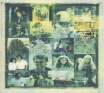
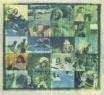
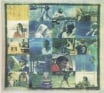
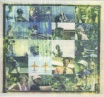
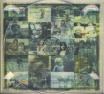
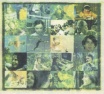
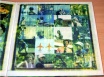
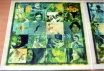
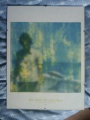
The liner notes include a grid-like collage of apparently seventies-era photos, degraded in a manner similar to the cover. The source of a few of these images have been discovered:
- A photo of a curly-haired man sitting at an Commodore CBM 2001 computer was taken from a 1979 yearbook photo from the Illinois Institute of Technology. [1] [2]
- A photo of blonde-haired woman in profile was taken from a 1972 anti-drug propaganda film called Social Seminar: Tom. A sample of dialogue from the film was also used towards the end of the album track "Chromakey Dreamcoat".
Comments and Trivia[edit]
- When asked if the record (and especially its artwork) was a throw back to Music Has the Right to Children, Marcus replied that:
"it's deliberately reminiscent of MHTRTC. Musically it's like an echo of that record, all bleached-out blue skies and so on. In some ways it sounds older than MHTRTC because of the choice of instruments and the sheer amount of damage we've done to the sound." [7]
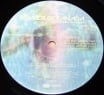
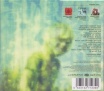
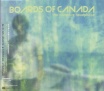
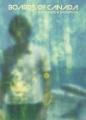
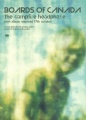
- The bottom left corner of the front cover (and onto the spine of the digipak) has a smudge that strongly resembles the hexagonal Geogaddi cover. The front and back covers are repeated in the smaller pictures inside the digipak. The smaller pictures are less distorted than the covers.
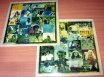
- Playing the vinyl release at 45rpm evokes a completely different listening experience.
- When inverting the colors on the back cover art, the child's expression changes into a ghostly, almost horrified, stare.
Reviews[edit]
- CD Times review by Mark Thompson
- New Noise review by Jim Merrett
- Pitchfork review by Mark Richardson
- Brainwashed review by Matthew Jeanes
- Allmusic review by John Bush
- BBC review by Colin Buttimer
- Texture review
- Igloo Magazine review by Gabriel Weinstock
- The Observer review by Simon Reynolds
External links[edit]
- The Campfire Headphase at Bleep.com
References[edit]
- ↑ 1.0 1.1 https://web.archive.org/web/20050717021647/http://www.music70.com:80/boc_discog.html
- ↑ https://bocpages.org/wiki/Emotional_Abuse
- ↑ 3.0 3.1 https://bocpages.org/wiki/Music_of_Struggle
- ↑ https://bocpages.org/wiki/Two_for_the_No-Show
- ↑ https://bocpages.org/wiki/La_Part_du_Feu
- ↑ https://bocpages.org/wiki/Above_Board!
- ↑ 7.0 7.1 7.2 https://bocpages.org/wiki/We_Are_The_(Folk)_Robots
- ↑ https://bocpages.org/wiki/Stirred_Up_The_Ashes
- ↑ https://bocpages.org/wiki/The_Downtempo_Duo
- ↑ https://www.twoism.org/forum/viewtopic.php?f=2&t=90&p=724#p724
- ↑ https://pitchfork.com/reviews/albums/839-the-campfire-headphase/
Artwork[edit]
WARPCD123-overview-2.jpg 147 KB
WARPCD123-overview-1.jpg 131 KB
WARPCD123-text.jpg 929 KB
WARPCD123-inlay-5.jpeg 73 KB
WARPCD123-inlay-4.jpeg 74 KB
WARPCD123-inlay-3.jpeg 73 KB
WARPCD123-inlay-2.jpeg 73 KB
WARPCD123-tray.jpeg 73 KB
WARPCD123-inlay-1.jpeg 76 KB
WARPCD123-disc.jpeg 86 KB
WARPLP123-vinyl-3.jpeg 131 KB
WARPLP123-vinyl-2.jpeg 127 KB
WARPLP123-vinyl-1.jpeg 132 KB
WARPLP123-side-4.jpeg 98 KB
WARPLP123-side-3.jpeg 109 KB
WARPLP123-side-2.jpeg 112 KB
WARPLP123-side-1.jpeg 105 KB
BRC-139-back.jpeg 40 KB
BRC-139-front.jpeg 33 KB
Boc-tch-promo-poster.jpg 117 KB

Thc-japanese-poster.jpg 43 KB
Thc-japanese.inlay.jpg 53 KB
Thc-japanese.cover.jpg 88 KB
Tch-postcard-02.jpg 293 KB
Tch-postcard-01.jpg 263 KB


![[2]](http://web.archive.org/web/20070228221147/http://www.iit.edu/alumni/updates/yearbook/1970s/images/campus%20and%20student%20in%20computer%20center%201979.jpg)